Metalwork

Hammering history

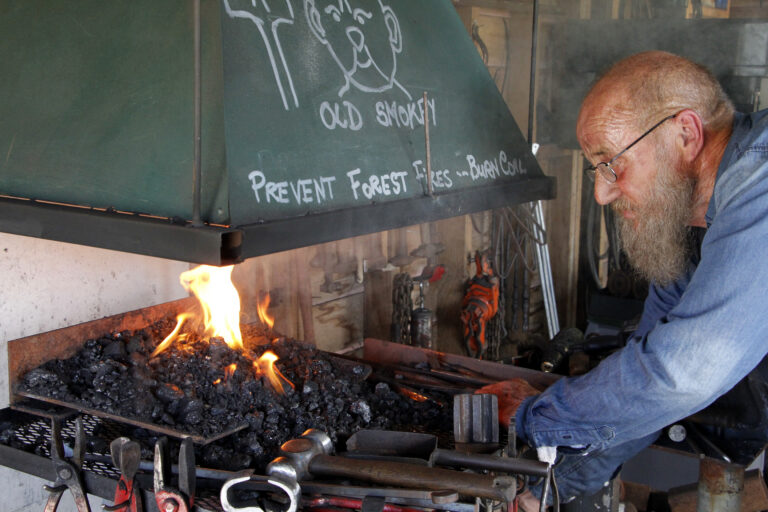
You can probably count on the fingers of one hand the number of Kiwi women who have become blacksmiths in their 60s. Judy Waterston of Livingstone, inland North Otago, is one of them.
As a child Judy spent hours in her engineer-father’s workshop sorting nuts and bolts, tidying away his tools, sweeping up, and watching him make things. She says her love of tools and machinery came from her dad.
The blacksmithing seed was sown in 1972 when Judy first saw Nicol’s Blacksmith Shop in Duntroon, some 40 km from Oamaru up State Highway 83. The building was being devoured by periwinkle planted 100 years before to act as a fire retardant. Most of the windows were smashed and it was draped in cobwebs.
“I looked through the broken windows and when I saw the anvil and bellows they took my breath away,” she remembers. “I’ve loved this building ever since.”

READ MORE »

Metal and wood shelving

No matter how much storage space you have, there is always a need for more. One solution is to make better use of existing cupboards and wardrobes. In my own house the third bedroom is used as an office, so the built-in wardrobe was an obvious target for conversion into a storage place for files and computer supplies.
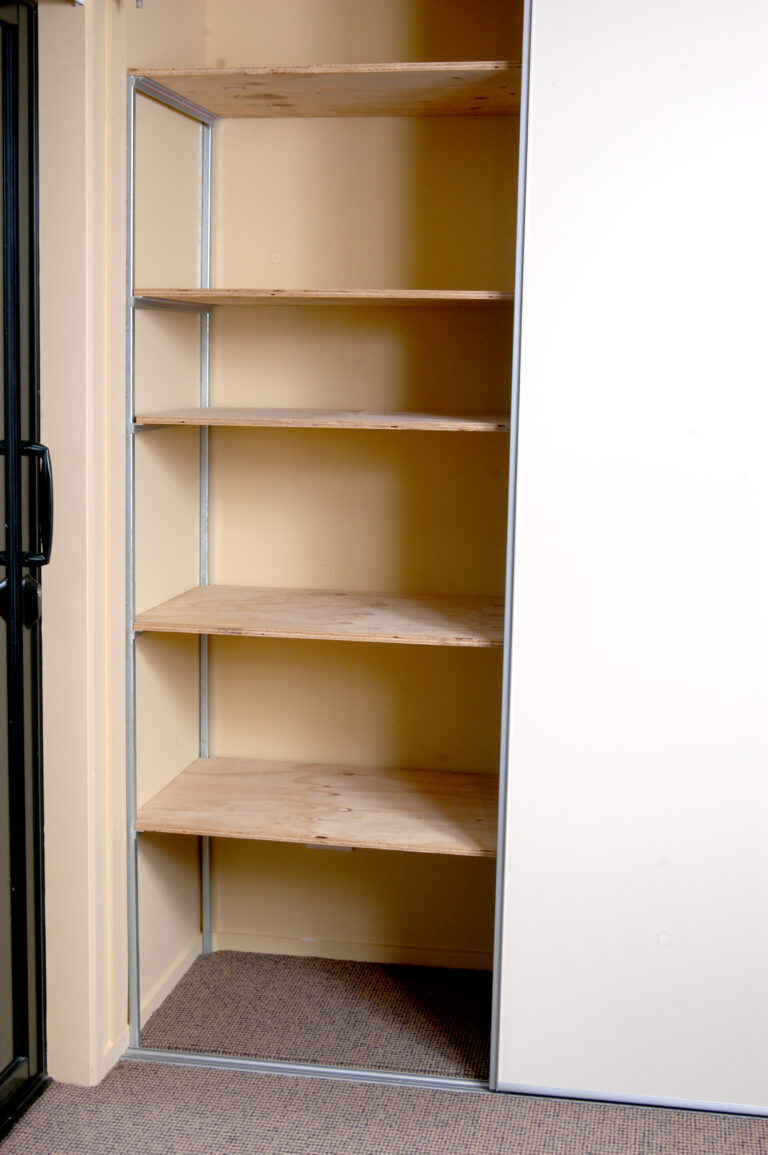
I had already tackled one shelving upgrade. We have a hallway cupboard used for many things that don’t have a place anywhere else, including toys for the grandchildren when they visit. The space was not used well. My solution was homemade shelving using frames of steel with plywood shelves.
For this cupboard, we had to allow for a basket of toys and chillibin on the floor level and picnic items and other bits and pieces on other levels. Once the shelves were installed, better use of space meant more room became available. One of Murphy’s Laws soon came into play and other items found their way into the open spaces, making good use of the variety of shelving.

READ MORE »

Forging ahead – take a knifemaking class

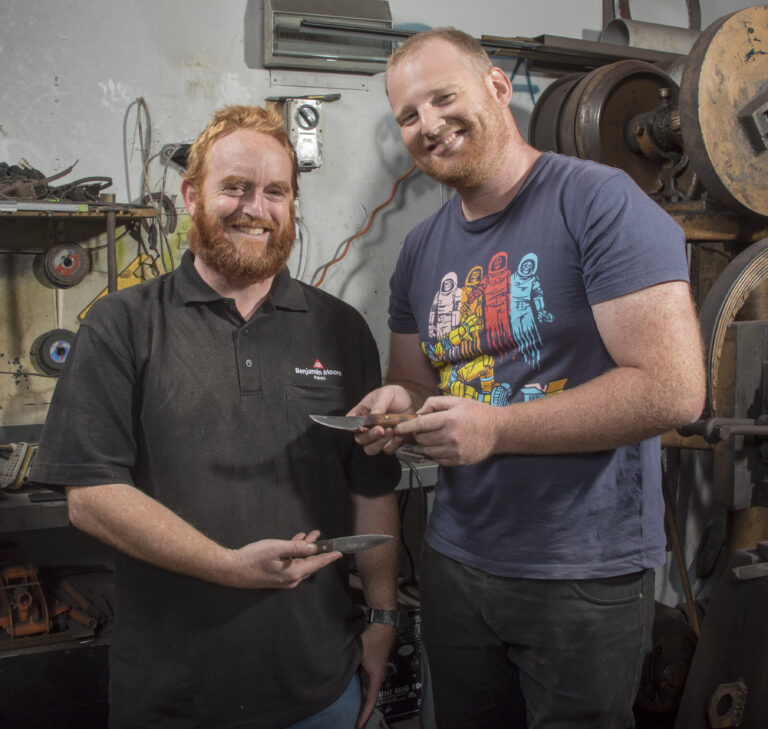
Knifemaking has undergone a resurgence in the past few years. It may be the fact that it requires only a modicum of equipment. You only really need a file and gas torch.
Of course the more elaborate the knives you make, the more gear you will need but this is one of those hobbies that can grow with you. Naturally, having a forge, some sort of anvil – even if it is only a lump of hard steel or a bit of railway line, a grinder, and a hammer will extend your options and none of these are particularly expensive. There are a number of knifemaking classes springing up all over the country to cater to this interest. Shea Stackhouse runs classes in basic knifemaking, making Damascus steel and blacksmithing

READ MORE »

Getting a grip

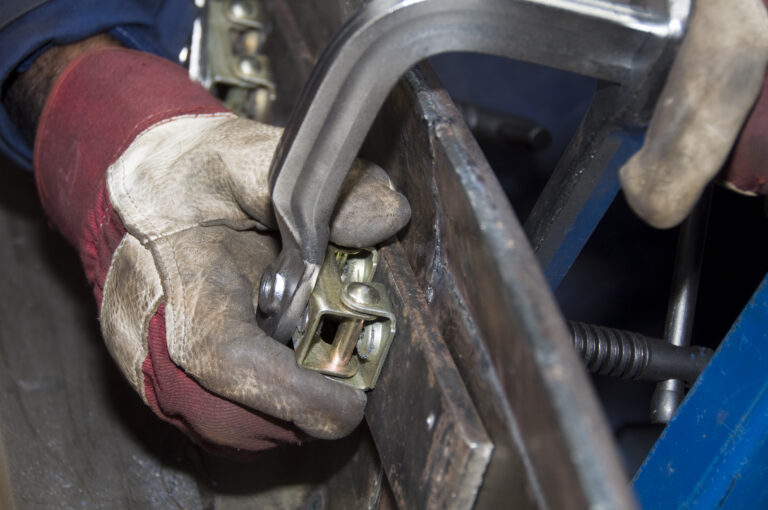
I’m currently making a mould for a rotational moulded boat. It’s a complex project with barely a square angle in it and dozens of folds and welds. It’s the sort of job that requires precision and the often needs more than two hands.
Clamps are useful but they are usually fiddly and can have a tendency to slip at the last moment especially where there aren’t any flat even surfaces to get a purchase on. So I wasn’t expecting too much when I was asked to try the Strong Hand utility clamps.
They are lighter than cast clamps so I had some doubts that they would have the clamping strength I needed for the more difficult pieces.
I was a bit dubious about the sliding action, too. It’s unusual to use sliding F-clamps in engineering but I’ve seen them used in boat-building and woodworking.

READ MORE »

Letting off steam

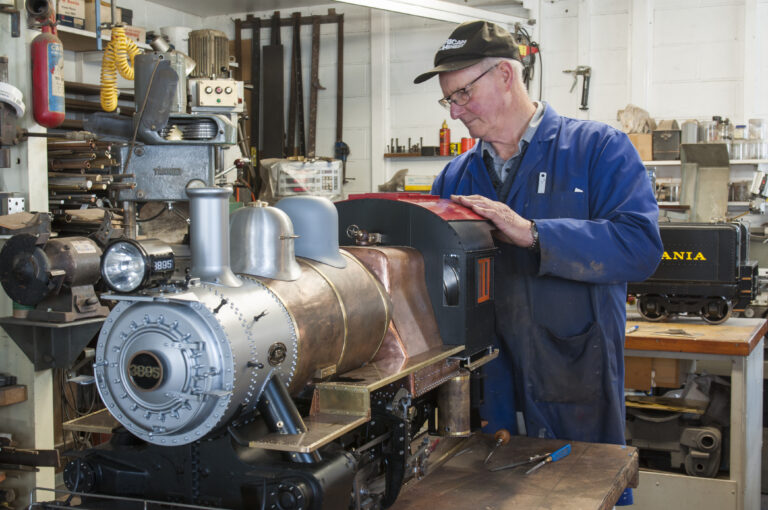
“Steam is the only way to go,” says Win Holdaway, a Blenheim-based enthusiast who builds working models from scratch in his backyard shed.
Over the years, Win has spent thousands of hours constructing immaculate scale locomotives, including an 1870s’ Baldwin Standard TE, BR standard class 9F, and a Burrell Special Scenic Showman’s road locomotive. He is currently working on an inch-and-a-half scale 1925 Pennsylvania A5S 040 switcher, complete with tender. “It’s one thing to make a model that looks authentic and another to make it work,” says Win, whose working models can all hold 90-100lb of steam.
Win reckons he spent around 5000 hours building his Burrell Scenic Showman’s road locomotive alone. It is fittingly named Lynette after his wife. While he probably spends more time in his shed than the house, she is his greatest supporter. “It’s more than a hobby. This is his life,” says Lyn, a legal annotator who knows the importance of precision.
“I’m out here most days,” admits Win who, if not in his own workshop, can often be found down at Brayshaw Heritage Park with fellow model engineering enthusiasts.

READ MORE »

In pursuit of perfection

If David Curry was to be summed up in a single word it would almost certainly be precision. But that’s not enough – it would be absolutely vital to add artistry. Putting them together amounts to a search for perfection, so perhaps that’s the word to use.
Here’s an example: David is at present building a dauntingly complicated perpetual calendar skeleton clock, which has 38 gears, one with 165 teeth, all of which have to be individually machined. Clearly precision is paramount. But the levers and some parts of the frame look a little utilitarian, so he’s redesigning them with a few artistic flourishes. For inspiration he looks to a skeleton clock built in 1855.
“The engineering has to be right so that the parts work properly, but they also have to look right,” he says.
The clock tells the time, has a second hand, notes the day, date and month, and knows whether the month has 30 or 31 days. David is adding a second chiming system so that the half hour, three-quarter hour and quarter hour chimes have different tones from the full hour strike.

READ MORE »

Lights galore

If you are interested in adapting and using discarded bits and bobs to make something useful, then building lights, table lamps, and the like, offers an endless source of relatively inexpensive projects to amuse you. What’s more, they make unique gifts and nice conversation starters for visitors. Lamps are also a good way of supporting a decorating theme. Whether you are into an Art Deco, Arts and Crafts, modern or industrial look, it is nice to enhance your chosen theme by constructing a light from an object that is reminiscent of it.
Of course you are dealing with 240-volt electricity, which is potentially lethal, so it is essential that you use common sense and particular care when wiring up lights (see the safe wiring tip box). The advent of 12-volt downlights powered by small transformers has also made the construction of lights much safer. Lights can now be wired in such a way that the 240-volt transformer is remotely located or secured and independently earthed. There is no electrocution risk posed by the 12-volt wiring in the rest of the light.

READ MORE »

Welding: Standing to attention – lathe bench build part 2

I ordered some drawer slides of the appropriate length (350mm) and worked out the width of the slides and thus the width of the drawers. The drawer slides are rated at 45kgs. I couldn’t be sure what weight I would be likely to load but this should suffice. I elected to run with eight drawers and make the second opening in the frame a cabinet to house larger components like the four-jaw chuck. After some fiddling I settled on two drawers each of 75mmx70mmx60mm, and 50mm high, separated by 10mm.
I bought three sheets of cold rolled steel 1mm thick. This is within the limits of the panbrake and I had hoped the material would be stiff enough given that the drawer had to span over 500mm width. I broke the material down into half sheets to make it easier to handle.

READ MORE »

From Rust to Rrroarrr video – part 1

Out of the shed and into the sun – part 1
After storing his bike for 50 years, Peter has begun t o restore it. He doesn’t want his bike to look flashy and new; he just wants it to run well and look the part.
In The Shed magazine December/ January 2025 issue 118, we begin a six-part series on the restoration of a 1952 AJS motorbike.  
This series of videos will accompany each article from the magazine. 

READ MORE »

My car the barbecue

A mobile barbecue built out of an abandoned Holden Statesman? Why not. This clever conversion by Scott Edwards, a former freezing-worker-turned-motor-mechanic, was the pin-up attraction at a car, bike, truck and boat Show Day held in Riverton, the popular coastal resort town about 32 km west of Invercargill.
Scott is currently completing an adult motor mechanic apprenticeship but has always had a flair for anything to do with engines. He began early. Scott’s partner, Nicola Swain, says his mother had told her that Scott pulled apart every toy he got as a child, then put them back together again to see how they worked, before he played with them.

READ MORE »

Build your own tinnie

The aluminium runabout – better known as the tinnie – is the quintessential Kiwi bach boat. Most arrive in the backyard direct from the showroom or Trade Me, but Auckland boat designer Jim Pauling has created a new way of getting a tinnie: building it by kitset.
He has several sizes in his range. This one is the baby, the DIYNO 361, at 3.6 metres long. Thanks to improved technology and lower prices for power tools generally, it is much easier for the home handyman to pick up a welder, have a few practice runs on some scrap aluminium, or do a course at night school, and build his own kitset, 12-foot tinnie.
Pauling is a diehard fan of aluminium as a building material. Thanks to CNC (computer numerically controlled) cutters, it can be accurately cut to shape for sale as a kitset, which saves labour and vastly improves the result.

READ MORE »

Looking hot

I began by careful measurement of the existing barbecue and designed a framework around it. At the same time I decided to upgrade and purchased a reasonably cheap single burner that didn’t have a long burner tube to contend with.
The framework is essentially just four legs with a couple of bars to sit the barbecue on, two outriggers that can be used for the side burner and a table for placing meat before and after cooking. The barbecue is attached to the base by four screws through the lid hinge.
I cut all the parts on the bandsaw, starting with all the bevelled parts. I elected to make the four legs contiguous with the arms of the outriggers so they are welded together as one piece, rather than making the outriggers as separate pieces and welding them to the tops of the legs.

READ MORE »

Along for the ride

Every Wednesday and Saturday morning about 20 retired tradesmen leave their lunch boxes in the Oamaru Steam and Rail smoko room, shrug themselves into their overalls, and head for the old railway workshop to get on with the day’s tasks.
They might be restoring turn-of-the-20th century railway carriages, stripping down a locomotive or installing wiring systems. Each man brings a lifetime’s worth of skills and the willingness to learn something new.
They work out of the old New Zealand Rail wagon workshop, or lifting shop as it was called, at the back of Oamaru’s historic precinct. The Oamaru Steam and Rail Society Inc took over the building in 1989. Most of the tools and equipment needed to complete the volunteers’ first major project were on hand so they rebuilt the 60mx12m workshop which had been partially demolished by NZ Rail when they decamped.

READ MORE »

New life for old stuff

Broken blades, tired tools, worn washers, grimy gears. These are sorry sights for most sheddies, but for Bruce Derrett they are the treasures of his trade. The Motueka metal artist combines his skill wielding a MIG welder with a highly fertile imagination to turn other people’s junk into quirky creatures, funky furniture, and striking sculptures.
Bruce, who ironically failed metal work at school, has always had an eye for mechanical bits and pieces. “As a kid I was always pulling things apart, like clocks and radios. It used to really frustrate my mum,” he says. Now he puts things back together again, albeit it in a very different form.

READ MORE »

Making a kayak anchor

This simple and effective rebar anchor is perfect for small boats and kayaks and is the result of welding $30-40 worth of materials. If you are a small boat and kayak enthusiast, fabricator or just want to learn some new metalwork skills, this two-hour project will be great for you; it needs few welding skills. Remember that the construction is modular and can be made to fit your needs.
With a net weight of only 7 kg, the anchor will not weigh down a boat or kayak. Anyone can pull it up, but it will still catch the seabed.

READ MORE »