Tools

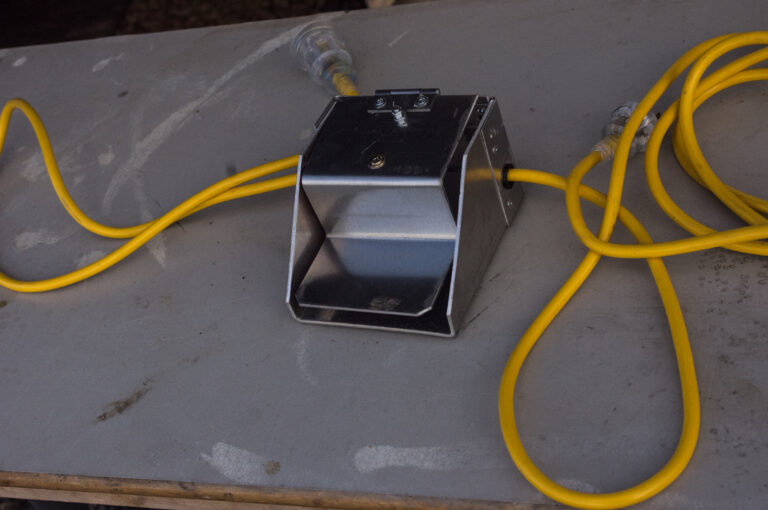
Building a dead man’s switch

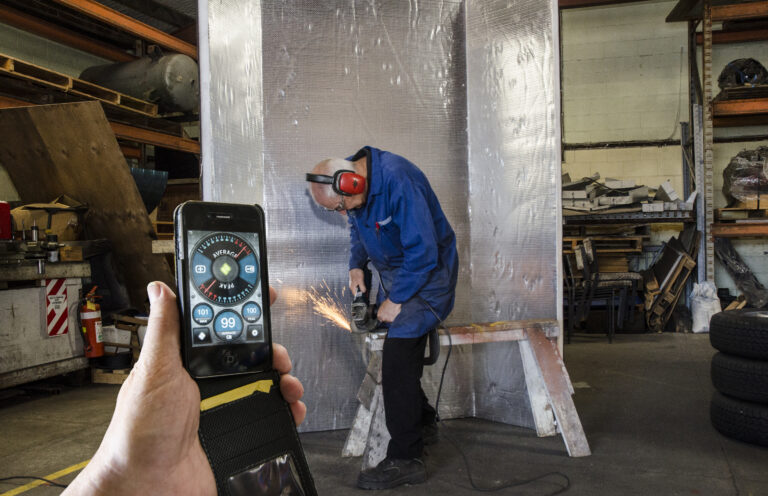
Routers, power and cut-off saws, as well as angle grinders, can all inflict very nasty injuries in a fraction of a second. I can still remember nearly breaking my wrist many years ago when a heavy electric hand drill, fitted with a one-inch drill bit, decided it was time for me to revolve instead of it! A foot- operated cut-off switch would have been just the ticket on that occasion.
The dead man’s switch, as I will call it, is a simple device fitted in between the power supply and the operating equipment that requires a foot kept on it at all times for power to be supplied from the source to the equipment.
As it will undoubtedly spend a lot of its time on hard floors and possibly uneven surfaces, it needs to be robust as well as big enough to accommodate your foot comfortably. It should also be rugged and well protected from the scuffs and knocks it will undoubtedly suffer over the years.

READ MORE »

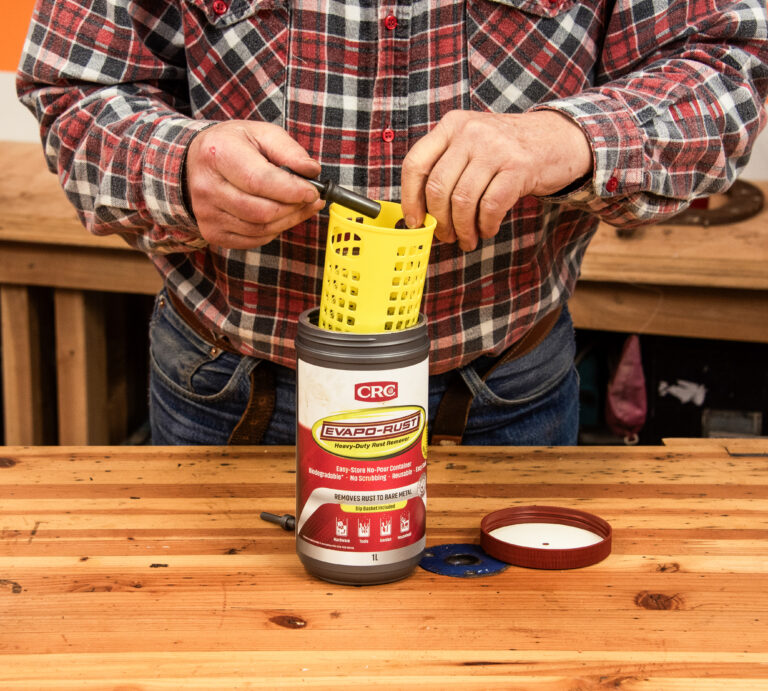
Rust, me and CRC Evapo-Rust

My tools and machinery were housed in an unlined shed for a few years, resulting in plenty of surface rust.
I tried removing it with abrasive products, but that involves an awful lot of manual labour and doesn’t always work well, not to mention the scratches it leaves on the tool’s surface. So I looked for a decent rust killer. CRC Evapo-Rust had a reputation, so I gave it a go.
Most of my affected tools were small enough to be immersed in the liquid. I had a container that I filled with Evapo-Rust, and an overnight immersion generally cleaned them up. The beauty of Evapo-Rust is that it’s reusable, so that container will last for the foreseeable future, probably a year for me.

READ MORE »

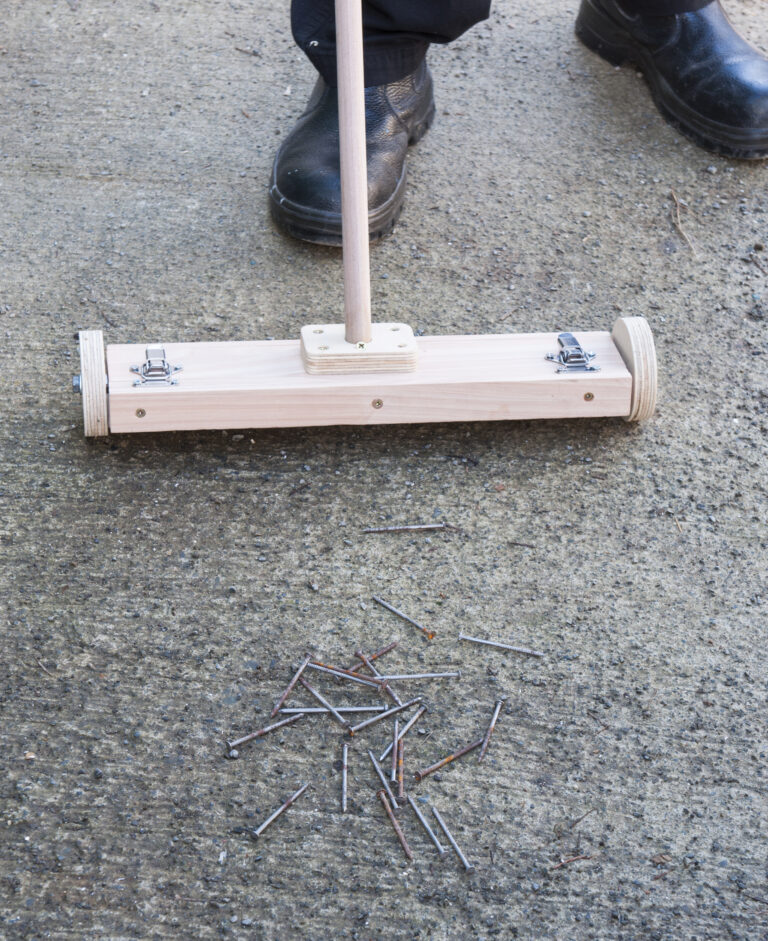
Making a clean sweep – how to make a magnetic sweeper

After mumblings of discontent about the potential punctures and those “messy engineers”, I decided to make a simple magnetic sweeper. The concept is not new. Magnets have been used for picking up road debris for a long time, and they are very effective.
The challenge, though, is where to find magnets that are strong enough, and how to effectively remove collected steel waste from the magnets. In an ideal world, it would be great to be able to turn the magnetism off and on.
This can be done, of course, by shifting the magnetic poles in the same way that magnetic chucks do on a surface grinder.
Very effective, but I couldn’t see our tool makers in the shed being happy to see the magnetic chuck from the surface grinder being “borrowed” to pick up nails.

READ MORE »

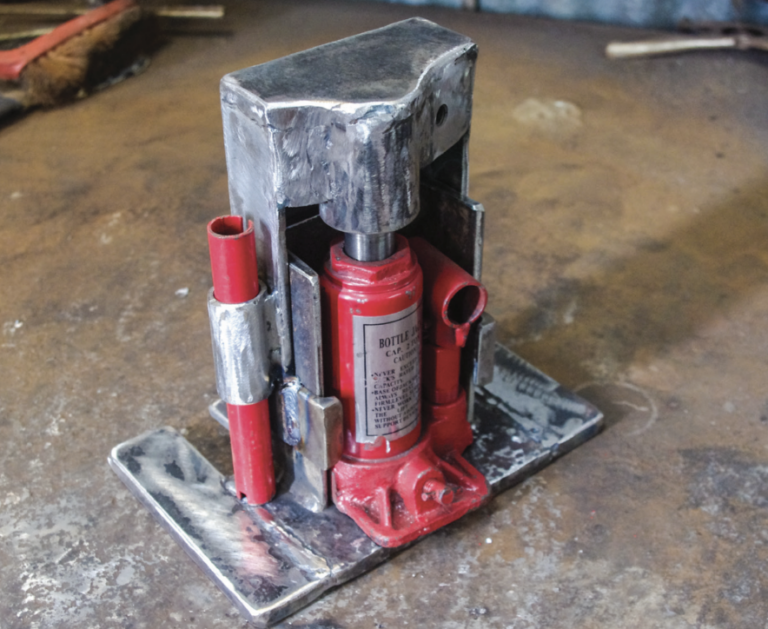
A weighty subject

One problem with working alone in the shed and having a liking for large pieces of Victorian cast iron is the difficulty of safely moving or lifting them.
They can be moved with load skates and pipes as rollers, but how do you lift the weight onto the rollers? Trying to push down on a crowbar while arranging pipe rollers under a machine is inviting trouble. A toe jack allows you to lift and hold the weight in the air as you arrange the rollers and put in safety blocks. It is not intended for great weights or high lifts due to stability, but it allows you to lift the weight.

READ MORE »

Create your own parrot-beaked pliers

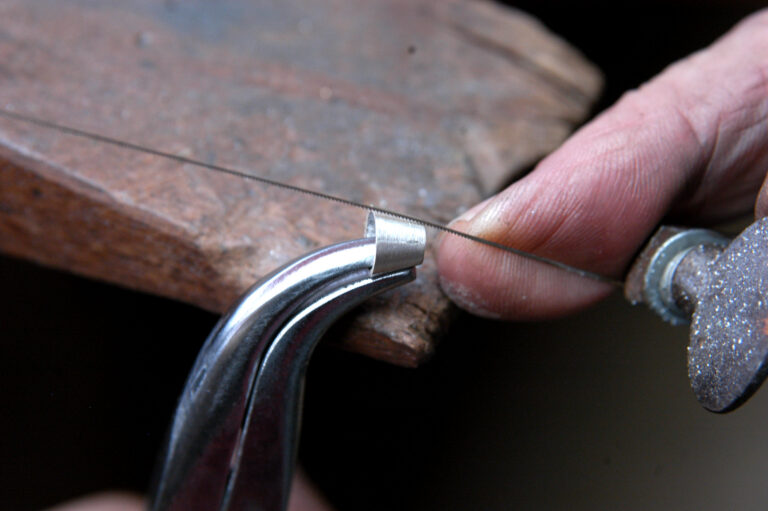
A specialist tool we made in that Hatton Garden workshop where I served my time was parrot-beaked pliers. These are used by the ring-maker for hand-made gem settings. They present the setting in a ring at just the right angle so the jeweller can pierce and file the design of the setting.
The best pliers for this are a pair of heavy, flat-pointed pliers, known in the trade as snipe pliers. Good jeweller’s pliers can cost up to $50, so I save my students money by most often using second-hand electrician’s snipe pliers. You can pick these up at any market for used tools and they do just as well. I am still using the pair I made during my apprenticeship 50 years ago.

READ MORE »

It’s good to be square

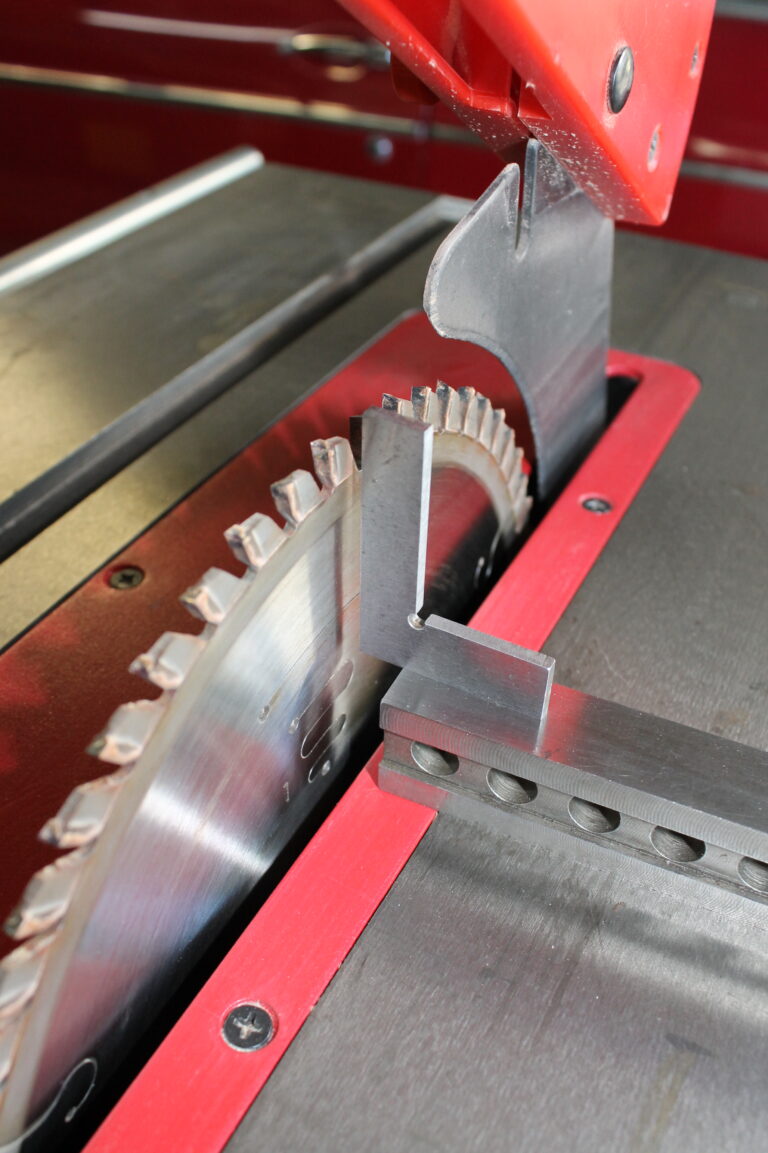
We need a range of squares to use for the many different situations we encounter in the workshop. For instance, we need a square to set up our machines – it is vital that your saw bench cuts square when you want it to. The blade obviously needs to be at right angles to the table and the sliding table or sledge needs to be square. The same for your planer.
The fence should be set square and you should regularly check that it remains square. Imagine the consequences of spending considerable time cutting mortise and tenon joints for fine furniture only to find they fit poorly due to the machined timber not being square. Errors also tend to compound over a project.

READ MORE »

Hand tool grand slam

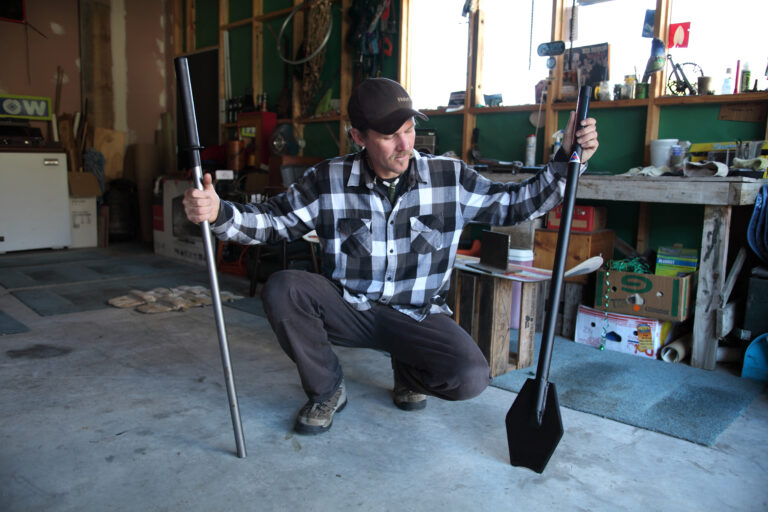
It splits wood and rock, it severs roots, it levers…it slams. The Slammer may be a literally ground-breaking tool to work with, but the manually operated device is a rare creature in the thriving high-tech landscape of new DIY tools.
Developed by TJ Irvin, a globe-trotting American who settled by Lake Hawea more than a decade ago and handcrafted by one of the oldest engineering firms in the country, Templeton & Sons, the Slammer is an unusual piece of kit any manual worker needing a bit of extra grunt should consider trying.
The 9 kg, two-piece Slammer developed by Irvin uses the impact of a solid, high-tensile steel rod rammed down a length of pipe by the operator. This provides the momentum to ram the attached blade into—and through—the sort of material most people hire a jackhammer to deal with. Other attachments turn it into a fence-hole rammer and a compacter for foundation work. As TJ describes it, the slammer/rammer multipurpose tool is a combination of a crowbar, axe, spade, mattock and sledgehammer all in one. Made in New Zealand.

READ MORE »

Soldering tips part 2: Getting the job done

We touched on some simple de-soldering methods in part one of this two-part series.
Just like other workshop tools, there is more than one way to achieve it and with less damage and frustration.
De-soldering involves removing the solder from the joint to either release the component or repair the solder joint. The aim is to do this with minimal damage to either part, but since you can generally replace the component, protecting the PCB is paramount.
SMT (Surface Mount Technology) is a whole other subject, and because of the design and density of the components, different tools are required.
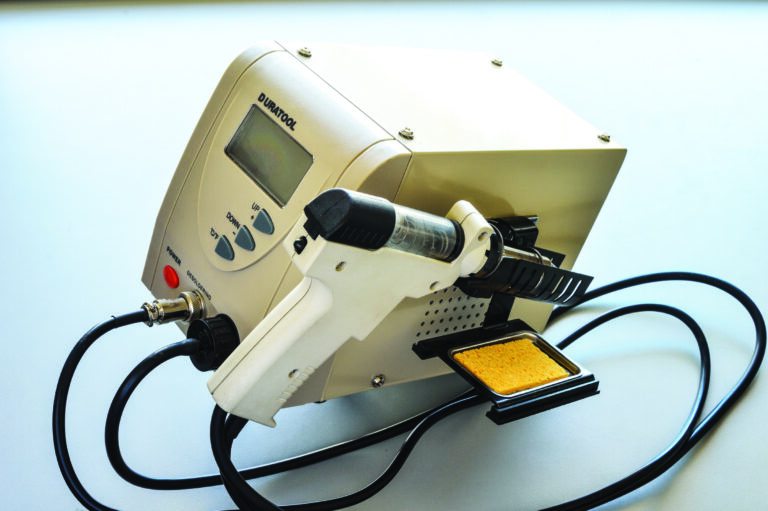
De-solder or rework stations consist of a box controlling a heated tip and a vacuum pump. There are many manufacturers, but I’m only going to discuss some of the ones I’ve had experience with.
While the control box may have shrunk, there is a limit to reducing the handset. The handset consists of a tube to collect the solder and filters to absorb the flux residue. The tips are hollow and reach right through into the collection tube.

READ MORE »

Versatile Hi-Q Toggle clamps

Toggle Clamps
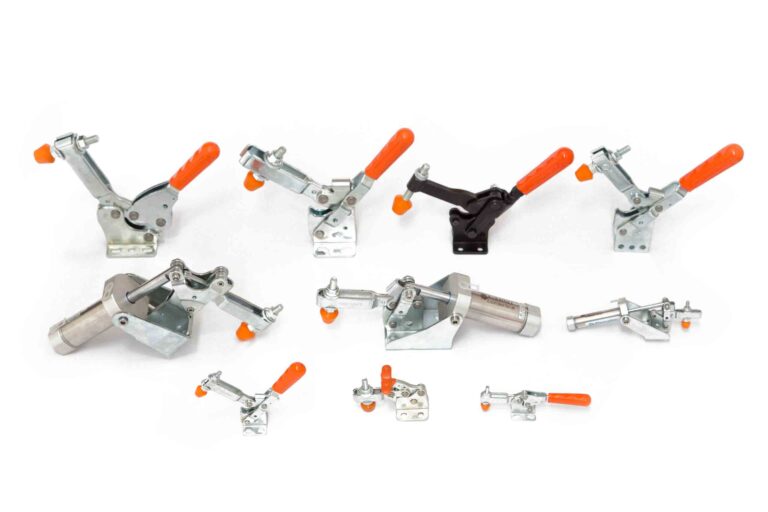
When it comes to clamping, lever-action toggle clamps offer excellent power from a quick and easy motion and they are simple to install for ready access. Toggle clamps have a multitude of uses in engineering, metal fabrication, and woodworking. Hi-Q Components stocks a wide range of high-quality Turkish-made Kukamet toggle clamps including horizontal and vertical actions, latching or push–pull configurations with different mounting options, and even pneumatic versions.

READ MORE »

Ponoko—a cut above the rest

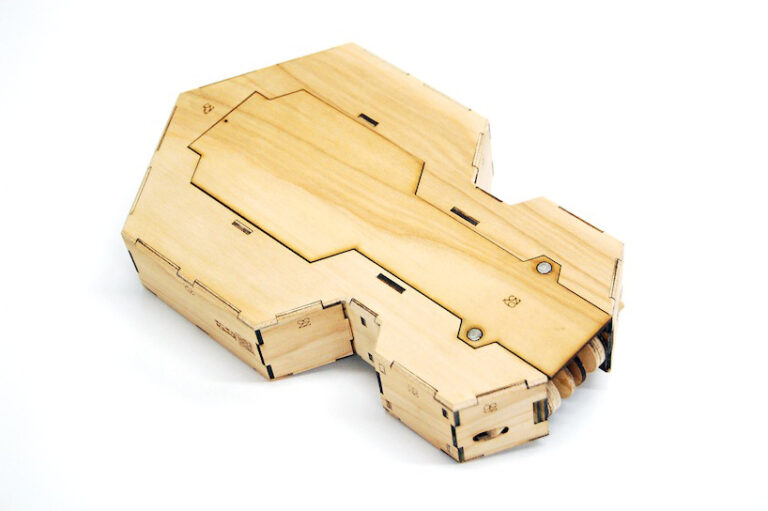
While laser cutters are now practical for home-build projects, they are not something that everyone will want to run. They take up bench space, need care and feeding, get expensive in large calibres, and if you don’t use one that often you might well be better off letting a company like Wellington-based Ponoko cut things for you.
Ponoko stock a wide range of materials and are experienced with using their laser cutters on them. Handy, but scarcely unique given the number of engineering outfits that are out there that’ll do pretty much the same thing.

READ MORE »

The right stuff – part one

These tips are a random collection of thoughts that I have grouped under the classification of things that relate to working at a bench using hand tools, rather than using a lathe, mill or other machine tool. So if you have only a workbench with some hand tools in your shed, this is meant to be useful for you too.

READ MORE »

Hi-Q Components has it all tied up with their range of ties

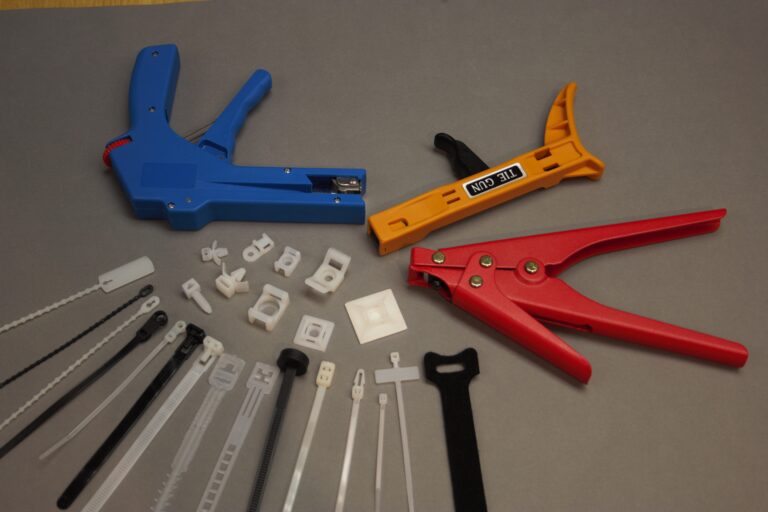
If you’re looking for plastic cable ties and mounts, and cable management components, it’s hard to beat Hi-Q Components’ comprehensive range, which covers just about anything you’ll need for the job in hand.
Its selection of plastic fixings and fastenings includes standard strap-type cable ties, from 75mm x 2.4mm to 1500mm x 9mm; as a bonus, many sizes are available in weather-resistant black nylon for outdoor use. Hi-Q also has specialist ties covered, with stock including HVAC duct straps, heavy duty for hydraulic hoses, releasable, screw mount, marker, push mount, double loop mounting, hanking, and beaded ties. As well as cable ties, Hi-Q offers a great selection of cable tie mounts, such as quick and easy self-adhesive tie mounts, and push and lock clip mounts for through-hole panel mounting.

READ MORE »

Make your own backyard forge

This is one of the very basic forges for heating metal bars. There are many other types of forge out there and Youtube can show you how to build and use them. My forge was made of scrap steel from my workshop and the local recycling centre.
The forge essentially consists of a fireplace or “bowl” in firebricks which are held firmly together in a brace or strap. They sit on top of a steel plate. Another steel plate sits on top of the bricks, with a large square in it to allow access to the firebowl.
A small, round, high-grade steel grate with several holes in it sits at the bottom of the brick bowl. Below this fireplace, a vertical pipe-fitting is welded into the supporting steel plate. The bottom of the pipe is an ash trap, and the ash can be dropped out by opening a small trapdoor.

READ MORE »

Size matters

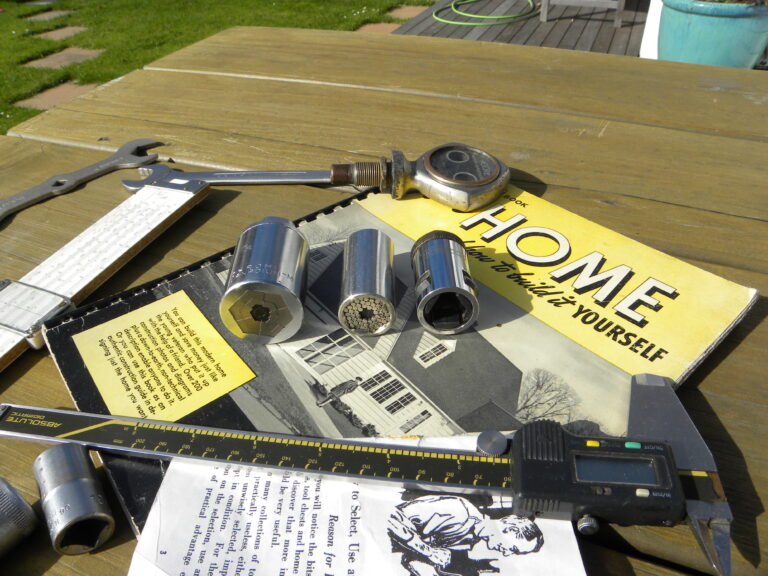
Over the years I have bought three universal sockets from second-hand tool dealers. Only one has a name and the manufacturer stamped on it, the American made “Ultra Socket”, while another is obviously a close copy of the “Gator-Grip” which is advertised on the internet.
I think the real appeal of these mechanical curiosities is that they can grip fasteners for which purpose-made sockets can’t readily be purchased, and the reason for that is that the system of sizing nuts and bolt heads has changed more than once over the past 50 years.

READ MORE »

Hi-Q Toggle clamps

Toggle Clamps
When it comes to clamping, lever-action toggle clamps offer excellent power from a quick and easy motion and they are simple to install for ready access. Toggle clamps have a multitude of uses in engineering, metal fabrication, and woodworking. Hi-Q Components stocks a wide range of high-quality Turkish-made Kukamet toggle clamps including horizontal and vertical actions, latching or push–pull configurations with different mounting options, and even pneumatic versions.

READ MORE »