
New clamps prove their value
By Steven Snedden with assistance from Senthoorvelan Krishnamoorthy
PHOTOGRAPHS: JUDE WOODSIDE
I’m currently making a mould for a rotational moulded boat. It’s a complex project with barely a square angle in it and dozens of folds and welds. It’s the sort of job that requires precision and often needs more than two hands.
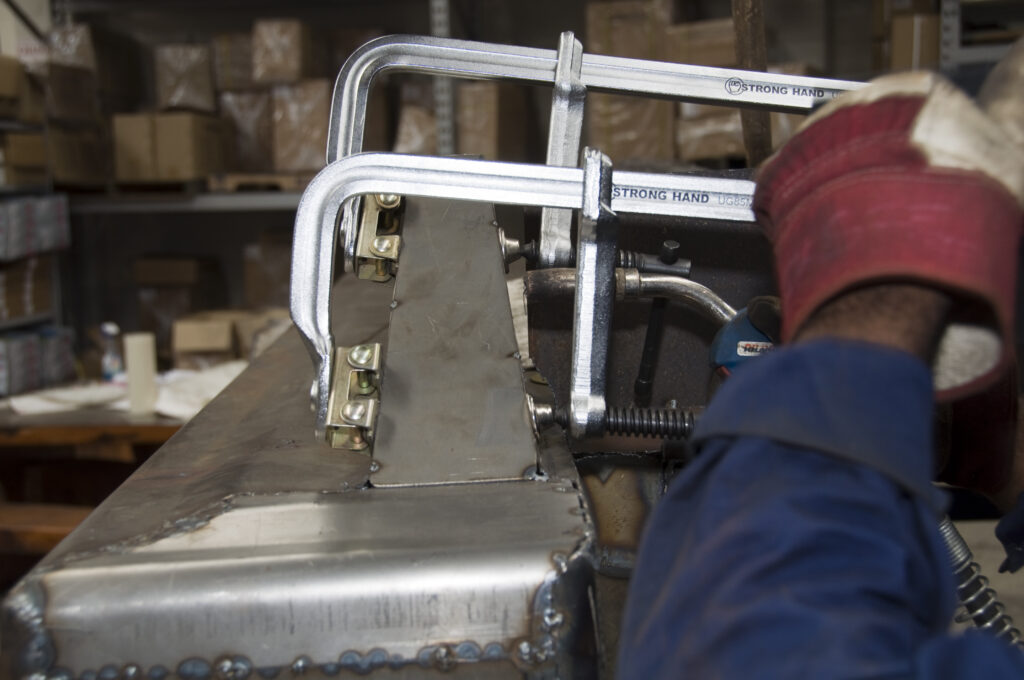
Clamps are useful, but they are usually fiddly and can have a tendency to slip at the last moment, especially where there aren’t any flat, even surfaces to get a purchase on. So I wasn’t expecting too much when I was asked to try the Strong Hand utility clamps.
They are lighter than cast clamps, so I had some doubts that they would have the clamping strength I needed for the more difficult pieces.
Sliding action
I was a bit dubious about the sliding action, too. It’s unusual to use sliding F-clamps in engineering, but I’ve seen them used in boat-building and woodworking. This is a very quick way of getting the clamps to the work and allowing them to be used single-handed.
I never once had one slip once in place, and even some hammering around the clamp didn’t tend to loosen it.
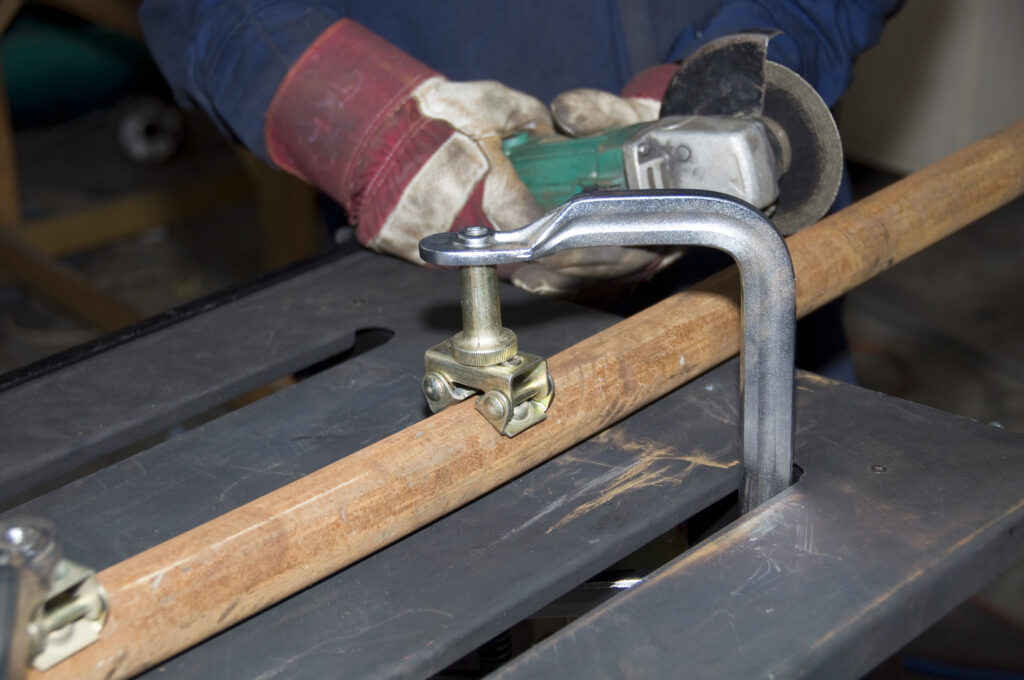
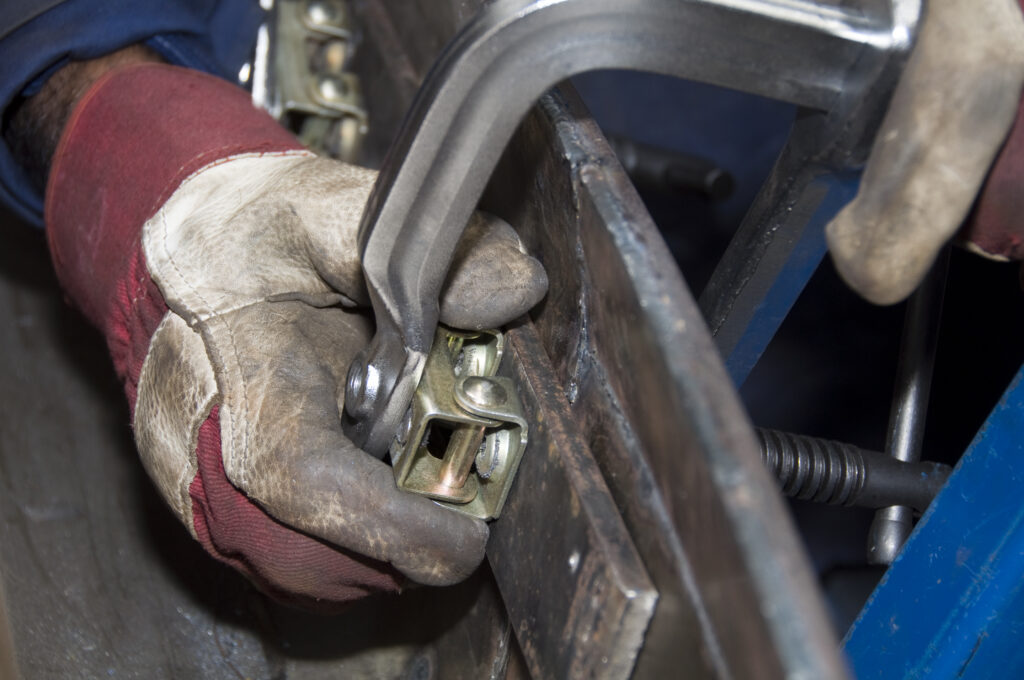
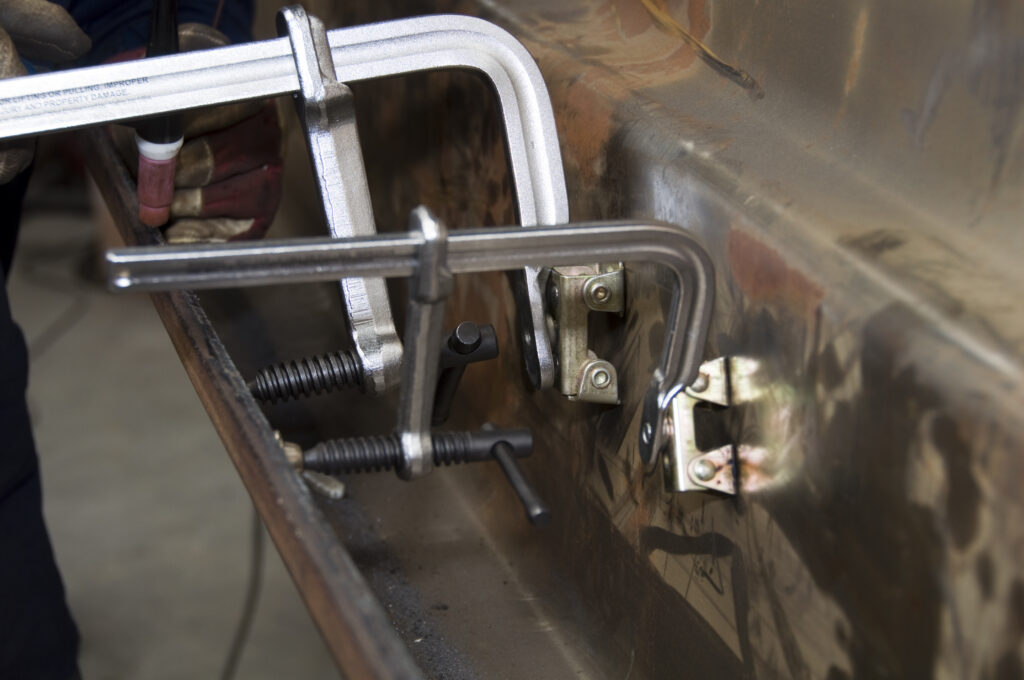
The clamps came standard with V-pads, which I think are an improvement on the pads I’ve seen on other clamps. The two pivoting pieces can spread the load a little better and will adapt to uneven or round surfaces.
Strong Hand also produce magnetic V pads as accessories. They should really be standard. Once you replace the standard pads with the magnetic ones, you wouldn’t want to change them back. The magnetic pad helps with one-handed operations by holding the clamp on the work surface while you adjust the business end and juggle the pieces into position.
Attaching the V-blocks
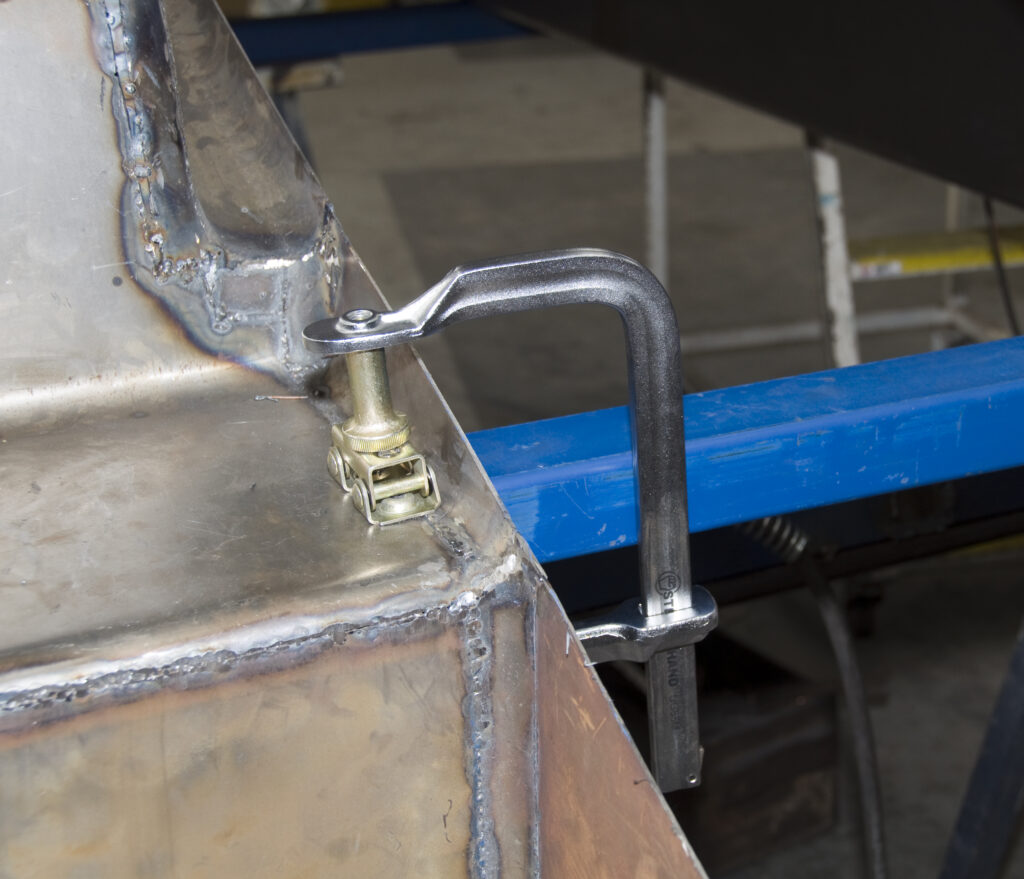
The threaded hole in the top end of the clamp allows you to easily attach the v-blocks and comes with an extender which is intended to get over lips. There are plenty of those here but you can use the clamp with none of these, just the flat end.
The clamp is quite thin, so it is easy to get in places that you would normally have trouble inserting a clamp head.
I was surprised at how much force the clamps took. It would be easy to apply too much pressure and damage the work piece. The clamps have a spring quality that allows them to be wound up tighter than a cast clamp and tighter than I would be comfortable tensioning a cast clamp. The handle is a decent size too so you can get a purchase on it.
The ability to flip the head and use the clamp as a spreader is a nice touch. This is possible with other F-clamps of course but the Strong Hand clamps have a small spring-loaded stop in the end of the arm to allow the head to be slipped off and repositioned.
Welding the gunwales in place
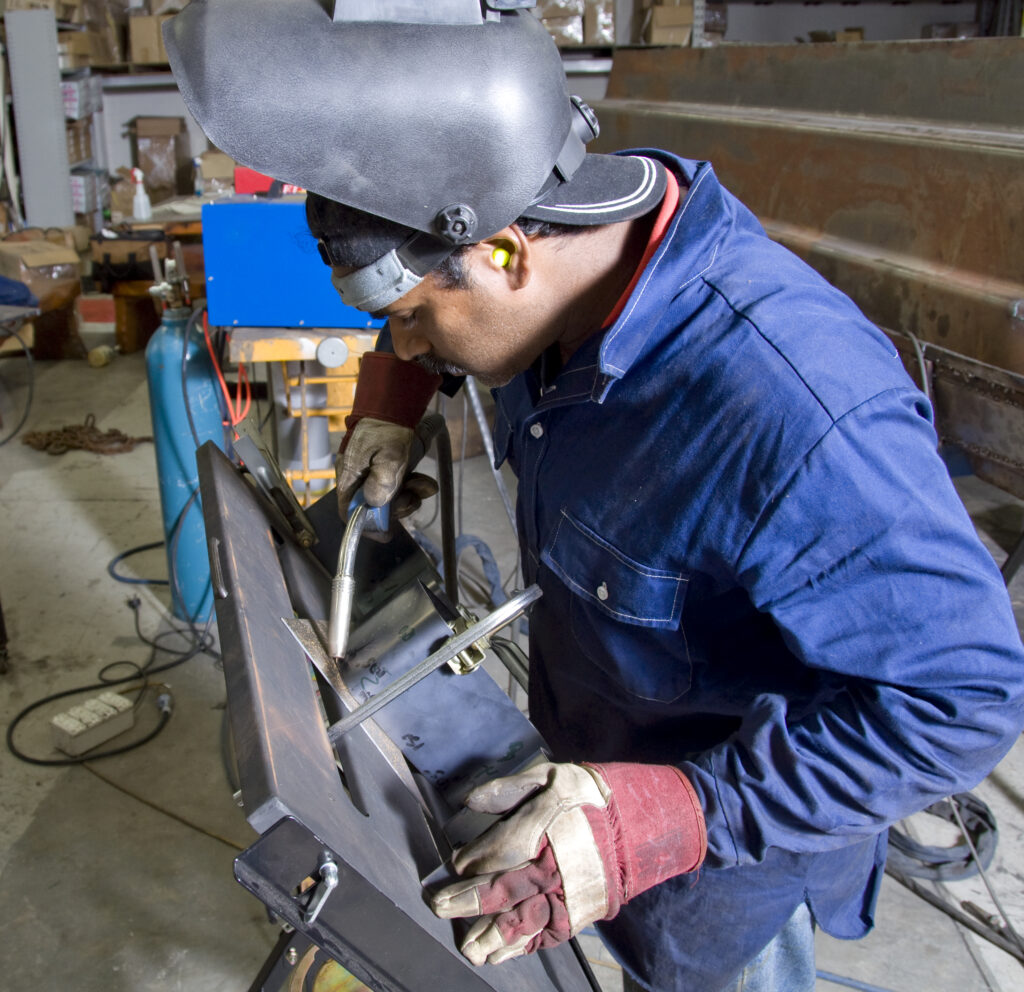
We had to use this process to weld the gunwales in place. I had used small hydraulic jacks to get the right curve and separation on the gunwales and I didn’t think the clamp would have enough purchase to hold the gunwale strip in place. I was wrong, and we were able to get rid of the admittedly clunky jacks.
These clamps seem to work even where you can’t get a flat purchase on the material. For example, in awkward sections with the head on an angle and the body of the clamp at an angle—the sort of position that F-clamps usually fail in—again, the magnetic heads certainly help when holding the work.
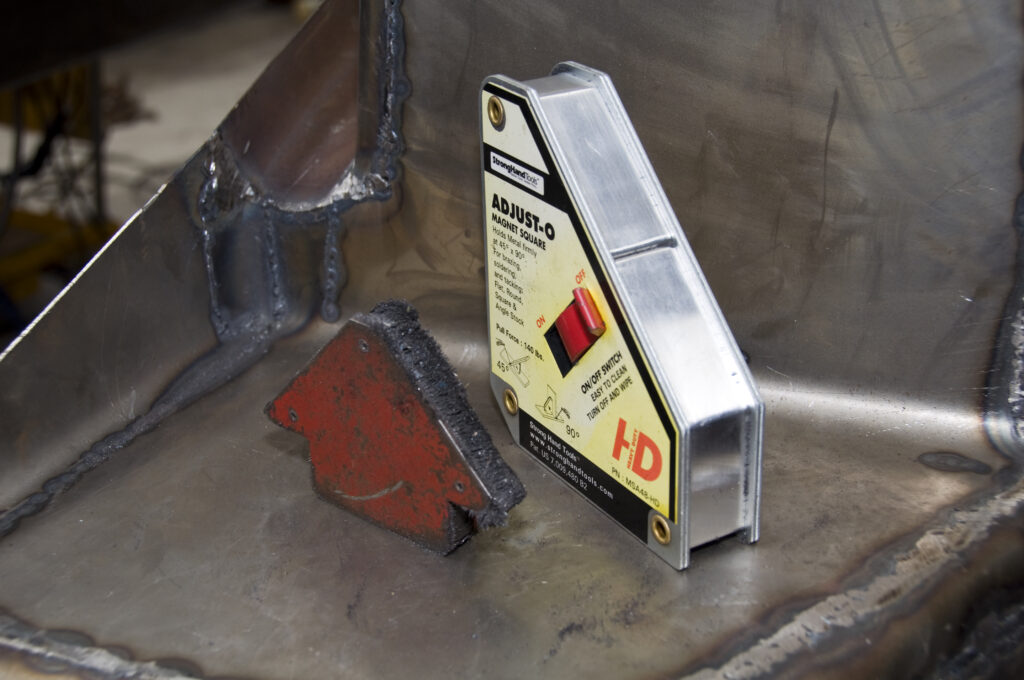
Strong Hand also make the Adjust-O-Magnet clamps which unlike other magnetic square clamps can be turned on and off with a switch. Once on, magnetic square clamps are difficult to move and the ability to turn the magnet off allows you the clean swarf and filings off the magnet. In spite of very few square corners, we found a few uses for the clamps too.
Portable work surface
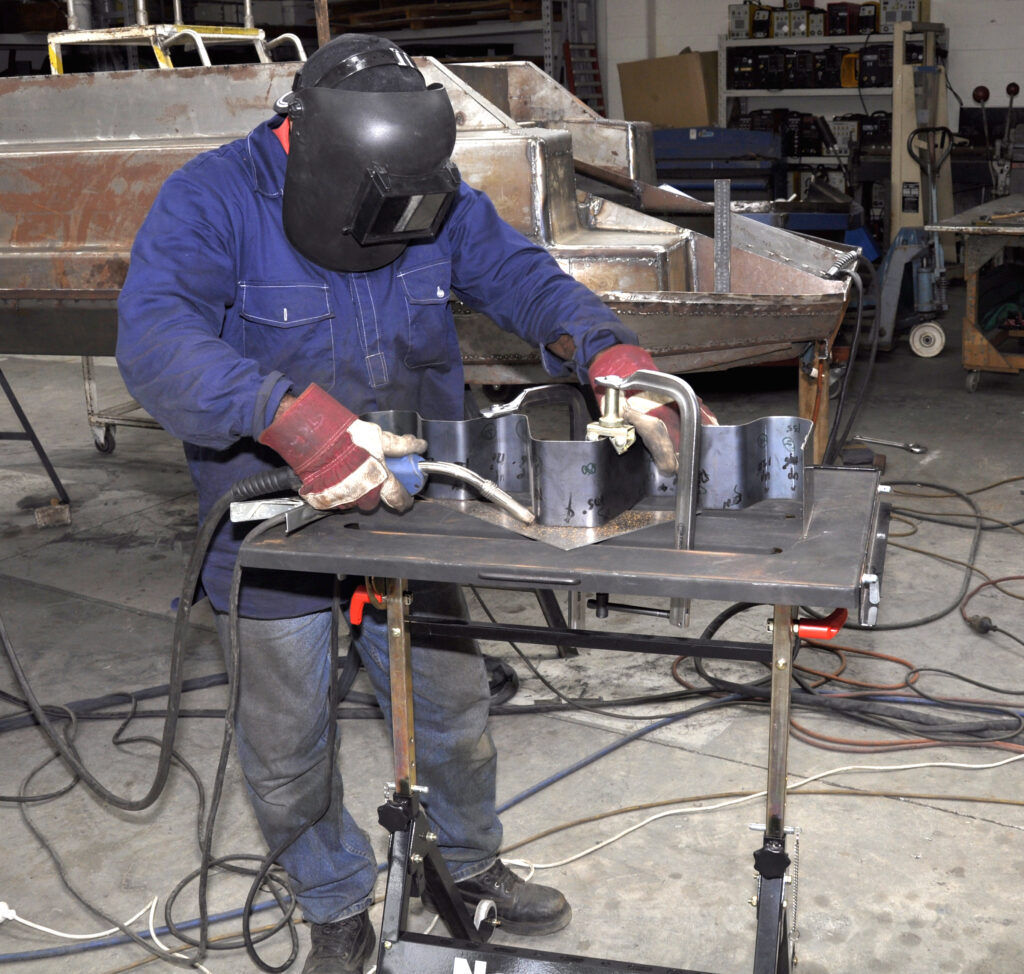
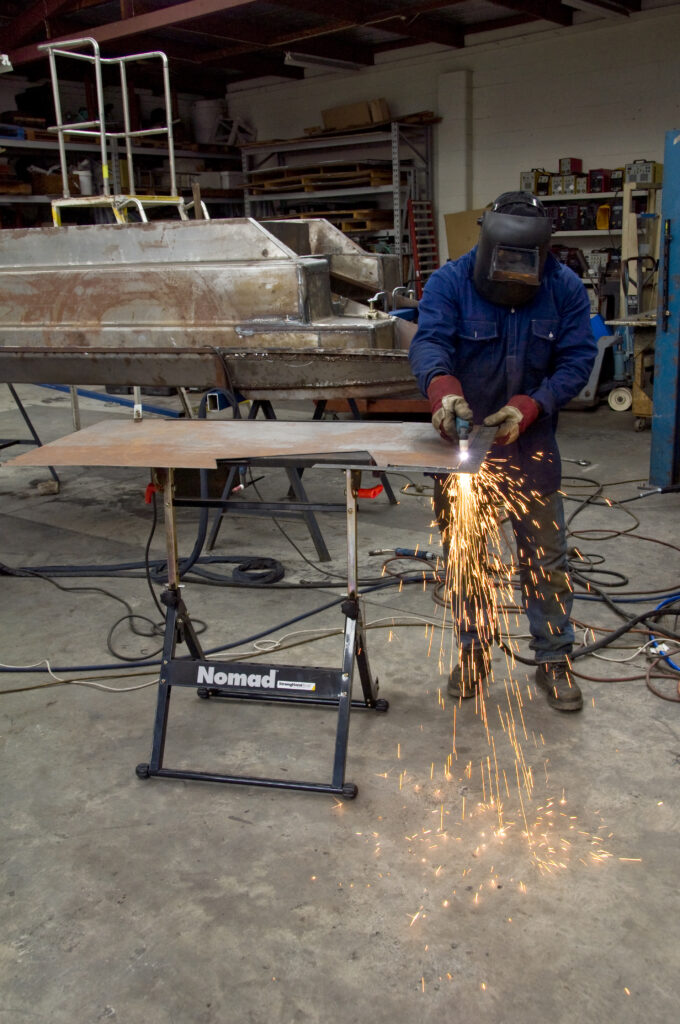
It’s always useful to have a portable work surface that you can use for fabrication or cutting. The Nomad table is small enough to fit in the boot of a very small car but it can be adjusted to work height. It has wheels that allow it to be rolled about rather than dragged. The table tilts which means you can get to the underside of the work without physically unclamping and turning the piece.
The table comes with adjustable edge-guides to make it easy to find a right angle but we found they were useful for quickly clamping sheet for cutting. The slots in the table allow you insert the clamps to hold difficult pieces. This is where the v-blocks in the clamps come into their own, clamping pipe for cutting. The table is ideal for light fabrication.
These tools are well-made, and it’s obvious that a lot of attention to detail has gone into their design. We couldn’t fault the manufacture, they surprised us with how versatile they are and over several hard days they stood up to everything we could do to them.
* Steve Snedden is a welder, former boat builder and owner of WeldNZ.