Woodwork

Woodwork: getting started (2)

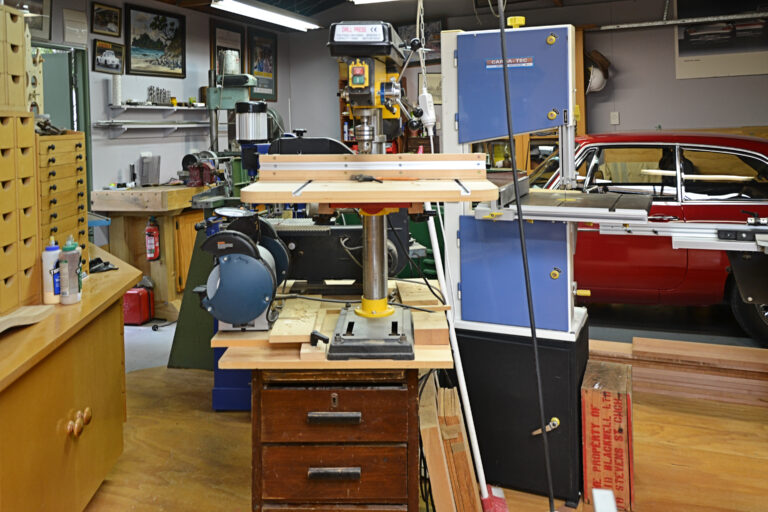
A home workshop is a special place and will function much better if you are able to plan how it is set out. My first workshop was in a single garage which was also the home of a very old Austin 7. As I bought machines, things became a little tricky. It was not that motivating on a winter’s evening, knowing I had to shift the Austin and re-arrange the workshop before I started. Our architect’s major renovation to our home included the redevelopment of my workshop area and from a single garage to a 9 m x 6 m workshop was a massive leap forward, even if it is shared with an MG.

READ MORE »

Woodwork: getting started – part one

Not be too many weeks pass before someone asks me how to get started in woodworking as a hobby. I have had a life-long interest in making or building things but only in the last 20-plus years has my woodworking become dominant. Most people contemplating something in the woodworking area say they have had previous exposure to the craft, but often that was just a brief introduction during their school days.
Perhaps the biggest decision is first to determine that you want to start making something out of wood. Once under way, you will probably move in a particular direction that interests you.
One of the best places to start is at a woodworking hobby class at a local school or polytechnic.

READ MORE »

Metal and wood shelving

No matter how much storage space you have, there is always a need for more. One solution is to make better use of existing cupboards and wardrobes. In my own house the third bedroom is used as an office, so the built-in wardrobe was an obvious target for conversion into a storage place for files and computer supplies.
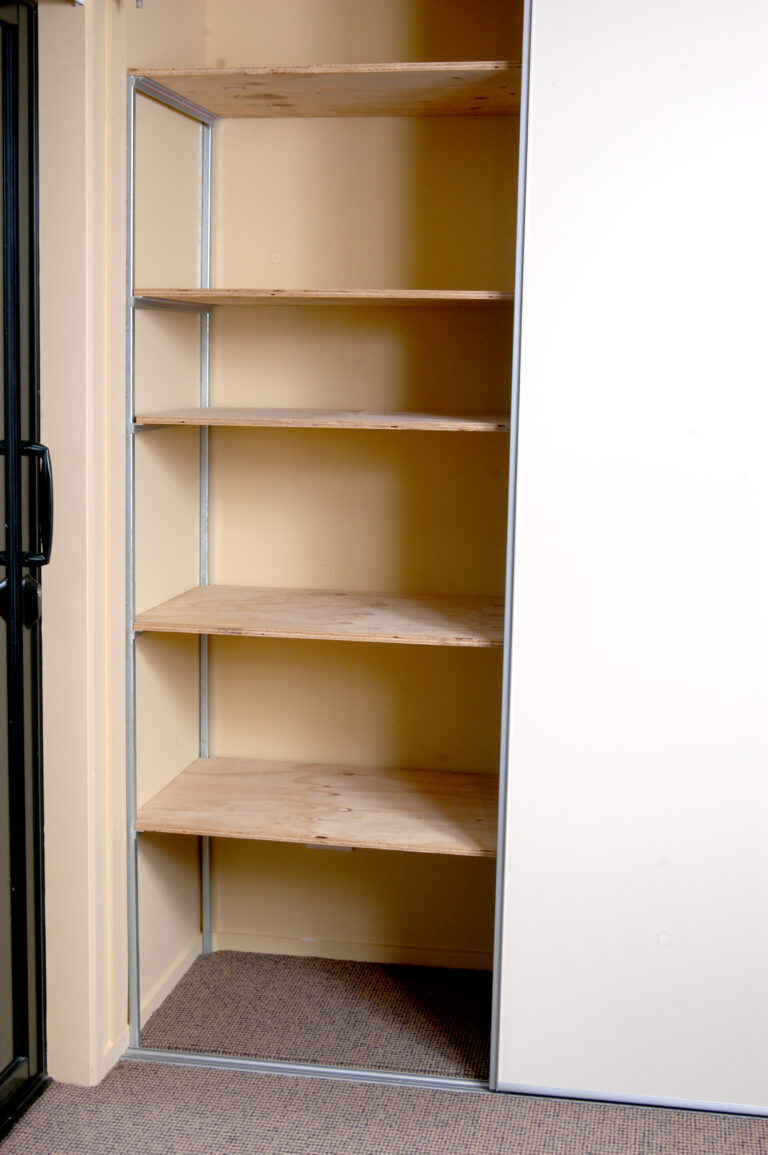
I had already tackled one shelving upgrade. We have a hallway cupboard used for many things that don’t have a place anywhere else, including toys for the grandchildren when they visit. The space was not used well. My solution was homemade shelving using frames of steel with plywood shelves.
For this cupboard, we had to allow for a basket of toys and chillibin on the floor level and picnic items and other bits and pieces on other levels. Once the shelves were installed, better use of space meant more room became available. One of Murphy’s Laws soon came into play and other items found their way into the open spaces, making good use of the variety of shelving.

READ MORE »

Recreating history

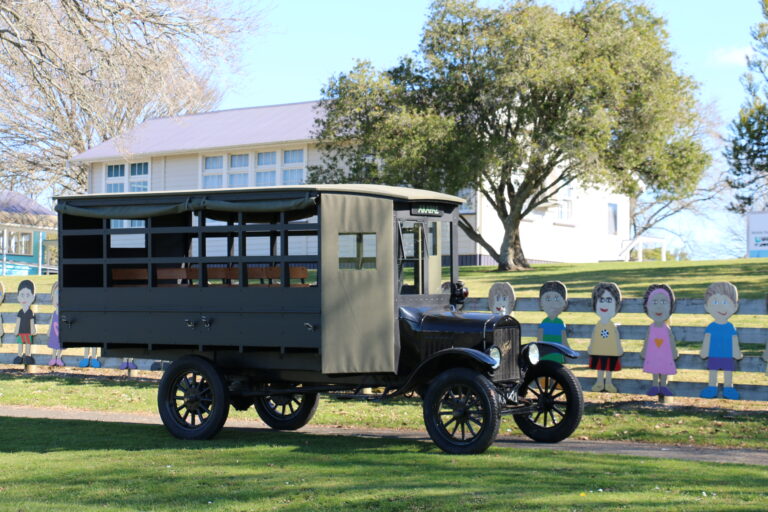
It seems the Phoenix Bus Company was well named, as like the phoenix bird of legend, the new bus has been reborn from the ashes of the old, so to speak.
A former principal of Piopio College, a local boat builder, and the whole community rallied around to recreate the Model T Ford bus, identical to its forebears.
It began when Brian Tegg, an ex-principal of Piopio College, found a 1921 Model T Ford restored transport truck for sale in Auckland and brought it on impulse three years ago.
Realising it was a unique opportunity to transform it into a bus, he got the Piopio College Trust and the local community behind the project.
Local fundraising by the Piopio College Trust, a Givealittle crowdfunding campaign, and support from many local people and businesses made the project happen.
Piopio is a small town of just 400 people but they have pride in their history.
Local boat builder Max Laver became involved in the project, transforming the truck into an exact copy of the early buses.

READ MORE »

It’s good to be square

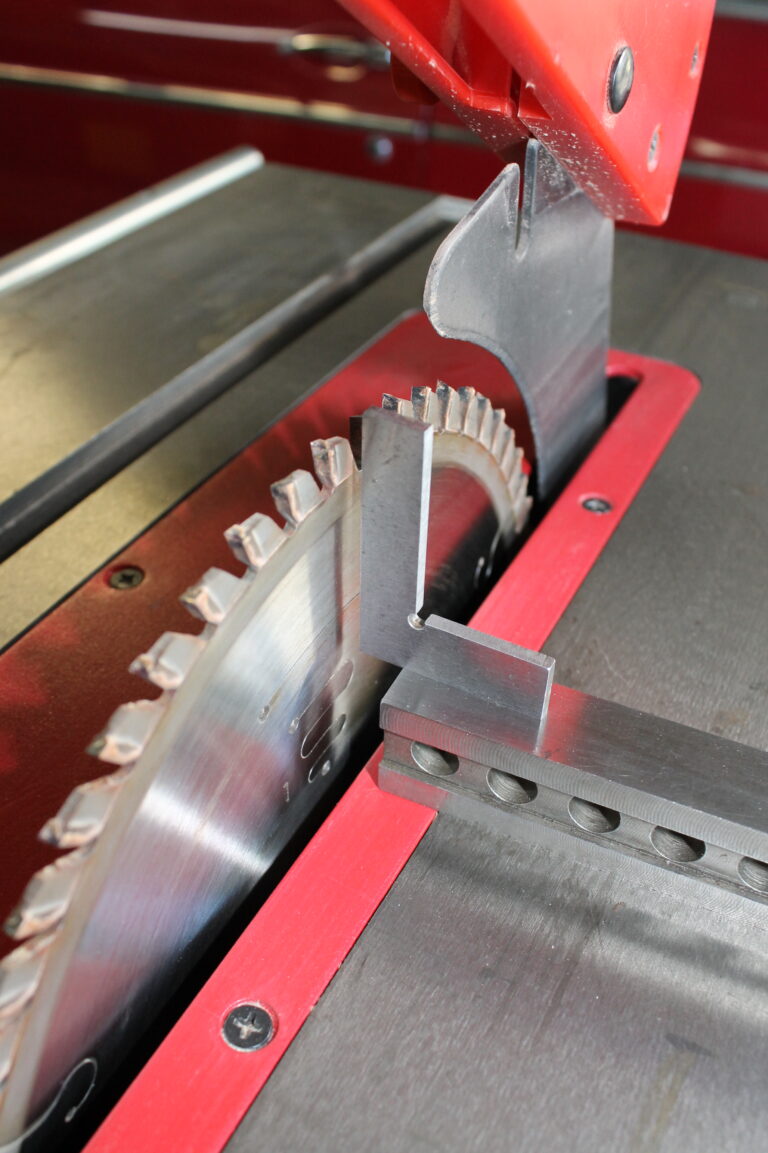
We need a range of squares to use for the many different situations we encounter in the workshop. For instance, we need a square to set up our machines – it is vital that your saw bench cuts square when you want it to. The blade obviously needs to be at right angles to the table and the sliding table or sledge needs to be square. The same for your planer.
The fence should be set square and you should regularly check that it remains square. Imagine the consequences of spending considerable time cutting mortise and tenon joints for fine furniture only to find they fit poorly due to the machined timber not being square. Errors also tend to compound over a project.

READ MORE »

Industrial style at home

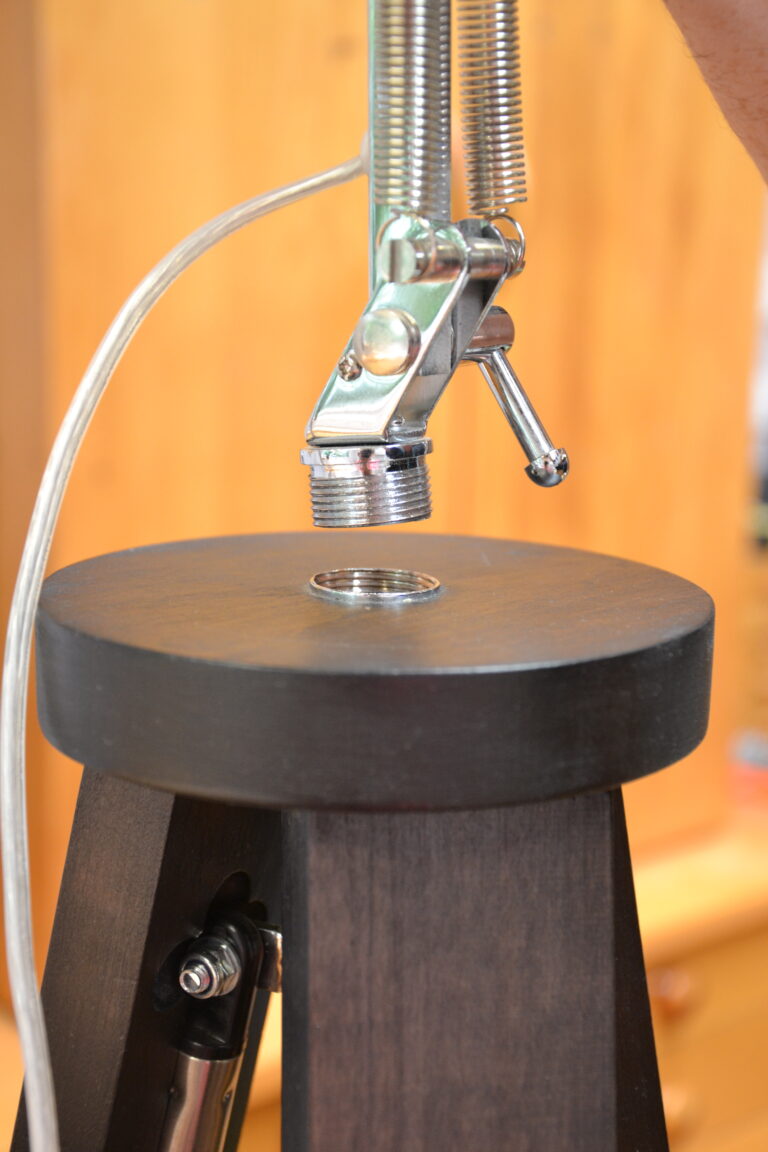
My daughter was looking for a large lamp for her husband’s birthday and struggled to find something with the modern industrial-type of look that she had in mind. She asked me if I could make something around her thinking. She particularly wanted a large tripod base with an adjustable lamp on the top.
We searched around for a suitable lamp for the top and found an adjustable lamp on a spindle base at Lighting Direct on sale for $89.95. We would have preferred a matt black finish but we felt the chrome model would work very well.

READ MORE »

A man of many sheds

Sitting on the edge of a little paddock in the river mouth settlement of Kakanui, ten minutes drive south of Oamaru, is a ramshackle shed where Lindsay Murray creates things of rustic beauty.
The shed has a long history. It was built in 1875 as the house and shop of a nurseryman, George Packwood, who came from Scotland to plant and tend trees around the mill manager’s house in Kakanui.
When Lindsay, an artisan wood worker and sometimes blacksmith took it over in 1993 the back wall had fallen off, half the roof was collapsing and the floors were rotted through in the living quarters. As far as Lindsay was concerned, it was perfect.
It had the remnants of the original dwelling: a kitchen with no running water but with a working coal range, and two other rooms which have served, over the years, as sleeping quarters and a sitting-cum-dining room. This is where Lindsay stays overnight when working on a major project. It also serves as temporary accommodation for visiting artisans and is currently home to Rolands Selis, a highly skilled leather worker.

READ MORE »

Child’s play

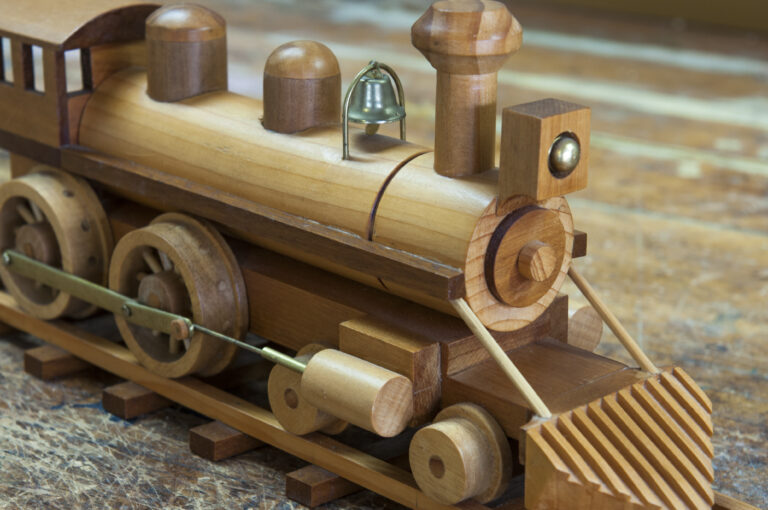
When you are a carpenter by trade with an interest in cars and still young at heart, making wooden toys has to be the perfect retirement occupation—although many of Alan Gray’s “toys” are not the sort of playthings you would put in the hands of small children. His meticulously crafted vintage vehicles, fashioned mostly from native timbers, mahogany and macrocarpa, can take around 60 hours to make and are more collectors’ pieces.
To keep the real kids happy, he has a more robust range mostly made from pinus radiata— diggers, trucks, pull-along hippos and the like.
Alan, 71, and his wife, Lesley, have been living in Cromwell for the past six years. Originally from Dunedin, Alan trained as a carpenter but turned his hand to fishing after moving to Stewart Island. He then spent the best part of three decades skippering boats for the Department of Conservation.

READ MORE »

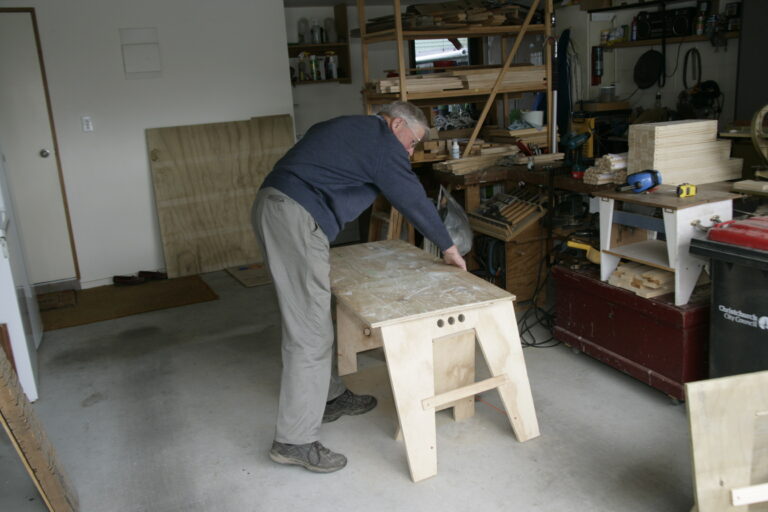
A movable bench with fold-away legs

Before I down-sized my workshop, I had a garage workshop area and plenty of room to have the traditional type of sawhorses or saw stools. Now I have just half of a double-garage which means the stools have to be stored out the back in all weathers.
I was looking at a sheet of 16 mm ply that was 1200 mm square and could see it would make two stools that would fold away flat and could be stored inside. They wouldn’t take up space standing permanently in the garage/workshop and they would need very little room folded away.

READ MORE »

Waka building – Tradition goes hi-tech

Architect, designer, sailor. Add lateral thinker, enthusiast and passionate Kiwi to the mix and you have the CV of a Christchurch man who has made it his mission to put Maori waka back on the water by marrying traditional knowledge with today’s technology.
Quentin Roake’s goal is to find a way to build waka in numbers, recreating the appearance and characteristics of traditional craft in a modern version that is portable, durable, and economical to manufacture.
“The big question is, how do you translate the traditional form of canoe into modern materials? You can’t cut down a big totara tree every time you want to make a canoe,” he says.
Quentin’s quest for a solution involved consultation with tohunga waka (canoe experts), including Hoturoa Barclay-Kerr and Sir Hekenukumaingaiwi (Hector) Busby, and led to Nga Waka Tangata kaupapa, a collaborative project to develop contemporary forms of waka.

READ MORE »

Building a potting shed

Among small buildings you can create without council building consent, a potting shed is very handy. The fact the builder agreed to put up this structure to get the gardening tools out of his shed is another story.
If you can possibly choose a flat site, do so. In this potting shed, the only site available was on a hill which meant a fair bit of work for the builder because of the extra labour and time.
Then in order to avoid the need for a building consent, measure the site up to ensure the 10 m2-or-less potting shed is no closer to the boundary or to a dwelling than its own height. In this case, the boundary is nearby but there are no dwellings close by to worry about. Here the original idea was a three-metre long building but it had to be shortened to 2.1 metres because the boundary was closer than first thought.

READ MORE »

Tricks of the trade

Philip King was employed in insurance when he decided he wanted to work with his hands. So he joined furniture manufacturer and restorer C.F. Neary Ltd before starting his own business under his house in Remuera in 1991. Soon afterwards he moved to a commercial building in Marua Road, Ellerslie, Auckland, where he now owns two units and employs four staff.
This period has seen dramatic change in the antique furniture world. The appearance of very cheap new furniture from Asia has seen both substantially lower price expectations and the demise of many New Zealand manufacturers, which has been reflected in falling antique furniture values.

READ MORE »

South Island sawmiller

The smell of marcocarpa and scream of saws greets visitors to a family-run sawmill up a valley behind Motueka where Lloyd Knowles specialises in making one-off timber products, often with intricate profiles, for do-it-yourself builders, renovators and furniture-makers.
“We make a whole range of stuff from weatherboards to architraves, as well as replica mouldings using different profiles. We just make a pattern to fit whatever they want. Negative detail is the flash term,” says Lloyd, who runs the business with his wife, Diane. Most requests for bespoke work come from Golden Bay and Motueka.

READ MORE »

Making the cut

Sentimentality and chainsaws don’t usually go hand in hand but Dave Neame uses the machines not to massacre but to preserve pieces of wood for posterity.
The long-time logger, who is based in North Canterbury, uses his prowess with a chainsaw to mill trees into slabs that can be turned into furniture, kitchen benches, or used as building features.
“I get approached by people who’ve got trees that have sentimental value and they want more than firewood or mulch out of them. I come and mill them up and they can get made into something that becomes a family heirloom.”

READ MORE »

Wood fan by name and by nature

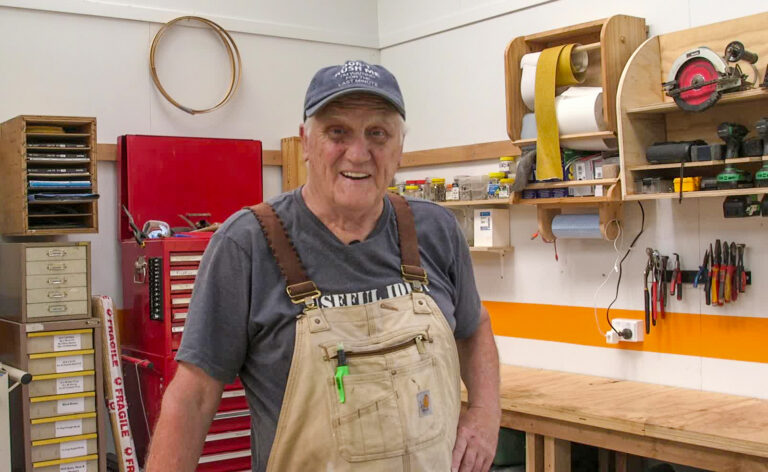
Brian Woodlands is semi-retired now but in his shed in south Australia he can proudly show off the samples from his joinery trade, the machines that supported his livelihood, the dozens of wood samples he collects, his antique hand tools and the rustic shed where “I have done some big stuff in this small workshop over the years.”
While the wind can come visiting through the spaces in the walls and open door, there is a cosy fire in an inner-room of the old-style country building and yarns aplenty to warm up the shed with an animated atmosphere.
“I was born here in the Adelaide Hills. My grandparents lived here in this district pre-war [World War Two] and my mother and father lived in the wattle-and-daub cottage over the road,” Brian says.
“In 1968, I took up an apprenticeship as a carpenter and joiner when I was 14 years old. I was not that rapt in school. As an apprentice you had to sacrifice wages to train but by time you were 18 or 19 it was good money. Today, apprentices start too late because they turn to the money first and it’s better early to be working at McDonald’s.”

READ MORE »