Projects

Hot stuff in Taranaki

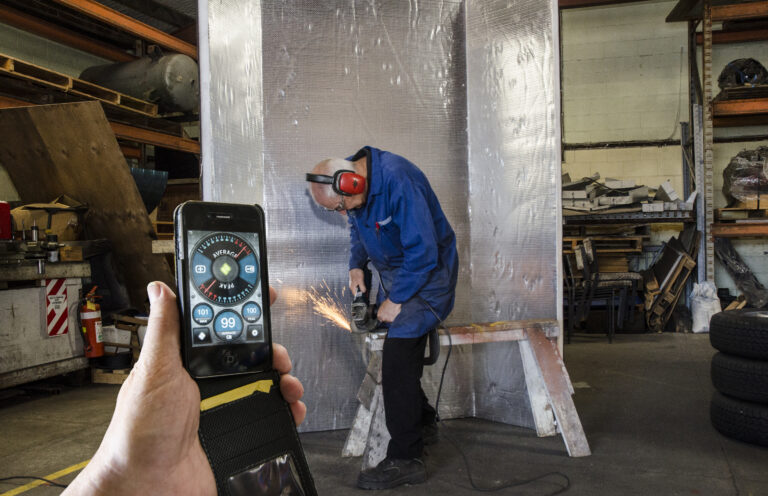
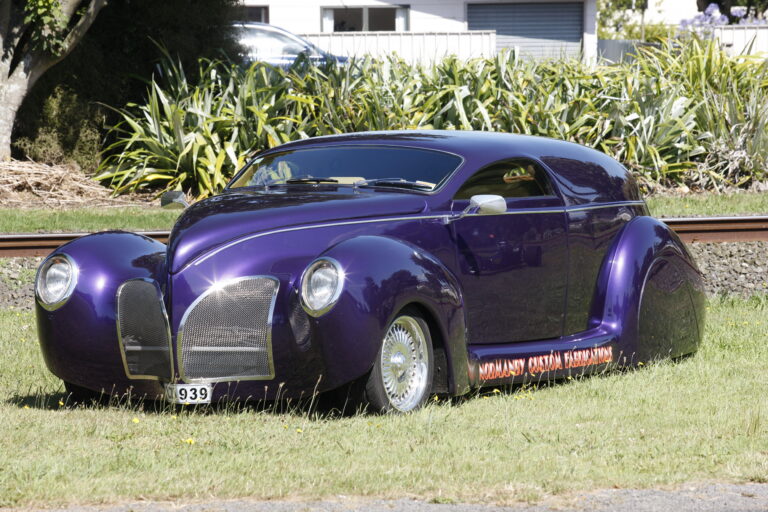
Hot rods – we see them rumbling round the highways and byways, big V8s burbling, immaculate finished body and paintwork and obviously someone’s pride and joy. Many people don’t realise the work that goes into customising one of these gleaming machines. Some are old cars reshaped and rebuilt, and some are made from scratch, often using the classic designs and lines of cars built in the 1920s, 30s and 40s.
In the little town of Normanby in South Taranaki there’s a workshop set up to create these beasts. We caught up with guys from three businesses in a row having smoko together. An upholstery business, a custom fabrication shop and an engineering shop. All mates who work in together in a way that can only happen in a small town.

READ MORE »

Making a workshop bench video

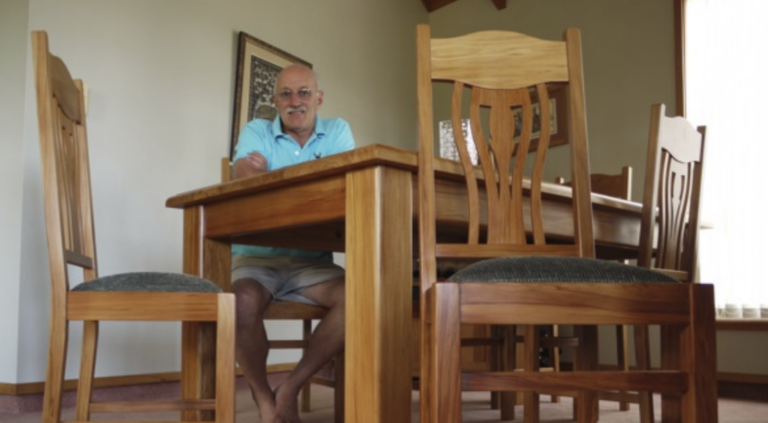
Every shed needs a utility bench, and most sheds usually have one or two.
It’s a place where things can be worked on or stored. I have built a few recently, and I have developed a simple process that makes the process quite easy and results in a sturdy workshop asset with space for storage.
The advantage of this design is that it doesn’t require good, straight timber. In fact, I often buy very cheap, knotty 2nd or third grade timber from my local sawmill, who specialise in Macrocarpa. I can get long lengths, but they are rarely straight or twist-free. Sometimes I can get relatively straight pieces, or I can find 3 metres or so in a 4-5m length. For the most part, you can usually find enough pieces of around a metre that are relatively straight.

READ MORE »

Hobbit haven

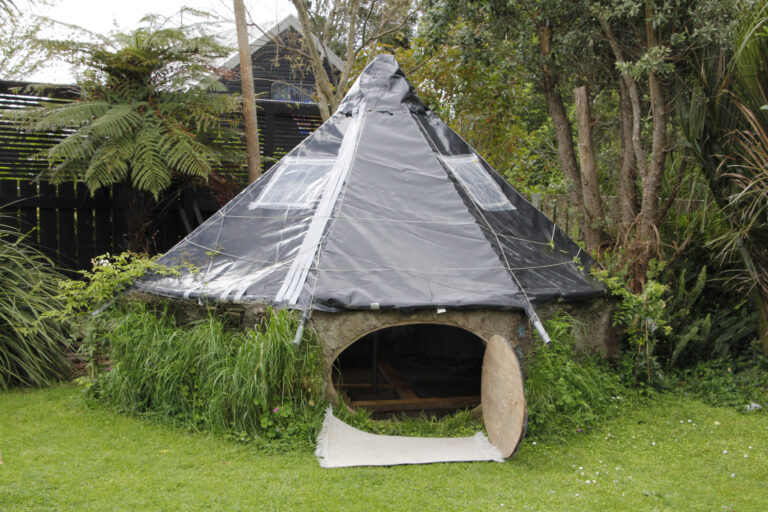
I have made a hobbit house for my kids almost entirely from recycled materials and left-overs from building a garage. The frame is an old trampoline. It is 3.2 metres wide (this depends on the size of your trampoline ) and 2.3 metres high at the apex. I can stand in it easily. The poles that were for the side of the trampoline had holes at the top so by the time I lashed them all together it was incredibly strong.
I made the walls out of an old pallet with a couple of bigger bits of driftwood on top. We mudded the walls with a mix of dirt, grass and a little cement until there were no more holes and then patched as needed. I used all kinds of recycled wood that would fit. We have added more layers as needed or as bits fall off. The walls are probably about 100 mm thick on average but up to 150 mm in places and we have added paper in the middle for extra insulation.

READ MORE »

Racing motorcycles – the art of engineering

Chris Gordon has been devoted to the internal combustion engine since his earliest days, when his next-door neighbour was a motor mechanic.
At 14, he was a crew member for Ron Collett, who successfully ran a Top Eliminator class dragster at strips throughout New Zealand. His Chris Gordon Racing Team won the 1998/99 125cc New Zealand Road Racing Championship, with well-known rider Dennis Charlett riding a Honda RS125 that Chris owned and prepared. Chris and his team ran the bike in the 125cc class at the Australian MotoGP at Phillip Island in 1999.
Chris has also, from a very early age, made things: models, an electric bicycle, an electric go-kart; a fibre-glass, road-registered, scratch-built car; and a 500cc V8- powered grand prix racing bike. He has a minimalist approach to tools and equipment, but to make the racer’s V8 engine, he had to buy and master a small lathe and a serious, large and highly capable milling machine. The alternative would have been to get the machining and development done professionally. Chris calculates that this would have involved thousands of hours of very expensive machine time – say, 3000-plus hours at $100 per hour. That’s a lot of money.

READ MORE »

Choppers with pedal power

Geraldine High School technology teacher Alan Minnear built pedal-powered choppers with his Year 11 students because he wanted something to capture their interest. He says he initially got the idea for the choppers from another local teacher but then discovered the Atomic Zombie website (www. atomiczombie.com) which opened his eyes to possibilities with the clear instructions available. He paid for and downloaded the PDF files for the two choppers named Vigilante and Overkill that caught his eye.
Because of their relative inexperience, the students basically followed the book for the choppers they built. However, the book gave no measurements, wanting builders to create their own design from the basics.

READ MORE »

On the move

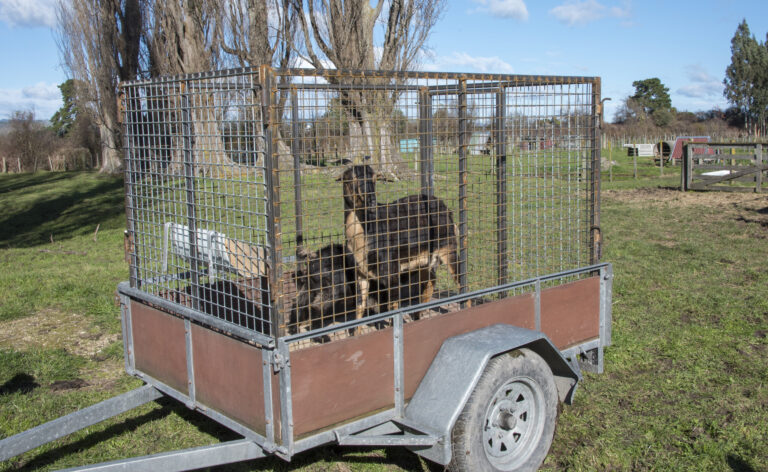
Farm life, even on a pocket-handkerchief farm like mine, means that you will need to move stock from time to time. I run a few cattle beasts and a few goats. I plan to get a few sheep soon, too. The issue with stock is moving them. Moving the cattle is a different story but for the smaller stock I could carry them either on the tray of my ute or my trailer if either had a stock cage.
I decided that building a cage could be an easily achievable project and so it has proved. It has value even if you don’t have stock – it certainly increases the options for your trailer. It is a lot easier collecting firewood with a cage, even transporting rubbish, or green waste. In the case of the latter you might want to make the end hinged rather than incorporate a gate to make it easier to unload the waste.

READ MORE »

My shed the barn

Capacity is always the issue. My two sheds at home were each at their limit. I had woodwork in one and a one-off car suffering fabrication right on top of it in another.
When it came time to plan a new house on the new section, I thought of a barn-sized shed. In this barn, I would build all the joinery for the house. But first I had to build the barn.
I had a design that had been kicked around for ages and required a giant leap forward in capacity. This barn as my workshop would have good height, tall openings, a range of areas for different tasks and that all-important swing room around the main machine, a multi-function dimension saw.
Like other glimpses I enjoy of by-gone eras, I have always loved those English “oak barns” typically housing Aston Martins in magazines portraying classic cars. The vision I had for my barn was of posts and beams and the roof crouching over long flanks, suggesting back rooms filled with the rare and the useful.

READ MORE »

Metal and wood shelving

No matter how much storage space you have, there is always a need for more. One solution is to make better use of existing cupboards and wardrobes. In my own house the third bedroom is used as an office, so the built-in wardrobe was an obvious target for conversion into a storage place for files and computer supplies.
I had already tackled one shelving upgrade. We have a hallway cupboard used for many things that don’t have a place anywhere else, including toys for the grandchildren when they visit. The space was not used well. My solution was homemade shelving using frames of steel with plywood shelves.
For this cupboard, we had to allow for a basket of toys and chillibin on the floor level and picnic items and other bits and pieces on other levels. Once the shelves were installed, better use of space meant more room became available. One of Murphy’s Laws soon came into play and other items found their way into the open spaces, making good use of the variety of shelving.

READ MORE »

Forging ahead – take a knifemaking class

Knifemaking has undergone a resurgence in the past few years. It may be the fact that it requires only a modicum of equipment. You only really need a file and gas torch.
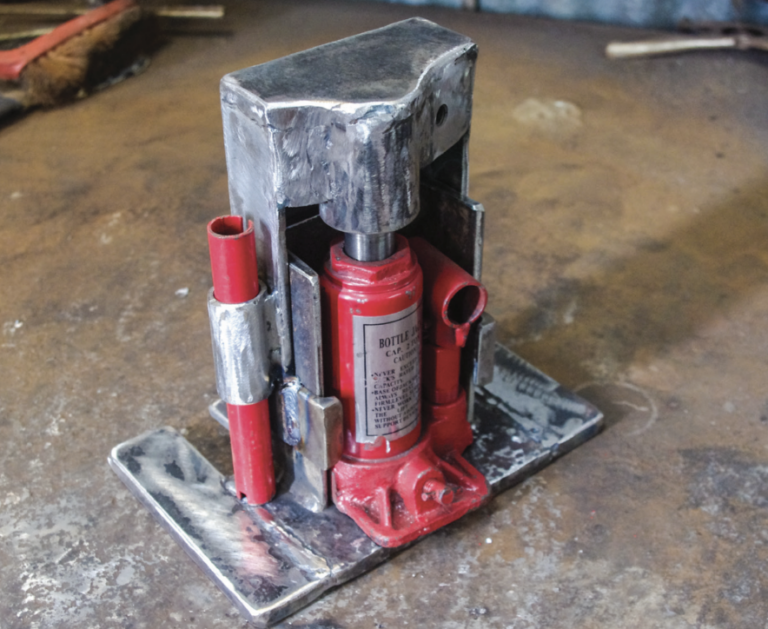
Of course the more elaborate the knives you make, the more gear you will need but this is one of those hobbies that can grow with you. Naturally, having a forge, some sort of anvil – even if it is only a lump of hard steel or a bit of railway line, a grinder, and a hammer will extend your options and none of these are particularly expensive. There are a number of knifemaking classes springing up all over the country to cater to this interest. Shea Stackhouse runs classes in basic knifemaking, making Damascus steel and blacksmithing

READ MORE »

Simple bins

Many black plastic bins from the hardware shops don’t allow enough air through or are only big enough for postage stamp-sized sections or blocks of land.
I make my own compost bins. Now that might seem fairly easy, but how many compost systems either take a huge amount of effort, or produce something reminiscent of milking-shed sludge? These bins require very little intervention besides putting stuff in.

READ MORE »

On the move

Moving machinery and heavy items around the workshop is a common job for most sheddies, especially those with an addiction to Victorian-era cast iron.
While using a bar or pipe for rollers works, as shown by the builders of the Egyptian pyramids, they won’t work if you have feet or obstructions, and are difficult if you are working by yourself.
Load skates are small, heavy-duty roller skates that fit under the load and you will generally need a set of four. This load skate is made from 100x50mm steel channel with rollers made from 40mm pipe with ball bearings. The bearings are cheap 6004RS model bearings which are a snug fit into 40mm pipe, and cost $2-3 each from online suppliers.
As this project was built out of materials to hand, I only had tapered flange channel so I used my horizontal milling machine with a side and face cutter to remove the taper.

READ MORE »

Getting a grip

I’m currently making a mould for a rotational moulded boat. It’s a complex project with barely a square angle in it and dozens of folds and welds. It’s the sort of job that requires precision and the often needs more than two hands.
Clamps are useful but they are usually fiddly and can have a tendency to slip at the last moment especially where there aren’t any flat even surfaces to get a purchase on. So I wasn’t expecting too much when I was asked to try the Strong Hand utility clamps.
They are lighter than cast clamps so I had some doubts that they would have the clamping strength I needed for the more difficult pieces.
I was a bit dubious about the sliding action, too. It’s unusual to use sliding F-clamps in engineering but I’ve seen them used in boat-building and woodworking.

READ MORE »

Letting off steam

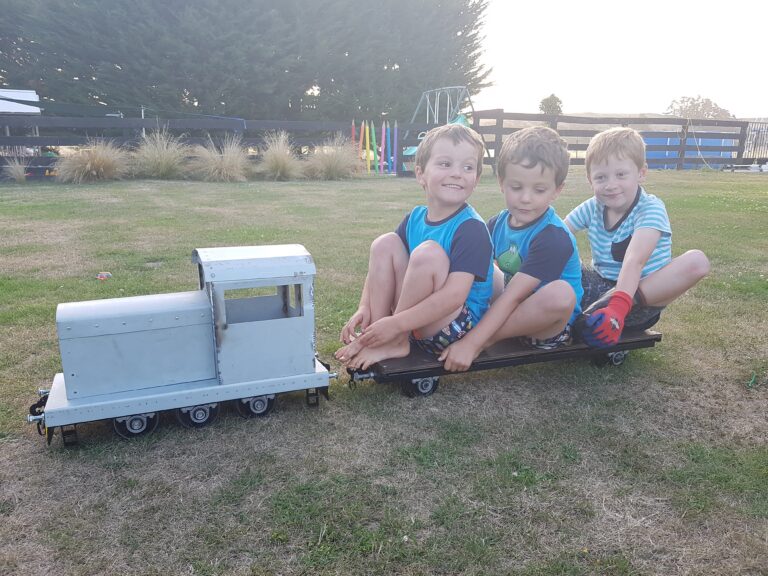
“Steam is the only way to go,” says Win Holdaway, a Blenheim-based enthusiast who builds working models from scratch in his backyard shed.
Over the years, Win has spent thousands of hours constructing immaculate scale locomotives, including an 1870s’ Baldwin Standard TE, BR standard class 9F, and a Burrell Special Scenic Showman’s road locomotive. He is currently working on an inch-and-a-half scale 1925 Pennsylvania A5S 040 switcher, complete with tender. “It’s one thing to make a model that looks authentic and another to make it work,” says Win, whose working models can all hold 90-100lb of steam.
Win reckons he spent around 5000 hours building his Burrell Scenic Showman’s road locomotive alone. It is fittingly named Lynette after his wife. While he probably spends more time in his shed than the house, she is his greatest supporter. “It’s more than a hobby. This is his life,” says Lyn, a legal annotator who knows the importance of precision.
“I’m out here most days,” admits Win who, if not in his own workshop, can often be found down at Brayshaw Heritage Park with fellow model engineering enthusiasts.

READ MORE »

Build an Almost Ready to Fly Warhawk

Then there is the relatively new kid on the block: the ARF (Almost Ready to Fly) model.
These come all packaged up in a huge box, beautifully built and packed, with all the hardware. But you do need to assemble them which can take up to a week. It isn’t quite ‘instant plane’ but it does provide some building satisfaction and a sense of achievement, albeit a rather shallow one, a bit like a healthy walk down to the bakery to buy a pie or taking Viagra.
To the supplied kit, you need to add various glues, an engine and electrical components (servos, relays, wires) to operate elevator, rudder, ailerons, throttle, flaps, undercarriage etc. The engine these days could be glow plug, 4-stroke or 2-stroke, electric or petrol.
This part of the hobby is now huge and the range and quality of products is astounding. ARF aircraft kits are readily available from many hobby shops and certainly online from within New Zealand and from lands far away.

READ MORE »

Industrial style at home

My daughter was looking for a large lamp for her husband’s birthday and struggled to find something with the modern industrial-type of look that she had in mind. She asked me if I could make something around her thinking. She particularly wanted a large tripod base with an adjustable lamp on the top.
We searched around for a suitable lamp for the top and found an adjustable lamp on a spindle base at Lighting Direct on sale for $89.95. We would have preferred a matt black finish but we felt the chrome model would work very well.

READ MORE »