
Hammering history

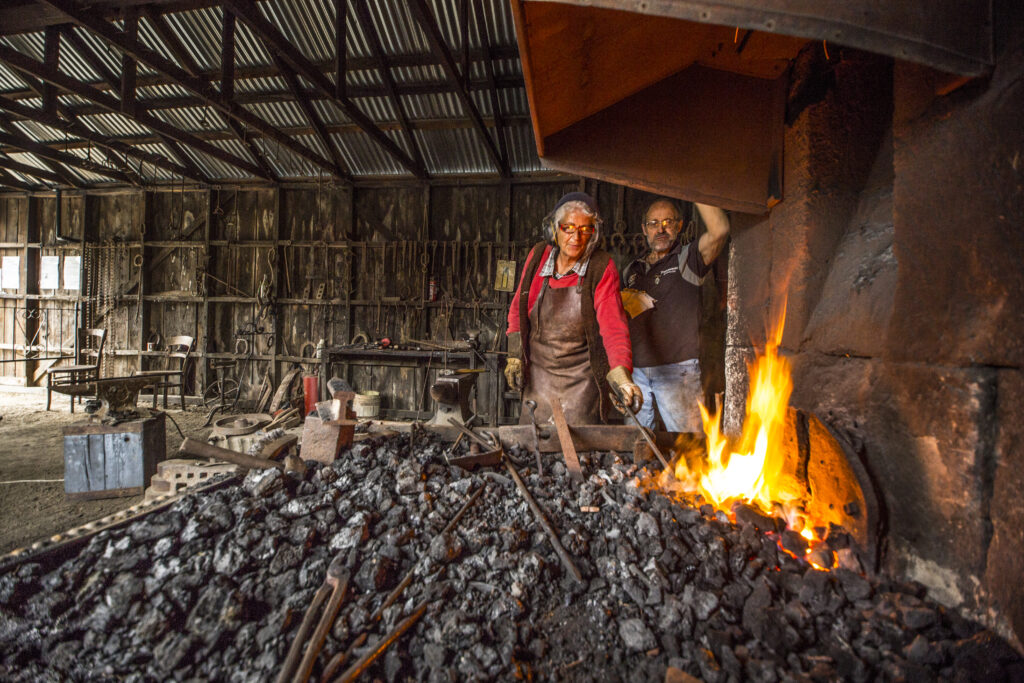
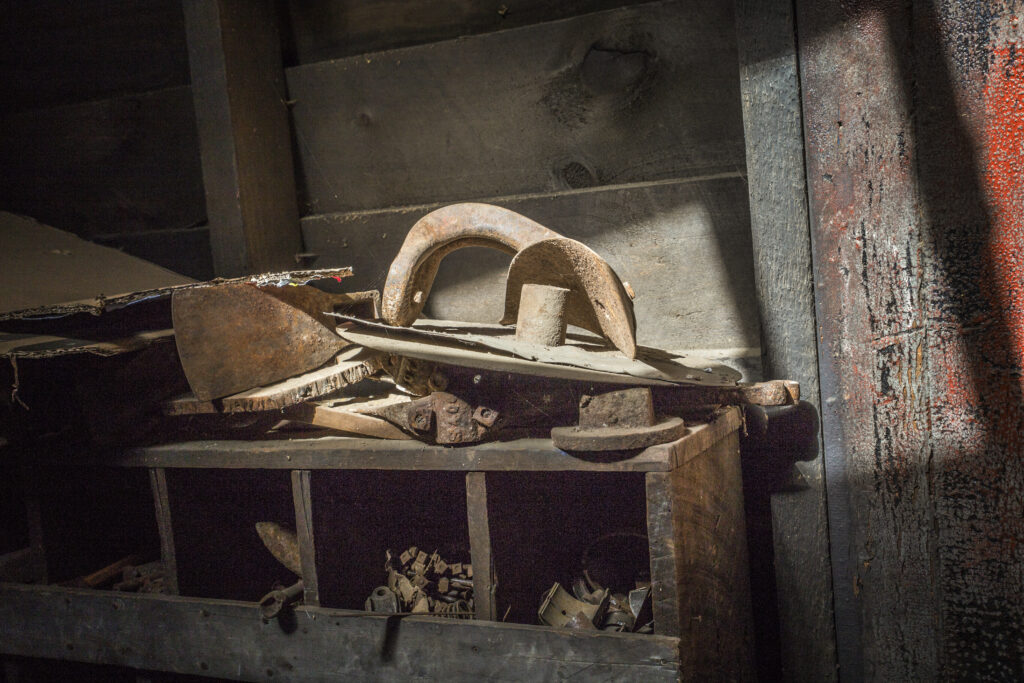
You can probably count on the fingers of one hand the number of Kiwi women who have become blacksmiths in their 60s. Judy Waterston of Livingstone, inland North Otago, is one of them. As a child Judy spent hours in her engineer-father’s workshop sorting nuts and bolts, tidying away his tools, sweeping up, and watching him make things. She says her love of tools and machinery came from her dad. The blacksmithing seed was sown in 1972 when Judy first saw Nicol’s Blacksmith Shop in Duntroon, some 40 km from Oamaru up State Highway 83. The building was being devoured by periwinkle planted 100 years before to act as a fire retardant. Most of the windows were smashed and it was draped in cobwebs. “I looked through the broken windows and when I saw the anvil and bellows they took my breath away,” she remembers. “I’ve loved this building ever since.”

Volunteers ensure an original Smithie flourishes as a rare snapshot in time
By Nathalie Brown
Photography: Derek Golding

You can probably count on the fingers of one hand the number of Kiwi women who have become blacksmiths in their 60s. Judy Waterston of Livingstone, inland North Otago, is one of them. 
As a child Judy spent hours in her engineer-father’s workshop sorting nuts and bolts, tidying away his tools, sweeping up, and watching him make things. She says her love of tools and machinery came from her dad.
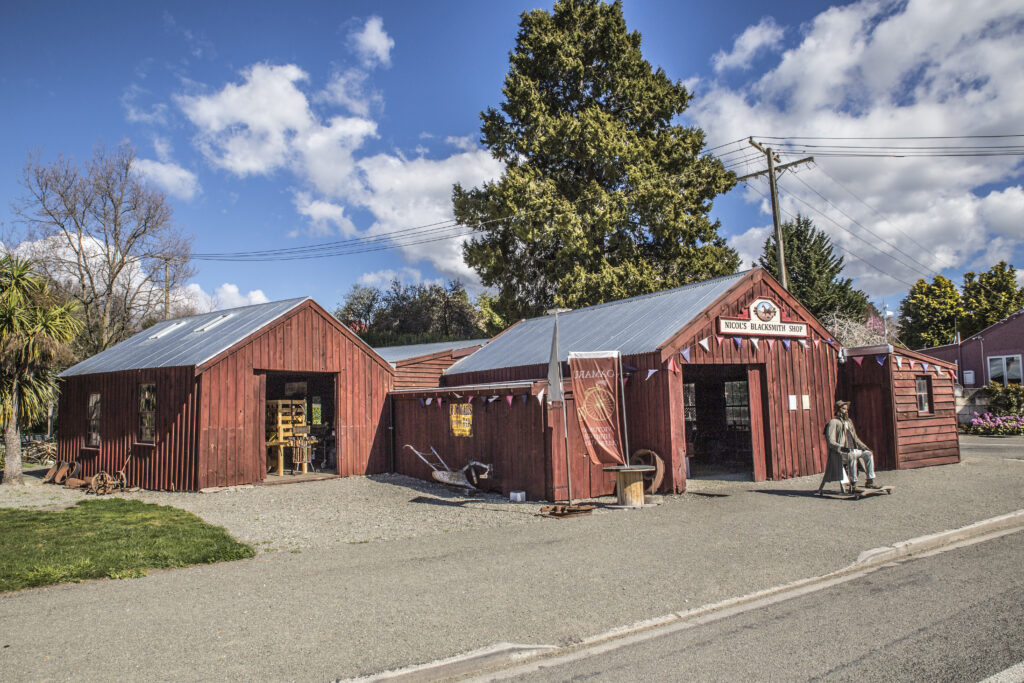
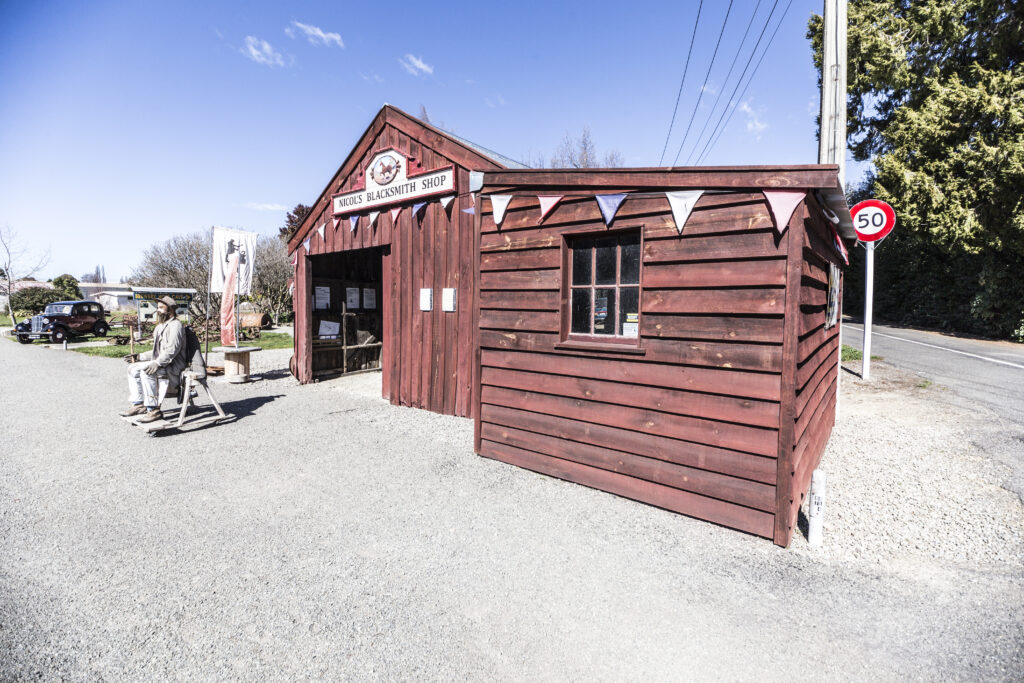
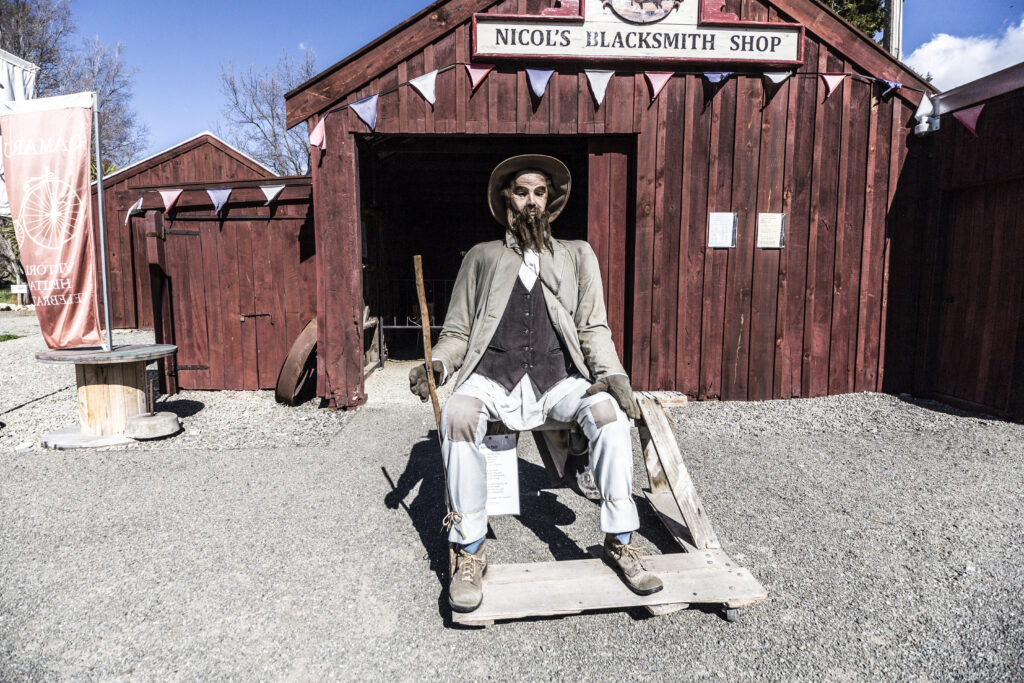
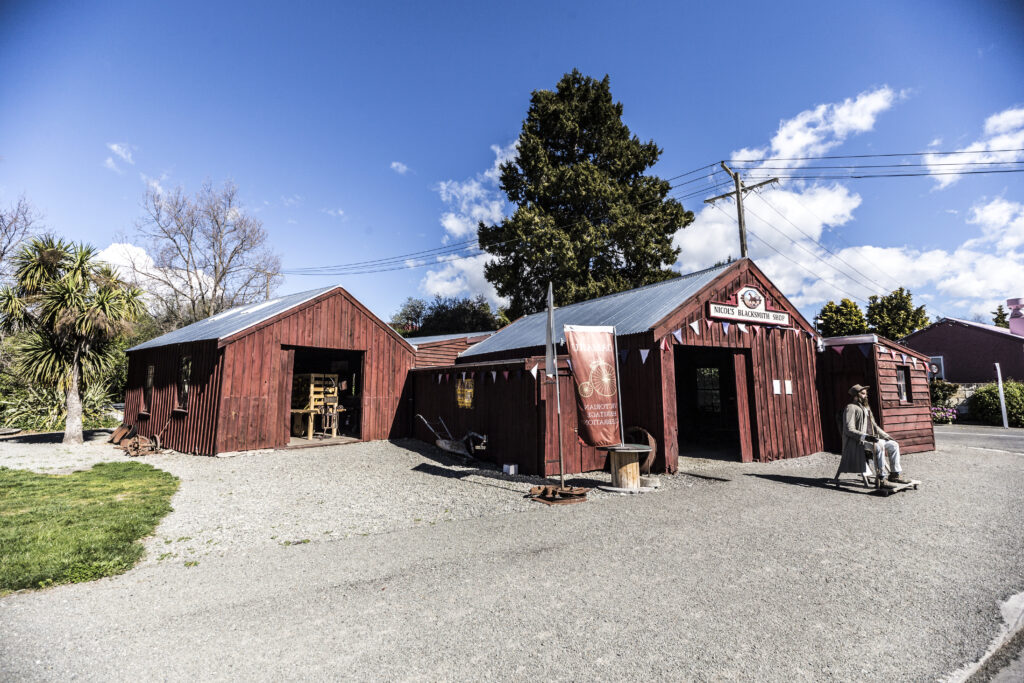
The blacksmithing seed was sown in 1972 when Judy first saw Nicol’s Blacksmith Shop in Duntroon, some 40 km from Oamaru up State Highway 83. The building was being devoured by periwinkle planted 100 years before to act as a fire retardant. Most of the windows were smashed and it was draped in cobwebs.
“I looked through the broken windows and when I saw the anvil and bellows they took my breath away,” she remembers. “I’ve loved this building ever since.”  

Nah, that’s bloke’s stuff
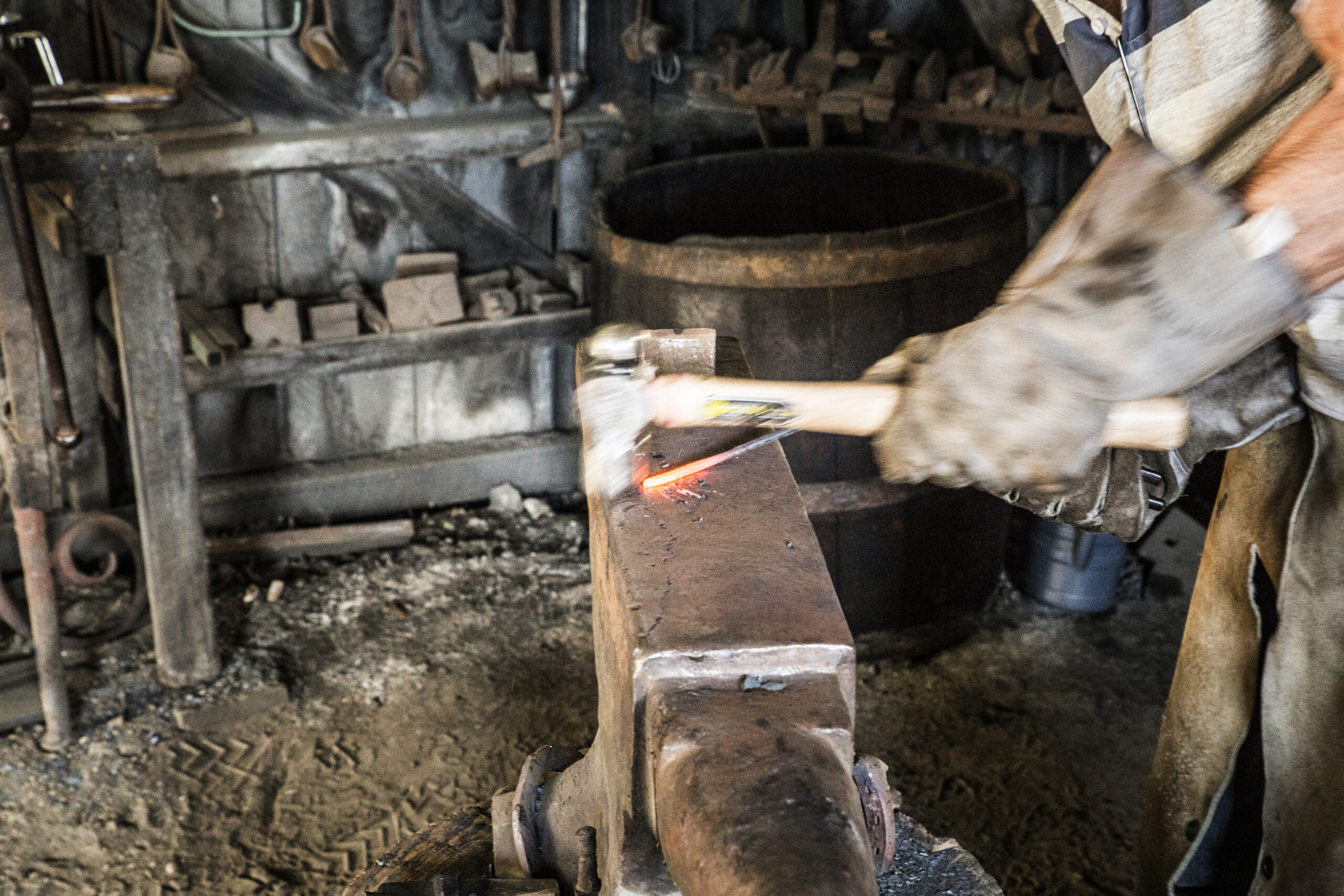
Two or three years later, when the smithy faced the threat of demolition, four local farmers stepped in to buy the building and all its chattels. Then, in 1984, when the forge had been cleaned up and was open to the public as a static display, Judy ran a small arts and crafts shop in front of the building seven days a week. People would wander in, and she’d tell them a bit about the history of the place and sell a few items. When friends suggested she should work the forge she waved the idea away. That was bloke’s stuff, she’d said. 
“But one day I had a go and it was fantastic! As soon as I started hitting hot metal with a hammer, I was sold on the idea. I forged there for a while, but I had no real idea where to start because girls weren’t accepted in metalwork classes at school in my day. Then I approached Noel Gregg, a master blacksmith who was at the Arts Centre in Christchurch at the time. Up to that point all I was doing was making pokers, but I got an Arts Council grant to learn different aspects of blacksmithing from him.”
She spent a few months under Noel’s tutelage but forsook blacksmithing for office work because she needed to earn a living, and it took her 20 years to escape the city and return to North Otago, near Duntroon. 

Forging ahead
Some time after her return, the four farmers who had bought the forge in 1975 decided to form a trust which would allow them to apply for the grants they needed to fully restore the smithy. Nicol’s Blacksmith Historic Trust was formed In December 2006. The idea was to create a heritage attraction, providing visitors with the experience of a working forge. 
Says Judy, “Ten years after that, having finished the restoration, the trust threw Nichol’s Blacksmith Shop open to the community and said – ‘Okay, what are we going to do with it?’ 
“We had a meeting and got about 12 volunteers, ranging from their 40s to 70s,  who were prepared to come and learn forging. I was a bit hesitant at first, not sure I had the physical strength to do it. However, as soon as I started pumping the bellows and the fire was surging I thought, ‘Yeah … the passion is still there.”

Teaching blacksmith skills
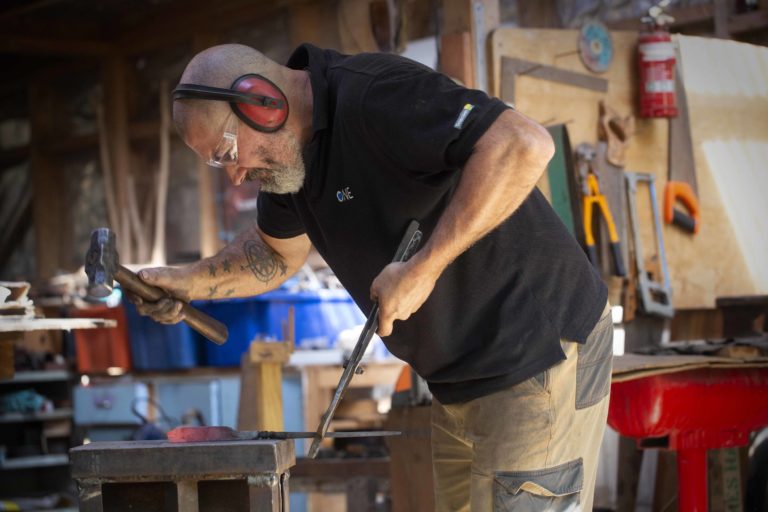
Judy is one of the volunteers rostered on over weekends. Last year, several North Otago tutors – all of whom are artisans in their own right –  conducted workshops to teach the volunteers specific skills. Dave Hamer, a retired master blacksmith, still teaches most of the blacksmithing while Lindsay Murray (see The Shed 16 Dec/Jan 2008 for an article on Lindsay)  was the tool-sharpening tutor, and his son Will taught knife-making. Dugal Armour handled the copper-smithing.
Judy finds she learns better watching rather than by working alongside a tutor. “I’d rather do it in private. We had a couple of men come in to demonstrate welding a while ago and I’m really keen to do some by myself.”
An engineering firm in Oamaru provides the trust with mild steel and they scavenge through scrap heaps for the high- carbon steel from old car springs. Some time ago Nicol’s Blacksmith Shop put out a call for the straight, thin, fencing standards made from wrought iron.
“The standards are different from the mild steel. They’re quite hard to work because the wrought iron is layered, and if you don’t get the heat right it de-laminates. While the blokes handle it well, I find the wrought iron hard work on the anvil because it’s so thick,” she says.

Moving with the times
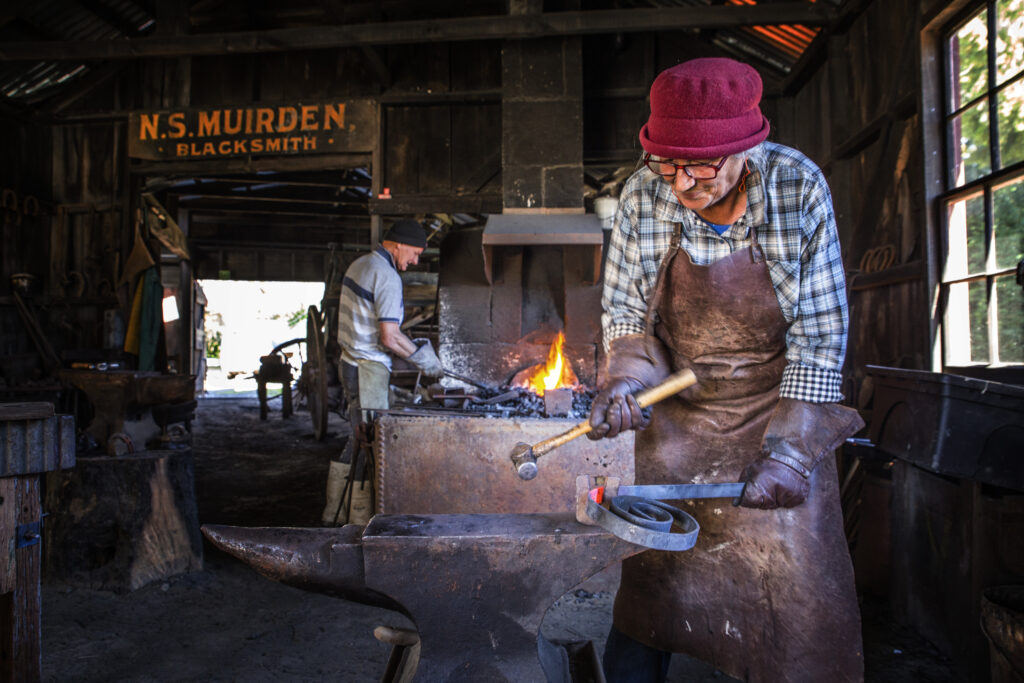
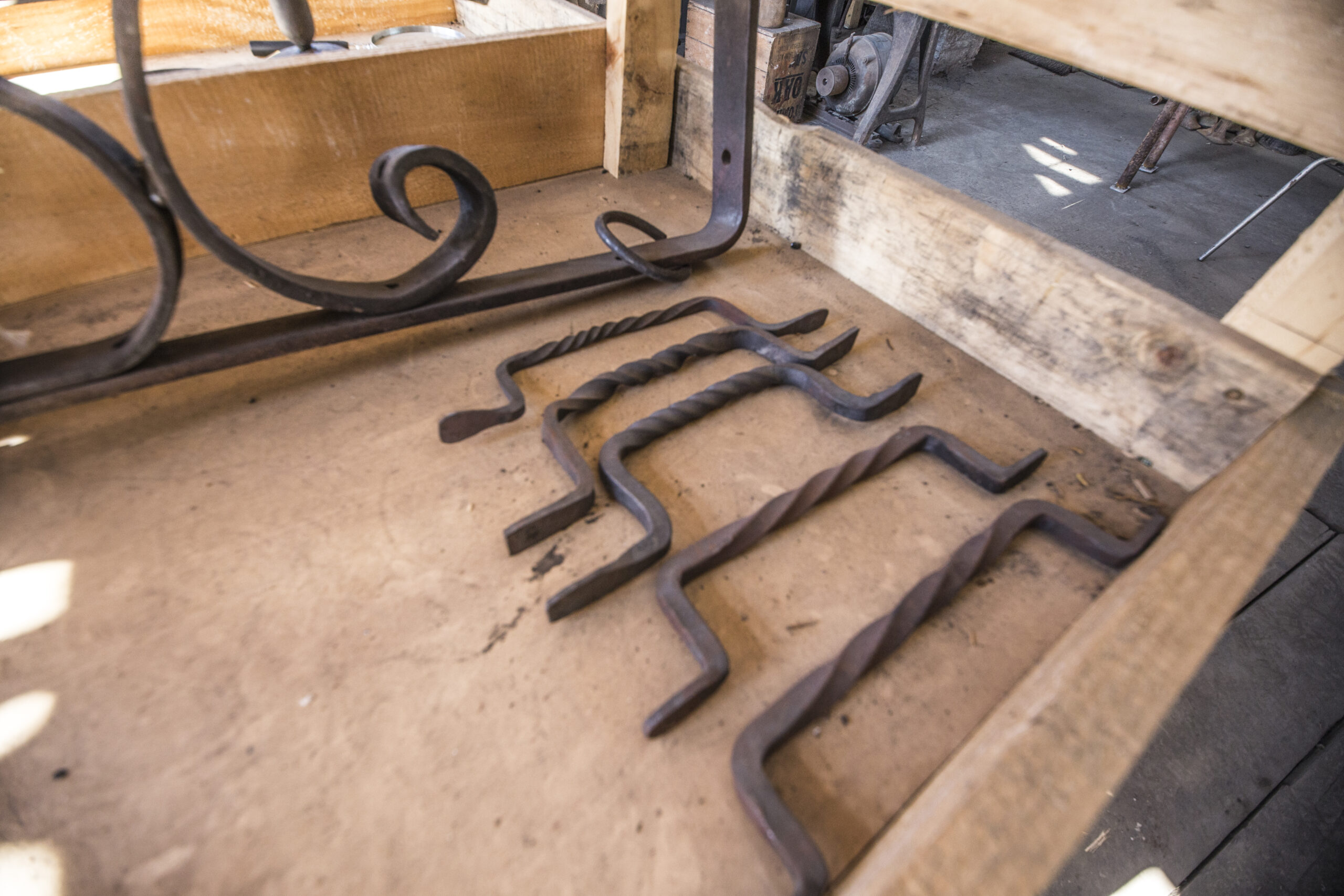
The purpose of restoring the forge is to capture a slice of time, but the most regular work a blacksmith did in the old days was shoeing horses. It’s very rare for people to bring horses in to be shod these days. Instead, the farriers use a small portable gas forge, so they can shoe the horses in their paddocks, and the blacksmiths at Nichol’s forge make things like trowels and trivets, pokers, and garden tools.
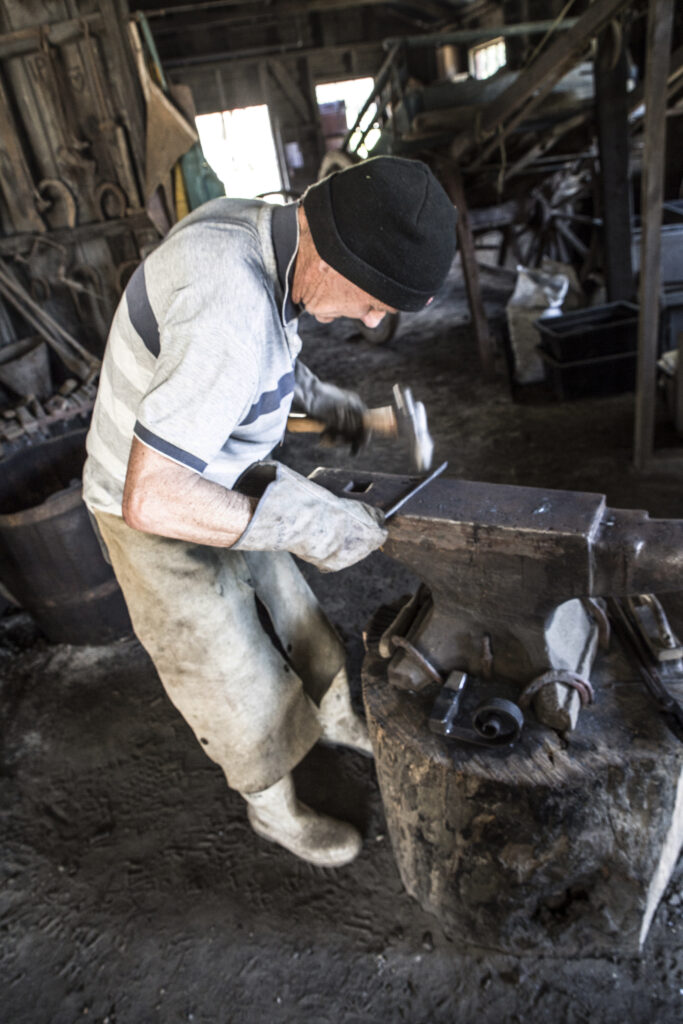
No matter what you’re making as a blacksmith, says Judy, the work is strenuous and dirty from the earthen floor, the coal smoke, and the sweat.
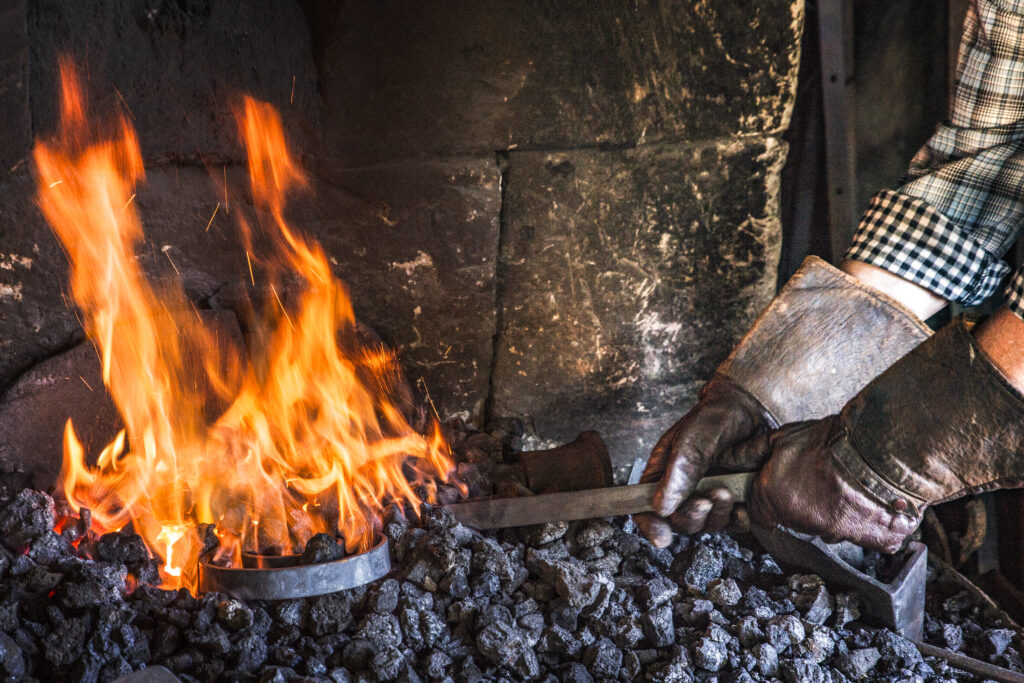
“Most smithies use their left arm to pump the bellows, and with the right arm they’re banging metal, so they get really good arm muscles. There’s no need to go to the gym. I find it very physical and can’t forge for too long.”
She makes fire tools for her own use. “I’ve got an outdoor fire, so I’ve made a good long poker with a hook at the end because I find it easier to poke wood around and turn logs with a hooked end.”
She also makes small hand tools for digging out dock and dandelion roots from the garden. 
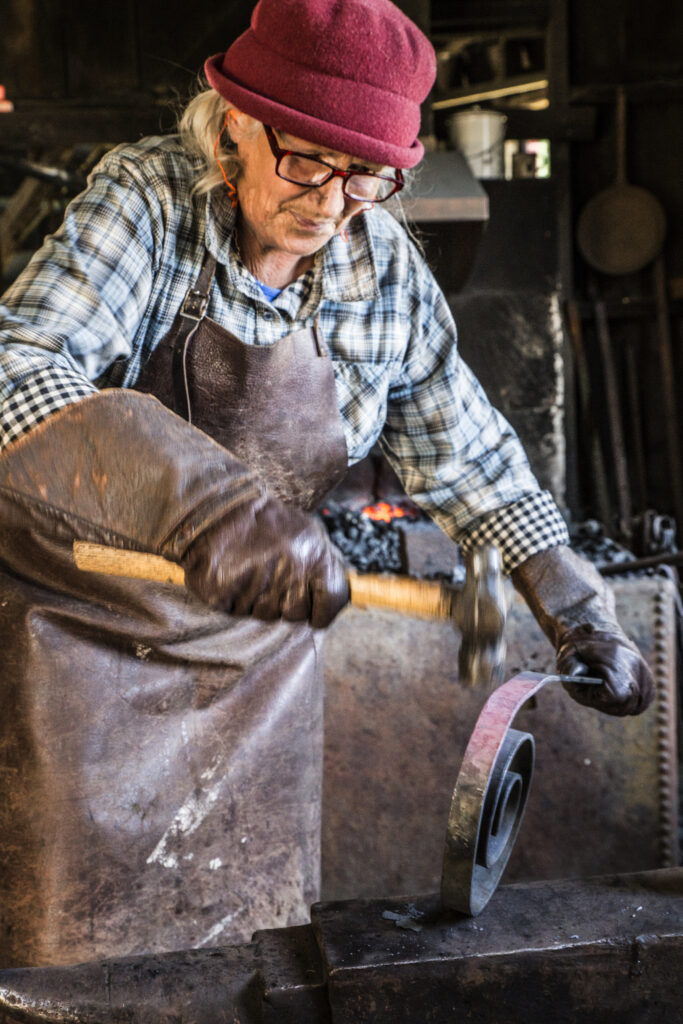
“Lately I’ve been making trivets for holding a pot or pan above the heat source when I’m cooking on a log burner and even on a gas cooker because sometimes it’s hard to get a very low heat. I’ve got a low, medium and high trivet; each one gradually takes the vessel higher above the heat. The high trivet is wonderful on the log burner. You can put your kettle on it after it’s boiled, and it stays hot; and for pickles and sauces where you want that slow, long cook. I love doing spiral trivets. They have a lovely heft to them. I have a relatively small one that I’ve used as a hammer, but I also put it on the fire and stick it in my pocket as a hand warmer.”

Sharing the blacksmith skills
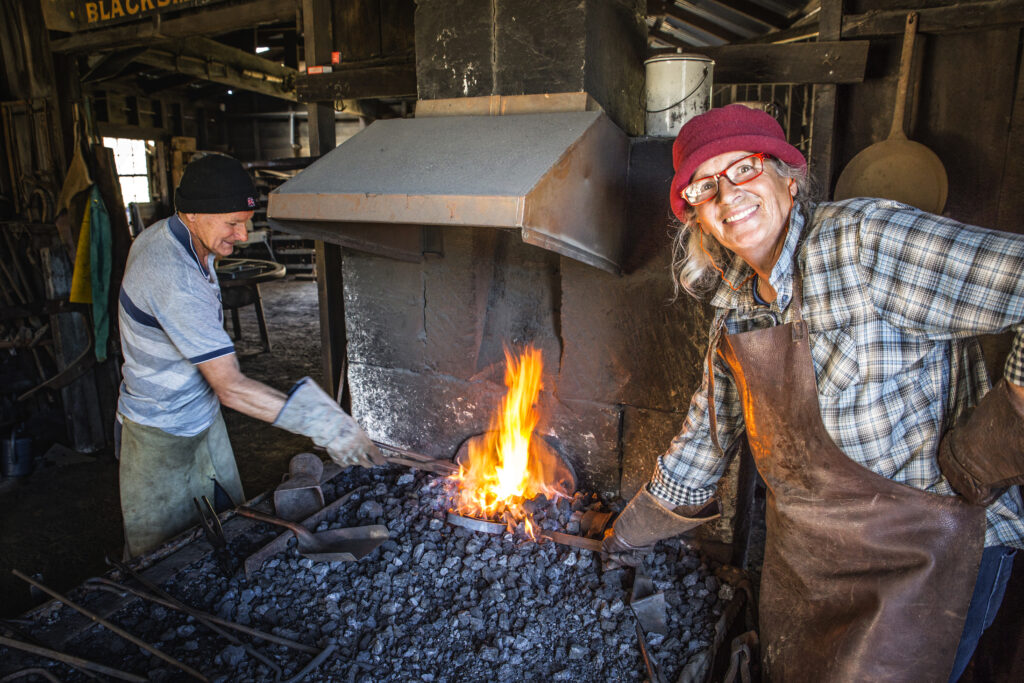
Judy’s time at Nichol’s Blacksmith Shop is mostly spent giving talks and demonstrating blacksmithing techniques to visitors. People love to see her twisting metal.
“We’ve got a small gas forge here too. We got it through a grant from Meridian Energy. Visitors love the coal forge, but the gas is instant and it’s a lot cleaner.”
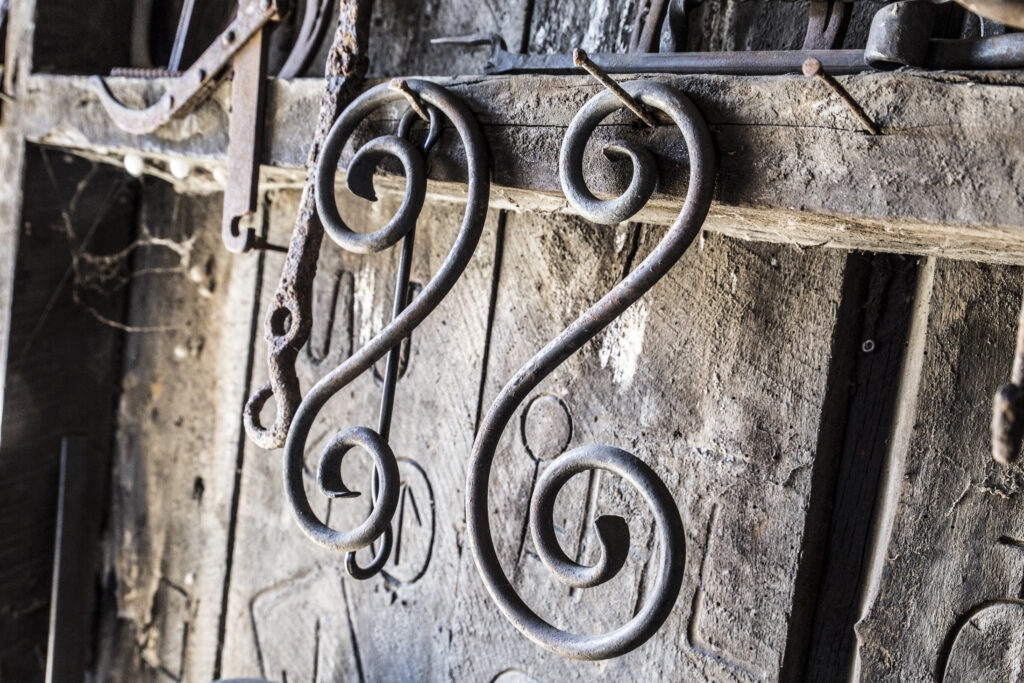
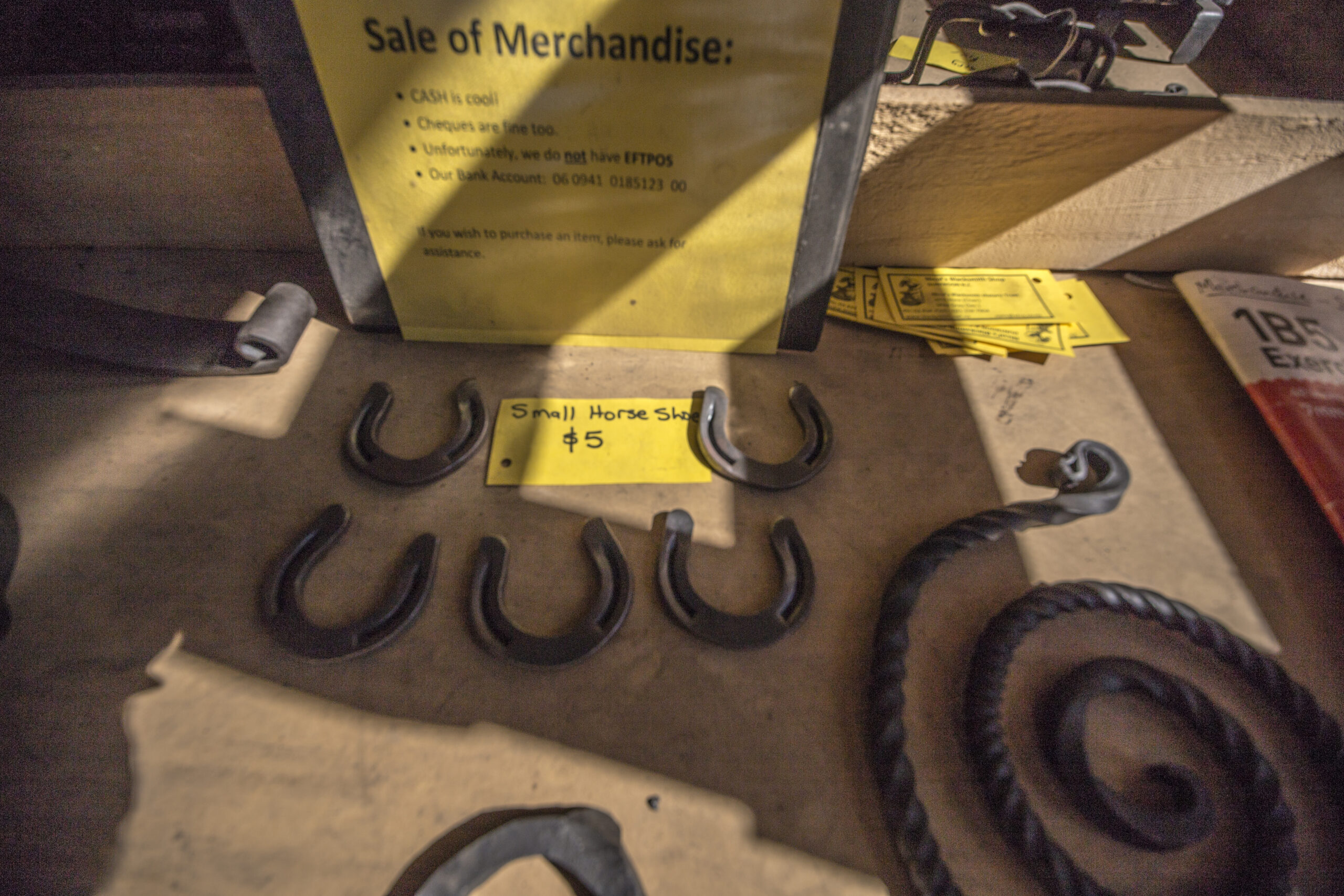
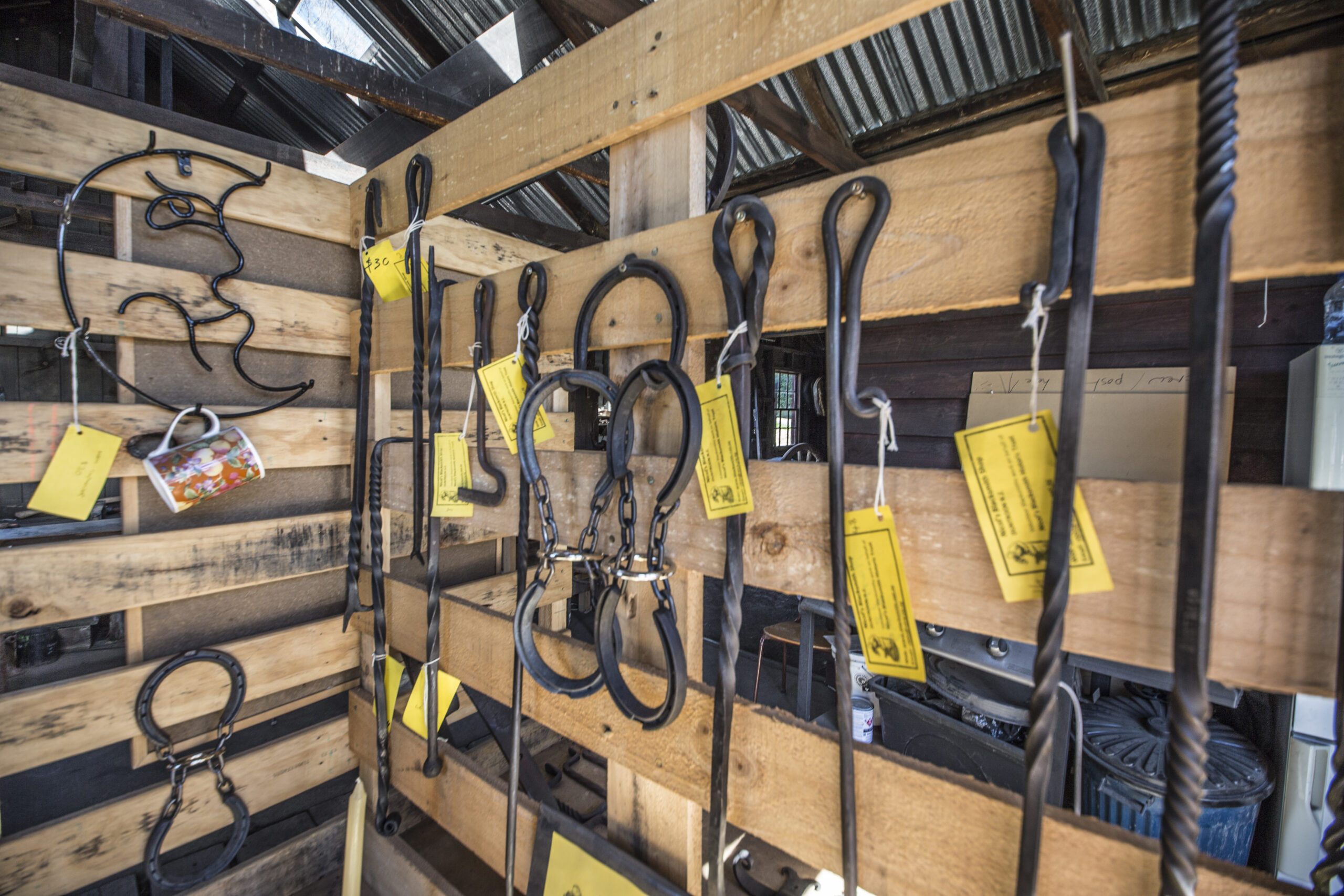
Most of the items made by the volunteers are for sale although, Judy points out, Dave Hamer’s work is on display solely to show the volunteers what they might aspire to: handles, a toilet roll holder, beautiful gate hinges, a coat hook made from car valves …
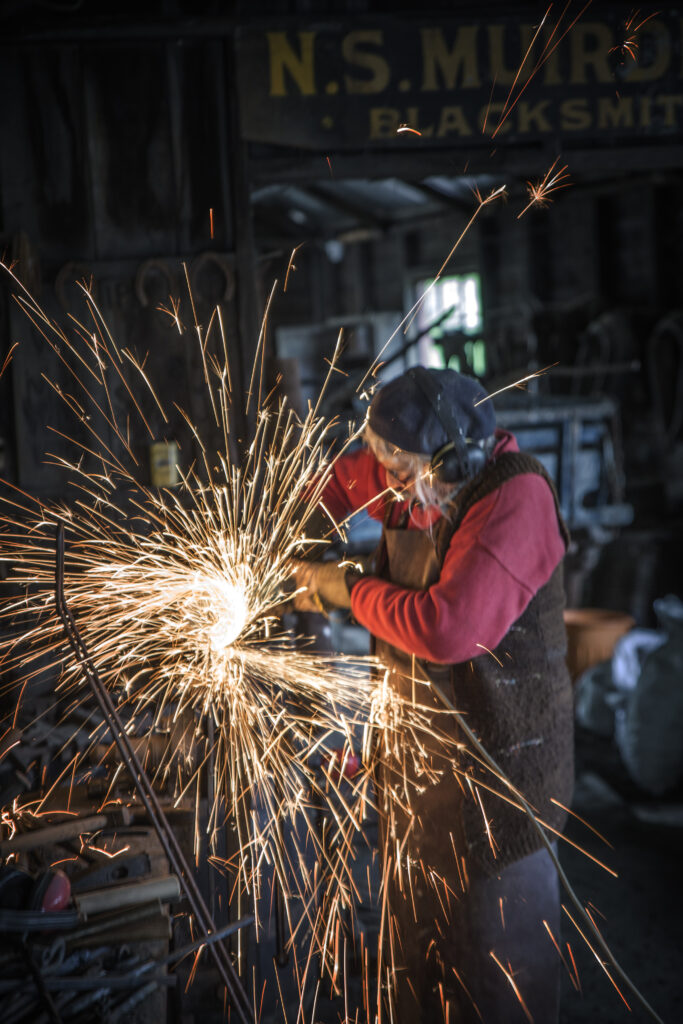
Over the winter of 2017 three volunteers held working bees to put guards around the belt-driven drill press, power hacksaw and grinding stones. “Even though it’s not quite authentic, it had to be done to comply with safety regulations.”
The forge is open weekends from Labour Weekend in October to Queen’s Birthday in June. Judy mounts demonstrations for small groups and conducts beginners’ courses by appointment.

Blacksmith courses for young and old
One thing you have to know: don’t talk to the blacksmiths while they’re working at the forge because they can spend an hour making a piece and one moment’s inattention can cause them to burn it and it’s ruined.
“You can sometimes cut off the damaged part and start again, depending on where the burnt bit is, but you’ve just lost an hour’s work,” says Judy.
While she gets a lot of pleasure from working at the forge, more than anything Judy is eager to introduce blacksmithing to young people.
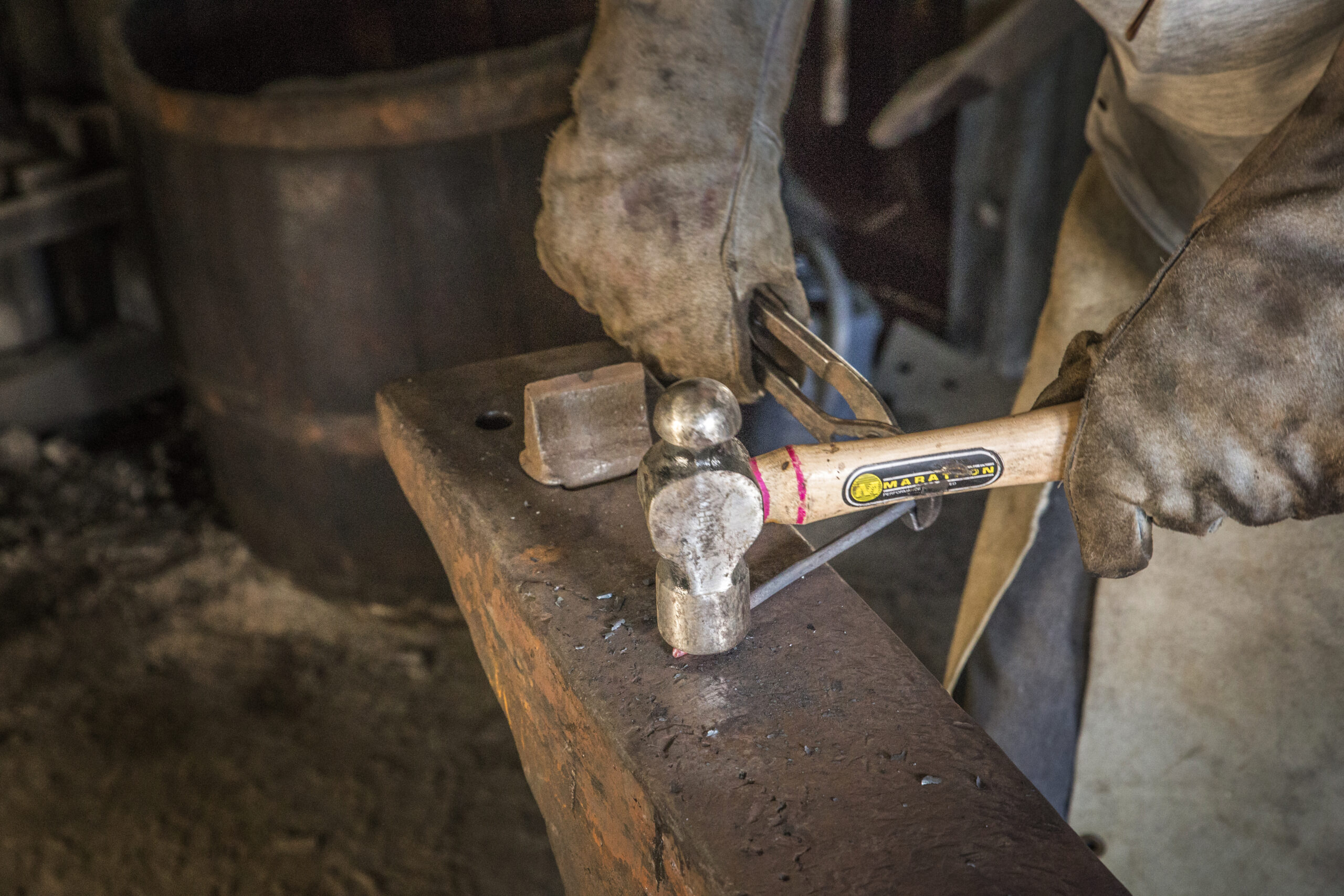
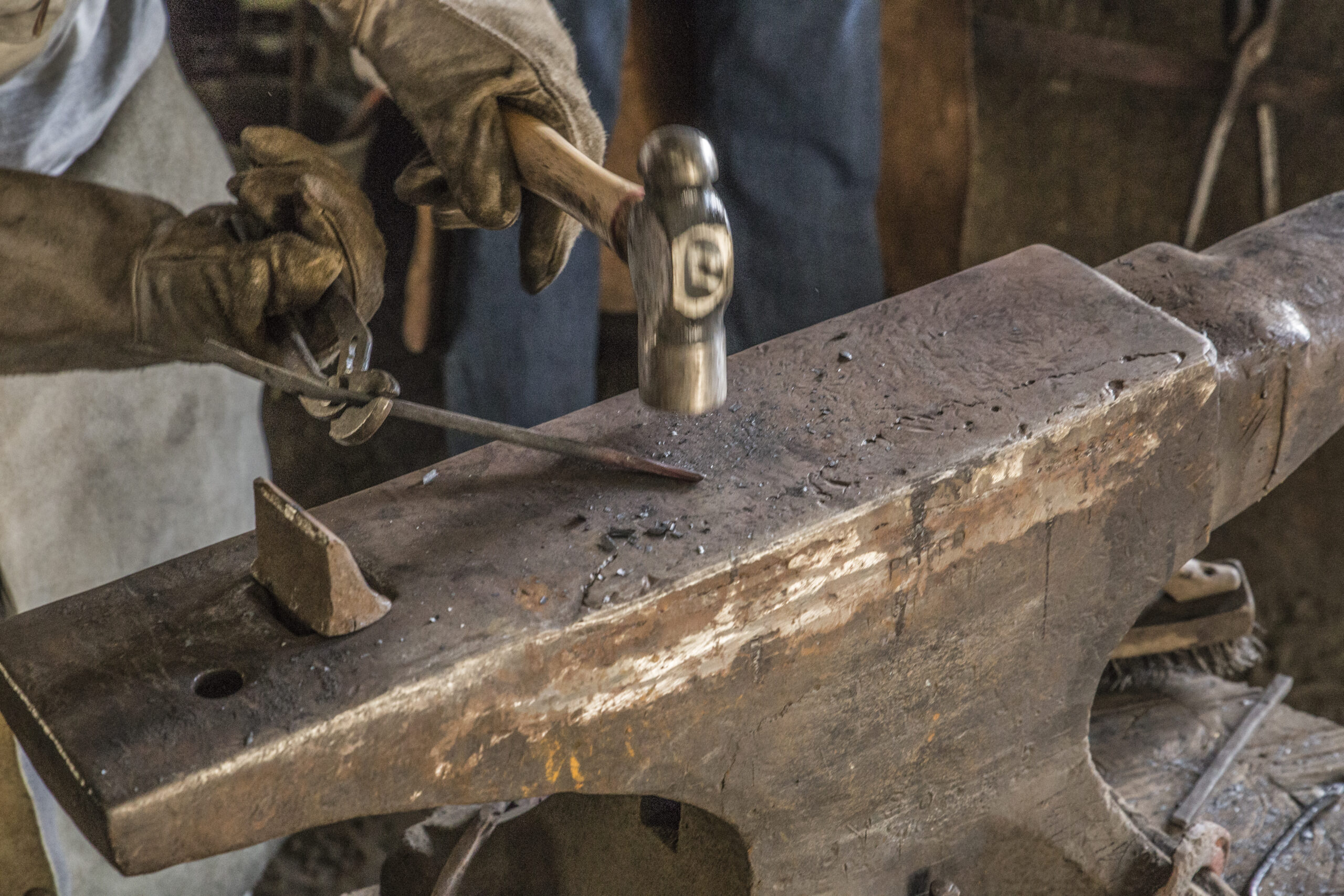
“We’ve established beginners’ courses for the young ones, and their eyes light up when I kit them out with a leather apron, glasses, and gauntlets and get them going. They work the bellows and have a go at hammering the hot metal. We really need these young people. They’re our future. We need them to be inspired.
“It’s so rewarding to pass on knowledge and skills. That’s where my passion lies. Because I can’t forge as much as I’d like to, I just want to get the young people involved.”

Nichol’s Blacksmith Shop, Duntroon
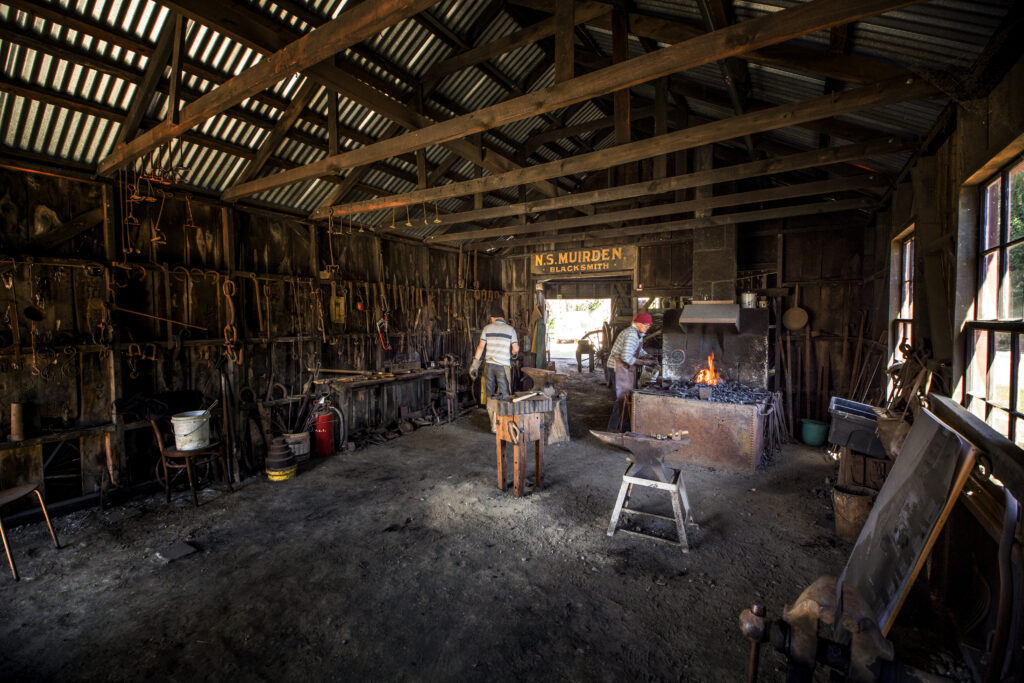
Nicol’s Blacksmith Shop is the only easily accessible and authentic village blacksmith in New Zealand. It is located in the middle of Duntroon township on State Highway 83, some 40km north-west of Oamaru. 
The building was facing demolition until four local farmers – John Hore, Burns Pollock, Bill Simpson, and Jim Harvey – bought it in 1975. As children these four men had spent many after-school hours with Nicol Muirden at the smithy and pumped the bellows for him. They wanted to preserve the history of the village. Ownership of the building was transferred to Nicol’s Blacksmith Historic Trust in 2006.      
New Zealand Historic Places Trust’s 2009 classification as Category One recognises it is as a place of national significance, emphasising its authenticity and importance in telling the story of the role of the horse in the development of this country. 
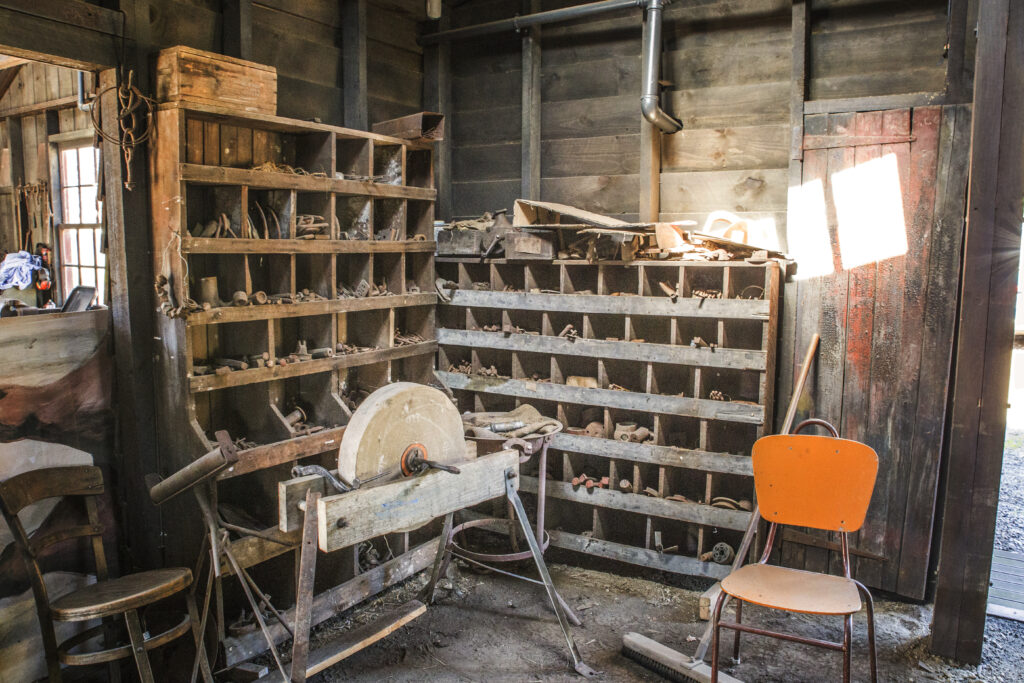
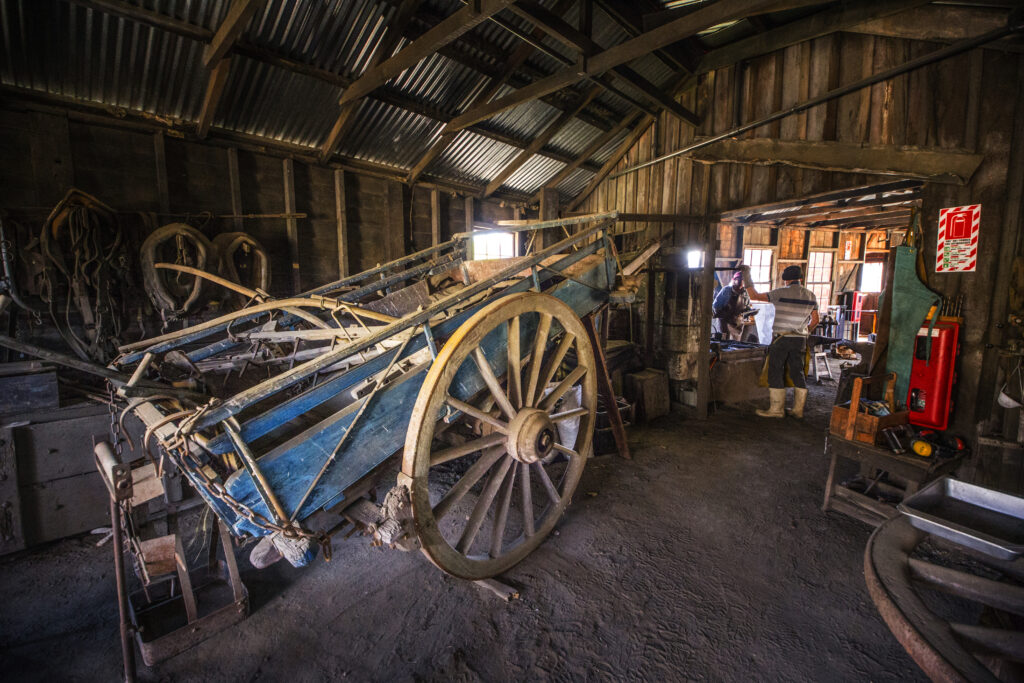
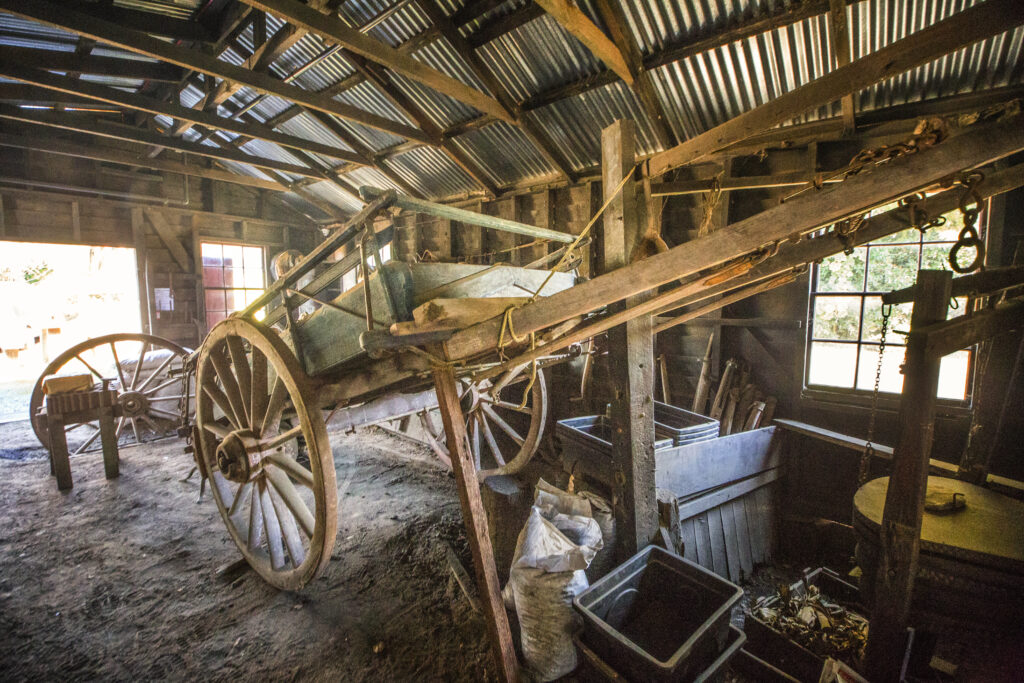
Architecturally, the building is typical of the weatherboard construction over an earthen floor of local smithies. Such buildings are now rare, as most have been modernised by adding wall to wall floors and other luxuries. The original smithies were not built for comfort but for function and Nichol’s Blacksmith Shop provides an example of the working conditions of the 1870s.
Nicol’s Blacksmith Shop is important because it is a very rare example of what was a vital service throughout New Zealand, and it lives on in its original building. It represents the workplace of a craftsman, who epitomises many others who collectively kept the land transport system and the farming industry working. 

Share:

More Posts

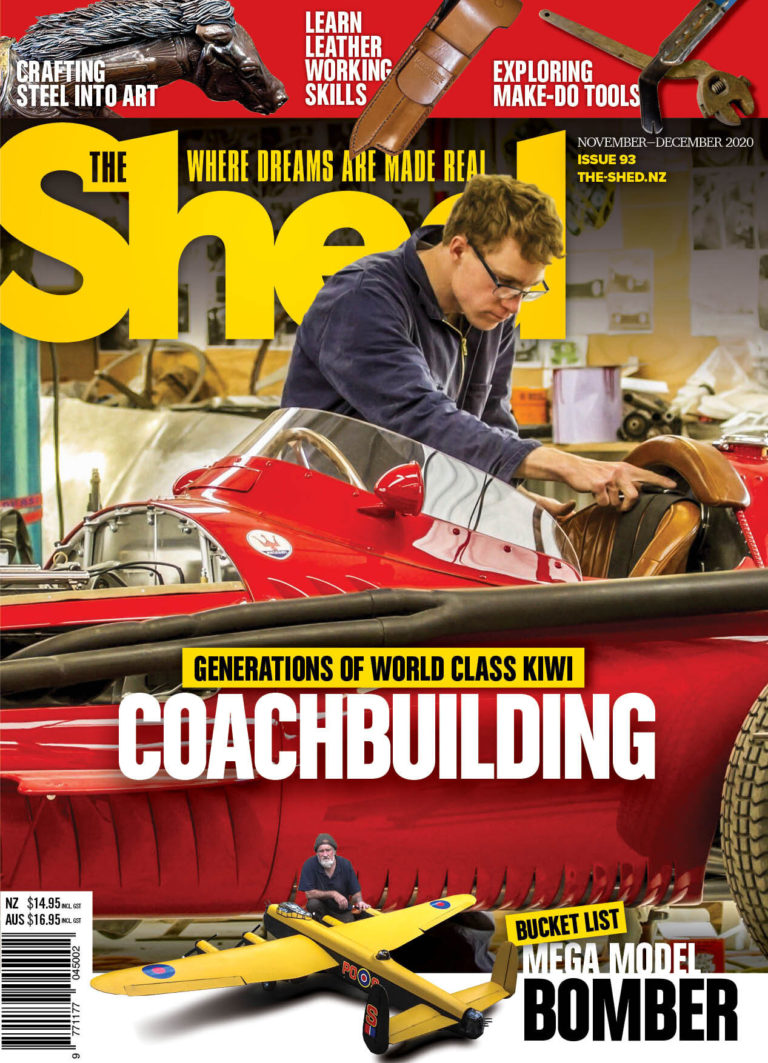
The Shed November/December 2020 Issue 93, is on sale now

We showcase the metal-shaping and coachbuilding skills of Rod Tempero Motor Body Builders Ltd from Oamaru in The Shed Issue No. 93. The company’s world-famous and internationally sought-after car-building talents make it one of this country’s finest coachbuilders. We head to the mainland to meet Rod and his team and do our best to dig out as many metal-shaping and car-building secrets as we can.
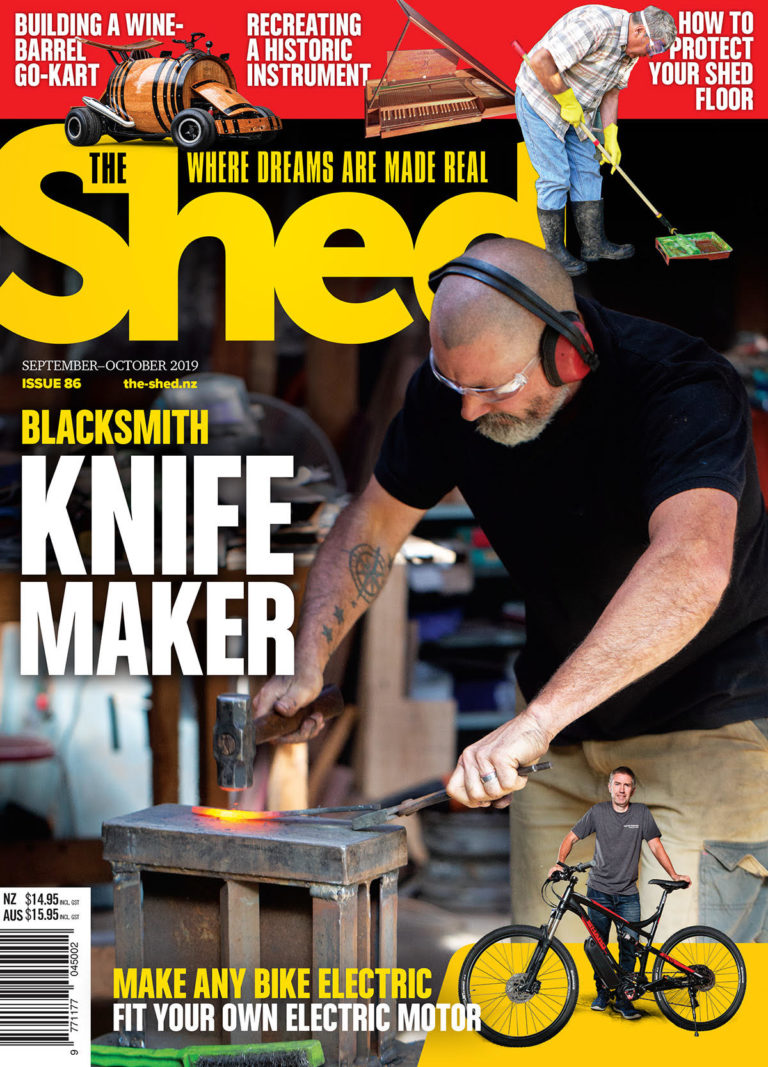
The Shed, September/October 2019 Issue 86, on sale now

In the October/ November Issue 86 of The Shed, we first head to Whanganui to meet blacksmith Josh Timmins.
Josh has his own way of making knives and axes and shows us how to make a Viking Knife starting with a piece of new steel right through to the finished product.
Then we head to…