
A club devoted to saving past relics has created a unique heritage park
By Sue Allison
Photographs: Juliet Nicholls
The West Coast has a history as rich as it is rugged, with a past steeped in mining, logging, and dairy farming on a forest-clad strip between the mountains and the sea. Up by Hokitika airport is a sheddies’ paradise where relics from this past are being resurrected by an enthusiastic and capable band of volunteers.
“It all started back in 1981. Everything was going by train out to scrap, so we formed a club to stop it,” says Mort Cruickshank. The “we” were four young men – Spike Jones, Jim Straton, Mike Rooney and Mort. They formed the Westland Farm and Vintage Machinery Club and started salvaging old machinery that had been destined for the dump. With no premises, they kept it in their backyard sheds and met sporadically to plan the future.
Four decades on, and the Westland Industrial Heritage Park, spread over several acres up by Hokitika airport, is packed with machinery, sheds and enthusiasts. It is a hub of community activities, has a Menzshed on site and is increasingly a drawcard for tourists.
The inspiration behind the club
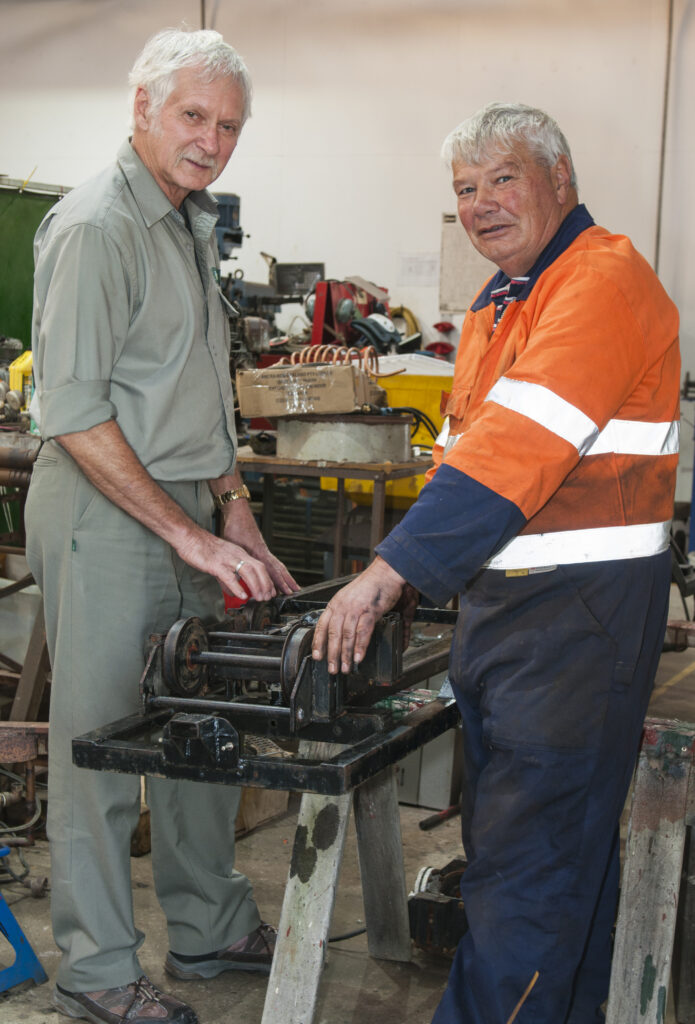
Of the original nucleus of four, three are as passionately involved as they were at the outset. Mort, a retired welder and fitter, and Mike, a former truck driver and fireman, probably spend as much time at the park as they did in their day jobs, while Jim, who works for the Department of Conservation, is a key player in setting up the on-site miniature railway through native wetlands.
“Spike, who called the first meeting, has sadly passed on. He would be blown away to see all this,” says Mort.
When the council-owned site came up in 1999, the vintage machinery club formed a partnership with Heritage Hokitika and leased the land from the airport authority for $1 a year. They now have more than 40 members from a range of backgrounds.
“We have work days on Wednesdays and Saturdays, but it’s open every day, and there are pretty much people up here all the time,” says Mort, who is there five days a week.
“We all bring in our trades. There aren’t many problems we can’t solve between us. You have to be creative all the time here, but most of us were brought up around the 1950s and ‘60s when Kiwi ingenuity was at its best. When we were nine, we were building crystal sets and soap box derbies.”
Bach steam engine
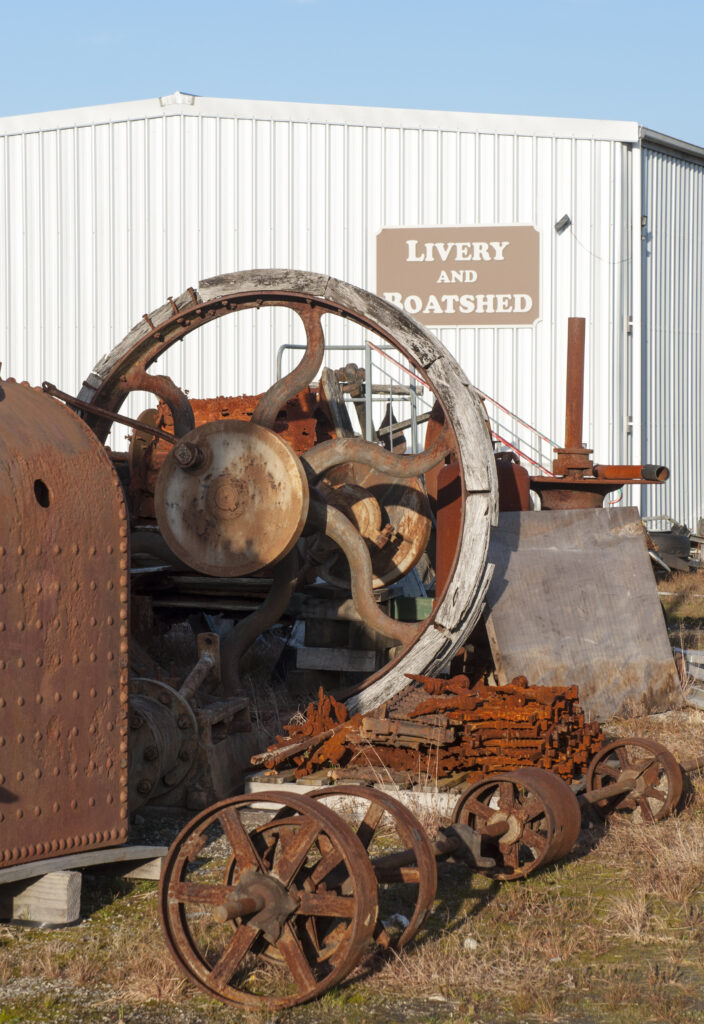
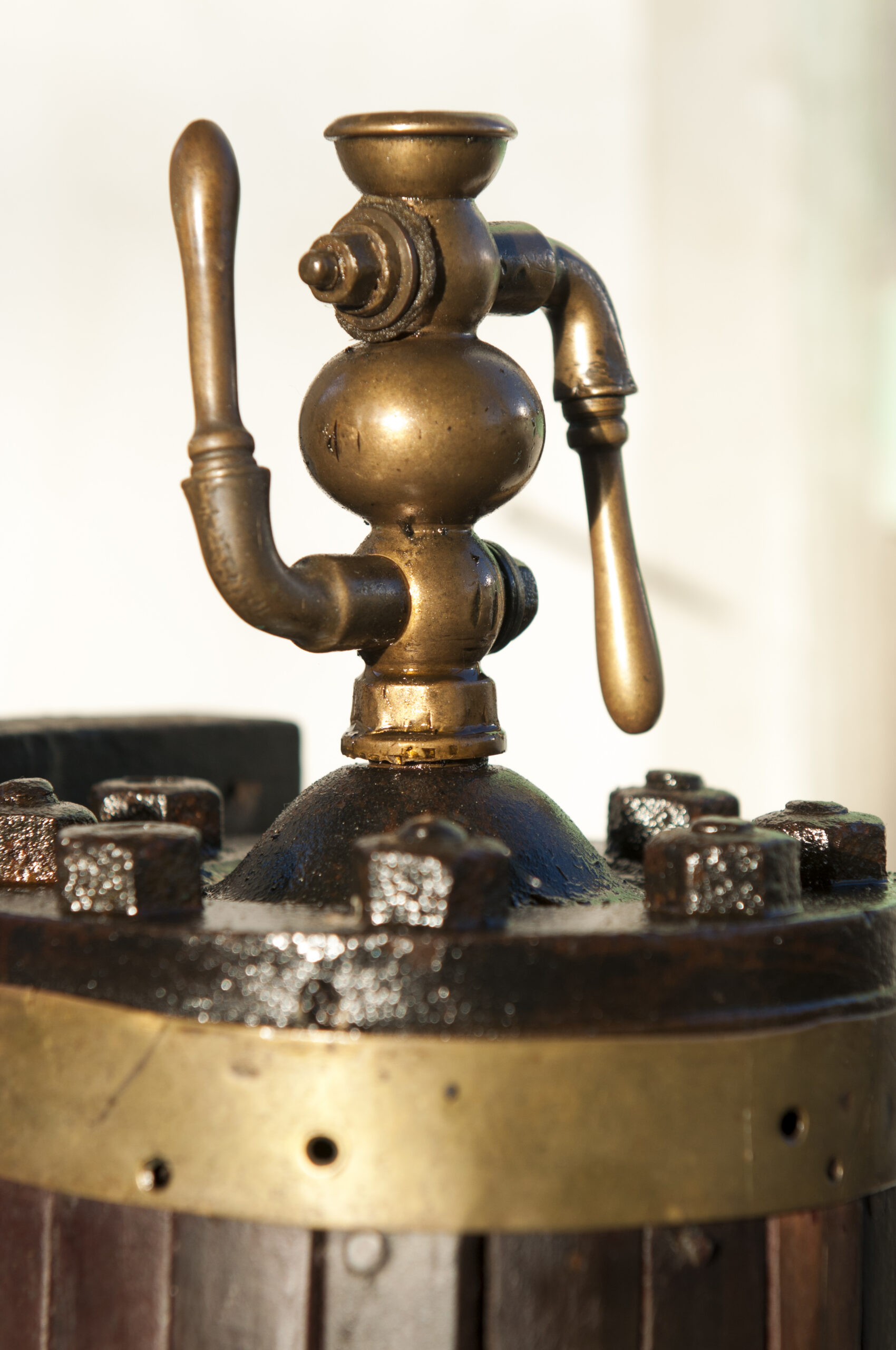
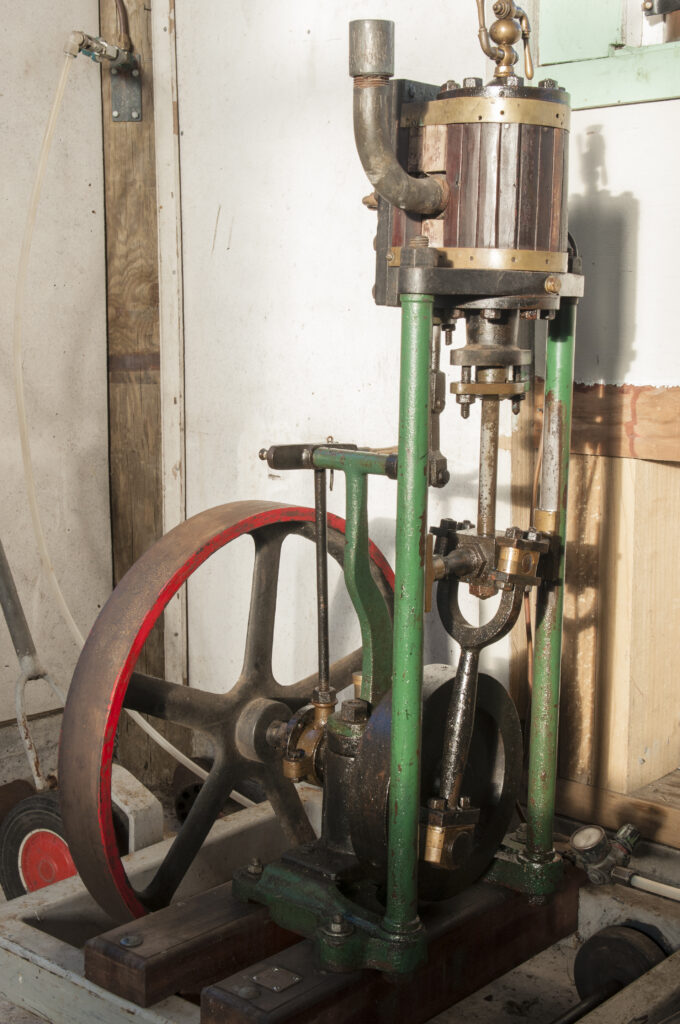
The park’s 1845 Bach steam engine is believed to be oldest surviving steam portable of its type in the world. Pre-dating traction engines, it came from Birmingham, England, to Hokitika where it was used for processing coffee beans. The boiler is butt-joined and fixed with pixie-head pointed rivets. Because there were no injectors, the connecting rod was split in half so the feedwater pump could be concentric with the main cylinder pump, running off an extension of the piston rod. Mort wants to build a replica of the engine and roasting mill using original drawings sourced from the internet.
The spirit of the coast
Isolation forced Coasters to develop a particularly creative No 8 wire mentality. “If a farmer had a broken machine, you couldn’t just say ‘I’ve got a bit coming from Christchurch in two days’. You had to fix it even if it was just a makeshift to keep it going till the parts arrived.”
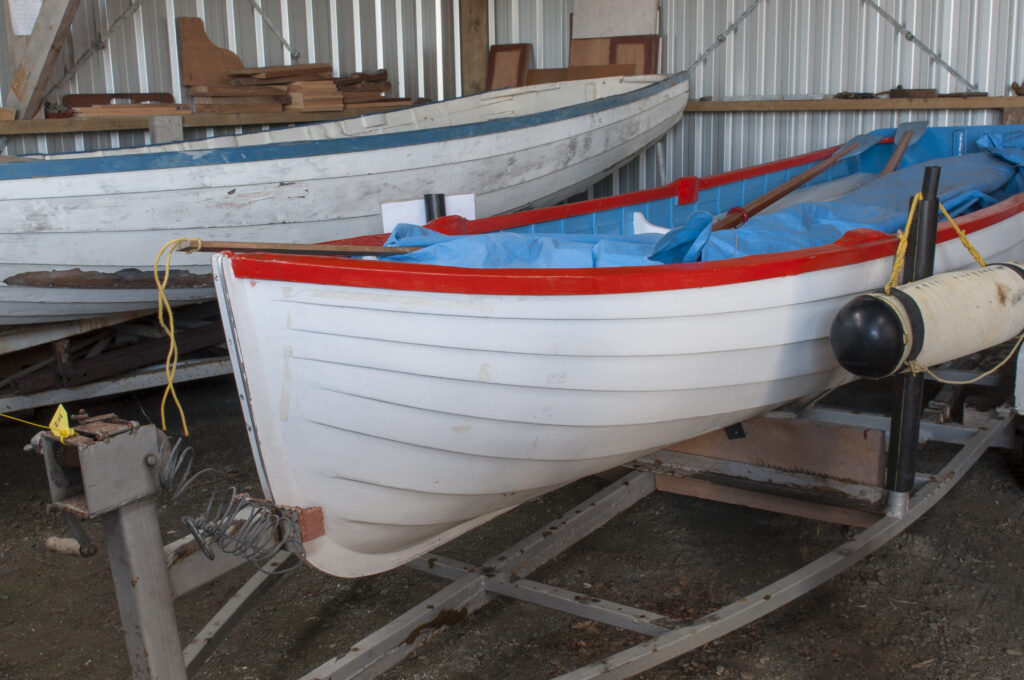
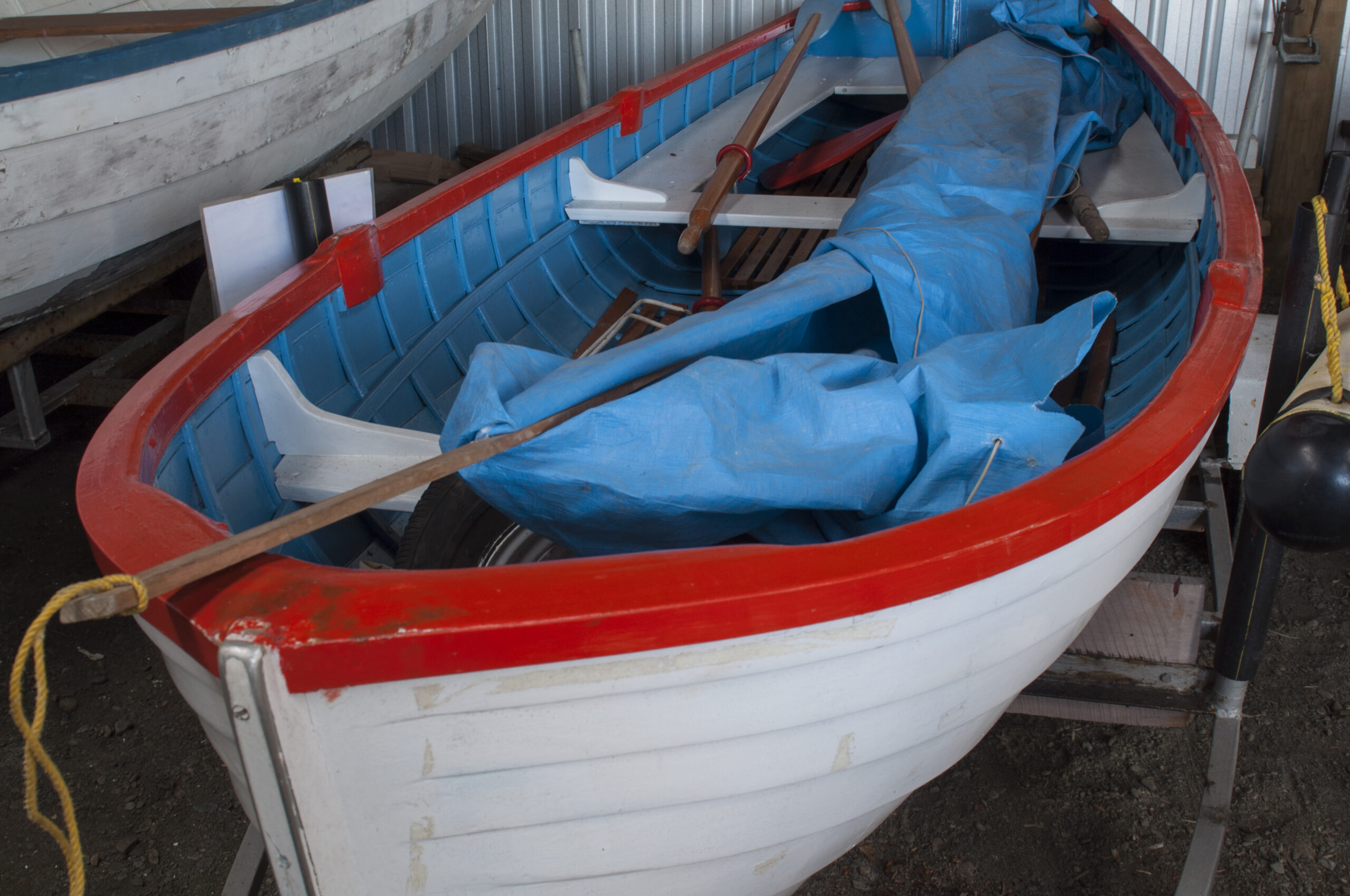
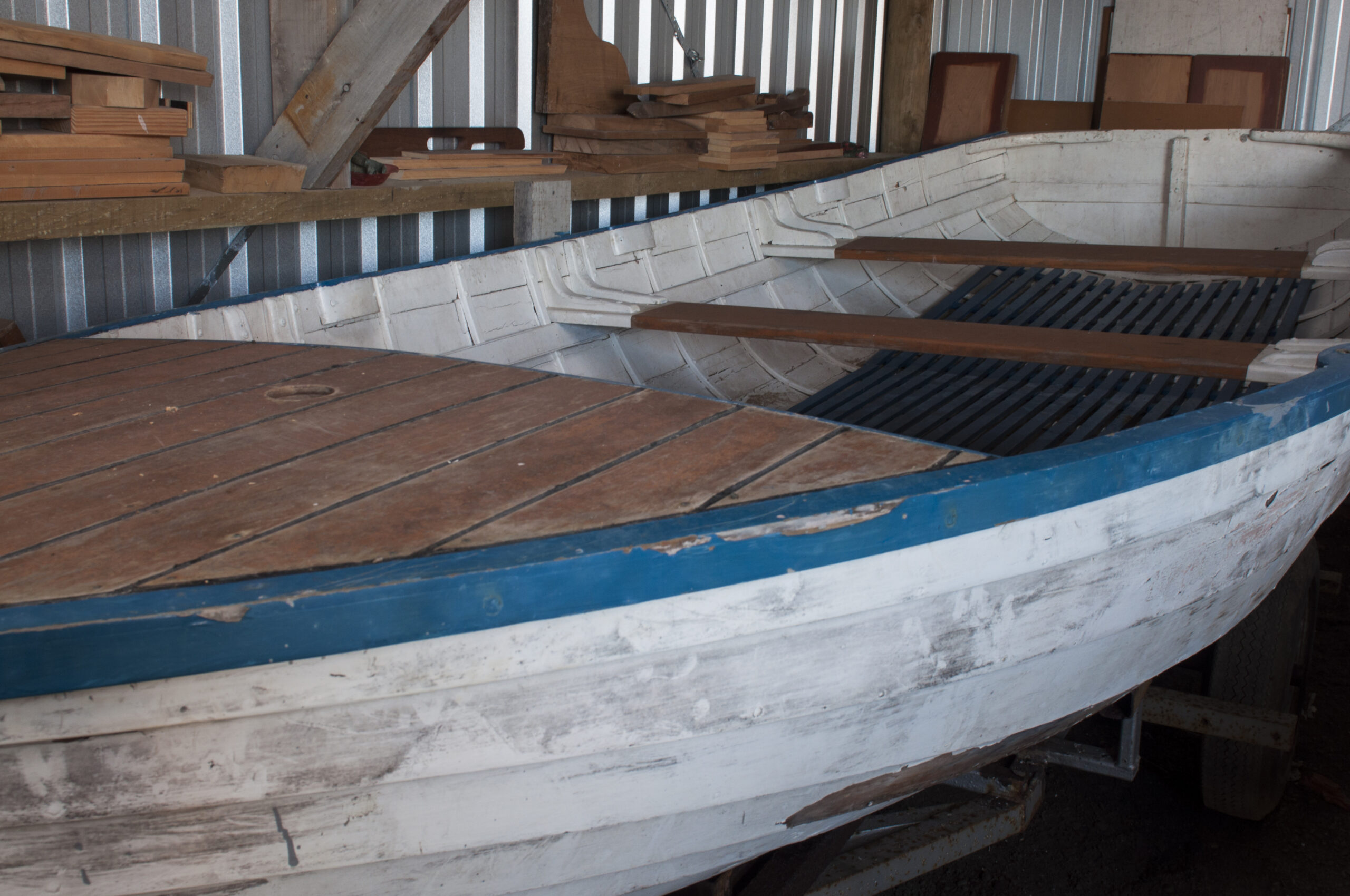
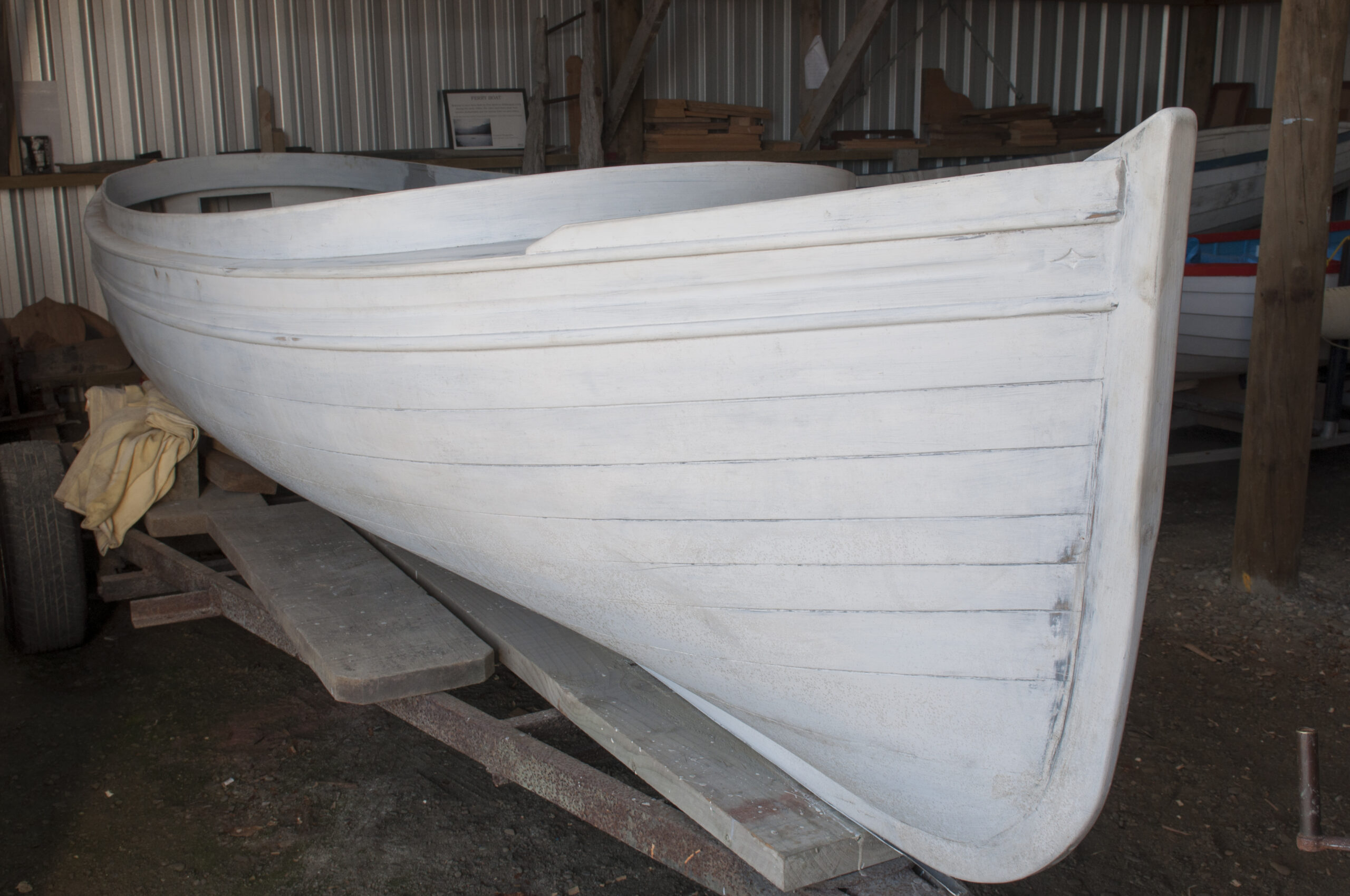
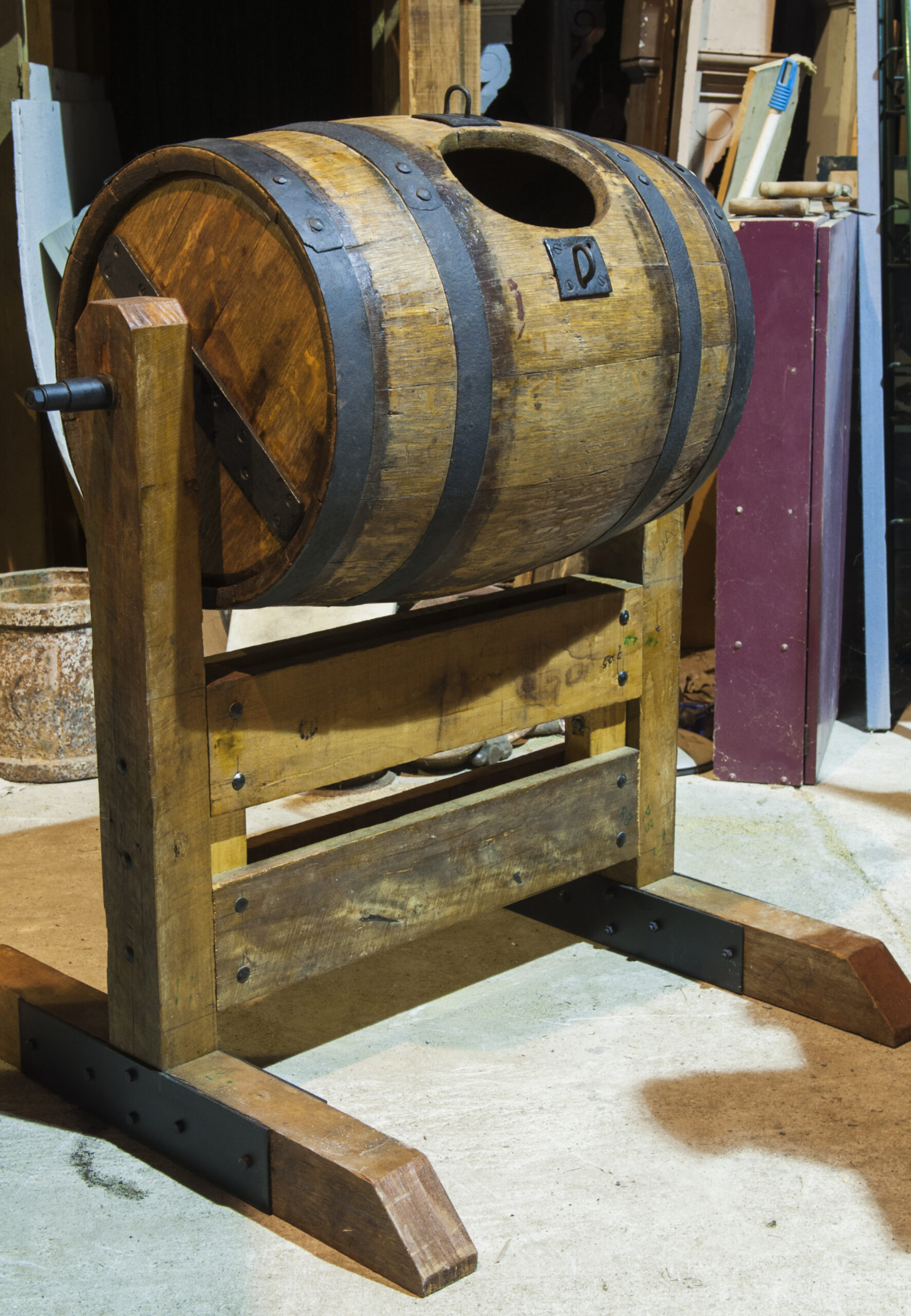
Park members, most of whom are retired, bring decades of combined expertise in everything from metalwork and engineering to some rare specialist skills. Merv Johnston, the oldest member and a cooper by trade, recently restored an early butter churn that was in pieces; club secretary Ian ‘Gilby’ Gilbertson, formerly cartographer for Lands and Survey and a skilled calligrapher, is masterful with the plasma cutter; Rob Daniels, borough engineer and skilled woodworker, is using traditional steaming methods to rebuild the old boats. Others come to learn new skills after careers working in one area, and all come to share the camaraderie that comes with the $30 annual membership fee.
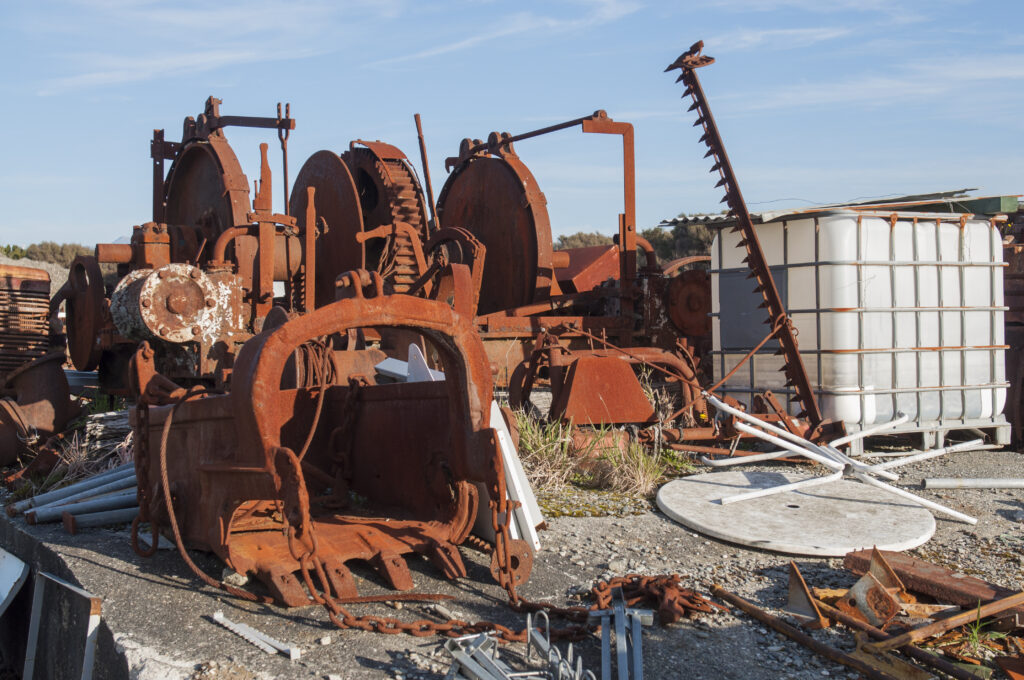
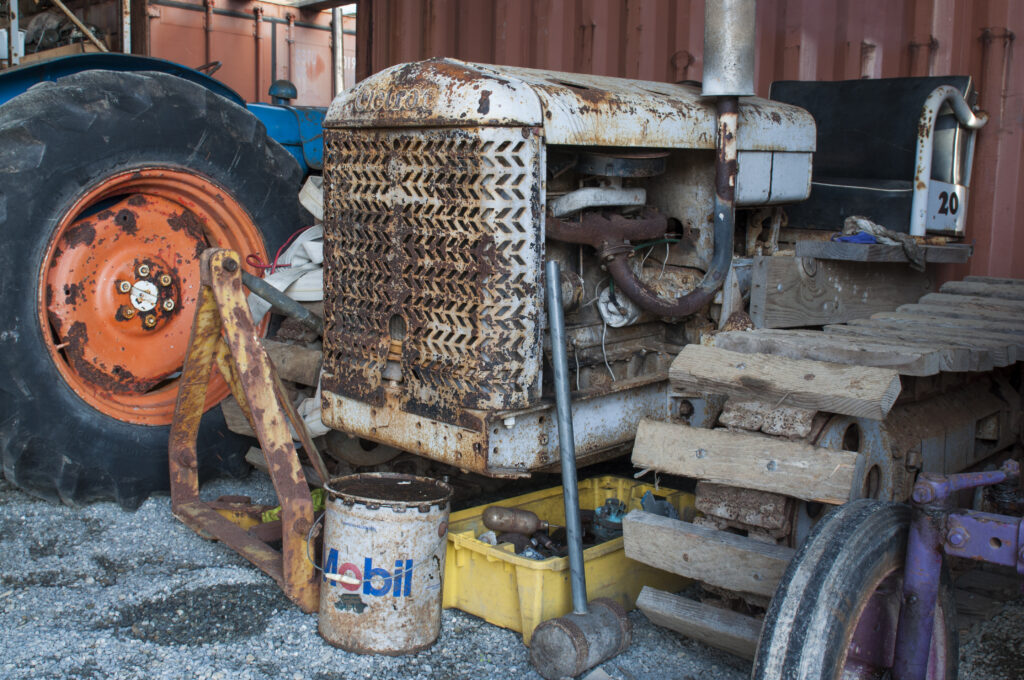
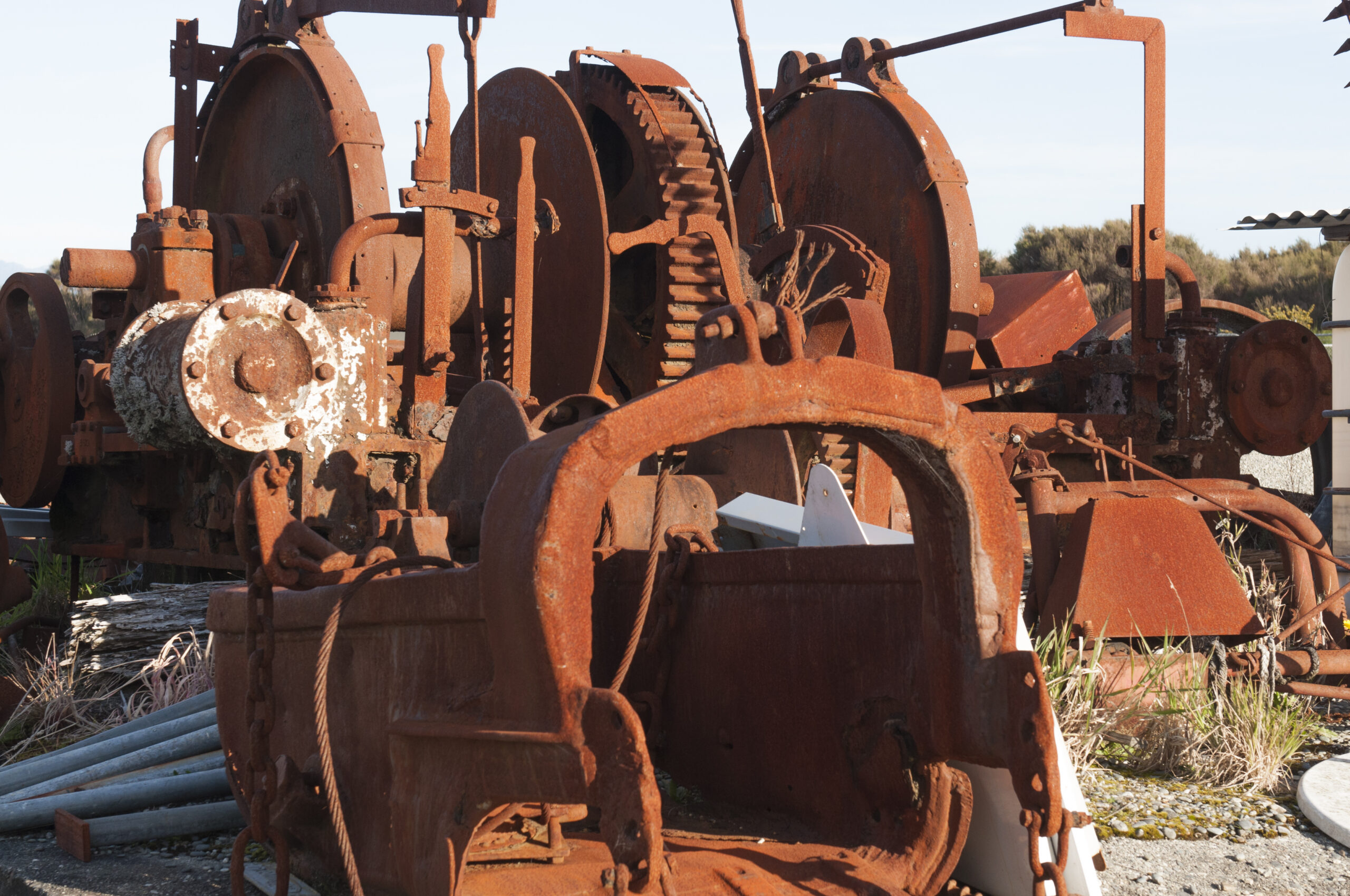
Stacked among the sheds are piles of rusty machinery, victims of time and sea air, awaiting the members’ ministrations.
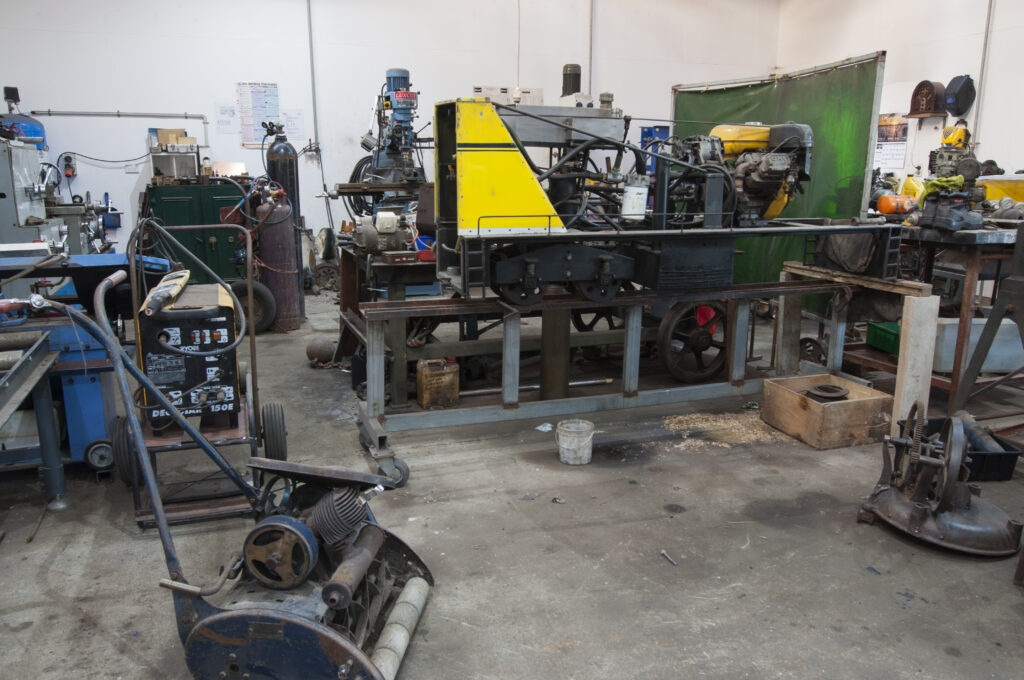
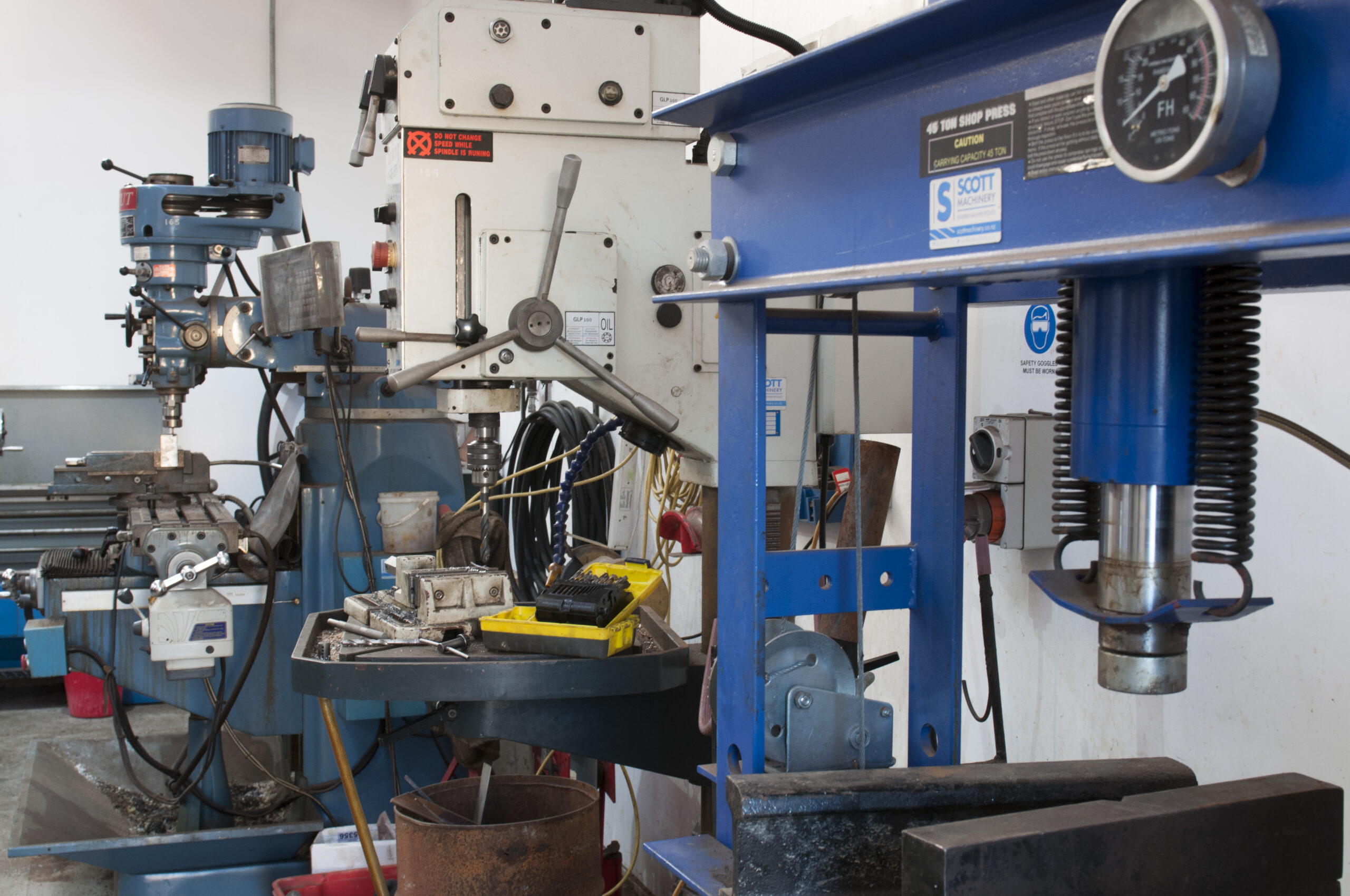
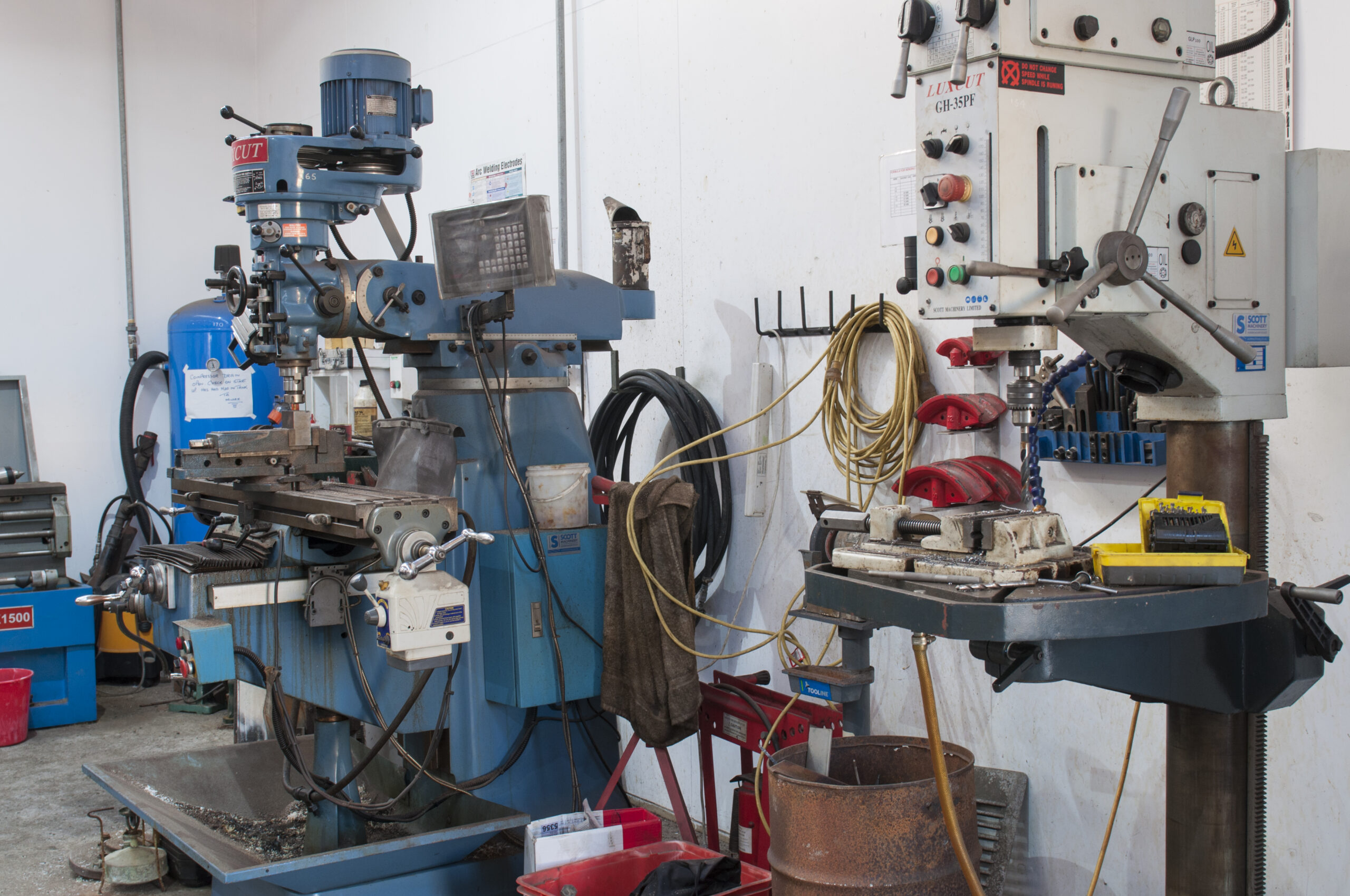
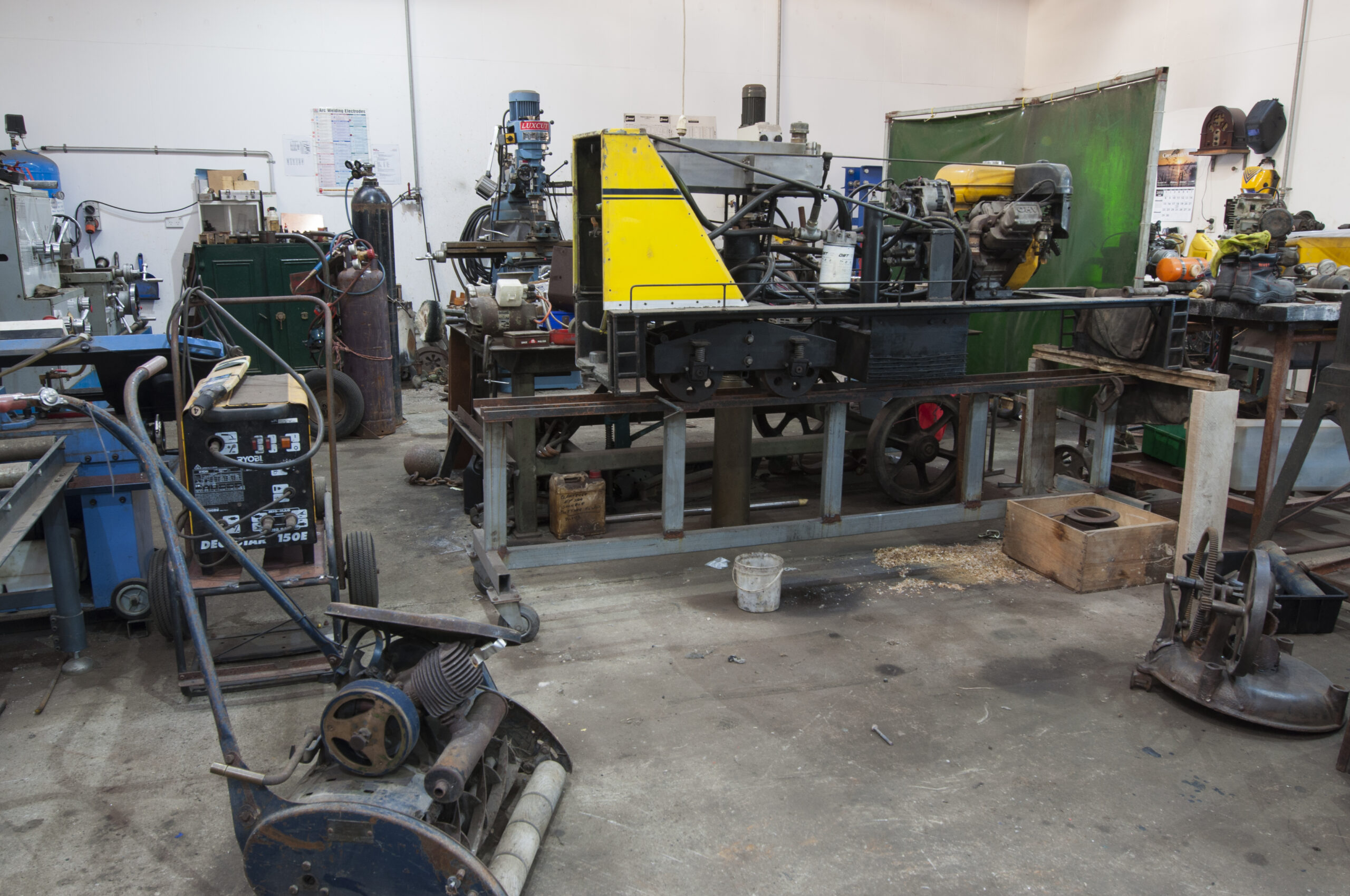
“Very rarely do we get given something which is in good working order,” says Mort. But they are well-equipped to deal with most repairs. “We had a bit of a tragedy three years after we came up here when the whole workshop burned down. The only piece that survived was the concrete floor slab.” The silver lining was a lump sum insurance payment which they spent wisely on a new metal lathe, Luxcut turret milling machine (a demonstration model going cheap) and geared drill press, as well as a 50-tonne metal press, welding machine, and plasma cutter. “We’d had old secondhand stuff. Now we’ve probably got one of the best-equipped workshops in Hokitika.”
They also own three diggers, including two donated Massey Fergusons.
Raising funds
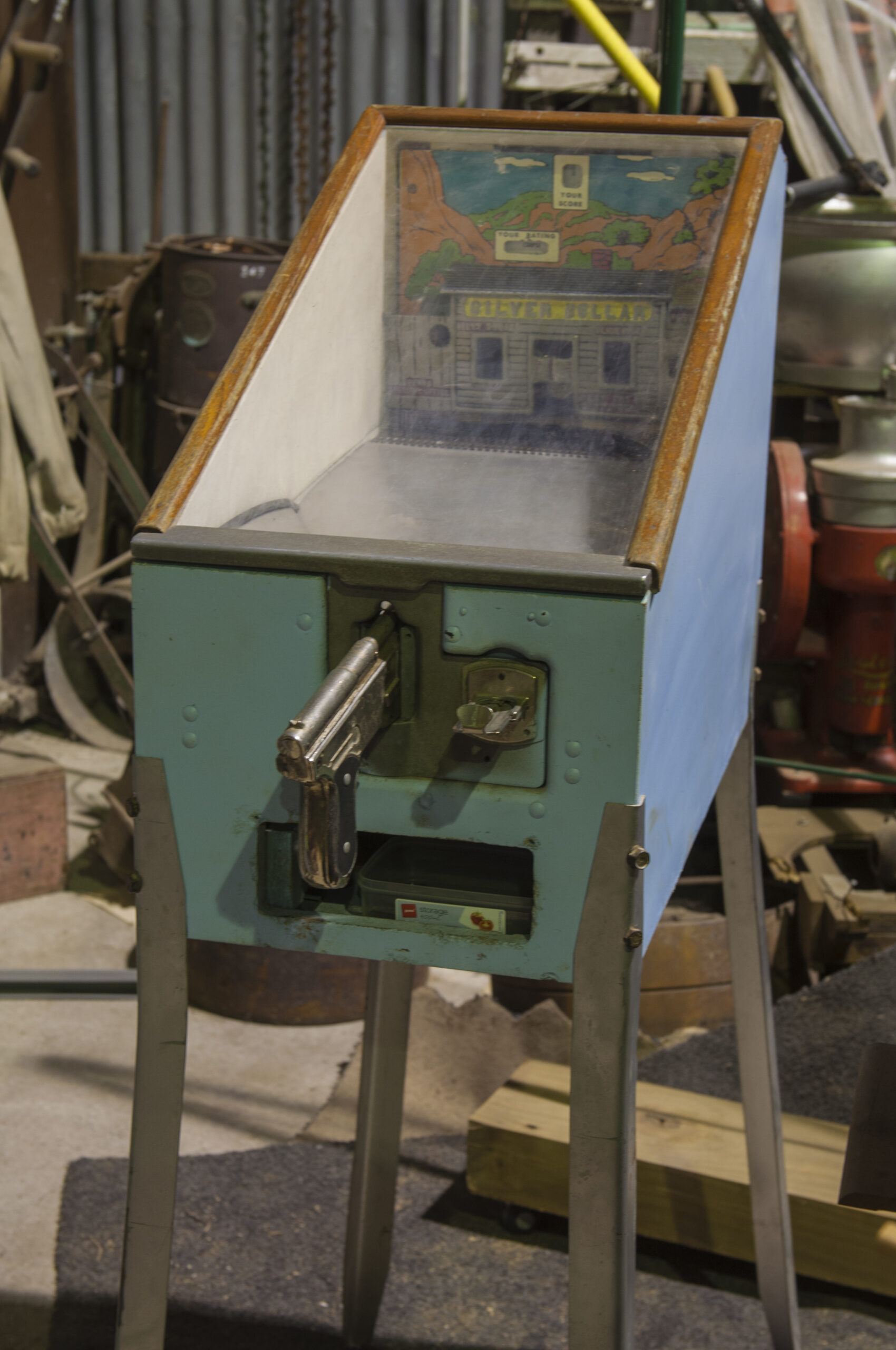
While they receive grants for some projects, funds are raised through raffles and community events, as well as donations for running courses through REAP (Rural Education Add-on Programme). They built a memorial for the new RSA building, repaired cemetery fences, spent 250 hours doing up a derelict tractor at Okarito for the Department of Conservation, and completely overhauled a 1927 shooting gallery and gave it to the Boys’ Brigade. Their annual open day, which is both a friend and a fundraiser, also supports the Cancer Society. Last year, they won the Supreme Trust Power Community Award for their efforts to preserve the district’s industrial history and improve community facilities.
20-year restoration
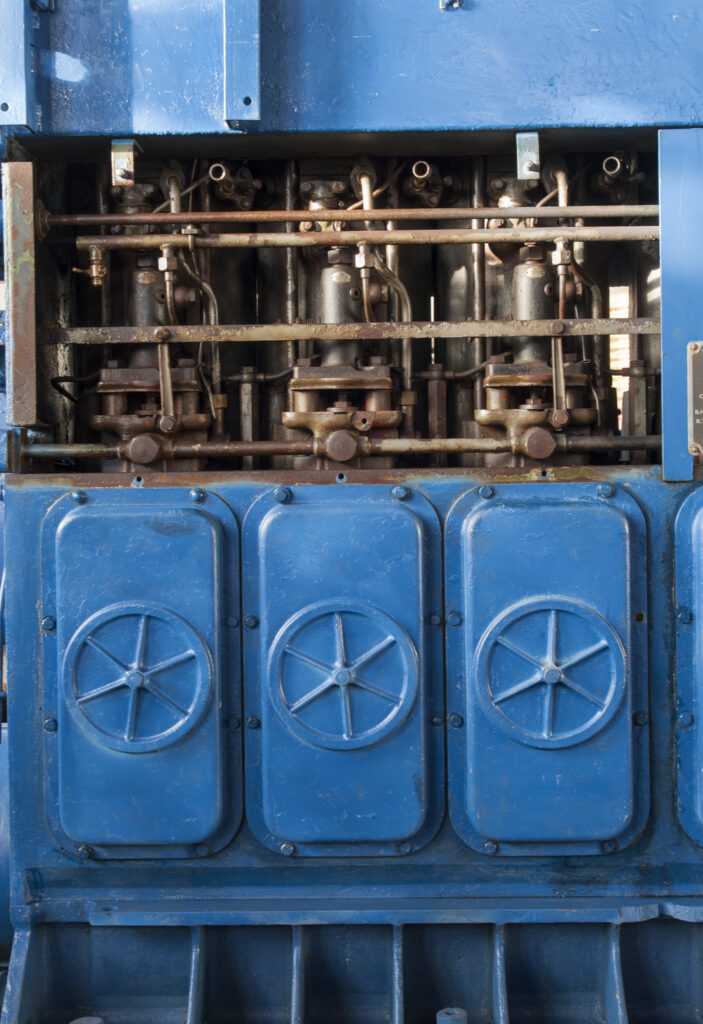
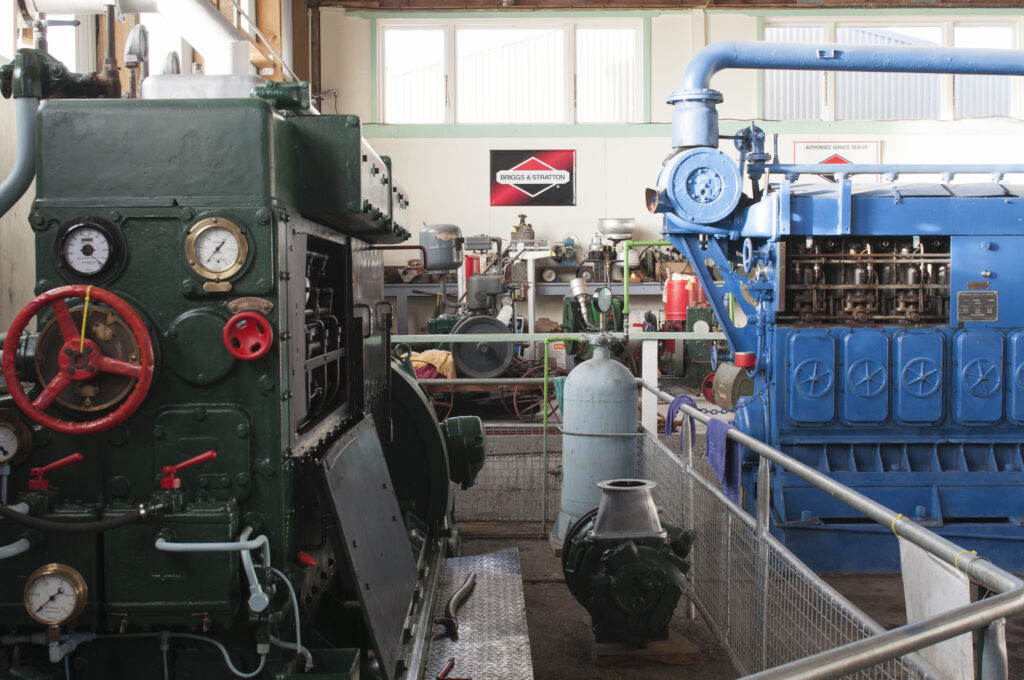
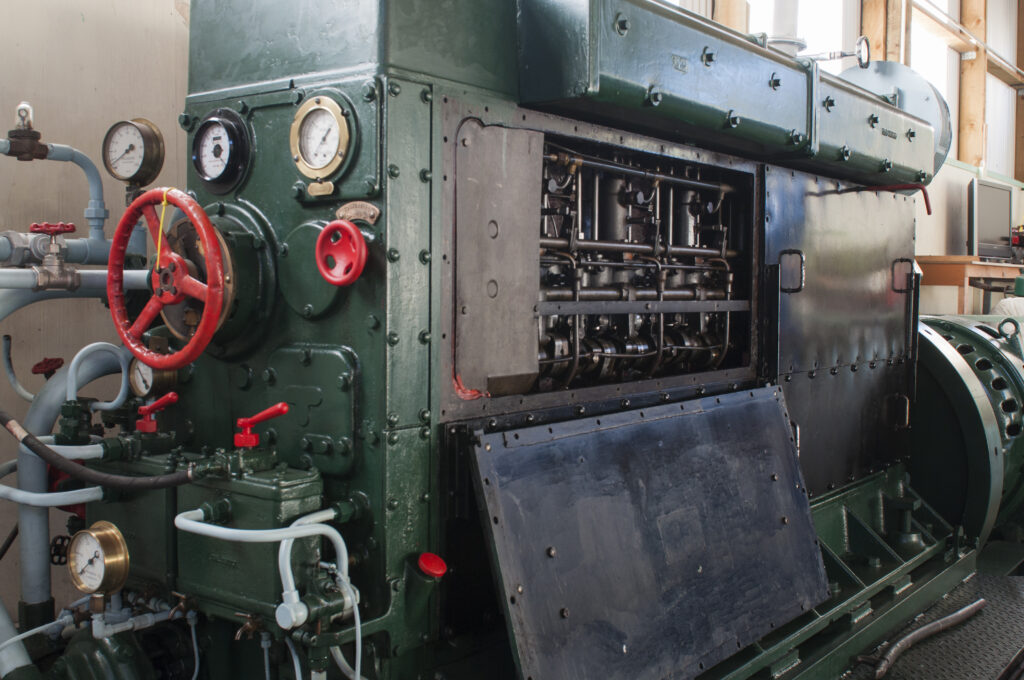
The machine that perhaps best symbolises the park’s journey is a big twin-cylinder Ruston and Hornsby diesel engine. Gifted to the original club in 1984, it sat at the council’s Kaniere depot until 1999, when it was transferred to the park for restoration. “It was 20 years from when we took delivery of it till we first ran it,” says Mort. “It would have gone to scrap if we hadn’t stored it for all those years. We didn’t want to put it anywhere till we knew it was at its final resting place.” That final resting place was on a 20-tonne slab of concrete. “Building the framework for it to sit on had to be precise. We had a dozen Japanese car jacks under it to fine-tune it, and when we got it right, we just poured concrete over the whole lot.”
For a group committed to restoring the past, it’s appropriate that Hokitika means ‘place of return’, even if the journey back to the future sometimes takes a while.
The railway
The heritage park’s miniature gauge railway is the fulfilment of a dream. “It was always part of our plan since 1981, so it’s been nearly four decades in the making,” says Jim Straton, the project leader who also works for the Department of Conservation, which has given the park a grant to plant natives and enhance the endangered mudfish’s environment in the wetland area.
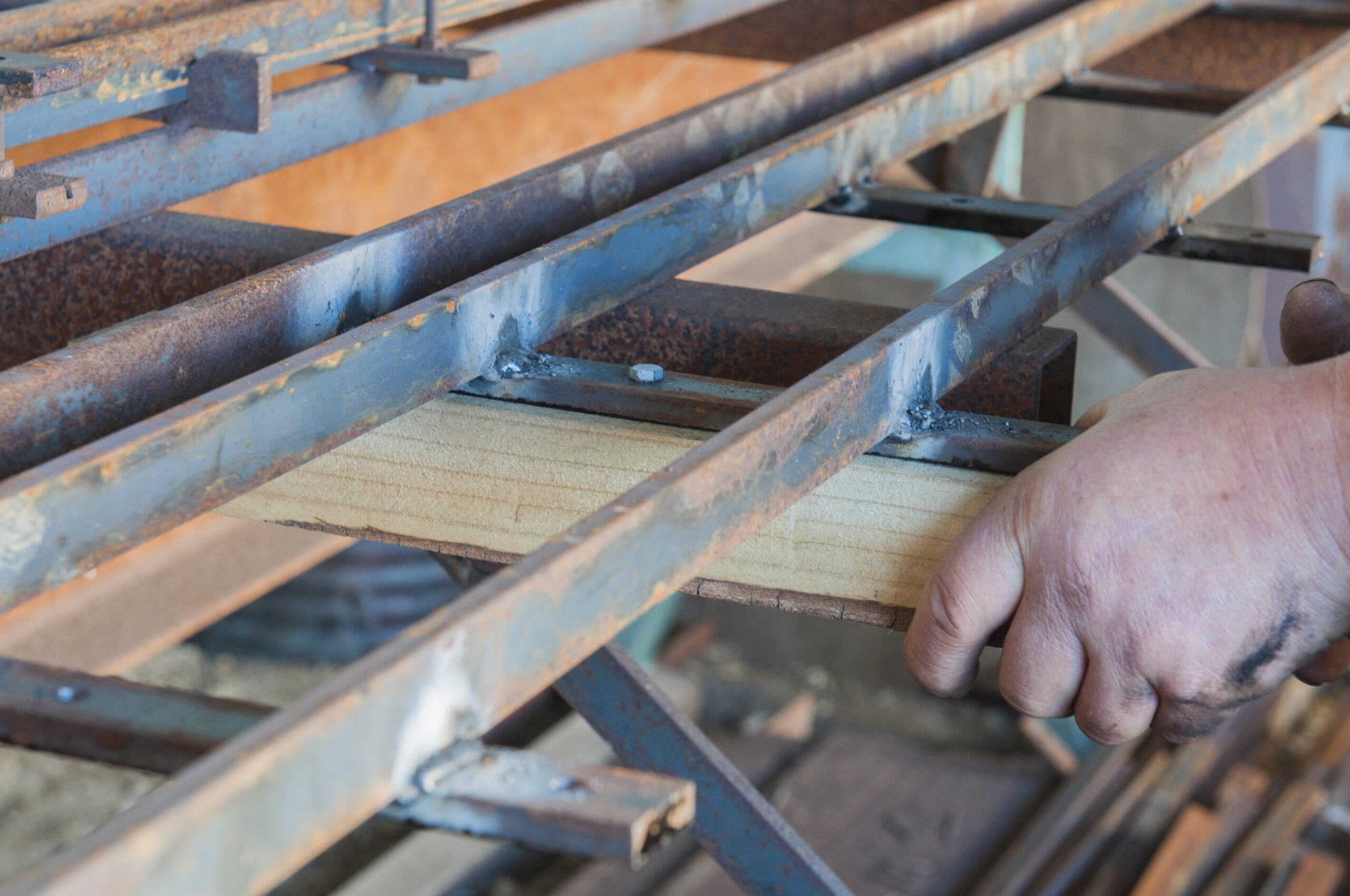
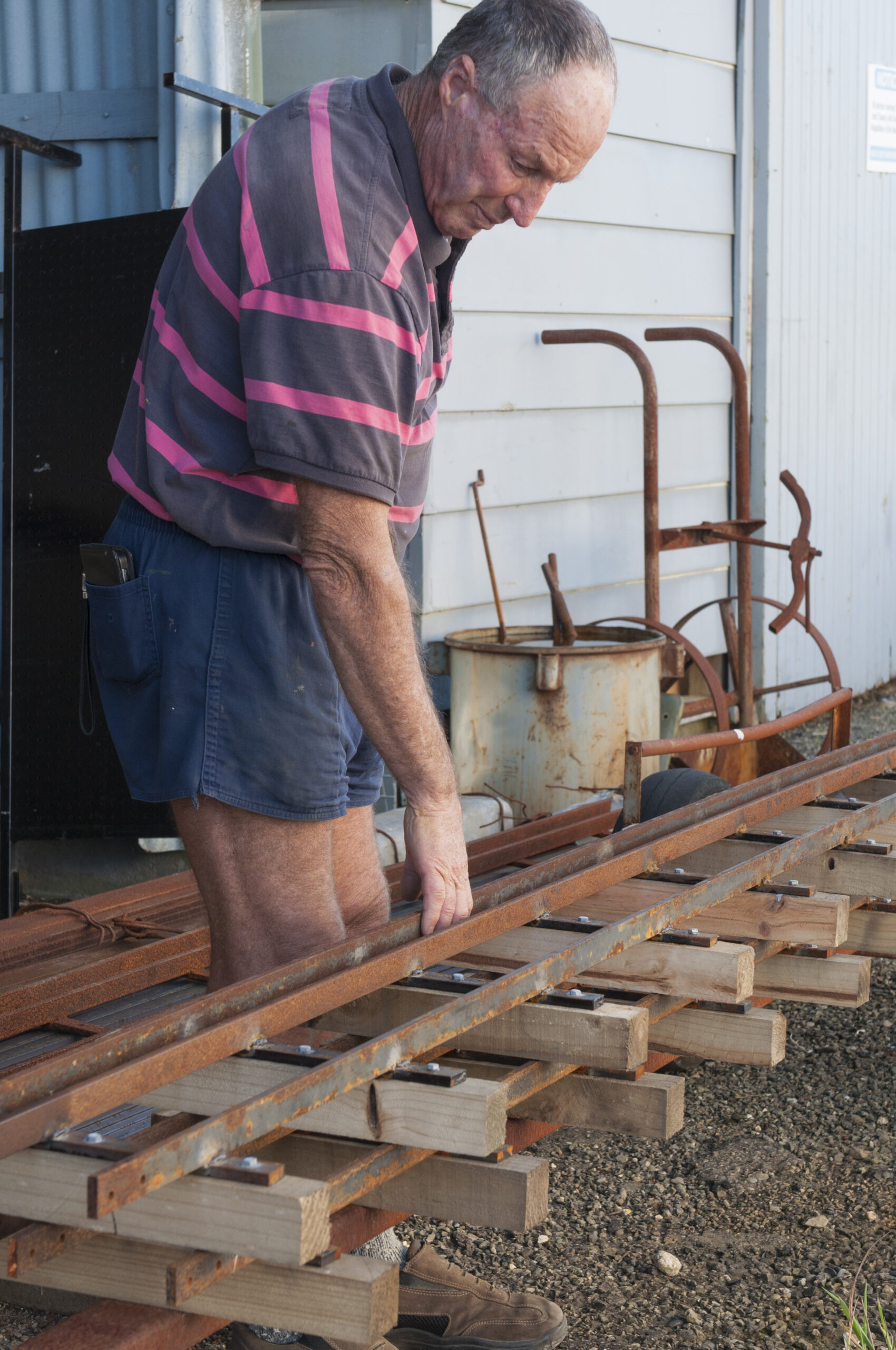
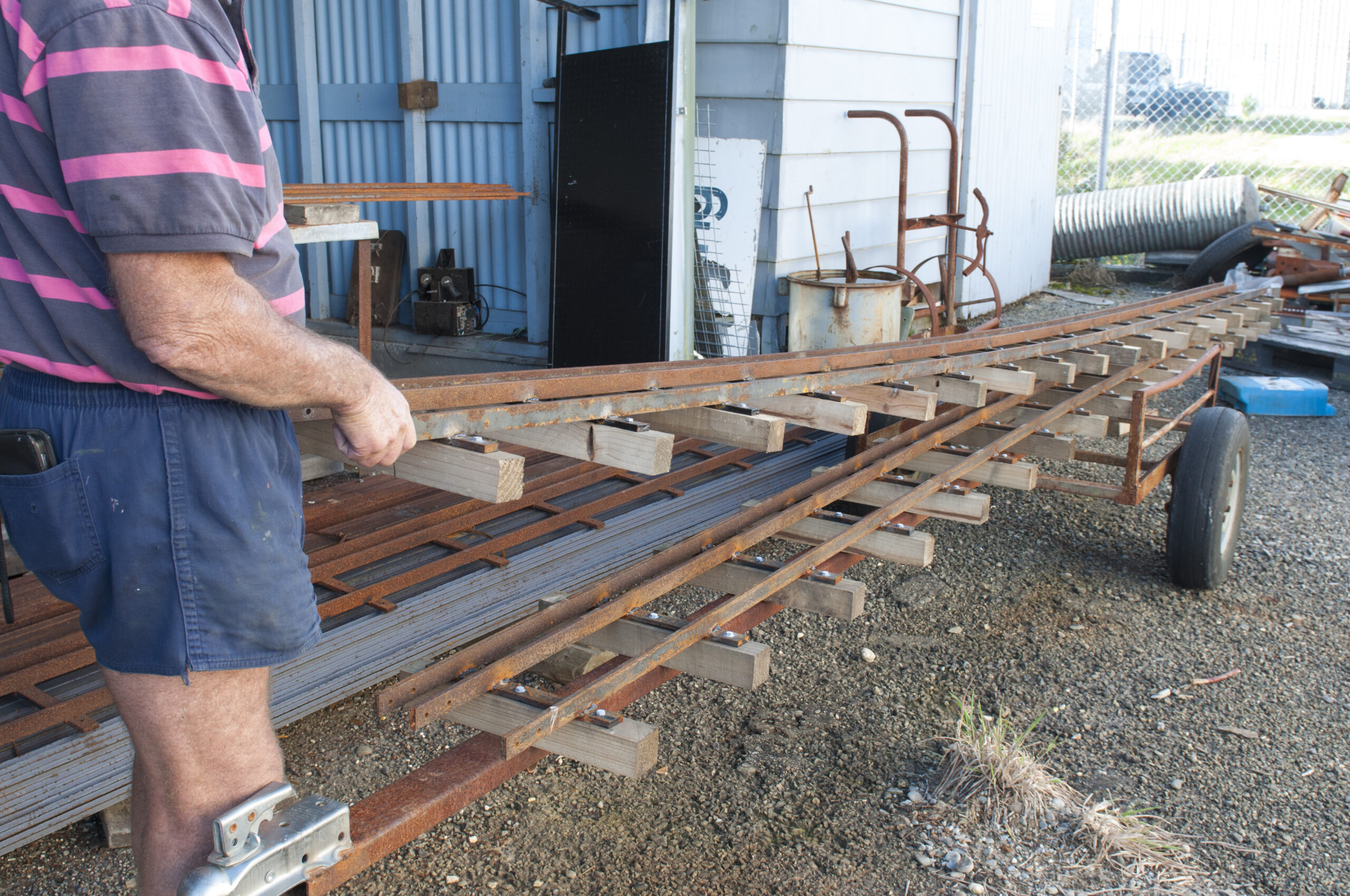
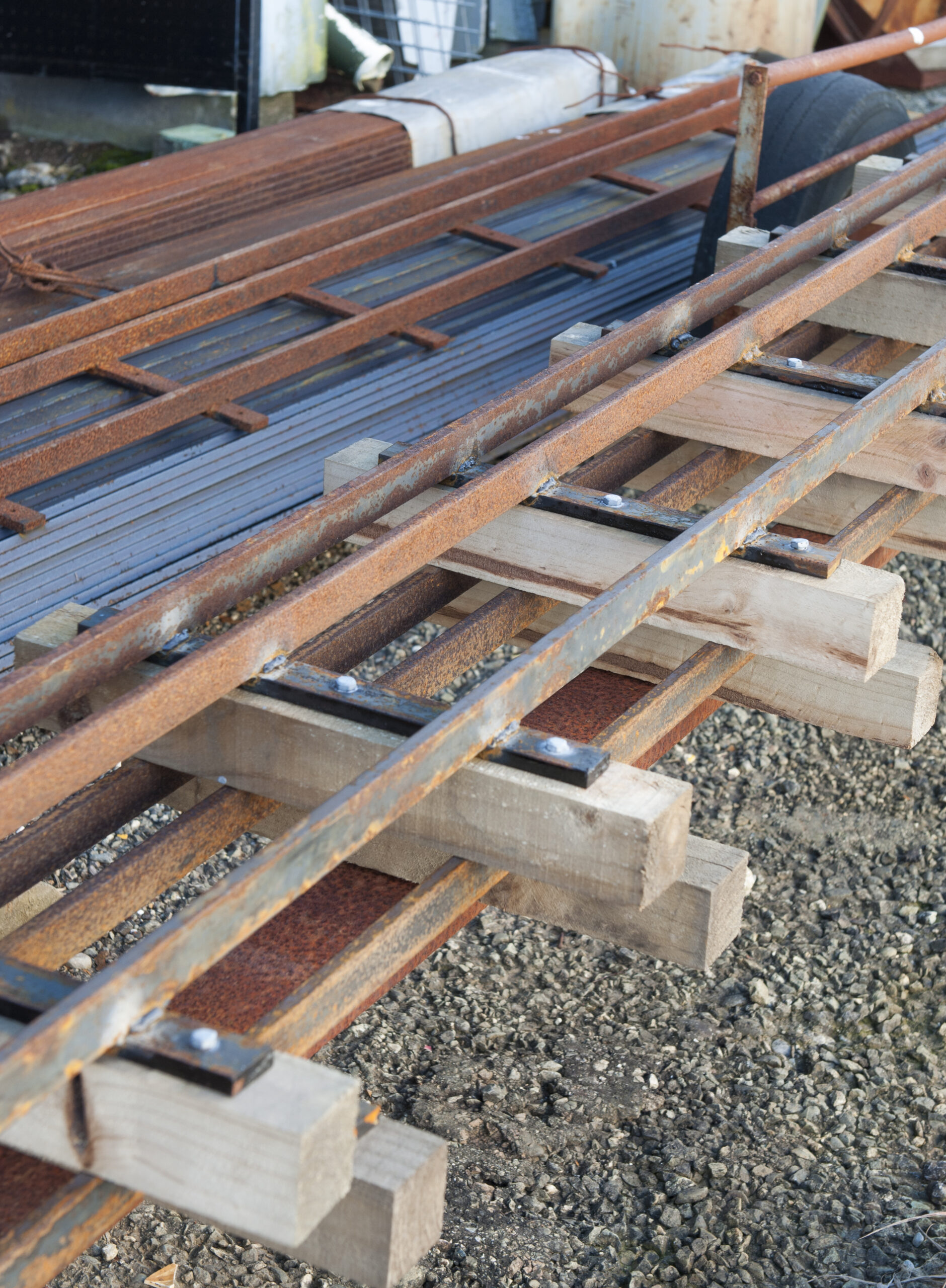
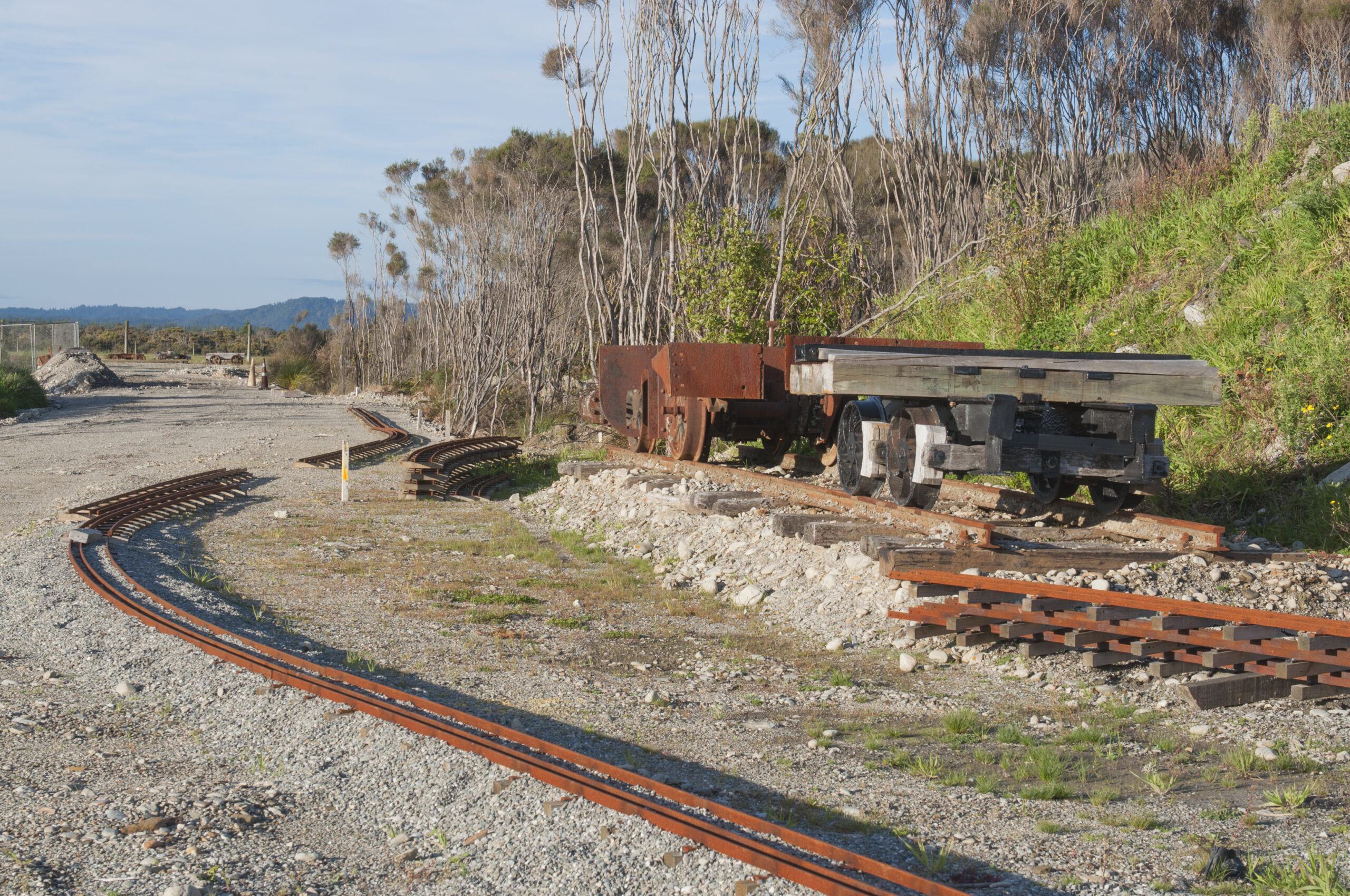
The railway complex will include a ticket office and station platform, as well as a concrete bay alongside, so visiting railway enthusiasts can load their own locomotives onto the track. The track comprises three rails so it can be used for both 71/4-inch and 51/2-inch gauge trains, and was designed so all the curves are 22m radius.
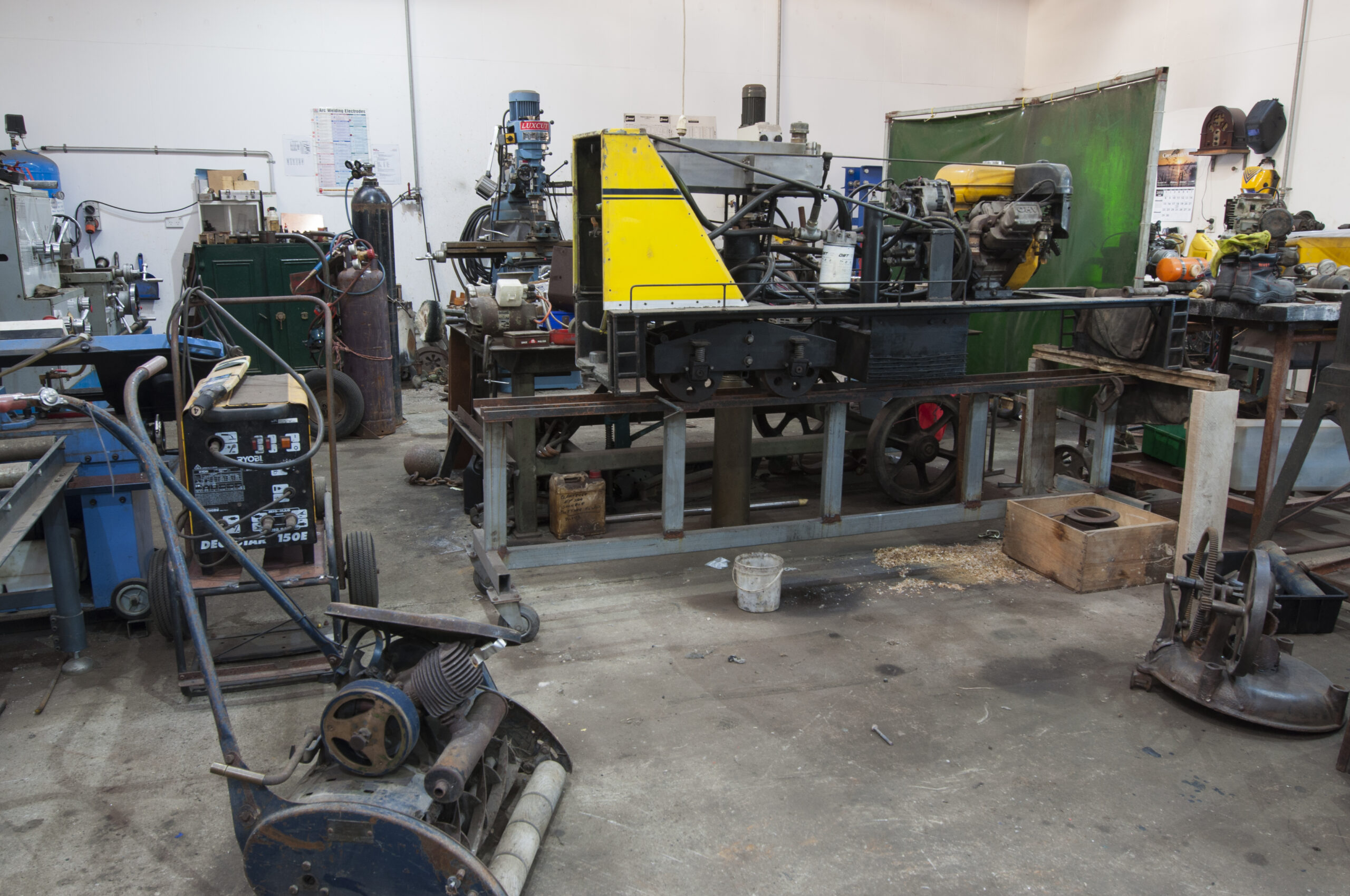
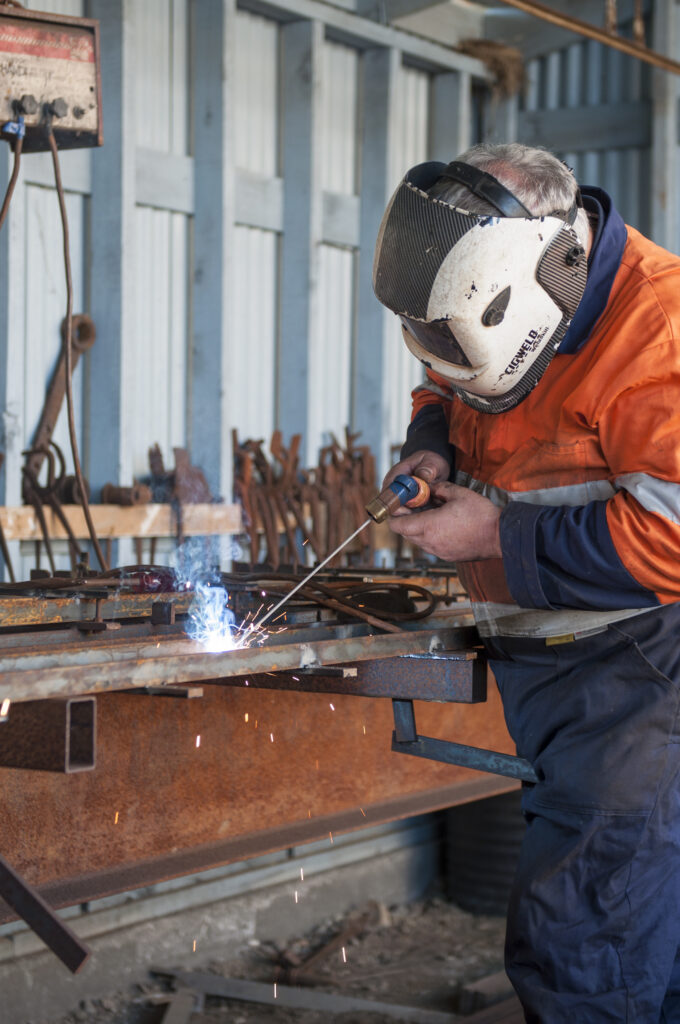
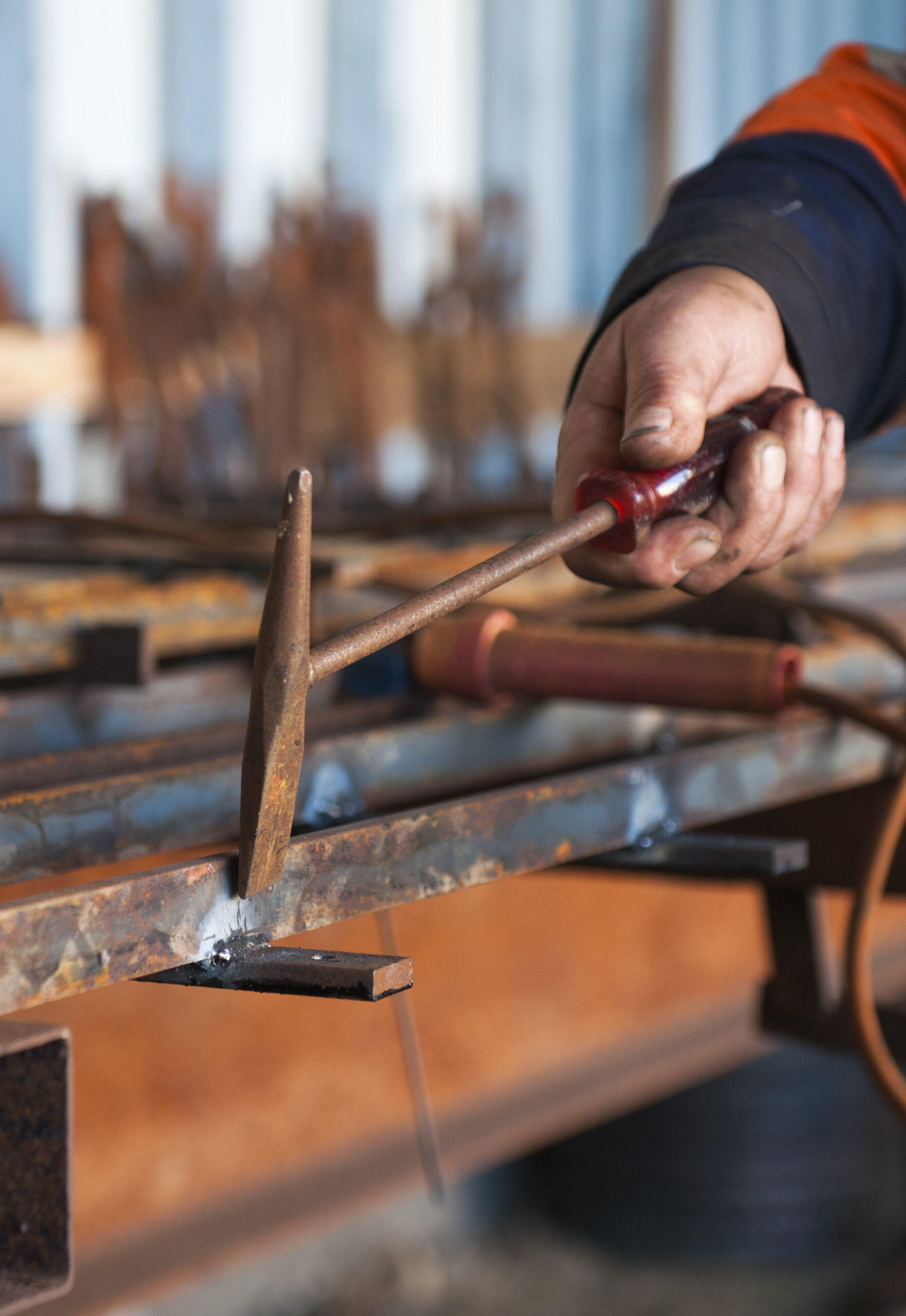
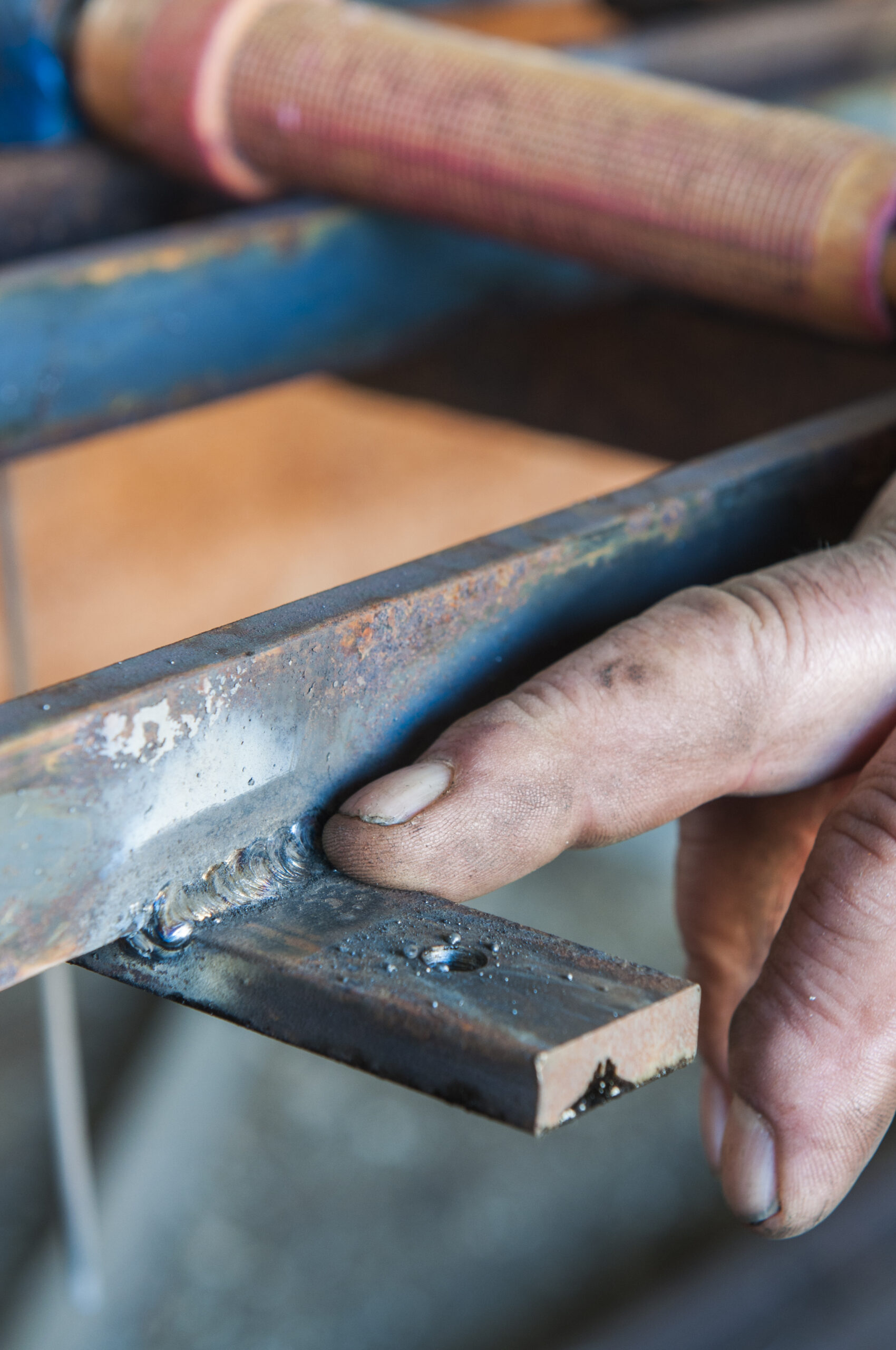
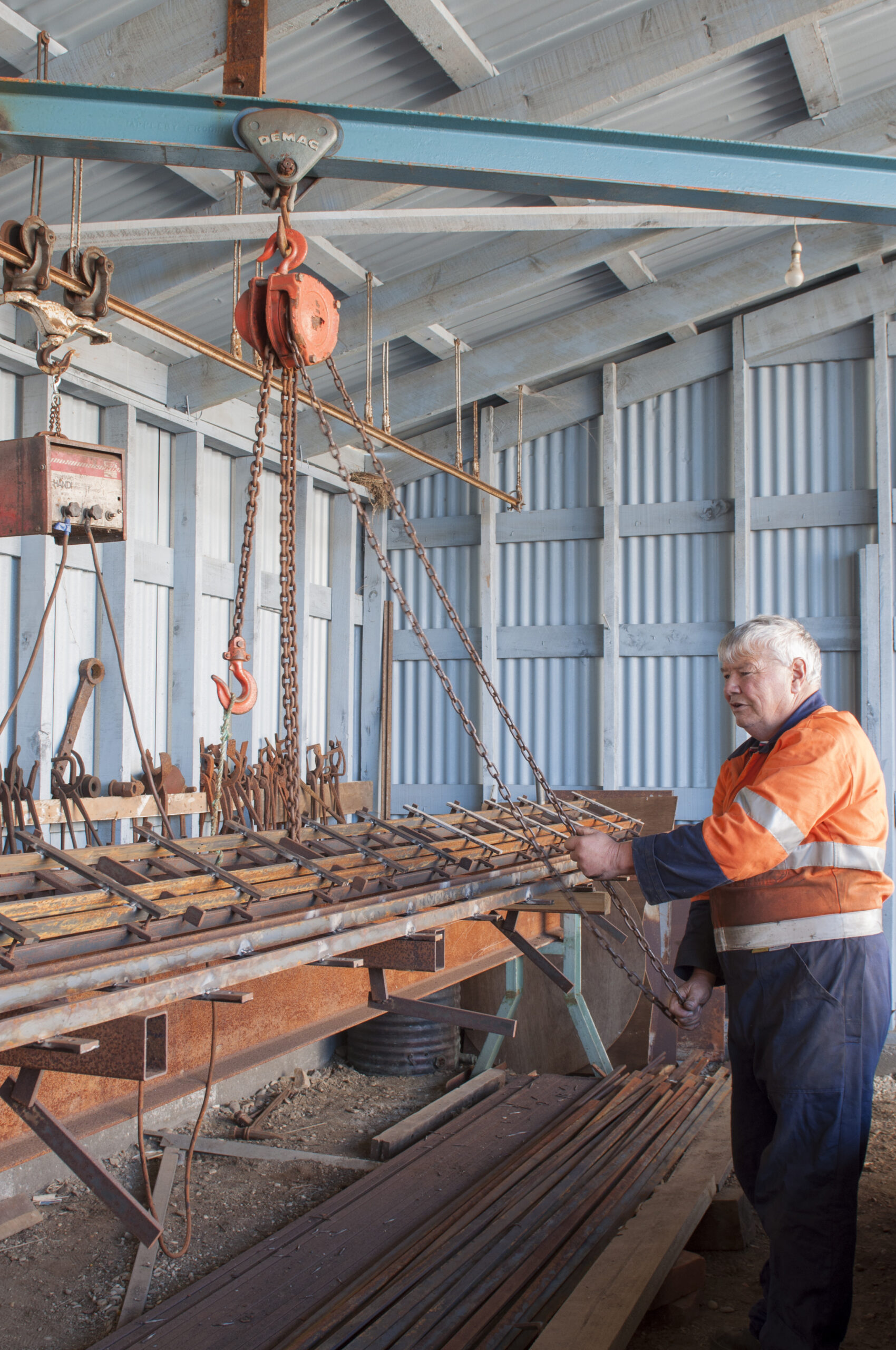
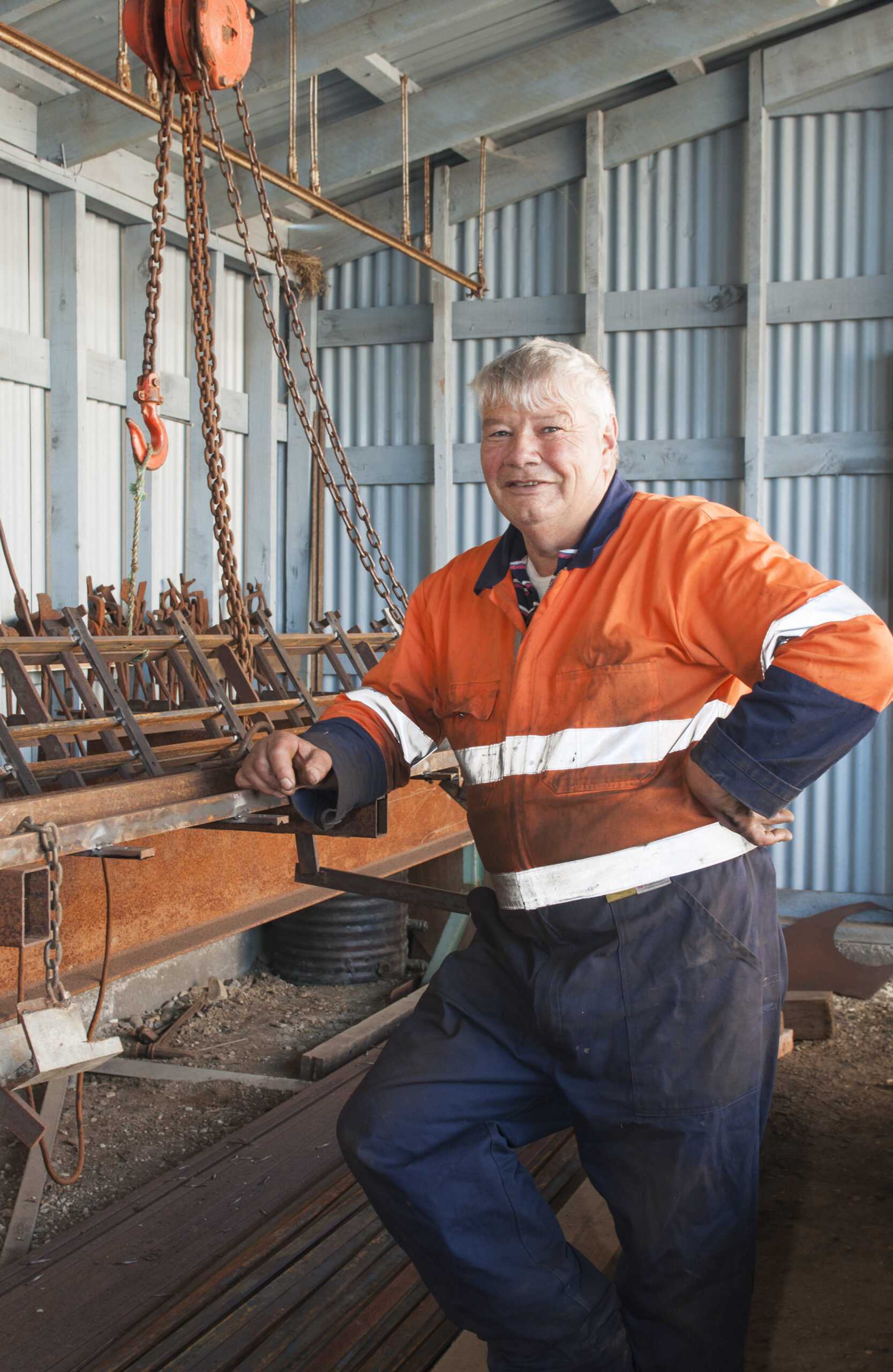
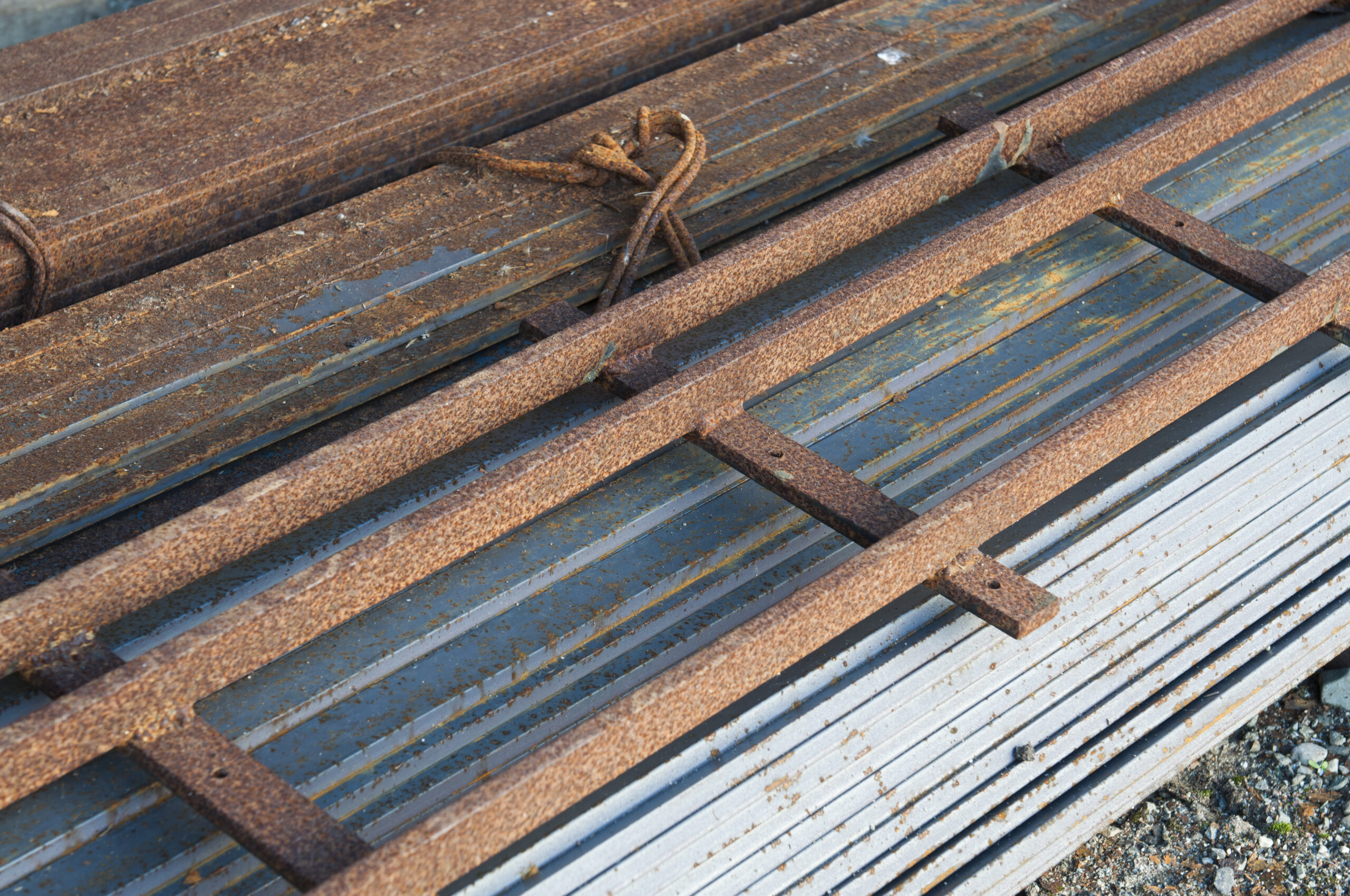
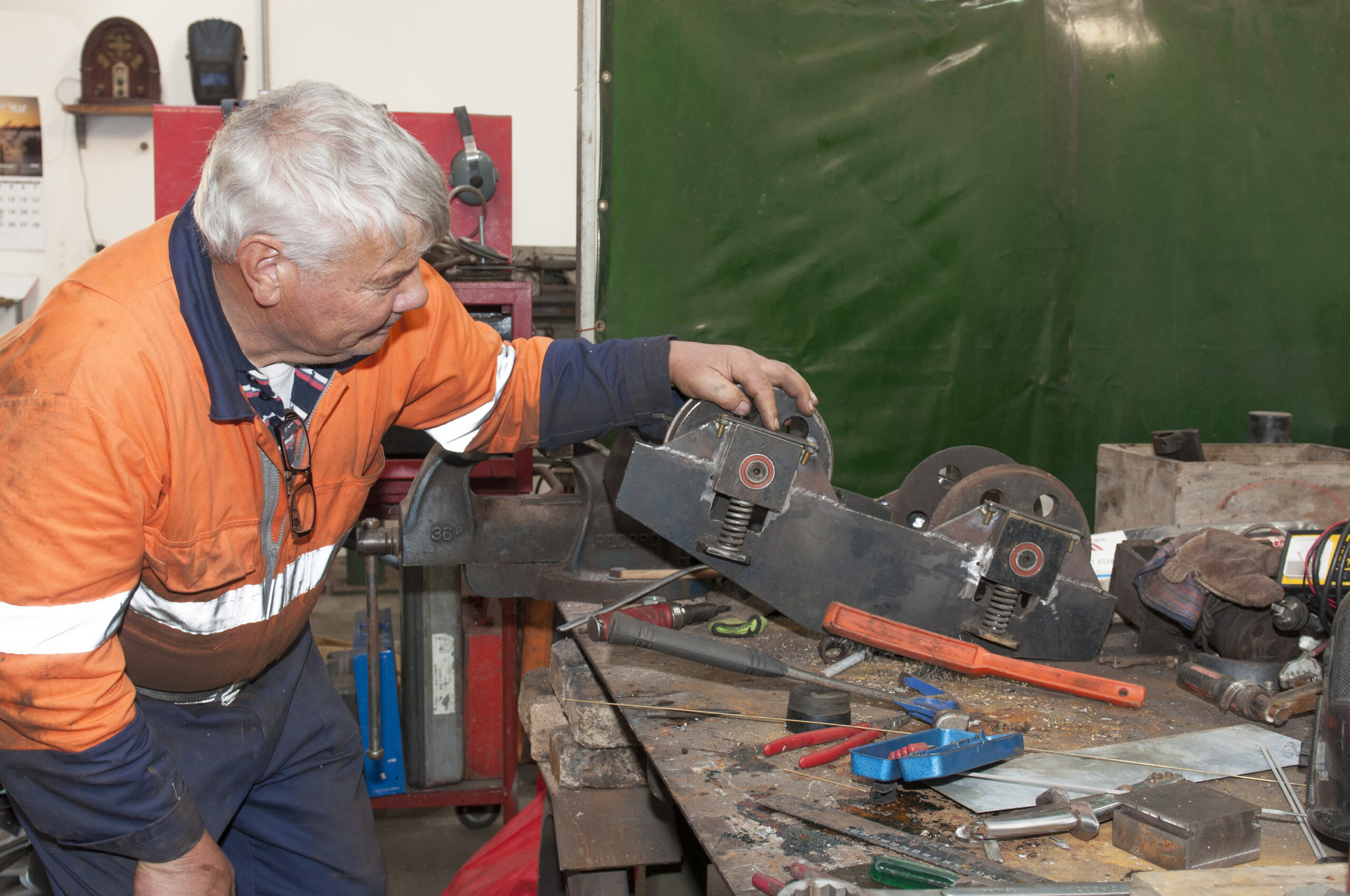
Mort Cruickshank set up a railway workshop to build the tracks, devising hinged jigs for welding both the curved and straight rail sections. “I had to think 10 steps ahead as you have to make allowances for the left and right-hand curves and can’t turn them end to end or the third rail doesn’t line up.”
The lengths of steel are cut with a donated, reconditioned bandsaw and welded with Mort’s “brand new” 1973 welding machine, which hangs on a mobile frame that came out of a picture theatre. “They used to hang the scenery on it for live shows,” he says. The small crane used for loading the tracks onto the jig, turning them, and transferring the finished ones to a waiting trailer was used in a local hardware shop to move merchandise between the floors.
Mort also set up a jig for drilling a total of 6000 holes, three per stay. The track, which is fixed to treated pine sleepers, will have 200 links in its 1km circuit. It takes about 45 minutes to make one length of track from start to finish on the production line.
There will be a main engine and service engine with three wagons each able to carry four adults and the driver sitting in the tender. They opted for petrol-driven locomotives so the volunteer operators don’t have to have steam tickets.
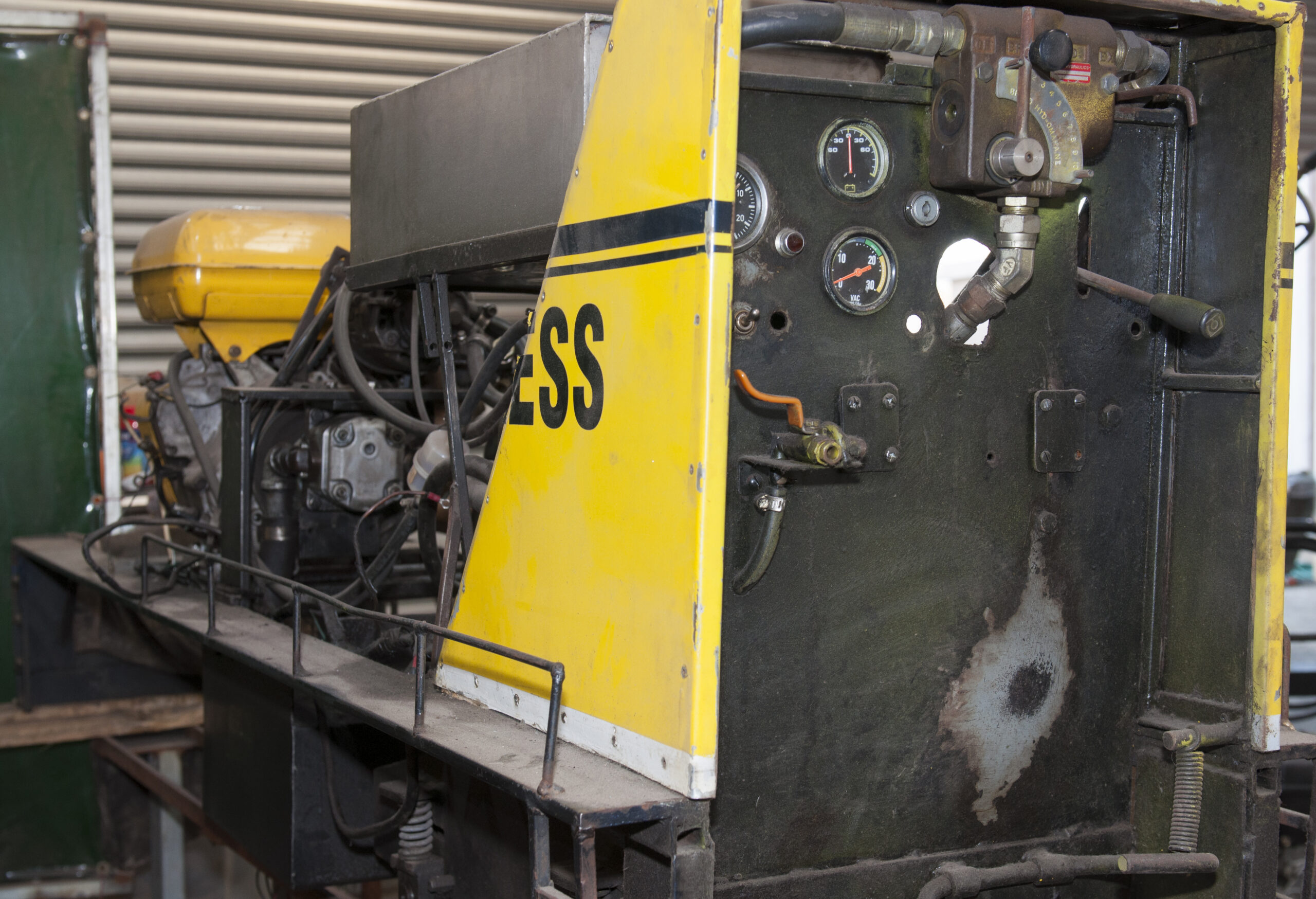
The engines are being rebuilt from secondhand machines, with major modifications necessary to get them up to New Zealand model engineering specifications for carrying passengers.
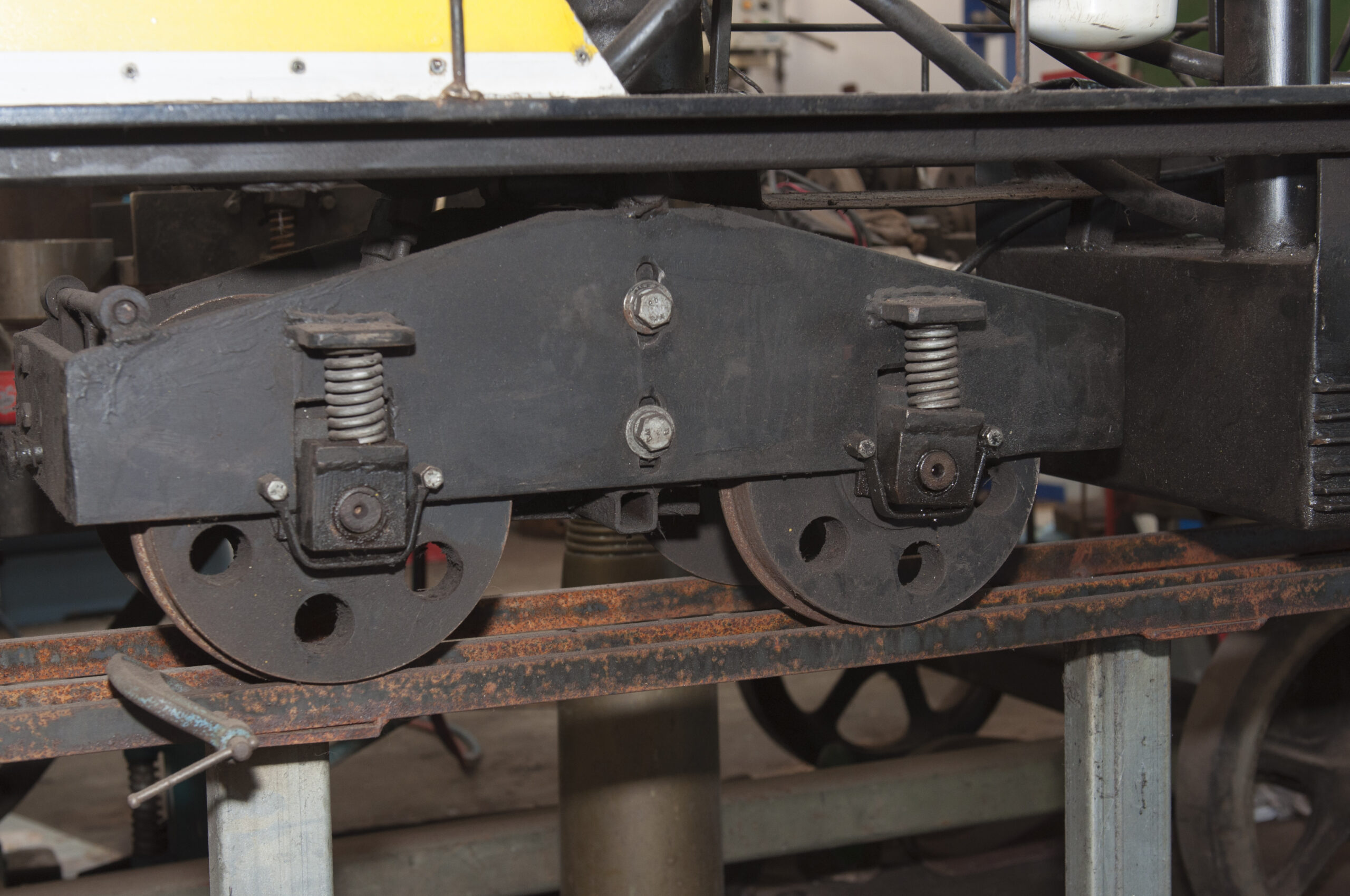
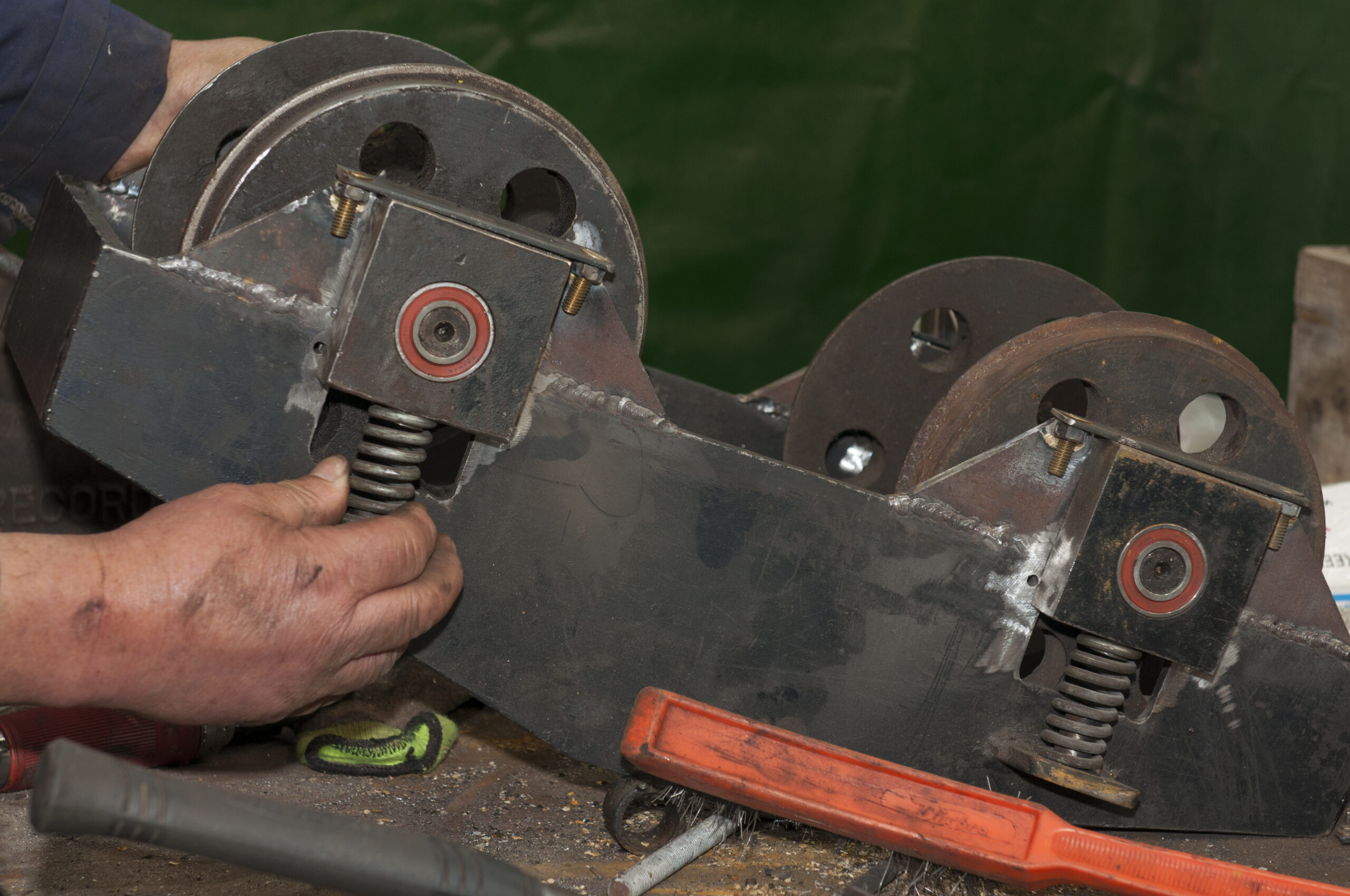
The previously nylon bearing blocks for the bogies have been remade using steel from an old set of forklift prongs, then braced with steel plates to eliminate side movement. One hydraulic motor came from a machine that had been used to feed ferrets.
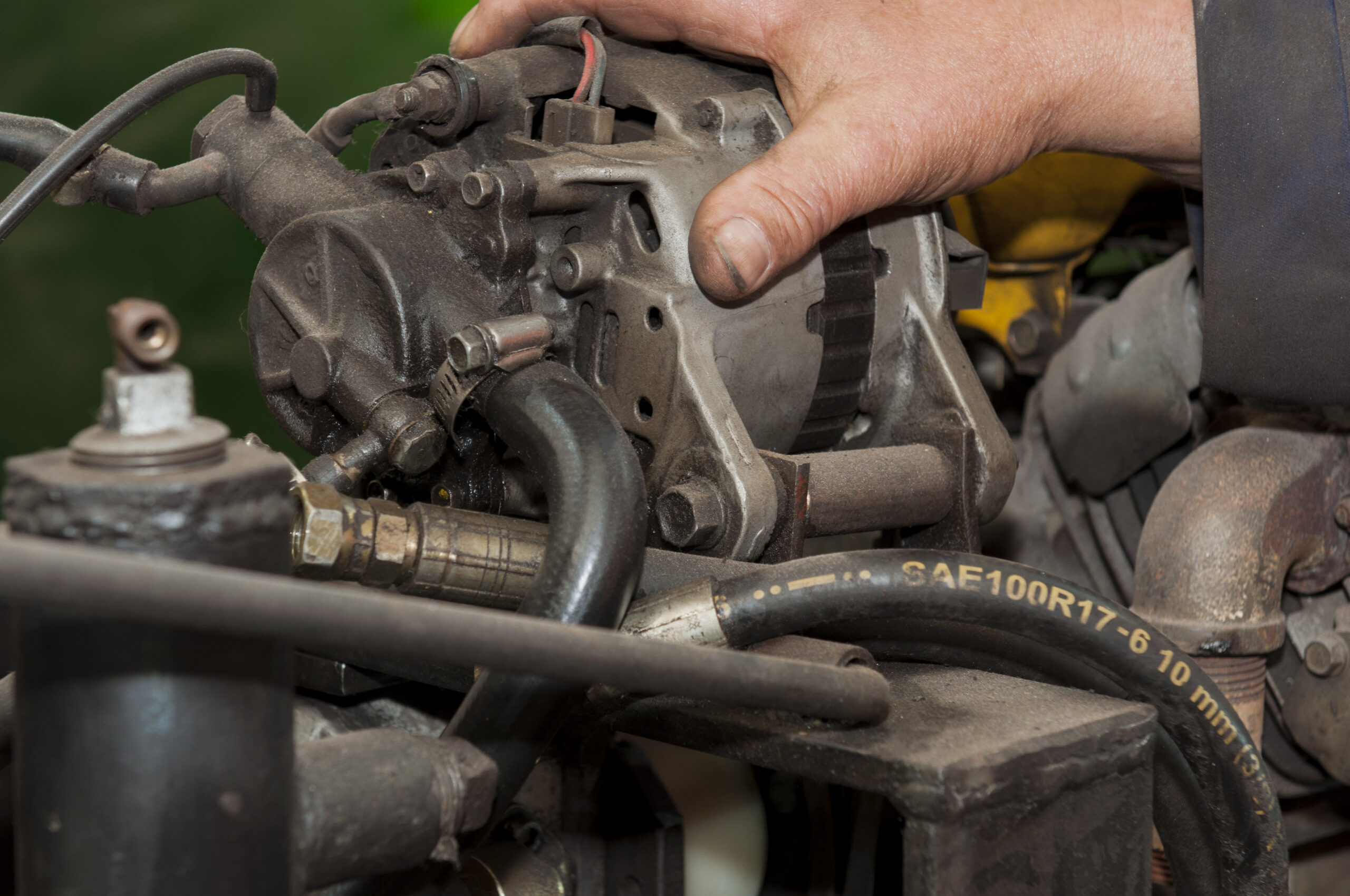
“A guy down at Ross was dumping it. I went and had a look, and the hydraulics were exactly the same as on the other locomotive,” says Mort. The motor creates pressure up to about 2500lb, driving all eight wheels. They adapted an alternator off a Nissan truck to create the charging system for the battery, using the vacuum system to run the brakes on the engine, which will be reshaped to look like the round-nosed DG shunters used in the last days of logging.
Some ingenious repurposing goes on to keep costs down. The railway turntable came from a car showroom, while Mort plans to build a traverser (a transfer table that shifts the rail to the side) using a mechanism off a tip truck. “For $1200, I can build a traverser which would normally cost around $4000.”
Mike Rooney, who is doing all the digger work for the railway, as well as landscaping the site, has dug down 5 metres in places and moved tonnes of soil. “I moved a whole hill. It’s taken me years,” he says. The tracks are set in gravel bedding from a little shingle quarry on site.
Old pieces of machinery and gold-mining gear will be displayed along the route of the railway, which they hope to have up and running within a year.
Oldest working machine
The oldest working machine at the park is a 1862 air-cooled Lister steam-driven milking machine that powered a single cow plant. “A farmer found it when he was having a clean-up in his cow shed that dated back to the 1920s,” says Mort. It will be one of the star attractions in the park’s planned working milking shed, where they will display dairying memorabilia and restored vintage machines demonstrating the three different pre-electronic mechanical pulsating systems.
Out-of-school teachers
Westland High School can’t provide practical experience in engineering as it no longer has a metalwork teacher, so the students come to the park to get their NCEA credits. “It’s a bit like a pre-apprenticeship. They get to use our machines and learn a bit of geometry and trigonometry along the way,” says Mort, who has done a lot of apprentice training as well as being involved with Boys’ Brigade for more than 30 years. “They love it up here and often come up in free periods too.”
Thirty students are coming to do a variety of activities over 13 weeks at the end of the year. As well as helping in the workshops, they will be involved with DOC’s wetland project.
The park also runs courses for Reap House, including women’s welding classes. One woman who originally did the course so that she could make outdoor furniture is now helping weld railway tracks.
Fire engines
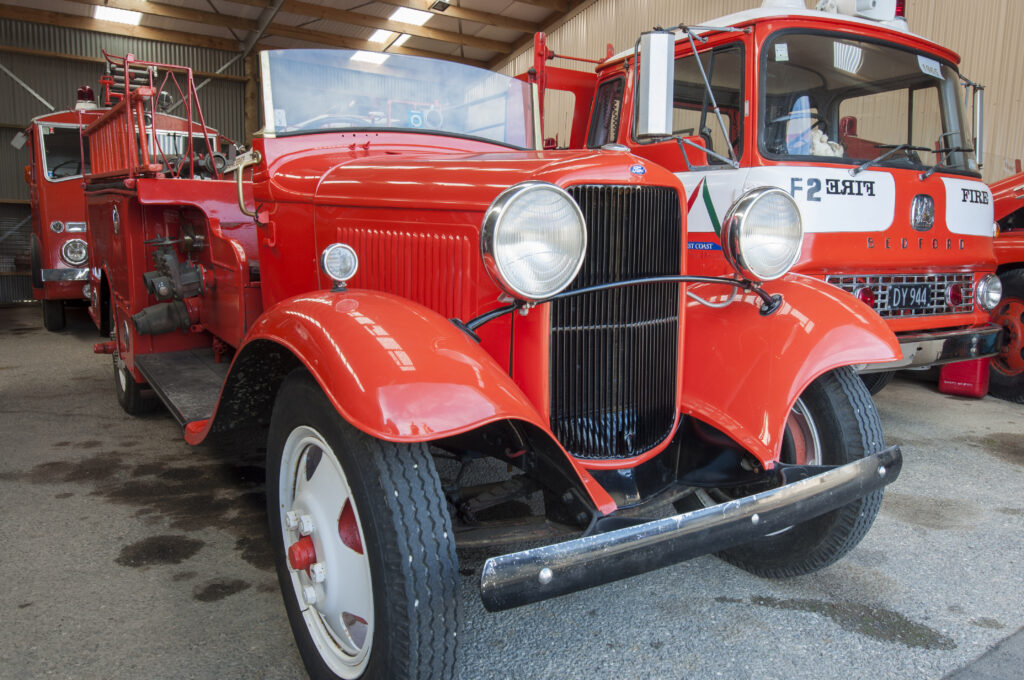
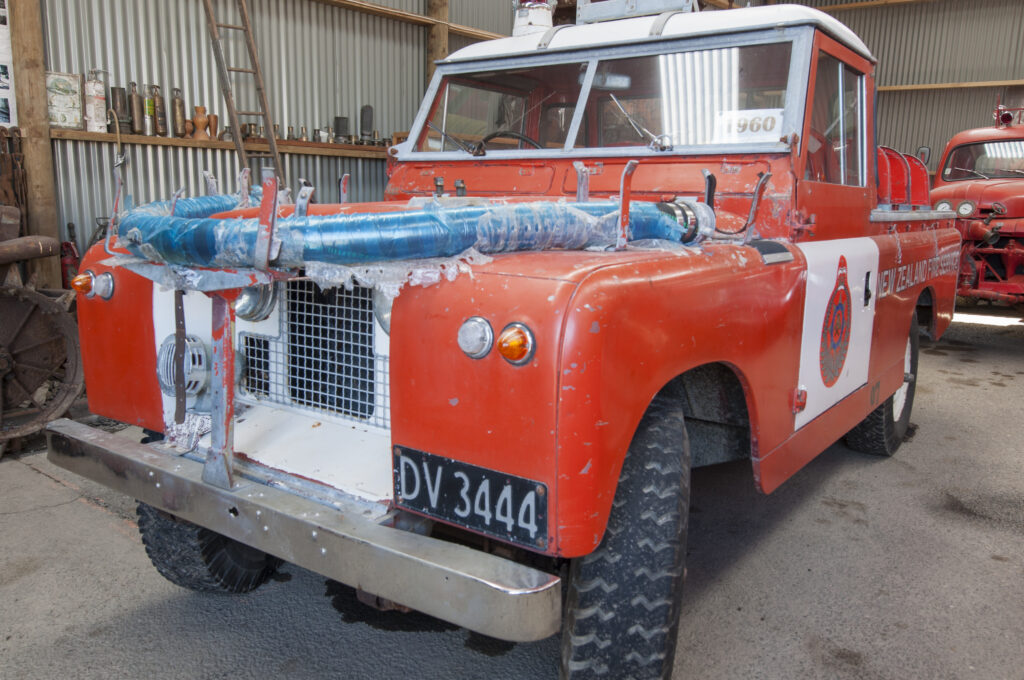
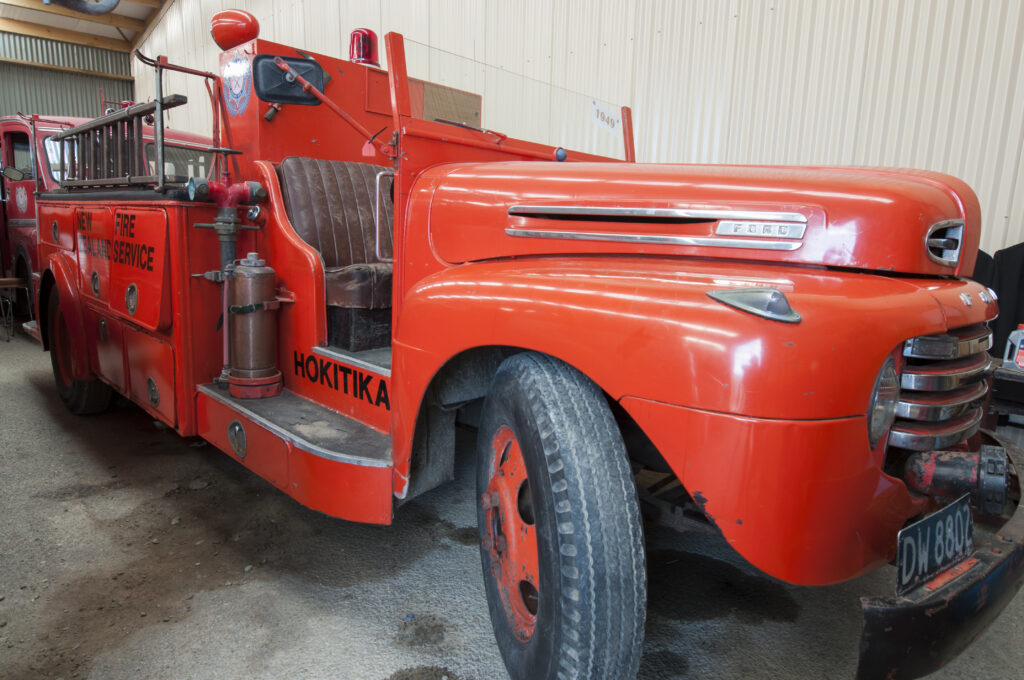
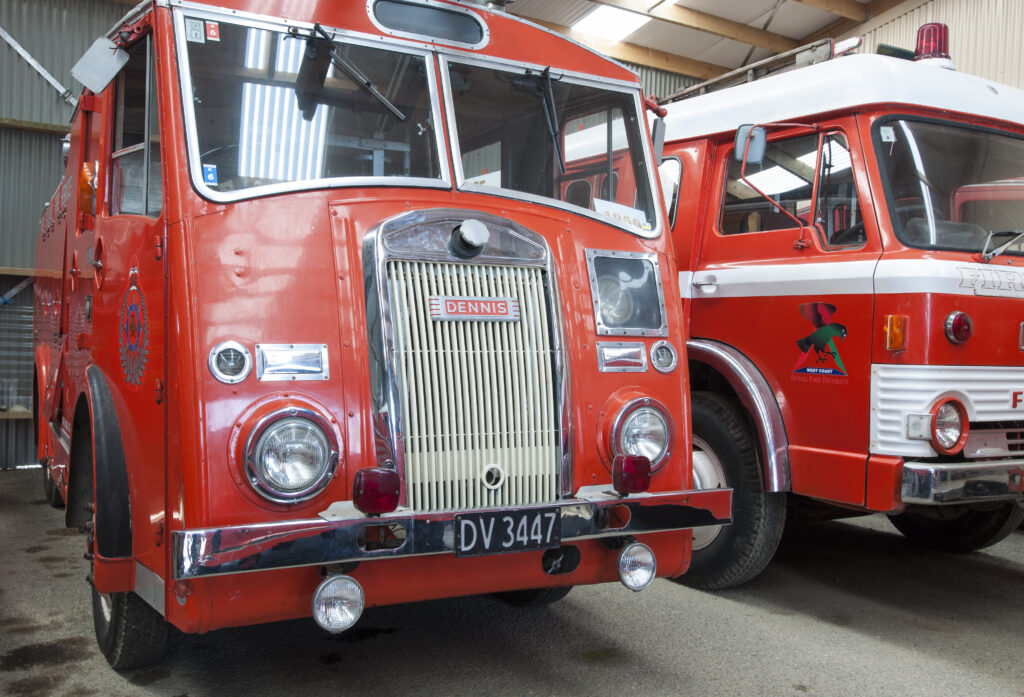
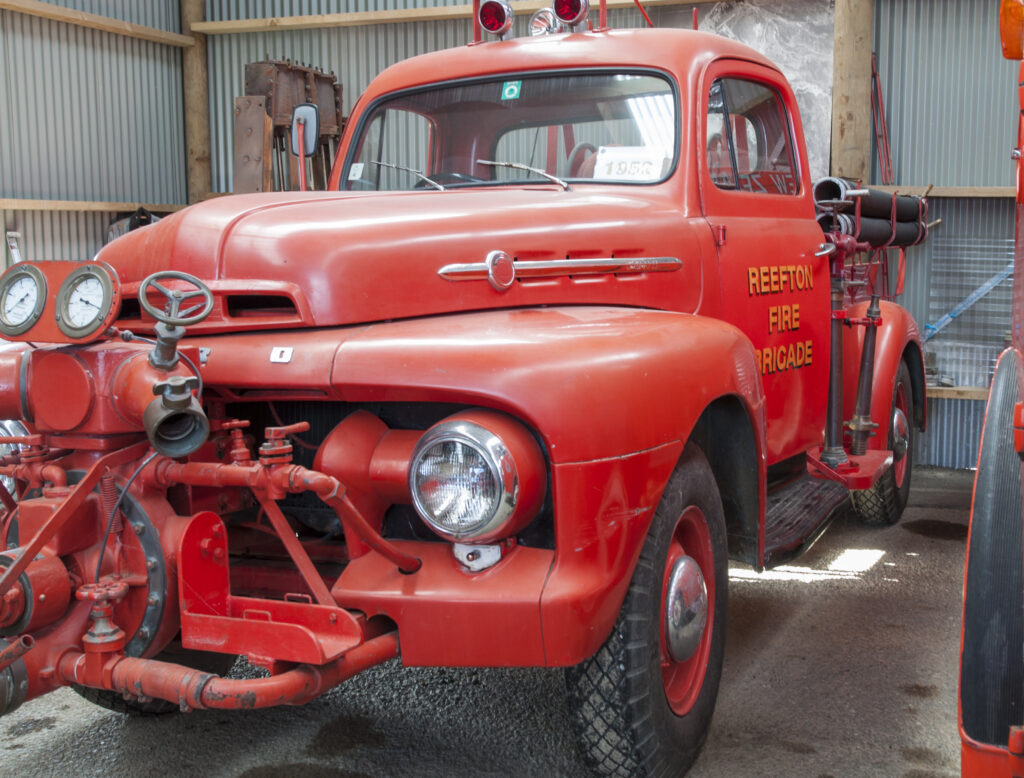
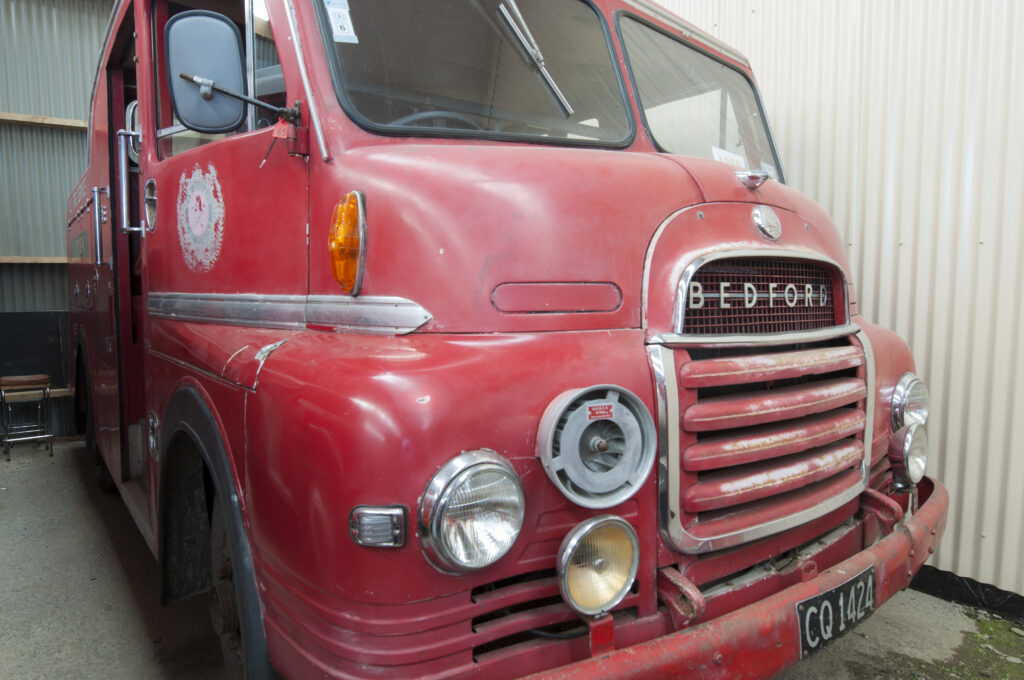
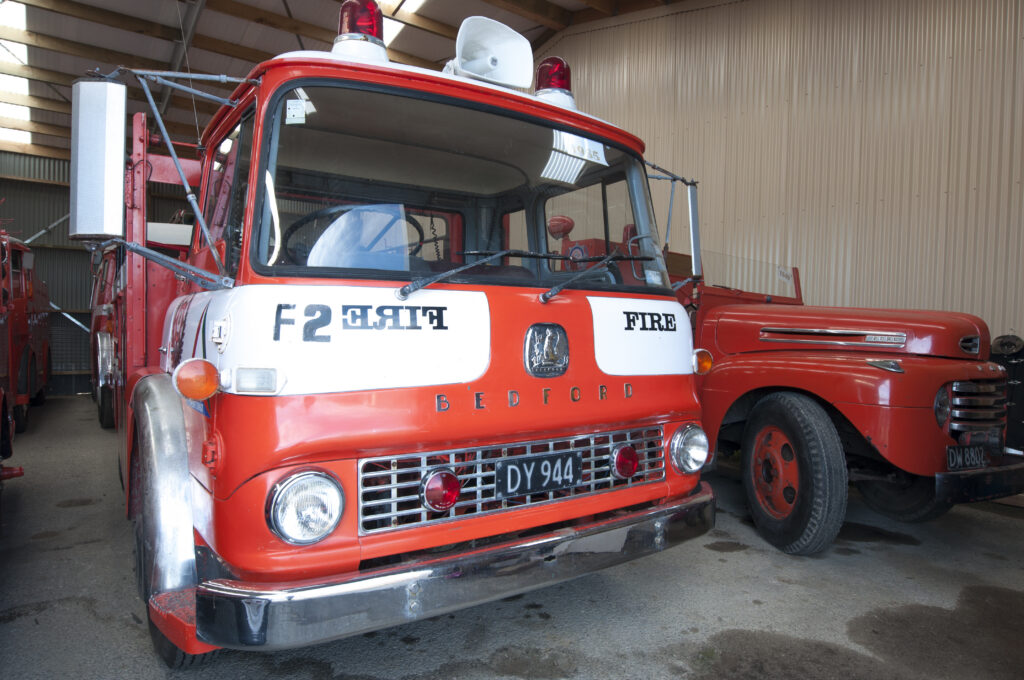
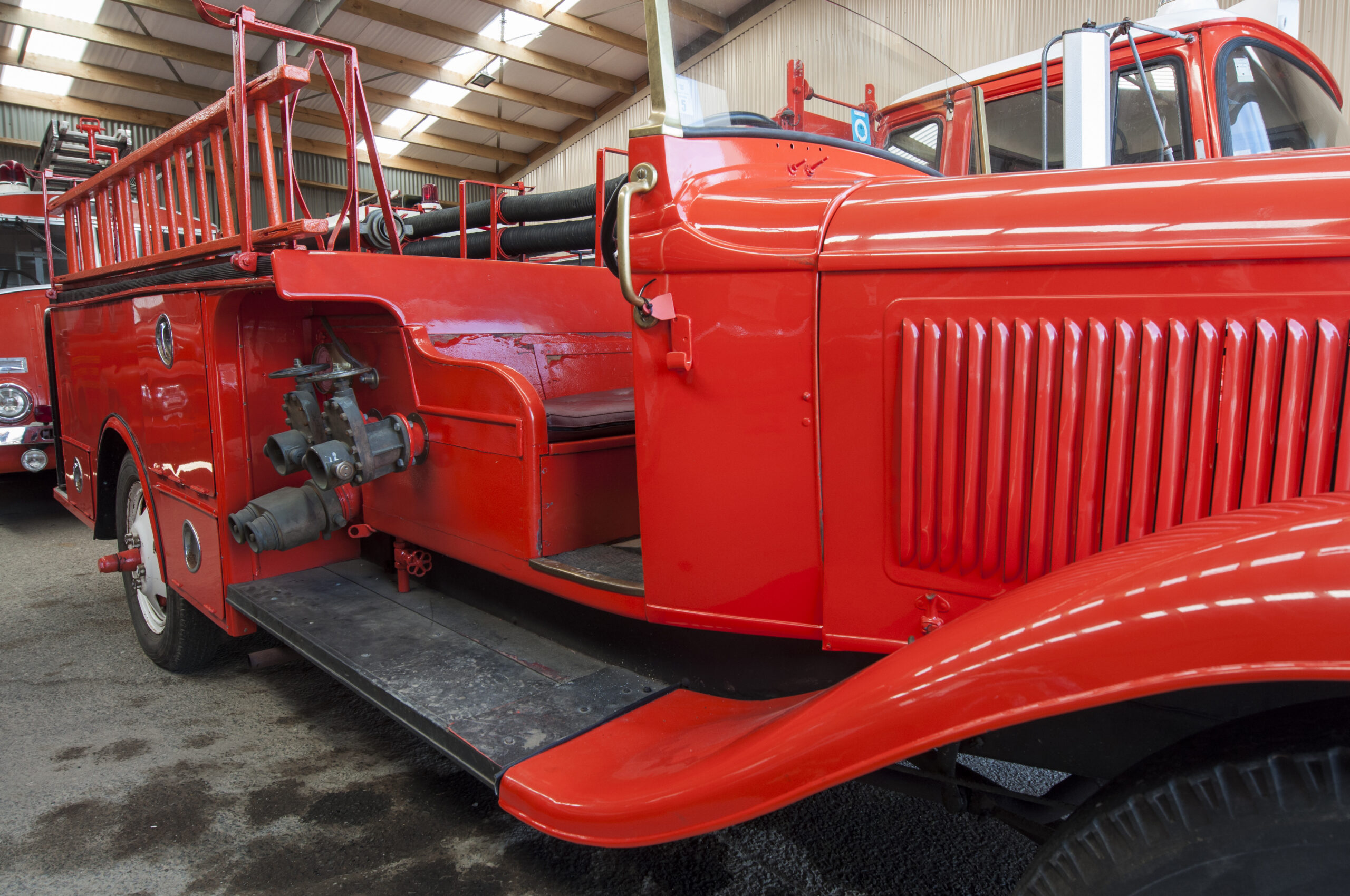
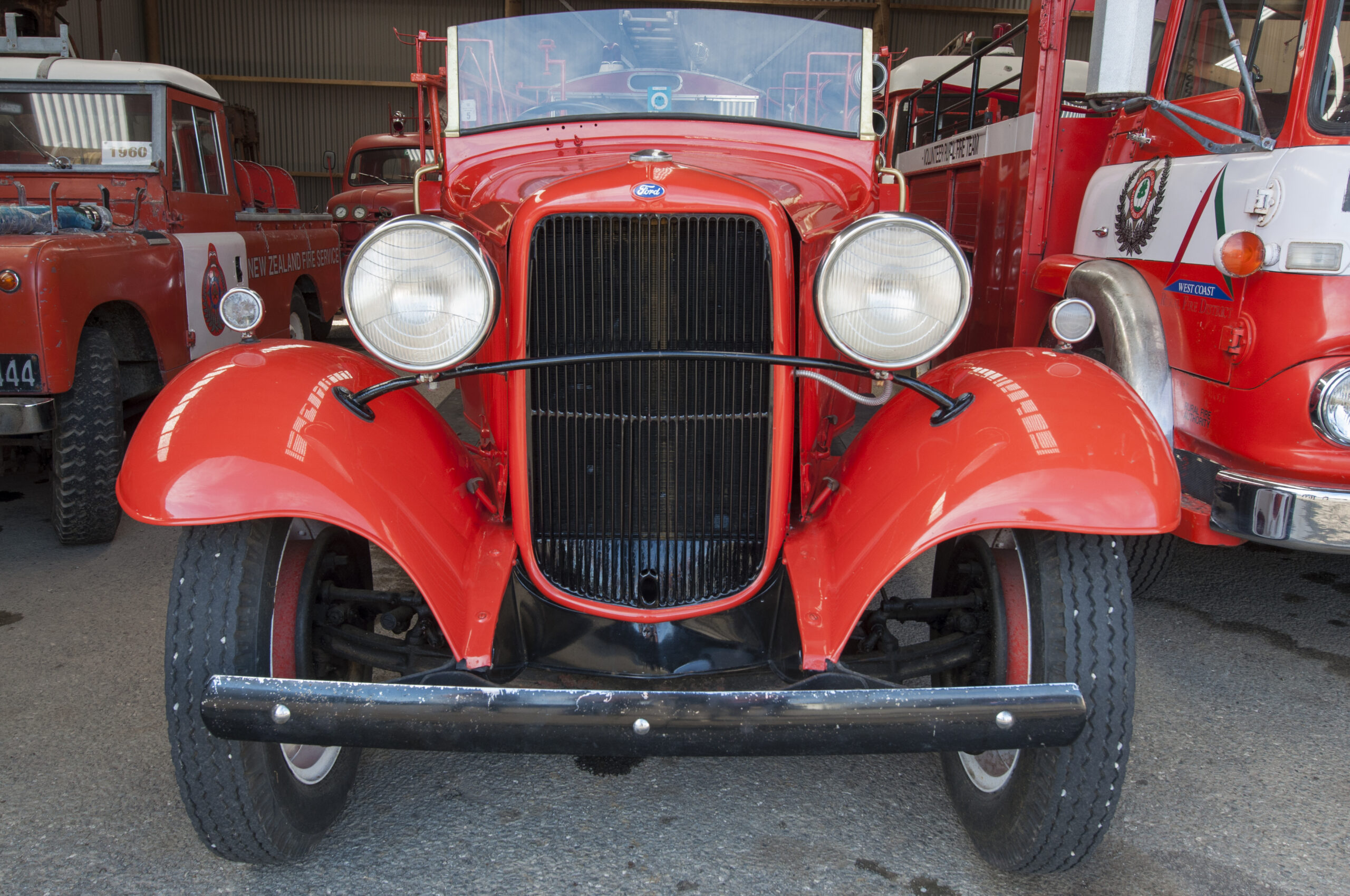
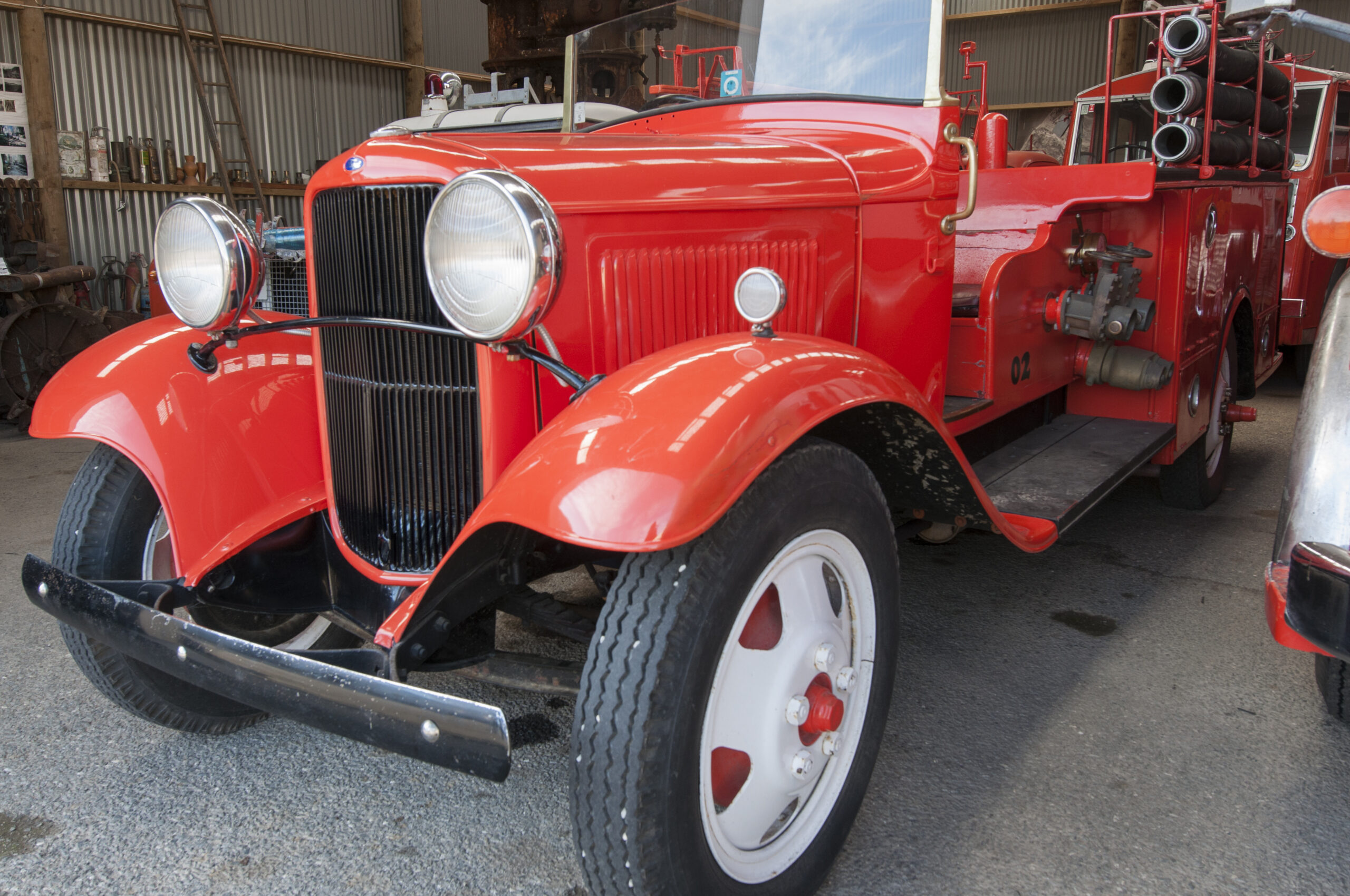
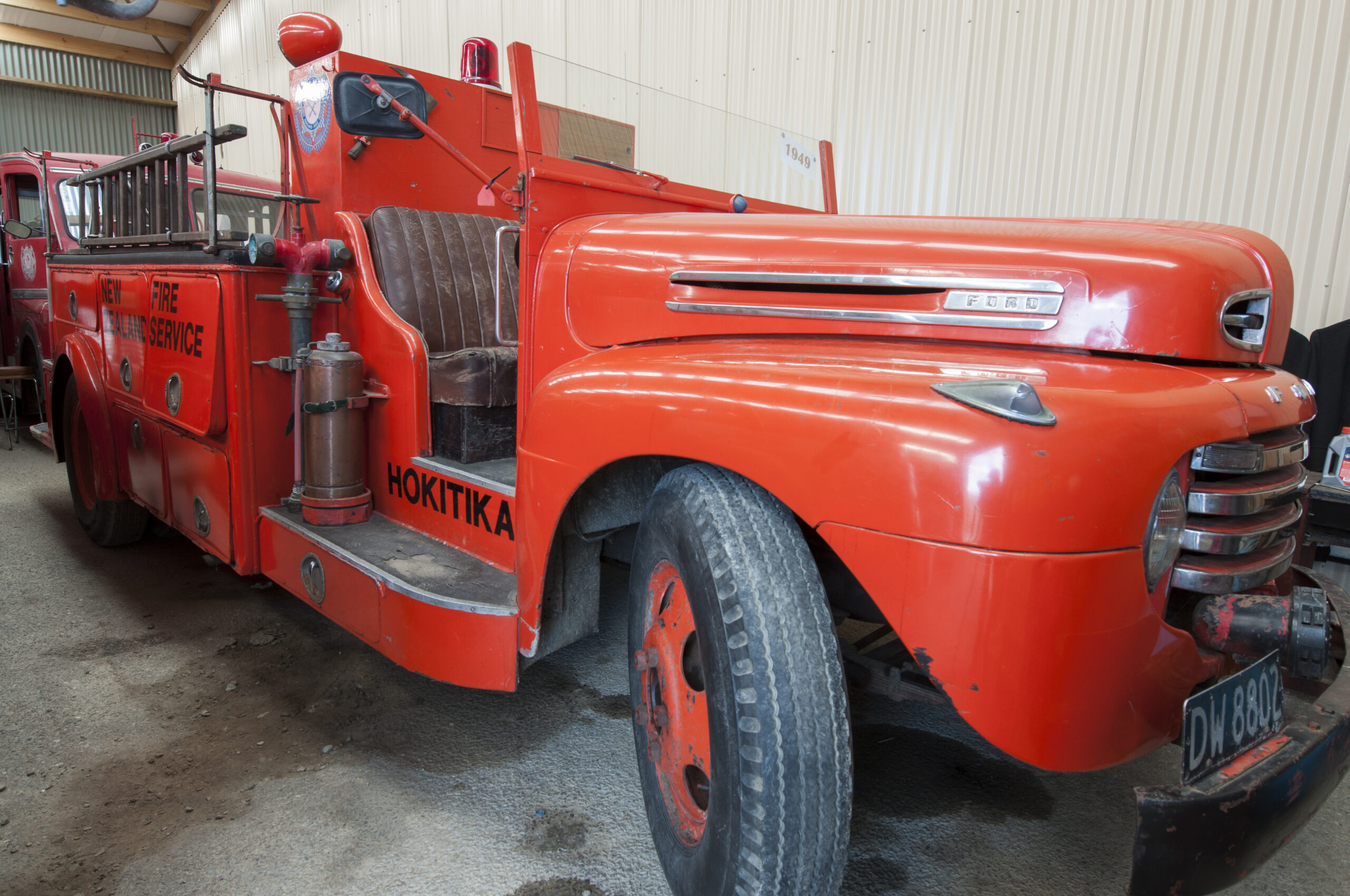
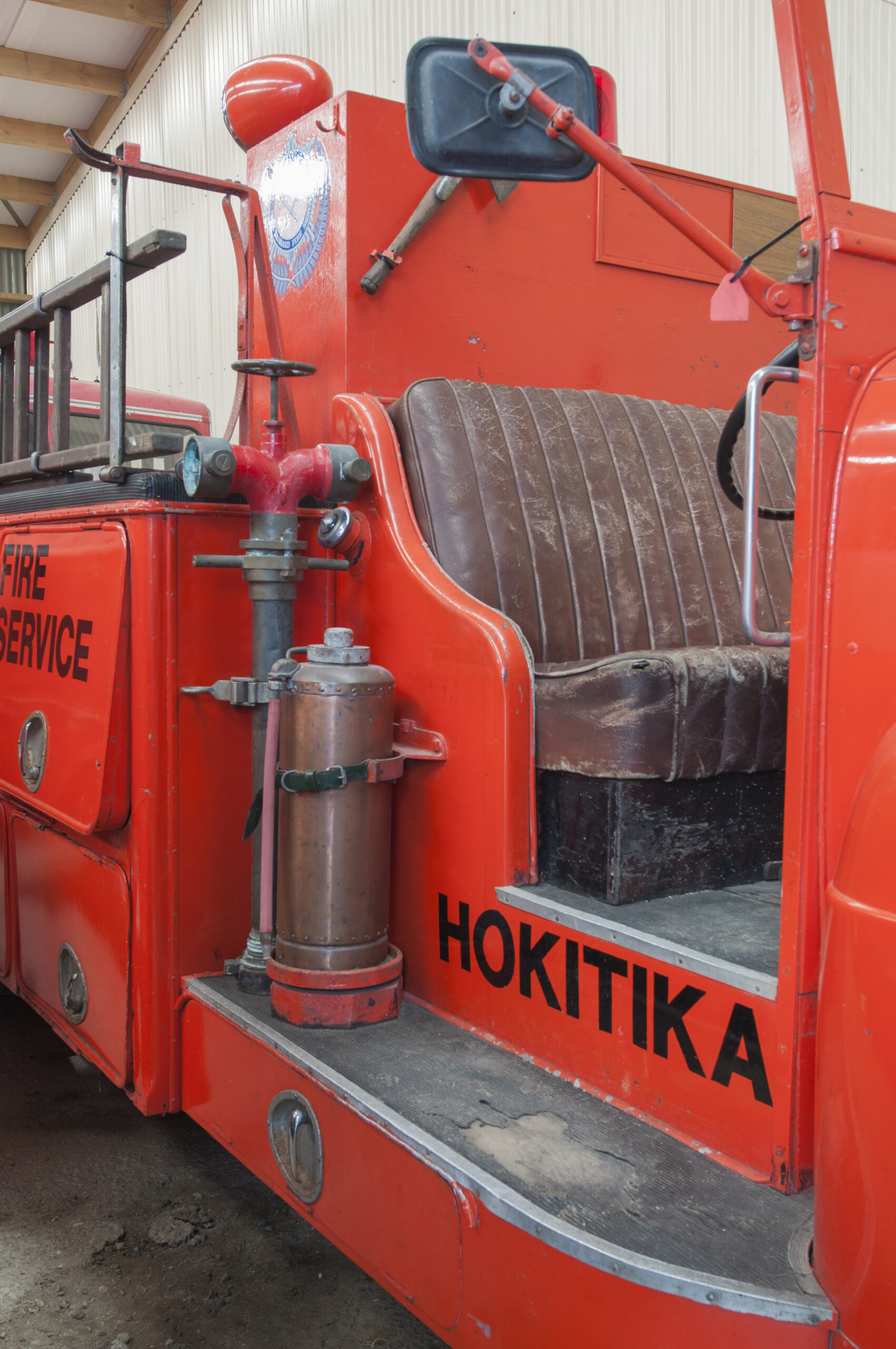
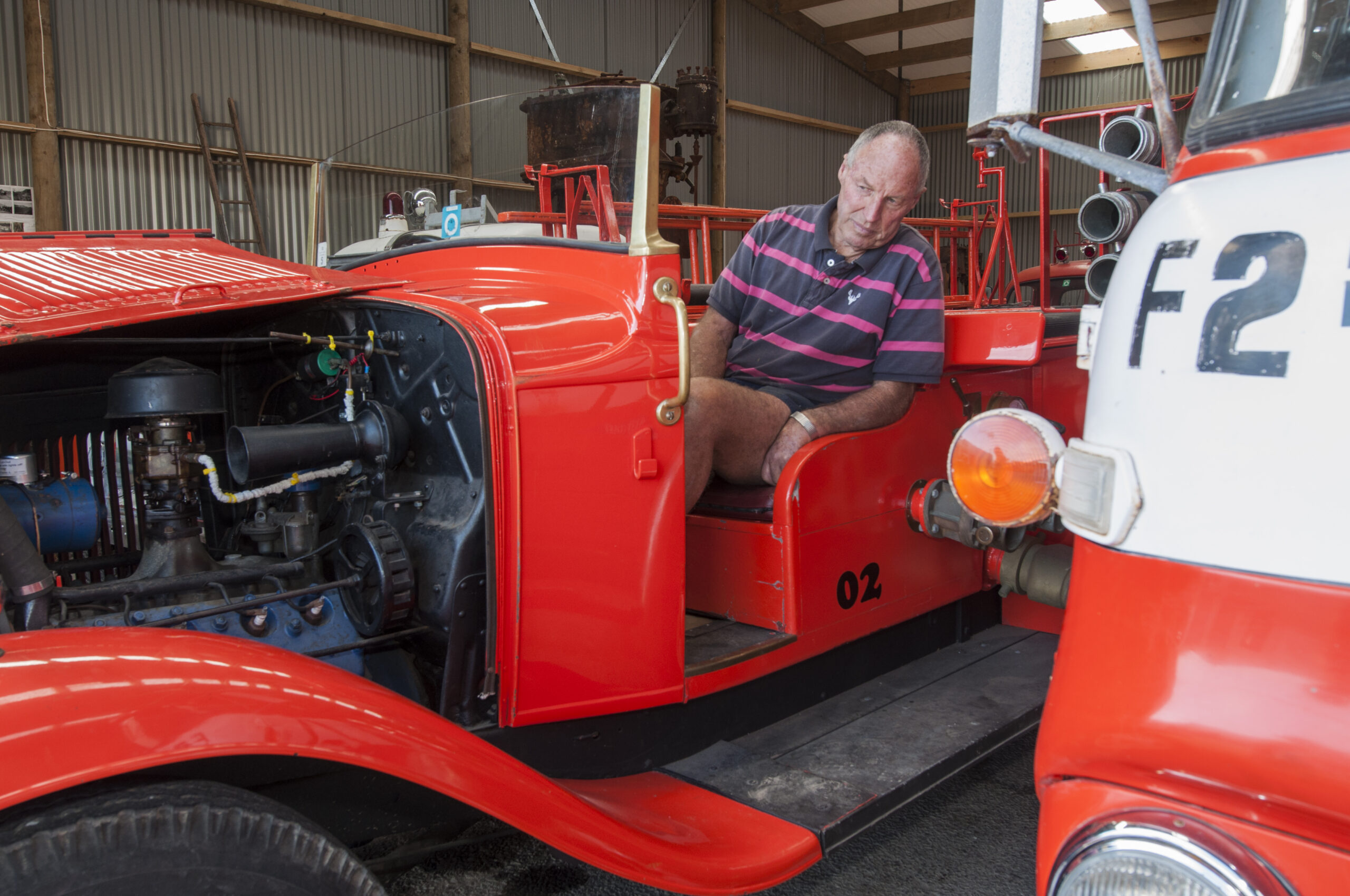
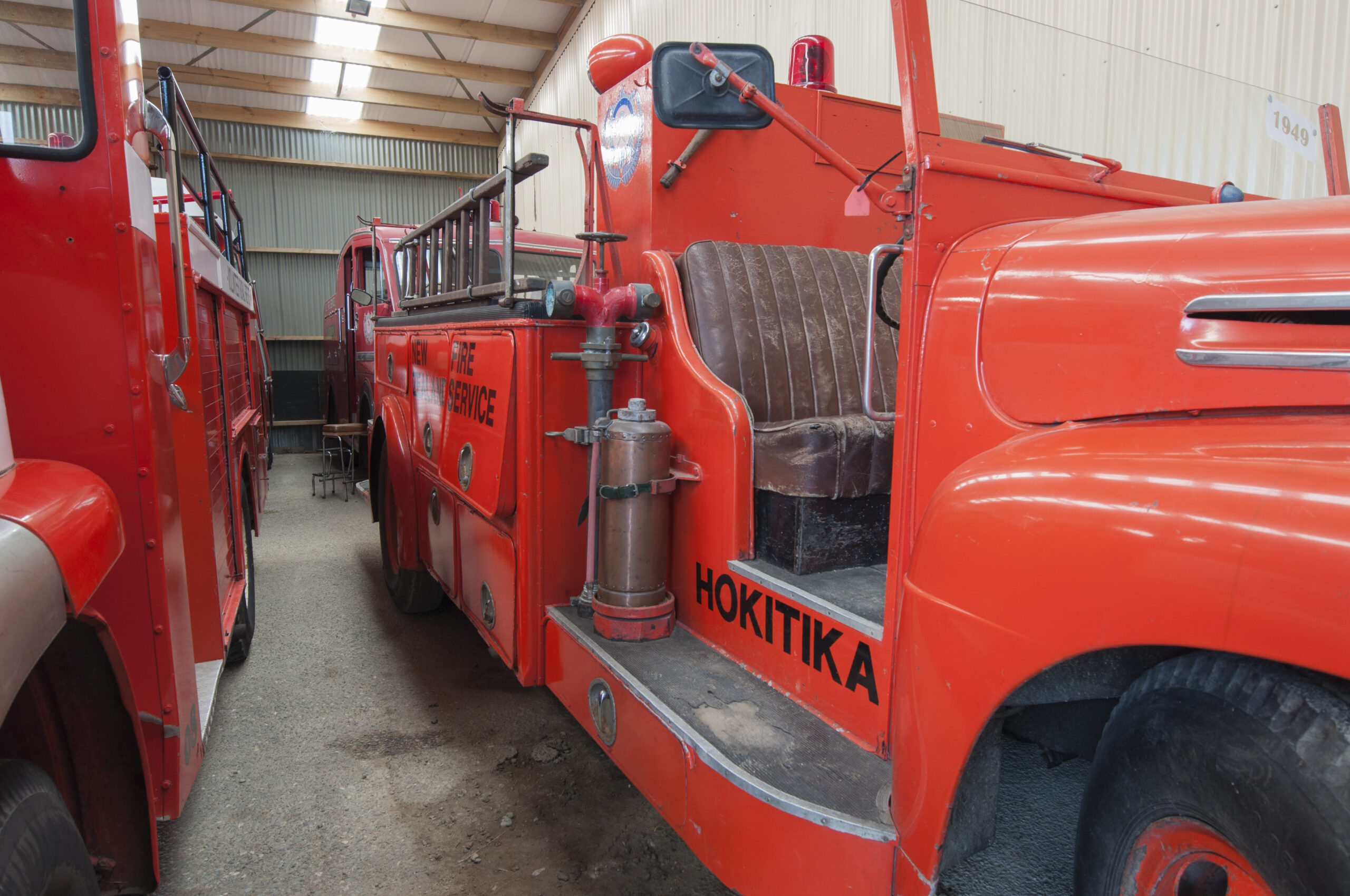
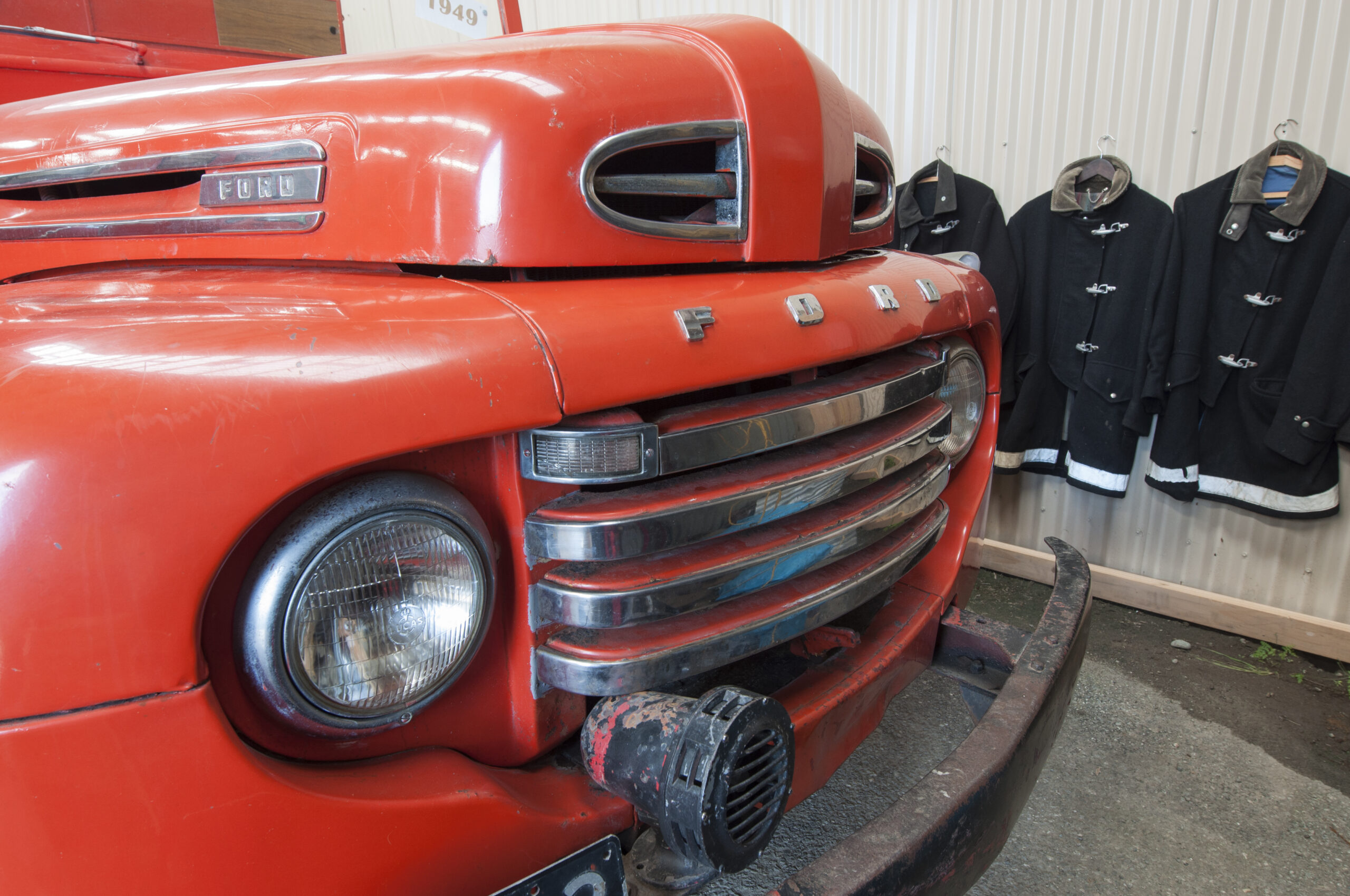
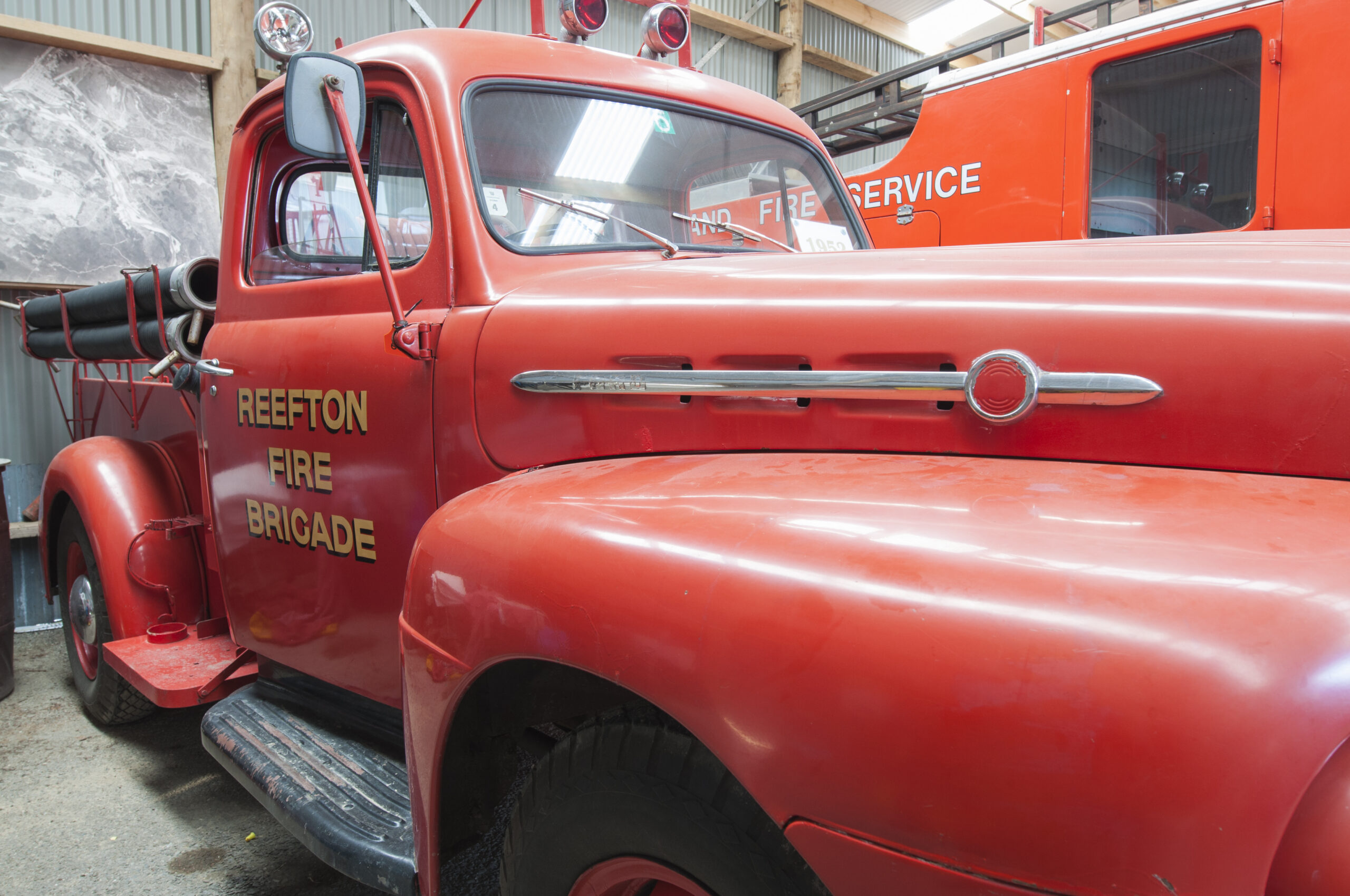
The heritage park, which has a close association with the local fire brigade, has an extensive collection of fire engines, from a 1933 Ford CV to a new arrival just decommissioned after 25 years’ service. The engines are a popular part of the town’s annual Christmas parade.
“We get them going and paint them up. They don’t have to have warrants, just be running nicely and able to stop,” says Mike Rooney, a former fireman who did time on a couple of the vehicles in the shed.
Notable machines include a ‘Green Goddess’ engine from Otira, which used to fight bush fires, a 1952 Reefton Ford V8, and the park favourite, a Model AA Ford fire truck. “It’s a real honey,” says Mort. Built by the Ordinance Department at Trentham, it served at Burnham and came over to the Coast to Seaview Hospital after the war, where it was used by the hospital fire party. “It was left derelict when the hospital closed down, and we got it in a very poor state.”
The little engine’s piece de resistance is a simple but effective friction-driven siren which runs off the fan-belt and is operated with a pedal by the passenger.
The club’s next project is to build an eight-bay shed to display the engines and fire-fighting paraphernalia, which includes leather beaters, rakes, an antique “jaws of life” cutter, and an ingeniously simple roof-piercing device made by a local man. The sharp-ended pipe has holes in the sides so it can be punched through the tin and a hose attached without ripping off the roof and inflaming the fire.
Ambulance
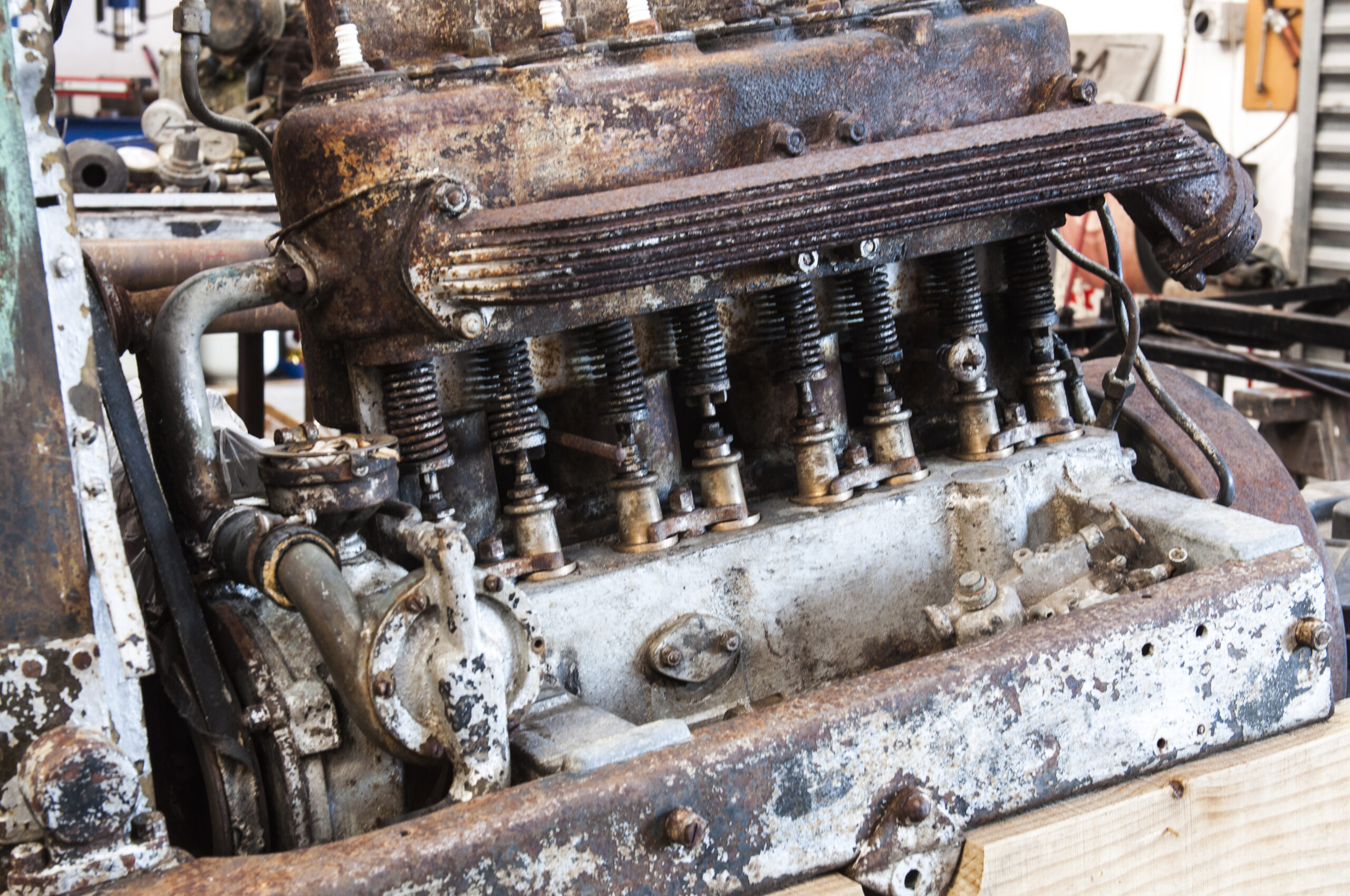
The engine of a 1914 Sunbeam Rover, which had been converted for use in a World War I ambulance, sits on a purpose-built trailer awaiting its body. “During World War I, Britain put a call out for people to donate their vehicles for ambulances,” says Mort. “The gentry donated cars, including their Rolls-Royces, and also their drivers.” This vehicle was bought by a local by the name of Keenan after the war. He went round showing movies, using it as a generator to run the projector. Later, the body was burnt, and the engine was salvaged to run a saw bench for cutting firewood. The heritage shed team are hoping to rebuild it as an ambulance, having obtained full working drawings of the 1914 vehicle and having had a stroke of luck in accessing handy materials. “A guy in Ashburton was doing up a Sunbeam Rover car and had heaps left over, including the chassis,” says Mort.