Motorbikes

Hot stuff in Taranaki

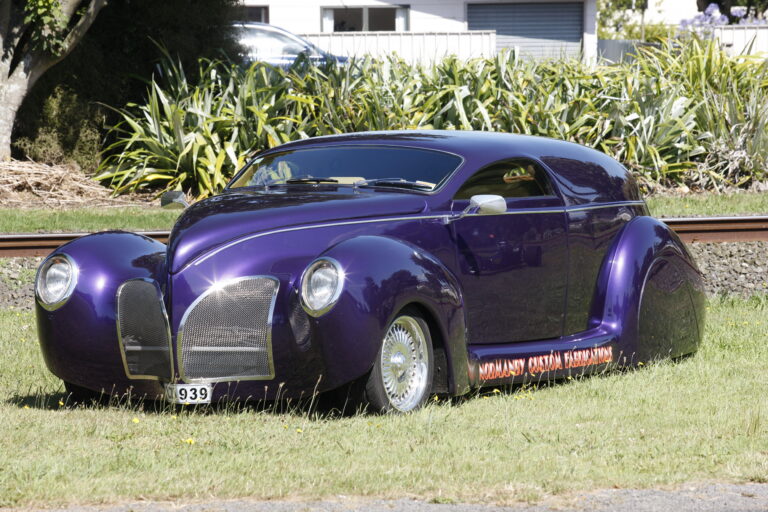
Hot rods – we see them rumbling round the highways and byways, big V8s burbling, immaculate finished body and paintwork and obviously someone’s pride and joy. Many people don’t realise the work that goes into customising one of these gleaming machines. Some are old cars reshaped and rebuilt, and some are made from scratch, often using the classic designs and lines of cars built in the 1920s, 30s and 40s.
In the little town of Normanby in South Taranaki there’s a workshop set up to create these beasts. We caught up with guys from three businesses in a row having smoko together. An upholstery business, a custom fabrication shop and an engineering shop. All mates who work in together in a way that can only happen in a small town.

READ MORE »

Racing motorcycles – the art of engineering

Chris Gordon has been devoted to the internal combustion engine since his earliest days, when his next-door neighbour was a motor mechanic.
At 14, he was a crew member for Ron Collett, who successfully ran a Top Eliminator class dragster at strips throughout New Zealand. His Chris Gordon Racing Team won the 1998/99 125cc New Zealand Road Racing Championship, with well-known rider Dennis Charlett riding a Honda RS125 that Chris owned and prepared. Chris and his team ran the bike in the 125cc class at the Australian MotoGP at Phillip Island in 1999.
Chris has also, from a very early age, made things: models, an electric bicycle, an electric go-kart; a fibre-glass, road-registered, scratch-built car; and a 500cc V8- powered grand prix racing bike. He has a minimalist approach to tools and equipment, but to make the racer’s V8 engine, he had to buy and master a small lathe and a serious, large and highly capable milling machine. The alternative would have been to get the machining and development done professionally. Chris calculates that this would have involved thousands of hours of very expensive machine time – say, 3000-plus hours at $100 per hour. That’s a lot of money.

READ MORE »

From Rust to Rrroaarrr video, part 5

In the first article, I wrote about nickel welding repairs to a broken cast-iron cooling fin (parts from a barbecue hot plate), magneto check, head repair, valve work and nickel plating the push rod cover tubes. The second article was mainly about how I developed nickel and copper plating, with a little bit about kick starter repair using nickel plate on a worn shaft, and grinding teeth. Third article, the start of frame painting; engine, clutch and gearbox assembly and installation, with magneto timing.
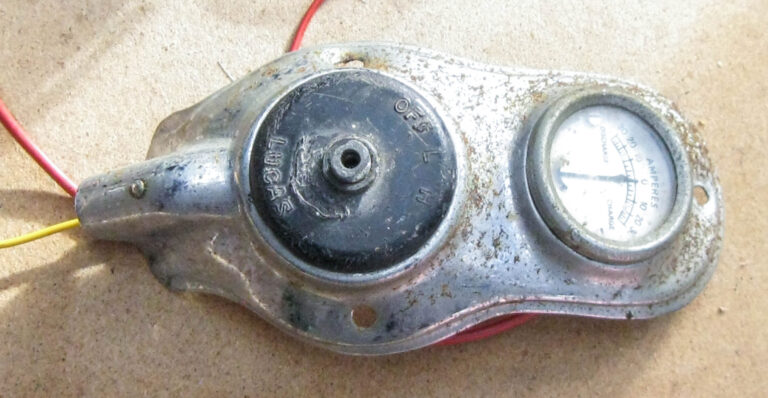
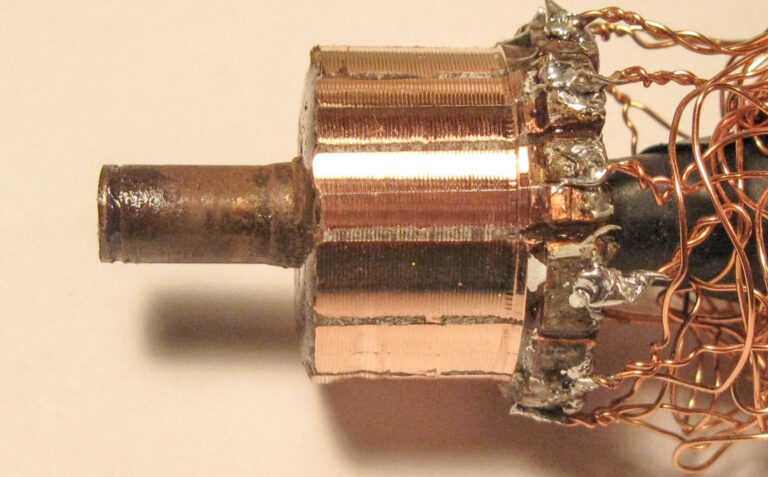
In my last article, part four of the series, I described my efforts to rebuild the bike’s dynamo (generator) by reconstructing the disintegrated commutator, rewinding the armature, replacing the bearings and then testing. Sadly, with no success.
I have achieved a little bit of progress with fixing the fuel tank and the seat, but I have not really met any targets. When I started this series, I expected that by this article, part 5, I would be writing about fixing the famous ‘Jampot’ and ‘Teledraulic’ suspensions, and at the end of part 6, I would have re-laced the wheels, having nickel-plated the spokes, rims and hubs ready for a trial ride.

READ MORE »

Video of From Rust to Rrrroaarrr Part Four

In the first article, I wrote about nickel welding repairs to a broken cast iron engine cooling fin, magneto check, head repair, valve work and nickel plating the push rod cover tubes.
The second article was mainly about how I developed nickel and copper plating, with a little bit about kickstarter repair using nickel plate on a worn shaft and grinding teeth.
The third article, the start of frame painting, engine, clutch and gearbox assembly and installation, with magneto timing.
For this fourth episode, I had planned to write about how I rebuilt the electrical system, reupholstered the seat and renovated the fuel tank. There has been progress on each of these three things but little in the way of meeting targets.

READ MORE »

Video of from Rust to Rrroarrr Part two

From Rust to Rrroarrr Part Two
As featured in The Shed magazine, February/March 2025 issue 119
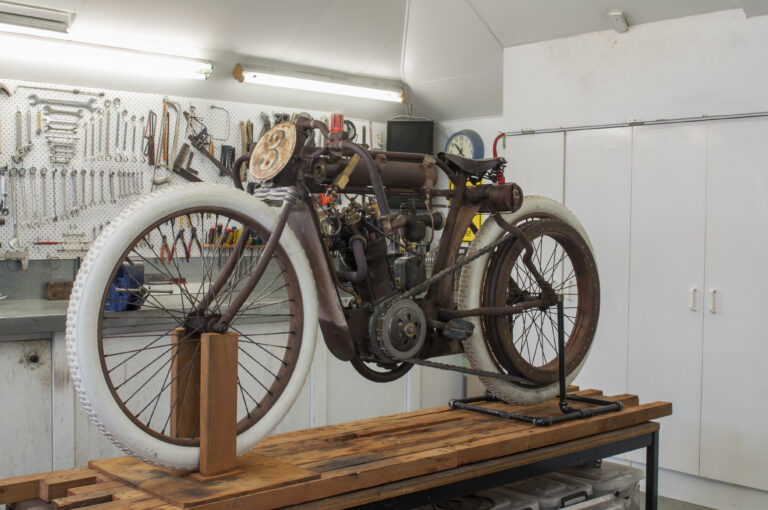
A six-part magazine series on the restoration of a 1952 AJS Motorbike
PART TWO – Metal plating:
The secrets of successful nickel plating
In part one of this restoration series, Peter described how he started rebuilding, as cheaply as possible, an old bitser AJS 500 motorbike, and discussed the start of his nickel-plating tasks.
For this Rust to Rrroarr project, he has decided on a nickel-plating finish instead of chromium for his AJS. In this part two of the six-part series, Peter describes his nickel-plating process

READ MORE »

From Rust to Rrroarrr video – part 1

Out of the shed and into the sun – part 1
After storing his bike for 50 years, Peter has begun t o restore it. He doesn’t want his bike to look flashy and new; he just wants it to run well and look the part.
In The Shed magazine December/ January 2025 issue 118, we begin a six-part series on the restoration of a 1952 AJS motorbike.  
This series of videos will accompany each article from the magazine. 

READ MORE »

Easy rider

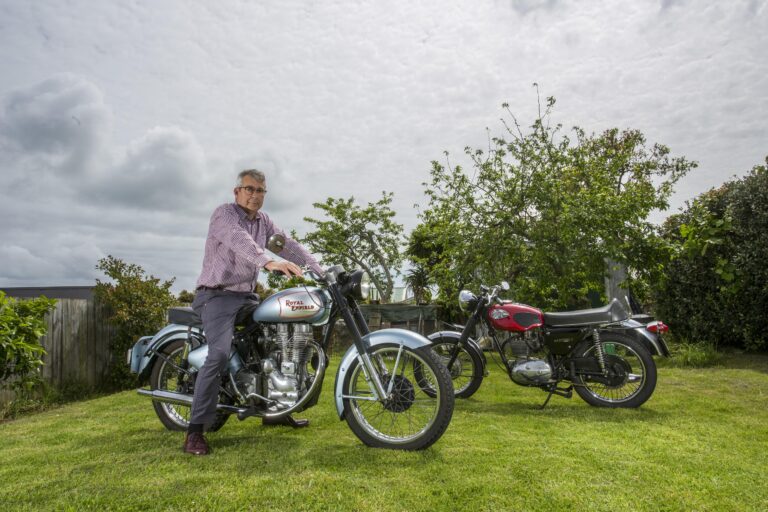
Simon Dew has a thing for Italian and English bikes – think Ducatis, BSAs and Royal Enfields. Over the years he has spent hours in his shed labouring over rebuilds and his passion for restoring bikes has been undimmed by the sometimes tortuous process.
“It’s all a bit nonsensical really,” he admits. “It would be much easier to go out and buy a bike that’s up and running and hit the road but for me it’s not about the bike itself but the process.”
Simon likens rebuilding bikes to herding cats. “Getting compliance so a bike can get back on the road is often long and arduous – and then you’ve got to keep it going.

READ MORE »

A dream shed that came true

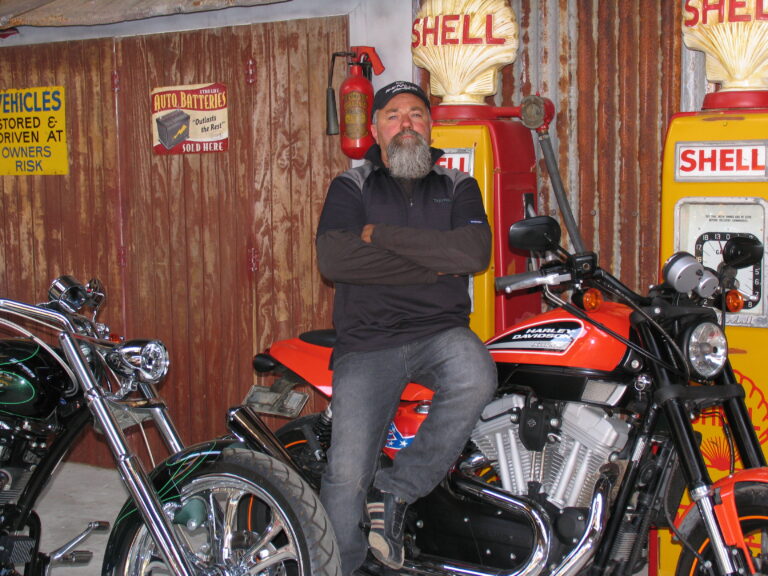
Gary Wells has a shed that isn’t quite your normal sheddie bloke’s shed. It is still a place of work but a recent extension, after a quick clean-out, now doubles as a well-appointed entertainment area complete with bar and luxurious sofas which Gary made from the backs of two Ford cars. It could also be the old 1950s petrol station at Makarewa, once a small township and now incorporated into Invercargill to the north. A quick glance around Gary’s shed at the old-style petrol bowsers, the weather-beaten, corrugated iron wall, advertising placards and oil dispenser puts you back in the days when petrol was actually served to customers.

READ MORE »

Life in the fast lane

He might describe himself as a larrikin biker, but former world motorcycle racing champion Graeme “Croz” Crosby is really more of a modern Renaissance man.
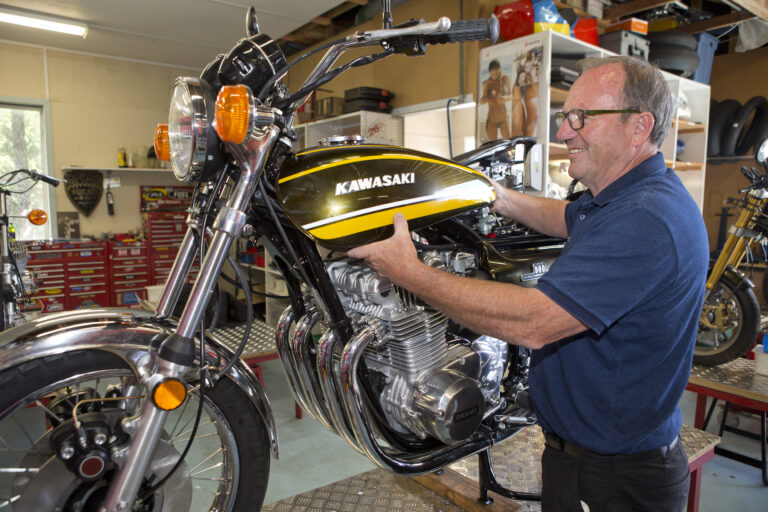
Put simply, a Renaissance man is defined as a very clever person who is good at many different things. So check the Croz record thus far: Champion motorcycle racer, commercial pilot, successful author, businessman, house builder, skilled motorcycle mechanic, enthusiastic cook, raconteur – the list goes on. He can speak a little Japanese, bake a soufflé or lace up a wire-spoked bike wheel. And even though he turns 62 this year there’s still quite a bit of the larrikin left.
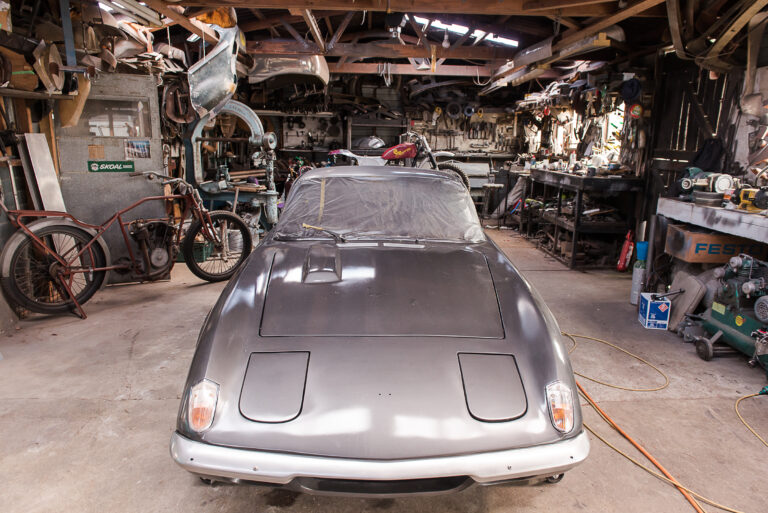
It almost goes without saying that Graeme has a shed. Well, it started out as a hobby shed, somewhere to tinker with old bikes and other motorised toys. In typical Crosby fashion, though, it has become the headquarters for a thriving business restoring and exporting classic Japanese motorcycles. Graeme and his wife Helen bought a 12 acre (4.8 ha) block in the picturesque Matakana countryside an hour north of Auckland more than eight years ago, built a spectacular house, the shed and, across the road, Helen’s The Vivian art gallery.

READ MORE »

A king-sized country shed for an ex city boy

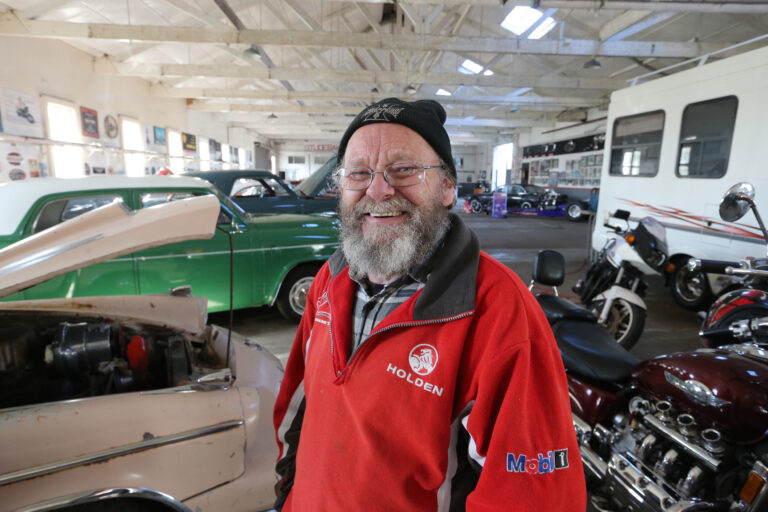
When Phil Kindberg decided to escape the Auckland rat race and retire to rural Taranaki with his precious collection of old Studebaker cars, he didn’t dream of the massive shed that was waiting for him.
Two years ago he made the shift south and purchased the 100-year-old Riverdale dairy factory, not far west of Hawera.
The big factory, which in its heyday specialised in cheese production, already had a bit of a past with motor vehicles, having been a panel beating shop for a while and also once housing a huge collection of old Citroen cars.
Now on display in the factory are Phil’s seven Studebakers from 1947 to 1962, a 1958 Packard, a mate’s collection of 40 motorbikes, including some classics and home-made bikes, and other weird and wonderful machines.

READ MORE »

Jet Bike

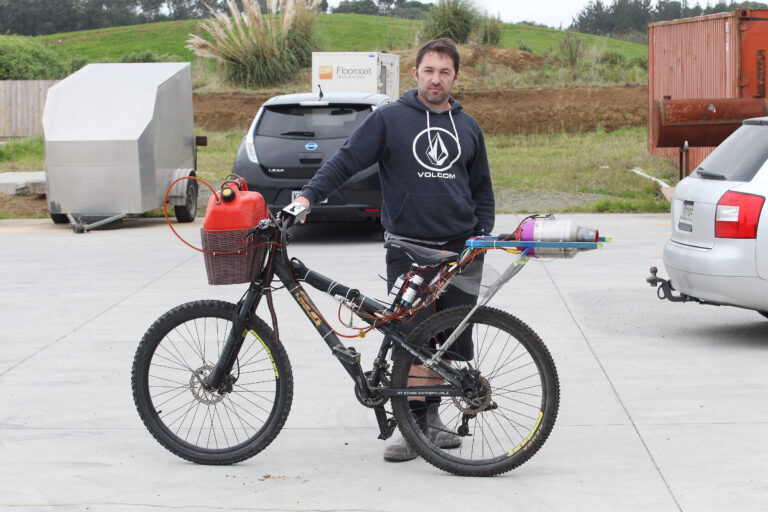
Paul Jury likes going fast. He enjoys the world of speed so much he’s attached a micro jet engine to a push bike. Paul’s bike has been cranked up to 120kph and he thinks it can go as fast as 150kph.
The New Plymouth man, who runs Floorcoat Taranaki, said he and his mates like speed and a bit of danger. They’re into activities such as drift triking, wake boarding, kite surfing, snowboarding, and skydiving.
Checking out a few YouTube clips they decided to up the ante and use jet power.
“The jet motor was originally attached to planks of wood and when we first cranked it up, it tried to take off in the workshop, showering anyone behind it with gravel,” says Paul.
The next step to check out its capabilities was attaching it to a go-kart but Paul said the kart was a bit heavy to realise the maximum potential of the jet.
Attaching it to the bike worked a treat.

READ MORE »

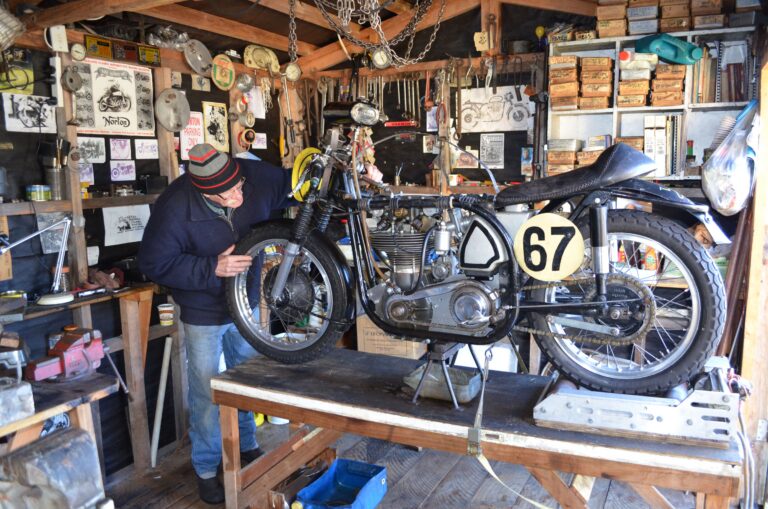
Classic Manx Norton flourishes

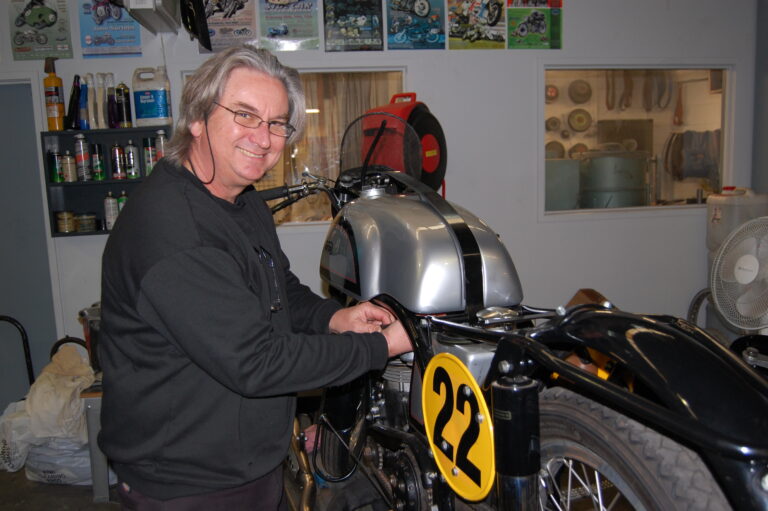
The legendary Manx Norton was
the first single-cylinder motorcycle
to lap the famous Isle of Man TT
circuit at an average speed of 100 miles per hour (160 km/hr).
Made from 1946 until 1962, the bikes became a favourite of privateer racers and in more modern
times, a popular choice for classic
motorcycle racing.
Today, half a world away from the original Birmingham factory, a small Kiwi company is restoring and supplying parts to Manx Norton owners around the globe.

READ MORE »

Videos of metal shaping and motorbike guru, Steve Roberts

In the November/December issue 105 of The Shed, our cover story is on a Kiwi legend of metal shaping and motorbikes, Steve Roberts.
If you enjoyed that article here is a link to a website that has even more of Steve’s story as well as videos of the cars and bikes he has constructed and inside info from chats with Steve.

READ MORE »

Work, life and play

Most people have separate places for work, play, accommodation and their hobbies but Malcolm Anderson has successfully managed to combine them all into one.
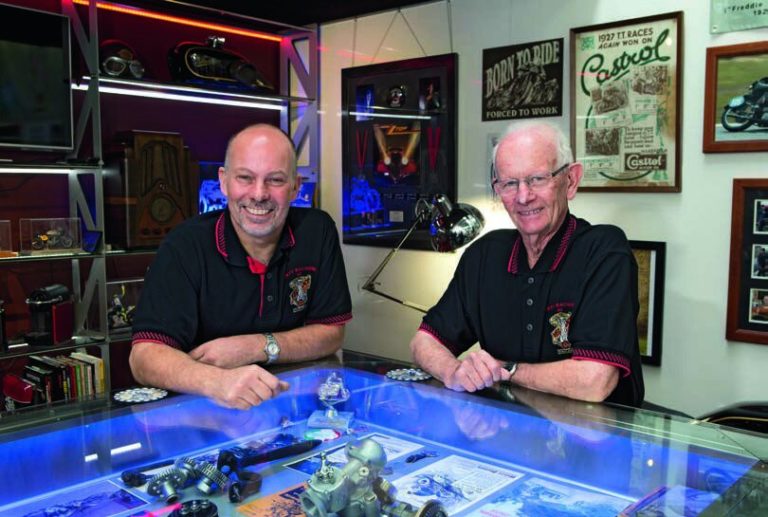
Malcolm’s father, Bruce Anderson, has a passion for collecting and restoring motorbikes to the highest standard. One of his projects, a 1929 Harley-Davidson OHV Two-port Special that he restored from a pile of parts, now resides in the Harley-Davidson Museum in Milwaukee in America.

READ MORE »

A scooter carrier for a campervan

Owning a campervan means you can take your house on holiday with you. The downside is you need to pack up your whole holiday site when you want to drive off and get some fish and chips for dinner. I considered towing a car behind the campervan but that was impractical. I use a scooter for commuting so the solution was obvious—put a scooter carrier on the campervan to give us an easy transport option on holiday.

READ MORE »