
Teachers take a busman’s holiday
By Jude Woodside
Photographs: Jude Woodside
Knifemaking has undergone a resurgence over the past few years.
It may be the fact that it requires only a modicum of equipment. You only really need a file and a gas torch.
Of course, the more elaborate the knives you make, the more gear you will need, but this is one of those hobbies that can grow with you. Naturally, having a forge, some sort of anvil – even if it is only a lump of hard steel or a bit of railway line, a grinder, and a hammer will extend your options and none of these are particularly expensive. There are a number of knifemaking classes springing up all over the country to cater to this interest. Shea Stackhouse runs classes in basic knifemaking, making Damascus steel and blacksmithing through his website (www.stackhouseknives.co.nz).
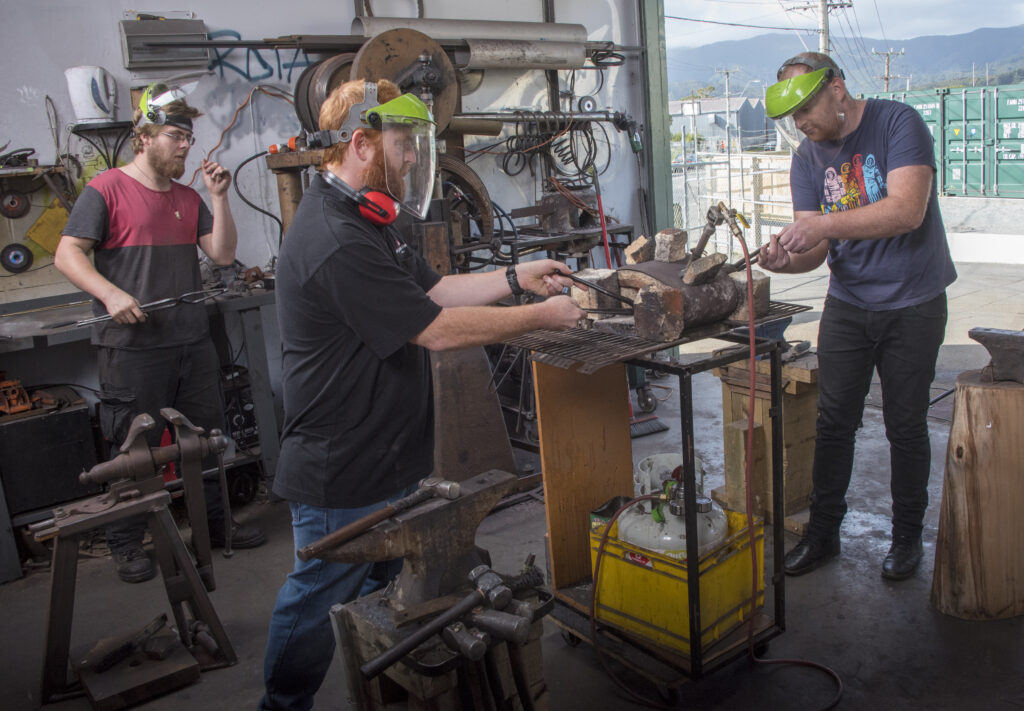
The week after The Shed visited him for our article on knifemaking, he held a class with two enthusiastic teachers, taking advantage of the term break. Sam Dockery and Ben Reay teach science subjects in Auckland and Hawkes Bay, but both are keen to come to grips with the art of beating steel into something useful.
“This is one of those hobbies that can grow with you”
Easing into it
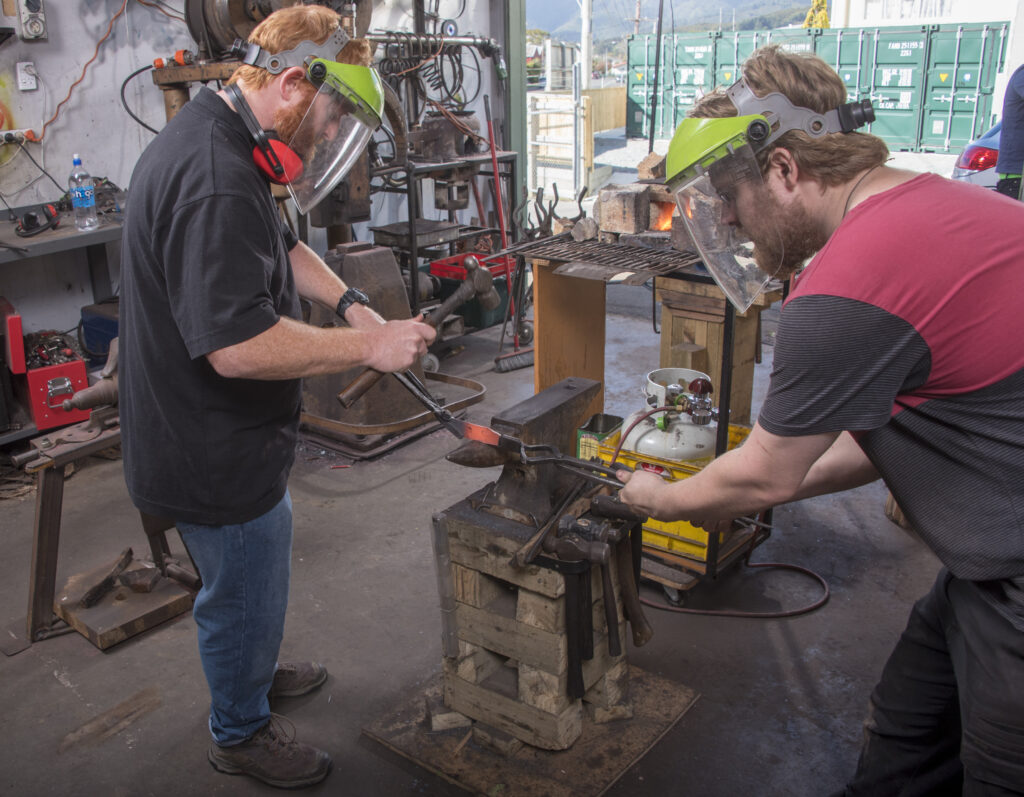
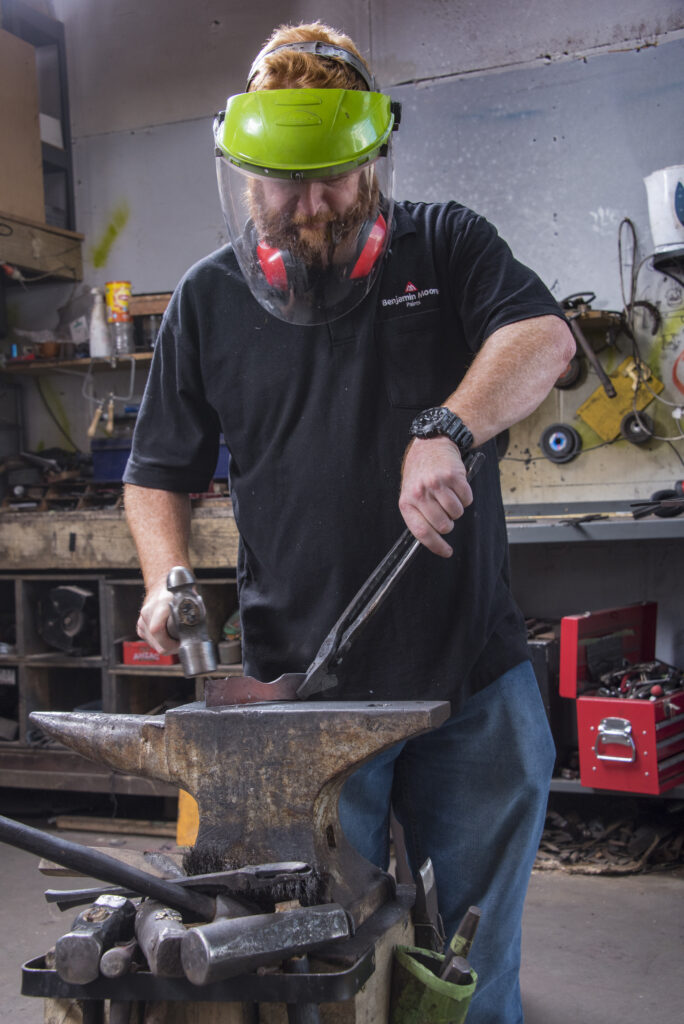
Shea gives the ‘students’ a safety briefing and then starts from the basics and guides them through the art of using a hammer to mould hot steel. They first forge a point on the knife blank, then, using the horn on the anvil, they create a curve in the blade, all the while heating and reheating the steel.
It looks easier than it is, and it takes both participants some time to get comfortable with handling the red-hot steel with tongs and using a hammer at the same time. The point of the first exercises is to get familiar with the tools. Ben has had some previous experience with another knifemaker and has tried a few things at home without much success due mainly to not being able to get the steel hot enough. But as he heats and forges the steel, he is beginning to get a feel for how it should be done. Meanwhile, Sam forges on (pun intended). They draw out the point and create the drop head on the drop point hunter they are making. This is a full tang knife so it requires some work on the tang to shape it into a useful form.
“Shea’s classes take a full day but the price is inclusive of materials”
Grinding and the handle
Once the basic shape is established, it’s time to start the rough grind. Then the knives are heat-treated and tempered. Tempering is a delicate operation, and Shea does this so they can get the idea and see the subtle colour changes.
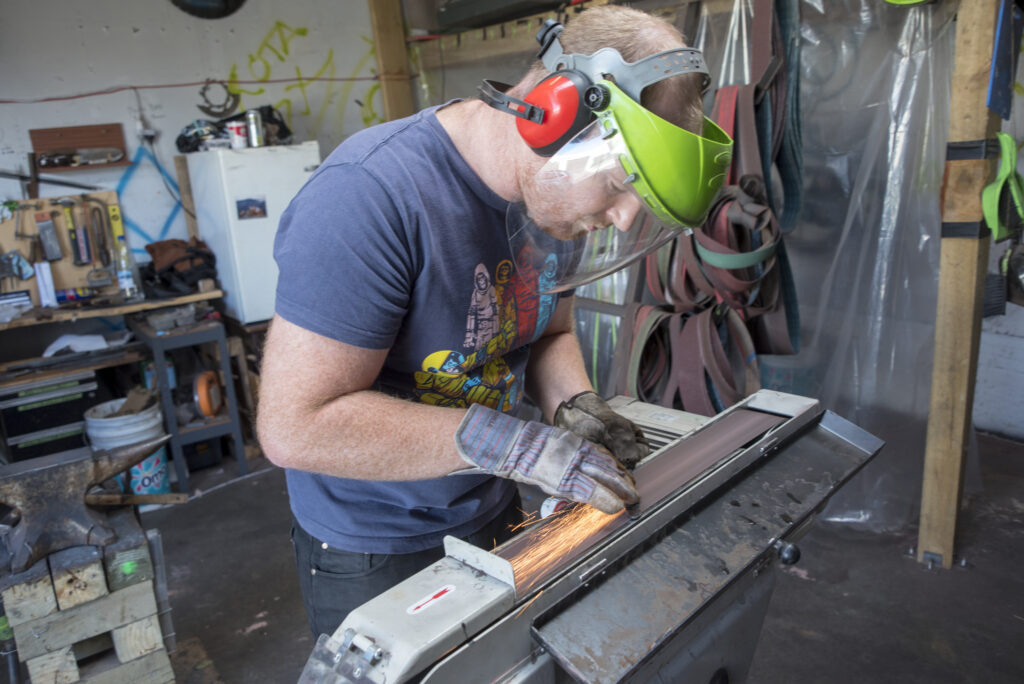
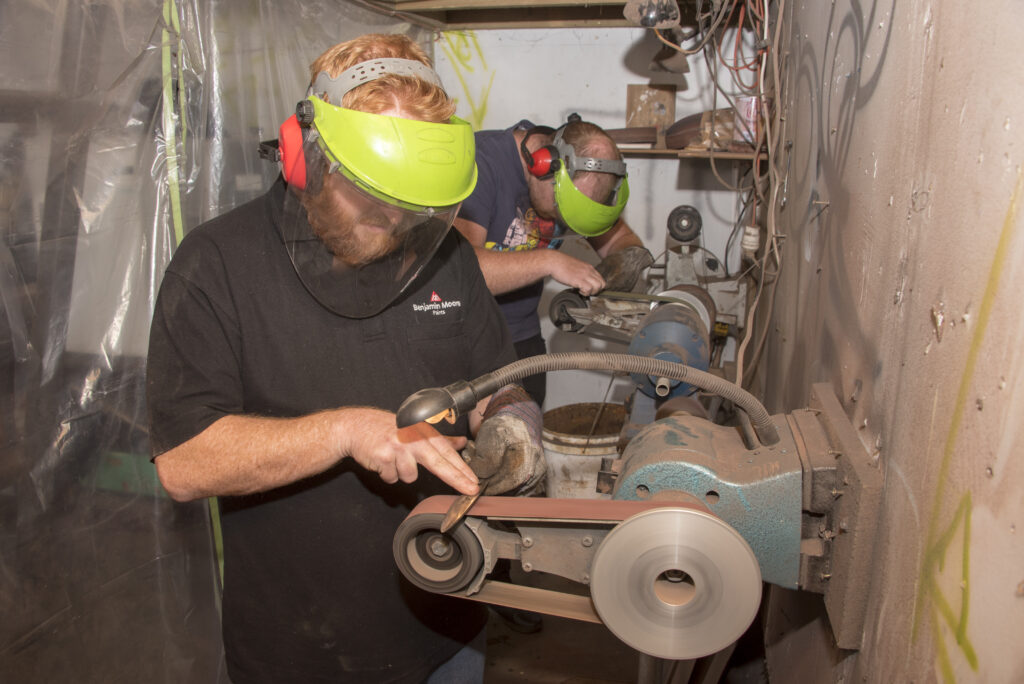
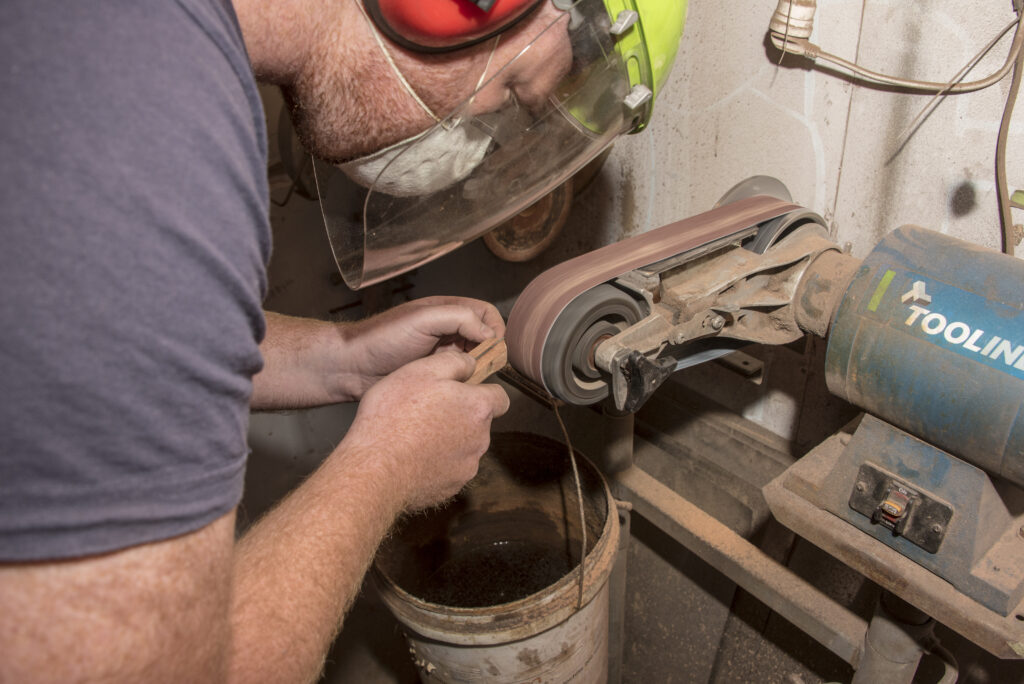
Once the knife blade is tempered, the students get the opportunity to practice their grinding skills through successive grits, learning to create bevels and keep the grinds even.
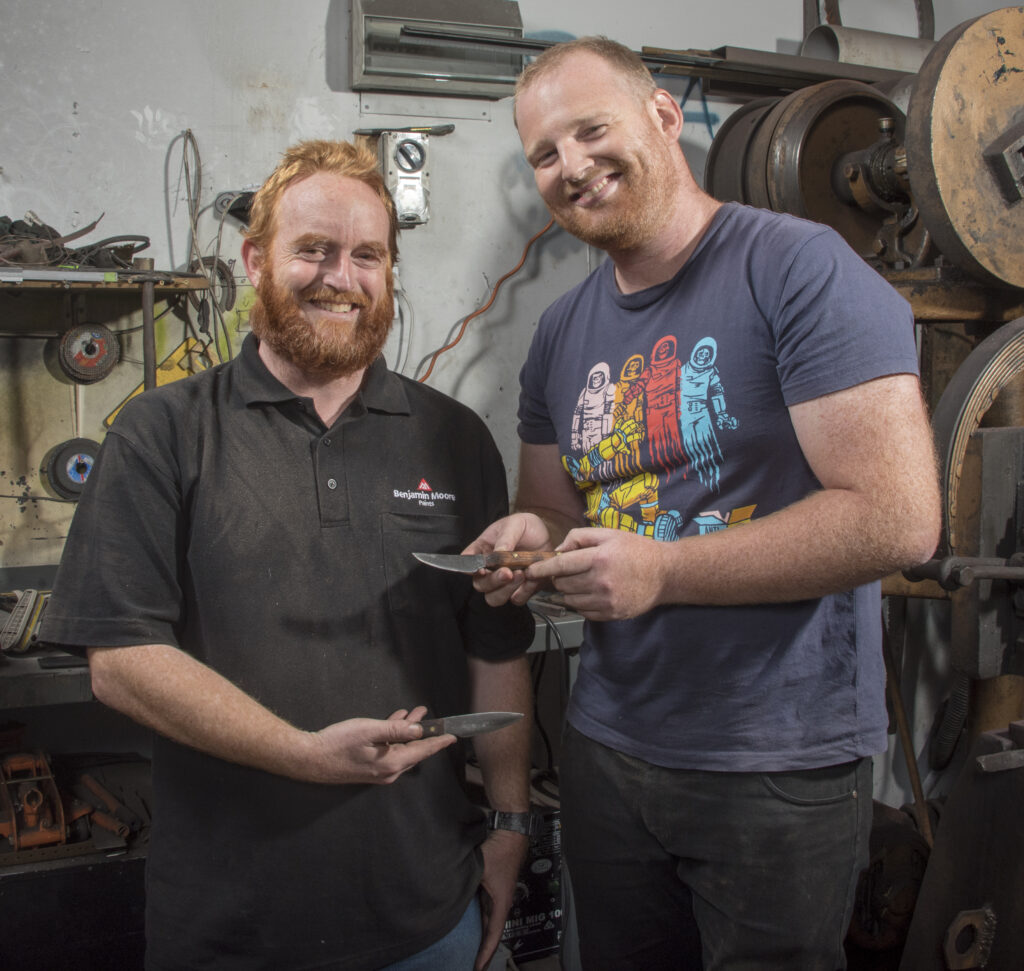
With the knives ground, it’s time to tackle the handles. Holes are bored through the handle to accommodate brass pins. The handles are made from pieces of Eucalyptus saligna (blue gum). The handles are roughly cut to shape on a bandsaw. Full tang knives require scales so the blanks must be split also on the bandsaw. The scales are epoxied and pinned through the tang. After the glue has had time to set, the scales can be shaped on the grinder again and finished by hand. The last stage is sharpening the knives on a stone and honing on a steel and a leather strop, and the participants have a long-lasting memento of their first day making knives.
Shea’s classes take a full day, but the price is inclusive of materials, and the participants leave with a knife of their own making and a newfound passion.
Head to www.stackhouseknives.co.nz to sign up for a class.
