
Hobbit haven

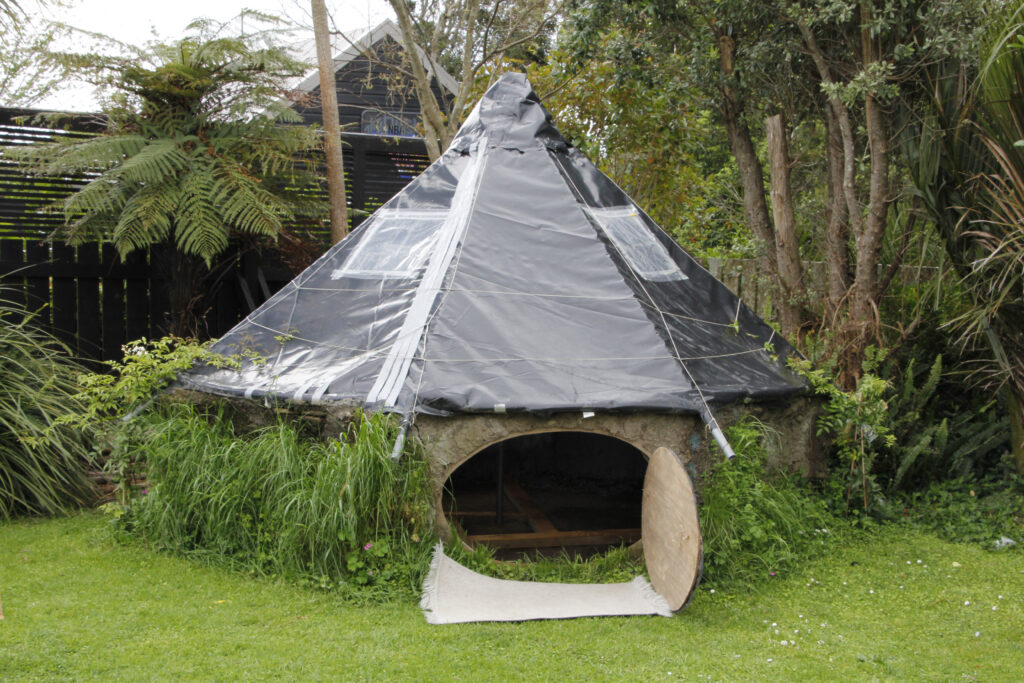
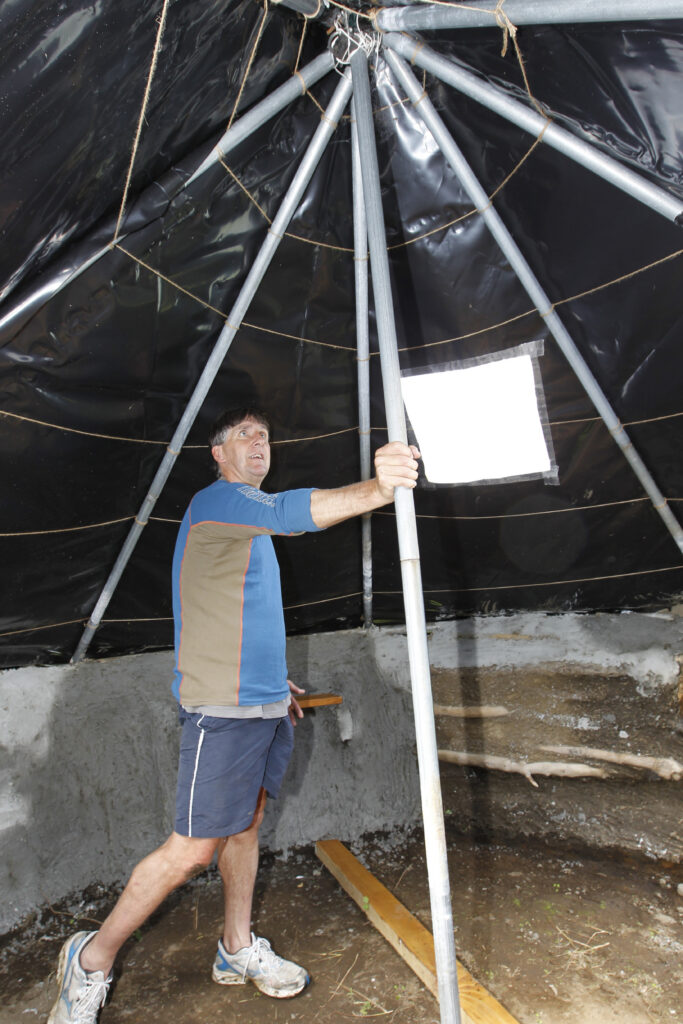
I have made a hobbit house for my kids almost entirely from recycled materials and left-overs from building a garage. The frame is an old trampoline. It is 3.2 metres wide (this depends on the size of your trampoline ) and 2.3 metres high at the apex. I can stand in it easily. The poles that were for the side of the trampoline had holes at the top so by the time I lashed them all together it was incredibly strong. I made the walls out of an old pallet with a couple of bigger bits of driftwood on top. We mudded the walls with a mix of dirt, grass and a little cement until there were no more holes and then patched as needed. I used all kinds of recycled wood that would fit. We have added more layers as needed or as bits fall off. The walls are probably about 100 mm thick on average but up to 150 mm in places and we have added paper in the middle for extra insulation.

A dad has come up with a backyard haven with a hobbit flavour, all of which began as a bit of amusement
By
Craig Cook
Photographs: Rob Tucker

Hobbit House

“In a hole in the ground there lived a hobbit,” wrote J R R Tolkien on a blank piece of paper while marking student essays, setting off a thought process that led to his book The Hobbit and eventually to his three-volume creation The Lord of the Rings.
So, if you are going to re-create a hobbit home but don’t want to dig like a mole, earth-covered walls might be the next best thing.
Craig Cook has created a backyard haven with a hobbit flavour, all of which began as a bit of amusement. As he writes:
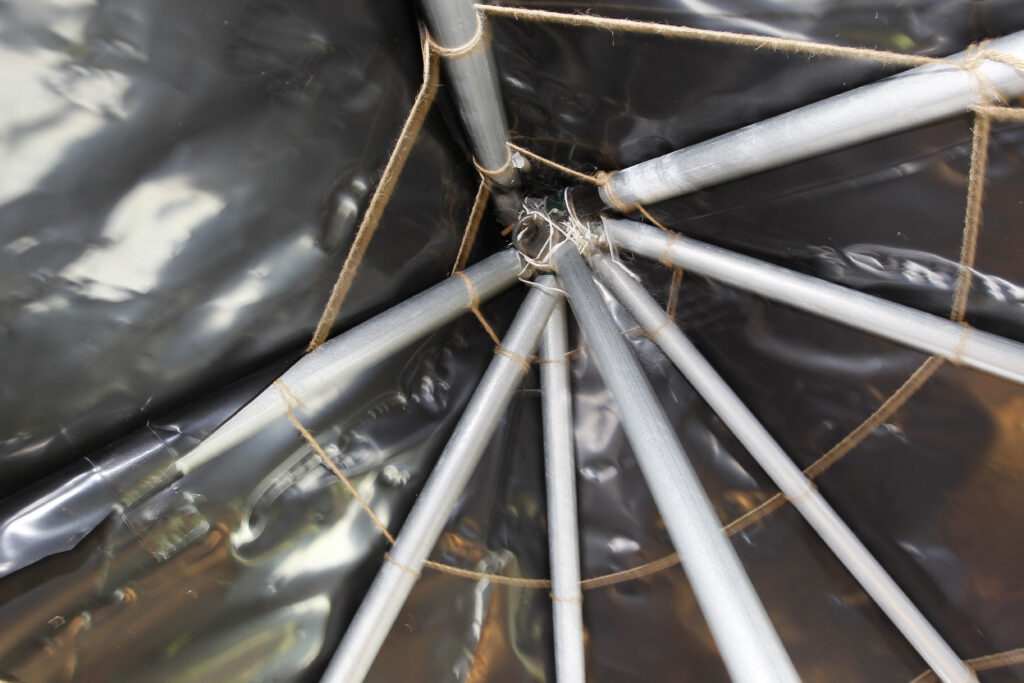
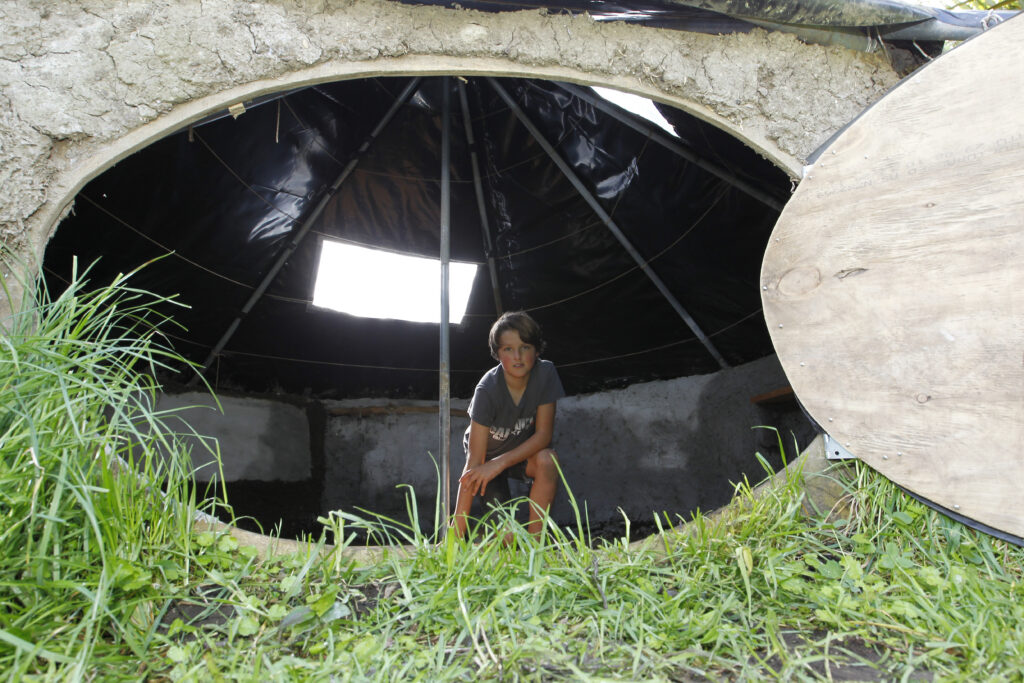
“I have made a hobbit house for my kids, almost entirely from recycled materials and leftovers from building a garage. The frame is an old trampoline. It is 3.2 metres wide (this depends on the size of your trampoline ) and 2.3 metres high at the apex. I can stand in it easily. The poles that were for the side of the trampoline had holes at the top so by the time I lashed them all together it was incredibly strong.

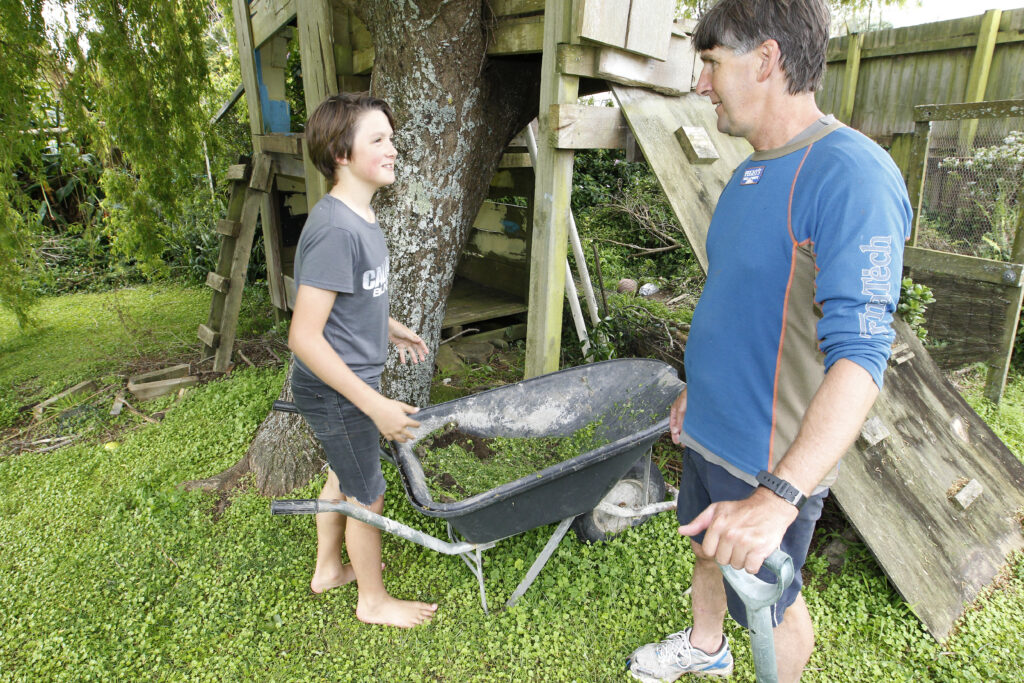
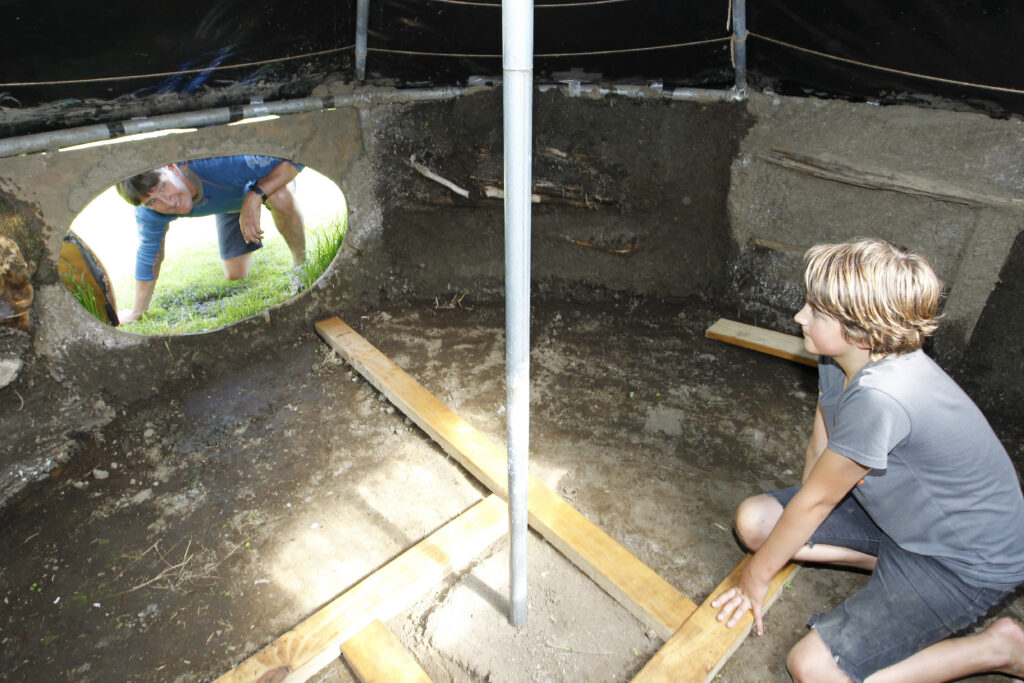
Craig and son Essala discuss...
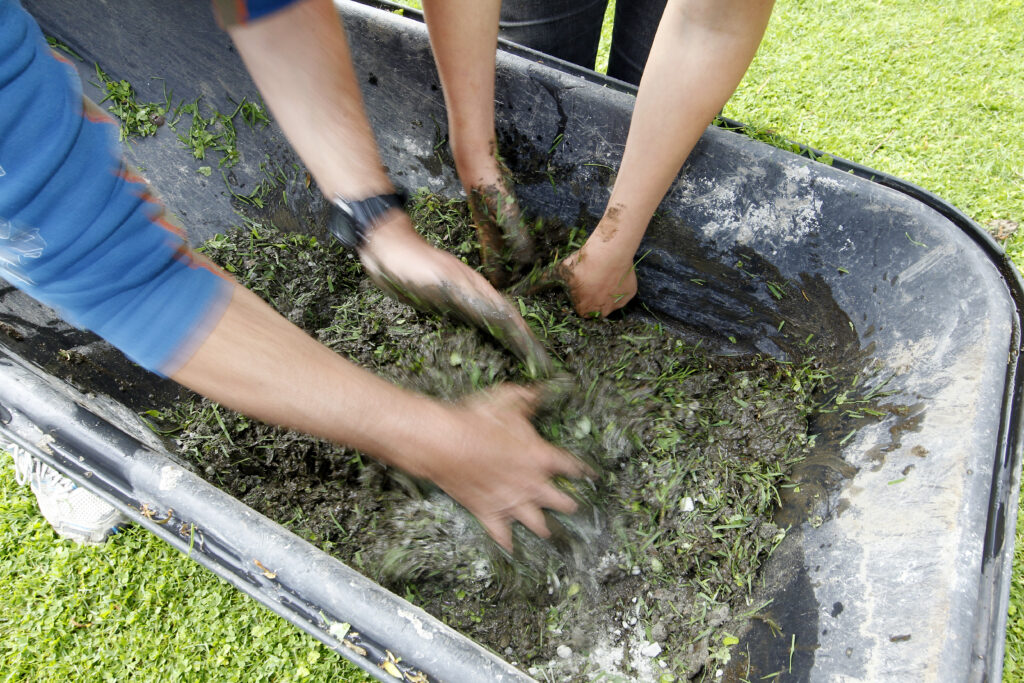
...mud making
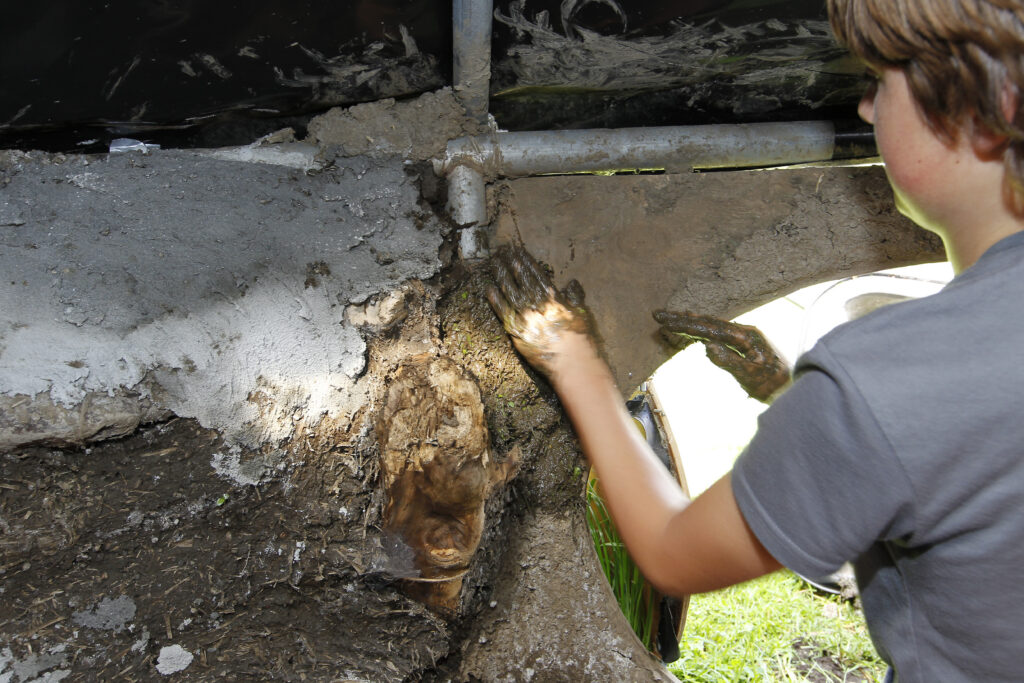
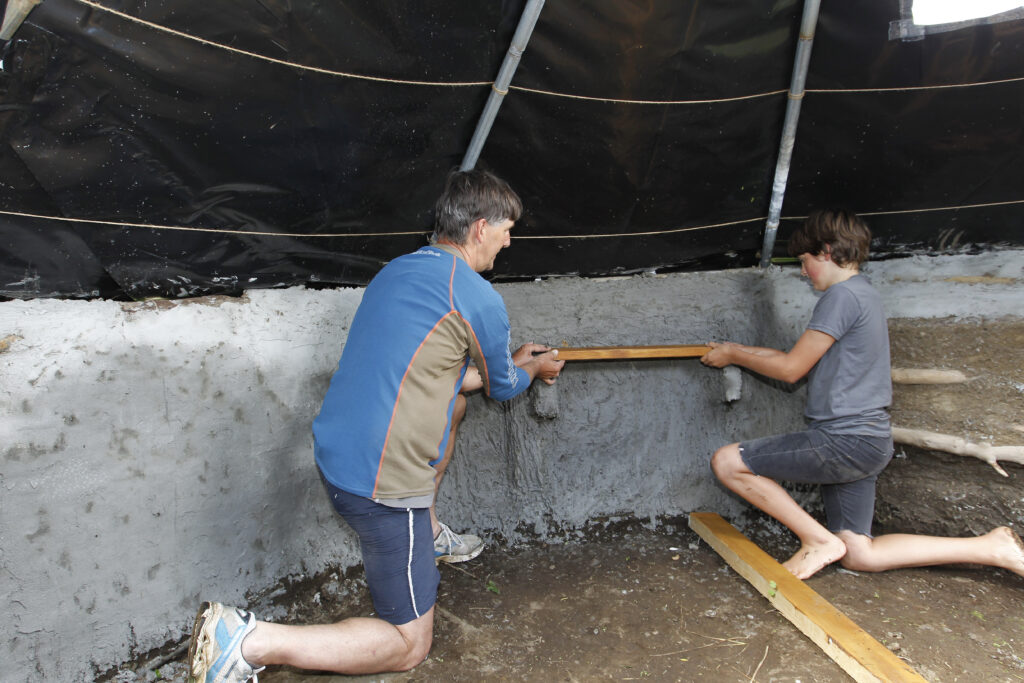
Mudding the walls
Ex-trampoline poles

The walls
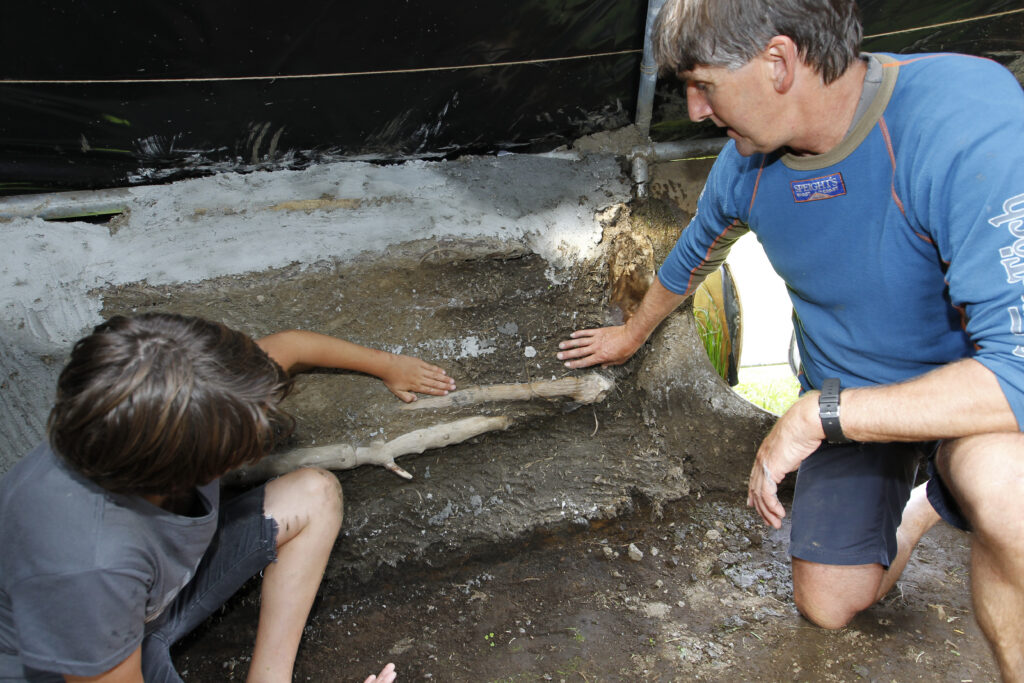
I made the walls from an old pallet, with a couple of larger pieces of driftwood on top. We mudded the walls with a mix of dirt, grass and a little cement until there were no more holes and then patched as needed. I used all kinds of recycled wood that would fit. We have added more layers as needed or as bits fall off. The walls are probably about 100 mm thick on average, but up to 150 mm in places, and we have added paper in the middle for extra insulation. 
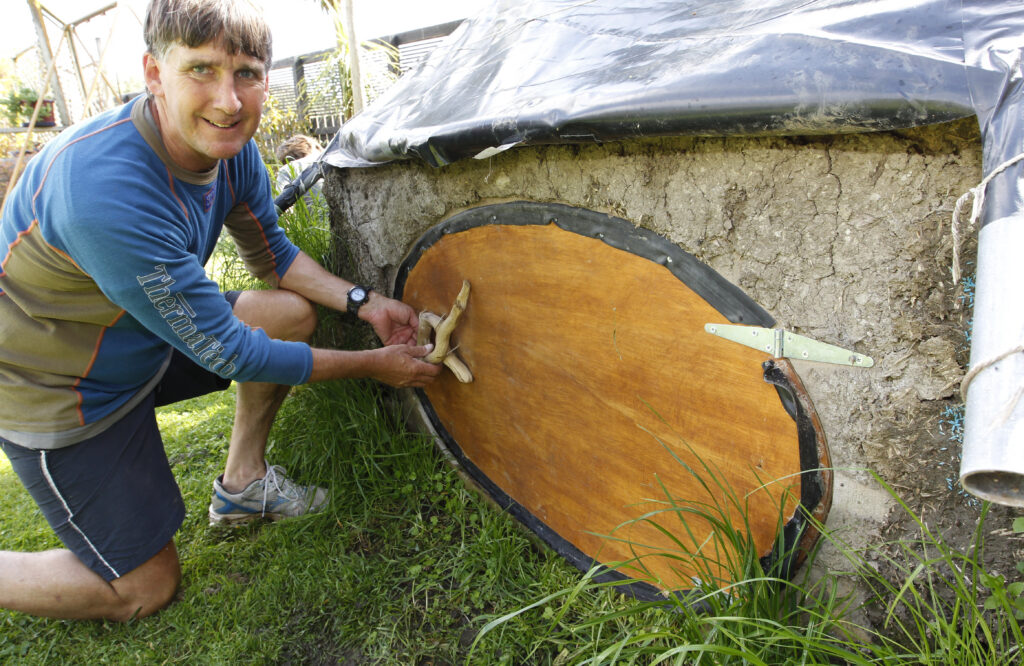
We just lashed the wood to the trampoline frame with twine. No nails are used; the only screws are in the door to hold the hinges firm and fix the bike tyre to the outside of the door to prevent drafts. The whole structure, bound together with twine, has already withstood several storms.
When I started this, it was just a bit of fun, and I was concerned about poles falling down and hitting someone on the head. It is at a stage now where my son Essala wants it as his bedroom, but don’t tell the council. It’s just a playhouse. 

Working out shelving
This strong twine binding has withstood a decent storm
Driftwood-packed walls
Wooden inlay for concreting the floor

The talk of the town
My son has decided he wants to sleep in it, and he suffers from asthma, so I am in the process of plastering the inside walls. Kids love doing the mudding of the walls, and Essala enjoys the mud fight with the leftovers at the end of the day even more.
The $120 total spend is from $50 on cement and plaster, $50 on the creeper plants beside the outside wall, which will eventually grow up and cover the roof and $20 on extra tape and twine. I had hinges, screws and some tape and twine to start with.
I have now installed a wooden inlay on the ground and will concrete the floor. I will probably have to spend another $150 to finish it with plaster, builder’s mix and cement (this cost would be done away with if it were just kept basic). We may go as far as a small solar system to power two LED lights and enough to run a computer. It’s very ‘kool’ and the talk of the town.”

Only screws used hold hinges and rubber draft-stopper door fringe
Young Essala now wants to use the hut as his bedroom

Share:

More Posts

Hot stuff in Taranaki

Hot rods – we see them rumbling round the highways and byways, big V8s burbling, immaculate finished body and paintwork and obviously someone’s pride and joy. Many people don’t realise the work that goes into customising one of these gleaming machines. Some are old cars reshaped and rebuilt, and some are made from scratch, often using the classic designs and lines of cars built in the 1920s, 30s and 40s.
In the little town of Normanby in South Taranaki there’s a workshop set up to create these beasts. We caught up with guys from three businesses in a row having smoko together. An upholstery business, a custom fabrication shop and an engineering shop. All mates who work in together in a way that can only happen in a small town.

Heart of glass

Parts of Carmen Simmonds’ cast glass studio glow with the ethereal, often surreal treasures that emerge from their creator’s imagination and the searing heat of her kiln. Radiantly coloured dolls’ heads, glass lace and crochet, headless dancing dresses, ballet shoes, lilies in milk bottles, flowers, and other organic forms are at once beautiful and disturbing.
Then there is the other side – the chemistry and chemicals, machinery, and tools; hours of modelling, firing, grinding, sanding, and cutting.
But this studio is also a home. Carmen and her husband Glen live at her work studio – a 100-metre-square shed on their 8.5-hectare lifestyle block in Brunswick, Whanganui. The shed was originally intended as Carmen’s full-time studio but when they sold their house in town they had nowhere else to live so they moved into the shed “to camp for a while” and have stayed, still temporarily, for eight years.  

Making a workshop bench video

Every shed needs a utility bench, and most sheds usually have one or two.
It’s a place where things can be worked on or stored. I have built a few recently, and I have developed a simple process that makes the process quite easy and results in a sturdy workshop asset with space for storage.
The advantage of this design is that it doesn’t require good, straight timber. In fact, I often buy very cheap, knotty 2nd or third grade timber from my local sawmill, who specialise in Macrocarpa. I can get long lengths, but they are rarely straight or twist-free. Sometimes I can get relatively straight pieces, or I can find 3 metres or so in a 4-5m length. For the most part, you can usually find enough pieces of around a metre that are relatively straight.