Art & Jewellery

You’ve got mail

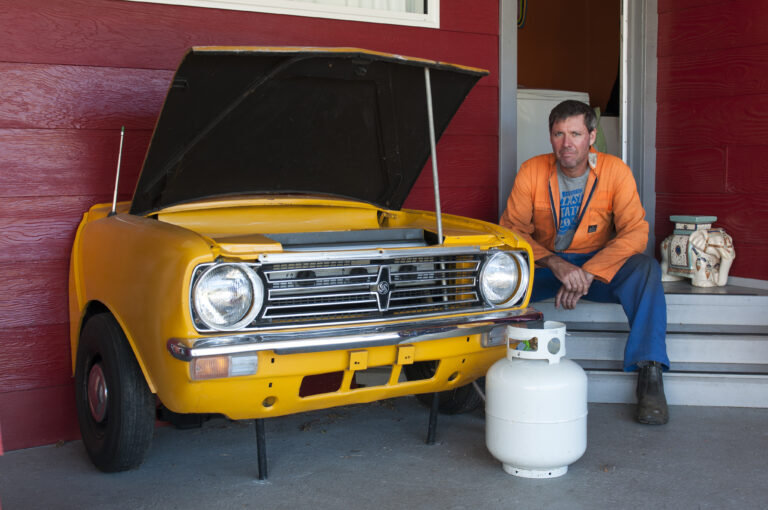
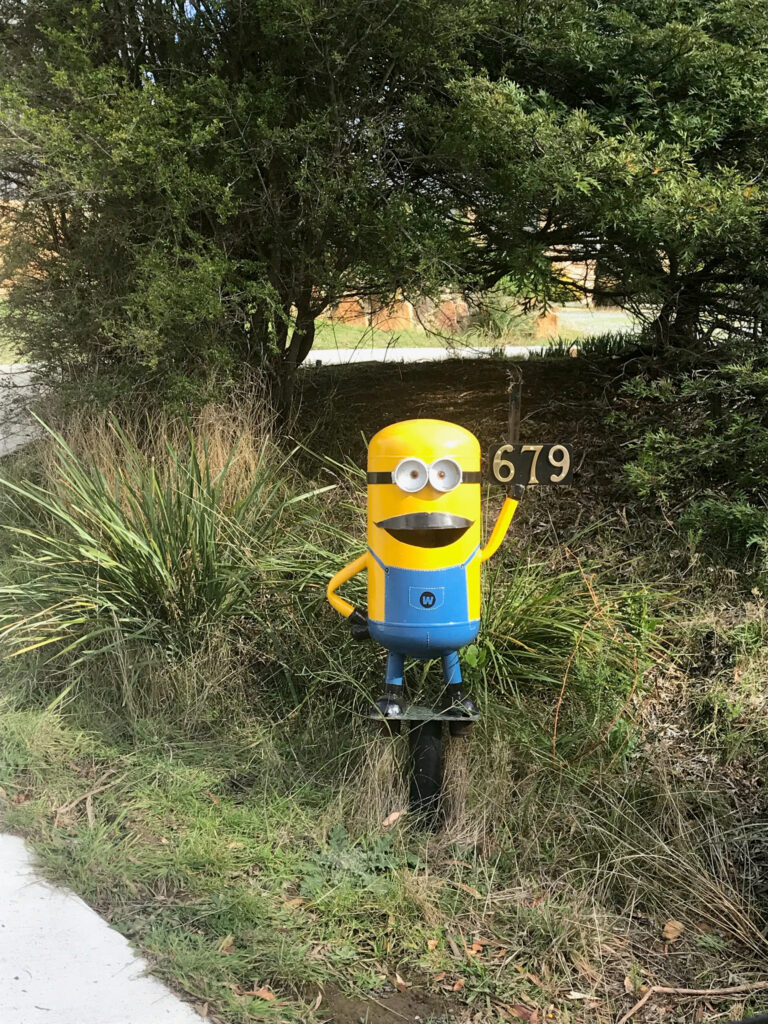
In a world beset by increasing regulations, building codes, local government bylaws, vehicle safety legislation, and the like, very few things remain untouched by the long, deadening arm of bureaucracy. However, one that has escaped is the humble mailbox.
While their suburban cousins have generally succumbed to the pressure to have standardised, mass-produced models available from hardware chain stores, their rural brethren have maintained their diversity, and still reflect their owners’ creativity and imagination.
In this era of increasing conformity, the rural mailbox stands out as a statement of individuality made by those of us unwilling to follow the common herd. Although postal services worldwide are coming under continued pressure from the new delivery platforms, the mailbox is still an integral part of any property, rural or suburban. A good mailbox should be thought of as a fine example of street art, a whimsical statement by its owners perhaps reflecting their passions and interests, while fulfilling a utilitarian function.
READ MORE »

Creative duet

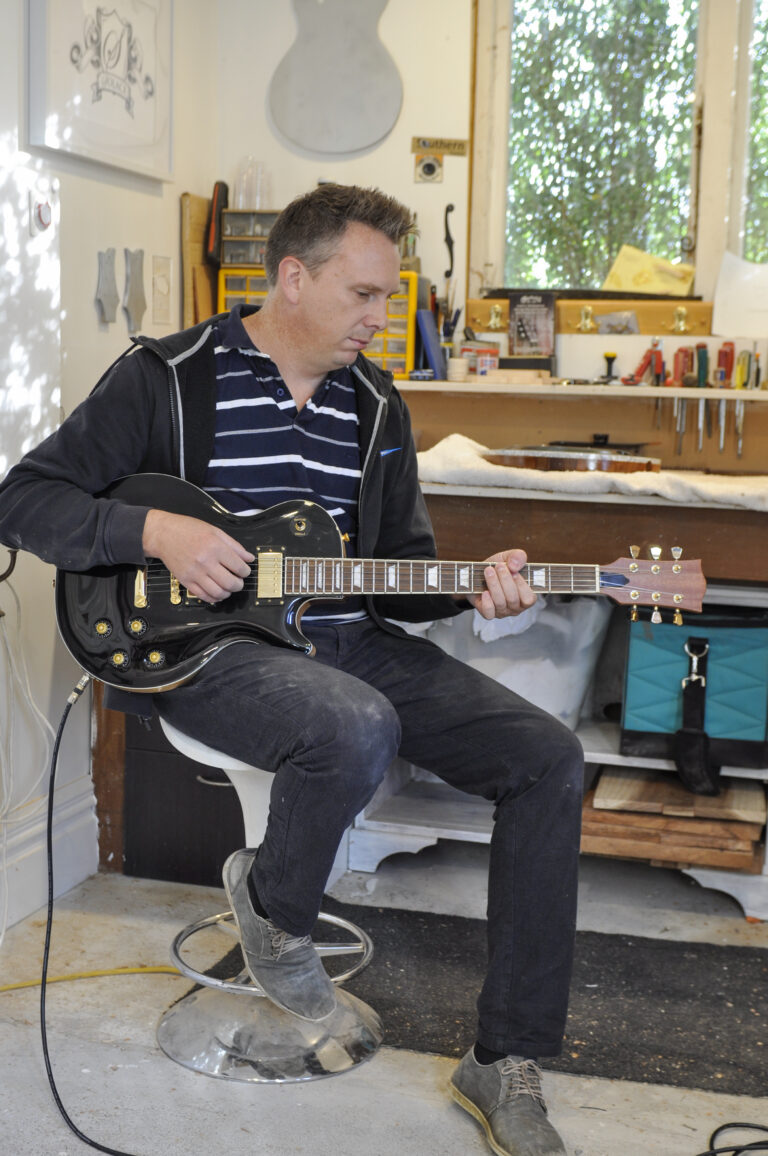
For Dave Pauling, making guitars is the natural fusion of two passions – music and wood.
Dave, who has been playing the guitar since he was 13, also knew the pleasure of pottering in sheds from a young age. His father is a “sheddie” from way back who, among other things, still spends many hours restoring vintage vehicles.
“I grew up helping him with his Model Ts, making bows and arrows, or working on a model railway we had in the loft,” he says.
While Dave himself has spent a fair few hours restoring a 1965 Mustang imported from San Francisco, he prefers working with wood. There’s something about the malleability and smell of wood, as well as its provenance, he says. Wood, especially the recycled timber he uses to construct his guitars, has had a previous life. “Every guitar I make comes with a pre-history.”

READ MORE »

A butterfly takes wing

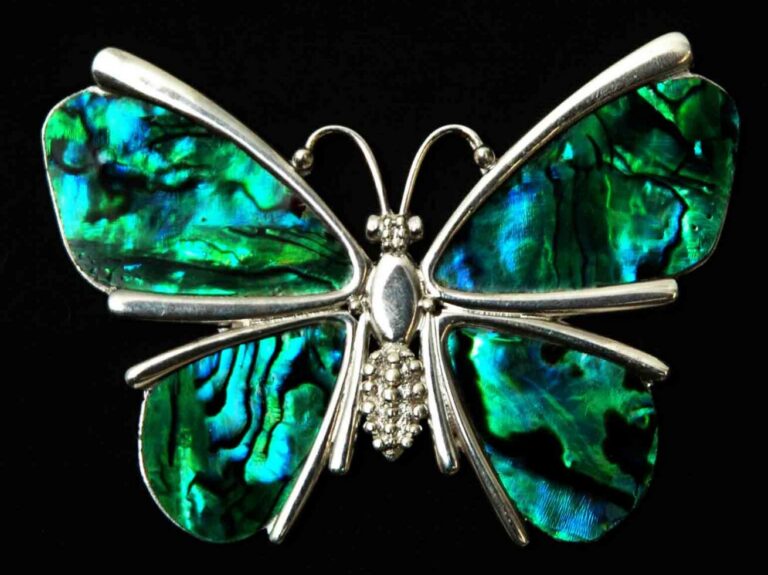
This simple butterfly pendant or brooch (depending on the back fittings) is a very good exercise in several basic goldsmithing techniques. It also can be decorated in several different ways to produce strikingly different finished pieces of jewellery.
I drew this design more than 25 years ago for a company that then made paua-shell jewellery. They stamped out their products, so I often made the master patterns in copper and from these patterns they spark-eroded the dies.
If this design was being made in an art school, it would be stuck to a sheet of silver and the basic shapes cut from there. If a design was made this way in, say, 18-carat gold and the wing outlines (as here) made from 2.5 mm thick metal, the outlay and waste material would be considerable from a 2.5 mm-thick sheet of 18-carat gold plate. But we will make it like a professional craftsman who has to live in the real world where costs matter.

READ MORE »

How to pimp your shed

The urge to decorate is universal, whether it be tattoos, floral designs on early Stanley rebate planes, or flames on hot-rod hoods, and sheds are no exception.
Big or small, simple or ultra-flash, sheds have one consistent feature – they all have decorations. These can be nostalgic, humorous, or more or less misogynistic (and often all three).
The mamo-centric female portraits which, in the past, were so common in garages and workshops are now rarely seen, perhaps because businesses which used to distribute complimentary “girlie” calendars can’t now risk the potential bad publicity. Or shed owners are embarrassed at the thought of their wives, children, or grandchildren seeing them. Or perhaps we have all become a little more mature.
Feminist relatives tell me that the purpose of pin-ups wasn’t decorative, but to make women visitors so uncomfortable that they wouldn’t linger, creating a woman-free zone. Sort of like farmers draping the skins of killed predators on fences to discourage their kin.

READ MORE »

In the dining room shed

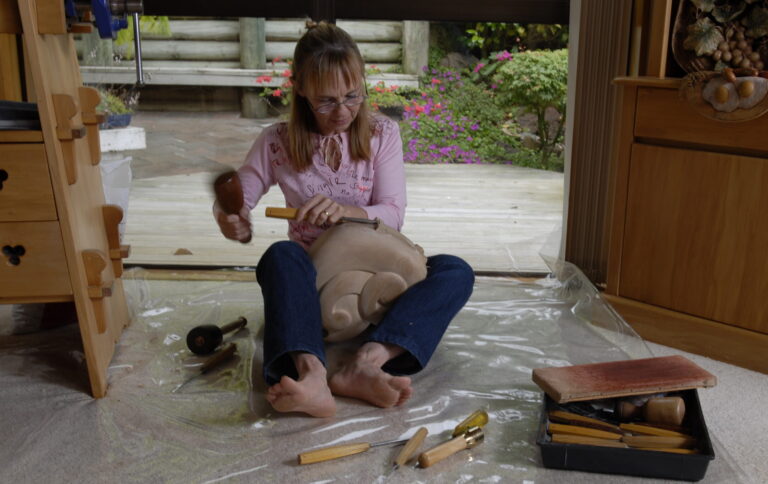
Jane Allnatt’s father was a commercial artist, a painter, model-maker and did a bit of carving, so there’s something of the family tradition in what Jane Allnatt is doing in working with wood. But it’s unlikely her father imagined her designs and creations coming out of a shed in the dining room.
Working on a sheet on the floor of a room in her house is the Howick resident’s “workshop” and preferred way of creating work. Yet that work has regularly taken prizes in various categories at the annual National Woodskills Festival at Kawerau, a central gathering place of woodturners and sheddies.
It is also unlikely you would find many men praising the convenience of their working space because, as the sculptor puts it, “the room is centrally placed and I can disappear to cook dinner or if there is any washing, I can do that. The light is good, too.”

READ MORE »

Heart of glass

Parts of Carmen Simmonds’ cast glass studio glow with the ethereal, often surreal treasures that emerge from their creator’s imagination and the searing heat of her kiln. Radiantly coloured dolls’ heads, glass lace and crochet, headless dancing dresses, ballet shoes, lilies in milk bottles, flowers, and other organic forms are at once beautiful and disturbing.
Then there is the other side – the chemistry and chemicals, machinery, and tools; hours of modelling, firing, grinding, sanding, and cutting.
But this studio is also a home. Carmen and her husband Glen live at her work studio – a 100-metre-square shed on their 8.5-hectare lifestyle block in Brunswick, Whanganui. The shed was originally intended as Carmen’s full-time studio but when they sold their house in town they had nowhere else to live so they moved into the shed “to camp for a while” and have stayed, still temporarily, for eight years.  

READ MORE »

A life in harmony

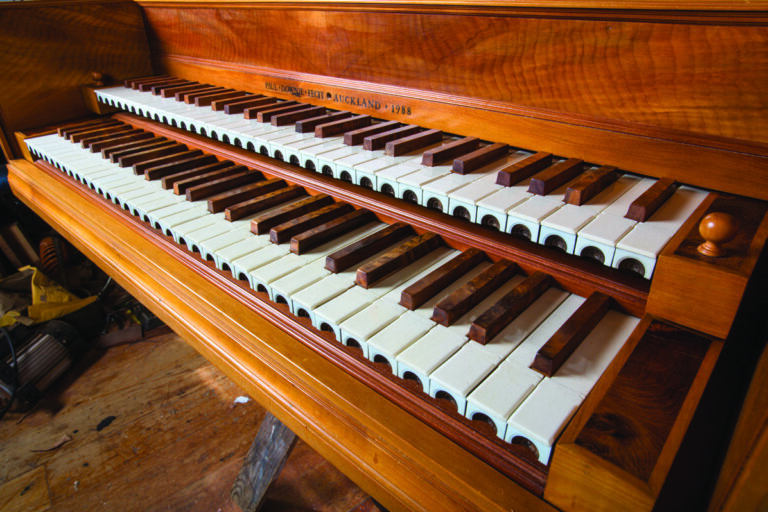
There is such a thing as serendipity. When Paul Downie was 11 years old a chance meeting at his grandmother’s house was to eventually set him on a course that would define his career.
“I was learning the piano at the time and her friend had a harpsichord that he invited me over to see. I thought it was marvellous,” he recalls. “He told me I should build one and although it sounded like a ridiculous idea, it never went away.”
When he was 22, Paul embarked on the project, researching how to build a harpsichord, scouring junk shops for old tools, sawing bits of wood, and gluing them up until he had constructed the instrument.
“I enjoyed the whole process so much that when I was 23 I decided to build another one. I discovered that overseas museums had very detailed technical drawings of old instruments which you could buy – when they are restored everything about the instrument and the mechanisms are recorded.
“I went on to build two more harpsichords. The first one did work but it wasn’t up to the same standard so I ended up pulling it apart and my sister burnt it as fire wood,” he says laughing. “The others have survived and are owned by very good musicians.”

READ MORE »

Create your own parrot-beaked pliers

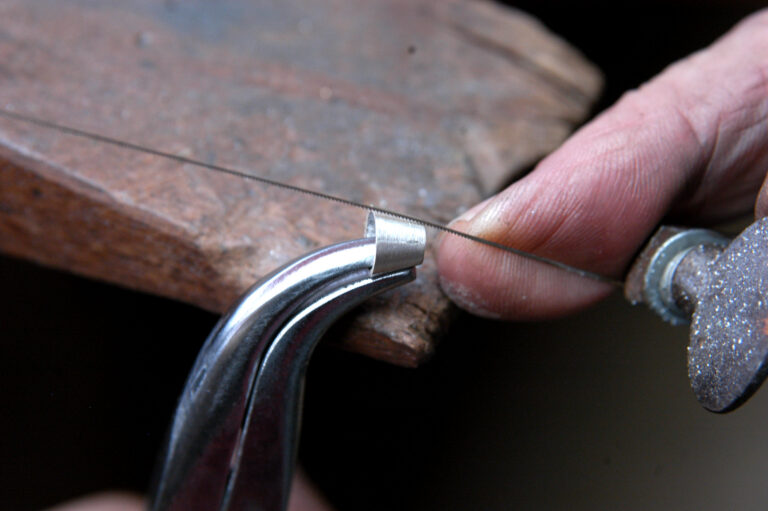
A specialist tool we made in that Hatton Garden workshop where I served my time was parrot-beaked pliers. These are used by the ring-maker for hand-made gem settings. They present the setting in a ring at just the right angle so the jeweller can pierce and file the design of the setting.
The best pliers for this are a pair of heavy, flat-pointed pliers, known in the trade as snipe pliers. Good jeweller’s pliers can cost up to $50, so I save my students money by most often using second-hand electrician’s snipe pliers. You can pick these up at any market for used tools and they do just as well. I am still using the pair I made during my apprenticeship 50 years ago.

READ MORE »

The ultimate man cave

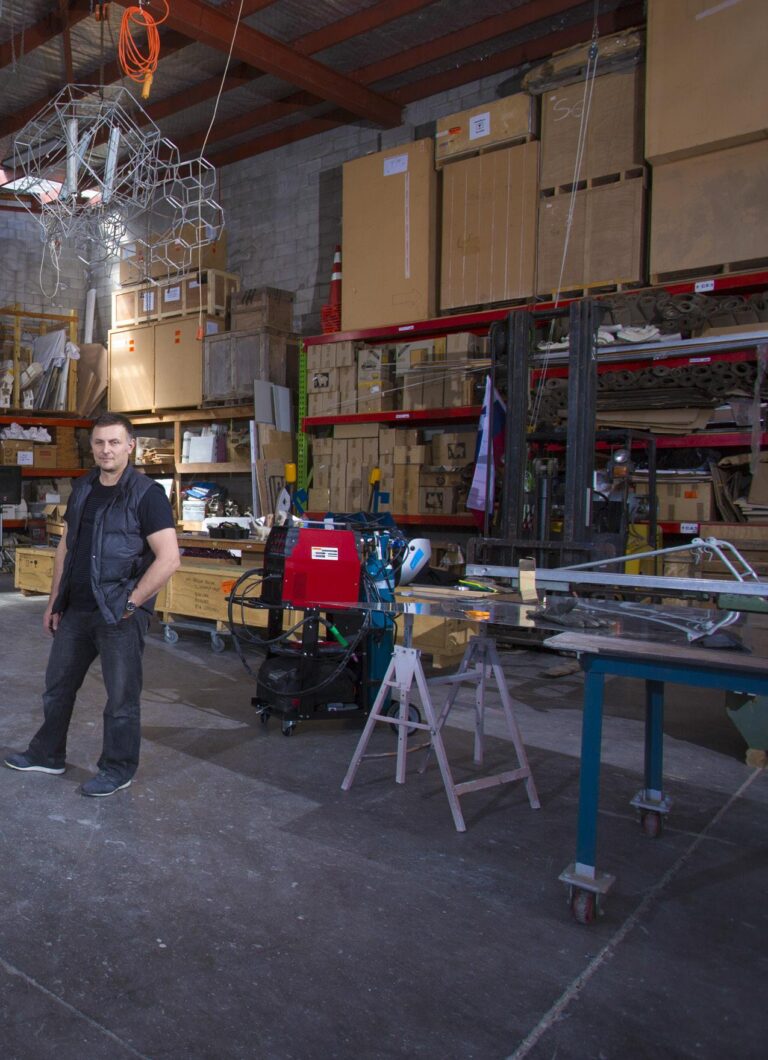
It’s tempting to think of Gregor Kregar’s work space as the ultimate humongous man cave. The 410-square-metre studio in a gritty industrial area of Auckland’s New Lynn certainly has all the “boy’s toys” to make the most avid sheddie happy.
Vises, grinders, table saw and cut-off saw? Check. MIG and TIG welders and drill press? Check. Two electric and a gas-fired kiln? Check. You get the picture. This is a serious space set up to work on all manner of materials.

READ MORE »

In pursuit of perfection

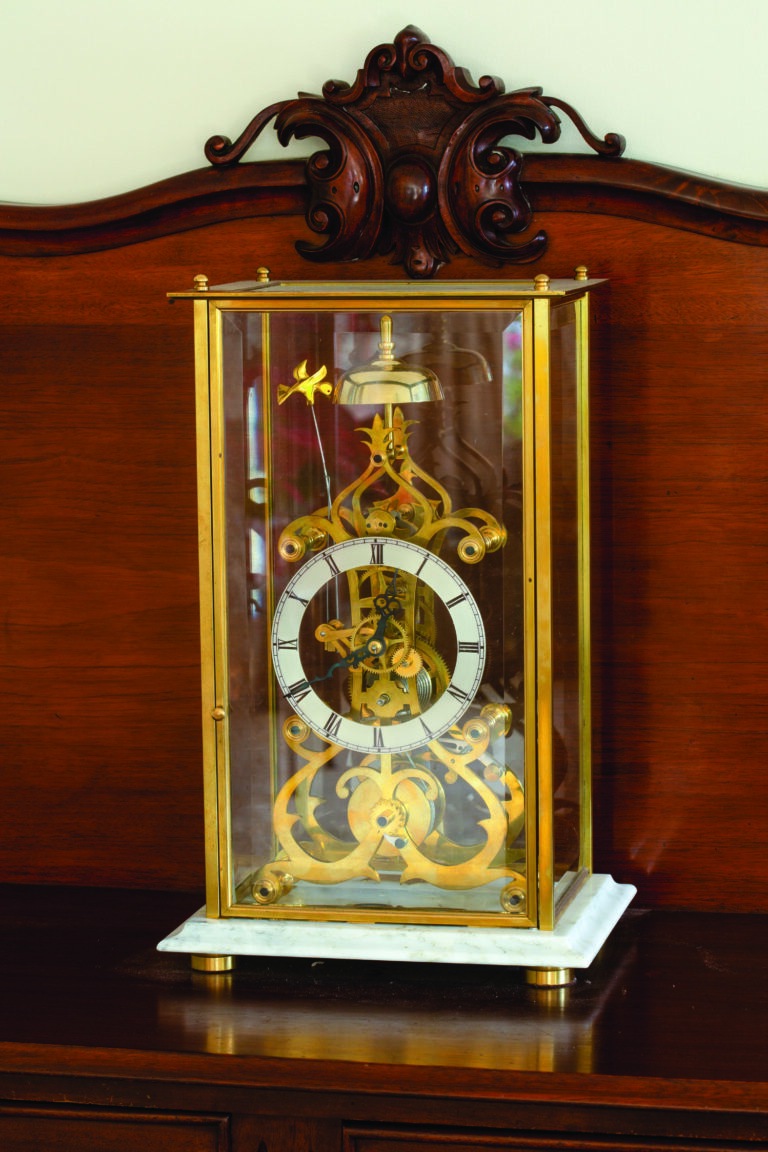
If David Curry was to be summed up in a single word it would almost certainly be precision. But that’s not enough – it would be absolutely vital to add artistry. Putting them together amounts to a search for perfection, so perhaps that’s the word to use.
Here’s an example: David is at present building a dauntingly complicated perpetual calendar skeleton clock, which has 38 gears, one with 165 teeth, all of which have to be individually machined. Clearly precision is paramount. But the levers and some parts of the frame look a little utilitarian, so he’s redesigning them with a few artistic flourishes. For inspiration he looks to a skeleton clock built in 1855.
“The engineering has to be right so that the parts work properly, but they also have to look right,” he says.
The clock tells the time, has a second hand, notes the day, date and month, and knows whether the month has 30 or 31 days. David is adding a second chiming system so that the half hour, three-quarter hour and quarter hour chimes have different tones from the full hour strike.

READ MORE »

Futuristic fabrications

A sci-fi artist working from a backyard shed in Central Otago is turning stuff no one wants into things that are sought after across the globe.
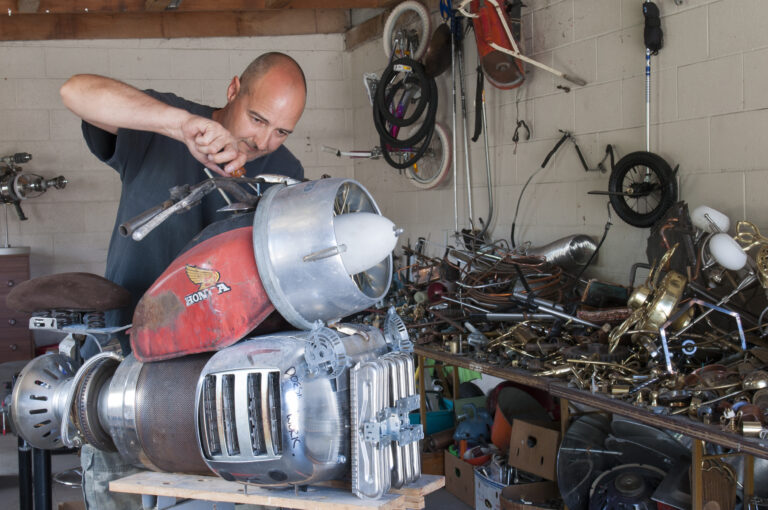
Sean Boyd uses anything that takes his fancy, from light fittings and plumbing parts to typewriters and old vacuum cleaners, to make futuristic fabrications which include ray guns, life-sized robots, jetpacks and other cosmic curiosities.
“The satisfaction is in finding parts, imagining outcomes and working out how they can fit together,” says Sean, who gets most of his raw materials from the local recycling centre, Central Otago WasteBusters. “I fill the back of the car for about $35. I think I’ve got more waste here than the waste station,” he says, looking round at the piles of paraphernalia in his humble garage in Clyde.

READ MORE »

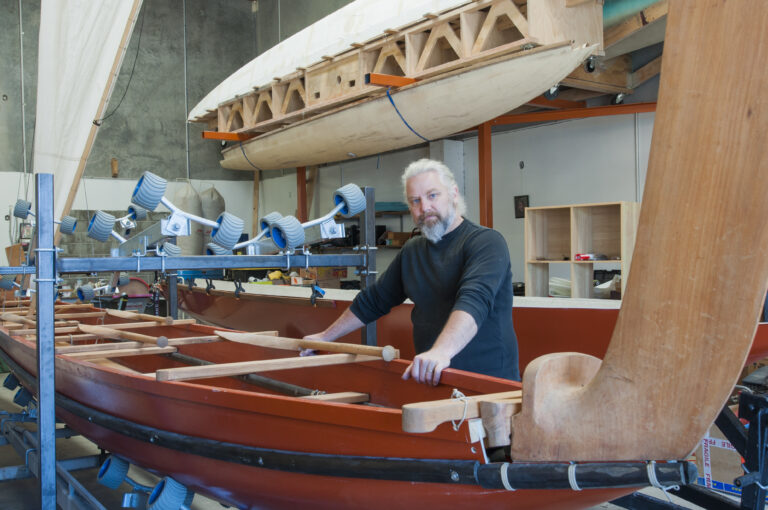
Waka building – Tradition goes hi-tech

Architect, designer, sailor. Add lateral thinker, enthusiast and passionate Kiwi to the mix and you have the CV of a Christchurch man who has made it his mission to put Maori waka back on the water by marrying traditional knowledge with today’s technology.
Quentin Roake’s goal is to find a way to build waka in numbers, recreating the appearance and characteristics of traditional craft in a modern version that is portable, durable, and economical to manufacture.
“The big question is, how do you translate the traditional form of canoe into modern materials? You can’t cut down a big totara tree every time you want to make a canoe,” he says.
Quentin’s quest for a solution involved consultation with tohunga waka (canoe experts), including Hoturoa Barclay-Kerr and Sir Hekenukumaingaiwi (Hector) Busby, and led to Nga Waka Tangata kaupapa, a collaborative project to develop contemporary forms of waka.

READ MORE »

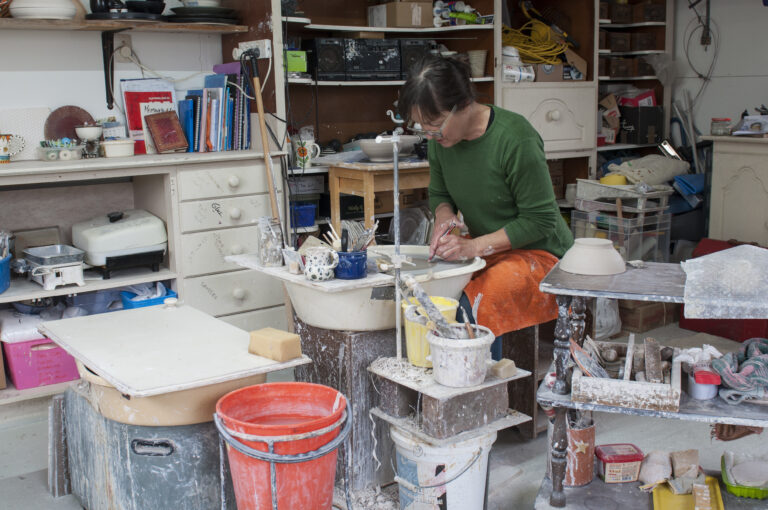
The magic of mud

Christchurch potter Renate Galetzka draws inspiration for her colourful and quirky pots from her daughter’s stint as a circus trapeze artist and the books of Dr Seuss.
“I want to make people smile,” says Renate, whose pots are fanciful but functional, made to be used not left on the shelf. “I make pots to brighten your day every day.”
German-born Renate met her Kiwi husband, Liam, in the Abel Tasman National Park in the 1980s. “I was on an OE and I’m still on an OE,” she declares, and part of that on-going overseas experience included discovering the art of ceramics. She took hobby classes in Christchurch, followed by “work experience” with one of the grand dames of New Zealand pottery, Frederika Ernsten, looking after her gallery in return for lessons. Renate went on to run and teach pottery at the Risingholme Community Centre.

READ MORE »

New life for old stuff

Broken blades, tired tools, worn washers, grimy gears. These are sorry sights for most sheddies, but for Bruce Derrett they are the treasures of his trade. The Motueka metal artist combines his skill wielding a MIG welder with a highly fertile imagination to turn other people’s junk into quirky creatures, funky furniture, and striking sculptures.
Bruce, who ironically failed metal work at school, has always had an eye for mechanical bits and pieces. “As a kid I was always pulling things apart, like clocks and radios. It used to really frustrate my mum,” he says. Now he puts things back together again, albeit it in a very different form.

READ MORE »

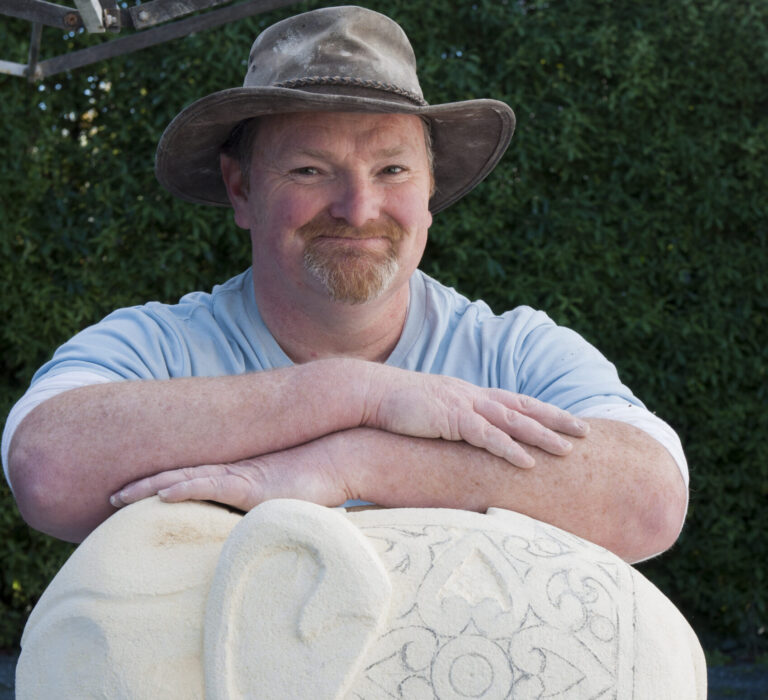
Carving out a career

Shaugn Briggs’ shed is a 6m x 3m pop-up gazebo and heavy-duty groundsheet. And that’s just on a bad day. When the sun is shining, the Christchurch limestone carver works alfresco, with the sky overhead and surrounded by trees and music.
The shedless sheddie’s “workshop” consists of a pile of portable Ryobi benches and an assortment of tools in stackable plastic tubes. When not stored in the single garage at the end of his drive, they are loaded on the trailer he tows around to various working and teaching venues.
Shaugn, who is also an accomplished painter, started his working life, somewhat reluctantly, as a painter and decorator. “The art thing was all I ever wanted to do but there is always that pressure to get a proper job,” he says.

READ MORE »