
Heart of glass

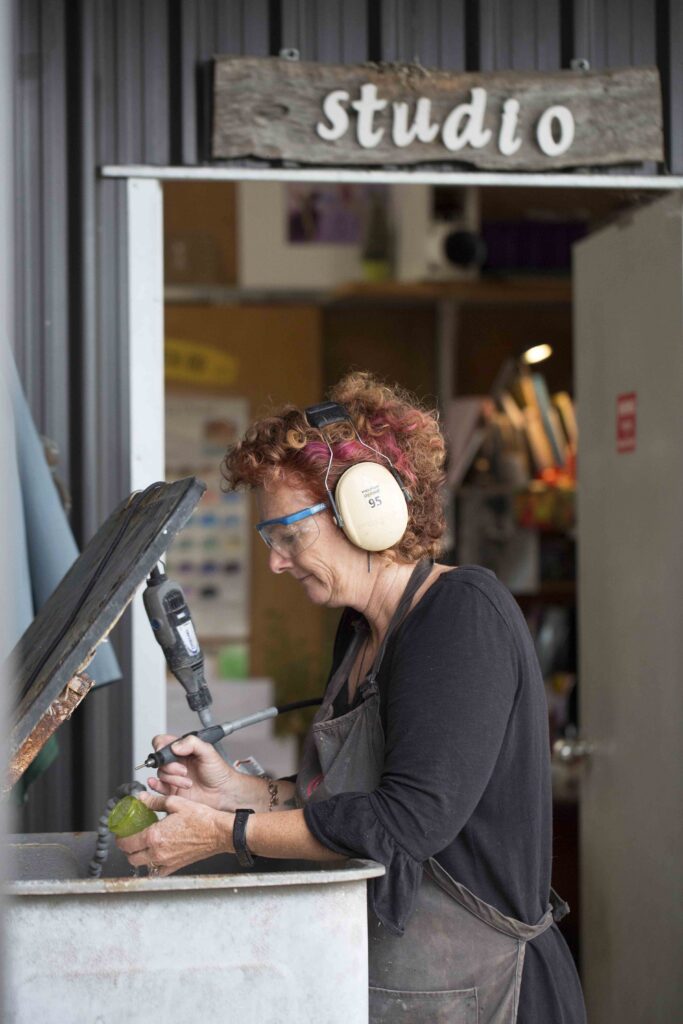
Parts of Carmen Simmonds’ cast glass studio glow with the ethereal, often surreal treasures that emerge from their creator’s imagination and the searing heat of her kiln. Radiantly coloured dolls’ heads, glass lace and crochet, headless dancing dresses, ballet shoes, lilies in milk bottles, flowers, and other organic forms are at once beautiful and disturbing. Then there is the other side – the chemistry and chemicals, machinery, and tools; hours of modelling, firing, grinding, sanding, and cutting. But this studio is also a home. Carmen and her husband Glen live at her work studio – a 100-metre-square shed on their 8.5-hectare lifestyle block in Brunswick, Whanganui. The shed was originally intended as Carmen’s full-time studio but when they sold their house in town they had nowhere else to live so they moved into the shed “to camp for a while” and have stayed, still temporarily, for eight years.  

A Whanganui glass artist shares her passion for a versatile medium through workshops and exhibitions
By Helen Frances
Photographs: Tracey Grant

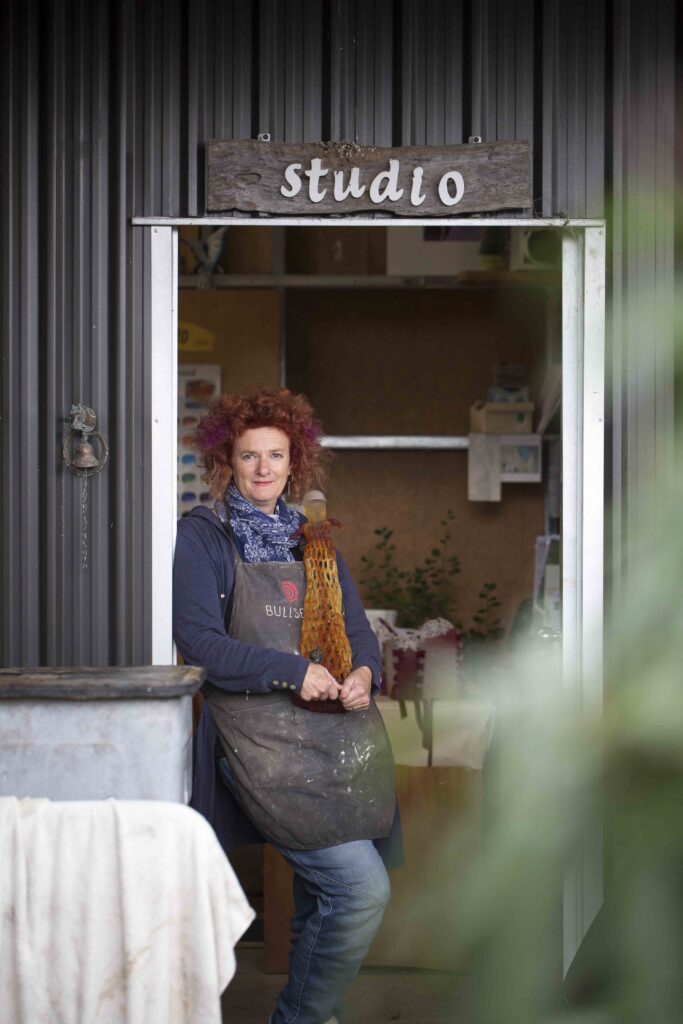
Carmen holding The Decision — the head opens to reveal words inscribed with a Dremel
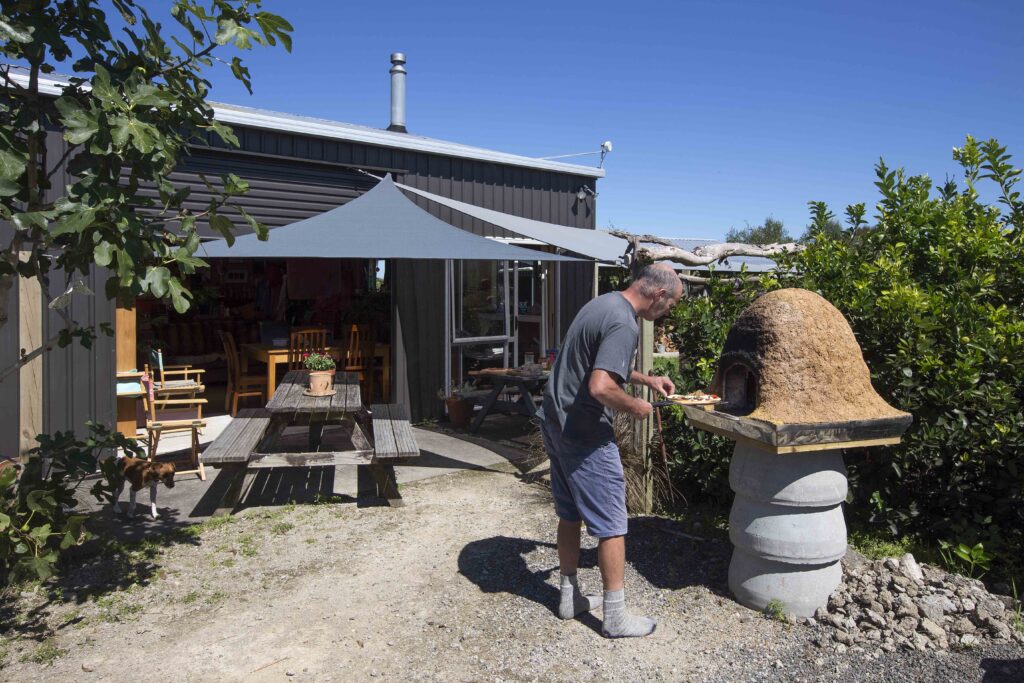
Nick taking time out to make pizzas

Parts of Carmen Simmonds’ cast glass studio glow with the ethereal, often surreal treasures that emerge from their creator’s imagination and the searing heat of her kiln. Radiantly coloured dolls’ heads, glass lace and crochet, headless dancing dresses, ballet shoes, lilies in milk bottles, flowers, and other organic forms are at once beautiful and disturbing.
Then there is the other side – the chemistry and chemicals, machinery, and tools; hours of modelling, firing, grinding, sanding, and cutting.
But this studio is also a home. Carmen and her husband Glen live at her work studio – a 100-metre-square shed on their 8.5-hectare lifestyle block in Brunswick, Whanganui. The shed was originally intended as Carmen’s full-time studio but when they sold their house in town they had nowhere else to live so they moved into the shed “to camp for a while” and have stayed, still temporarily, for eight years.  
Another architect-designed shed house is in the planning stage and will be built on their property further down the road.
“It’s actually really comfortable living here,” Carmen says. “I can get up in the morning – because we have the bedroom, lounge and kitchen all in one room – take three steps in my dressing gown and slippers into my studio and start working. Quite often I have to get up in the night to check my kiln so everything is handy. It’s going to be so inconvenient to have to walk up the paddock to here.”

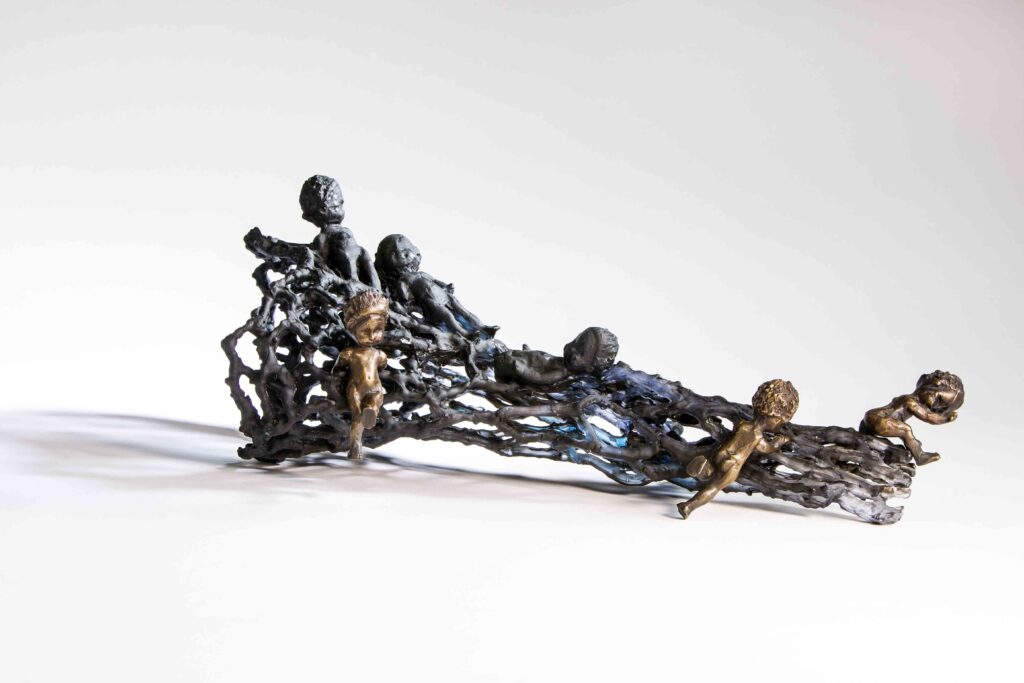
Caught — a brass and glass sculpture
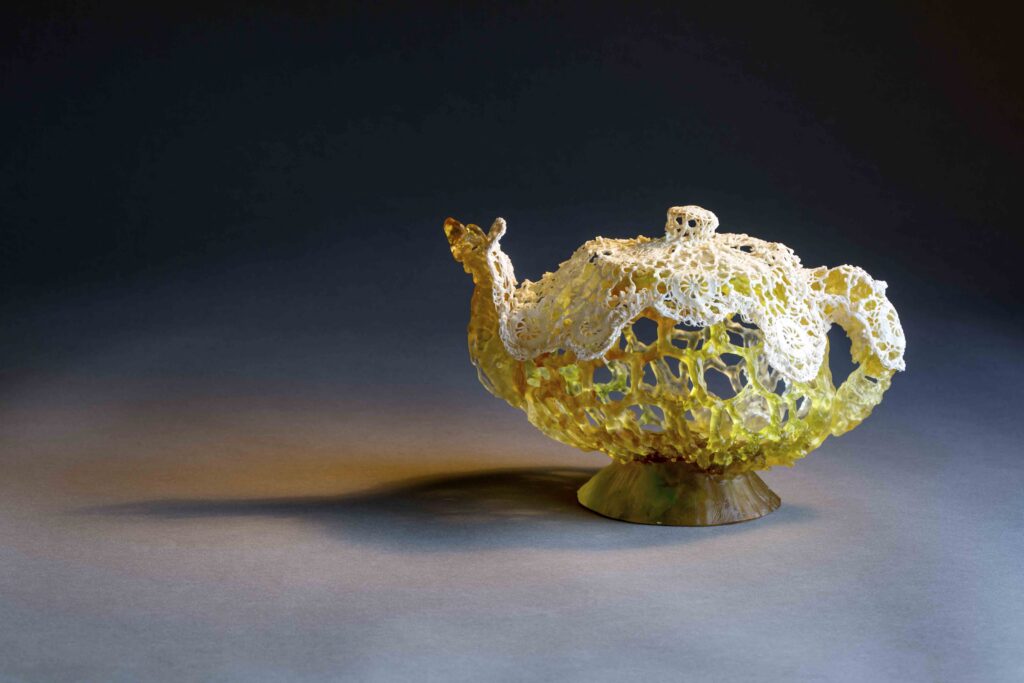
Lace teapot

Love of glass
Carmen has a science background and worked as a lab technician doing quality control. She discovered a love of glass and photography while studying for a Bachelor of Fine Arts at UCOL and went on to do a Master of Art and Design at AUT. 
She has been very successful in her career; her glass work is exhibited within New Zealand and internationally, and has been bought by collectors in New Zealand, Australia, the United Kingdom, and America.
“It’s a medium people like. Glass is very alluring, and you can do anything with it,” she says.
Core cast glass, where a shell of glass is created, is her preferred way of working, and she also makes open cast or solid glass objects. An experimenter from way back, she likes to adapt tools and machinery rather than buy more expensive glass-making equipment.

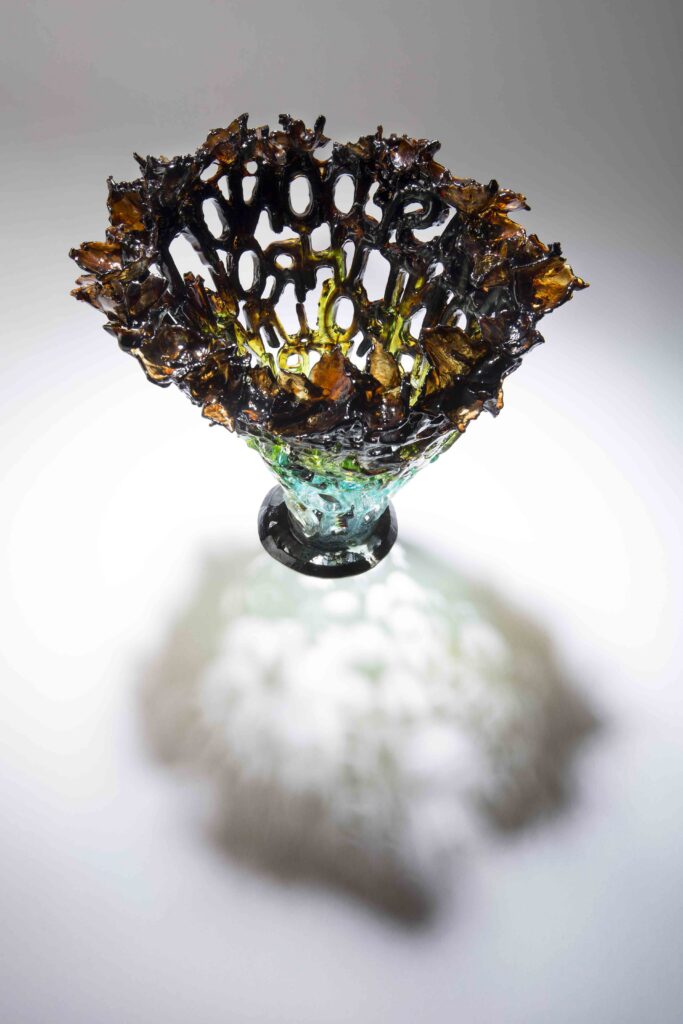
Please Do Not Throw Me Out — entered into the 2018 Sarjeant Gallery Te Whare O Rehua Whanganui Arts Review

Tools, machines and materials
Carmen sources worn dental instruments from her dentist and has adapted machines such as a wet belt finisher from a glass factory, a wallpaper steamer to melt the wax out from the plaster mould, dremel, sand blaster, linisher, compressor, flatbed diamond grinder – an air-driven, cut off tool modified with a diamond blade, drills, and a crockpot to melt wax, or frypan for small amounts. The tools all have diamond drills and blades. 
“Being a Kiwi, you do tend to do the Number 8 wire thing,” Carmen says. “I realised that when I went to overseas conferences. They have all the machinery and tools, whereas we have adapted things and made them work for us. So it is totally doable. For example, I have an auto parts washer and I recycle water through it when I use the dremel if I have to cut or drill the glass, because you always need water. It acts as a constantly flowing tap. I also have a cut off tool I got from Super Cheap Auto and instead of having a steel blade on it to cut off metal I have adapted it for a diamond blade so I can cut off chunks or things I don’t like on the piece.”
Two three-phase electric kilns represent considerable investments and she can cast anything from very small objects up to 20kg-plus sculptures. There is a separate kiln room because of the toxic fumes, and a cold working area. Her studio space occupies one third of the building at present.

Sanding ...
... and sandblasting
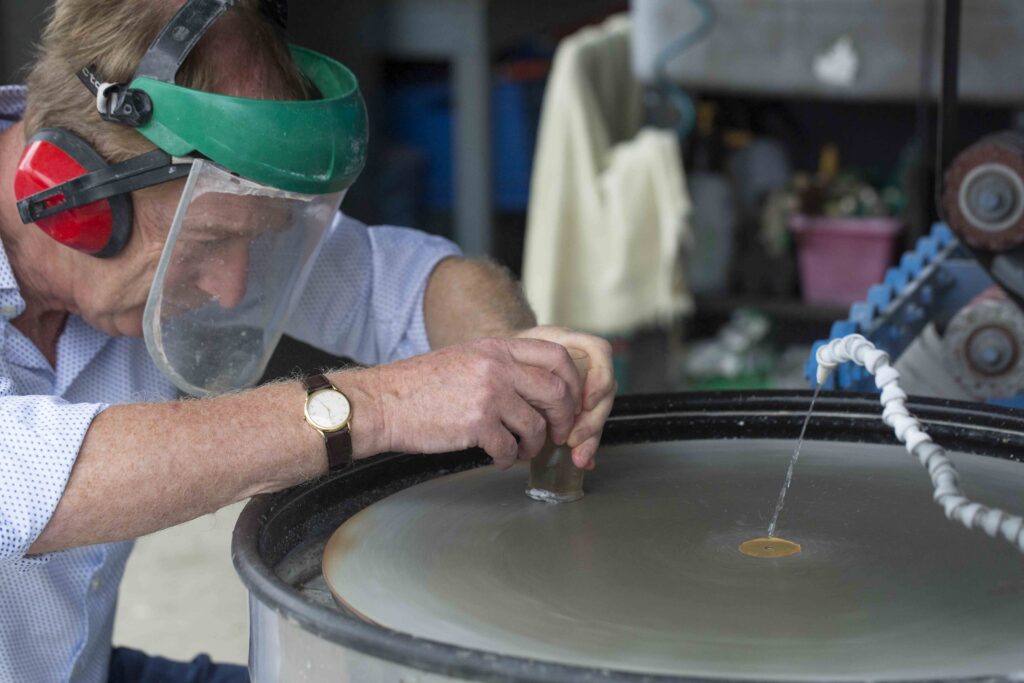
Nick sanding the bottom of a shot glass to make it level

Working with colour
When she started out, Carmen used salvaged glass, which is an option for beginners. 
“I couldn’t afford to buy glass so I smashed up car windowscreens, house window glass – anything that wasn’t laminated that you could smash up into small bits. But unfortunately when you cast some of that glass it can come out a bit cloudy. 
“People use Steinlager bottles and they work reasonably well but you have to heat it quite hot to make it run into the moulds. You work with whatever colour the glass is.”
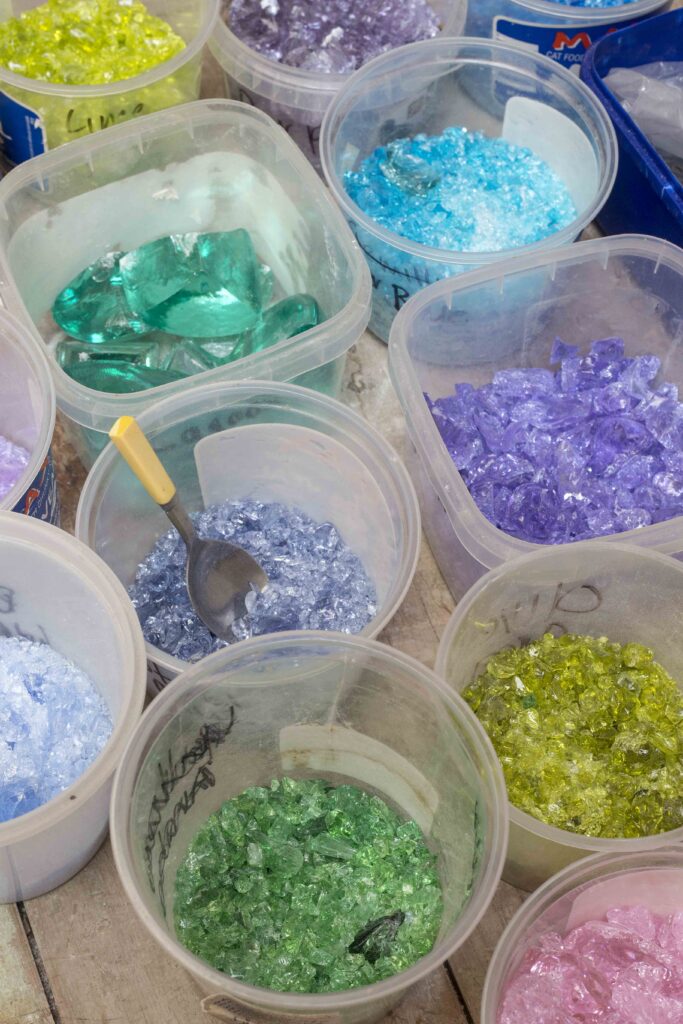
She uses Gaffer glass, a company that was originally formed in New Zealand, which comes in many colours. 
“In my workshops I get students to work out the colours as though they are painting a watercolour so they can create a flow. You can’t really predict how it’s going to turn out but you can give it a good shot by placing coloured glass in certain parts of the mould and making sure it flows in the right way.”

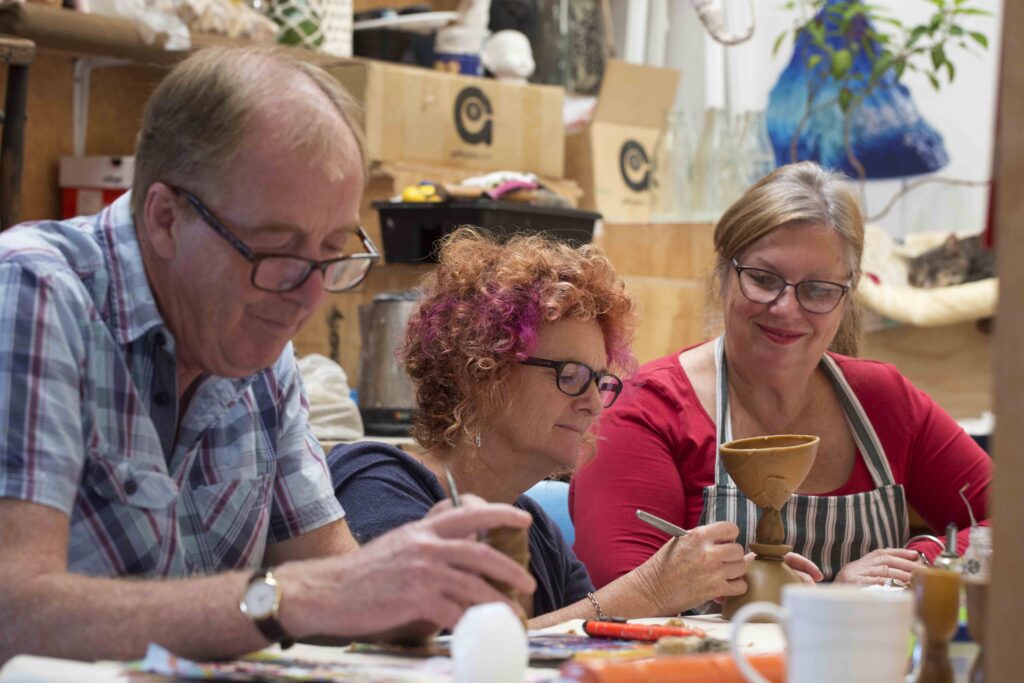
Nick, Carmen, and another workshop participant refining wax moulds using worn dental instruments
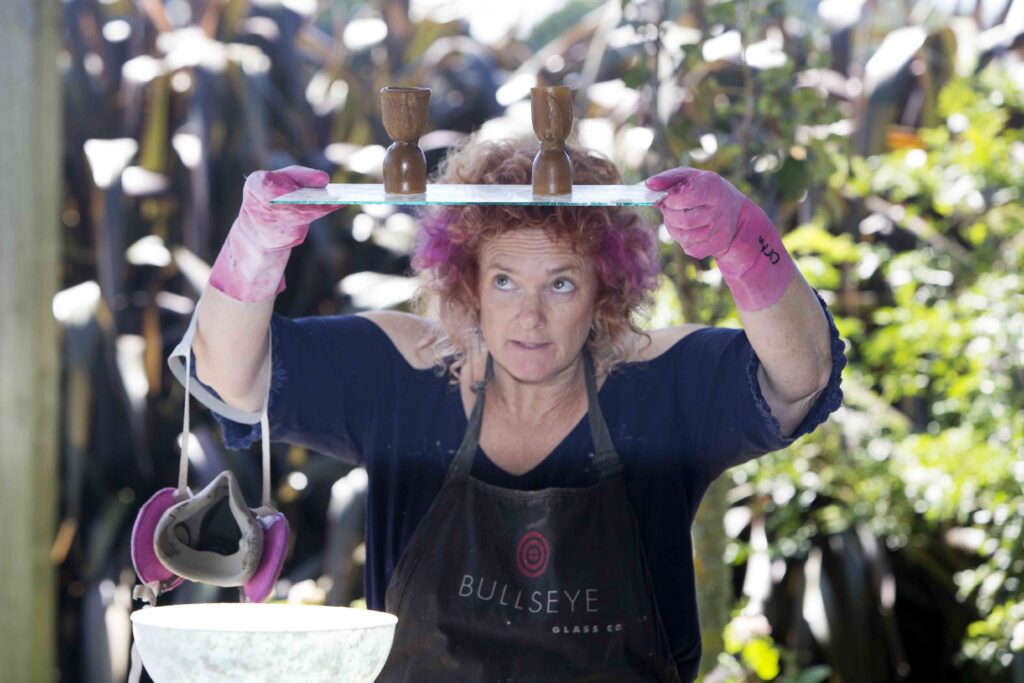
Checking the shot glasses are level before the next process, making the plaster mould around the wax

Glass workshops
Carmen has taught workshops for many years, both for beginners and those with some experience. She teaches mainly hollow form core casting.
“In two days, people learn what they could take six months to learn, and they often return to consolidate. Glass casting can be applied to many areas. A brewer wanted glass handles for his beer taps, and other people have ordered glass figurines for the front of their cars. A bronze caster made sculptural figurines, and another person cast a full-sized replica of his father’s head.” 
All materials, including glass, use of tools and machinery are provided, and for a small charge, there are two bedrooms for hire in another shed annexe. She runs a course every month.
Workshop participants are mainly women but she says men are starting to get interested now too. The gender differences are complementary. 
“Men ask the technical questions. Annealing is the cooling part of the process so men will ask what the machines are used for and how you finish the pieces off. The women tend to be, “Oh my God, look at the pretty colours.” The guys are far more process oriented and practical. It’s nice to get a guy and a gal because you get two different ways of thinking.”

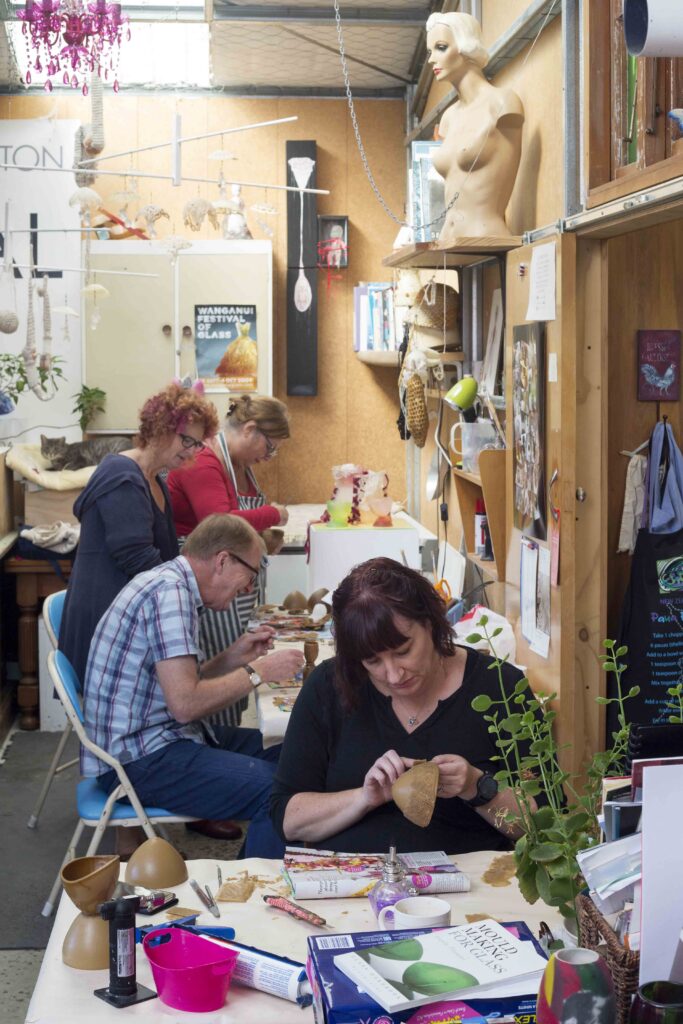
A busy workshop
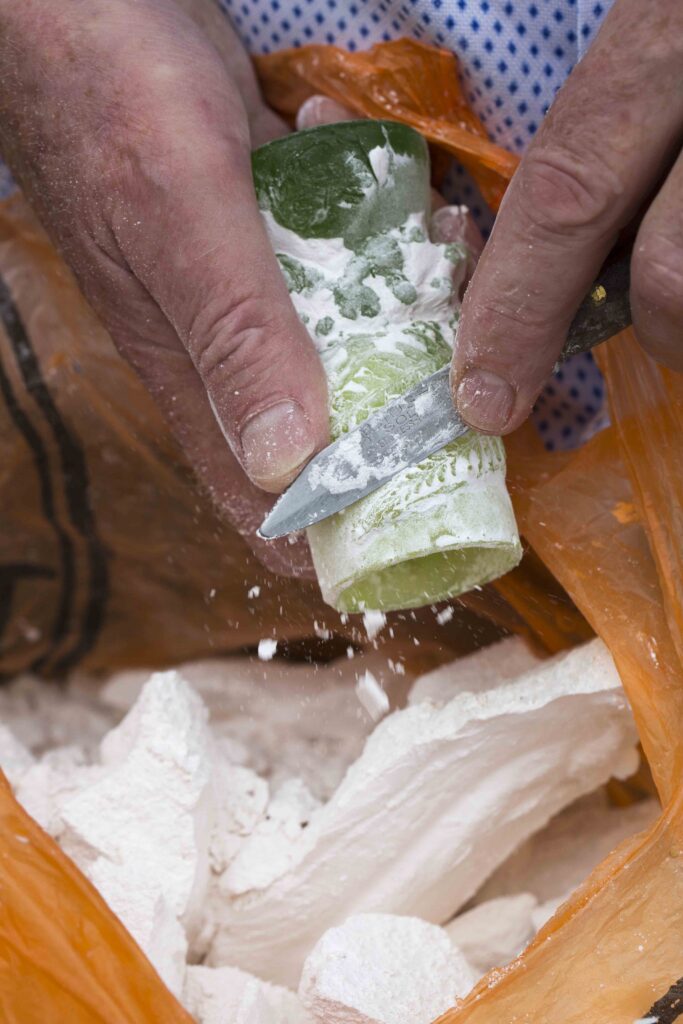
Using a peeling knife to gently remove the plaster mould from around the glass after kiln firing

Blokes making dresses 
A while back, several men attended a course, and she gave them one of her dresses as a project to render in glass. 
“They had to rearrange the dress into something of their own creation – like a figurine. It was a challenge but they were thinking about how their partners would like it. Some have gone on to making glass a big part of their life now. I got them to chop up their wax impressions of the dress and put it back together again in glass in a way they thought was interesting, using different colours. As part of the process, they made their own small silicone moulds.”
Nick Price, a British ophthalmologist, on a short-term contract in Whanganui, was doing his second workshop with Carmen. 
“When I came to Whanganui, I discovered it was the centre of glass-making in New Zealand,” Nick said. “I love the glass-making process, and I’m planning to set up a little glass-making studio back home. I’ll get my own kiln and kit.” 
Nick has made three shot glasses, which he decorated with organic forms. He had bought animal-making balloons to create different shapes, then decided to go with the oval shot-glass forms.
“The most challenging part is coming up with artistic ideas, designs and patterns,” he says.
carmensimmonds.com

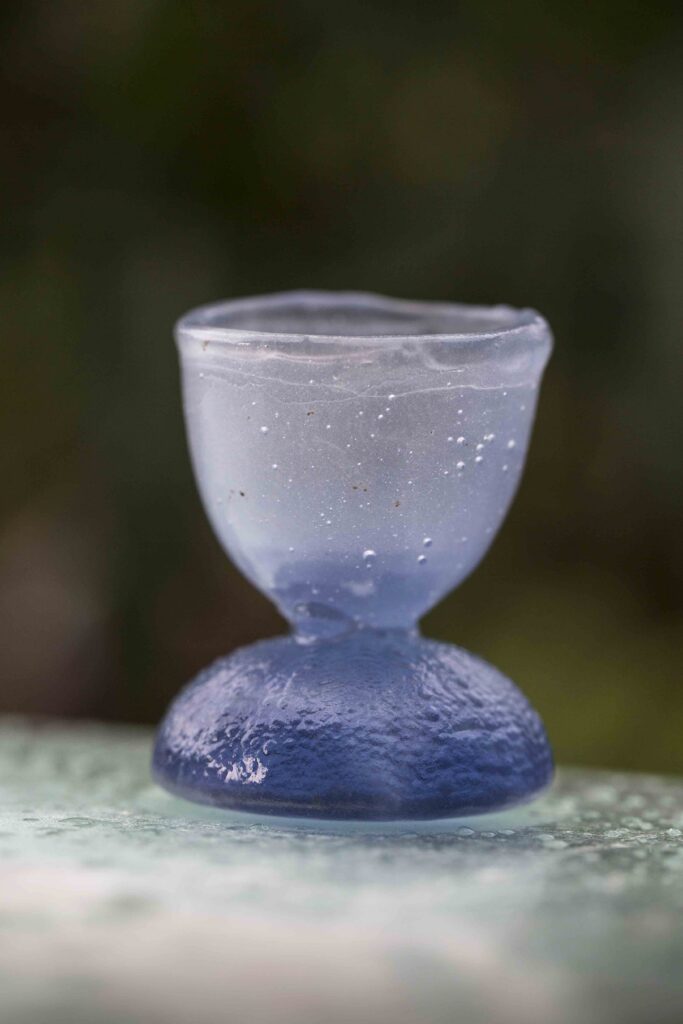
Nick Price’s shot-glass
Running water and a Dremel remove imperfections around the rim
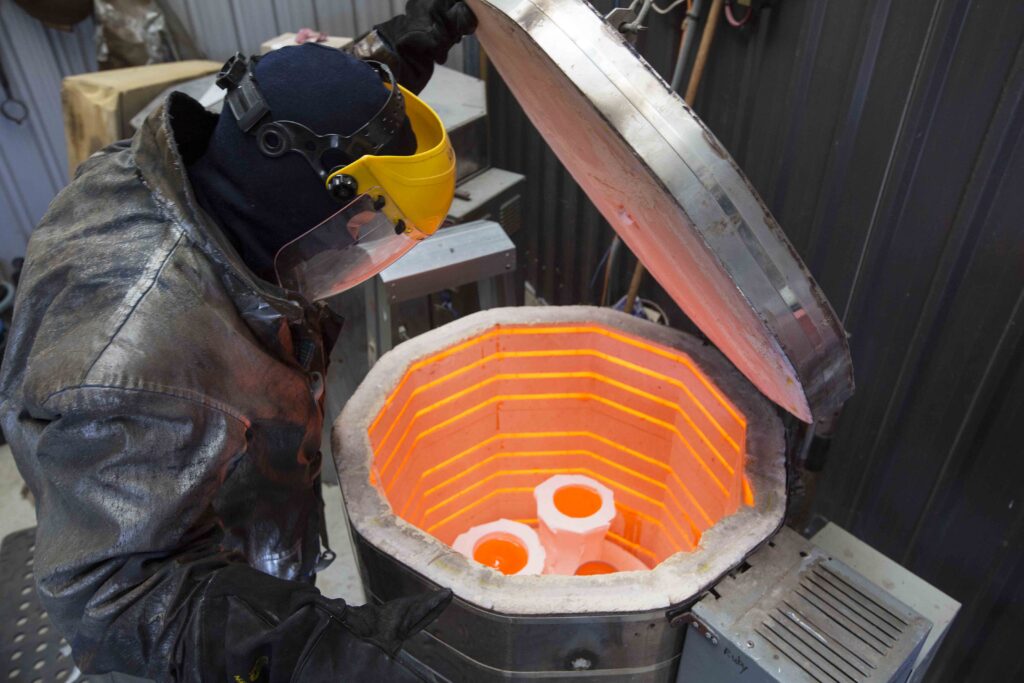
Carmen opens the kiln lid to check the glass firing
Nick uses the air compressor to remove particles of plaster from his work

The stages of cast glass making 

Silicone rubber moulds: decorative, textural objects
Ahead of time, prepare embellishments with which to decorate the main form. Decorations can be anything that appeals. Organic materials work well – leaves, flowers, bark, seeds, or materials such as lace, buttons, jewellery, etc.

Resists 
To avoid sticking, and depending on the material: 
Spray-on polyurethane, which protects porous objects and stiffens soft, delicate materials such as lace.
Vaseline – apply with a paintbrush or fingers. Stops silicone from sticking to metals, plastic, and glass.
A detergent solution can be used to keep fabric or paper materials moist.

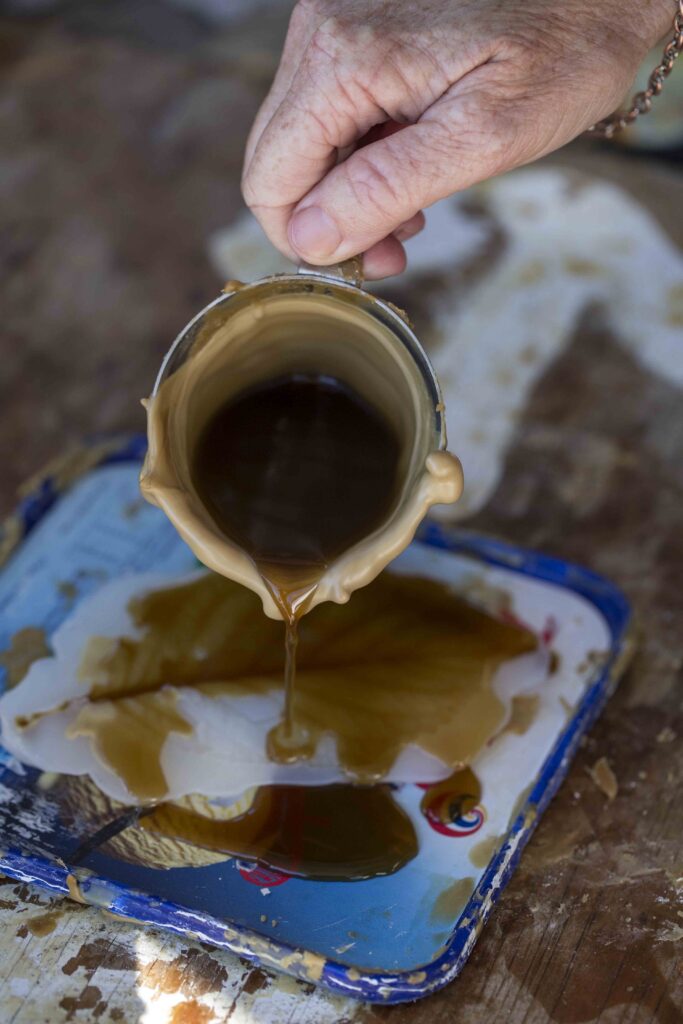
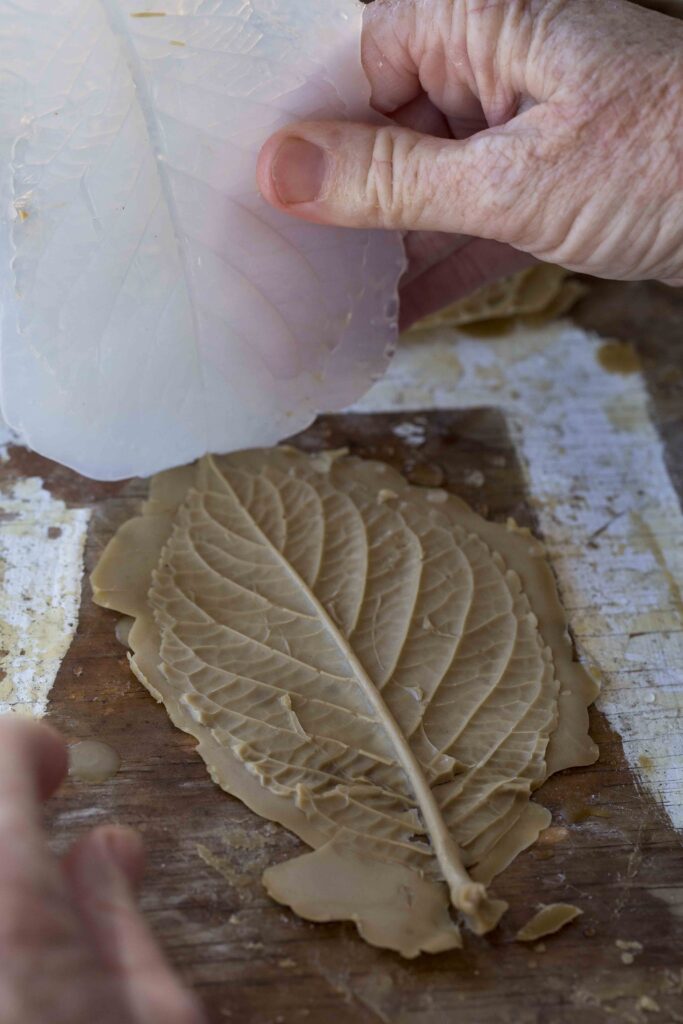
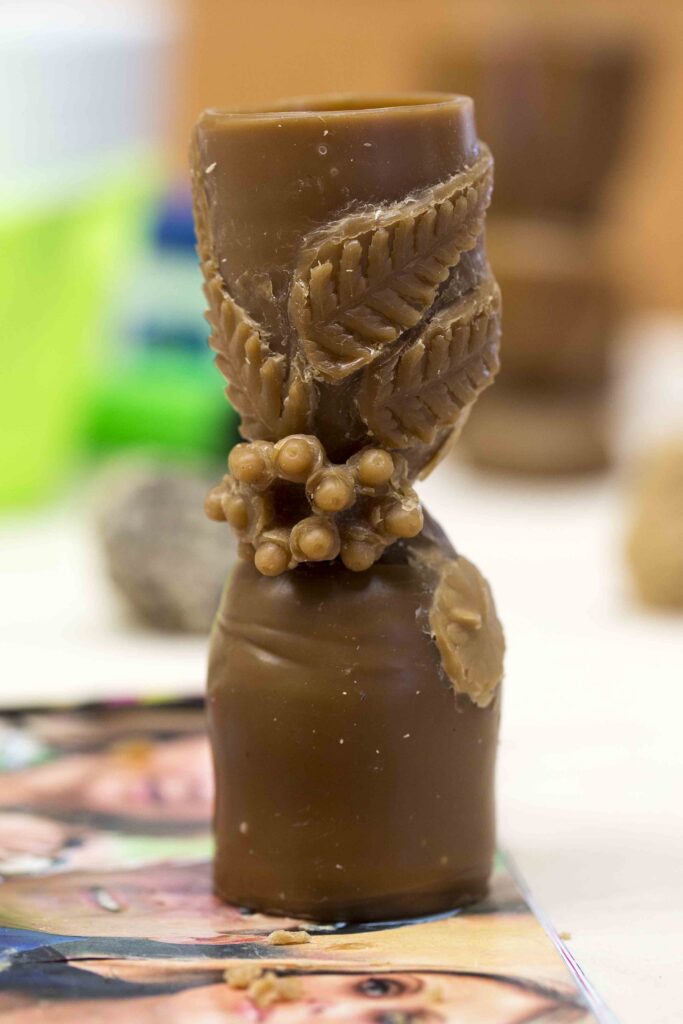
Silicone is spread onto an object to create a mould, then wax is poured over the mould to create an impression. This is then attached to a larger object using a warm implement to refine the wax

Using silicone rubber 
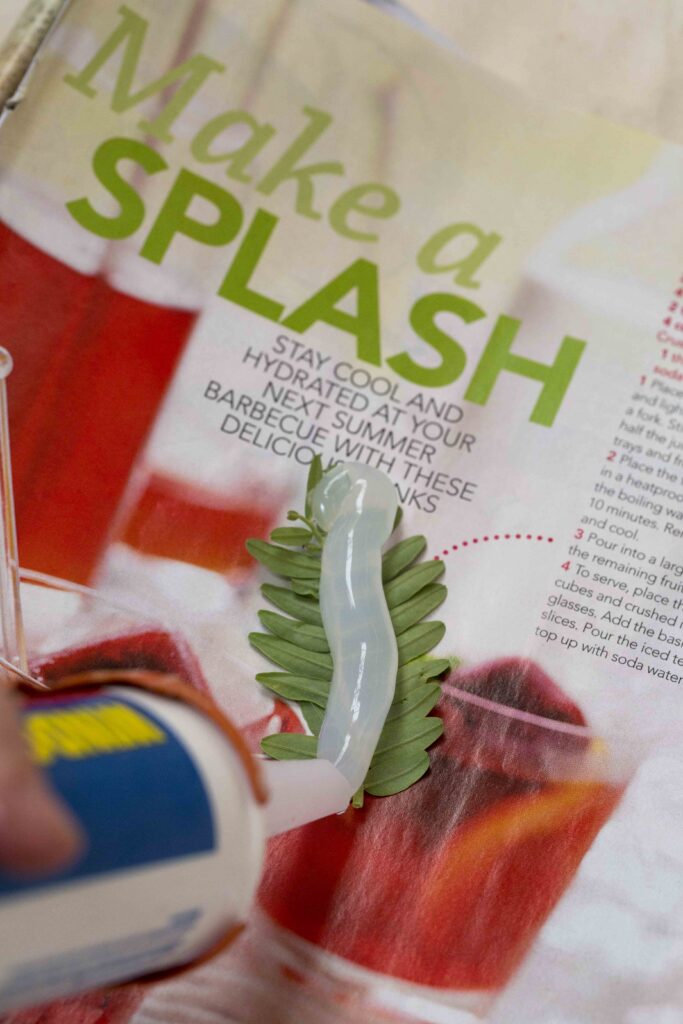
Apply silicone rubber (Ados RTV Acetic Cure silicone from Mitre 10) to your object’s surface with a caulking gun. 
“I do it on magazine glossies like NZ Woman’s Weekly, because it peels off easily.” Pipe the silicone on in overlapping runs to avoid air bubbles. You can also squirt it into soapy water, take it out with your fingers, and apply. The soapy water stops it from sticking. 
Or wet your fingers with detergent and water, and then spread the silicone gently and evenly over the textured surface. Take care not to trap air under the surface. Make the silicone rubber mould 1cm thick. 
Leave 12-24 hours to cure.
Once cured, the silicone can be peeled off the form. Clean the interior with soapy water if needed. It is now ready to be used, many times. The next process will use wax.

Making wax moulds for lost-wax casting – Nick’s shot glasses

Use microcrystalline modelling waxes to make the form. These waxes are easy to work and burn out cleanly at a low temperature without catching fire.
Nick made three shot glasses. Here is the process he followed: 
Melt wax in a crockpot (you won’t be cooking stew in it again) to a temperature of around 80°C.
Fill two small balloons with water “water bomb” style to the size you want your form to be. One will be the base and the other the top.
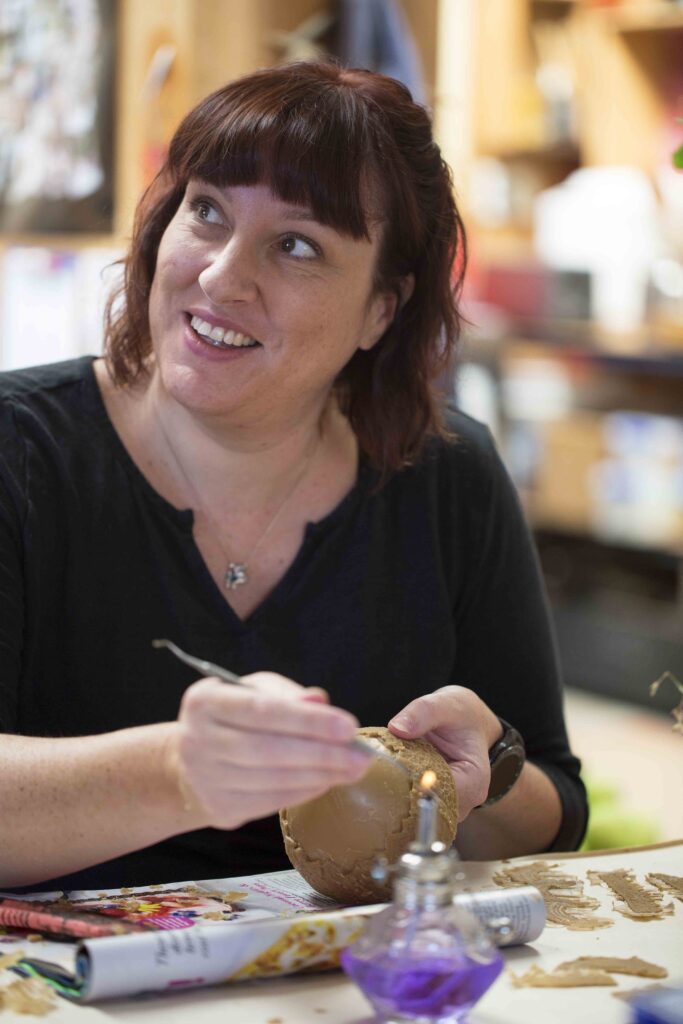
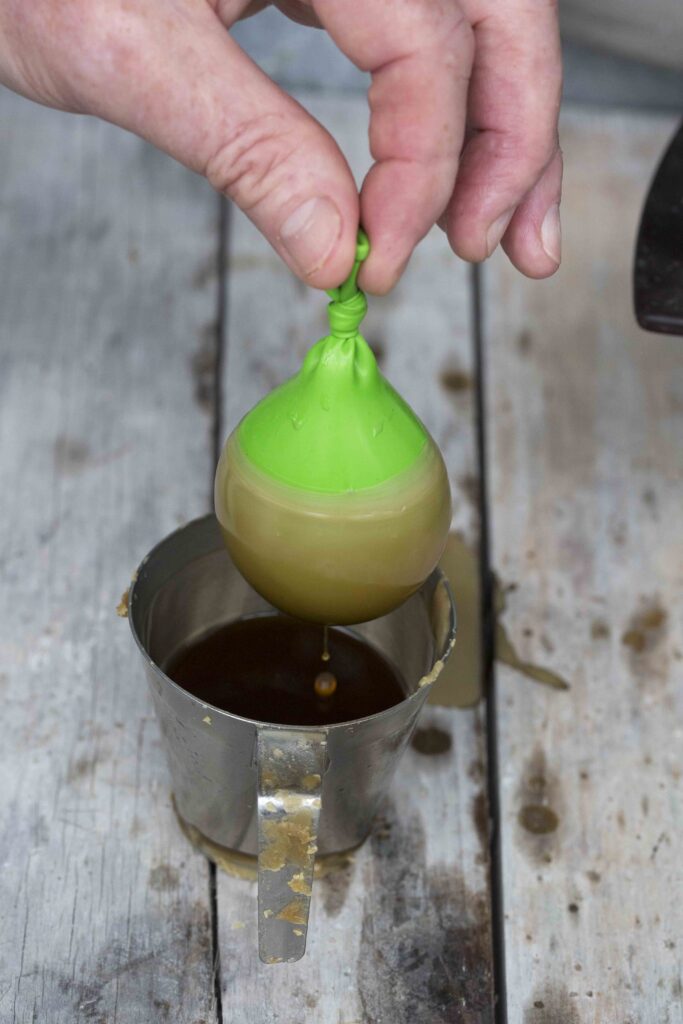
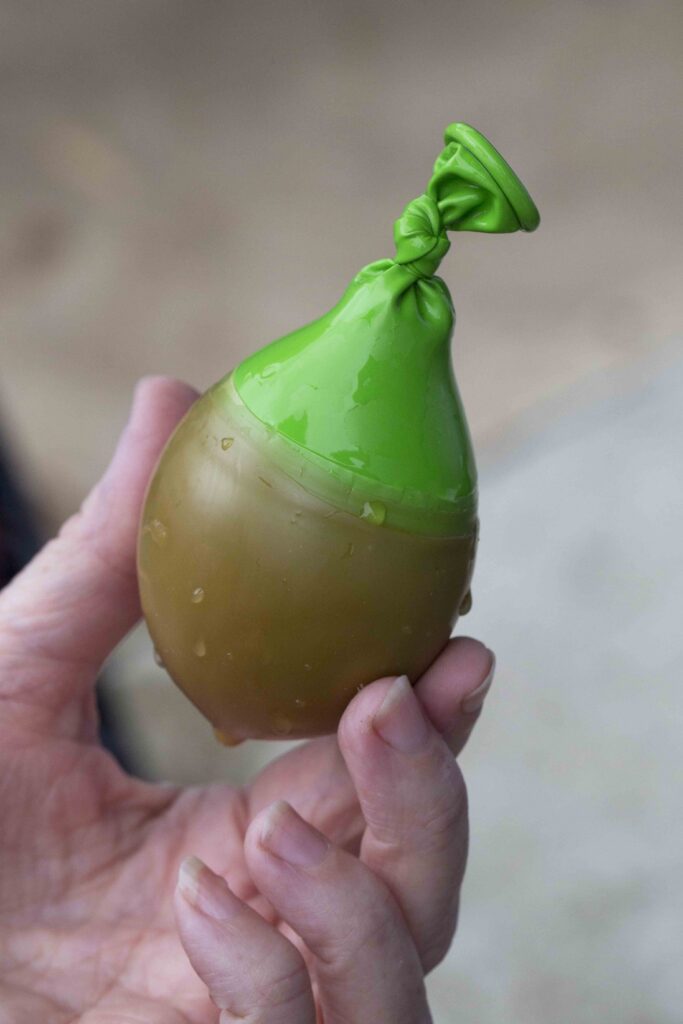
Dip around two-thirds of the balloon in wax. Remove and allow the wax to harden and cool down – you can also dip it in water. Repeat the process about seven times to create a slip or shell. 
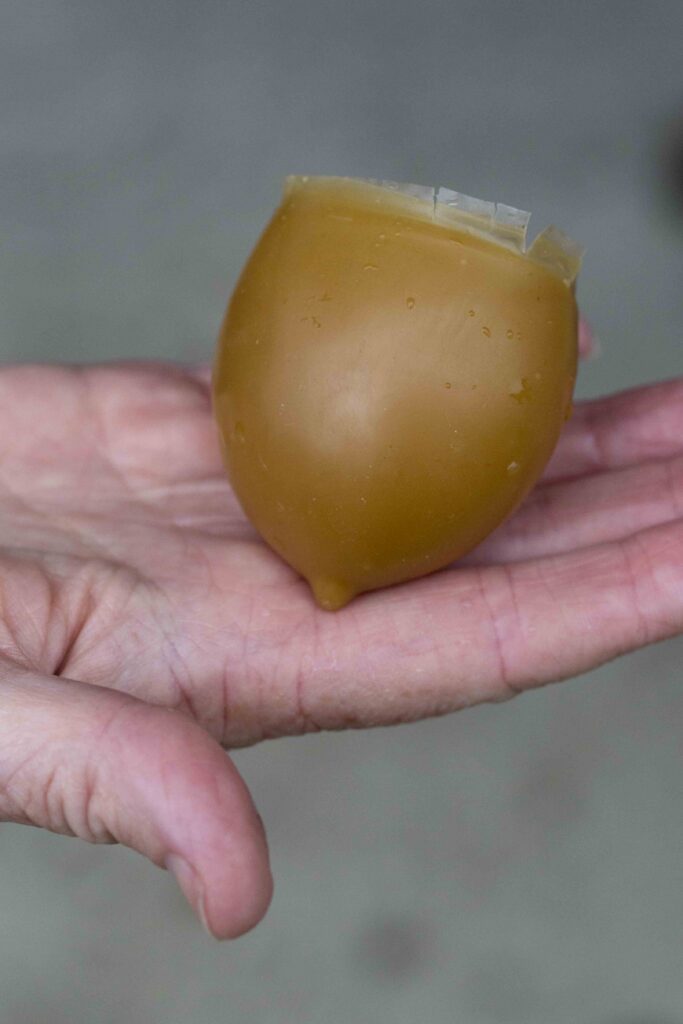
Pop the balloon with a Stanley knife or pull it out. 
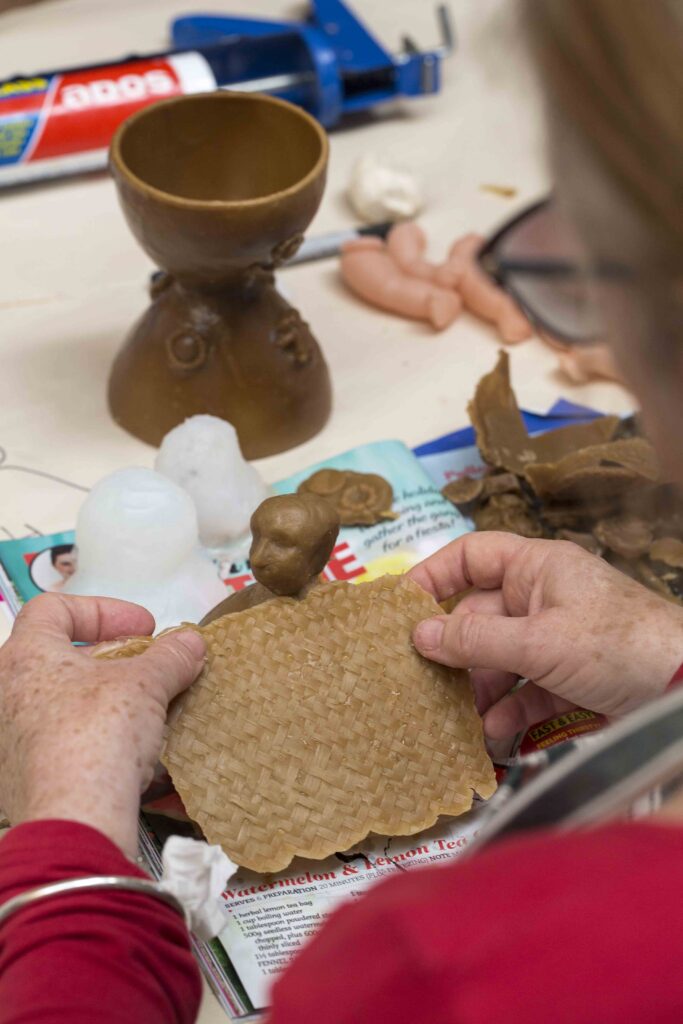
Join the two balloon shapes at the apex of the curve to make top and bottom and anchor with wooden skewers or toothpicks, which burn away in the kiln. Then add more wax (a thin sausage) around the middle and smooth it out using small metal instruments such as a spoon or knife, ground to a shape that suits you, and heat over an alcohol burner flame. 
Add on any pre-made decorations. Nick used berry moulds on one and on another, a latticework of flax on the outside with a flower shape in the bottom of the glass.
The goblet forms can be sculptural pieces or functional.

Dipping a water-filled balloon into wax to create a form
The balloon is popped and extracted before adding details

Refractory mould
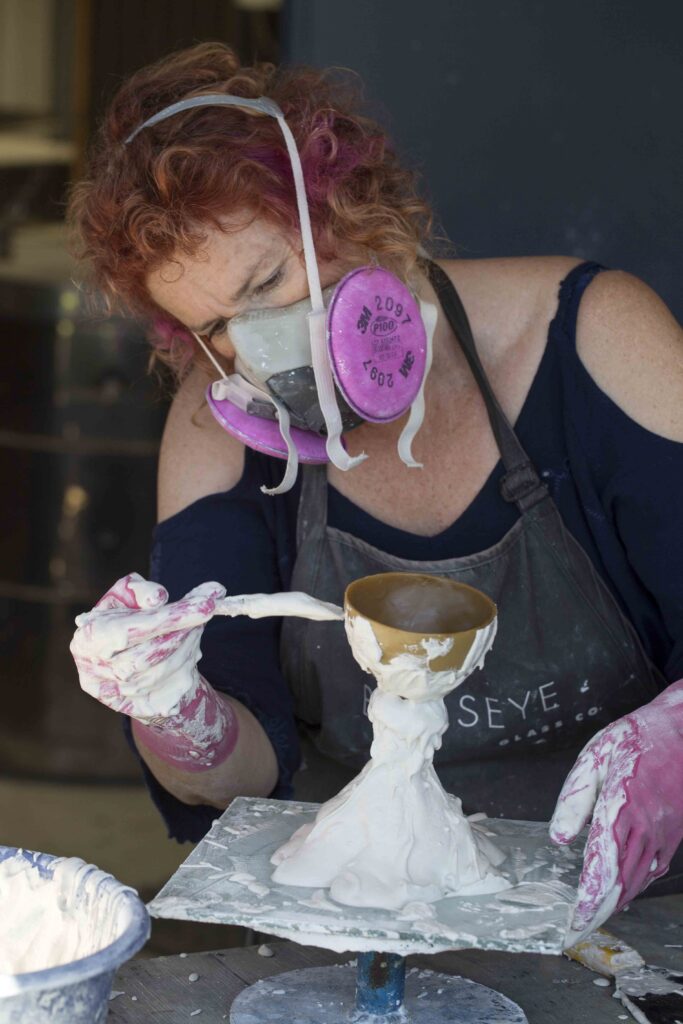
When the wax mould is finished, make, or “invest it with” the refractory mould. Make the refractory mix with a 1:1:1 ratio of water (to mix), plaster (to hold the form), and silica (to stop it breaking up in the kiln). 
Use clean water and allow the plaster to “slake” for 2-3 minutes before mixing. Gently stir without making air bubbles. The mix is like whipped cream. 
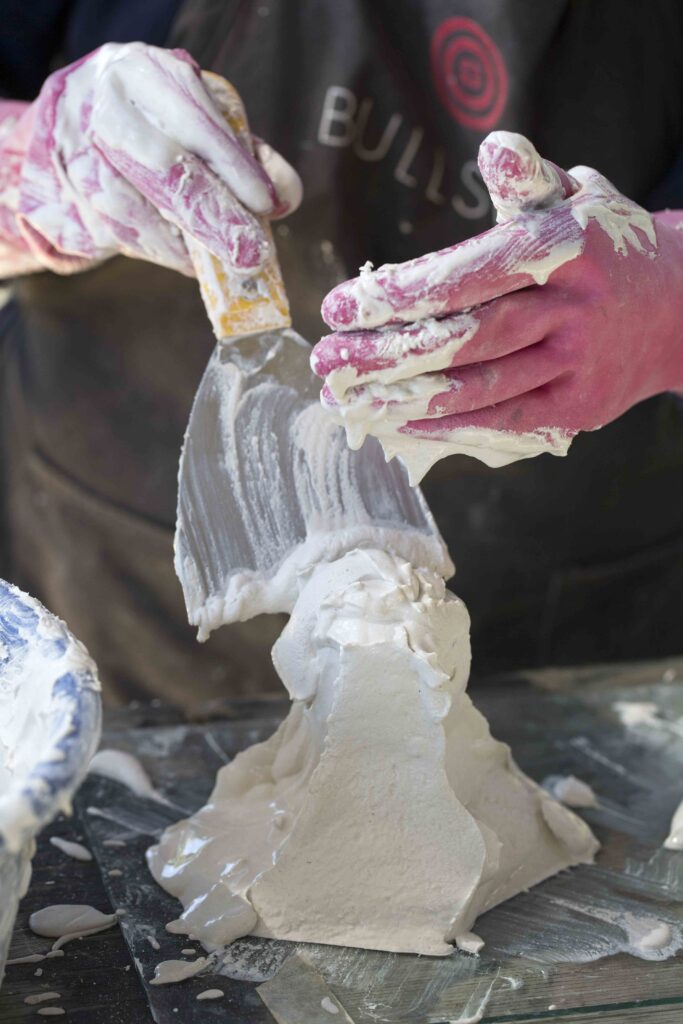
“With your hands, mould the plaster around the piece. Do lots of layers. In the kiln, if one layer goes, the next will hold it. The internal layer around the wax is the important one because it catches all the textures so it needs to be sound. These are the “core moulds” and they have an internal and external surface. 
The base or “sprue”, which is the other cup form, is solid. That is where the glass goes in through a feed. The glass pieces sit in the top and melt down into the sprue then in and around the bottom cup form.
Allow to “cure” for 24 hours to reach maximum strength.

Applying the first coat of plaster using a paintbrush to ensure all the detailing is picked up. A mask guards against toxic fumes
Building plaster around the object, making sure it is evenly coated

Losing the wax – or “cire perdue”
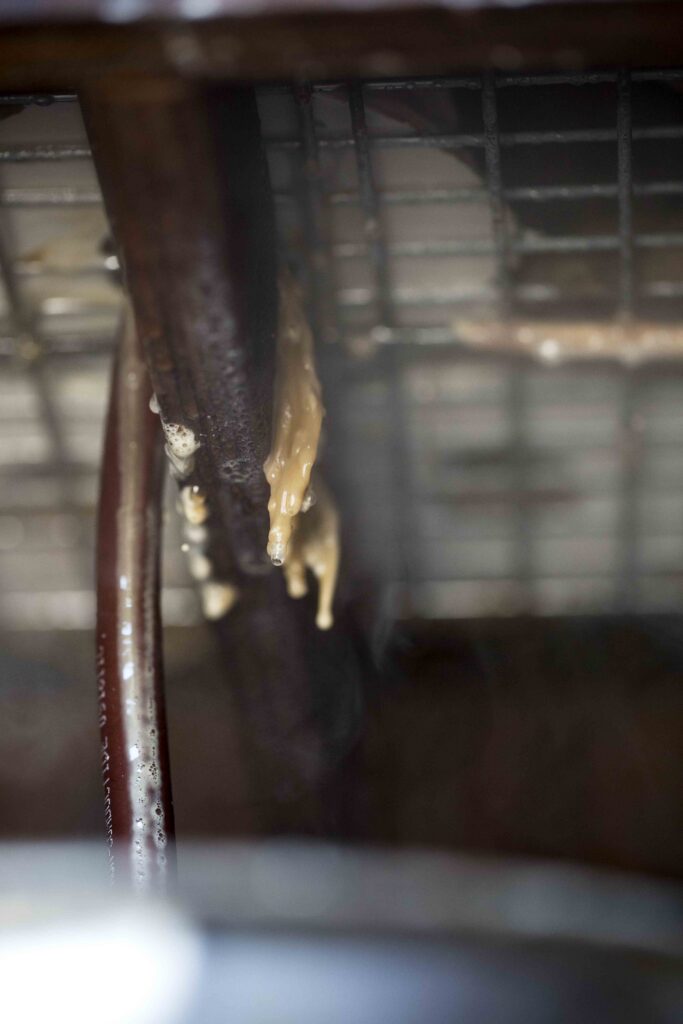
Make sure the steamer heats up the mould from bottom to top so that it is too hot to touch. Steam out the wax.
“You don’t want any wax left in it, as it makes marks on the glass. We want a clean surface. The wallpaper steamer is gentle.” 
The process begins with a positive, goes to a negative, then back to a positive.
“Ideally, once the mould has been steamed out, leave it long enough to dry (a week or more) before putting it in the kiln. Moisture from the mould can rust the kiln. But I don’t have time when running the weekend workshops.”

Steaming the wax out of the moulds to create the cavity for the glass to flow into

Glass
Work out how much glass you will need. Carmen uses the water displacement method. 
Mark the water level on a jug. Pour water into the mould up to the level you want the glass. Tip the water out of the mould and see the difference between the mark on the jug and the water level then put glass into the jug to make it up to that level.

Many colours of glass are available from suppliers

Kiln firing
The firing process is very technical and has to be followed step by step according to a schedule. If you don’t have a kiln, you can take your objects to a facility that hires out kilns, or you could ask a glass artist to do it for you. 
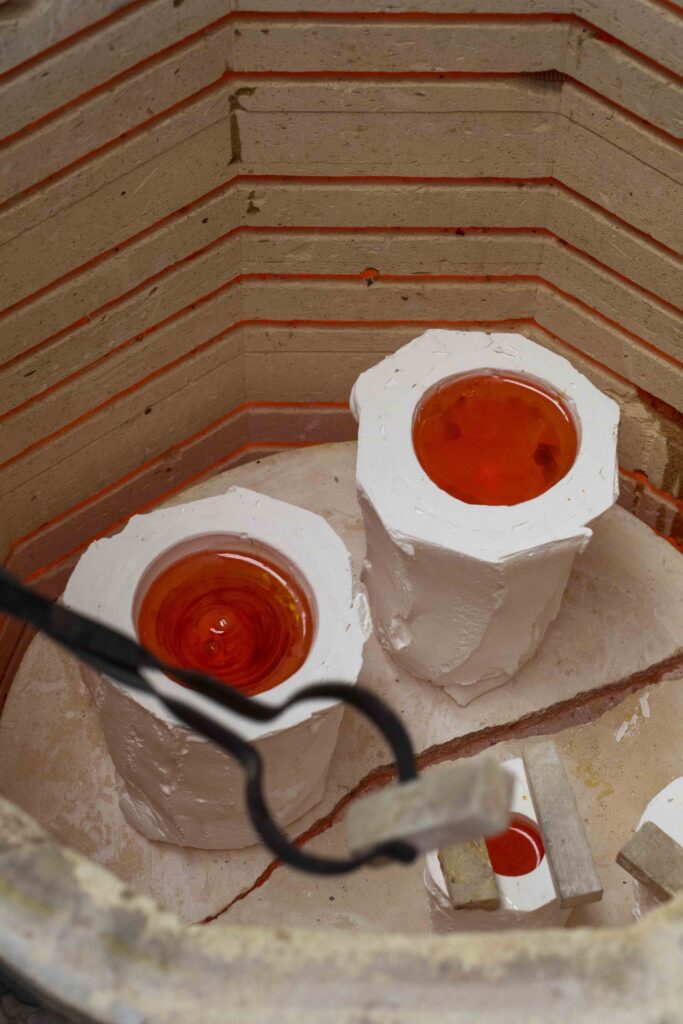
Carmen heats up the kiln slowly to let the mould dry out, then holds it at 800°C to let the glass run in, and the air come out. 
“Hold for a few hours, then crash the kiln, cooling it fast to stop the glass flowing. Then crash it down again to the annealing temperature during which all the particles of glass slow down and lock into position so you don’t get any cracks. If you don’t anneal properly you’ll get cracks in the glass. Hold at annealing temperature for the recommended time of the glass manufacturer, which lets the mould and the glass cool at the same time. Then cool through several stress points until it reaches room temperature. It can take days or weeks. You need to work it out logically according to how thick the glass is.”
The workshop students’ objects are usually ready after four days. 
“I try out lots of different things. I put on my firefighter’s outfit and I’m in there with my gloves at 800°C putting glass in and taking pots out with different reservoirs if I’m trying to mix glass in a certain way. There are lots of things you can do when glass is molten as long as the refractory mould is good with no cracks. It’s quite fun but you can’t be scared of heat.”
If you don’t have a kiln Carmen reckons sheddies could do 90 percent of the glass casting process themselves and take the object to a kiln for firing.

Removing the blocks from the hot kiln

Removing the mould
Take the mould off carefully. Be gentle; pick away with a blunt peeling knife, always mindful of where the glass sits. “Pretend you are an archaeologist, and don’t chuck it in water because the plaster can expand and crack glass.” 
Use a toothpick and a toothbrush to clean away the plaster. 

Finishing
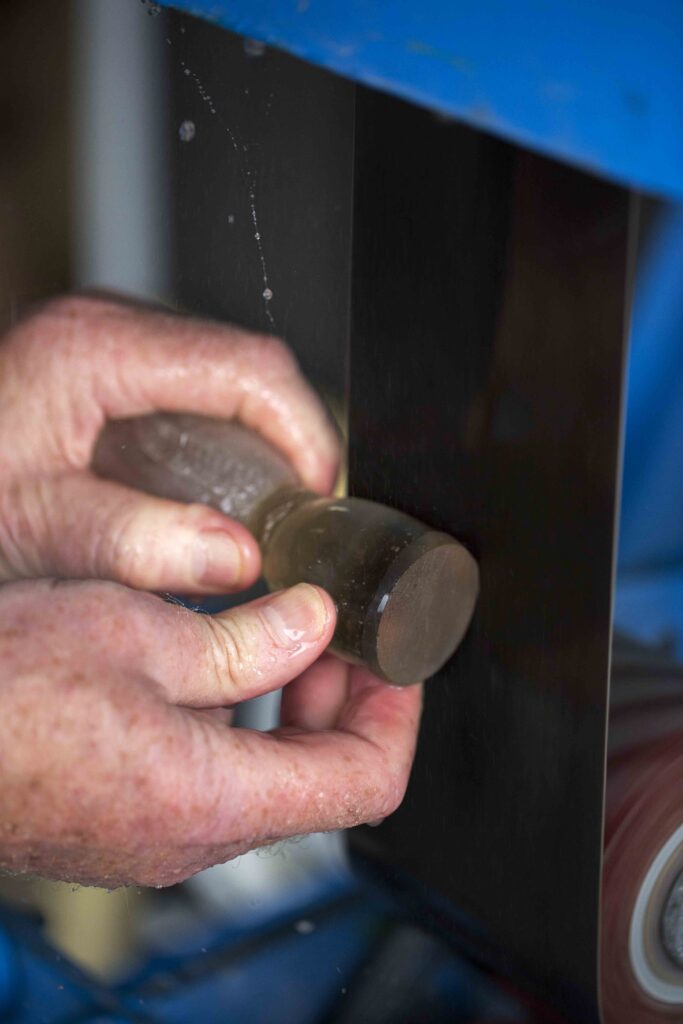
Carmen uses various machines to refine the glass object and “sort out any problems”. The wet-belt linisher does soft edges and the diamond flat bed levels the flat base of the shot-glass. Using the dremel Nick smoothed off rough bits around the rim and then air-dried the shot glass before sandblasting.
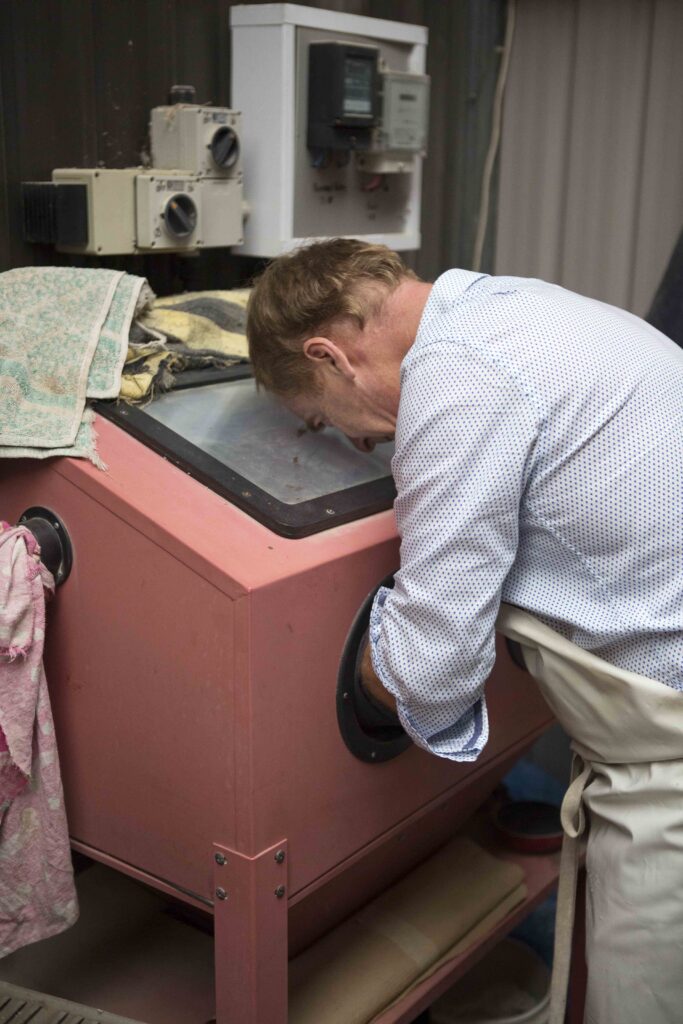
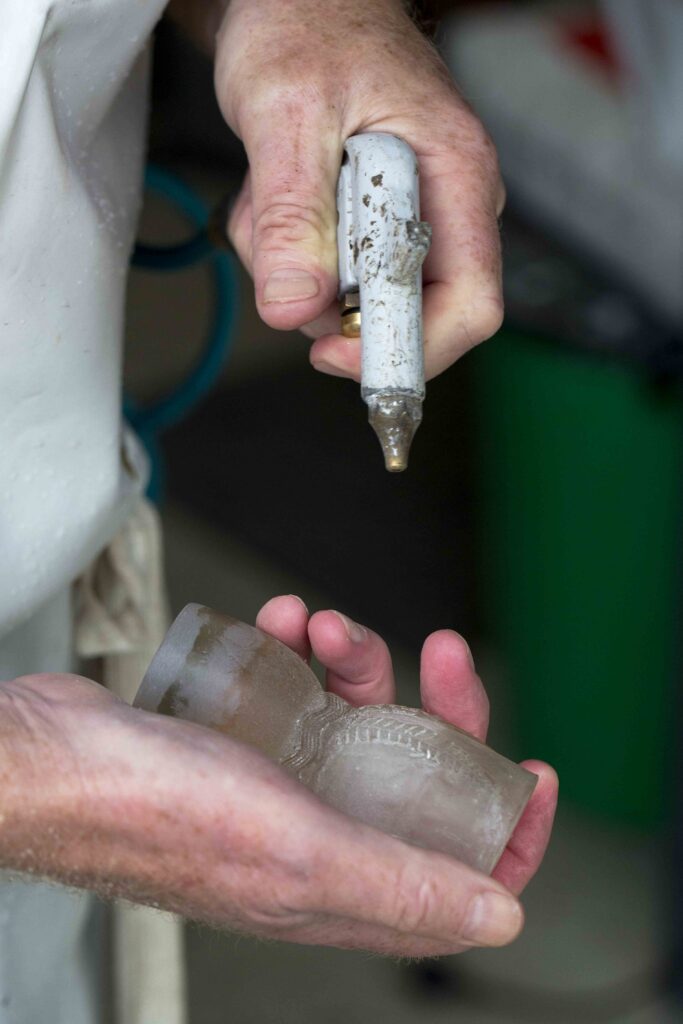
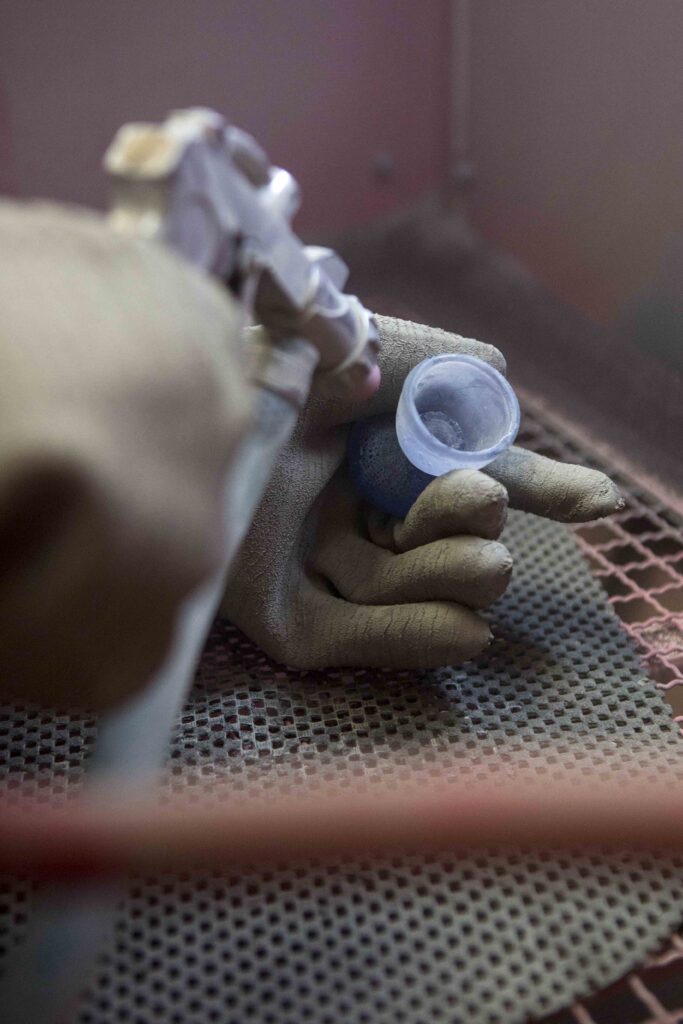
The sand blaster creates tiny, even pits in the surface of the glass with a mixture of air and garnet. Once that is done, the glass can be put into acid, which eats into the fine holes.
“Sometimes I use sugar acid, which gives a durable satin finish, otherwise I squirt the piece with silicone once it is sandblasted. This protects and gives a nice sheen. You have to wear long gloves and a mask when working with sugar acid, and be fully covered as it is quite toxic.”
http://www.carmensimmonds.com/

Wet-belt linisher
Small pieces of plaster are removed from the glass in the sandblasting machine

Share:

More Posts

The Shed May/June 2021 Issue 96, on sale now in Australia, nationwide

Our cover story in the May/June 2021 Issue No. 96 of The Shed is about a sheddie who decided to avoid spending a fortune on tools for his new career and instead make his own. Why? Because he could, and it saved waiting months for delivery in these Covid ravaged times. Plus there were considerable financial savings to be had.

The Shed May/June 2021 Issue 96, on sale now

Our cover story in the May/June 2021 Issue No. 96 of The Shed is about a sheddie who decided to avoid spending a fortune on tools for his new career and instead make his own. Why? Because he could, and it saved waiting months for delivery in these Covid ravaged times. Plus there were considerable financial savings to be had.

Video of Carmen Simmonds, glass artist

In Issue 79 of The Shed we featured Whanganui glass artist Carmen Simmonds. In this video by Tracey Grant, Carmen shows us in some detail a few of her creative practices and we showcase some of her outstanding creations with glass and occasionally brass. Carmen is currently president of the New Zealand Society of Artists in Glass.