


A guide to eye candy for your shed
By Ritchie Wilson
Photographs: Ritchie Wilson
The urge to decorate is universal, whether it be tattoos, floral designs on early Stanley rebate planes, or flames on hot-rod hoods, and sheds are no exception.
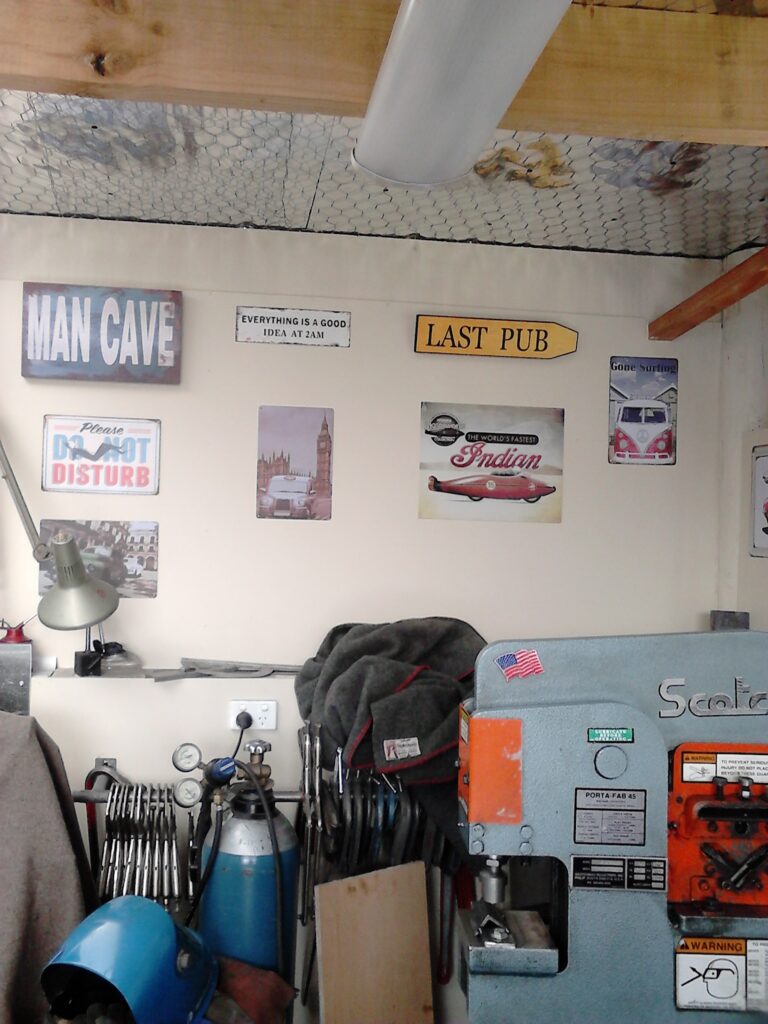
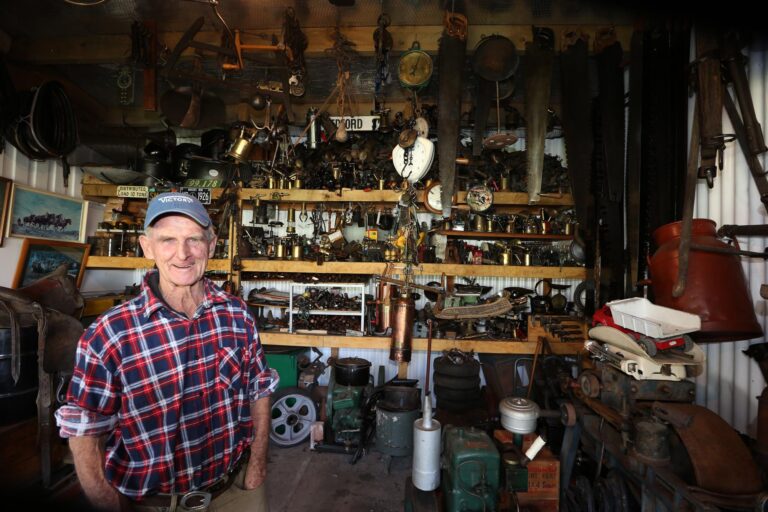
Big or small, simple or ultra-flash, sheds have one consistent feature – they all have decorations. These can be nostalgic, humorous, or more or less misogynistic (and often all three).
The mamo-centric female portraits which, in the past, were so common in garages and workshops are now rarely seen, perhaps because businesses which used to distribute complimentary “girlie” calendars can’t now risk the potential bad publicity. Or shed owners are embarrassed at the thought of their wives, children, or grandchildren seeing them. Or perhaps we have all become a little more mature.
Feminist relatives tell me that the purpose of pin-ups wasn’t decorative, but to make women visitors so uncomfortable that they wouldn’t linger, creating a woman-free zone. Sort of like farmers draping the skins of killed predators on fences to discourage their kin.
Moving on
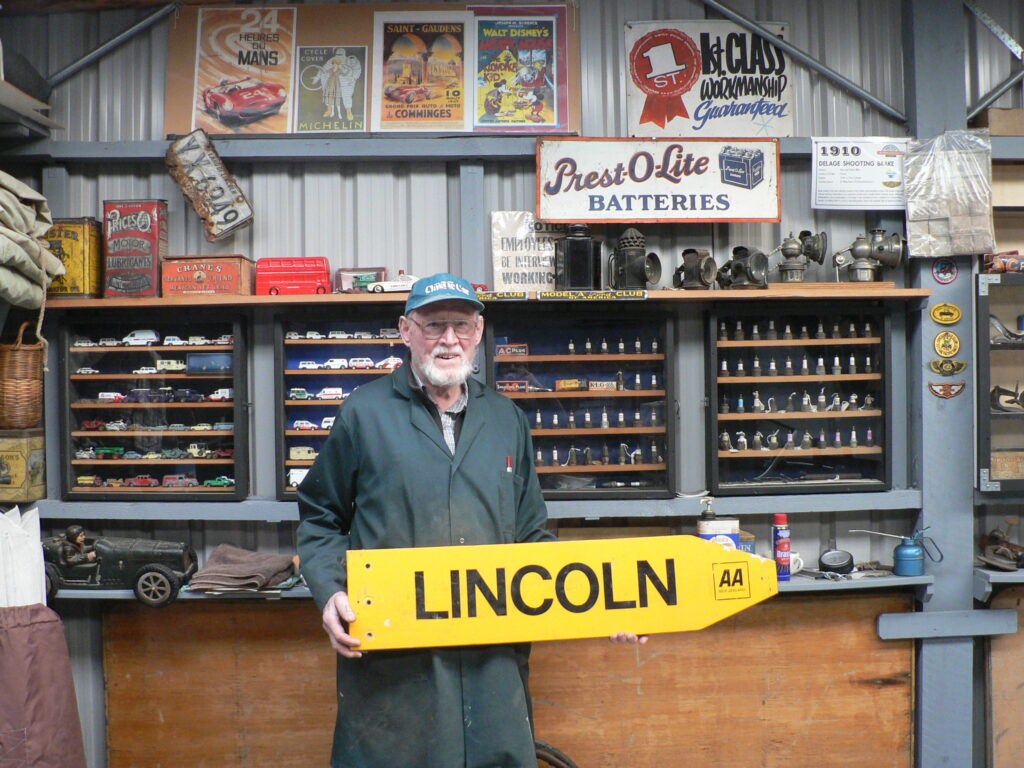
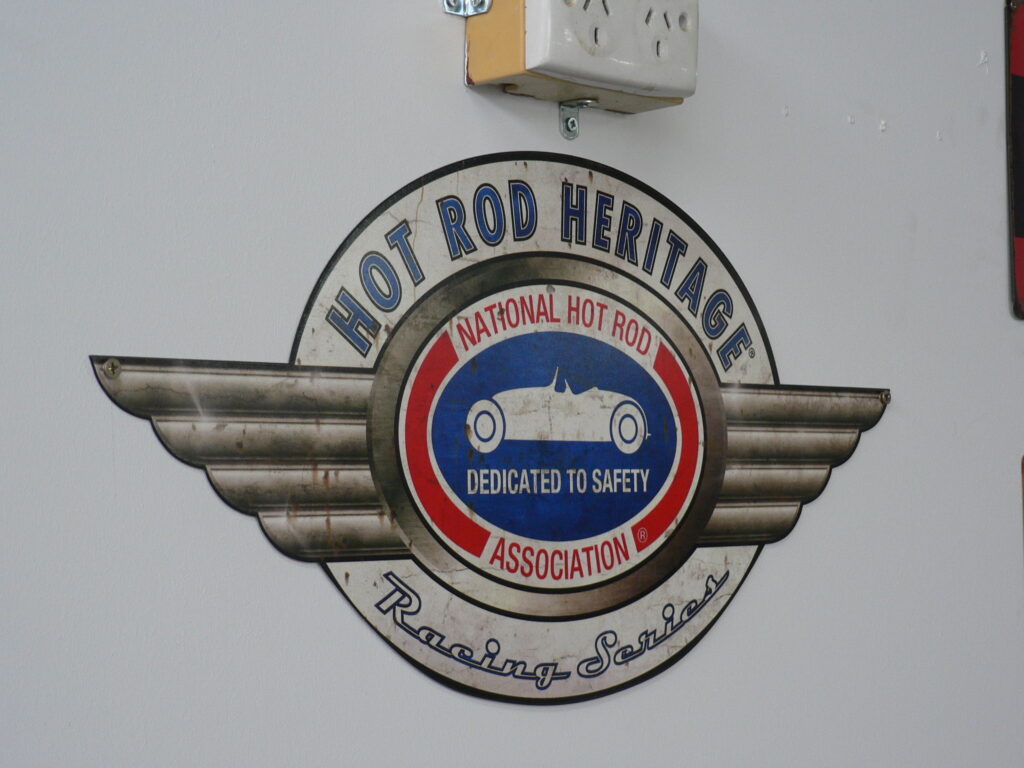
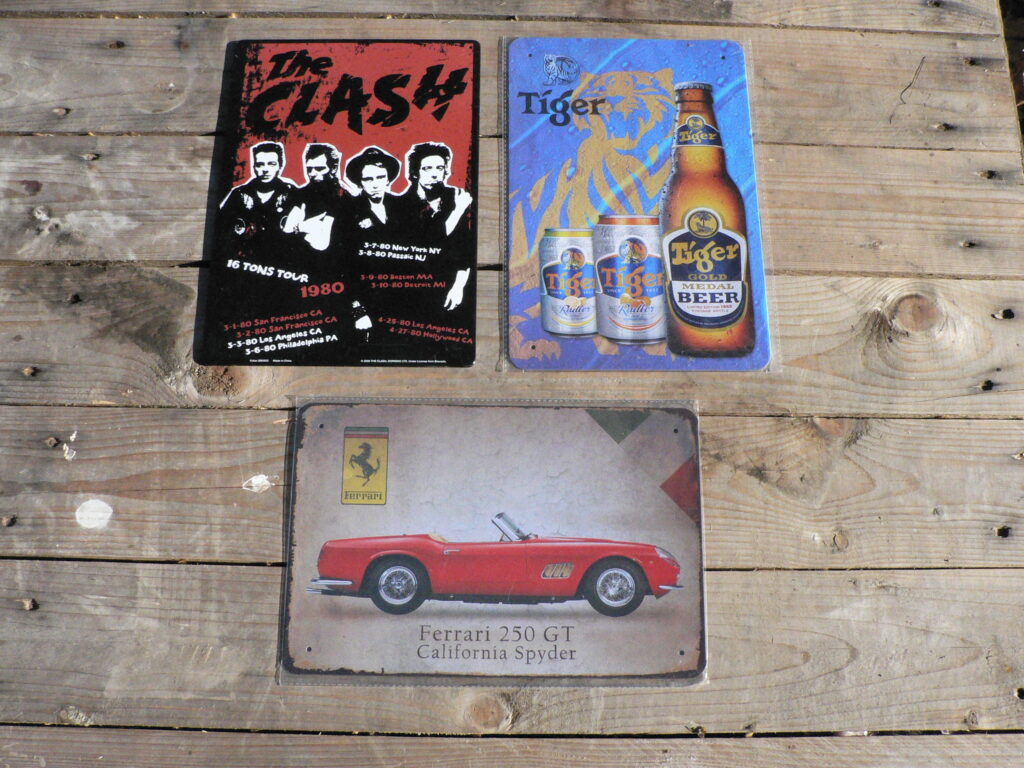
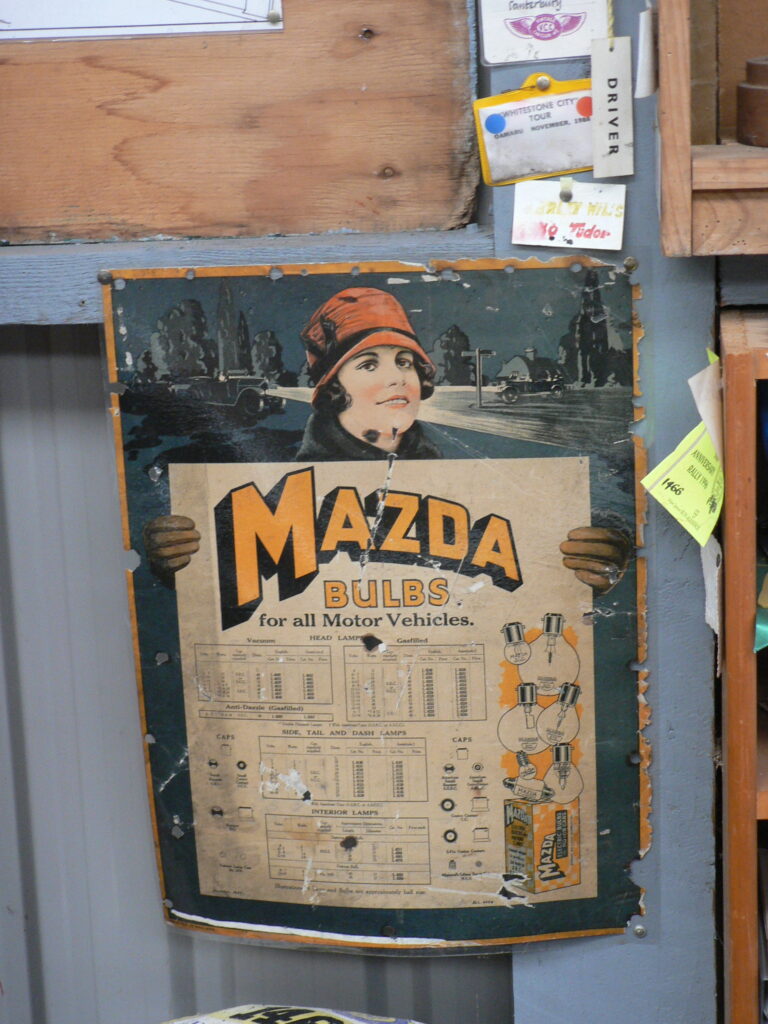
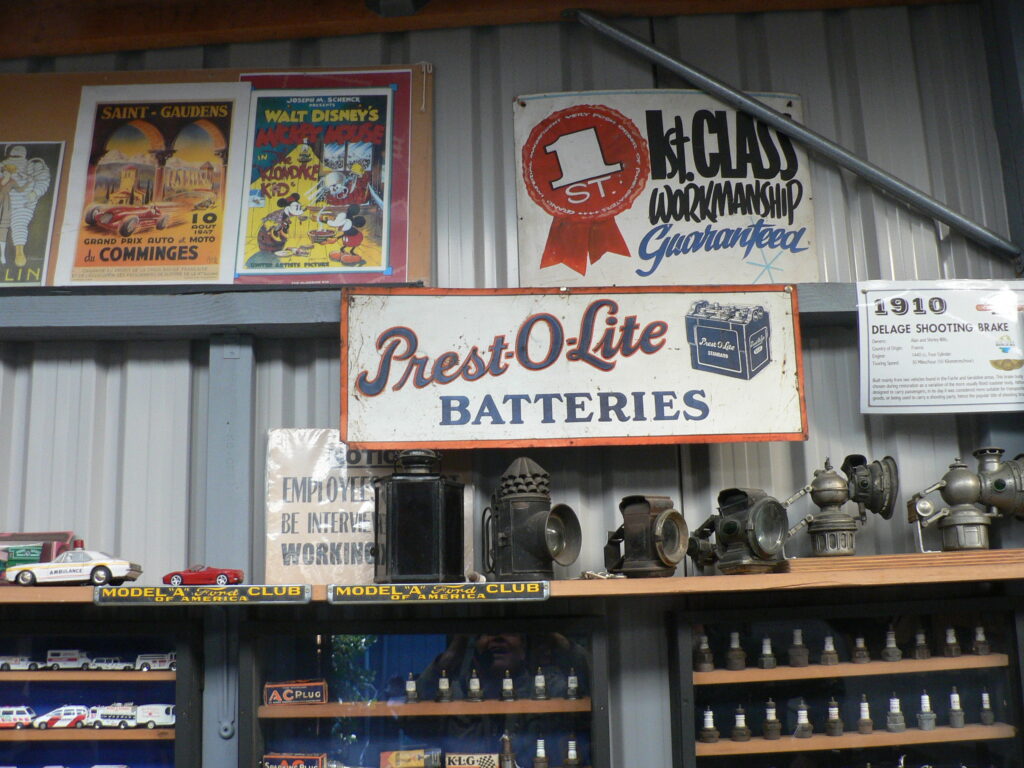
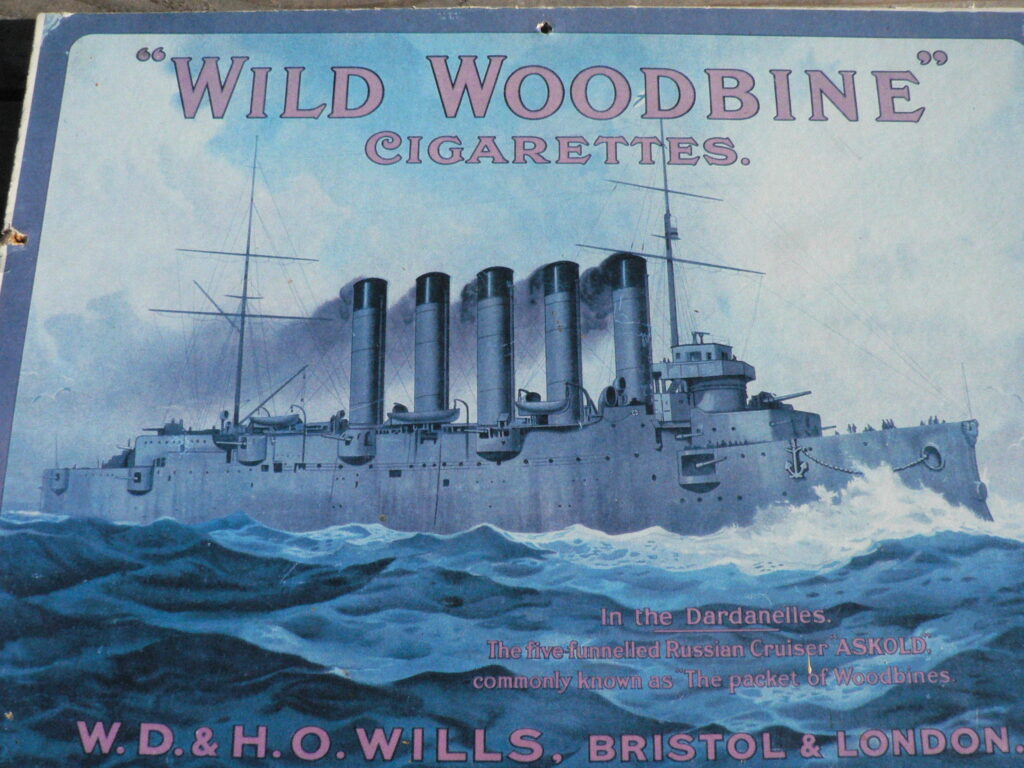
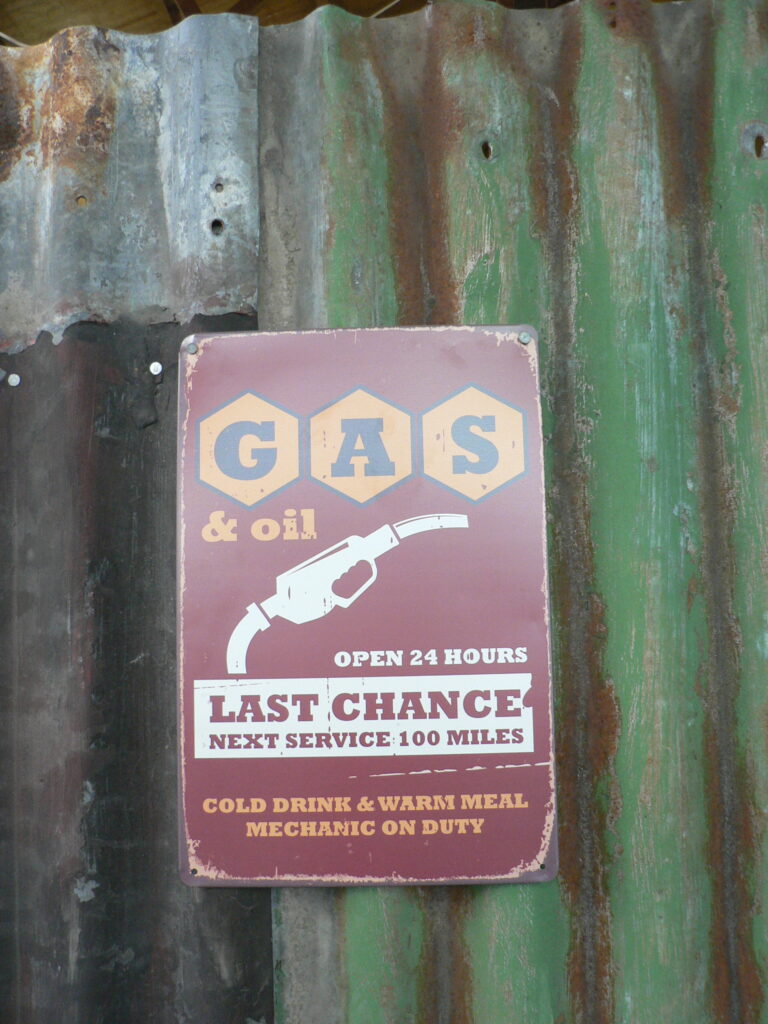
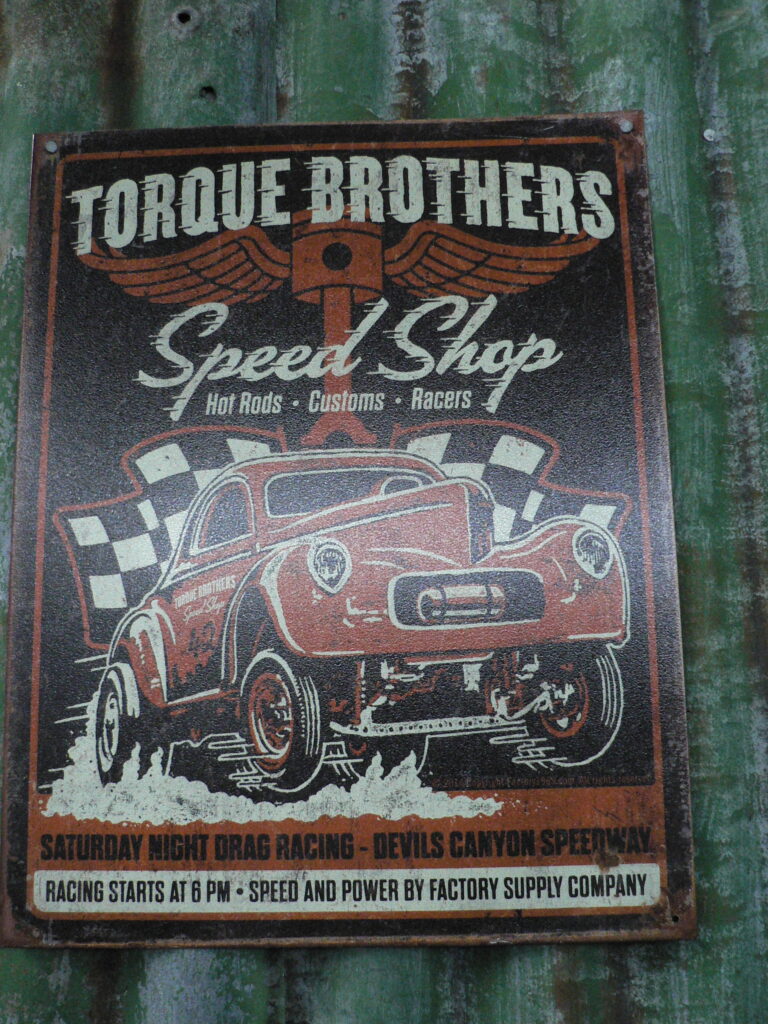
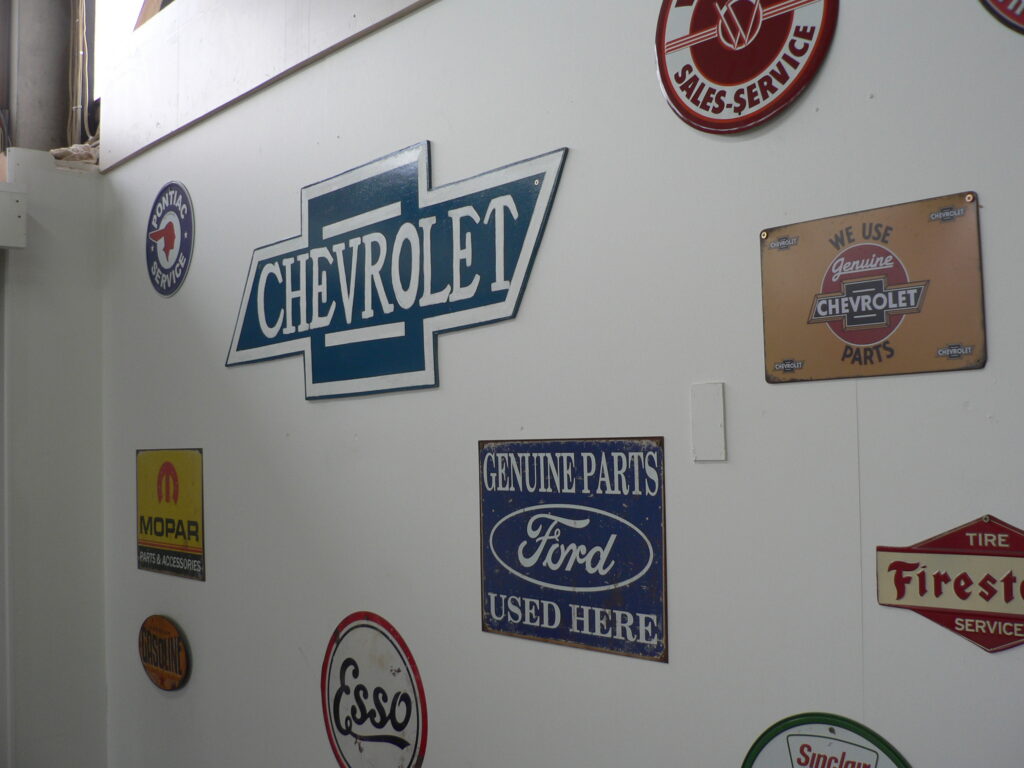
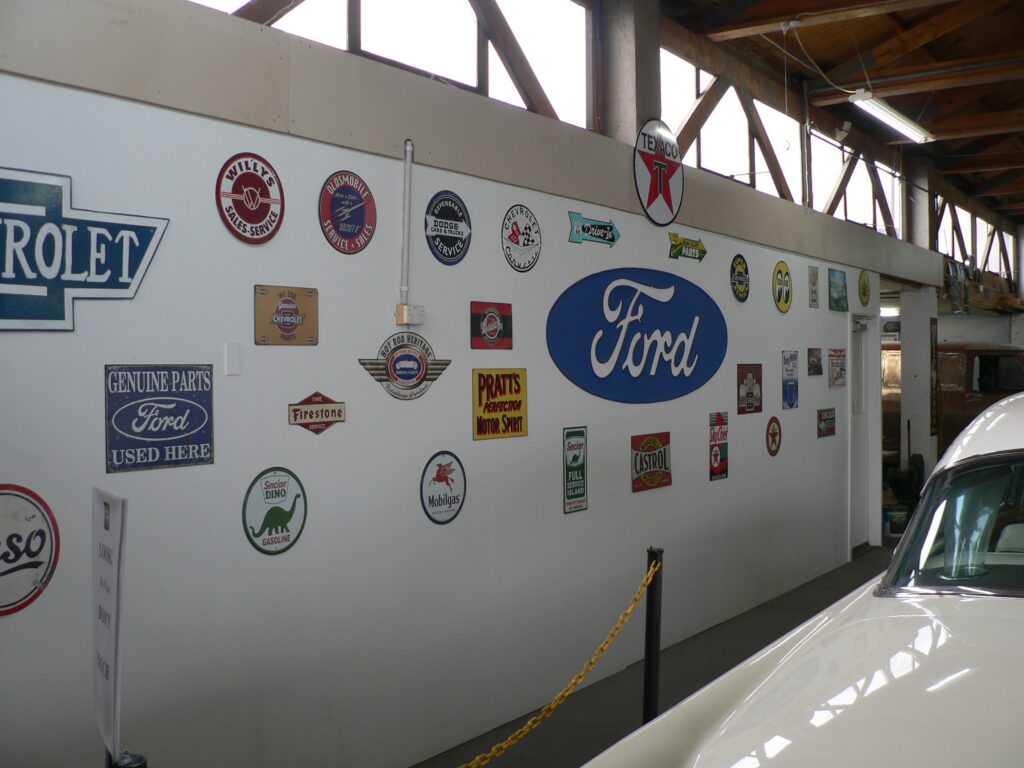
Reproductions of old advertisements are now being manufactured in large numbers on metal sheet. These are copies of the sort of original old advertising signs which are so sought after by collectors and which command surprisingly high prices. Liquor, cars, motorcycles, garages, and oil companies feature prominently on these signs. My favourites are bicycle advertisements. Our local bike shop in the 1950s had a huge wall poster of a young man on a bicycle being pursued by an African lion across the veldt. It was produced by the export division of Raleigh Cycles and the happy expression on the cyclist’s face showed that he wasn’t worried about the outcome. The modern-day reproductions of these iconic images have been shrunk to a standard size, but are still attractive and evocative.
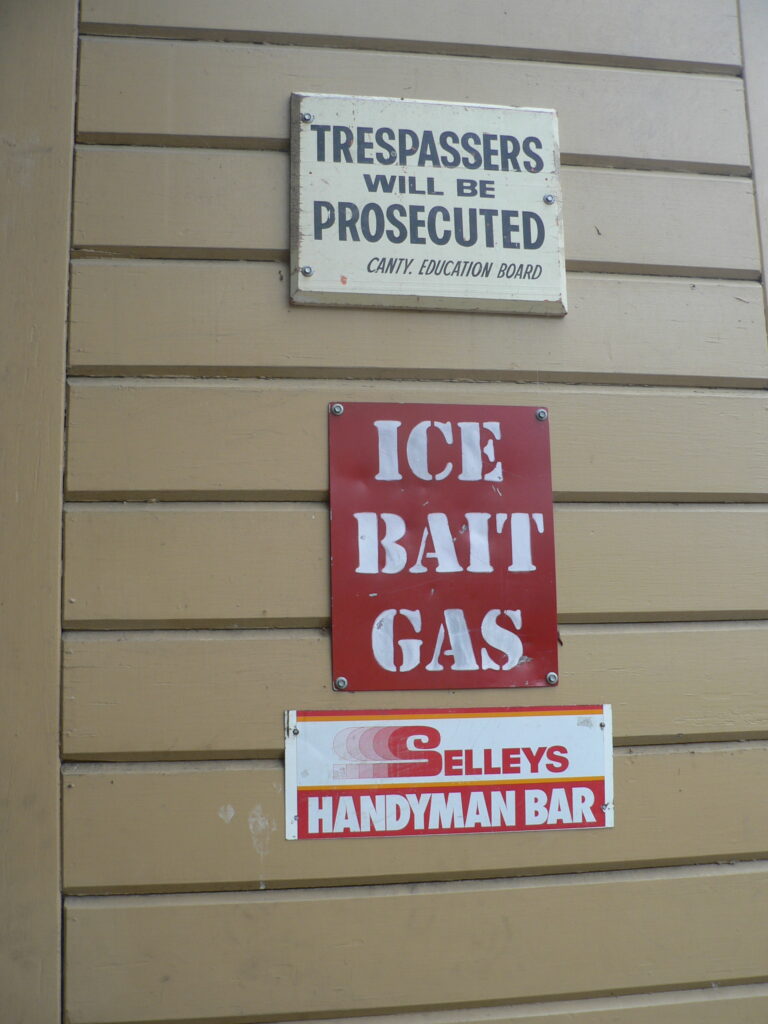
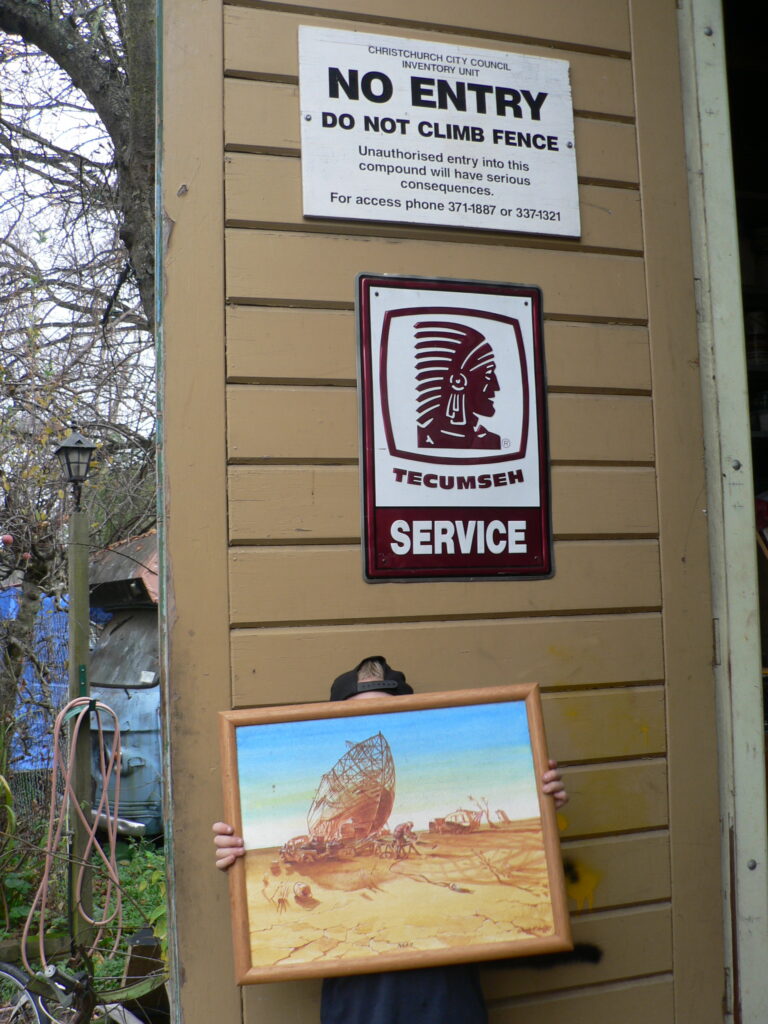
Official signs or notices, such as those that adorn student flats (amidst the traffic cones), are often seen. My shed doors have hand-painted notices on wood –one came with the doors, the other was salvaged from a skip. Other pieces on the doors are gifts: one from a mower shop; the other made by my son-in-law. It is common for sheds to have “Assembly Points” or “End of Works” notices, in my case rescued from the local river.
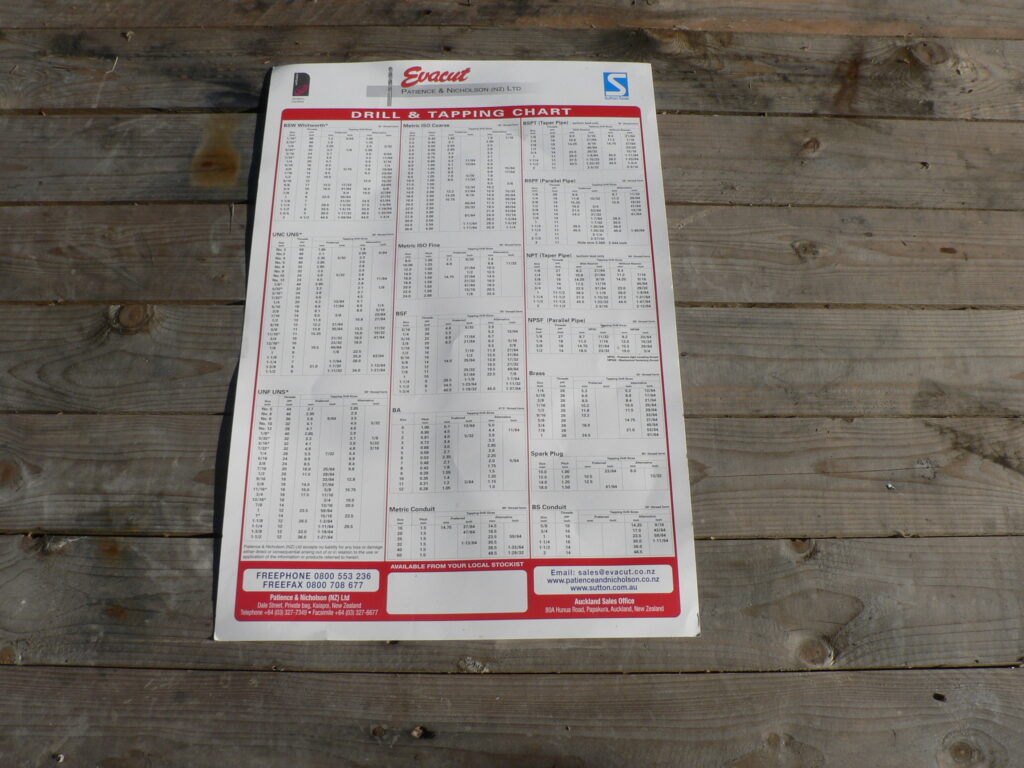
Large charts showing the sizes of drills for tapping or the range of available metric and imperial fasteners make any shed look more productive and are available free from engineering supplies companies. Professional sporting teams also give away team photos which are often seen in workshops.
We are all different
Years ago, my children were friends with children in the next street. The family has long since moved, but I well remember being shown around their brick outhouse by the father. Central to the small space was a Heidelberg letterpress printing machine of the type used by the very large printing and packaging firm my father worked for.
Displayed on the interior walls were dozens of posters promoting radical political change which had been set and printed in the room. I was given a humorous account of raids by the police on this disruptive focus of anti-government activity. The posters were colourful and confronting, and as well as being decorative were trophies of a conflict.
They were similar in a way to the rugby jerseys from British and French sides that my fifth form English teacher hung, for a few weeks, around his classroom.
Rock and roll
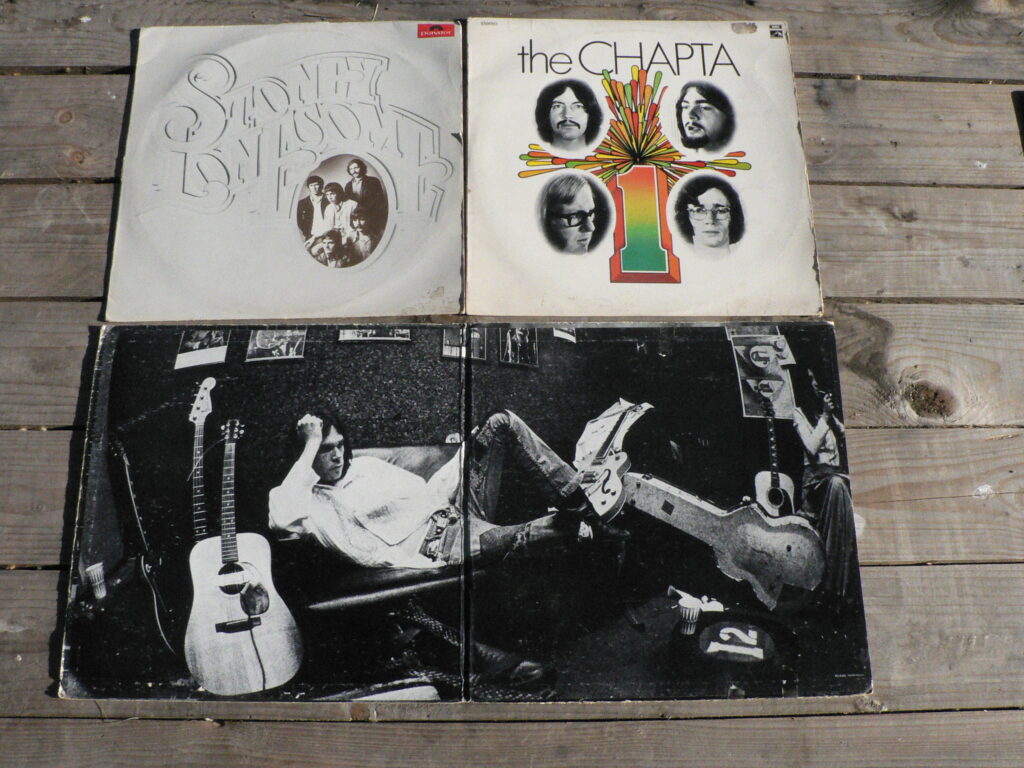
The covers (or sleeves) of vinyl long-playing records make interesting decorations and say something about their owners. The endpapers of Rolling Stone Keith Richards’ autobiography featured part of his library of LPs – displayed spine out because of the very large number – which gave an insight into his musical influences. Sheddies who feature record sleeves on their walls could be forgiven for displaying them.
The danger is that records, books, perhaps even magazine covers used as decorations risk changing the shed into a “man cave”. The most obvious difference between the two is the presence of a bar. A shed can have carpet on the floor, but if it has a bar, it is probably a man cave. The exceptions would be spaces with bars where things (beer, say) are actually made. If the bar has a vise or two fitted, then we are definitely talking about a shed.
My first attempt at shed building was on part of my family’s vegetable garden. There wasn’t an actual plan, but the design was based on a description of a “den” in the 1956 annual of the British Eagle comic. Much was made in the story of the possible decoration of the boy cave. Cutaway diagrams of cars, warships and aeroplanes from the centre page of the weekly comic were, of course, favoured and, perhaps as a consequence, when old copies of the comic turn up, the centre page is often missing.
Decorations for your shed
Meeting the demand for shed or man cave decorations is an increasing business. Very large numbers of mass-produced signs and reproduction advertisements are being imported and sold in gift and novelty shops. The proprietor of such a shop in our local mall told me that they had sold out of most of these items, but more were on order.
She volunteered the information that a lot of these signs were bought by the partners of the shed owners as gifts for the sheddie – what you buy for the person who has everything?
There are several New Zealand-based businesses who produce decorative items suitable for garages and workshops.
Spoilt for choice
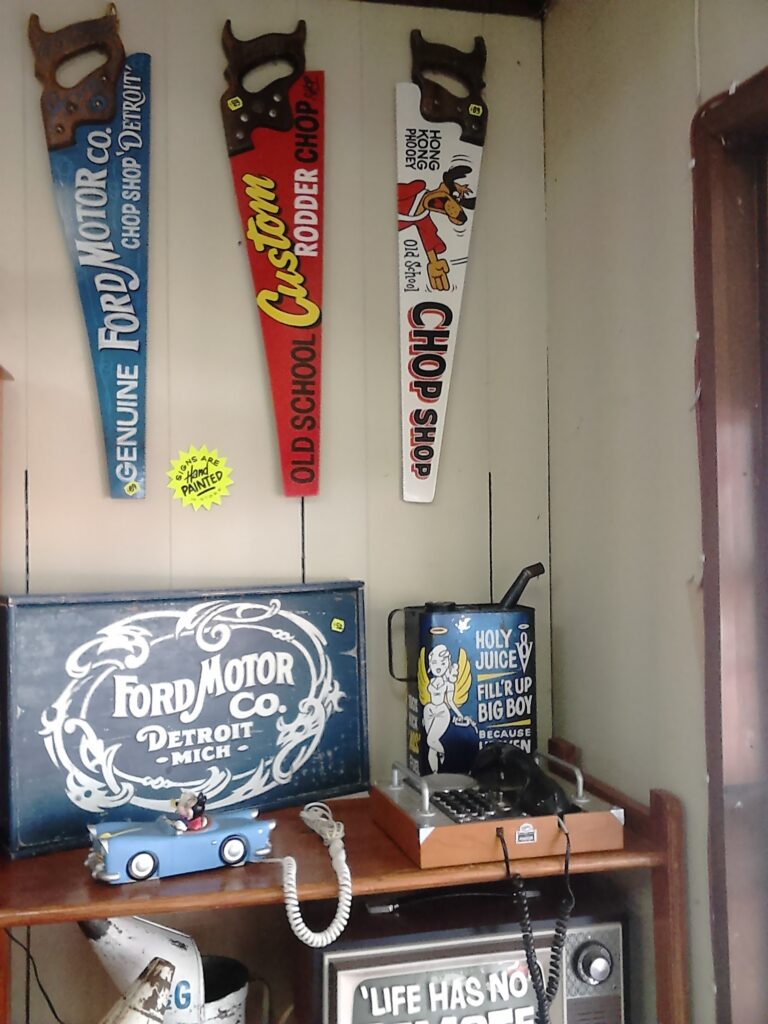
Paul Brennelly is a very experienced tradesman sign writer who runs a shop called Bullseye in Bulls which sells signs, each one unique, hand-painted on wood or on old saws. He describes them as “eye candy for sheds”.
Some of these are pricey, but he is making them for customers who can afford very expensive motorcycles or automobiles. He says that people with, say, $50,000 motorcycles don’t want “cheap, mass-produced signs printed on tin”. Being in Bulls (150km north of Wellington), he sees it as no disadvantage either. He thinks that people with enviable cars and bikes want to use them and regularly drive for an hour or two on days off from their busy lives, so travelling to Bulls is something they easily do.
He also sells from his Facebook page to people as far away as Western Australia. He regularly sells to women who happily spend $130 for a hand-crafted gift which is a one-off.
Bespoke signs
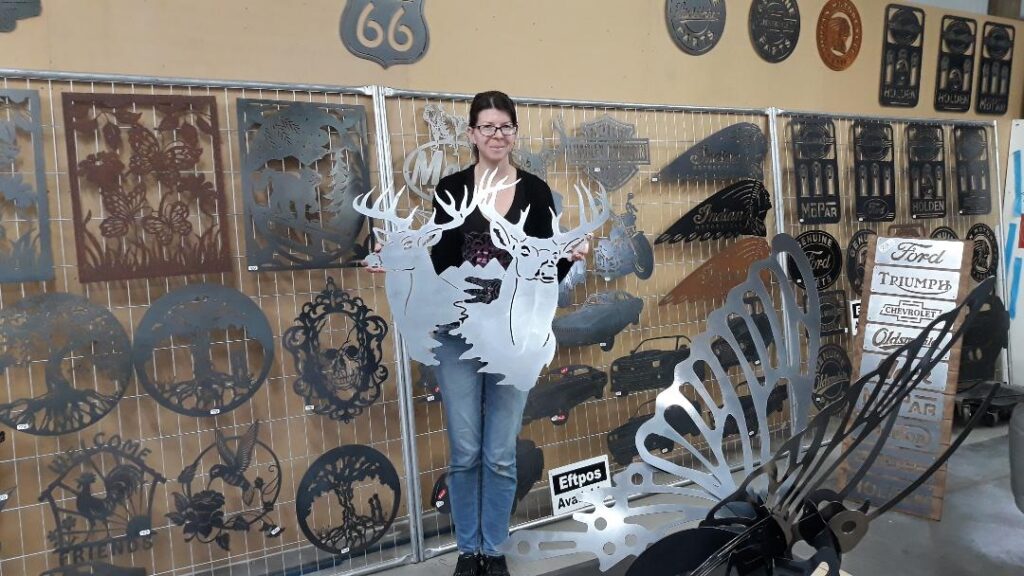
Shane Crossan has a large shed in Oamaru where he produces depictions of automobile, petroleum or motorcycle logos and other designs in CNC plasma-cut 2mm sheet steel. “Made in a shed in NZ” is his motto. The finished items resemble metal stencils and are sometimes used as such. Customers paint the pieces, perhaps in the same colour as their car, or leave them fashionably unfinished. He adapts historic advertisements and signs on his computer, which then controls the cutting of the finished design on his American PlasmaCAM plasma cutter. He imported the machine from America, assembled it and taught himself to use it.
Shane first trained as a joiner in Christchurch. He developed his digital design skills while working as a fabricator for a company that made neon signs, using drawing programs he again taught himself to use. He sells his “steel wall art” in a local shop, from his web-page or at vintage car swap meets. Shane’s partner, Talia Pearson, works in a related field. She is a leading airbrush artist and sign-writer, and often works on vans and hot-rods.
Taste of Kiwiana
Glenn Jones is an Auckland-based designer whose business, Glenn Jones Art, sells his witty Kiwiana-inspired images from his website. He trained for a year in graphic design at Auckland’s AIT and then got a job at New Zealand Rural Press, which produced titles such as NZ Farmer.
At the same time as they hired Glenn, NZRP invested in new computers. Assorted software was part of the computer package, and when he started work Glenn discovered an unopened pack of the then little-known Adobe Illustrator computer software programme. His very supportive boss allowed him to explore the programme when he wasn’t working on the design and layout of the publications, and he was able to master the software by teaching himself. He still designs on-screen, using much more sophisticated programmes, but the underlying principles he learned 25 years ago still apply.
After returning from three years in London, Glenn worked on “high-end design” for a leading agency which had household brands as its clients. Outside work hours, Glenn created designs for T-shirts. The US website Threadless.com produces T-shirts with designs that are submitted online, are voted for online, and the designs with the most votes are printed and sold. Glenn was the highest-selling designer.
Thirteen years ago, this attracted the attention of two entrepreneurial brothers from Austin, Texas, who formed a partnership, Glennz Tees LLC, with Glenn to produce T-shirts to his designs. The T-shirts are still in production and have been pictured being worn by many celebrities.
Three years ago, Glenn, now a family man, decided on a change of direction, and he and his wife Julia run Glenn Jones Art from their home. They used to print and frame the images Glenn produced in their shed, but the logistics of purchasing materials was time-consuming and cut into design time, so for the past year they have outsourced the printing, etc. and concentrated on design and sales.
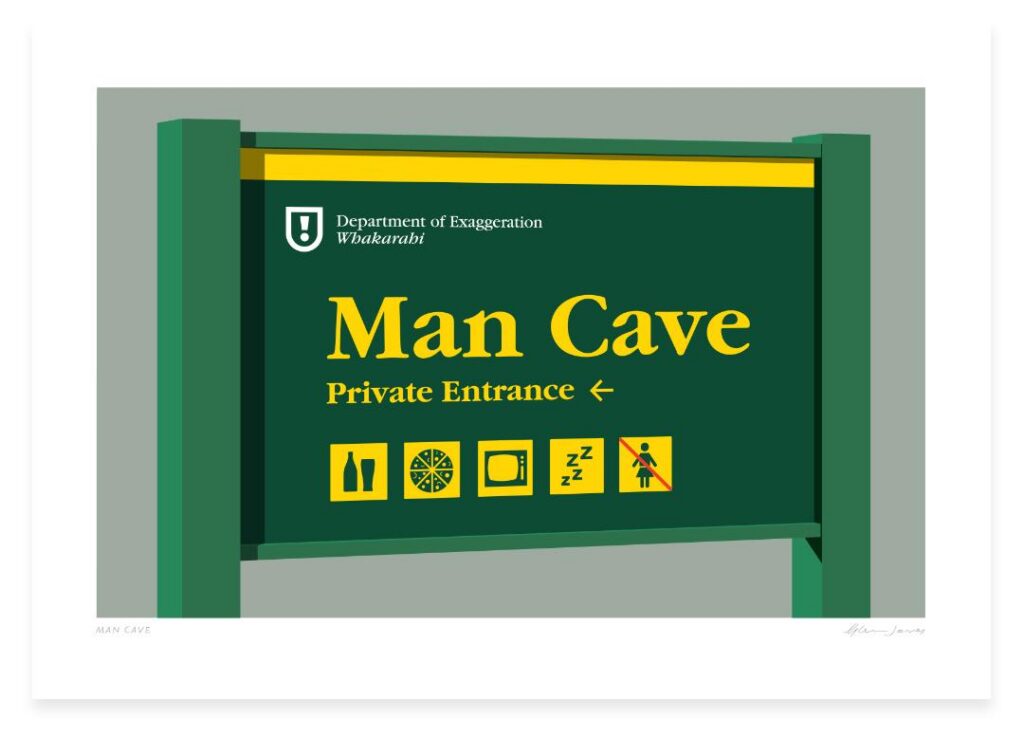
His mock Department of Conservation track sign is an exemplar of shed art with a Kiwi twist.