
From armour to fighter

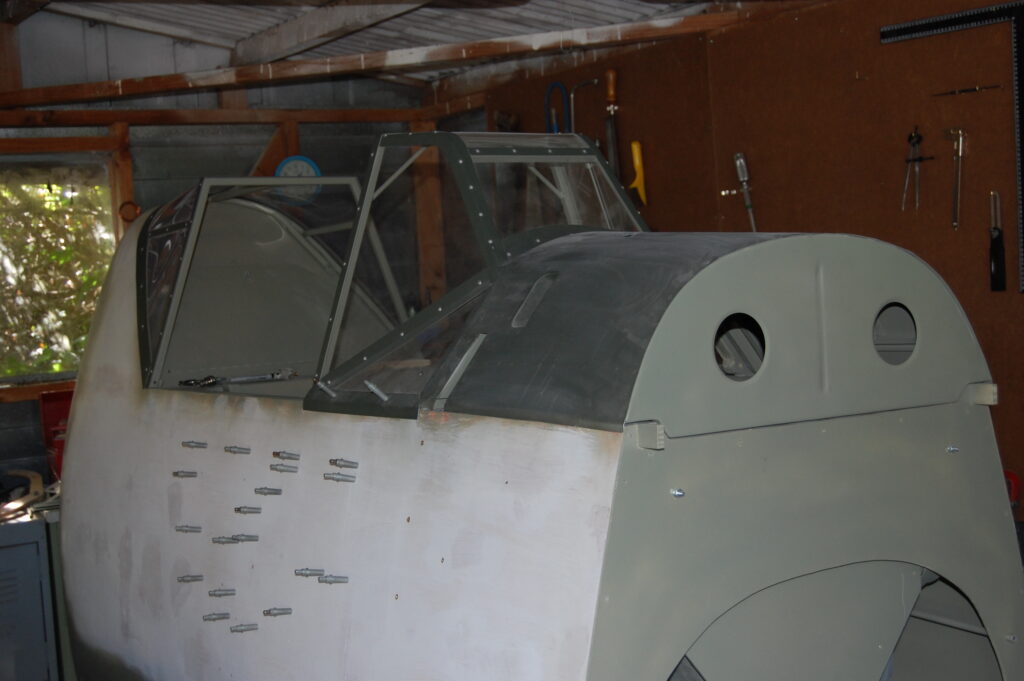
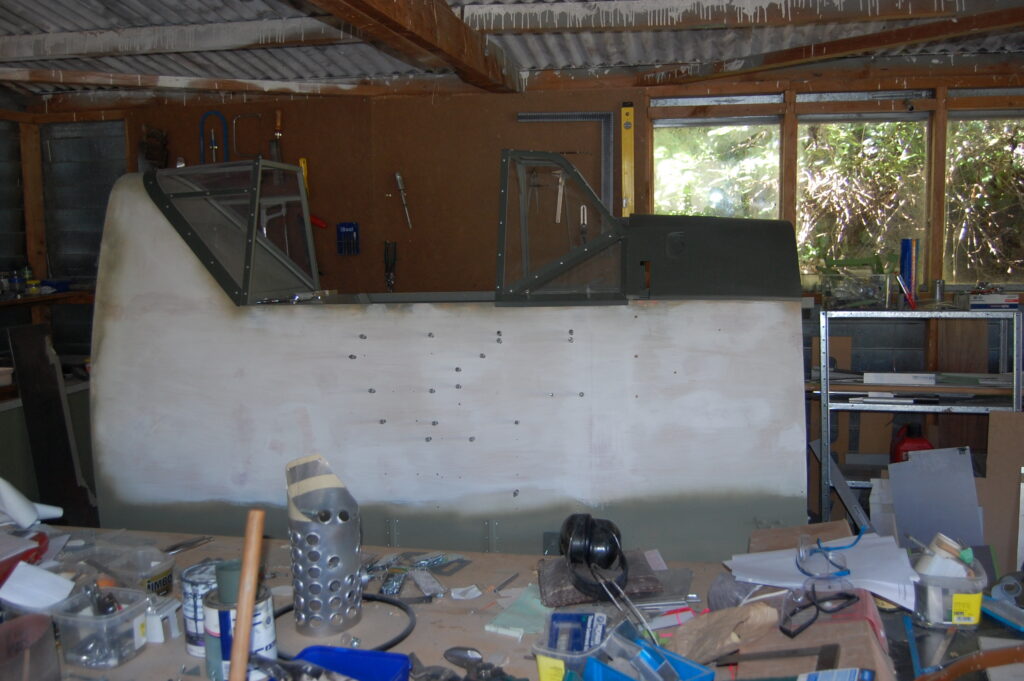
An unassuming garage in the Hunua Ranges south of Auckland is the current shed of Gordon Turner and home to his latest project – a full-sized replica cockpit of a Messerschmitt Bf 109E fighter plane. Made from plywood, timber and aluminium and five years in the making so far, it will never take to the skies. But it is eventually intended to become a flight simulator, giving the 'pilot' a realistic experience of flying one of World War Two’s most famous aircraft.

Precision rules in the armourer’s shed
By Roger Lacey
Photographs: Roger Lacey

Messerschmitt fighter cockpit in the making

An unassuming garage in the Hunua Ranges south of Auckland is the current shed of Gordon Turner and home to his latest project – a full-sized replica cockpit of a Messerschmitt Bf 109E fighter plane. Made from plywood, timber and aluminium and five years in the making so far, it will never take to the skies. But it is eventually intended to become a flight simulator, giving the “pilot” a realistic experience of flying one of World War Two’s most famous aircraft.
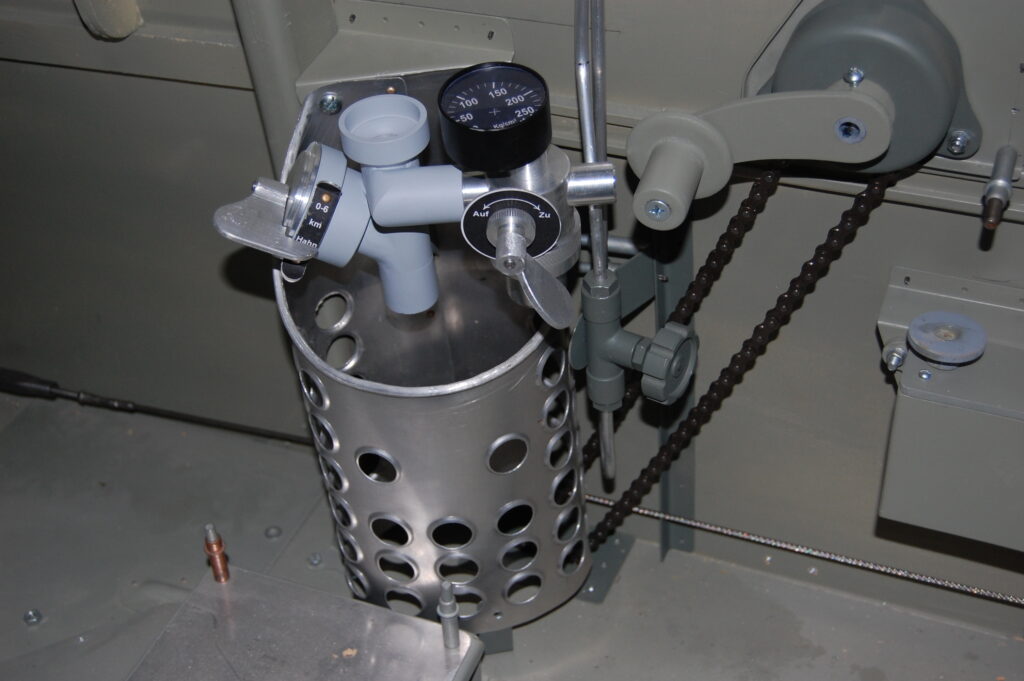
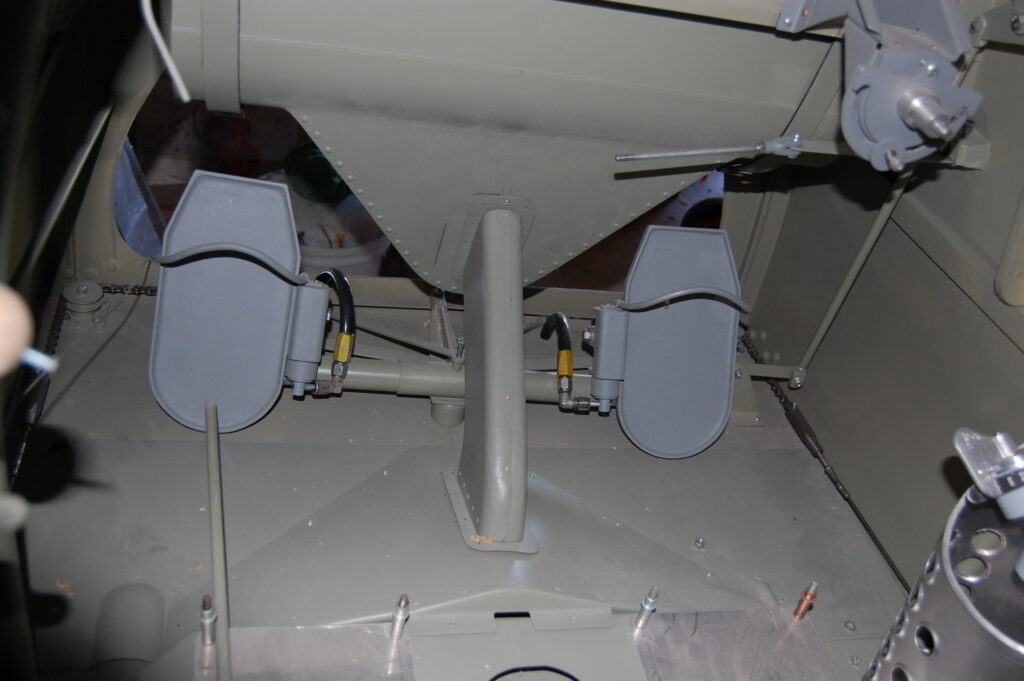
The basic frame is finished, and Gordon is now working on the interior details. The pedals, trim wheels and map box are already in place, along with seat rails and the oxygen regulator. A first attempt at the aluminium, oxygen regulator holder is on the bench. This is a complicated fabrication with around 20 punched and swaged holes all rolled into a cylinder. Gordon rejected the first try because it lacked a rolled edge on the top. The second version, with a rolled edge, sits in the cockpit looking as if it had come straight from the factory in 1942.
Although many Messerschmitt parts can be purchased for exorbitant prices from E-bay or other overseas websites, Gordon has made almost every component by hand, taking pride in what can be achieved with a few simple tools plus a bit of know-how and patience.
The cogs for the trim adjustment and radiator flap mechanisms have been cut and hand-filed by Gordon, as the right-sized ones were not available from the local engineering shop. A small deviation from faithful originality is the use of bicycle chain for the adjuster mechanism as the original size chain is only available on special order. 

Oxygen regulator holder with authentic rolled edge. Improvised bicycle chain for trim adjustment mechanism.
Cockpit rudder pedals

Why not a Spitfire?
Gordon works from photographs and drawings, as there are no Bf 109s in New Zealand for reference. I ask him why he chose to build a replica of a German plane and not a Spitfire? “Spitfires are too common,” he replies.
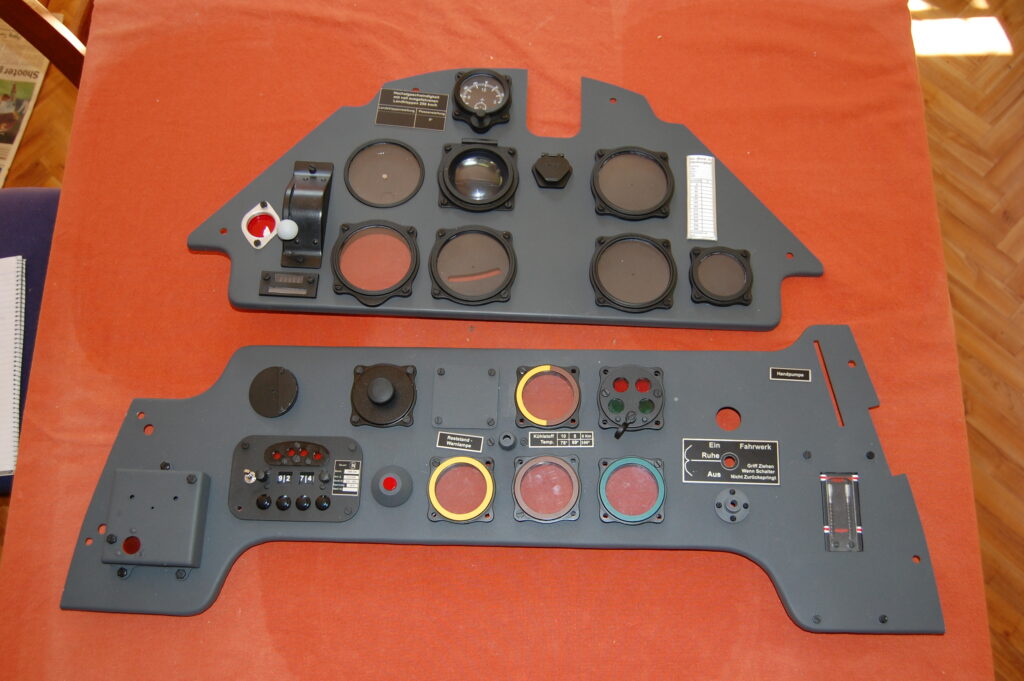
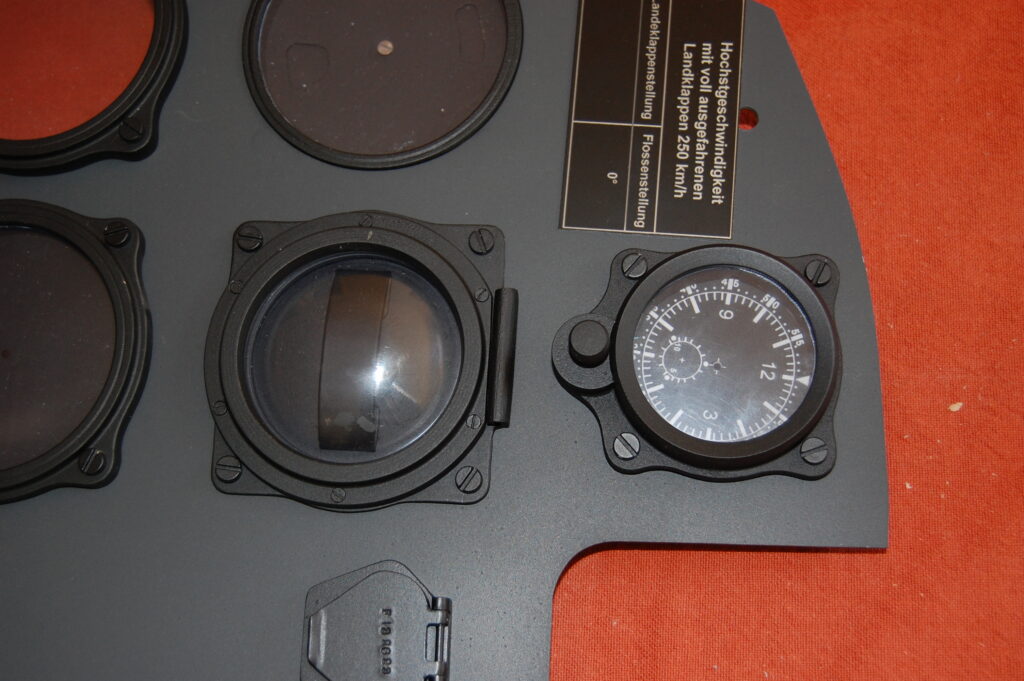
Inside his house, Gordon brings out the instrument panels that are almost complete but not fitted yet and shows me the two pieces that form the main cockpit display. The instrument mounts, though looking like mass-produced items, have all been turned, cut and filed to shape by Gordon, likewise the precision, push-fit bezels. Instrument markings have been laser-etched and printed by a local company from digital images that he has drawn on his computer.
For the curved lenses required on some of the instruments, he uses some good Kiwi ingenuity. Clamping clear plastic between two sheets of aluminium with instrument-sized holes in them, he gently softens the plastic with a blowtorch, then blows compressed air at the other side with an air duster until the right shape is achieved.
Gordon is determined to get every detail correct. He points to a small, square box on the left-hand side of the instrument cluster. “That’s the control box for the long-range aerial winch. It took me ages to find a photograph that showed it in enough detail for me to make it. Every shot I looked at had it cropped off or was from the wrong angle.”
The sliding cockpit canopy has been finished but is stored inside to keep the workshop dust off the clear Perspex.
Gordon has mapped out stages for completion: Stage one will be finishing the cockpit as a static model, stage two will involve lighting the instruments and adding sound and vibration, stage three will get the instruments working and stage four will be to hook it all up to flight simulator software and wraparound monitor screens. He has no deadline for completion but just works on each component as he has the time, money and facilities to do so. 
Trained as an aircraft technician for the RNZAF, Gordon worked on maintaining their Strikemasters, Skyhawks, Aermacchis and the CT4 air trainers. He got experience in shaping metals working in the skin bay at Ohakea.

Instruments mounts, turned cut and filed by Gordon
Instrument lenses are plastic curved by blowtorch
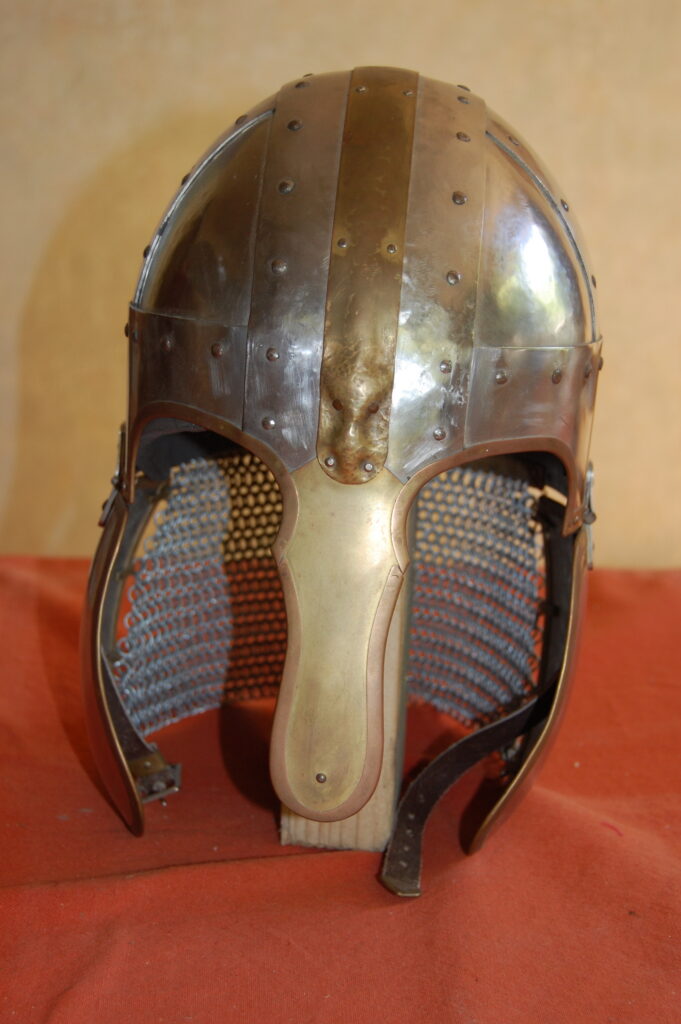
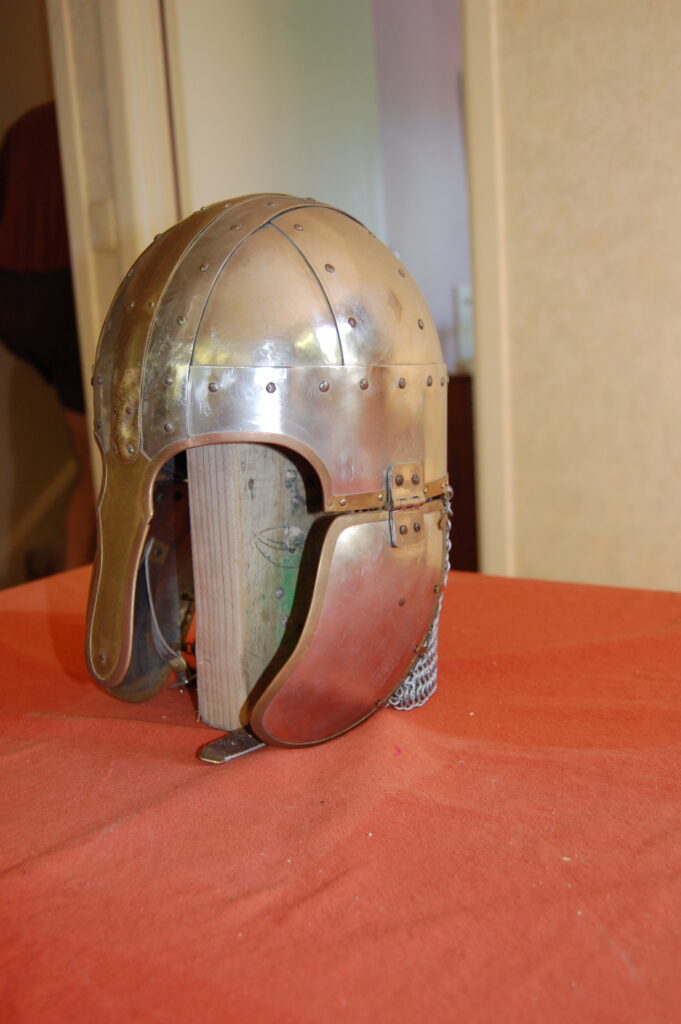
Gordon’s Coppergate helmet. Named after the helmet found in the Viking street of Coppergate, York, in England during excavations of a 10th-century Viking house
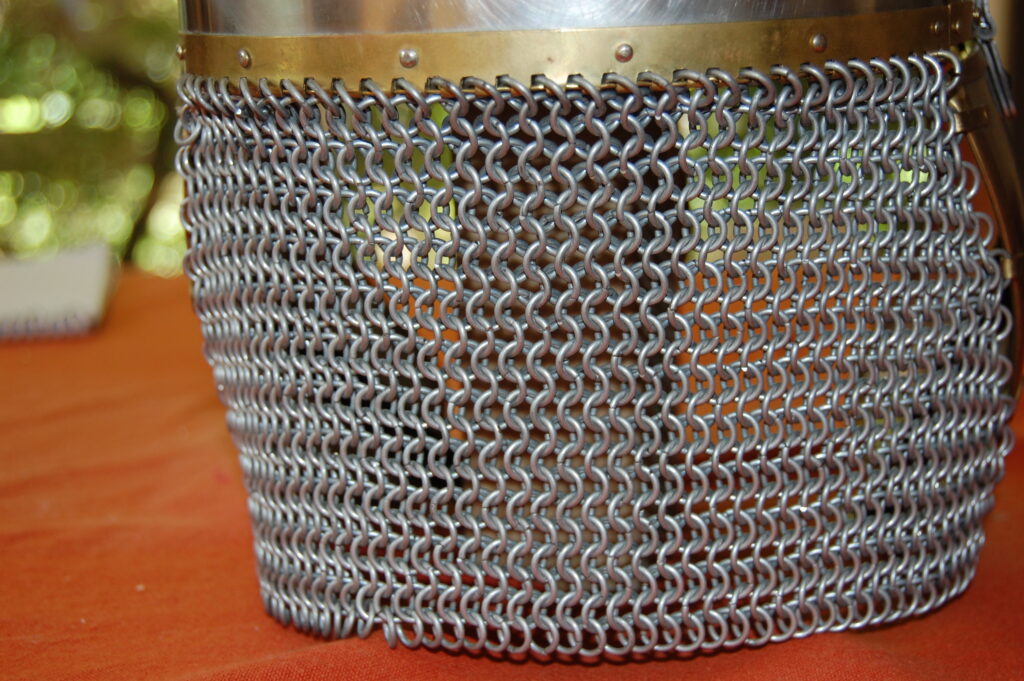
Coppergate helmet chainmail detail...
...edging and hinge

Skills
Having left the RNZAF, he now runs a pre-apprenticeship training course for Air New Zealand. The 36-week course is designed to teach basic tool skills and discover if the trainees have the desire and aptitude that is required for a career in the aircraft industry. The course is popular and has started taking overseas students as well as locals. The course covers engineering techniques, including many of the hand skills that he practices at home with his projects. “You can achieve a lot with tin snips, a hammer and a file,” he says. 
Many of the trainees he sees commence the course with little or no practical experience in making or fixing stuff. They have the skills inside but need opportunities to be shown how to develop them. Some of his trainees have gone on, not just to Air New Zealand, but also into the aircraft restoration business.
Gordon is pleased to be passing on his knowledge, but is concerned that much of the population is becoming “a society of users” where no one knows how to fix anything, so we just throw it away and buy another. 
Much of Gordon’s satisfaction with his own projects comes from setting challenges and from learning the skills required to overcome them. He has made a model mask using the repoussé technique of raising detailed shapes in metal by hammering from the back into a supporting mould made from plaster of Paris and pitch. His inspiration is Ugo Serrano, an American armourer and artist who makes incredibly detailed armour that has appeared in movies including Zorro, Planet of the Apes and Blade: Trinity. 

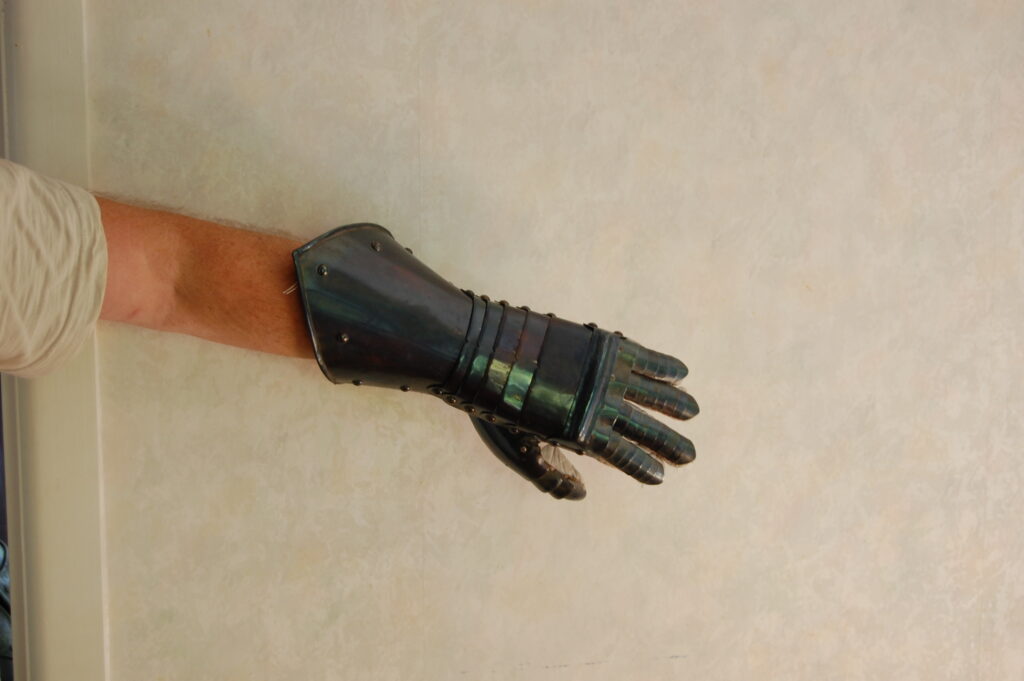
Gordon’s traditional finger gauntlet
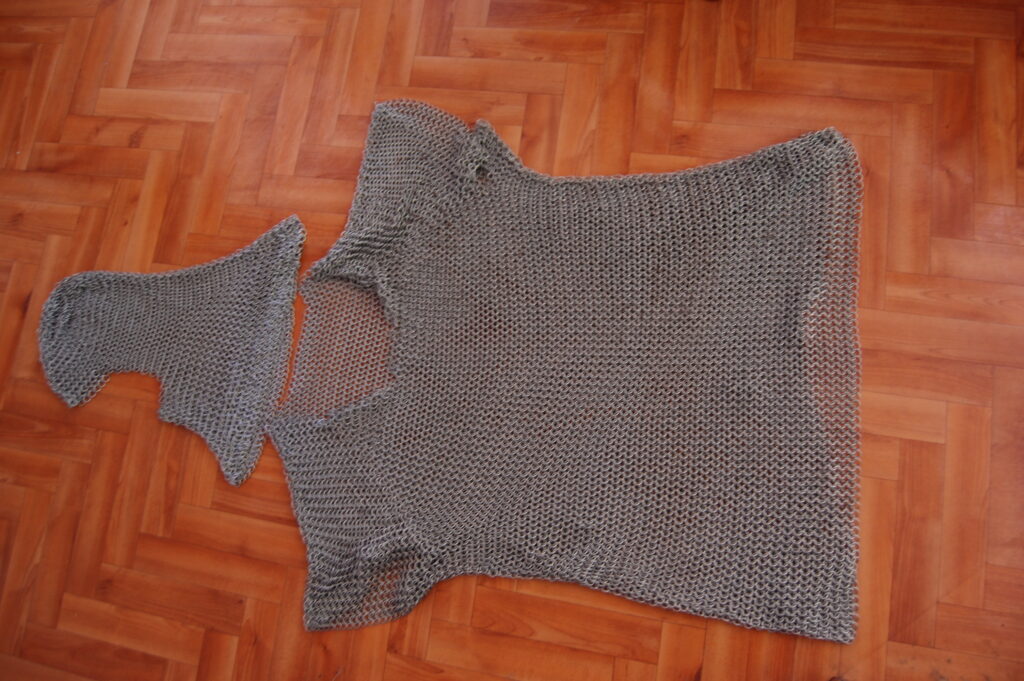
Chainmail vest took 14,000 links and six months of “knitting for blokes.”
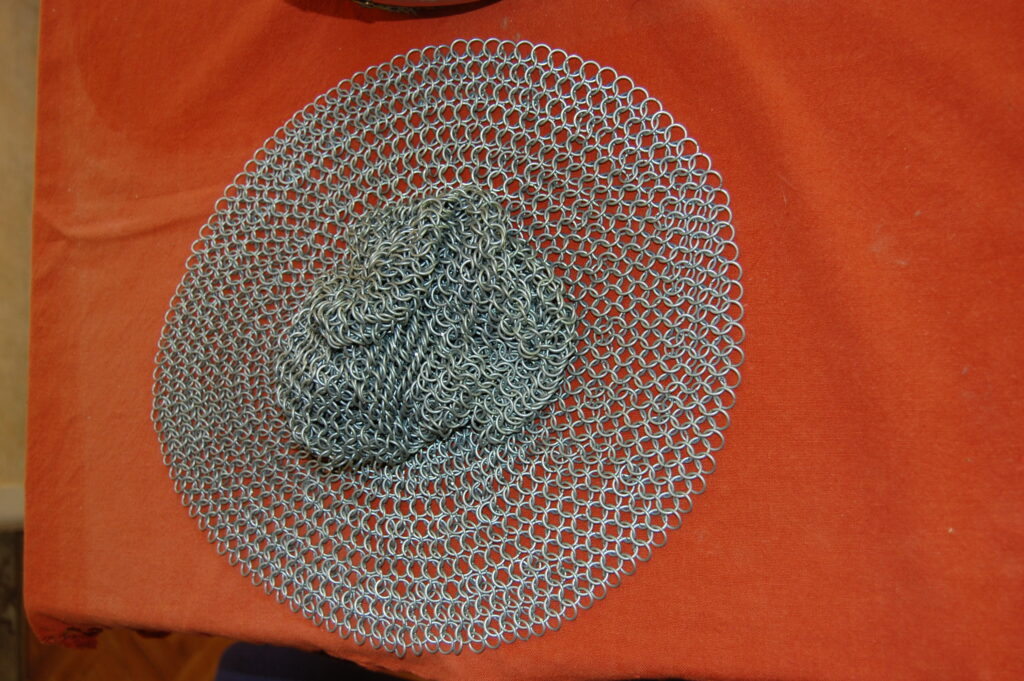
Gordon’s preferred style of chain mail butted together

Gordon’s shed
Gordon has always been tinkering and making stuff. His first dedicated “shed” was a spare room in a house in Blenheim, where he started making toys for his three children. One early project was a toy box in the shape of a cargo ship with wheels on the bottom, designed to keep a three-year-old’s room tidy. Rather than being used as intended, the ship-shaped container had his middle son Daniel preferring to sit in it and be pushed around the house. The cargo ship was later fitted with interchangeable decks, converting it to a warship and then an aircraft carrier, complete with spring-loaded elevators. The carrier deck also doubled as a handy table for kids.
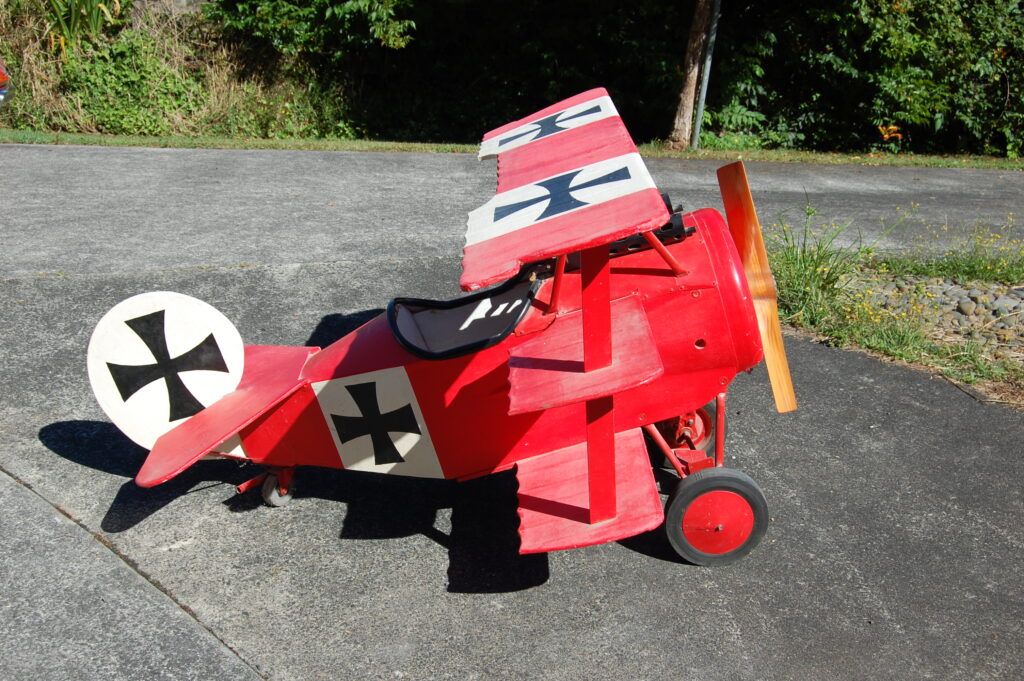
For a friend’s son, Gordon built a pedal-powered North American Harvard from plans ordered from Aviation Products in the USA. He then modified the design for his own sons, building a Gloster Gladiator for his James, his oldest and a Fokker Triplane for Daniel. Youngest daughter Alyce had no plane of her own but used her brothers’ machines when they had grown out of them.
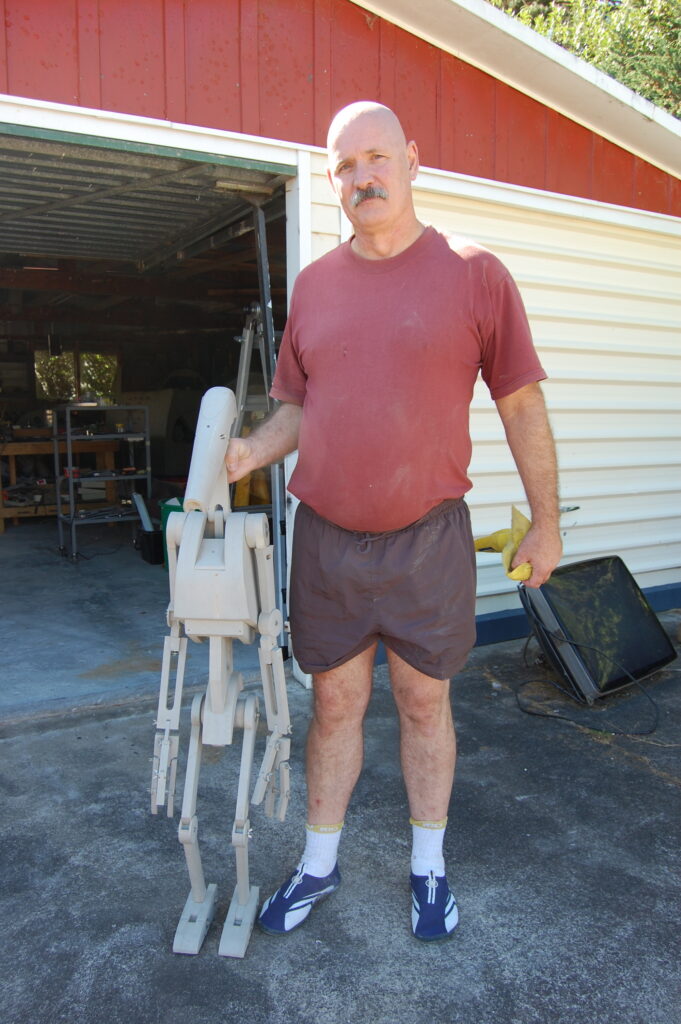
Building something from plans is an exception for Gordon; the idea for making a Star Wars battle droid came from wanting a mannequin for James to hang his clothes on. He started with the feet and legs before working out how to make the knee and elbow joints rigid enough to look like the original but not break. The finished item was a big hit with his son and friends.

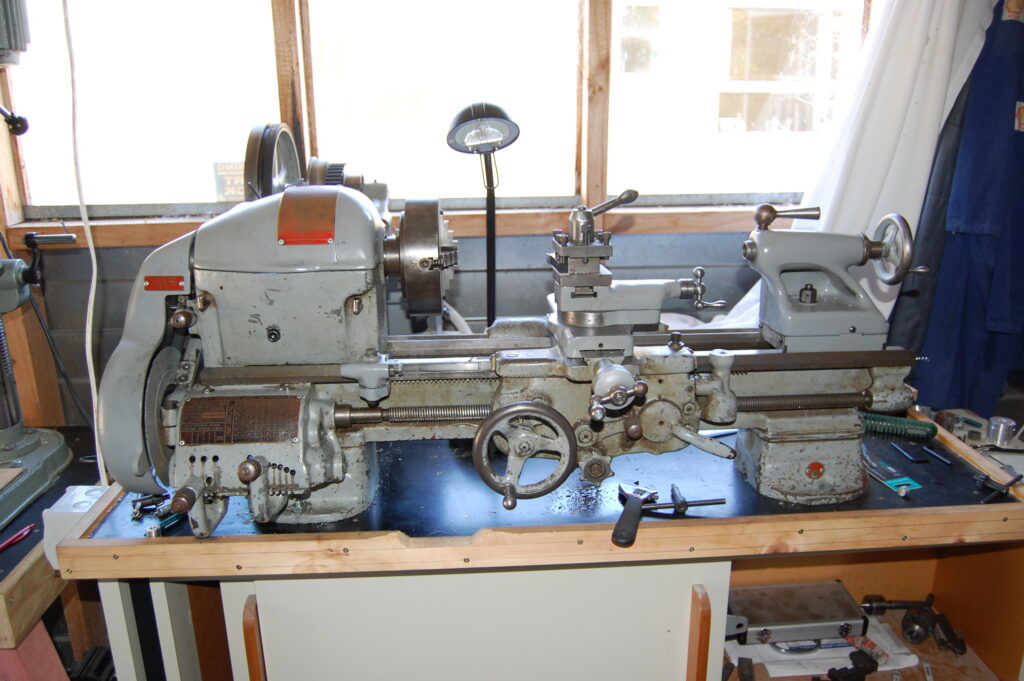
An armourer’s bench, South Bend lathe
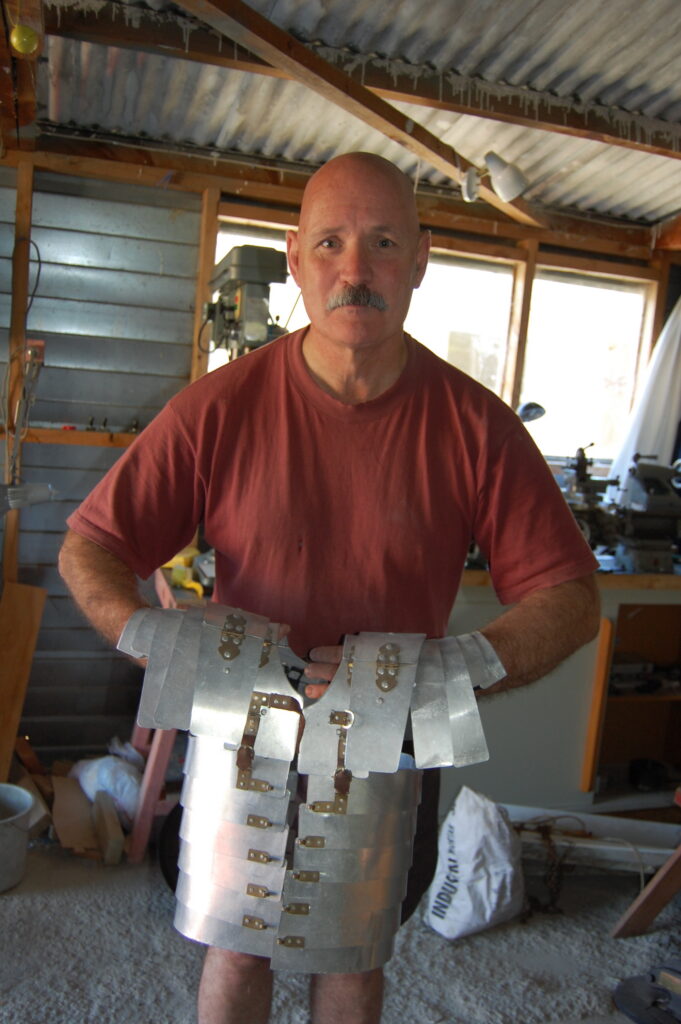
Gordon’s segmented plate armour for his son James
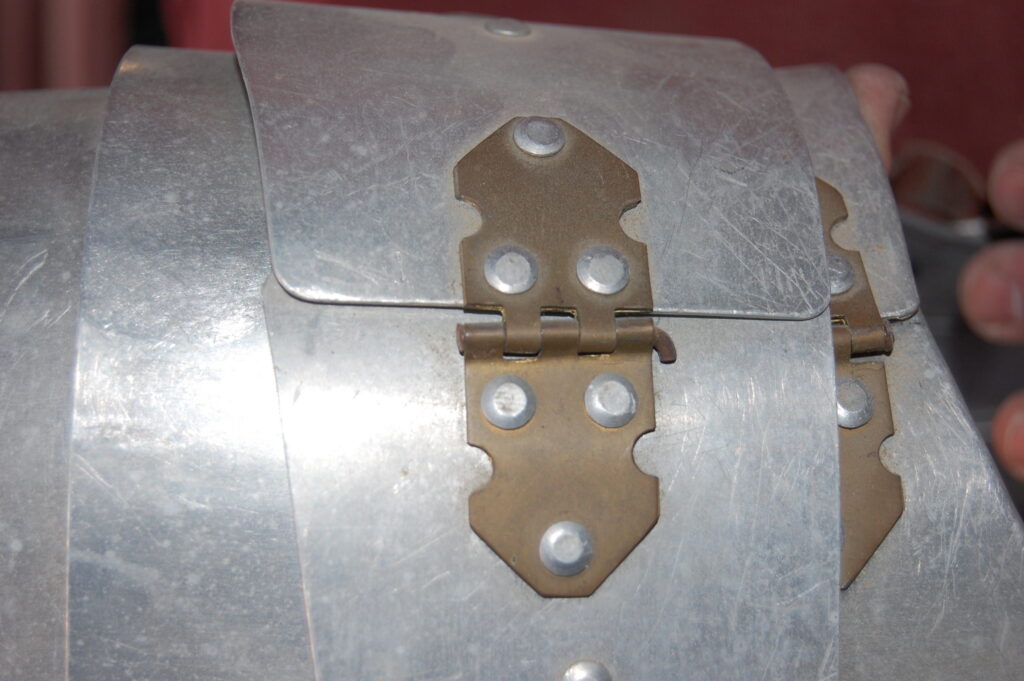
Hand-made brass hinges
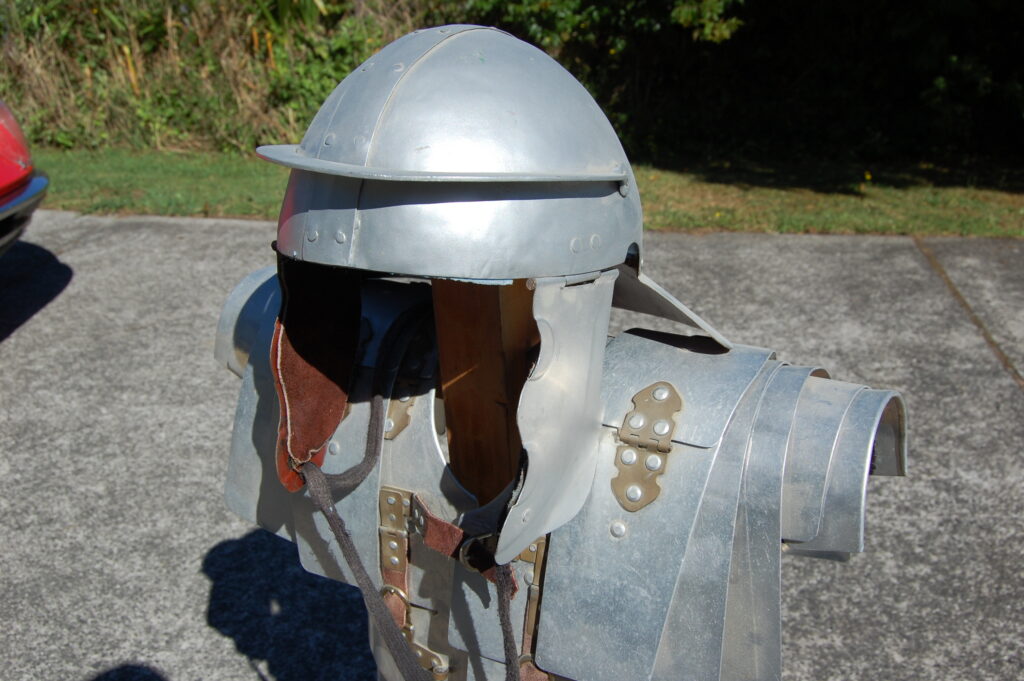
Helmet hammered from a Morris Marina boot lid

Armour
Another line of interest for Gordon is armour. His first project was a set of Roman lorica segmentata (segmented plate) armour for James. For lightness, it was made from aluminium with handmade brass hinges. The helmet was made from a Morris Marina boot lid, hammered to shape and riveted. The armour has seen much use by his children and friends in their games around the house.
Gordon has since made a wide range of armour and has developed an enormous respect for the craftsmen who made the original designs. He has made a chain mail balaclava and vest. The vest contains more than 14,000 links and took more than six months of “knitting for blokes”, as he calls it.
Gordon’s mail is made from butted links that are just squeezed together, while traditional mail was riveted or welded, making it much more time-consuming to construct. Gordon has experimented with a small sample of his own riveted link mail, but the thought of riveting thousands of links has put making full garments on the back burner.
Besides the mail, Gordon has made plate armour, helmets and gauntlets, each one requiring different techniques. He has reproduced full and three-quarter plate armour, Coppergate, Spangen, Pembridge, Sallet and Bascinet helmets plus clamshell and finger gauntlets. Some have been made for his children, others as display or demonstration pieces to explore the processes involved.

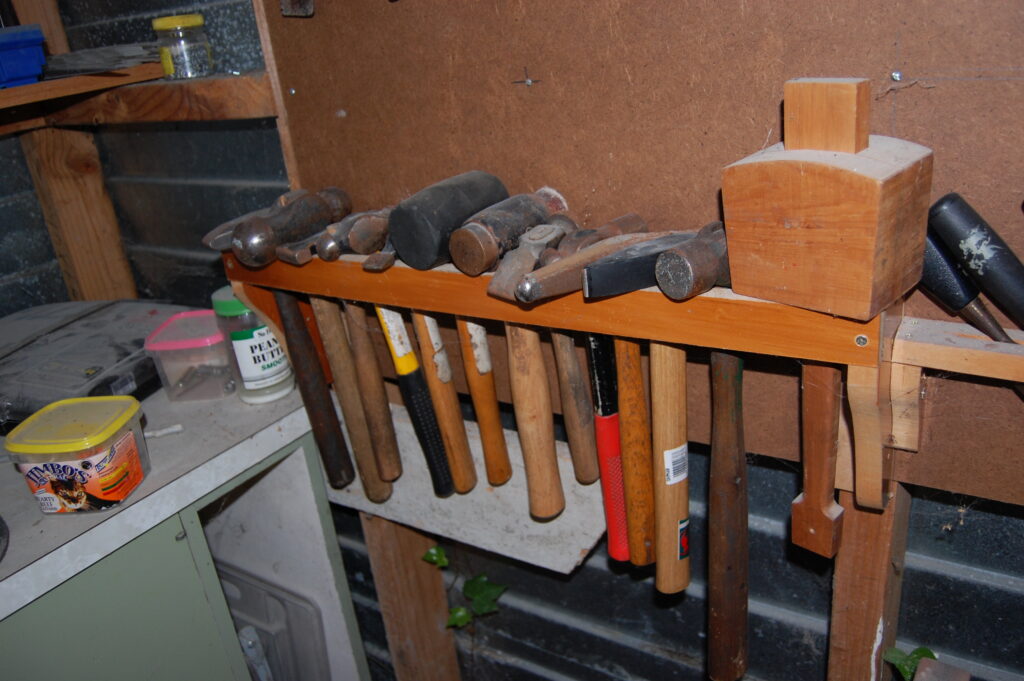
Tools include custom-made and modified hammers for armour work
Gordon with a jointed 'Star Wars' droid

Art of raising
Gordon made the Bascinet helmet to practise the art of raising (shaping by thickening the metal). The secret of raising is to strike the steel just in front of the forming edge, forcing the metal up rather than out. The helmet was hammered cold, then annealed; ten passes were needed to get the shape right. 
Considering his output, Gordon’s workshop is not packed with equipment. A small lathe and bandsaw are the main items on show, with a range of smaller power tools tucked away on shelves. A rack of hammers is on one wall, some custom-made and modified for his armour work. A wooden fence post with a dished centre has been used extensively as a shaping form. 
Doing much of the work by hand is part of the enjoyment for Gordon, giving him greater satisfaction in having done it the traditional way rather than taking short-cuts and is his way of winding down after work. The Messerschmitt project is currently at the top of the list but Gordon always has new ideas waiting for the right moment. He just seen a picture of Ugo Serrano’s latest repoussé work and his son Daniel has expressed an interest in making his own armour so who knows what will next appear from Gordon’s Hunua garage.

Fokker Triplane toy for son Daniel

Share:

More Posts

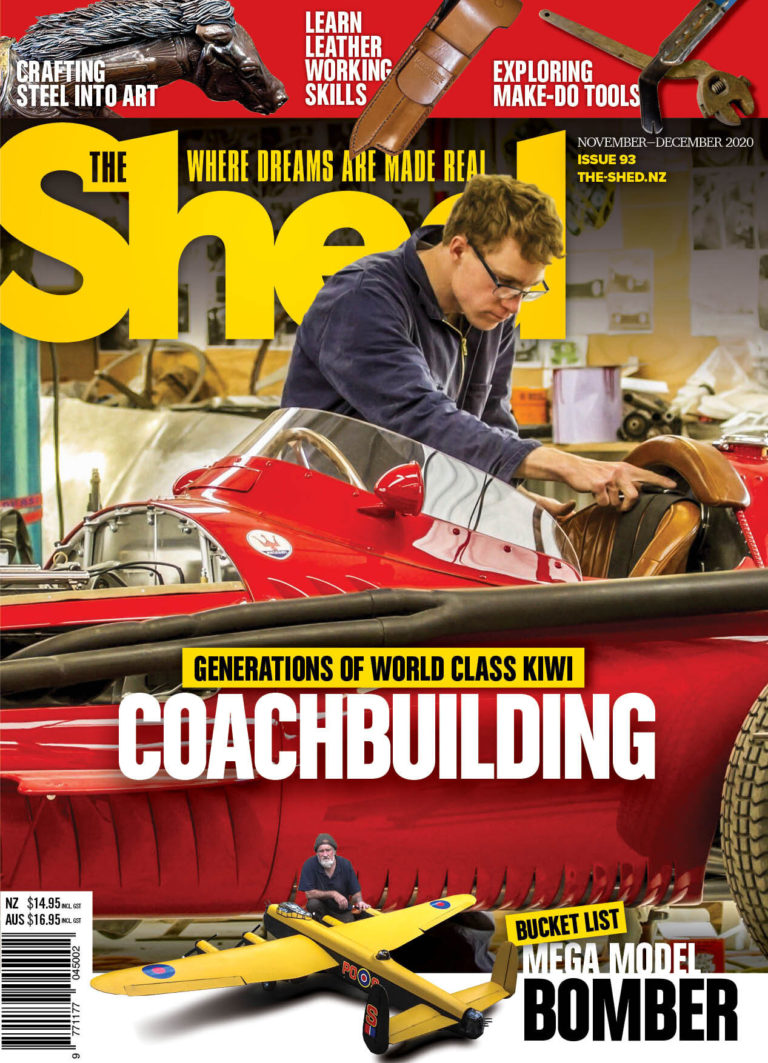
The Shed November/December 2020 Issue 93, is on sale now

We showcase the metal-shaping and coachbuilding skills of Rod Tempero Motor Body Builders Ltd from Oamaru in The Shed Issue No. 93. The company’s world-famous and internationally sought-after car-building talents make it one of this country’s finest coachbuilders. We head to the mainland to meet Rod and his team and do our best to dig out as many metal-shaping and car-building secrets as we can.
The Shed magazine June/July 2026 issue 127 on sale now

Murray Belfield is a phenomenon
He has built a few planes over the years, but none gave Murray the performance and thrills he really wanted until he built his scaled-down German paratrooper’s plane, a Storch. Building this rarest of planes consumed nine years of this 86-year-old’s life. And the result? He couldn’t be happier.
For most of us, stalking a deer across the back country, shooting it cleanly and lugging it home to furnish the table would be accomplishment enough for any evening’s bragging rights.
But when that involves landing an aeroplane you built in your shed onto a handkerchief-sized patch of hilltop scrub, finding and shooting the quarry, manoeuvring the carcase into the spare seat and getting off the ground again, and doing all that at the age of 86, bragging just vanishes in the slipstream. Murray Belfield is, anyway, far too practical and busy a guy to waste his evenings boasting to his mates, but he is, nevertheless, a phenomenon. His plane, the second he has built by hand, is another. Highly specialised for short take-offs and landings (STOL), it is a three-quarters-scale replica of a WWII flying legend, the Fieseler Storch.
The replica, designed by famed aircraft engineer Ladislao Pazmany, is so challenging to build that, to Murray’s knowledge, only one other Pazmany model has been completed to the flying stage, by an enthusiast in Alaska. As if that wasn’t a hard enough ask, Murray has incorporated many improvements of his own based on his many years of bush flying experience (and his dislike of fibreglass).