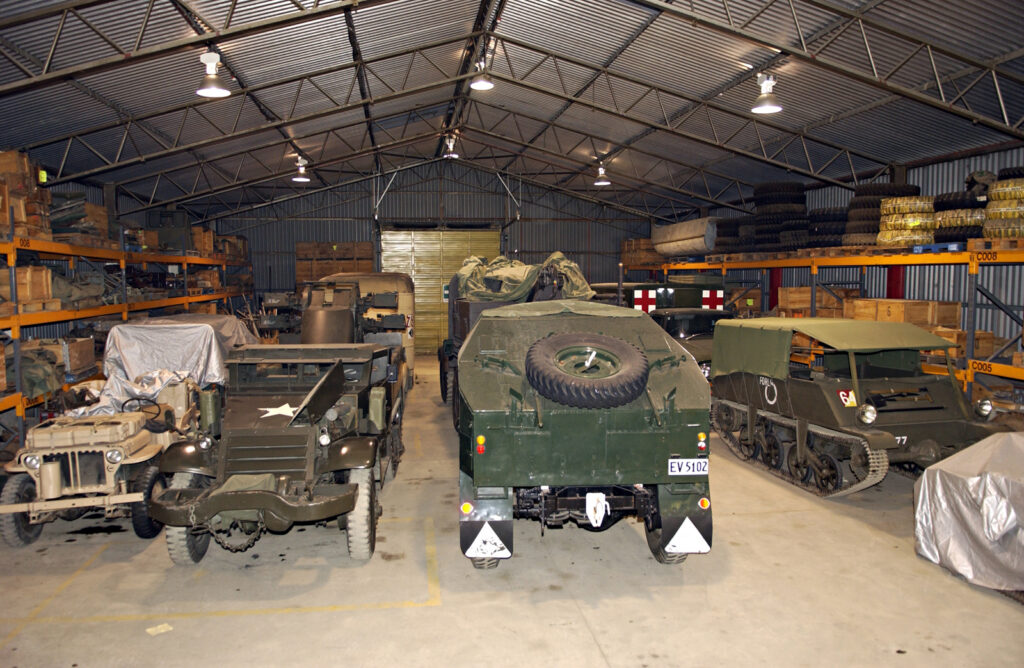

A willing group of volunteers is helping to restore a gun collection of heritage military vehicles
By Terry Snow
(This article first published in The Shed magazine in 2007)
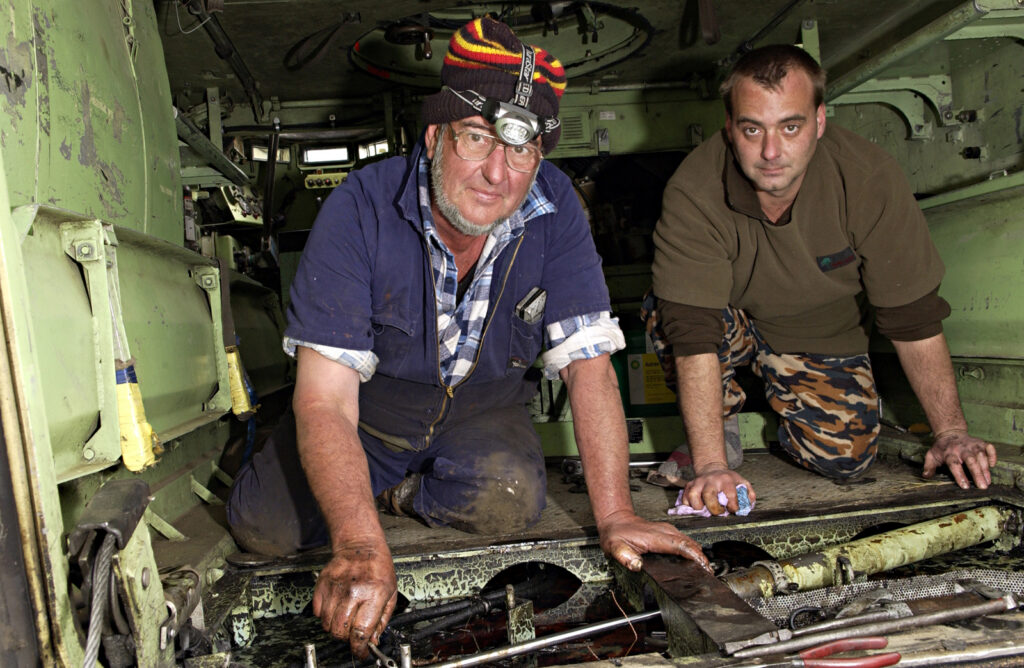
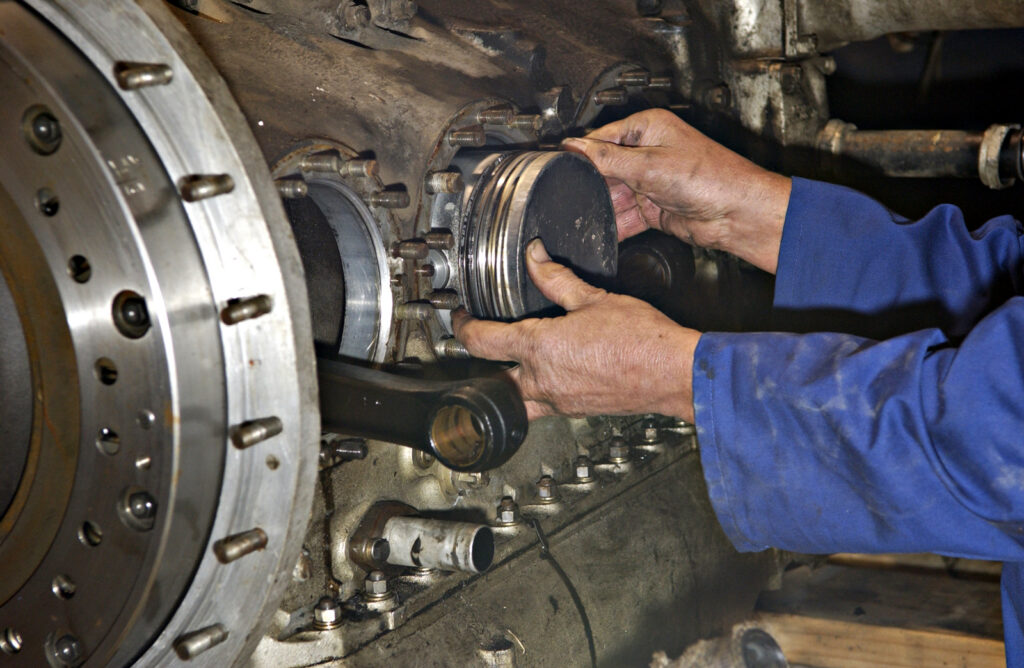
The call goes out. The volunteers pour into the military camp at Waiouru in the centre of the North Island. The only war, though, is going to be on rust, handbrake cables, driveshafts, seized brake systems, the battered cylinders of tank engines and the ongoing tussle to turn out new truck engine parts.
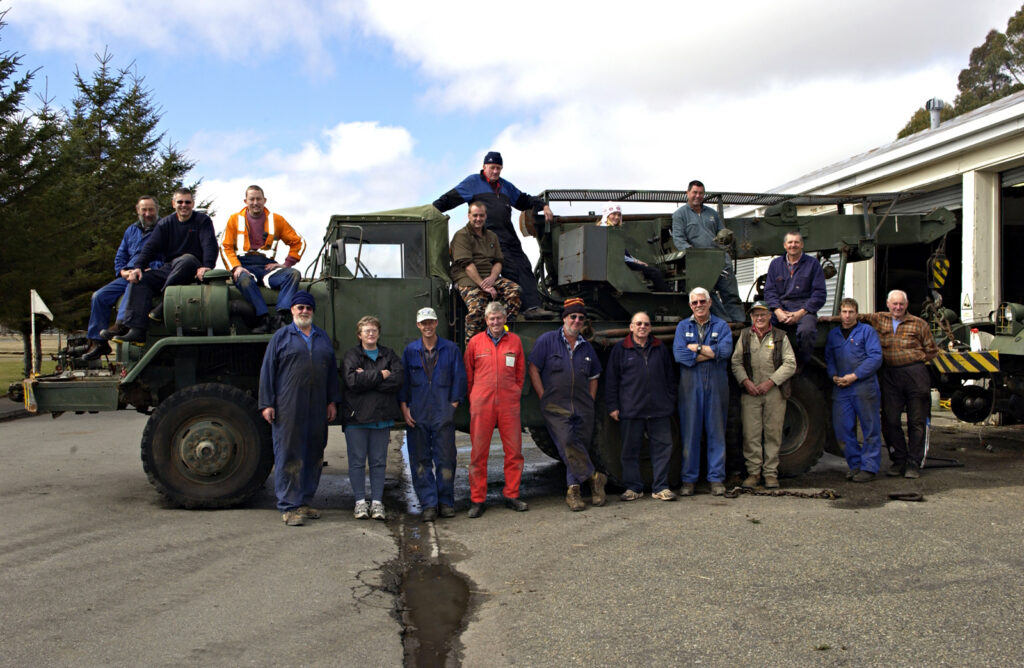
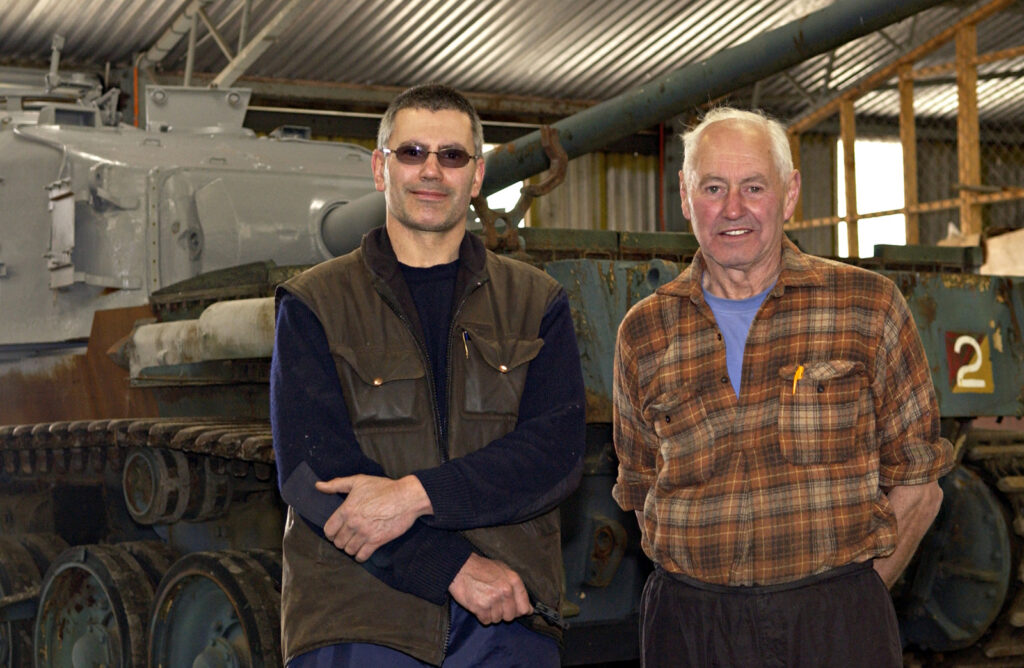
Here is a group of willing sheddies who meet about once every six weeks under the keen oversight of George Pycraft. Their job: to continue repairing the heritage vehicles of the Army Museum at Waiouru.
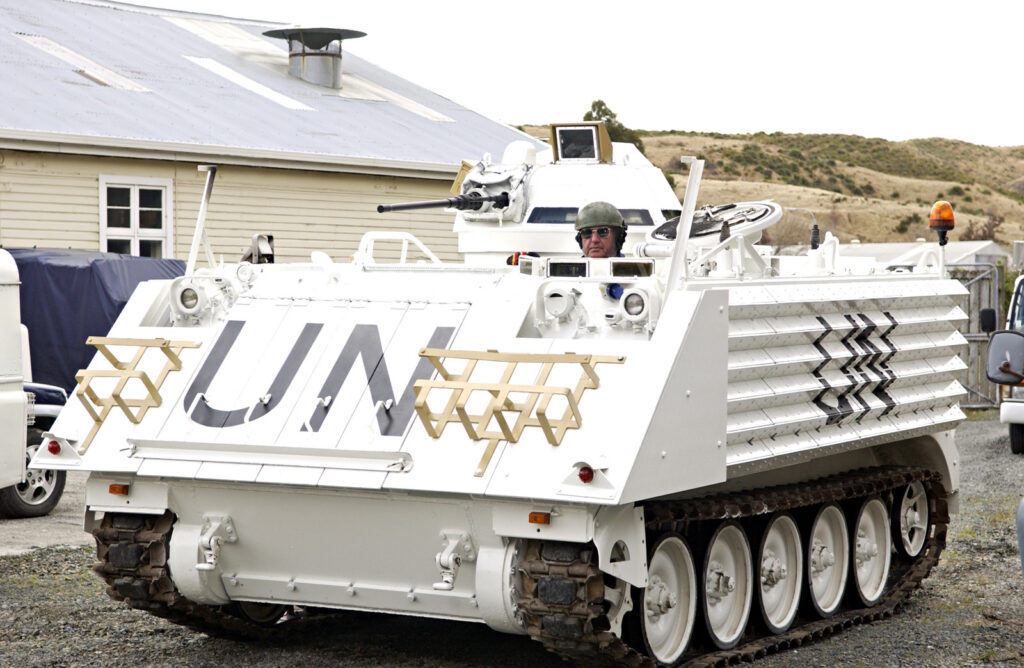
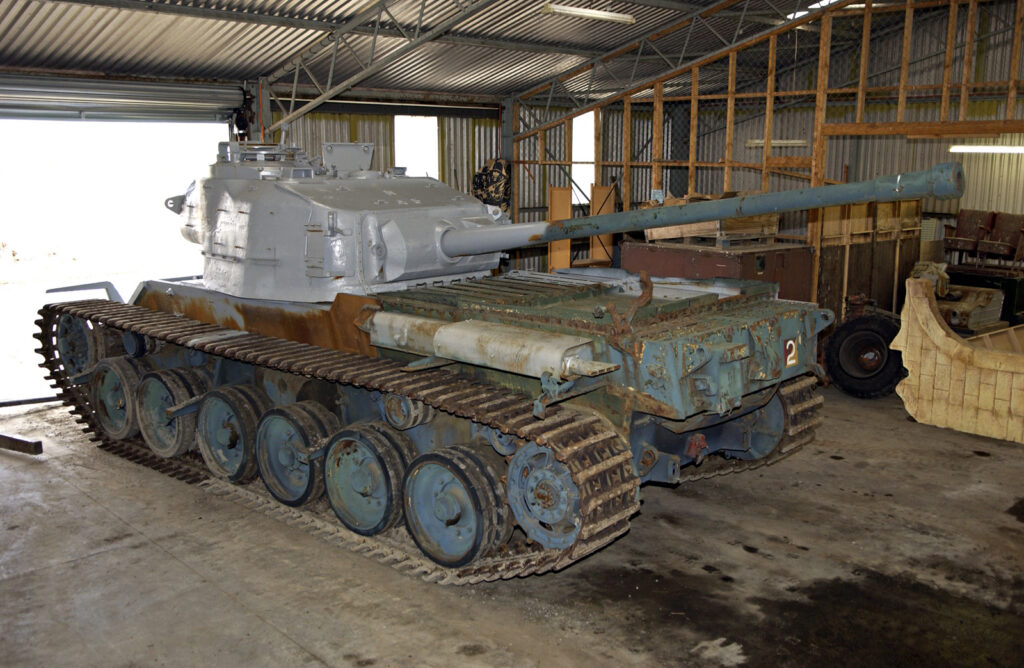
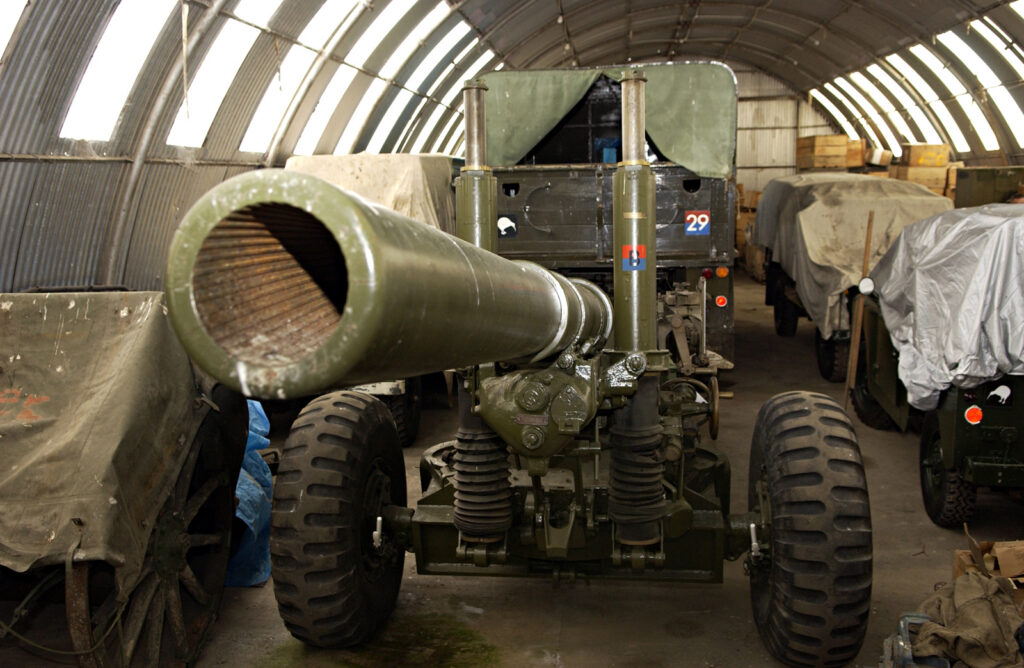
Their shed is a group of four storage sheds housing 85 vehicles in various states of repair. They are as diverse as tanks, the 24-tonne M41 Walker Bulldog, the Centurion, and Valentine tanks (the latter still in World War II Pacific theatre camouflage), a 1941 Canadian Pattern Chevrolet gun tractor, an MB Jeep still wearing its 1942 Long Range Desert Group livery, an M113A1 Armoured Personnel Carrier (APC) painted in UN colours and of the type used in Bosnia, a 1943 Ford F30 truck, a 39-inch searchlight and an M816 recovery wrecker truck made by American Motor Corporation in 1969.
Pycraft, the museum’s Assistant Curator – Technology, says that with the help and dedication of the museum’s volunteers, they are slowly coming closer to having a complete running collection of heritage vehicles.
“Our aim is to maintain our New Zealand army heritage vehicles for posterity. The vehicles are museum artefacts, and have to be preserved as closely as possible to the condition and appearance they would have had when in service.”
Pycraft says it sounds unusual, but restoring the vehicles to an “as new” condition is not an option. This is because most New Zealand army vehicles were modified to suit their operational role before being put in full-time service.
A busy weekend
On a recent volunteer weekend, jobs completed or in a state of advanced progress included:
* Changing and repairing the hydraulic ram door-closer on an M113 APC;
* Progress on turning 1951 Land Rover brakes up to WOF standard;
* making new parts, repairing and assembling the hubs, wheels and brakes of a 1940 Diamond T wrecker truck;
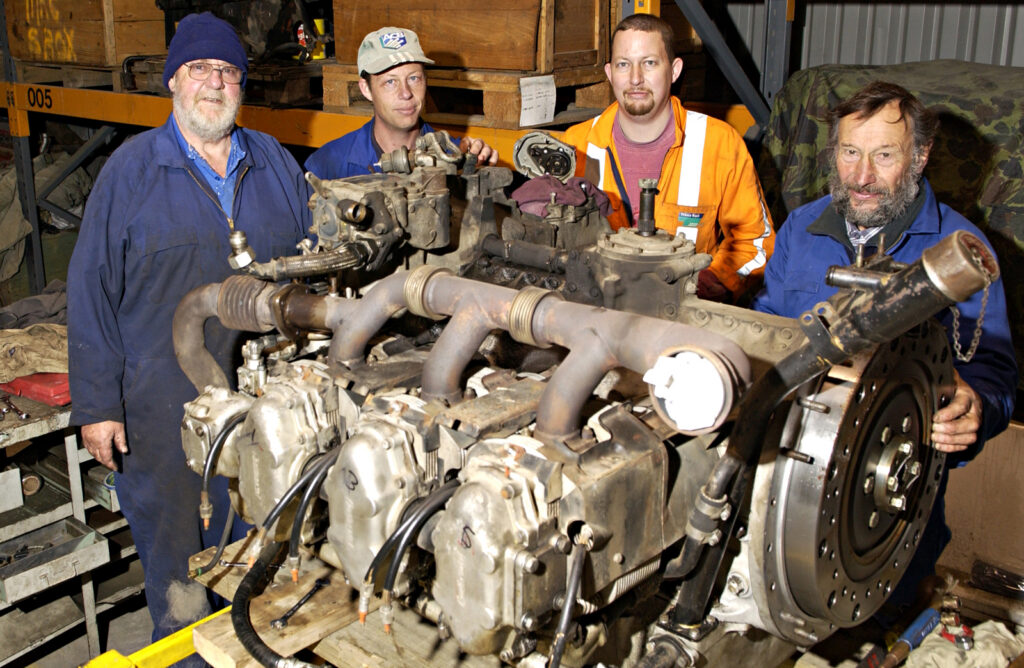
* dismantling the M41 tank’s Continental engine for rebuild;
* advancing the work on rebuilding the Centurion tank;
* replacing and adjusting the brake lines and brakes on a Long Wheel Base Series Two Land Rover;
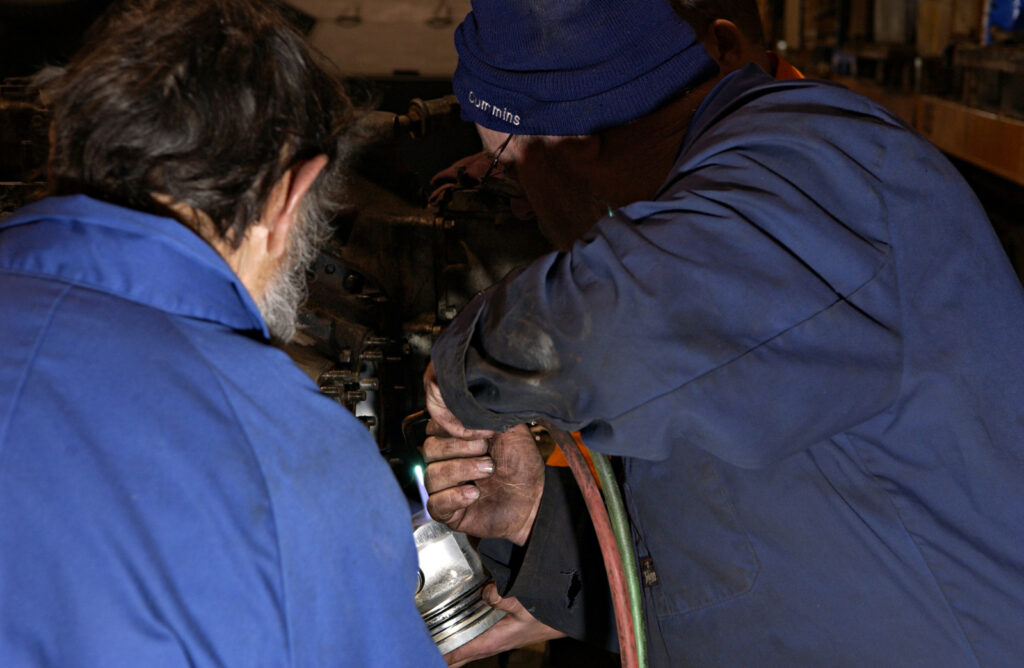
* starting and driving a 1943 F30 truck for the first time in seven years. New parts for the Ford’s V8 engine were made in the museum’s mobile workshop;
* completing minor repairs and maintenance on the UN armoured APC.
The volunteers come from everywhere. Lee Clark comes with his daughter, Holly, from Kawerau, where he owns his own mechanical workshop. Dave Clark is a mechanic who owns his own vehicle repair business in Omokoroa, and from Hamilton come Paul Lelieveld a Land Rover Club member and Mel Street a traveller and hobbyist. Sam Hunter from Feilding turns up with his sons Craig, a glazier from Taumarunui and Scott, an electronics worker from Hunterville. Other father-and-son teams are Roy Robinson, Katikati businessman, diesel mechanic and engineer with his son Brent, a mechanic from Rotorua, and diesel mechanics Gavin and Brent Delaney from the lower North Island.
The volunteers embrace the full range from hobbyists such as farmer and shearer Terry Tusa from Pio Pio and Bay of Plenty Land Rover club member Rod Edwards to New Plymouth searchlight expert Robbie Galvin, Rotorua garage owner and mechanic Cecil Gilcrest and Manawatu construction company managing director Graeme Blackley who is also president of the NZ Military Vehicles Collectors Club.
A wide variety of vehicles
Blackley has been going to Waiouru for about four to five years on and off, perhaps not as frequently as other volunteers because of his commitments with his construction firm.
He also has the attraction of rebuilding his own yard of military vehicles, which include a Chev cargo truck – Chevrolet made 150,000 1 ½-ton cargo trucks for the US Army, Army Air Corps and allied forces in World War II. The truck had a top speed of 48mph or 77km per hour. Blackley also has a rebuilt Bren gun carrier, a Valentine tank and a couple of rare Commer trucks.
“The attraction of Waiouru for me is the diversity – there are so many different vehicles,” he says. “I don’t know a lot about all of them, but I enjoy that side of things, the military part of life. I did a little training as a cadet at school, but was turned down for Compulsory Military Training (CMT) because I had a crook eye. I was disappointed about missing out.”
A mechanic by trade, Blackley is also drawn by the opportunity to drive strange vehicles he normally wouldn’t have access to – “I have driven the M41 tank” – and the chance to go round the camp with the army under their guidance. “There are a lot of pluses going to volunteer at Waiouru. You can get out and have a bit of a play.”
Roy Robinson says it blows people away to see the amazing quantity and different makes, models, shapes and sizes of vehicles. There’s no disappointment on the Land Rover front where his main interest lies, since he has found his favourite drive comes in different shapes, a recovery Land Rover, ambulance Land Rover and other kinds.
“They’re all in pretty original shape and condition – they seem to have come straight out of military service and into the museum collection.”
Having been a Waiouru volunteer for about four years, along with his son, who is by trade a Land Rover mechanic, Robinson says he enjoys the chance to play on military equipment and even to have a drive. “It’s a golden opportunity you would not get anywhere else. There’s also a great team spirit – we are all pushing the same scrum.”
Experts tend to concentrate on their speciality
For petrol/diesel mechanic Brent Delaney, volunteering at Waiouru with his mechanic Dad Gavin is a natural progression. The family has an Army background and collects their own military vehicles, “a bit of everything” from World War II to Vietnam, such as armoured vehicles and a field gun.
“We like going to Waiouru because you have to keep your finger on the pulse,” says Brent. “We help out the museum where we can, and we put our expertise into the technology. But for us, it’s a passion. People can’t understand, but it gets in the blood for life.”
During the weekends, the experts tend to concentrate on what they do well – the Land Rover guys, Brent and his father on big trucks – but at the end, “we have a lot of fun, there’s a great chance to drive bigger stuff than we have at home, like a Centurion tank, and we use any excuse to get the big ones out.”
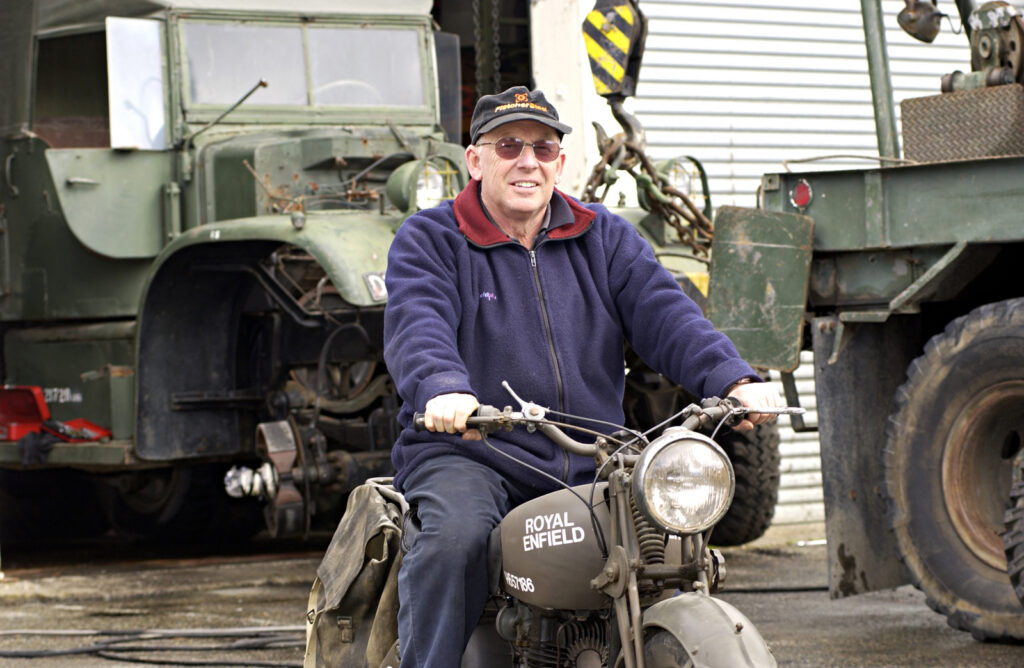
George Pycraft wanders around on the volunteer day on his motorcycle, a 1942 Royal Enfield WDCOB (War Department Civil Order with Burman gearbox). He says the network of volunteers is essential because the Army is too committed in present-day operations to have time for restoring heritage military vehicles. The work in the sheds also goes ahead independently to a degree from the Museum, which has room to house only five vehicles.
Wheels Around Waiouru
The general public gets to see a greater range of the restored vehicles during the two-yearly Wheels Around Waiouru parade. In February this year, there were twice-daily battlefield re-enactments, displays and a parade. Wheels Around Waiouru, once annual, is now seen to alternate with Warbirds over Wairarapa, where the skills and attention of some of the Waiouru volunteers are also needed.
George Pycraft is a jack-of-all-trades and master of many. Some of his skills he learnt from his father-in-law, who in 1938 built a rotary valve engine for a racing bike, way ahead of his time. The bike is now in the Southward Museum.
Then, apart from organisation and his own mechanical skills, George does a bit of design thinking. The heritage vehicles include a US Army M548 six-tonne tracked vehicle which saw service in Vietnam as an ammunition carrier, cargo vehicle and troop carrier. George Pycraft has adapted some 737 aircraft seats to convert them into a comfortable 12-seater, like a truck with an open back.
In curating the museum’s collection from vehicles and technology through to communications, George knows there is outside interest. The searchlights have been borrowed for military tattoos, and even top film director Peter Jackson used the lights in authentic pre-World War II period scenes in King Kong. Radio sets and searchlights were also borrowed for a children’s movie made in Queenstown and set during World War II.
There is also interest in what might come into the collection: just quietly, George knows of a rare British ABC motorcycle, purchased new from the factory, in 1916. The bike is in pristine condition, and it comes with a complete history from new. It would look good in the collection. And how does he know of the rare, good state of this bike? The owner keeps it in his bedroom.
Behind the scenes at the museum
The volunteers working on Waiouru’s heritage vehicle collection get on with their work without complaining. But as with any major organisation, there are glitches behind the scenes. Sometimes volunteers will turn up to work on vehicles they set right six weeks before to find the batteries won’t start the engines, the petrol is dead or brakes freed up earlier have seized again. George Pycraft says this problem has now been solved by using silicone brake fluid. Keeping many vehicles on the move so they don’t deteriorate becomes difficult between volunteer weekends.
Then there are the pro-museum and not-so-pro museum factions that the heritage vehicles get caught between. When it comes to divvying up spare parts, for example, it can be a bit of a rush to get what’s needed for the vehicle collection.
More volunteers would move the project along, but there is a squeeze on accommodation, which the Army provides along with meals, in exchange for the volunteers’ work.
And of course, while realising the reason for the museum location, there are those who would like it to be situated in a large population centre. More visitors would have easy access to the museum, rather than being only able to get to it while passing on a journey. George Pycraft says he can understand this point of view, but believes unless the museum is centrally located the volunteers would have to travel long distances to help maintain the collection.