
Video of the Ghent Makers Faire

For our electronics features in issues 110 and 111 of The Shed magazine we stepped away from a build project and instead head to a makers’ fair in Europe, this one in Belgium. Young and old were there, keen to display their electronic creations as well as to learn, share and to just enjoy fellow electronic sheddies’ skills. “Compared to other more famous maker faires events across Europe – Brussels, Rome, Hanover, to mention just the most renowned – the Ghent Maker Faire is considered a minor event. However, it still played host to thousands of visitors and is well worth attending because of its very special character. As you may have already read in the “News” in The Shed issue 109, the faire hosted the first European power tools racing along the lines of New Zealand and USA competitions. It was organised by the effervescent Henk Ryckaert, who was also the man behind the scenes for the power tools racing on the first day.”
For our electronics features in issues 110 and 111 of The Shed magazine we stepped away from a build project and instead head to a makers’ fair in Europe, this one in Belgium. Young and old were there, keen to display their electronic creations as well as to learn, share and to just enjoy fellow electronic sheddies’ skills.
“Compared to other more famous maker faires events across Europe – Brussels, Rome, Hanover, to mention just the most renowned – the Ghent Maker Faire is considered a minor event. However, it still played host to thousands of visitors and is well worth attending because of its very special character.
As you may have already read in the “News” in The Shed issue 109, the faire hosted the first European power tools racing along the lines of New Zealand and USA competitions. It was organised by the effervescent Henk Ryckaert, who was also the man behind the scenes for the power tools racing on the first day.”

Share:

More Posts

Hobbit haven

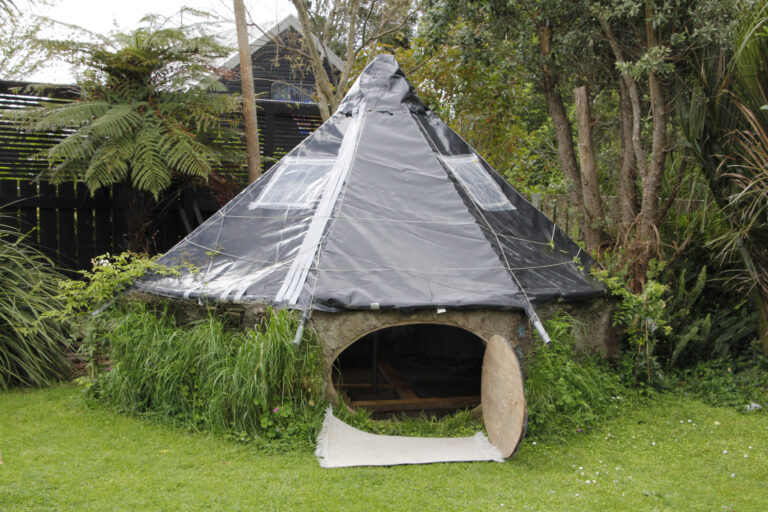
I have made a hobbit house for my kids almost entirely from recycled materials and left-overs from building a garage. The frame is an old trampoline. It is 3.2 metres wide (this depends on the size of your trampoline ) and 2.3 metres high at the apex. I can stand in it easily. The poles that were for the side of the trampoline had holes at the top so by the time I lashed them all together it was incredibly strong.
I made the walls out of an old pallet with a couple of bigger bits of driftwood on top. We mudded the walls with a mix of dirt, grass and a little cement until there were no more holes and then patched as needed. I used all kinds of recycled wood that would fit. We have added more layers as needed or as bits fall off. The walls are probably about 100 mm thick on average but up to 150 mm in places and we have added paper in the middle for extra insulation.
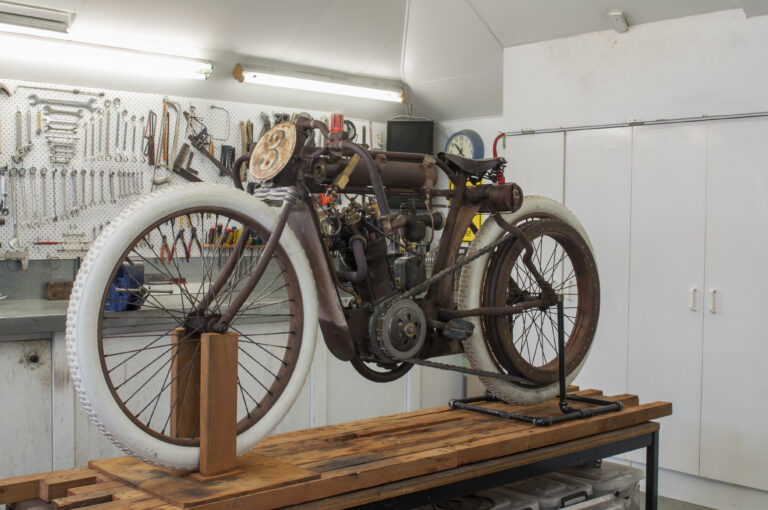
Racing motorcycles – the art of engineering

Chris Gordon has been devoted to the internal combustion engine since his earliest days, when his next-door neighbour was a motor mechanic.
At 14, he was a crew member for Ron Collett, who successfully ran a Top Eliminator class dragster at strips throughout New Zealand. His Chris Gordon Racing Team won the 1998/99 125cc New Zealand Road Racing Championship, with well-known rider Dennis Charlett riding a Honda RS125 that Chris owned and prepared. Chris and his team ran the bike in the 125cc class at the Australian MotoGP at Phillip Island in 1999.
Chris has also, from a very early age, made things: models, an electric bicycle, an electric go-kart; a fibre-glass, road-registered, scratch-built car; and a 500cc V8- powered grand prix racing bike. He has a minimalist approach to tools and equipment, but to make the racer’s V8 engine, he had to buy and master a small lathe and a serious, large and highly capable milling machine. The alternative would have been to get the machining and development done professionally. Chris calculates that this would have involved thousands of hours of very expensive machine time – say, 3000-plus hours at $100 per hour. That’s a lot of money.

Choppers with pedal power

Geraldine High School technology teacher Alan Minnear built pedal-powered choppers with his Year 11 students because he wanted something to capture their interest. He says he initially got the idea for the choppers from another local teacher but then discovered the Atomic Zombie website (www. atomiczombie.com) which opened his eyes to possibilities with the clear instructions available. He paid for and downloaded the PDF files for the two choppers named Vigilante and Overkill that caught his eye.
Because of their relative inexperience, the students basically followed the book for the choppers they built. However, the book gave no measurements, wanting builders to create their own design from the basics.