
A replica waterwheel is a reminder of days gone by
By Sue Allison
Photographs: Juliet Nicholas
When a Marlborough farmer with a passion for history took to his stream with a digger, he knew what he was looking for and came up trumps. John Walsh, of Woodbourne Farm, near Blenheim, was searching for remains of the waterwheel that powered the province’s first flour mill in the mid-1850s.
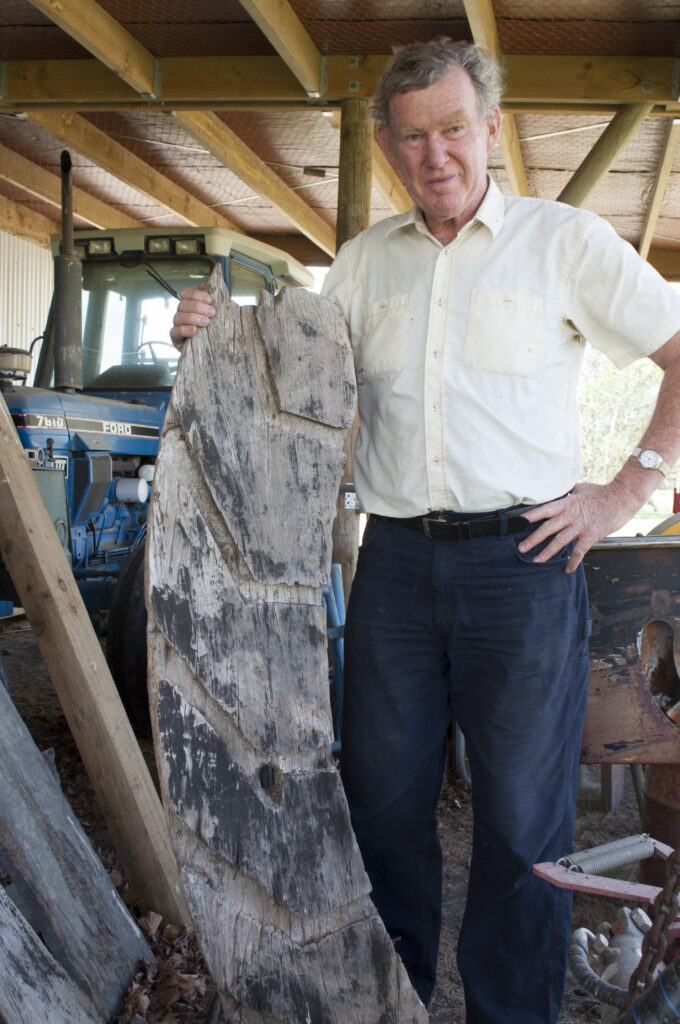
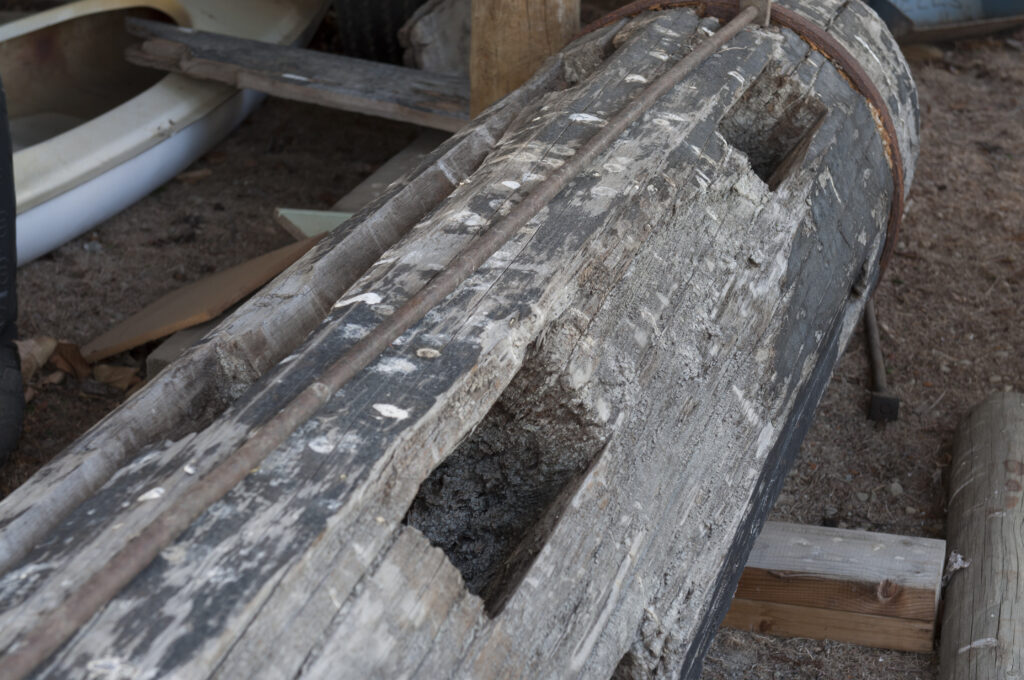
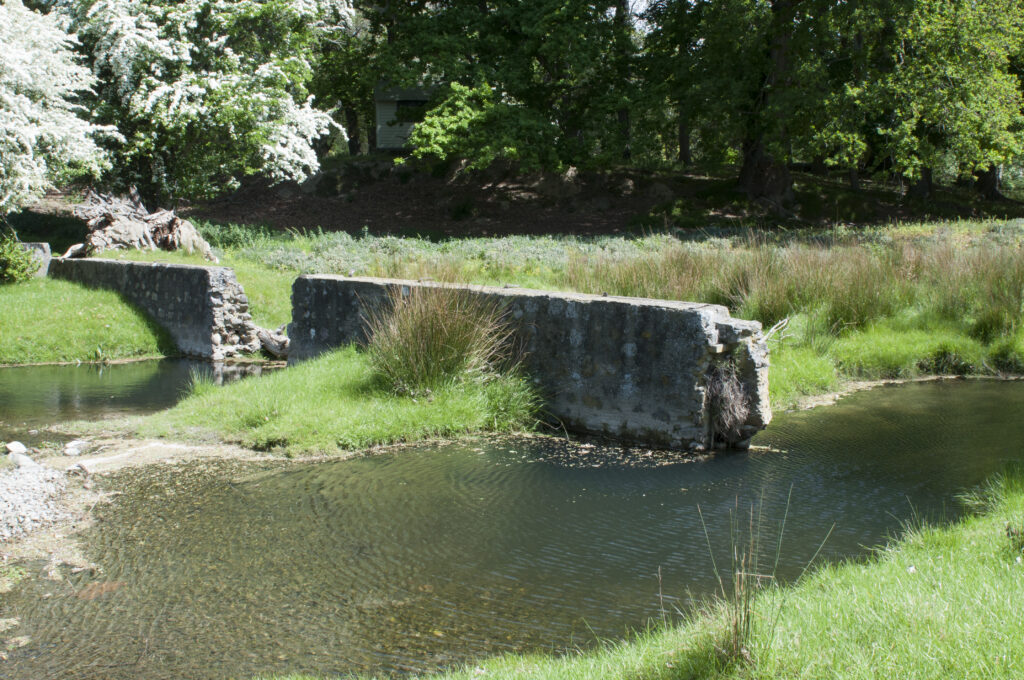
The concrete weir, although breached in a couple of places, was still standing on the Mill Stream, along with rusty debris from the metal operating system. The waterwheel itself had rotted away, save for two blades (or paddles) and a portion of the rim, but when John went digging below the weir, he unearthed the wheel’s wooden hub virtually intact.
“There was enough left to make a pattern from which to build a replica,” says John, who runs a private museum on the property, Woodbourne Homestead and Historic Farm, which is an NZ Heritage-registered site.
The waterwheel had been built for the original landowner, Henry Godfrey, by the Barton Brothers, who were early bridge builders in Marlborough. “These structures were built by the finest-quality tradesmen,” says John. But despite the workmanship, the water-powered mill operated for less than two decades, closing in 1873. Unlike the gentle streams of England, the meandering Marlborough Creek could turn from a trickle to a torrent in a matter of hours. “It wasn’t a hugely successful site,” says John.
Display replica
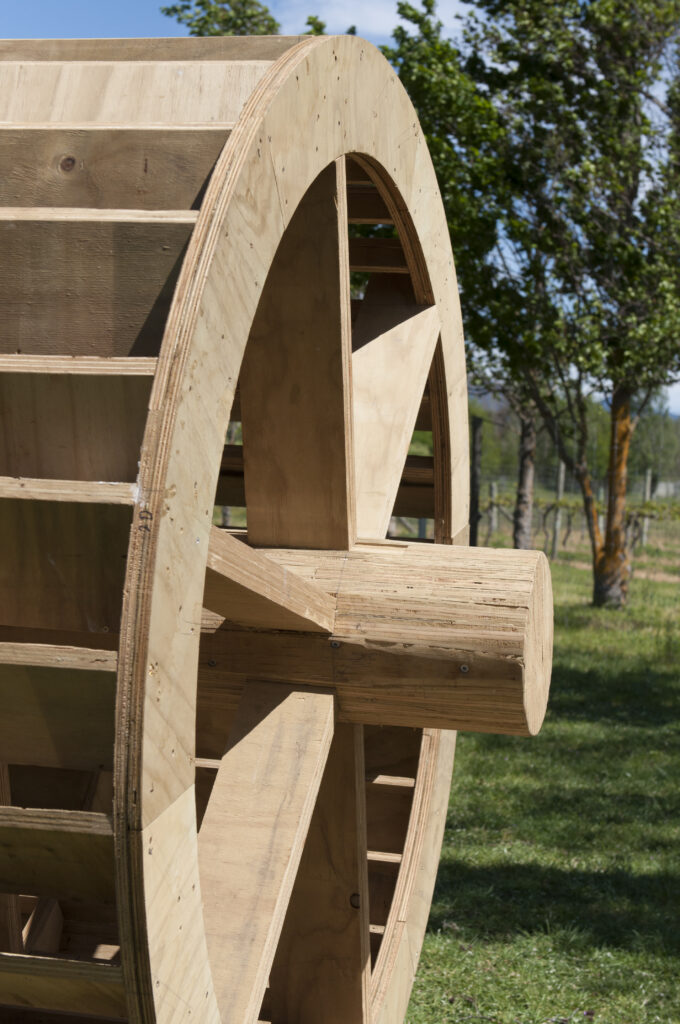
As it wasn’t feasible to build a full-size 3.7-diameter waterwheel, John decided to use the remnants to construct a half-size replica for display. “It was a rather complicated piece of woodworking, so I asked the Marlborough Guild of Woodworkers if they would like to do it and they agreed.”
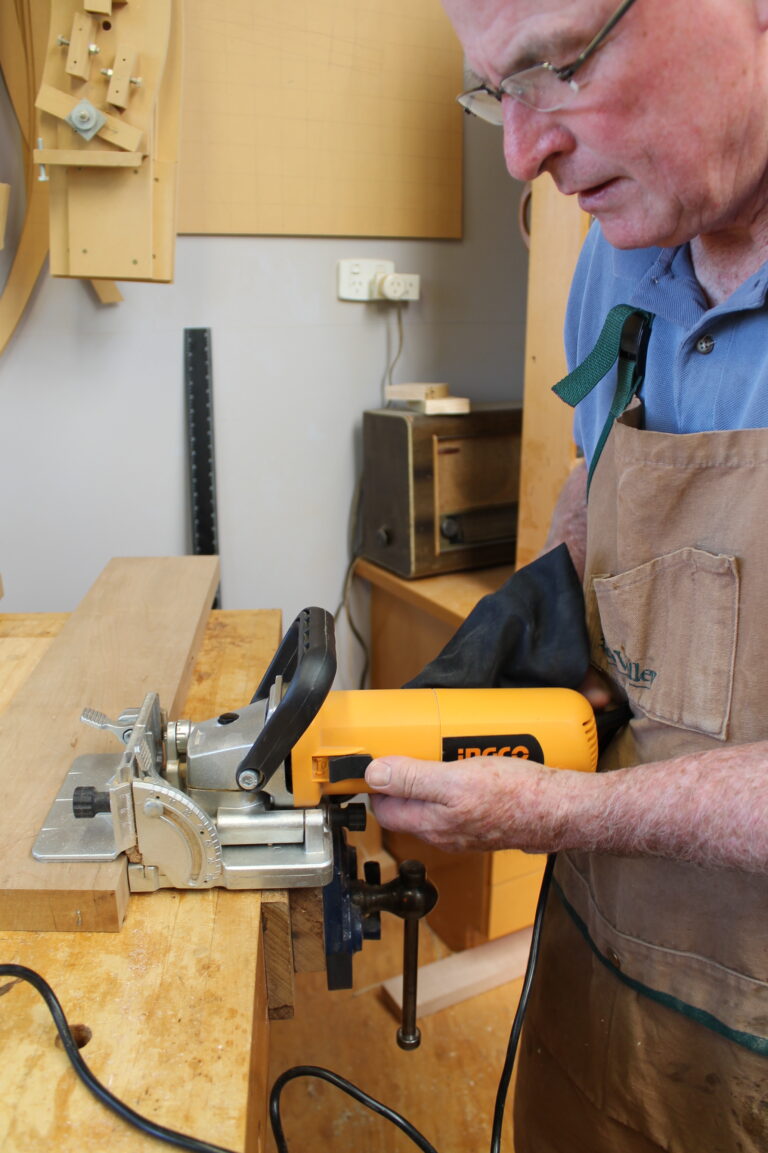
The guild, based at Blenheim’s Brayshaw Heritage Park, is a co-operative of volunteers interested in fostering the art of woodworking. Community projects they have helped with range from making nesting boxes for penguins to building a replica steering wheel for the historic Edwin Fox ship.
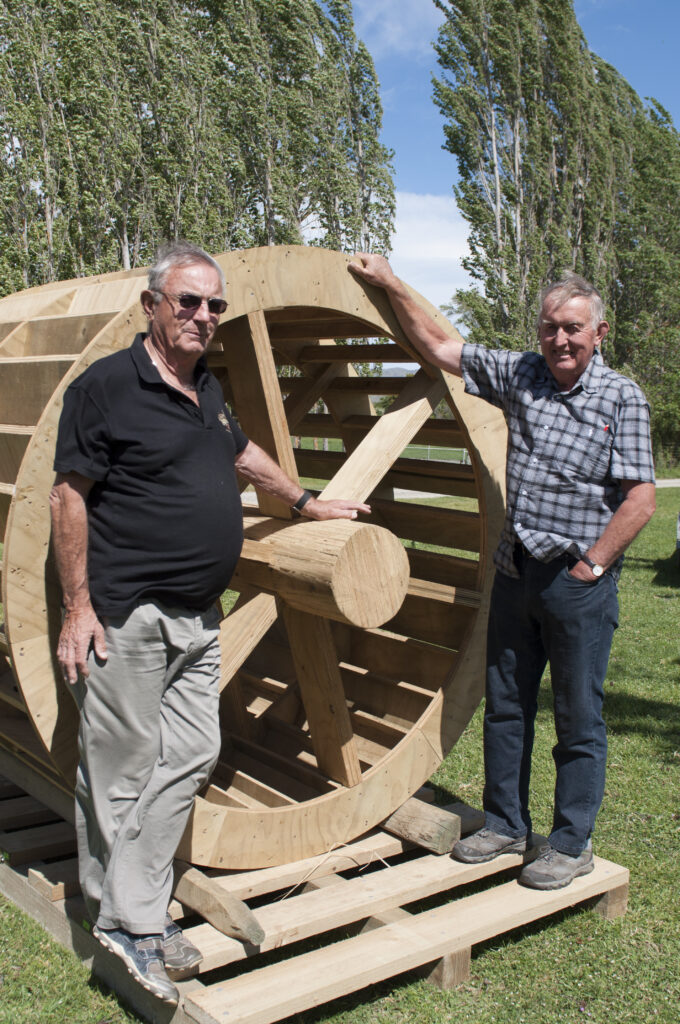
Vern Ayson and Jim Gilchrist headed the waterwheel project, using the information from the remnants to set up a pattern.
“The shaft John had dug out of the stream was basically complete, and he also had about a fifth of the ring and two sets of blades,” says Vern. “From those measurements we were able to work out the diameter of the wheel and how the blades fitted in. I basically made up a giant compass and marked out the blades, aligning them to the centre of the hub, and we managed to build it up from there.”
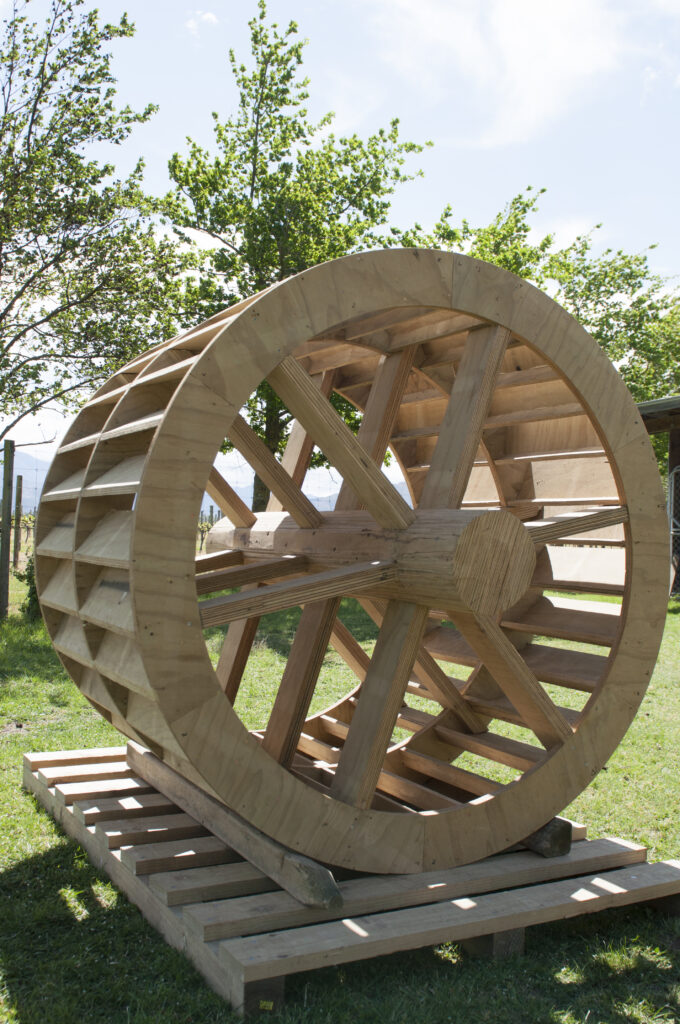
The original waterwheel, which is the undershot style of wheel, was unusual in that it had two sets of blades set side-by-side within three rings.
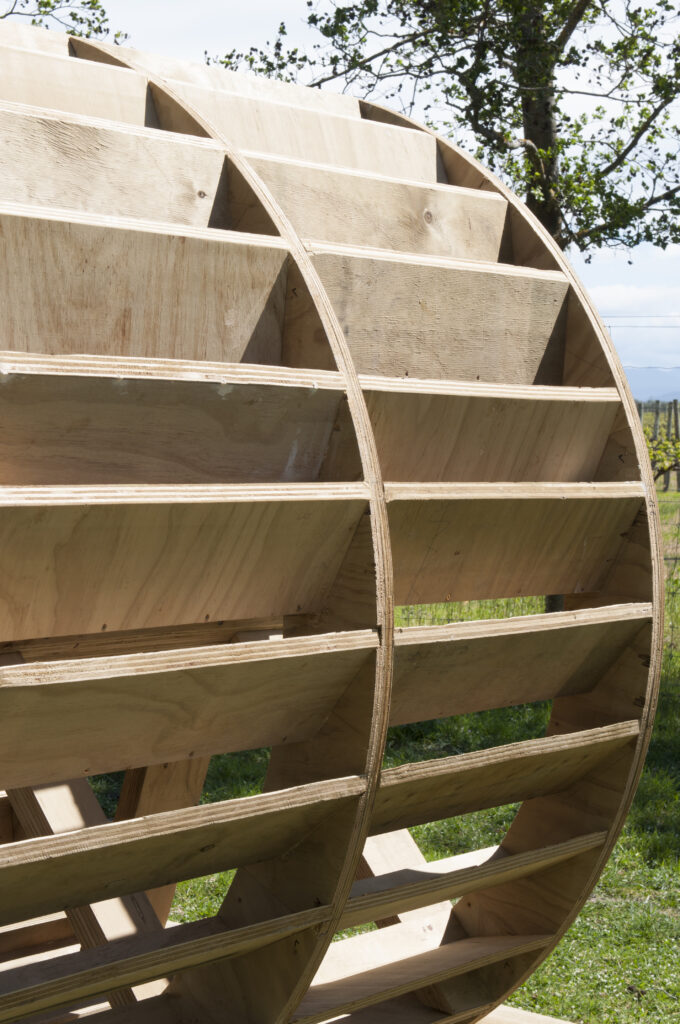
The half-size replica, with its 1.85m-diameter ring, has been constructed using 18 mm rural H4 plywood. Modern glues and screws have been used alongside more traditional tenon joints.
Sturdy spokes
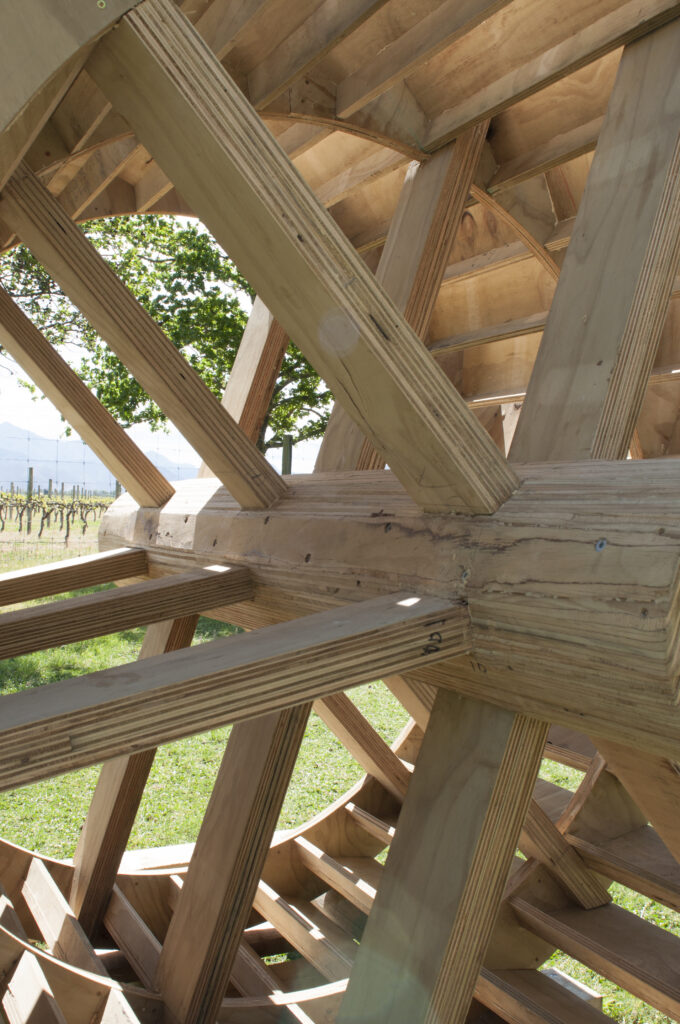
The new hub, which is made of laminated ply, is 1.99m long with a 280 mm diameter. Like the original, the central portion has been sliced into a 12-sided cylinder to fit the six spokes on alternate flat surfaces. Three sheets of laminated 18 mm ply were used for the spokes and two for the rings.
The main spoke of each of the three sets was driven through the middle of the hub to provide rigidity to fit the rings. These sturdier spokes are 165 mm by 54 mm. The secondary ones, which are 145 mm by 54 mm, have been tenoned into the shaft.
Each ring has 30 blades (60 in total), with the outer “scoop” of the paddle 145 mm deep and the narrower upright 65 mm. All the blades were glued and screwed to the rings except the end of one middle set, which was glued into recesses after the opposing paddles had been attached.
“Once we had worked out the pattern, it was a reasonably simple construction process,” says Vern. “The hardest part was the amount of space it took up in the workshop for most of the year.”
The finished waterwheel will be painted black to resemble the original one, which would have been waterproofed with pitch or tar. John has set it up on a pallet so he can easily carry it on a trailer for display purposes.
Waterwheels
The waterwheel is an ancient device that uses flowing or falling water to create power by means of a set of paddles (also known as blades or buckets) mounted around a large wooden or metal wheel. It was probably the first method of creating mechanical energy that replaced human and animal labour.
Greeks and Romans were the first to use them for both irrigation and as a power source between the 3rd and 1st centuries BC. They later became important to industry throughout the world, driving mechanical processes such as milling, rolling and hammering. Water turbines, developed during the Industrial Revolution, eventually replaced them as a power source.
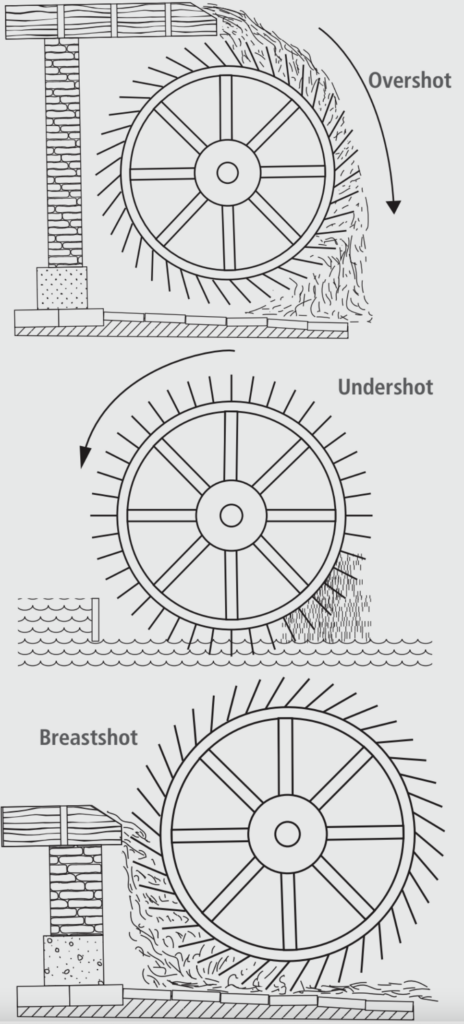
Different types of waterwheels were used depending on the location and source of water. The earliest ones were horizontal, turned by water flowing from aqueducts or jets of water. The more efficient vertical wheels are divided into three main types, according to where the water hits the paddles: overshot, undershot and breastshot.
An overshot waterwheel is rotated by falling water filling buckets near the top of the wheel, giving it the advantage of gravity. The weight turns the wheel, and the water flows out into the tailrace when the wheel rotates enough to invert the buckets. The overshot design doesn’t require rapid flow, and its “paddles” are usually buckets rather than the simpler blades of undershot waterwheels.
An undershot wheel (also called a stream wheel, as it is turned by the river’s motion) is rotated by water striking the paddles at the bottom of the wheel. Undershot wheels are most suited to shallow streams in flat country.
The breastshot wheel is a hybrid of the two, working somewhat like the undershot variety, but the water comes into contact with the wheel at mid-height, gaining some advantage from the weight of the falling water.