
Race cars made in NZ

Craig Greenwood is one of the best examples of someone who turned his passion into a business. He is also one of New Zealand’s most prolific racing car builders. Craig got into motor racing in the early 1990s, progressing from competitive cart racing to Formula Vee (now Formula First). The class is based on a 1200 cc VW motor and uses a collection of stock parts to form a competitive car from the engine, transmission, front suspension, brakes and wheels built into a space frame. The body is fibreglass or carbon fibre. It’s a racing class that allows an enthusiast to build and maintain his own car. Craig bought his first car but soon decided to build his own, working nights and weekends in a cramped single garage with little more than an oxy-acetylene welder, a hacksaw and a hand-held drill. “I wasn’t all that successful at first. Of 18 starts I made, I only finished four,” says Craig. “I realised that just knowing how to weld a chassis wasn’t enough, so I started to read about designing and building race cars.”

From racing to making, Craig Greenwood has met the challenge
By Jude Woodside
Photographs:
Jude Woodside

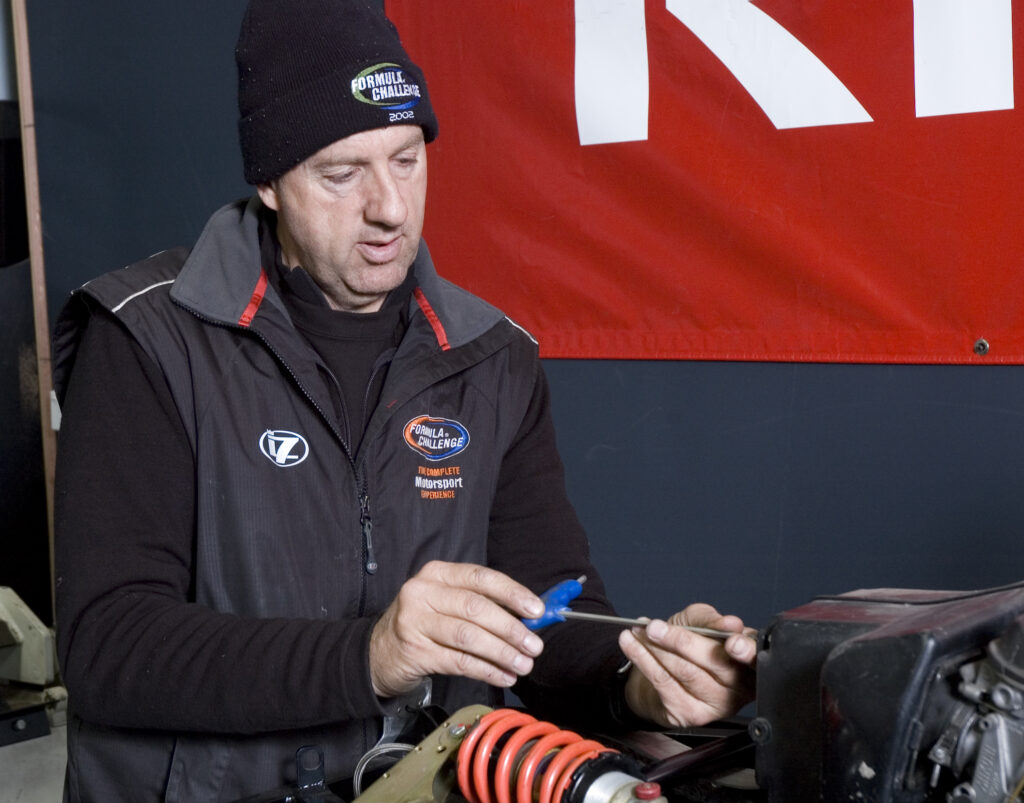
Craig Greenwood, Formula Challenge designer-builder

Craig Greenwood is one of the best examples of someone who turned his passion into a business. He is also one of New Zealand’s most prolific racing car builders.
Craig got into motor racing in the early 1990s, progressing from competitive kart racing to Formula Vee (now Formula First). The class is based on a 1200 cc VW motor and uses a collection of stock parts to form a competitive car from the engine, transmission, front suspension, brakes and wheels built into a space frame.
The body is fibreglass or carbon fibre. It’s a racing class that allows an enthusiast to build and maintain their own car. Craig bought his first car but soon decided to build his own, working nights and weekends in a cramped single garage with little more than an oxy-acetylene welder, a hacksaw and a hand-held drill.
“I wasn’t all that successful at first. Of 18 starts I made, I only finished four,” says Craig.
“I realised that just knowing how to weld a chassis wasn’t enough, so I started to read about designing and building race cars.”

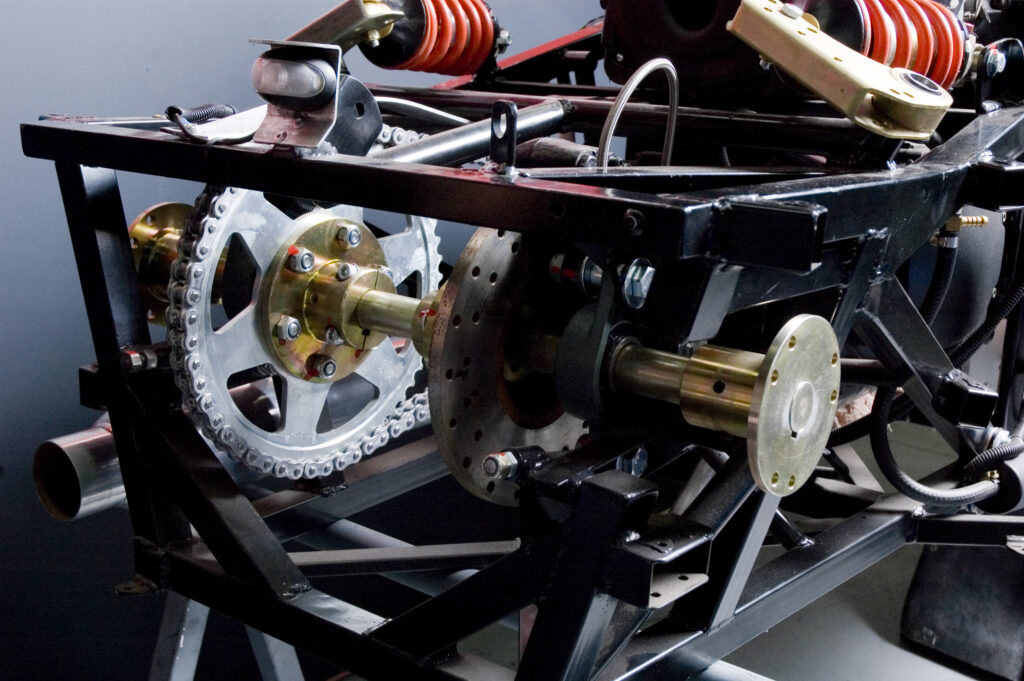
The cars are driven via chain drive. This is similar to the locked diff common on race cars but allows for a very efficient transfer of power and less weight

Competitive
The cars got better, and he started becoming competitive. He realised it was more productive to build multiple cars and race them as a team. By 1993, with three cars, Greenwood started a scholarship system to find other drivers for his team. He was by now becoming competitive in the class. Before long, he had a team of six and was one of the biggest racing teams in the competition.
Craig went on to win the New Zealand Formula Vee Championship in 1997, and his team won in 1998 and 1999. Craig has built 23 Formula Firsts and developed a reputation for building quick and reliable cars, most of which are still racing.
By 1999, Craig had come up with a new design. Based on the Formula First series and with the knowledge earned from running his own team, he knew the drawbacks in the current design.

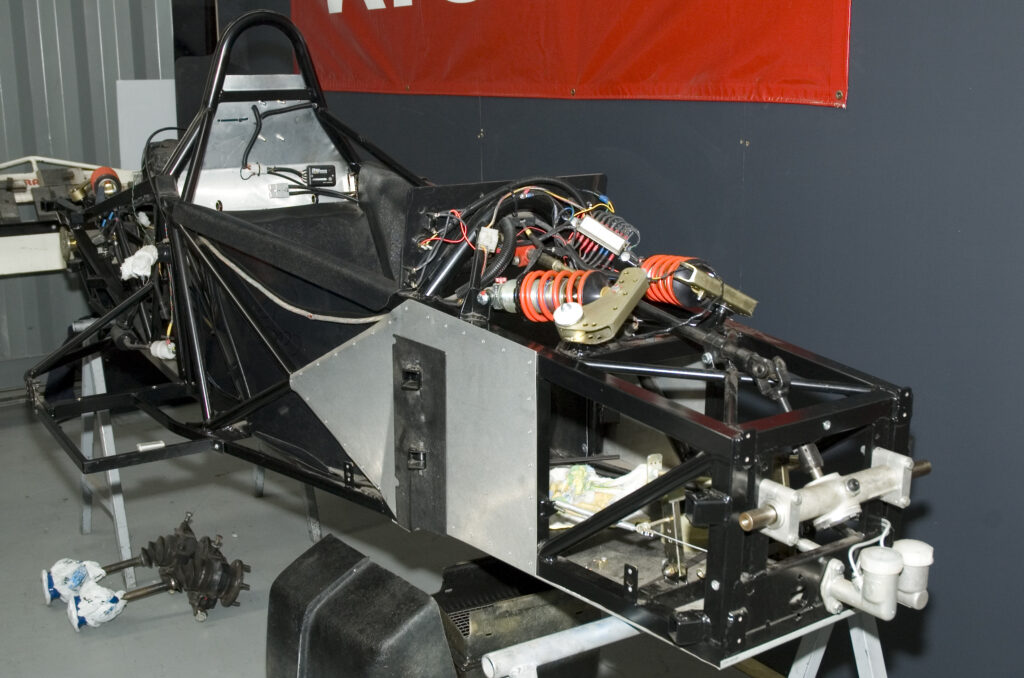
The space frame body of a Formula Challenge designed by Greenwood

Motorcycle engine
“I realised I could build a car from a space frame and a motorcycle engine. I wanted to make it simple. The car needed to have easy access to replace or work on the motor, it needed to have easily replaceable parts, and above all, it needed to look and sound like a racing car. So we designed the body to look like a ’99 Ferrari.”
Craig wanted to go beyond simply owning the team, he started a new series—Formula Challenge. With that, he also pioneered the “arrive-and-drive” concept, where drivers could lease cars or simply rent the car for the race. All the cars were set up to be identical; the only variable should be the skill of the driver. This was intended to be a driver’s championship. He also ran a scholarship program to encourage new talent.
By 2002, the series had won recognition on TV with a winter series. The series ran to 2005.
Formula Challenge Racing now concentrates on providing individuals with the thrill of piloting a car that looks, sounds and handles like the real thing. It has a base at Taupo raceway but is also available at Hampton Downs and now at Rua Puna. They run 12 open-wheeler Formula Challenge cars and nine Vs, both Ford and Holden, to cater to all tastes.
The Challenge car has changed little; the power plant is a Suzuki GSXR 1100 cc motorcycle engine. The car sports wings, spoilers and a demountable nose section which has a safety element. In any impact, the nose section helps to absorb damage without distorting the chassis or suspension.
The suspension is hard in typical race-car style, and the steering is positive and responsive. The sequential five-speed gearbox is controlled with two buttons on a demountable steering wheel.
The car generates an impressive 150 brake horsepower with a top speed of 230 km/h. It is capable of 0-100 km/h in 3.8 secs. It can generate a force of nearly 2Gs on corners, and at a maximum of only 40 mm off the ground, the driver has a sense that the speed is electrifying.
Before heading off for a few laps, drivers see a video of a track drive. The cars are linked to a datalogger so the team can analyse each lap with the drivers to highlight good and bad practices to help drivers fine tune their skills.

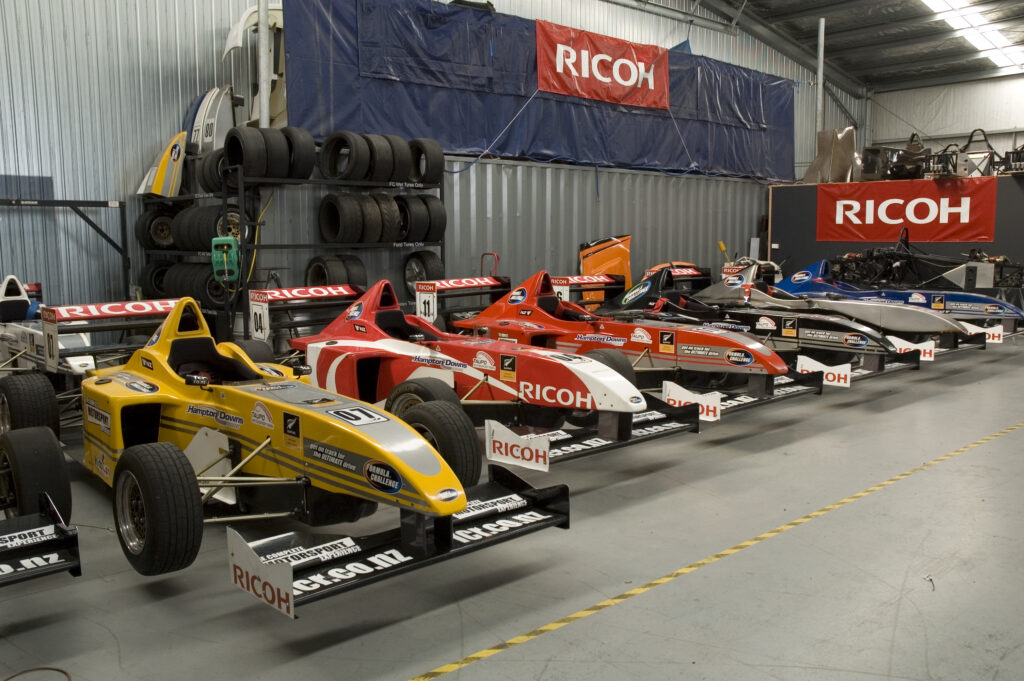
Formula Challenge garage

Share:

More Posts

The ultimate man cave

It’s tempting to think of Gregor Kregar’s work space as the ultimate humongous man cave. The 410-square-metre studio in a gritty industrial area of Auckland’s New Lynn certainly has all the “boy’s toys” to make the most avid sheddie happy.
Vises, grinders, table saw and cut-off saw? Check. MIG and TIG welders and drill press? Check. Two electric and a gas-fired kiln? Check. You get the picture. This is a serious space set up to work on all manner of materials.

Video of Geraldine Military Museum military revival

Two years ago, Don Pelvin set up the Military Museum in Geraldine as a retirement project.
He is pretty happy with how things are going, with an average of a thousand visitors a month, especially as his museum is one of six in the small South Canterbury town. He also organises the Rangitata Island Military Revival on the Saturday and Sunday of Labour weekend every year.
This is a combination of a display of military vehicles and gear, and reenactments of actions from WWI and WWII, and it all takes place at the Rangitata aerodrome, an airfield owned by a local farmer. About 50 reenactors turned up in their historically correct uniforms with their suitable weapons, after word had spread in the tight-knit military history world that the event was happening.

Introducing the New Linbide.co.nz

Linbide is proud to announce the launch of its newly redesigned website, linbide.co.nz, marking an exciting step forward in how we connect with the woodworking, engineering, and tooling communities across New Zealand.
For decades, Linbide has been dedicated to producing high-quality carbide cutting tools built for accuracy, durability, and performance. Our new website carries that same commitment into the digital space—designed to be faster, clearer, and more intuitive, giving customers a better way to explore our products and understand the value behind the Linbide name.