
Making a kayak anchor

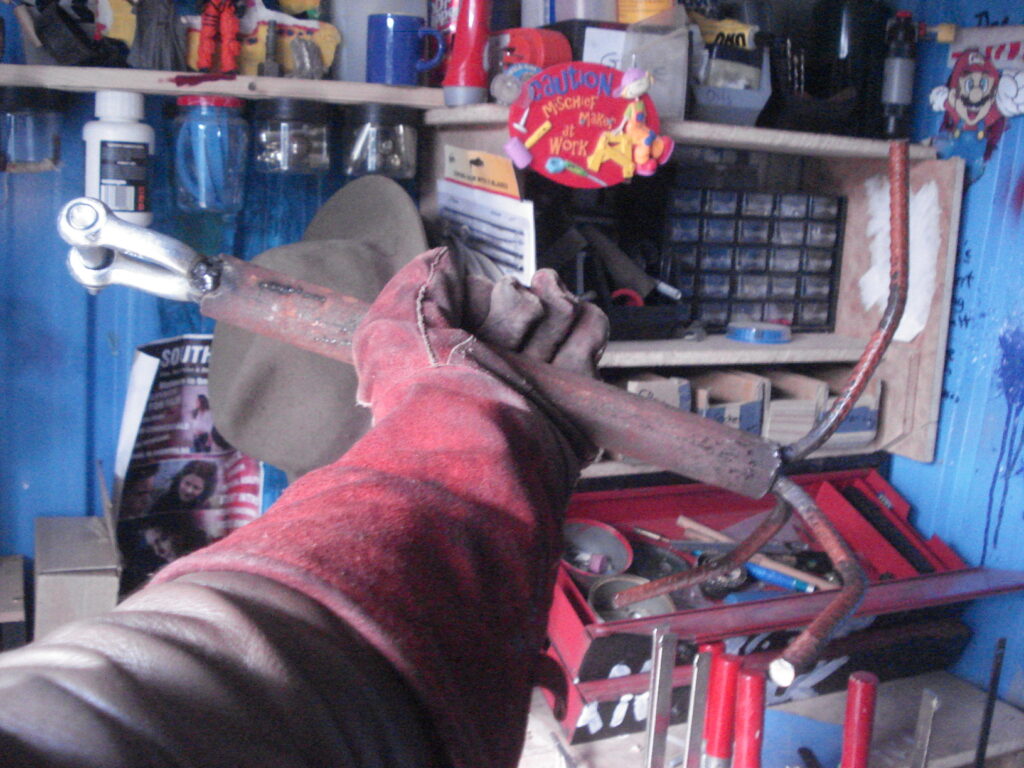
This simple and effective rebar anchor is perfect for small boats and kayaks and is the result of welding $30-40 worth of materials. If you are a small boat and kayak enthusiast, fabricator or just want to learn some new metalwork skills, this two-hour project will be great for you; it needs few welding skills. Remember that the construction is modular and can be made to fit your needs. With a net weight of only 7 kg, the anchor will not weigh down a boat or kayak. Anyone can pull it up, but it will still catch the seabed.

Keeping it simple
By Stu Bryan
Photographs: Stu Bryan

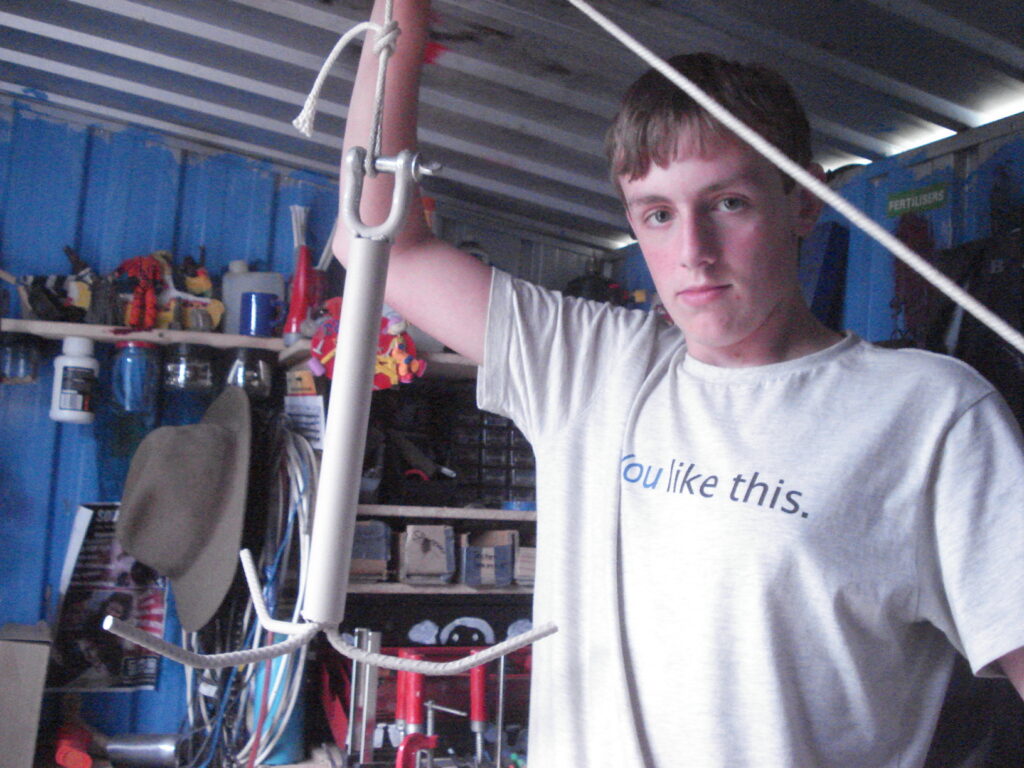
Stu Bryan and his rebar anchor

Stu Bryan got in touch with an idea about keys he had fabricated and then went on to suggest a small anchor he was making for his kayak. The young welder from Northland politely enquired whether there was an age limit to write for The Shed magazine, as he was only 16. No problem. Here’s his project:

This simple and effective rebar anchor is perfect for small boats and kayaks and is the result of welding $30-40 worth of materials. If you are a small boat and kayak enthusiast, fabricator or just want to learn some new metalwork skills, this two-hour project will be great for you; it needs few welding skills. Remember that the construction is modular and can be made to fit your needs.
With a net weight of only 7 kg, the anchor will not weigh down a boat or kayak. Anyone can pull it up, but it will still catch the seabed.

CAUTION: This project includes grinding and welding. Exercise care by using the appropriate safety equipment: safety glasses, gloves, a welding mask, enclosed shoes and hearing protection. Depending on what paint you use, you may need to wear a mask. If you are under 16, adult supervision is necessary.
My experience with welding ranges to about a year of arc, MIG and oxy-acetylene welding. For this project I used an arc welder as these welds will not corrode as fast as some MIG wires. An arc welder creates a stronger bond which will be more desirable for the anchor.
I used the following materials but you can change these sizes to fit your needs.

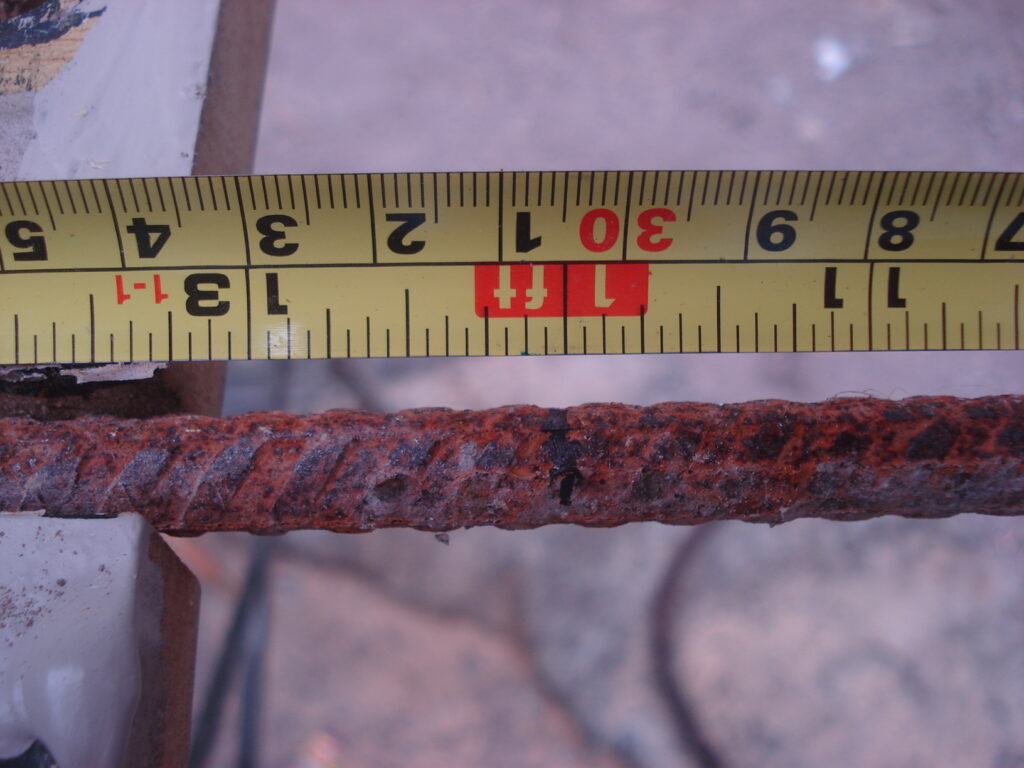
Measure 300 mm length of rebar

Materials
900 mm of 10 mm thick rebar steel
350 mm of 30 mm inner diameter steel pipe
Large shackle
“Extra thin” grinding wheel
2.3 mm arc welding rods
Thick enamel waterproof paint or CRC zinc spray
Rope
80 grit sandpaper
Most of the materials can be purchased at big barn retailers but the steel pipe will be harder to find. I sourced mine from an engineering shop but it was still rather cheap.

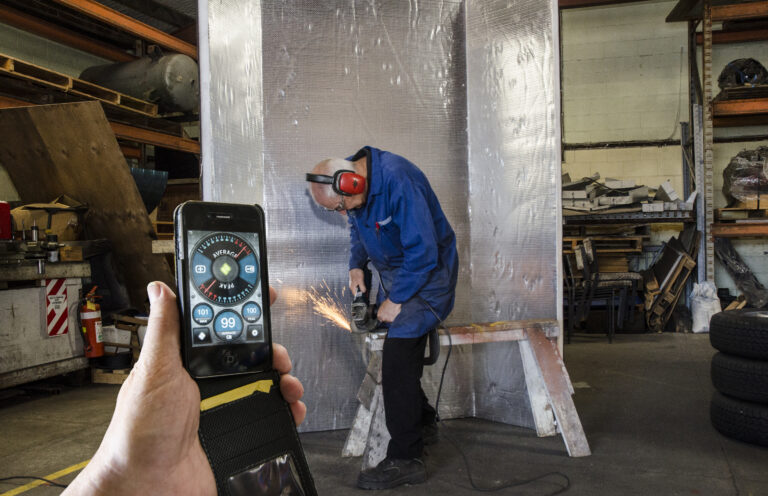
Use safety glasses when using a grinder

Cutting
Your steel supplier might be gracious enough to cut your steel pipe and rebar which needs to be divided into three 300 mm lengths. Otherwise you will need to mark it (scriber or marker) and cut it yourself—I used the “extra thin” grinding wheel but you could use a bandsaw. When you cut the rebar and the steel pipe (to 350mm long), remember to wear your safety glasses.
I used 80 grit sandpaper and a wire brush to sand down the surfaces sharp edges of the rebar and pipe or you could use a power sander or even angle grinder with sanding attachment. This stops as much rust as possible and give a stronger weld.

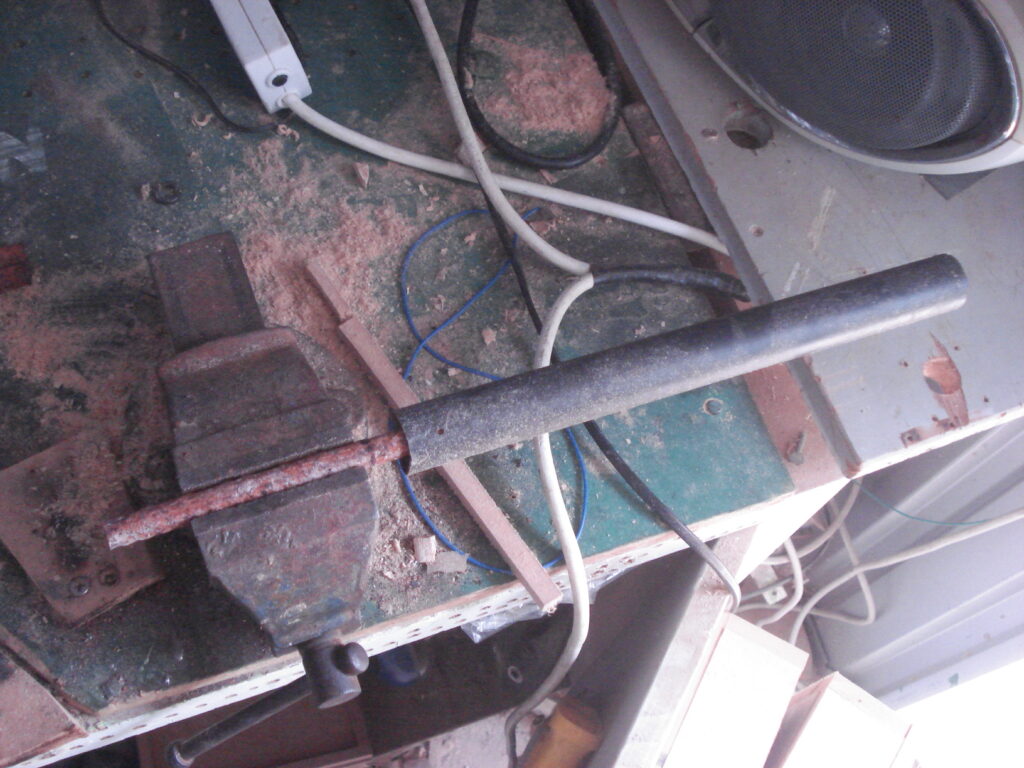
Steel pipe gives leverage for bending rebar
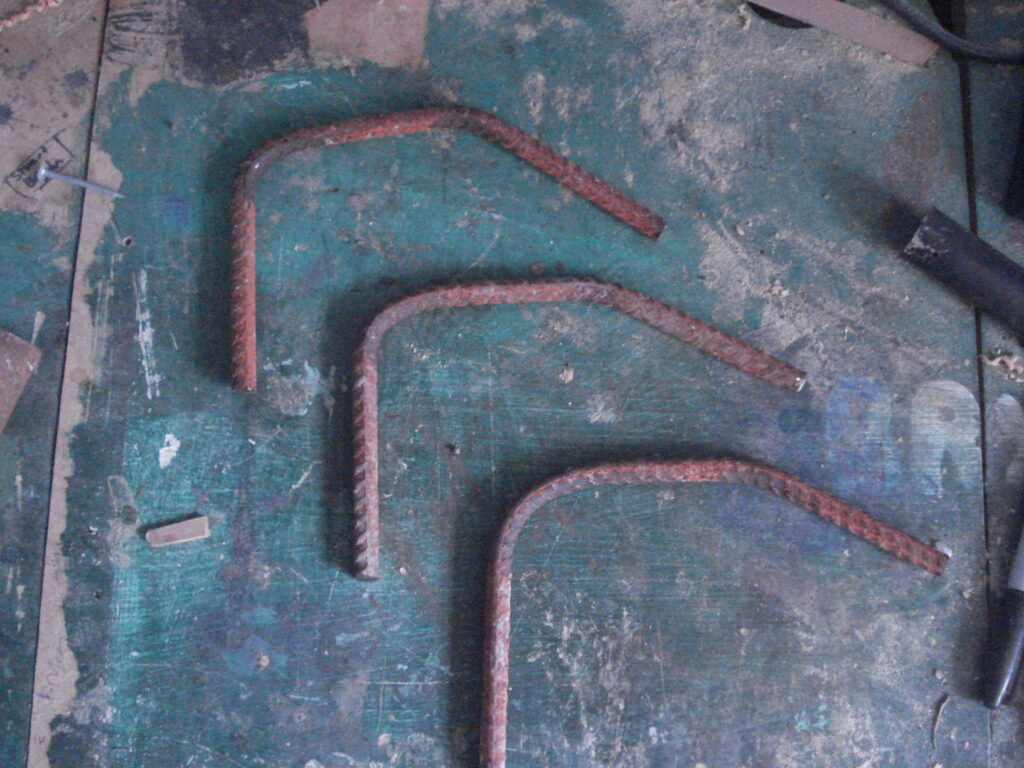
Two bends at 90 degrees and 45 degrees

Bending
Pull out those guns and using your forefinger and thumb, bend the rebar to your chosen angle. Joking aside, you will need a strong steel vice to hold the rebar when you bend it. To get a grip on the rebar and to help with the leverage, I slipped a steel pipe over the rebar.
To create basic shape of my anchor’s hooks, first 150 mm up the rod I bent the rebar at 90 degrees. I then placed the rebar in the vice with the bend pointing towards me, slipped the cheater bar over the shorter side and bent this to a 45 degree angle. After replicating this three times, I was ready for welding.

Snug fit

Welding
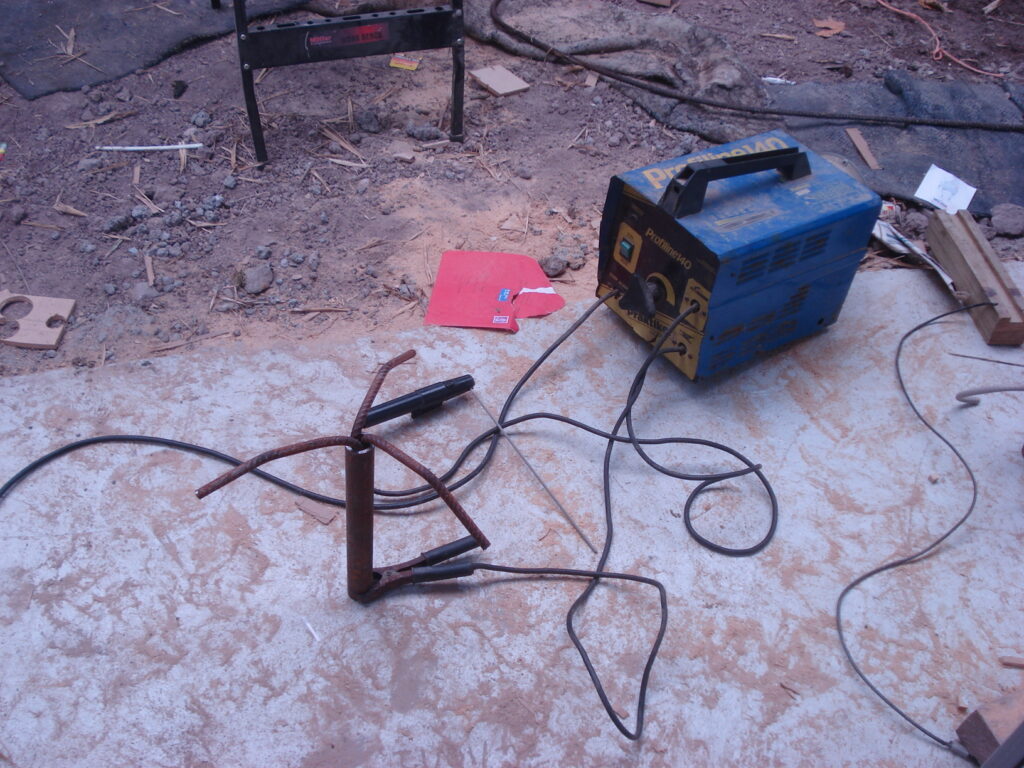
I used an arc welder that ranges from 80-150 amps and 2.3 mm welding rods. This is more than enough amperage to kill me, so caution is needed when operating an arc welder or any welder for that matter.
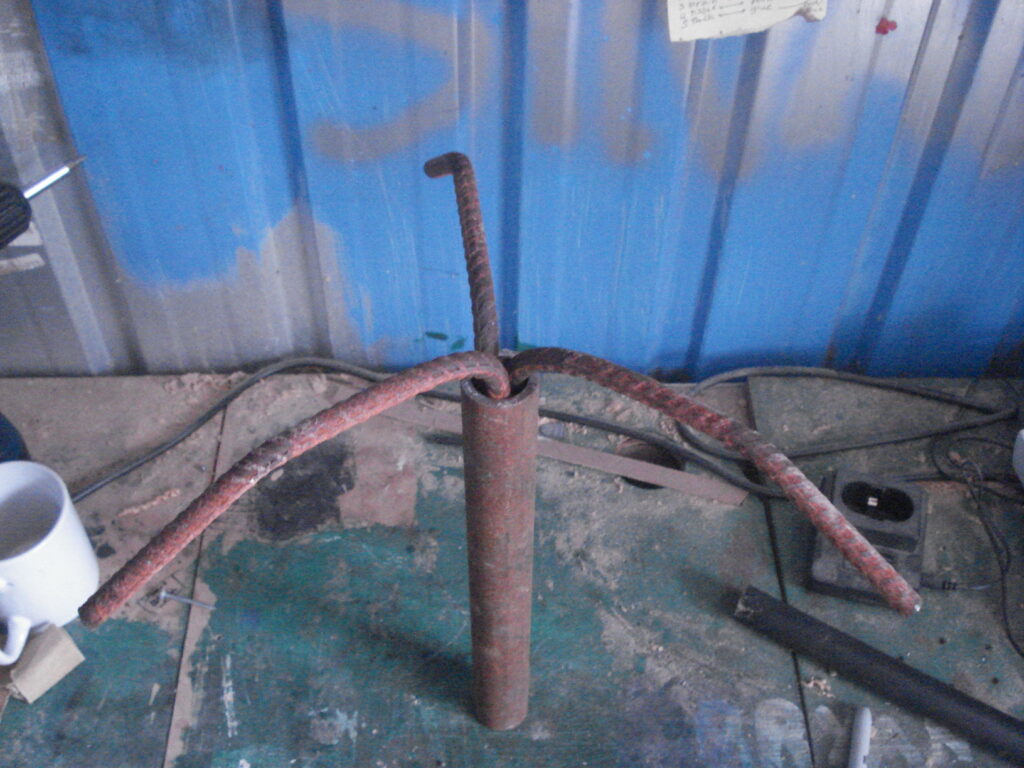
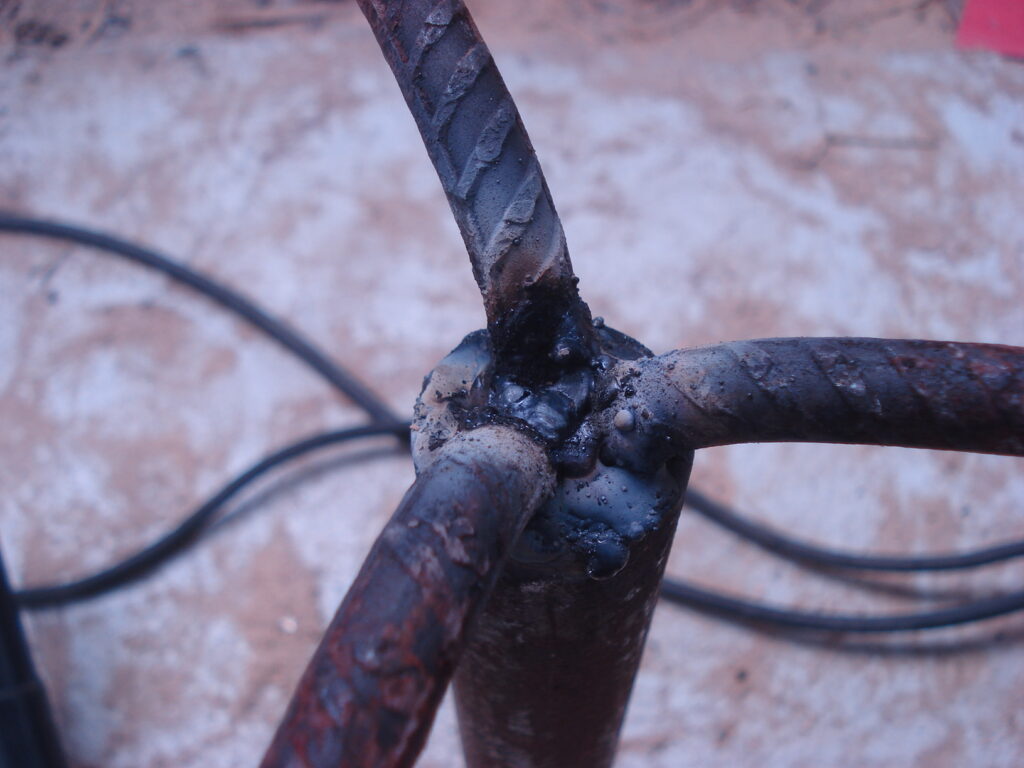
The three bent rebar rods fitted well enough in the steel pipe so that no clamps were needed. First I lay some slug welds over where the rebar sat side by side in the pipe then put more welds where the rebar touched the steel pipe. This thing needs to be solid. To test the strength of the pipe drop the anchor onto solid concrete. If the welds crack or snap off then you need to re-weld.
To weld the shackle on, I had to hold it with one hand (gloves!) to place a tack weld so I could lay slug welds to strengthen the connection. This is where the rope attaches to the anchor so weld the U-shaped steel fitting to the pipe, NOT to the bolt that come with the shackle.
Make sure to place a big strong weld between the pipe and shackle as this is going to take a lot of force when you dislodge the anchor to pull it up. Use the drop test again to check the strength of the weld.

Slug welds
Stu used an arc welder

Painting
Chip the flux off the welded areas using a flux hammer or old screwdriver before you paint it. I gave the anchor another sand down and hit the rust with a wire brush before using waterproof emulsion (or enamel paint) to brush several coats onto every surface on the anchor. You can also use an aerosol zinc spray—put on many coats of this but paint in a well-ventilated area. To ensure a longer and stronger use of this anchor, I will remove the old coat and repaint it once a year.
To use the anchor, I  tie a loop in rope, pass the shackle bolt through it and screw the bolt into the shackle. You now have an anchor perfect for small boats and kayaks that did not cost as much as a commercial anchor. It’s a perfect gift for boaters or personal use. Have fun on the water and building.

Shackle welded onto pipe

Share:

More Posts

Hammering history

You can probably count on the fingers of one hand the number of Kiwi women who have become blacksmiths in their 60s. Judy Waterston of Livingstone, inland North Otago, is one of them.
As a child Judy spent hours in her engineer-father’s workshop sorting nuts and bolts, tidying away his tools, sweeping up, and watching him make things. She says her love of tools and machinery came from her dad.
The blacksmithing seed was sown in 1972 when Judy first saw Nicol’s Blacksmith Shop in Duntroon, some 40 km from Oamaru up State Highway 83. The building was being devoured by periwinkle planted 100 years before to act as a fire retardant. Most of the windows were smashed and it was draped in cobwebs.
“I looked through the broken windows and when I saw the anvil and bellows they took my breath away,” she remembers. “I’ve loved this building ever since.”

Metal and wood shelving

No matter how much storage space you have, there is always a need for more. One solution is to make better use of existing cupboards and wardrobes. In my own house the third bedroom is used as an office, so the built-in wardrobe was an obvious target for conversion into a storage place for files and computer supplies.
I had already tackled one shelving upgrade. We have a hallway cupboard used for many things that don’t have a place anywhere else, including toys for the grandchildren when they visit. The space was not used well. My solution was homemade shelving using frames of steel with plywood shelves.
For this cupboard, we had to allow for a basket of toys and chillibin on the floor level and picnic items and other bits and pieces on other levels. Once the shelves were installed, better use of space meant more room became available. One of Murphy’s Laws soon came into play and other items found their way into the open spaces, making good use of the variety of shelving.

A Legend Returns

A Legend Returns
A Historic Ferrari Monza 750 Joins the 2026 Ayrburn Classic Line-Up – 20-22 February 2026
The Ayrburn Classic, one of the most anticipated motoring events on the New Zealand calendar, is set to take things up a gear in 2026 with a line-up that promises to captivate enthusiasts and the general public alike. Following the success of the inaugural event, the Ayrburn Classic returns with a recently confirmed feature that is nothing short of extraordinary: the historic Ferrari Monza 750 – a masterpiece of motorsport and one of the most significant vehicles to race on New Zealand soil.
Legendary status
This particular Ferrari Monza 750, which arrived in New Zealand in 1957 and has remained here ever since, holds a legendary status in motorsport history. It competed in the Mille Miglia, Le Mans, and the Targa Florio – the ‘Big Three’ of European endurance racing during the golden era of the sport. Few cars can claim such provenance, and even fewer have such a deep and poignant connection to New Zealand’s own racing legacy.
Tragically, the Ferrari Monza 750 was involved in a fatal accident at Ardmore in 1957, marking the final moments of British driver Ken Wharton, whose last photograph was taken next to this very car. The vehicle has since been meticulously preserved, with images from the aftermath of the crash etched in motorsport history. Today, it stands as a symbol of both the bravery of that era and the enduring beauty of Italian automotive craftsmanship.