Greg Vincent

Hobbit haven

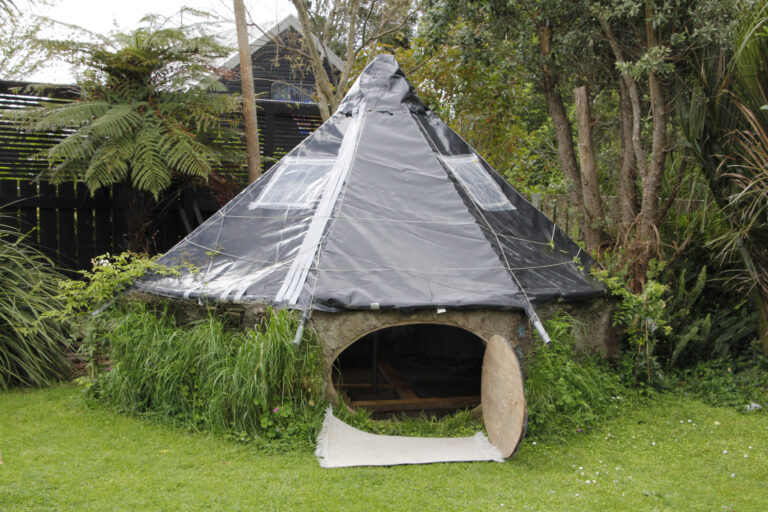
I have made a hobbit house for my kids almost entirely from recycled materials and left-overs from building a garage. The frame is an old trampoline. It is 3.2 metres wide (this depends on the size of your trampoline ) and 2.3 metres high at the apex. I can stand in it easily. The poles that were for the side of the trampoline had holes at the top so by the time I lashed them all together it was incredibly strong.
I made the walls out of an old pallet with a couple of bigger bits of driftwood on top. We mudded the walls with a mix of dirt, grass and a little cement until there were no more holes and then patched as needed. I used all kinds of recycled wood that would fit. We have added more layers as needed or as bits fall off. The walls are probably about 100 mm thick on average but up to 150 mm in places and we have added paper in the middle for extra insulation.
READ MORE »

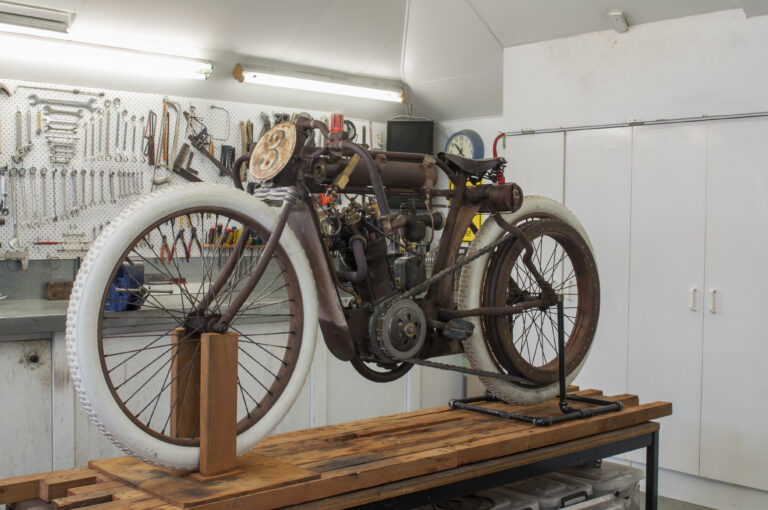
Racing motorcycles – the art of engineering

Chris Gordon has been devoted to the internal combustion engine since his earliest days, when his next-door neighbour was a motor mechanic.
At 14, he was a crew member for Ron Collett, who successfully ran a Top Eliminator class dragster at strips throughout New Zealand. His Chris Gordon Racing Team won the 1998/99 125cc New Zealand Road Racing Championship, with well-known rider Dennis Charlett riding a Honda RS125 that Chris owned and prepared. Chris and his team ran the bike in the 125cc class at the Australian MotoGP at Phillip Island in 1999.
Chris has also, from a very early age, made things: models, an electric bicycle, an electric go-kart; a fibre-glass, road-registered, scratch-built car; and a 500cc V8- powered grand prix racing bike. He has a minimalist approach to tools and equipment, but to make the racer’s V8 engine, he had to buy and master a small lathe and a serious, large and highly capable milling machine. The alternative would have been to get the machining and development done professionally. Chris calculates that this would have involved thousands of hours of very expensive machine time – say, 3000-plus hours at $100 per hour. That’s a lot of money.

READ MORE »

Choppers with pedal power

Geraldine High School technology teacher Alan Minnear built pedal-powered choppers with his Year 11 students because he wanted something to capture their interest. He says he initially got the idea for the choppers from another local teacher but then discovered the Atomic Zombie website (www. atomiczombie.com) which opened his eyes to possibilities with the clear instructions available. He paid for and downloaded the PDF files for the two choppers named Vigilante and Overkill that caught his eye.
Because of their relative inexperience, the students basically followed the book for the choppers they built. However, the book gave no measurements, wanting builders to create their own design from the basics.

READ MORE »

On the move

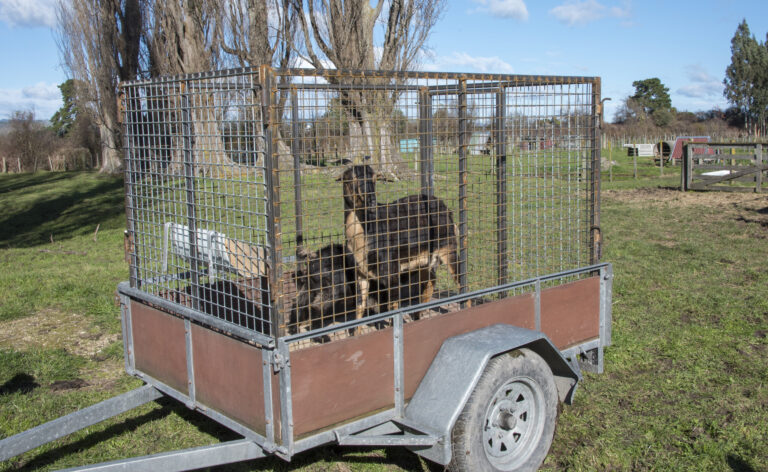
Farm life, even on a pocket-handkerchief farm like mine, means that you will need to move stock from time to time. I run a few cattle beasts and a few goats. I plan to get a few sheep soon, too. The issue with stock is moving them. Moving the cattle is a different story but for the smaller stock I could carry them either on the tray of my ute or my trailer if either had a stock cage.
I decided that building a cage could be an easily achievable project and so it has proved. It has value even if you don’t have stock – it certainly increases the options for your trailer. It is a lot easier collecting firewood with a cage, even transporting rubbish, or green waste. In the case of the latter you might want to make the end hinged rather than incorporate a gate to make it easier to unload the waste.

READ MORE »

My shed the barn

Capacity is always the issue. My two sheds at home were each at their limit. I had woodwork in one and a one-off car suffering fabrication right on top of it in another.
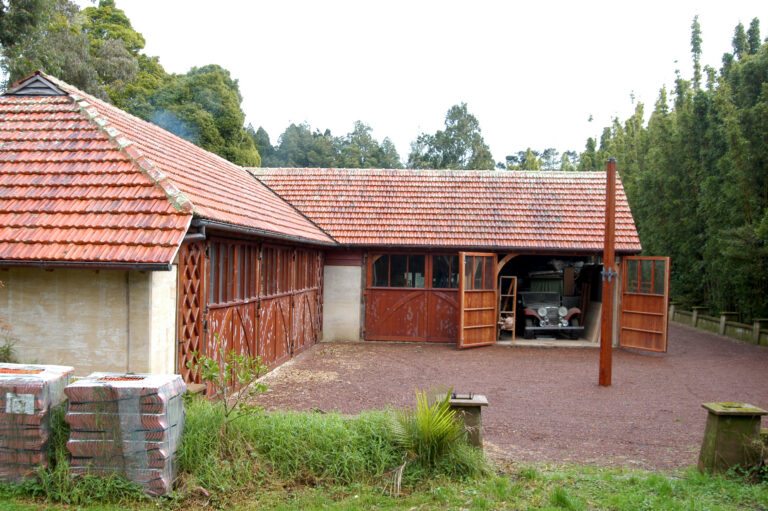
When it came time to plan a new house on the new section, I thought of a barn-sized shed. In this barn, I would build all the joinery for the house. But first I had to build the barn.
I had a design that had been kicked around for ages and required a giant leap forward in capacity. This barn as my workshop would have good height, tall openings, a range of areas for different tasks and that all-important swing room around the main machine, a multi-function dimension saw.
Like other glimpses I enjoy of by-gone eras, I have always loved those English “oak barns” typically housing Aston Martins in magazines portraying classic cars. The vision I had for my barn was of posts and beams and the roof crouching over long flanks, suggesting back rooms filled with the rare and the useful.

READ MORE »

A life in harmony

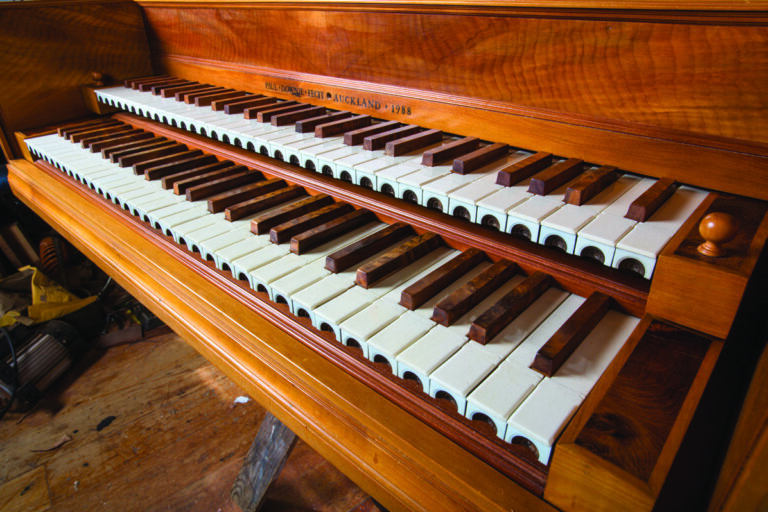
There is such a thing as serendipity. When Paul Downie was 11 years old a chance meeting at his grandmother’s house was to eventually set him on a course that would define his career.
“I was learning the piano at the time and her friend had a harpsichord that he invited me over to see. I thought it was marvellous,” he recalls. “He told me I should build one and although it sounded like a ridiculous idea, it never went away.”
When he was 22, Paul embarked on the project, researching how to build a harpsichord, scouring junk shops for old tools, sawing bits of wood, and gluing them up until he had constructed the instrument.
“I enjoyed the whole process so much that when I was 23 I decided to build another one. I discovered that overseas museums had very detailed technical drawings of old instruments which you could buy – when they are restored everything about the instrument and the mechanisms are recorded.
“I went on to build two more harpsichords. The first one did work but it wasn’t up to the same standard so I ended up pulling it apart and my sister burnt it as fire wood,” he says laughing. “The others have survived and are owned by very good musicians.”

READ MORE »

Create your own parrot-beaked pliers

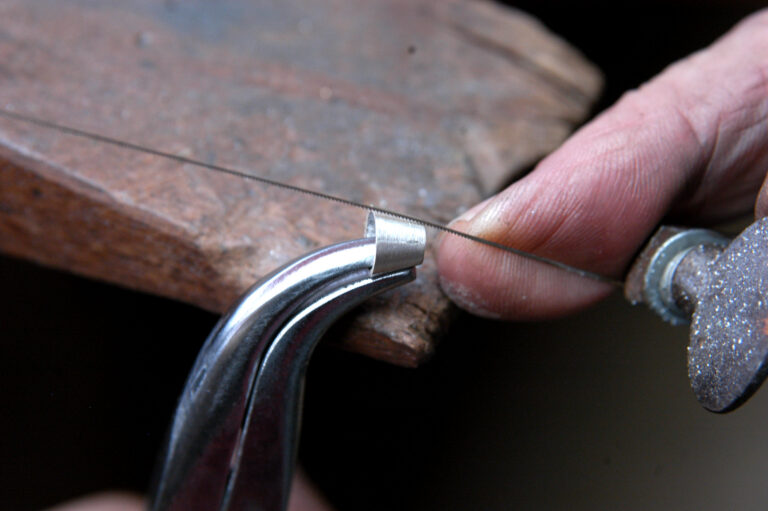
A specialist tool we made in that Hatton Garden workshop where I served my time was parrot-beaked pliers. These are used by the ring-maker for hand-made gem settings. They present the setting in a ring at just the right angle so the jeweller can pierce and file the design of the setting.
The best pliers for this are a pair of heavy, flat-pointed pliers, known in the trade as snipe pliers. Good jeweller’s pliers can cost up to $50, so I save my students money by most often using second-hand electrician’s snipe pliers. You can pick these up at any market for used tools and they do just as well. I am still using the pair I made during my apprenticeship 50 years ago.

READ MORE »

The Shed magazine February/March 2026 issue 125 on sale now

Going solar
Solar power seems like a great idea; who doesn’t want free power, right? But, what to choose, and what are the pitfalls of solar?
Regular The Shed writer, Andrew Broxholme, has just completed a large solar installation on his property and shares all the good, the bad, and the ugly aspects of his solar power journey.
I’m environmentally aware, but am not an environmentalist, so I’ve gone solar for only one reason, because it makes good financial sense to do so, that said it isn’t necessarily going to be right for everyone and its impact on your power bills will depend on where you are in New Zealand and the orientation and design of your house relative to where the sun rises and sets.
I’ve been interested in renewables for many years. I first looked at it while living in the UK. The early systems had promise, but really didn’t make financial sense as the cost of installation and ongoing maintenance wasn’t offset by big enough reductions in power bills. They wouldn’t repay that investment during their service life, which at the time was 15–20 years (maximum).
That’s no longer true, with higher volume, the equipment has got a lot cheaper, it is more efficient, but we have also seen huge increases in energy costs; this, in particular, changes the economics dramatically. That doesn’t, however, mean that you can buy the first solar system presented or recommended to you. Read on to find out why.

READ MORE »

The ultimate man cave

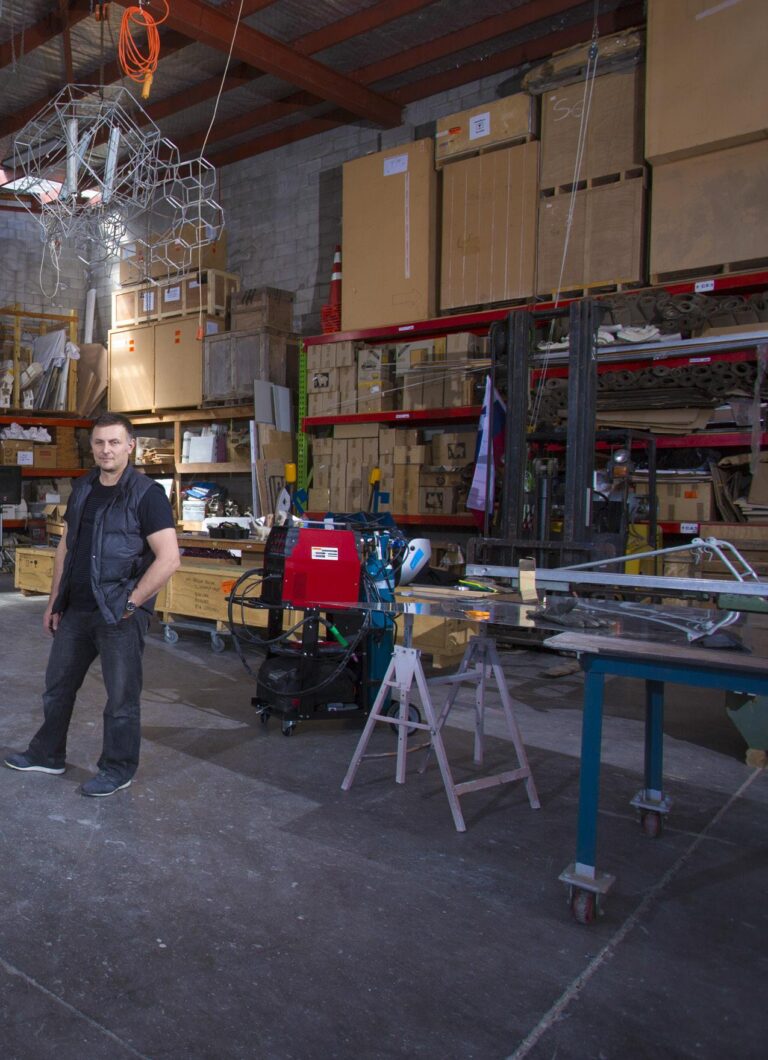
It’s tempting to think of Gregor Kregar’s work space as the ultimate humongous man cave. The 410-square-metre studio in a gritty industrial area of Auckland’s New Lynn certainly has all the “boy’s toys” to make the most avid sheddie happy.
Vises, grinders, table saw and cut-off saw? Check. MIG and TIG welders and drill press? Check. Two electric and a gas-fired kiln? Check. You get the picture. This is a serious space set up to work on all manner of materials.

READ MORE »

Video of Geraldine Military Museum military revival

Two years ago, Don Pelvin set up the Military Museum in Geraldine as a retirement project.
He is pretty happy with how things are going, with an average of a thousand visitors a month, especially as his museum is one of six in the small South Canterbury town. He also organises the Rangitata Island Military Revival on the Saturday and Sunday of Labour weekend every year.
This is a combination of a display of military vehicles and gear, and reenactments of actions from WWI and WWII, and it all takes place at the Rangitata aerodrome, an airfield owned by a local farmer. About 50 reenactors turned up in their historically correct uniforms with their suitable weapons, after word had spread in the tight-knit military history world that the event was happening.

READ MORE »

Introducing the New Linbide.co.nz

Linbide is proud to announce the launch of its newly redesigned website, linbide.co.nz, marking an exciting step forward in how we connect with the woodworking, engineering, and tooling communities across New Zealand.
For decades, Linbide has been dedicated to producing high-quality carbide cutting tools built for accuracy, durability, and performance. Our new website carries that same commitment into the digital space—designed to be faster, clearer, and more intuitive, giving customers a better way to explore our products and understand the value behind the Linbide name.

READ MORE »

Woodwork: getting started (2)

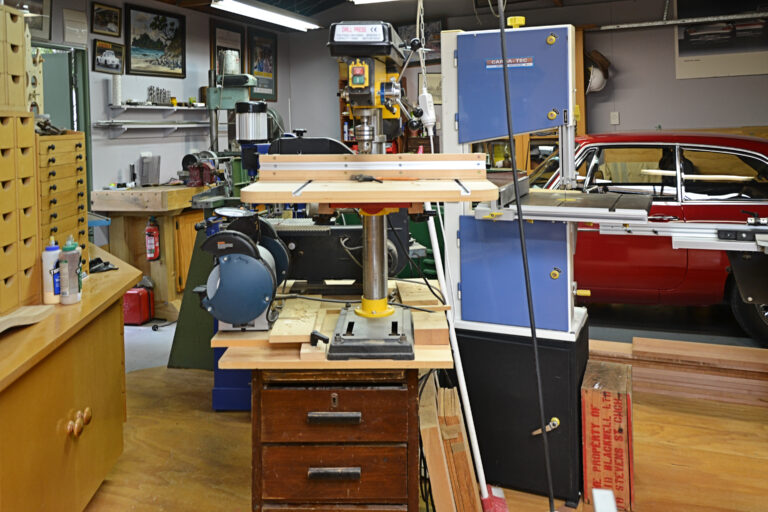
A home workshop is a special place and will function much better if you are able to plan how it is set out. My first workshop was in a single garage which was also the home of a very old Austin 7. As I bought machines, things became a little tricky. It was not that motivating on a winter’s evening, knowing I had to shift the Austin and re-arrange the workshop before I started. Our architect’s major renovation to our home included the redevelopment of my workshop area and from a single garage to a 9 m x 6 m workshop was a massive leap forward, even if it is shared with an MG.

READ MORE »

The Shed magazine December/January 2026 issue 124 on sale now

The Stude-Maker
Studebaker marketed their groundbreaking 1950 Aero-Nose models as “luxury for everyman.” A young Trevor Halstead thought this was a bit of him, so he began purchasing Studebakers in the early 1970s. The fact that the Champion model he chose was $50 less than the Ford he really wanted did play a small role in that life-changing decision. As they say, the rest is history.
“To the man on the street, they became known as bullet noses, and while they proved to be Studebaker’s best-selling model in 1950, those aero-lines did not age so well, and by 1952, the company reverted to a more conventional front end.
Fast forward a couple of decades into another hemisphere, and a one-man Studebaker ‘Next Look’ revival was about to begin, in the workshop of Studebaker devotee and custom-builder, Trev Halstead. This time, though, those vintage lines would take on wild and offbeat shapes.

READ MORE »

Woodwork: getting started – part one

Not be too many weeks pass before someone asks me how to get started in woodworking as a hobby. I have had a life-long interest in making or building things but only in the last 20-plus years has my woodworking become dominant. Most people contemplating something in the woodworking area say they have had previous exposure to the craft, but often that was just a brief introduction during their school days.
Perhaps the biggest decision is first to determine that you want to start making something out of wood. Once under way, you will probably move in a particular direction that interests you.
One of the best places to start is at a woodworking hobby class at a local school or polytechnic.

READ MORE »

Hammering history

You can probably count on the fingers of one hand the number of Kiwi women who have become blacksmiths in their 60s. Judy Waterston of Livingstone, inland North Otago, is one of them.
As a child Judy spent hours in her engineer-father’s workshop sorting nuts and bolts, tidying away his tools, sweeping up, and watching him make things. She says her love of tools and machinery came from her dad.
The blacksmithing seed was sown in 1972 when Judy first saw Nicol’s Blacksmith Shop in Duntroon, some 40 km from Oamaru up State Highway 83. The building was being devoured by periwinkle planted 100 years before to act as a fire retardant. Most of the windows were smashed and it was draped in cobwebs.
“I looked through the broken windows and when I saw the anvil and bellows they took my breath away,” she remembers. “I’ve loved this building ever since.”

READ MORE »