
My shed – Kevin Schimanski
Collecting and preserving tools and machinery used by generations gone by is a passion and obsession for this sheddie
By Ray Cleaver
Photographs: Rob Tucker
There’s nothing like using the shed for a restoration project on something built to last. Getting up close to the work of craftsmen and tools made with pride.
Our mainly rural pioneering past has meant bygone equipment is often left lying about and rusting in old farm sheds or thrown out at the tip, but sometimes reverently collected and restored by people who care.
One of these is farrier Kevin Schimanski of Wanganui. A lifetime of shoeing and riding horses has kept Kevin pretty fit. Aged 78, he still shoes horses and enjoys getting into the saddle to play polo.
He’s played polo for 42 years, is the oldest polo player in New Zealand and some say he’s the second oldest player in the world. He has 10 polo ponies to choose from.
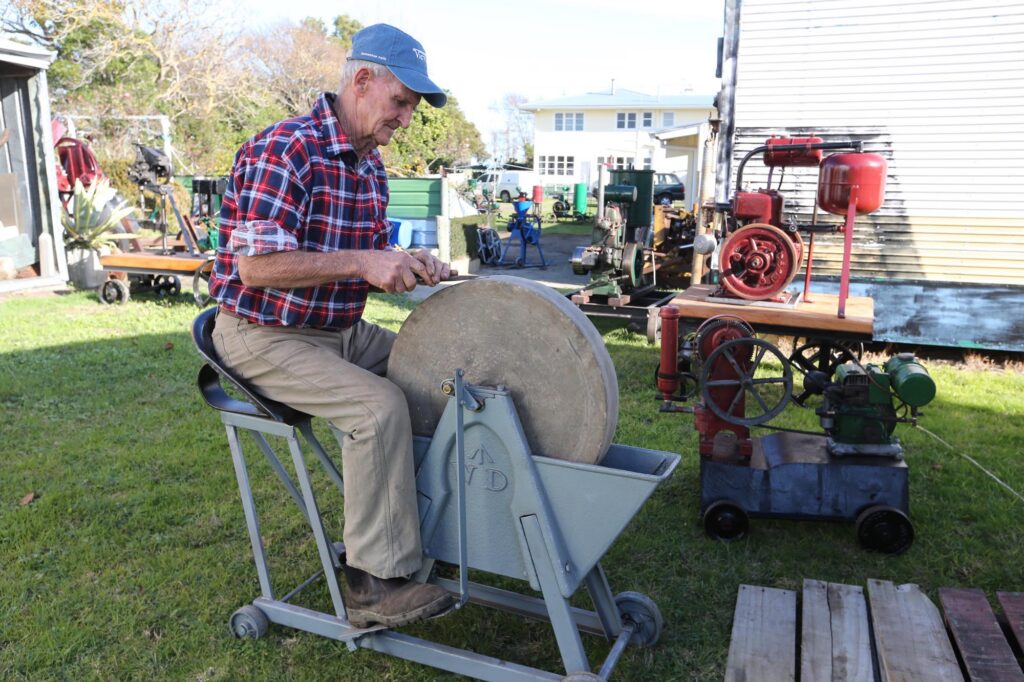
Kevin’s other passion, one he’s been indulging for the past 20 years, is collecting and renovating old tools, stationary engines, and various ancient paraphernalia.
Machinery fascination
Kevin grew up on a dairy farm in Mahoe, Central Taranaki. “I was fascinated by machinery when I was young. I guess I still am,” he says with a grin.
“The chug chug of the old stationary motors, the big work horses and their harness, the early tractors—they all had an impact on me.”
Indeed, the impact horses had on Kevin led to a lifetime career. His father was the last farmer in the area to take his milk to the factory with horse and cart. Watching his father shoe the big Clydesdales inspired Kevin to set up his own business.
At 15, he shod his first horse; at 22, he set up his business as a farrier, and he has been shoeing horses since. A couple of rural families have had their horses looked after by Kevin for more than 50 years.
His sons Nathan and Pat followed in their dad’s footsteps. They are also farriers and the three of them shoe horses from Taihape to South Taranaki.
A story in the August/September edition of The Shed last year featured the trio making a three-pound blacksmith’s turning hammer on the forge and anvil, using it to fashion horseshoes, and then they shod a horse.
Restored tools
But it was Kevin’s collection we noticed at the time, and we recently returned to check out his remarkable number of restored antique tools.
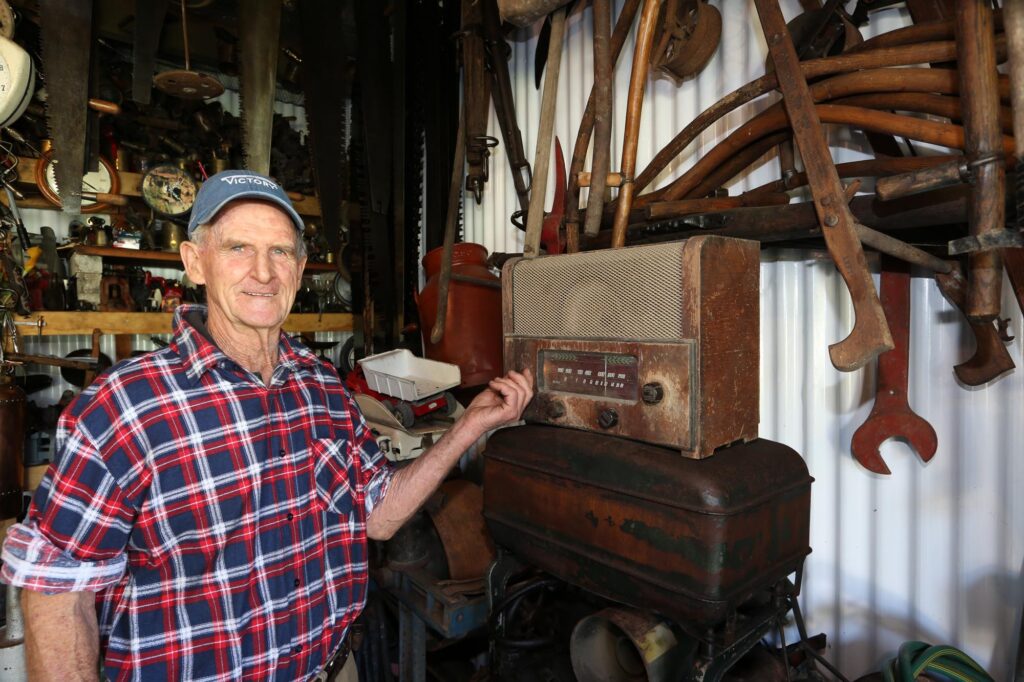
Kevin turned down the volume of an old valve radio when we arrived. It was the family farm’s cowshed radio 63 years ago and still runs, but I think it’s AM only.
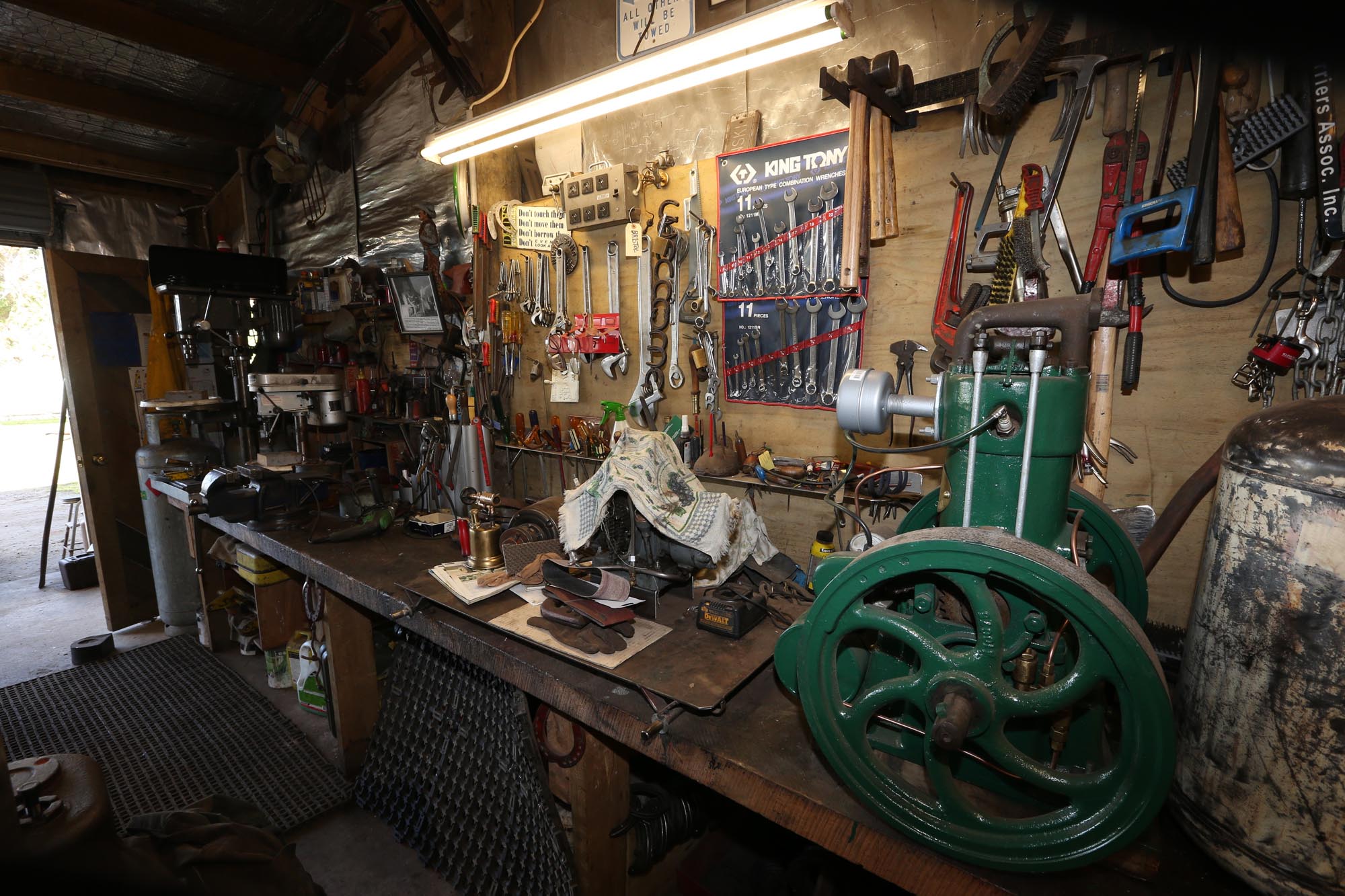
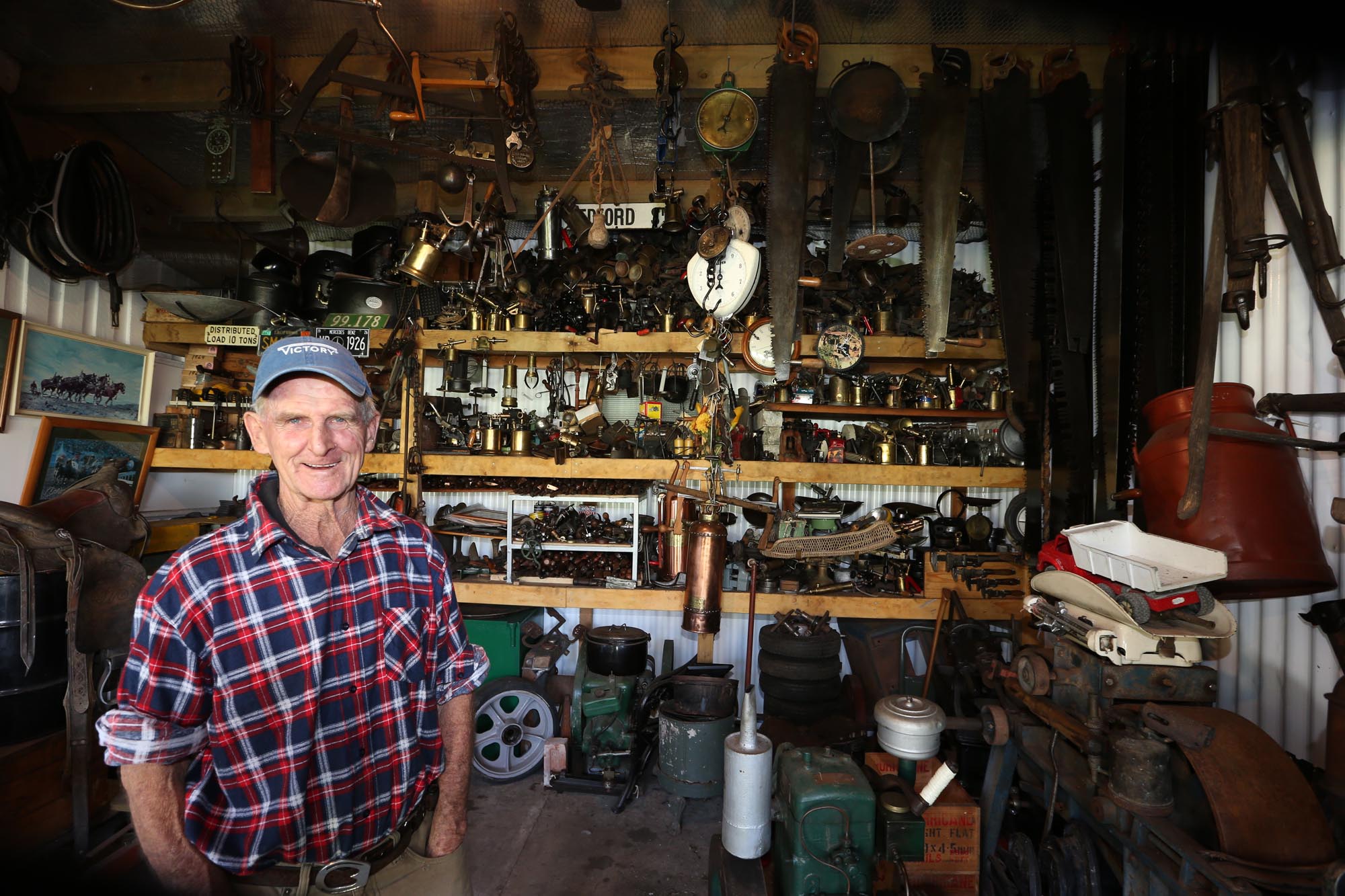
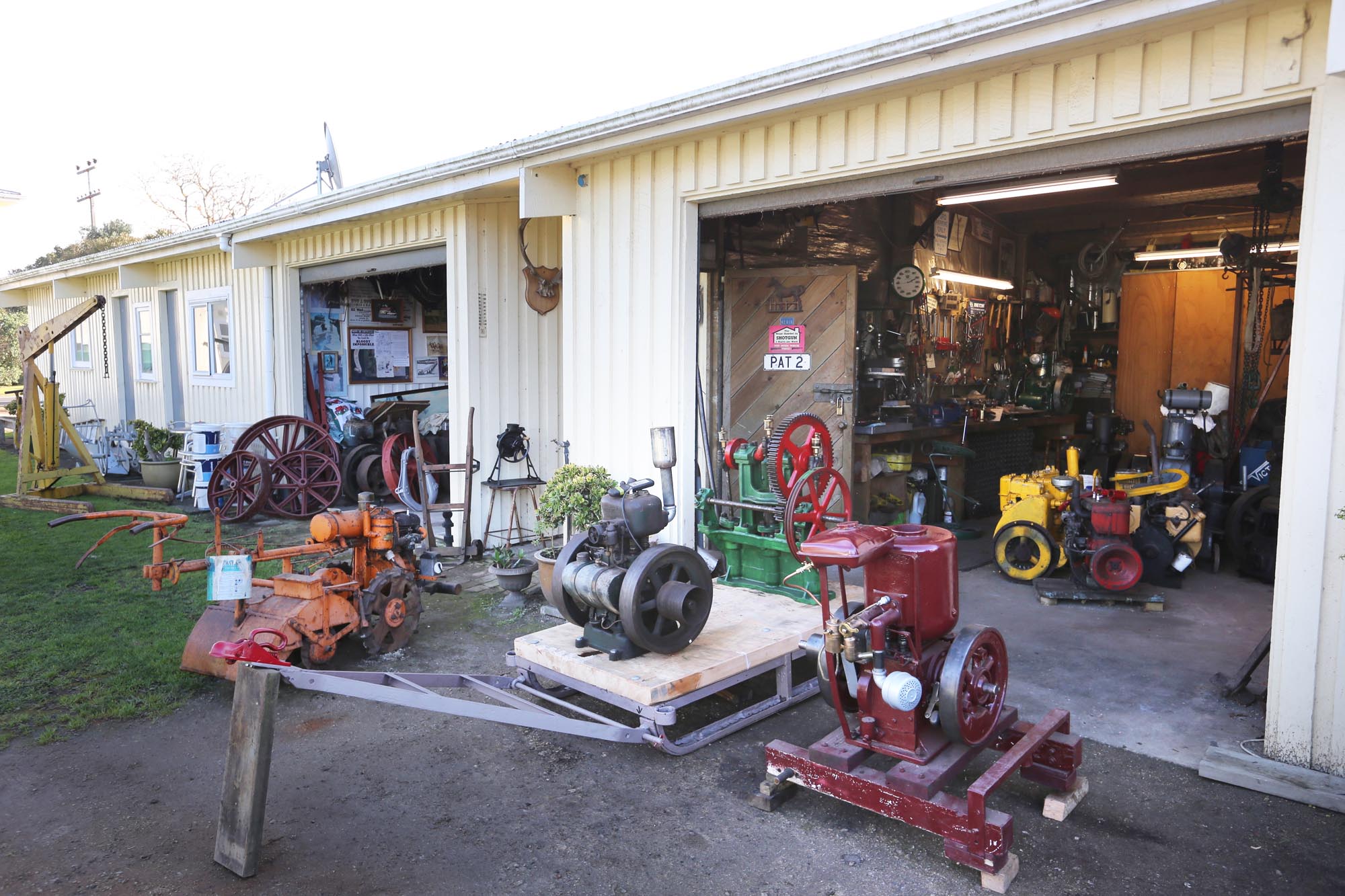
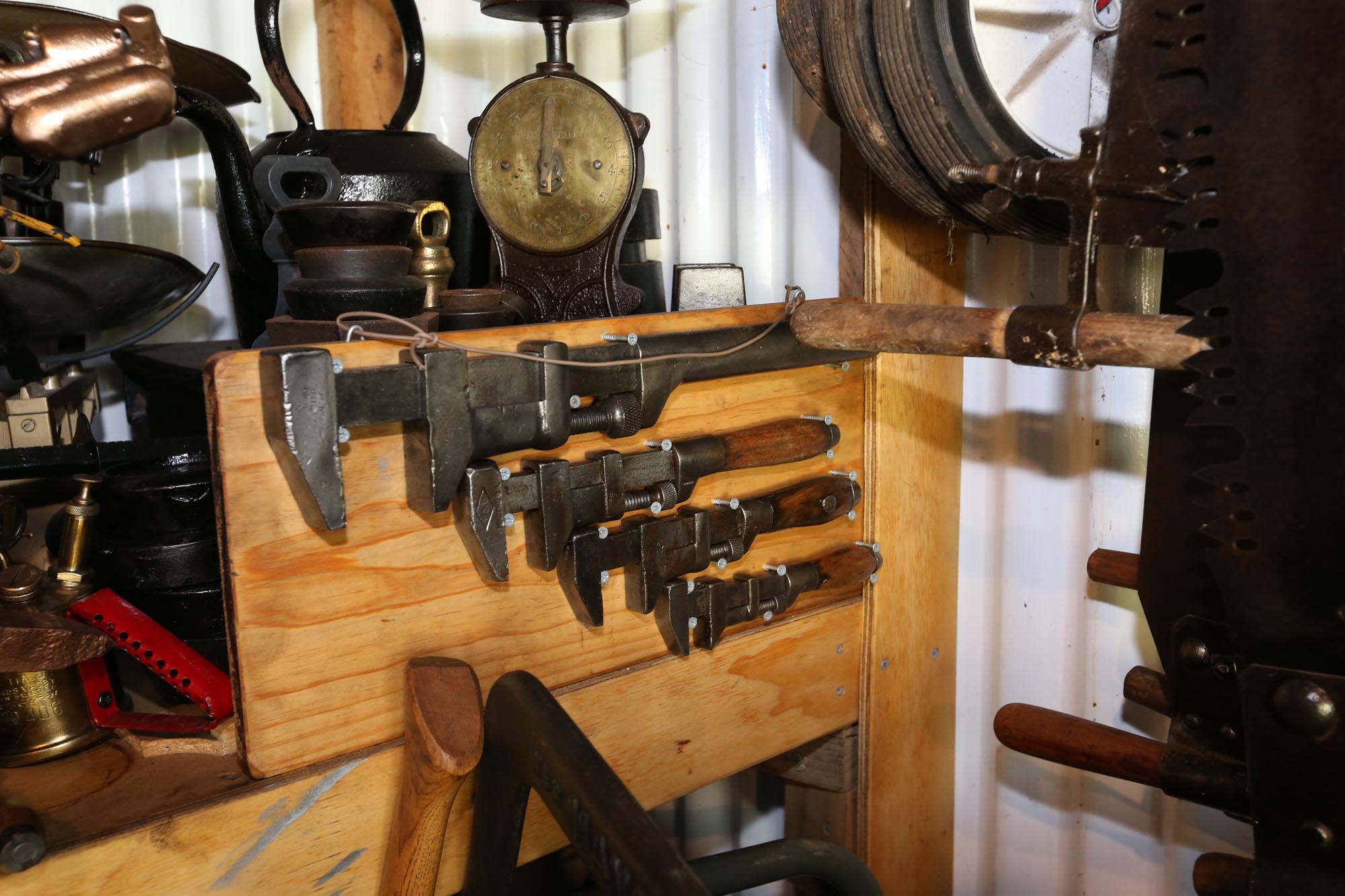
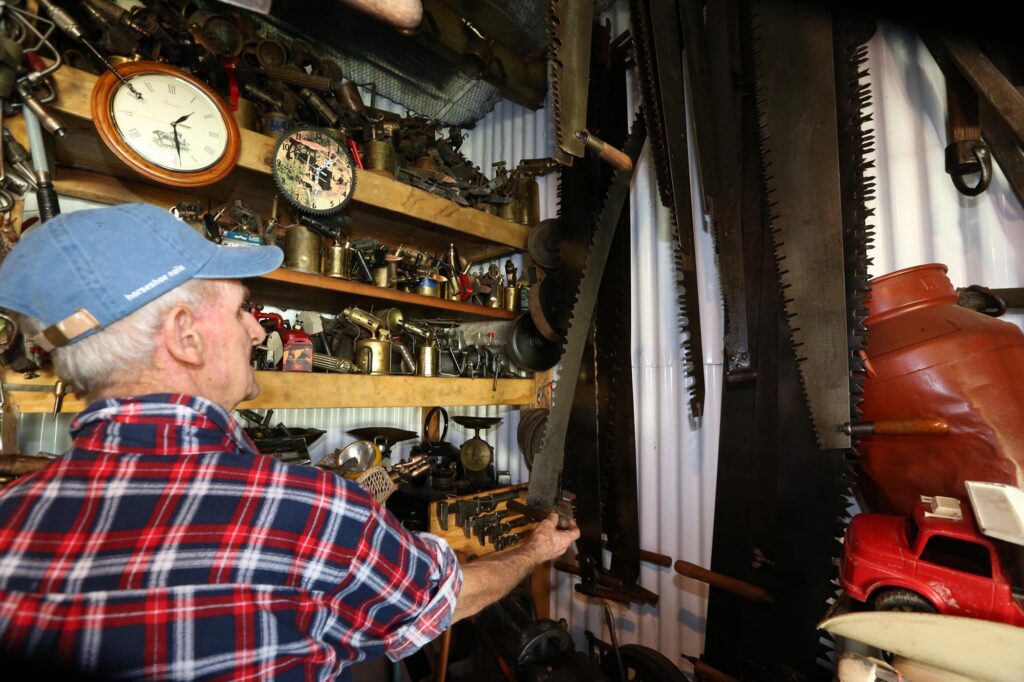
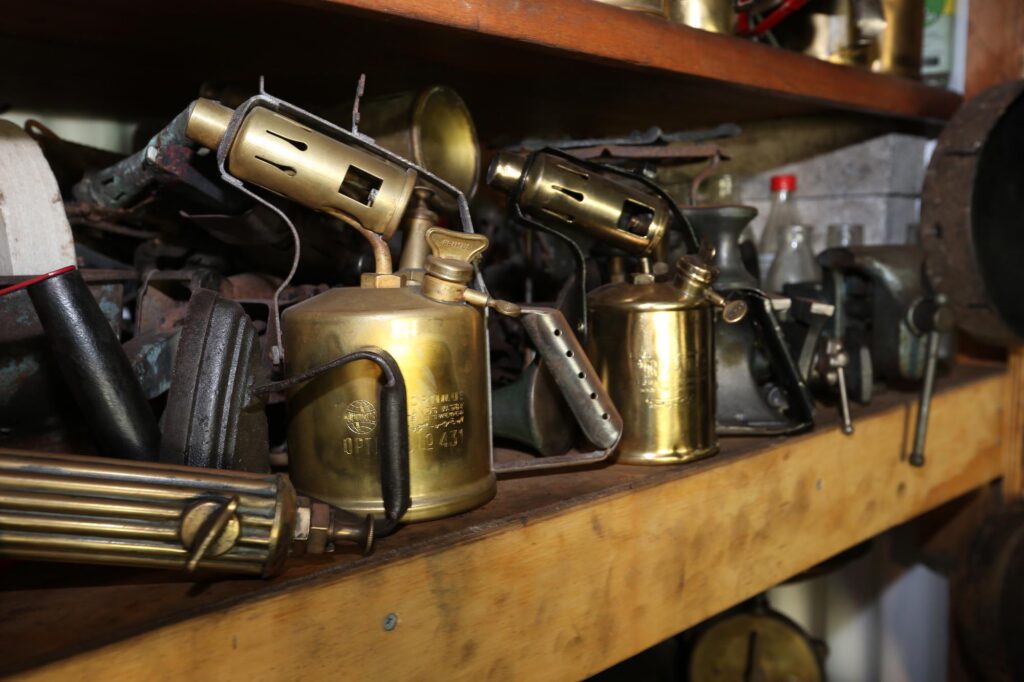
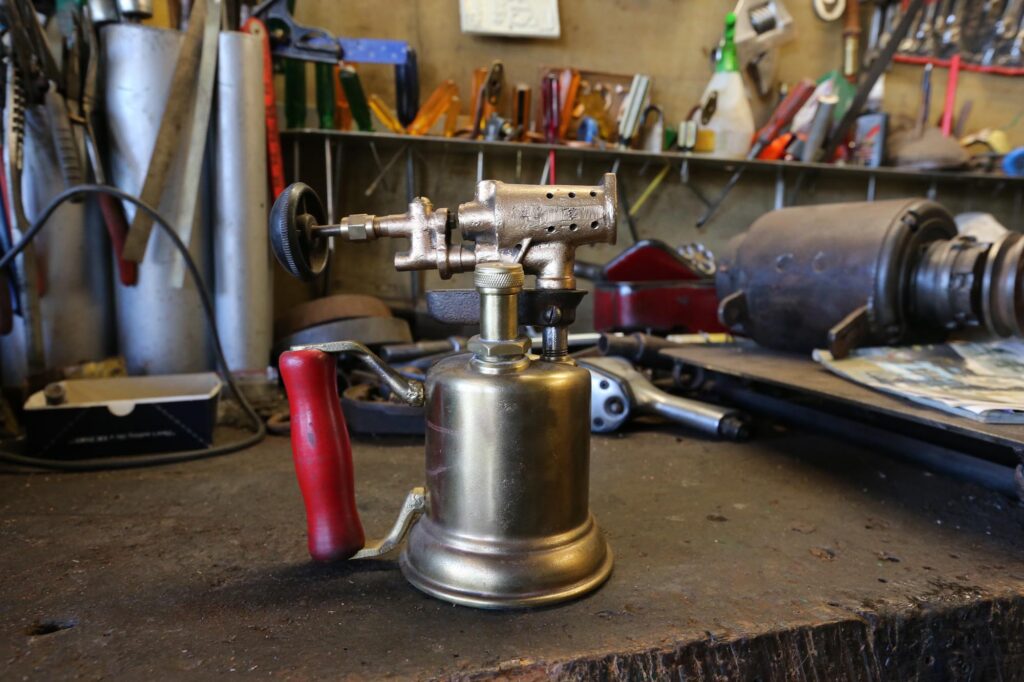
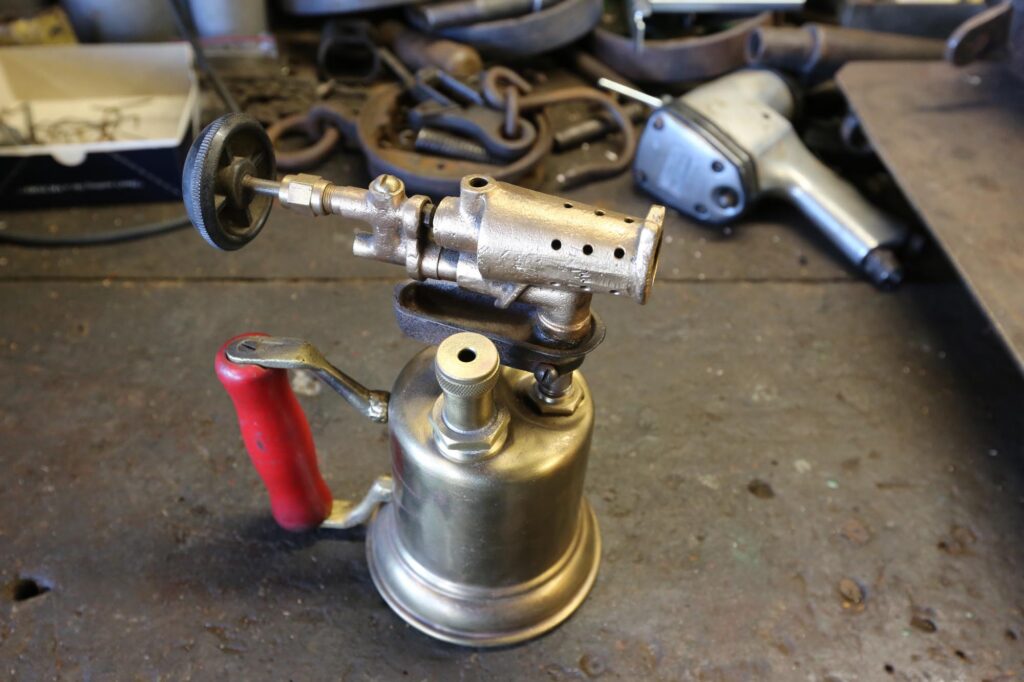
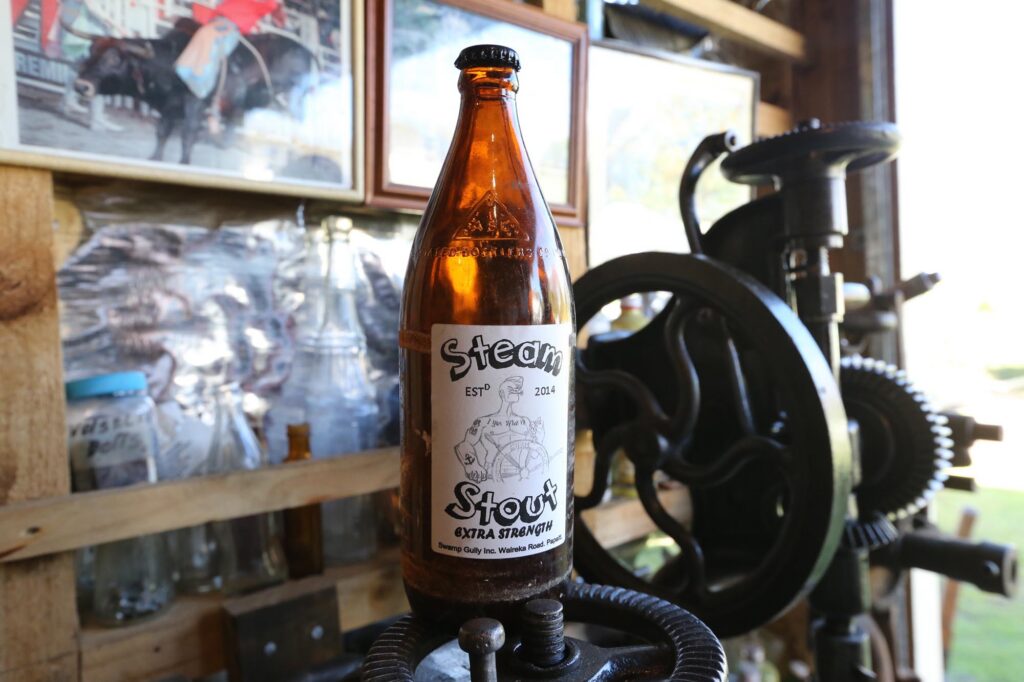
With three sheds for storage, Kevin has done a good job filling them. “Apart from my own old stuff, I started collecting about 15 years ago. It began as a fun thing, but I got the bug good and proper,” he said, pointing out a shelf containing more than 300 old brass blow torches of different sizes.
Below them are more than 150 old soldering irons. These are made to be heated with the blow torches or in the forge. Alongside them is a collection of old bush saws, from one-man blades to two-man pit saws, all in great condition.
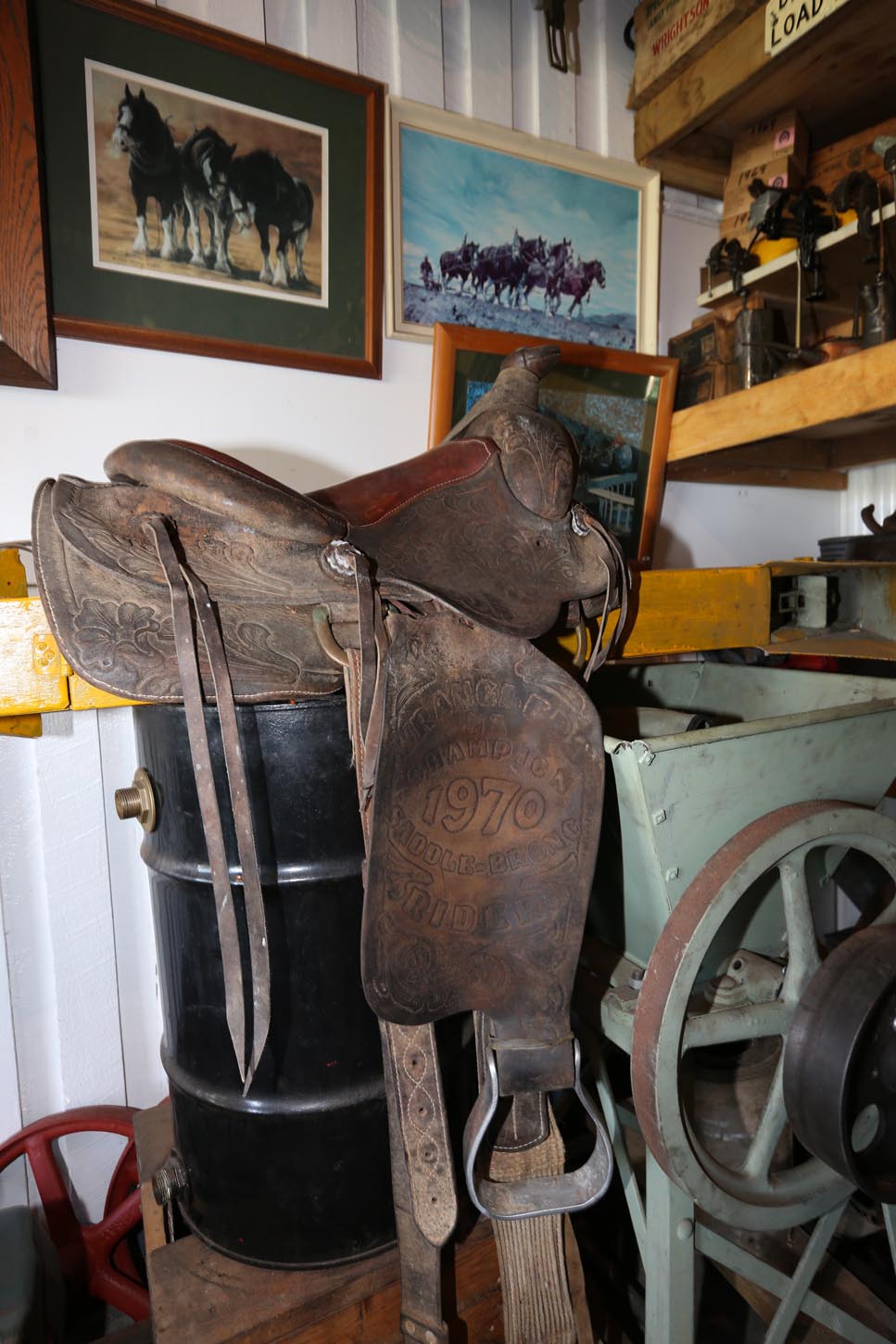
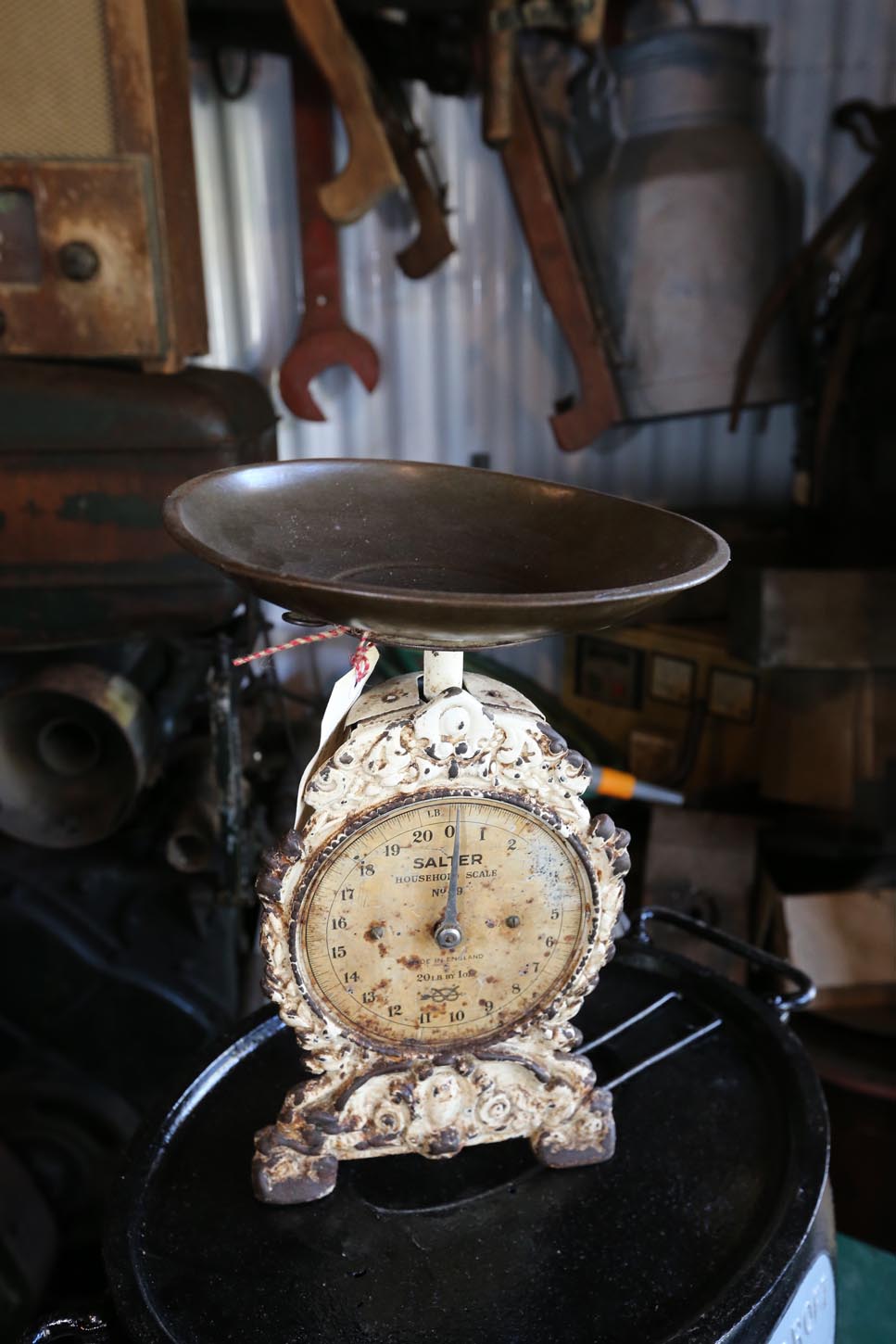
A couple of big old bank safes sit alongside western saddles and an 80-year-old set of kitchen scales he recalls his mother using for cooking.
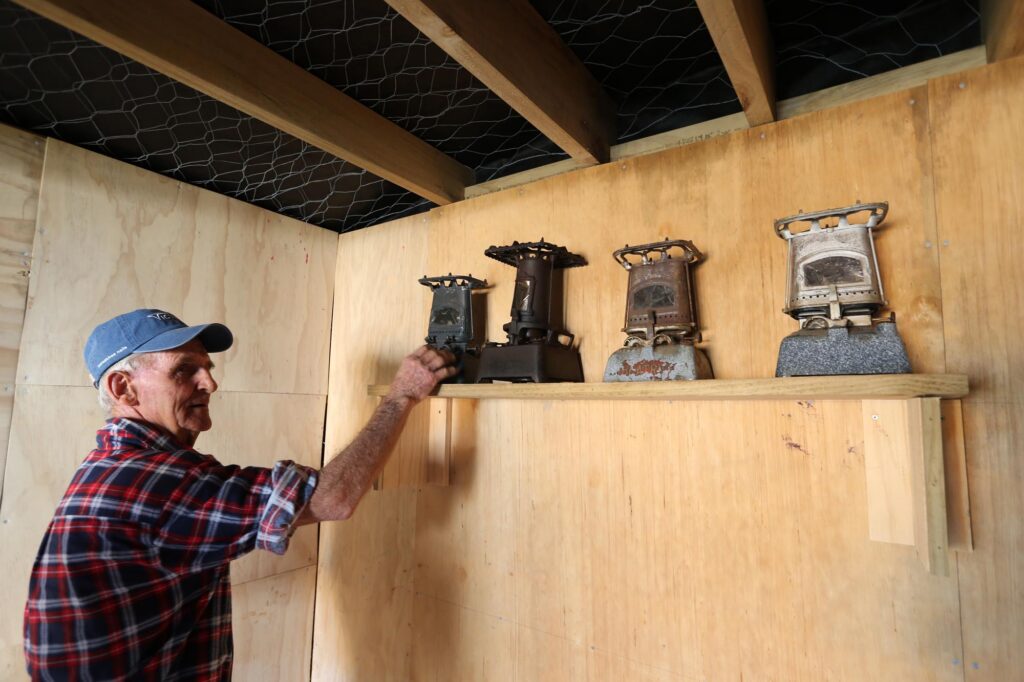
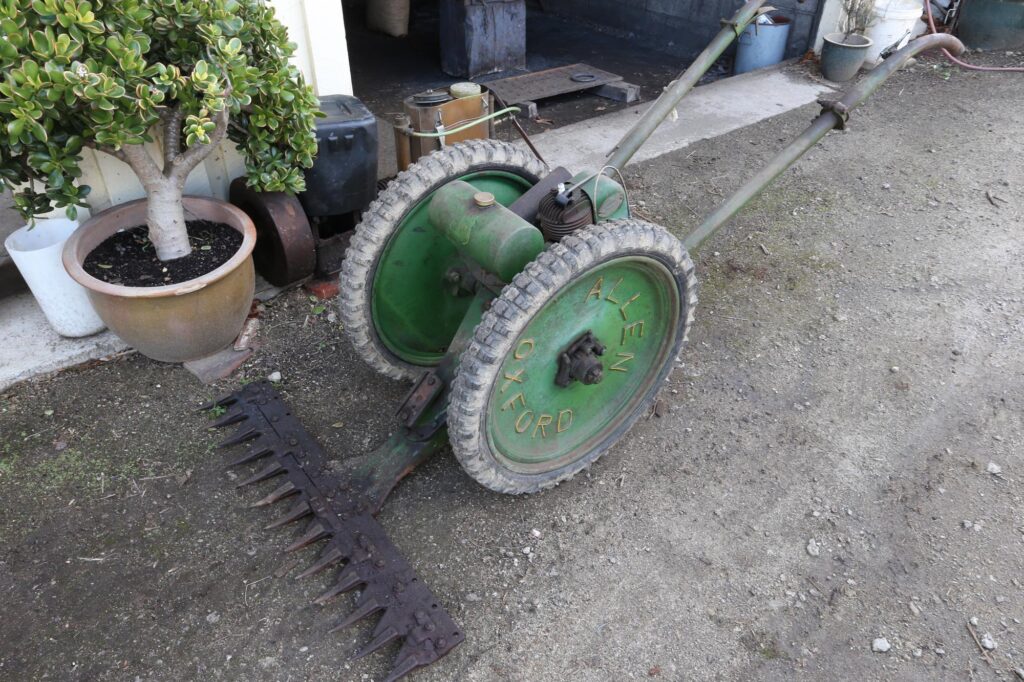
An interesting machine is a self-propelled sickle mower driven by a Villiers motor and steered by hand. A number of old stumping jacks and a row of kerosene mini stoves are part of the collection, and a big old horse-drawn plough sits against the shed.
Horse collars
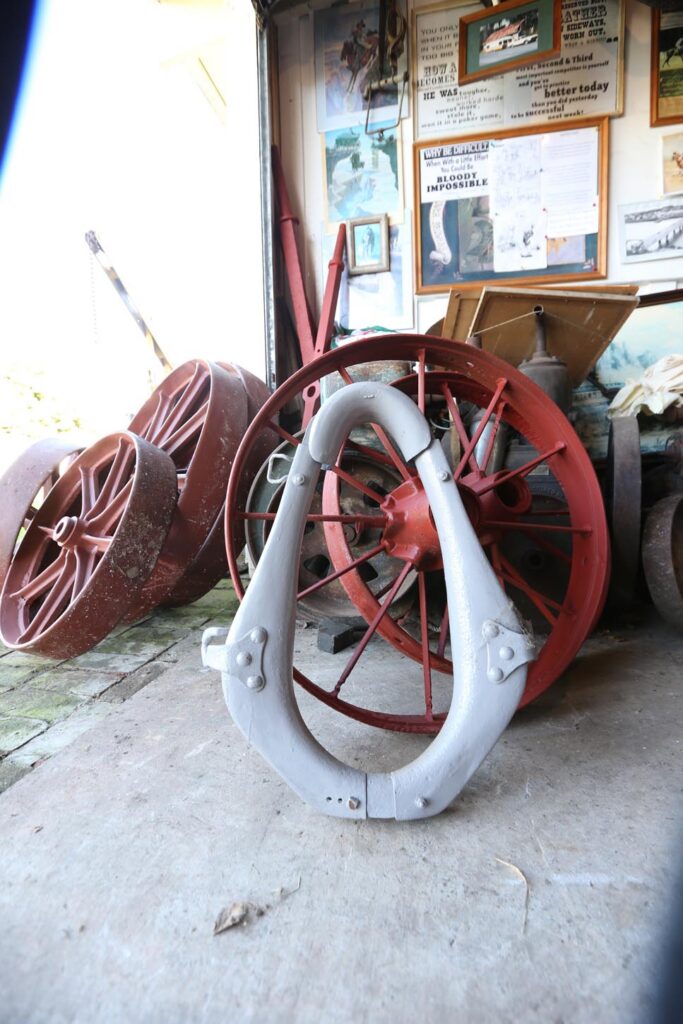
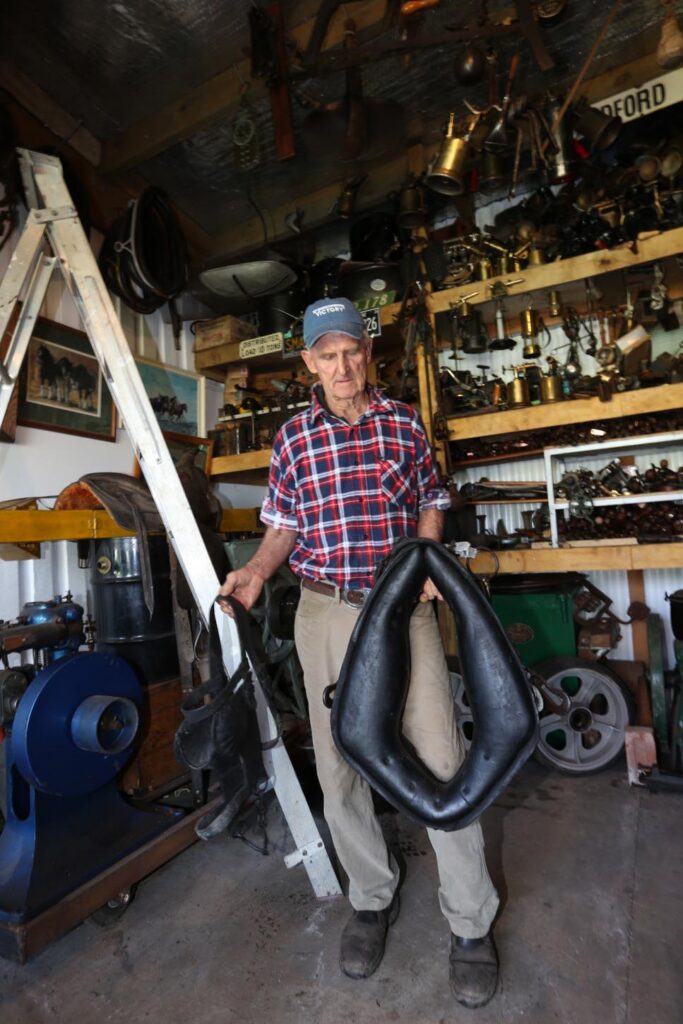
A row of horse collars of all sizes included one Kevin remembers his father putting on the heavy horses when Kevin was a child.
“He used to preserve them with what he called whale oil. It was blue. I’m not sure what was in it, but it kept the leather in great shape.”
Among the horse collar collection is one made of steel. “That’s really unusual,” says Kevin.
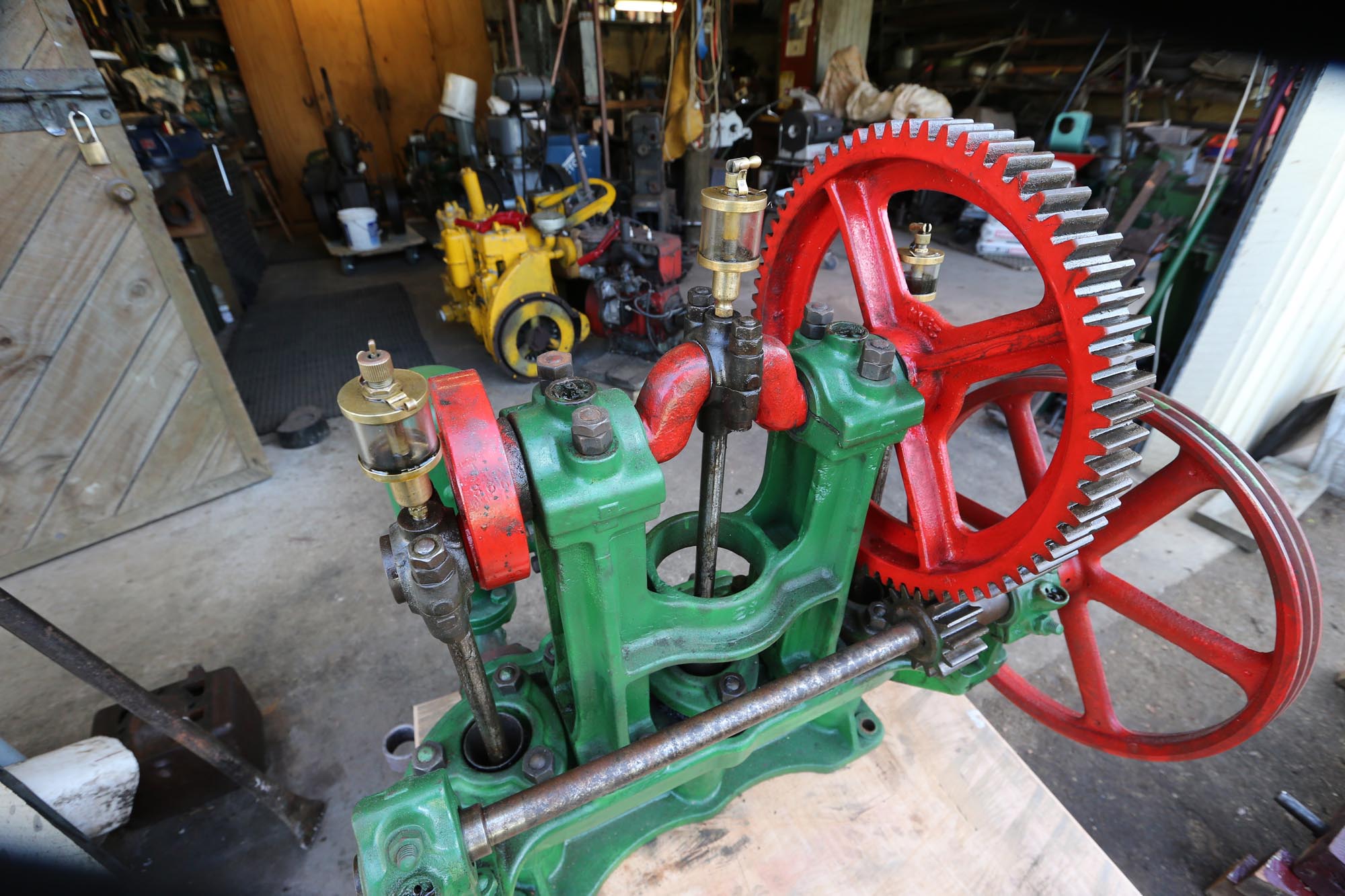
Like many collectors, Kevin has fully restored most of his collection, and some items look like new.
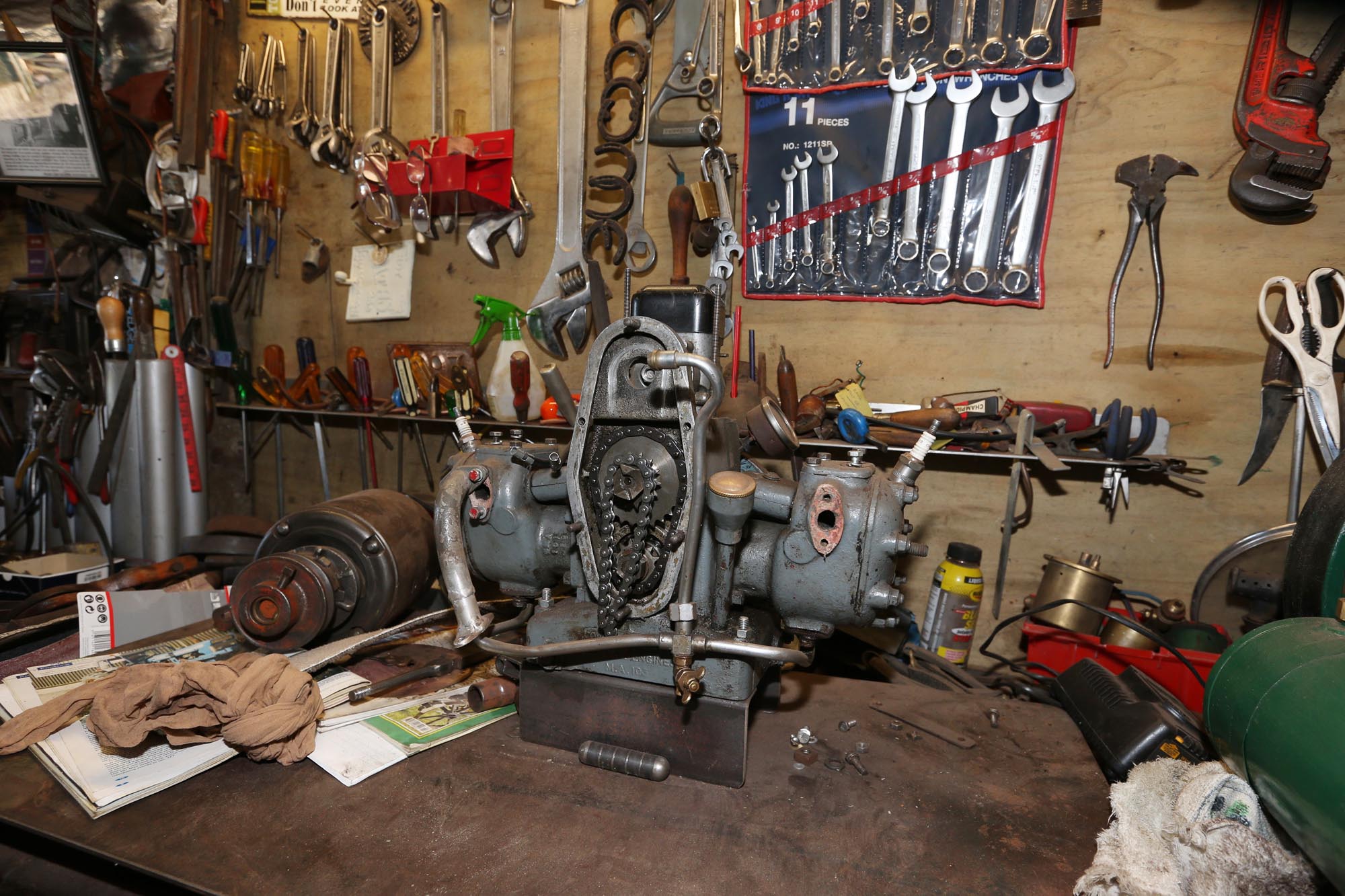
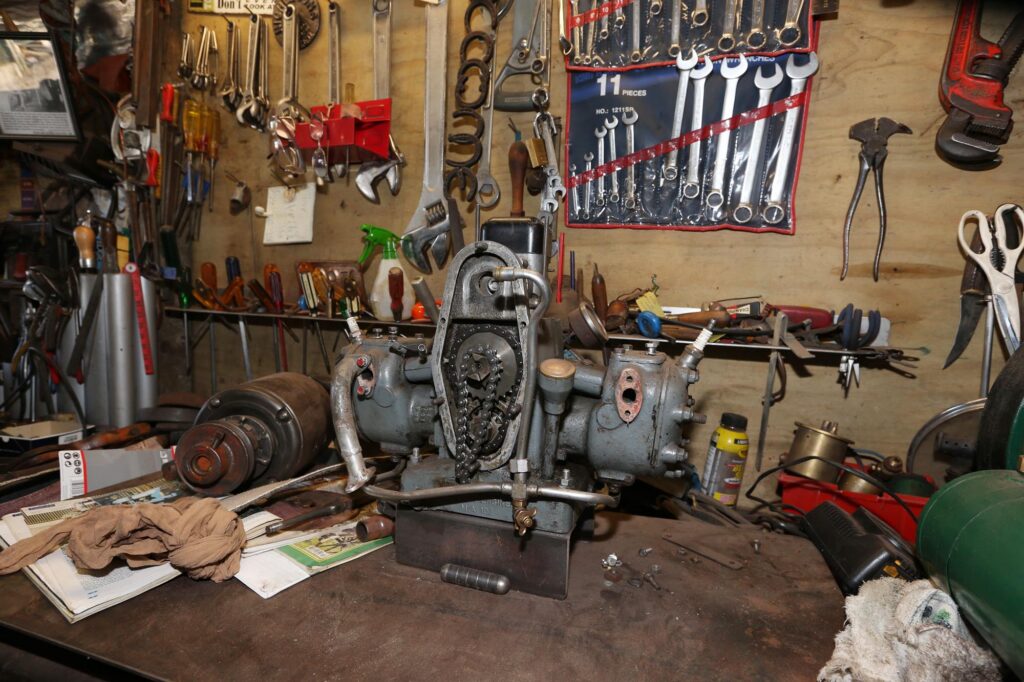
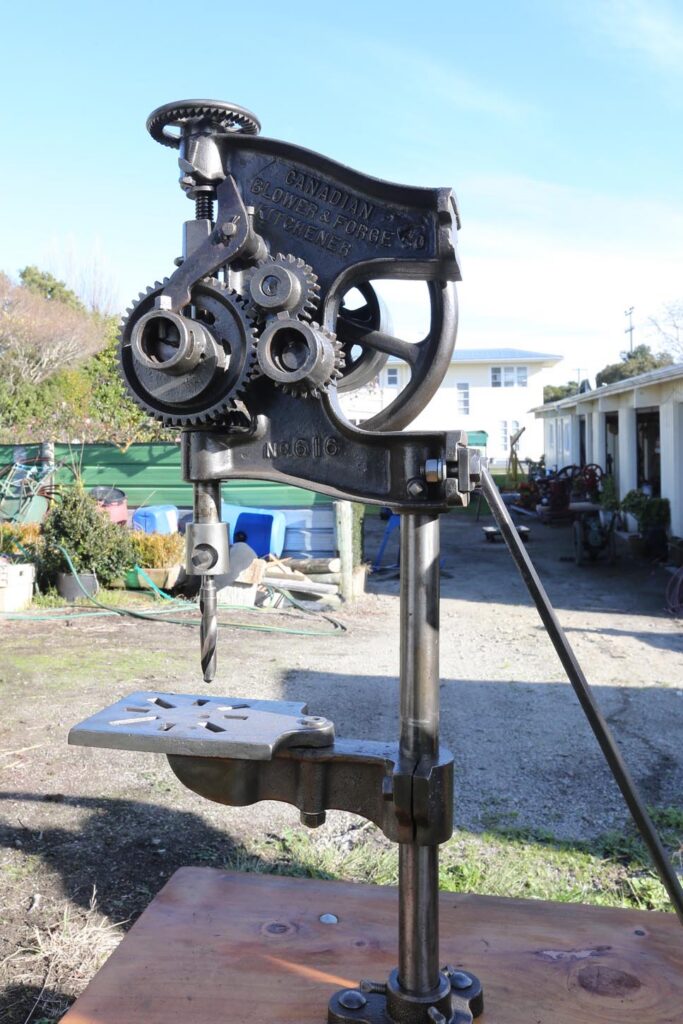
He taught himself to weld in his early 20s and now has MIG and ARC welders among his workshop tools. He has a fully equipped forge to make parts as well, and his sons’ blacksmithing abilities mean parts not available can be made with the forge and anvil.
The forge shed also contains a very powerful and ancient mechanical power hammer.
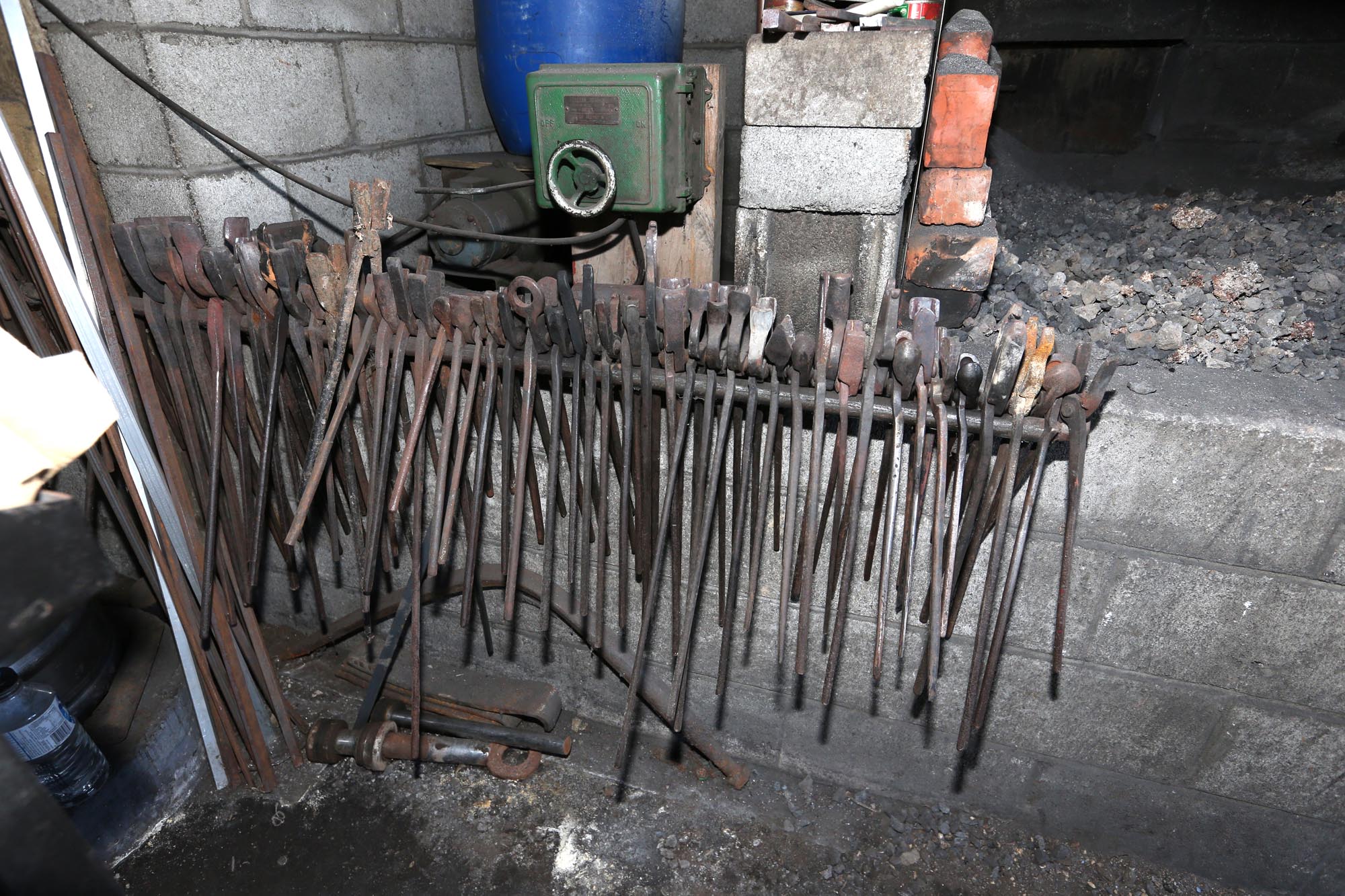
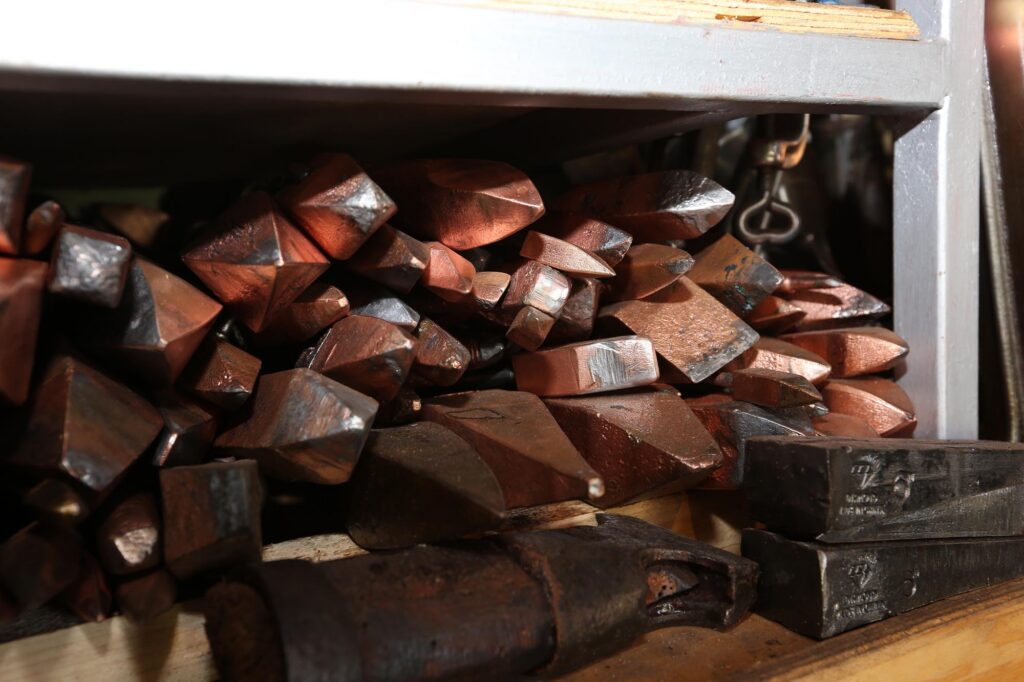
A few hundred tongs of all different sizes are set alongside the forge.
Stationary motors
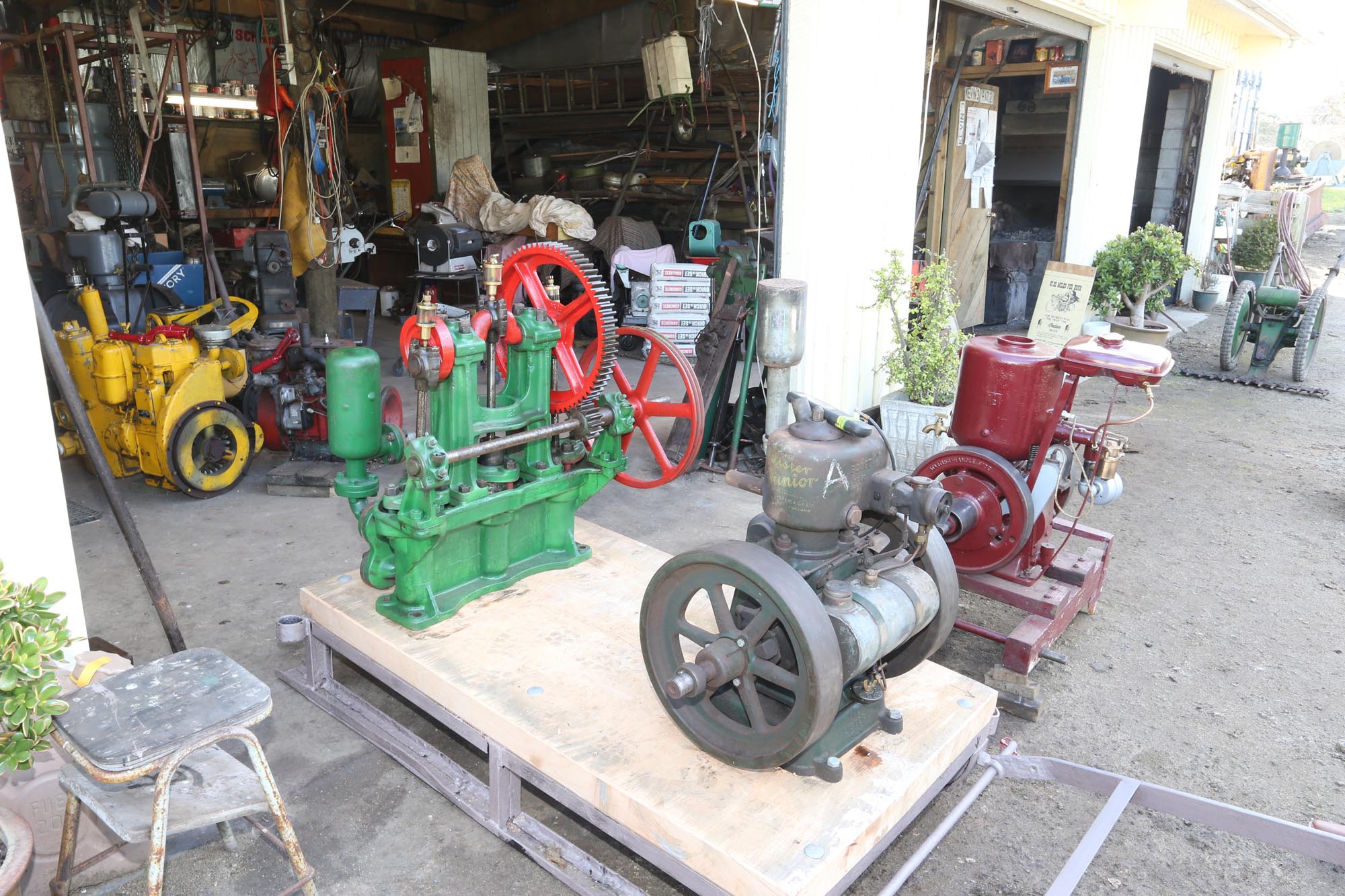
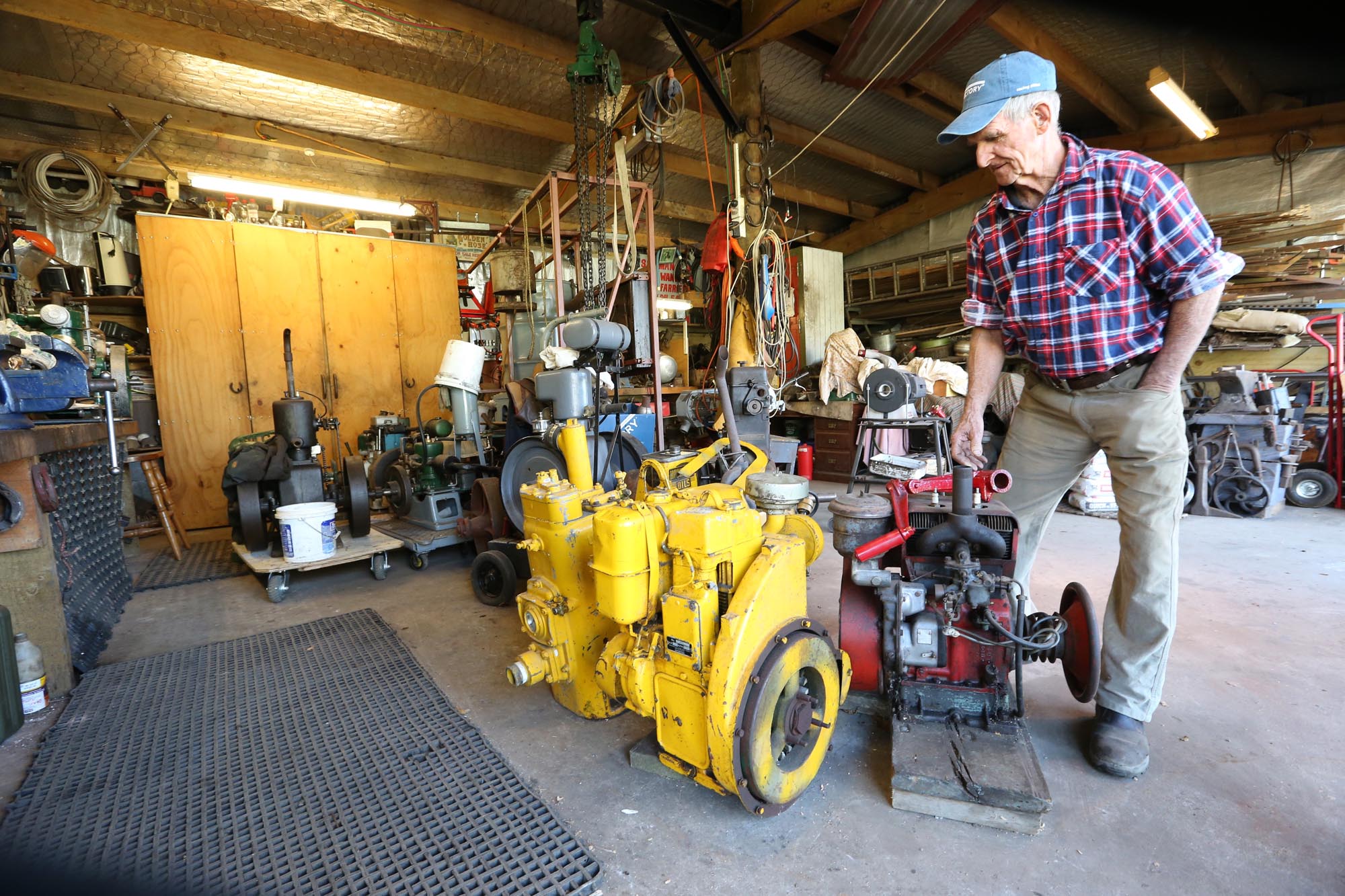
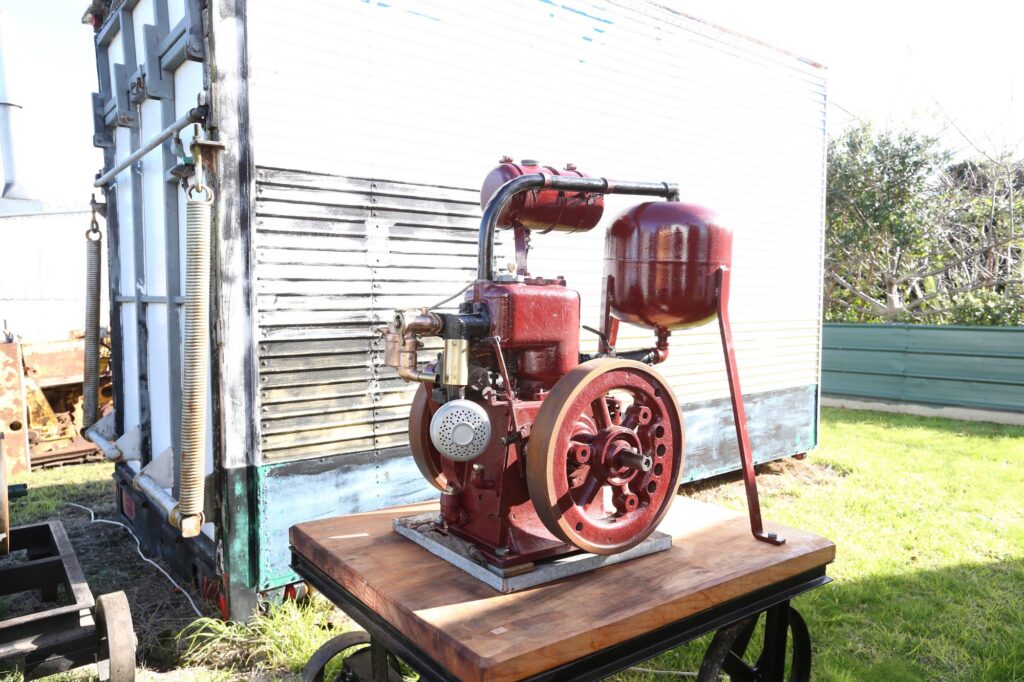
Stationary motors are a particular passion of Kevin’s. He got his first about 10 years ago.
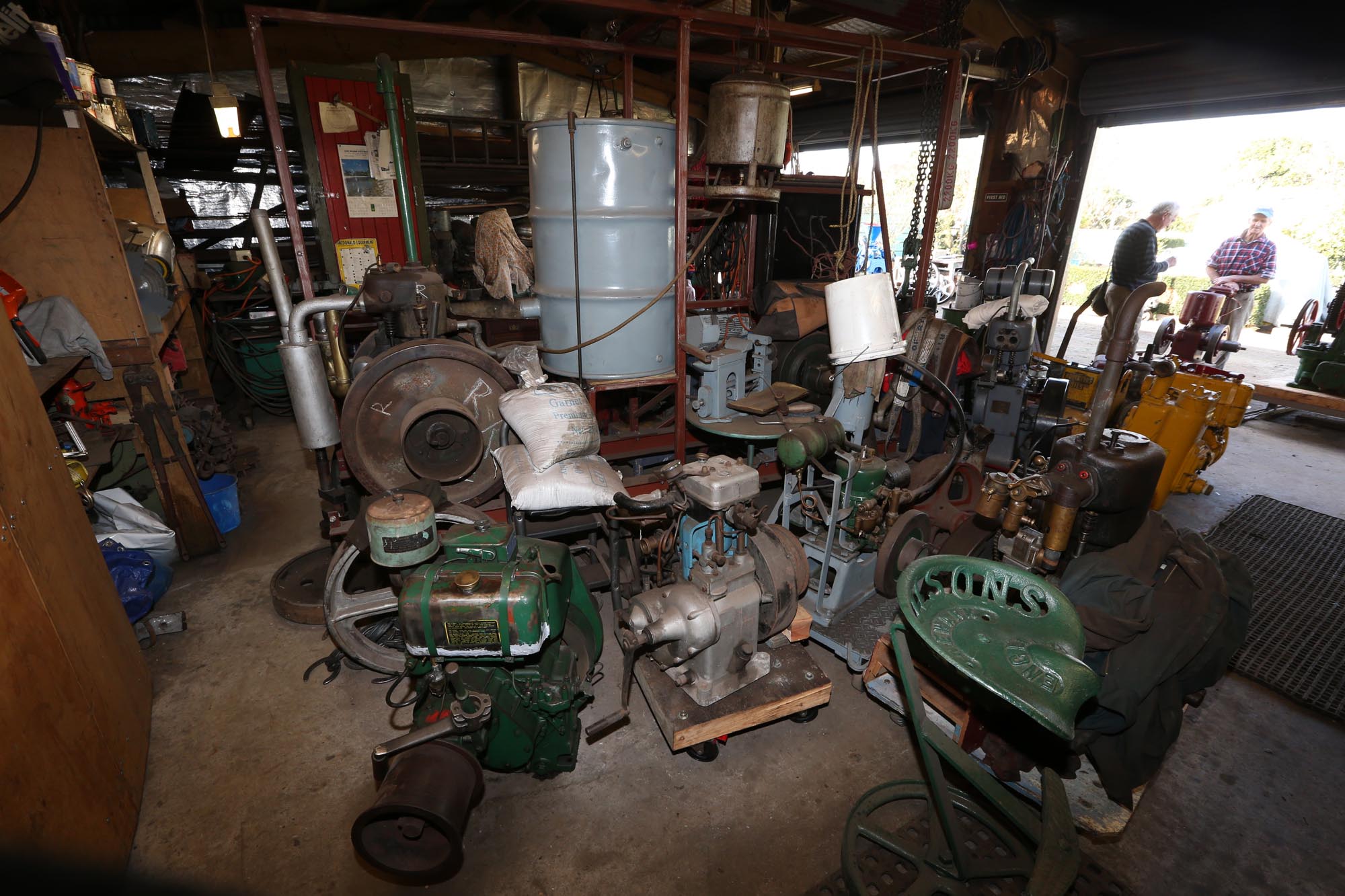
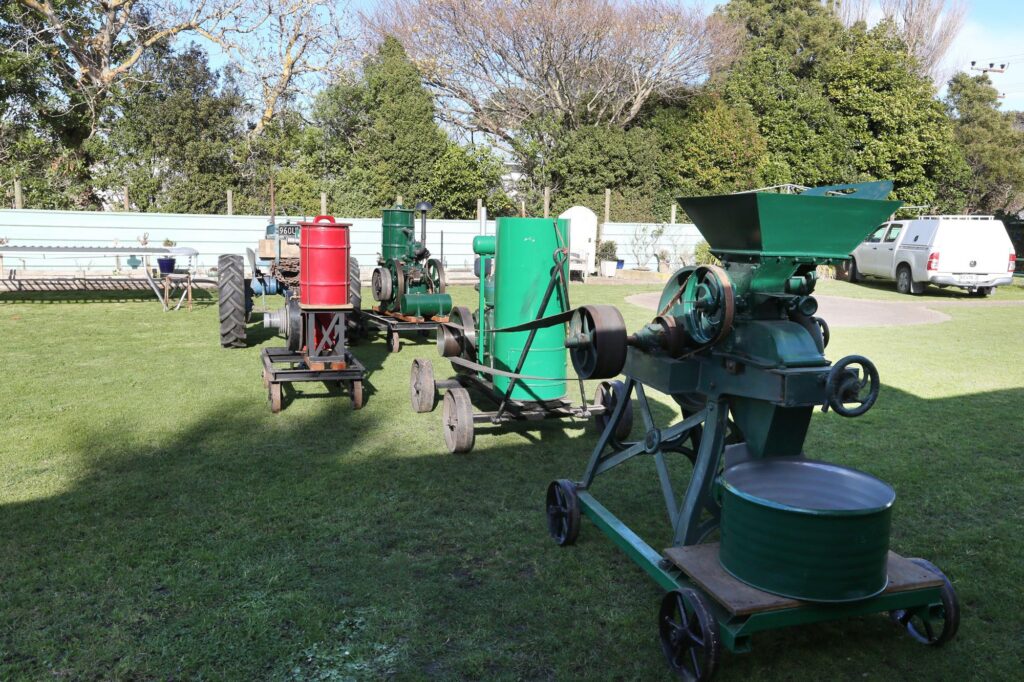
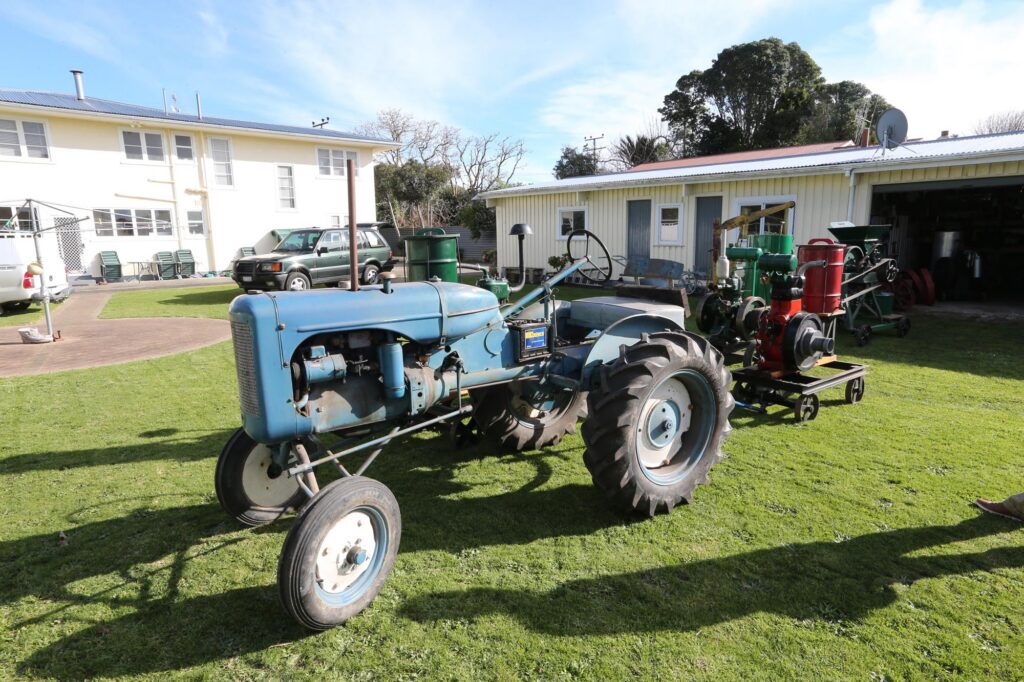
Now there is quite a collection, all different sizes and made for different purposes.
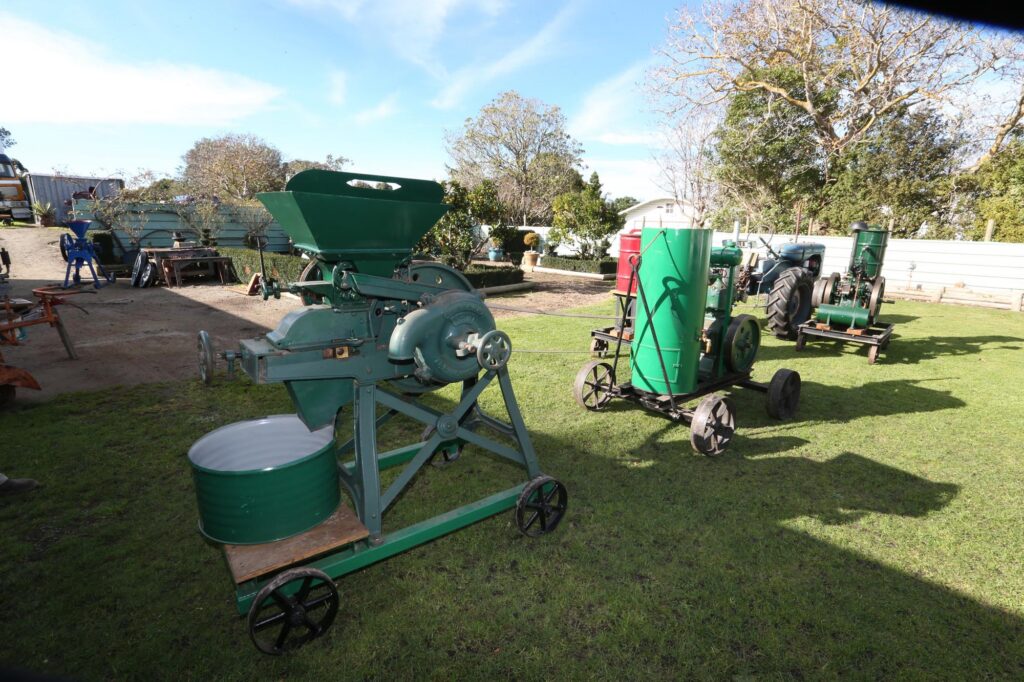
In the early part of the 20th century, stationary motors were on virtually every farm in the country. Often single-cylinder, water-cooled, long-stroke engines, these were used for a wide variety of purposes.
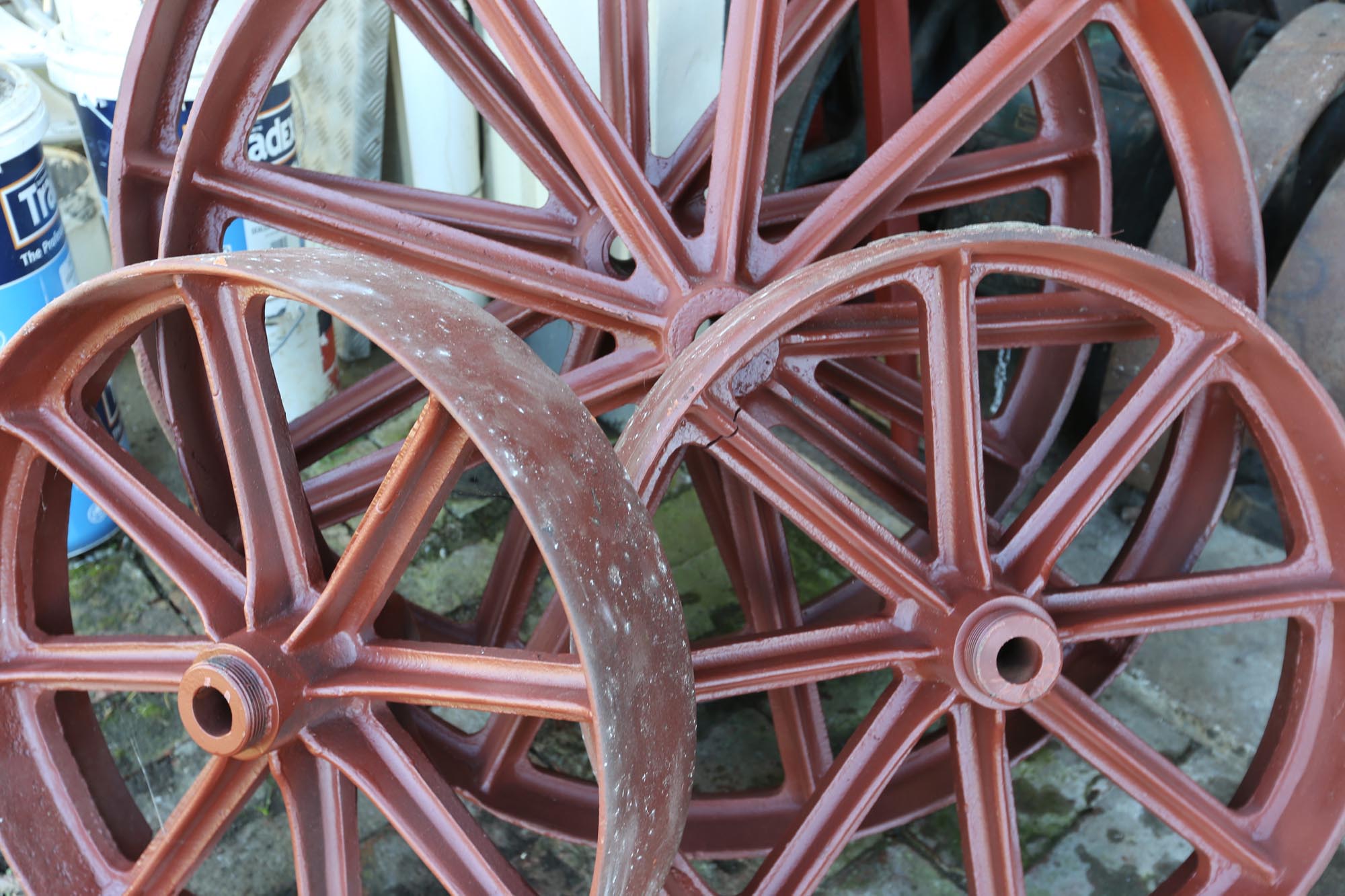
They were used to power shearing plants, early milking machines, water pumps, electricity generators, crushers, grinders and all manner of equipment. Most of them have heavy flywheels to keep the momentum steady, and they drive machinery through a belt.
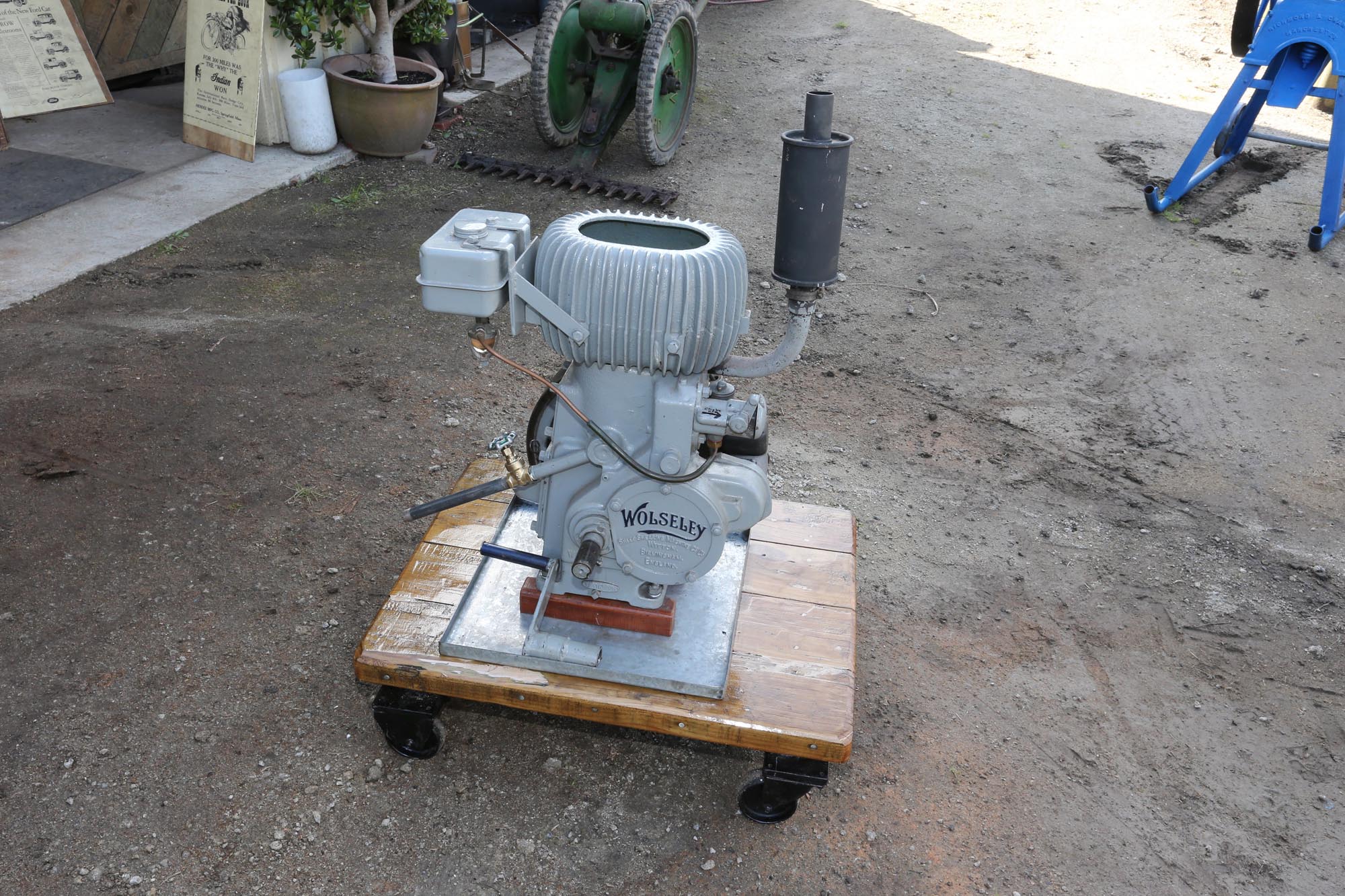
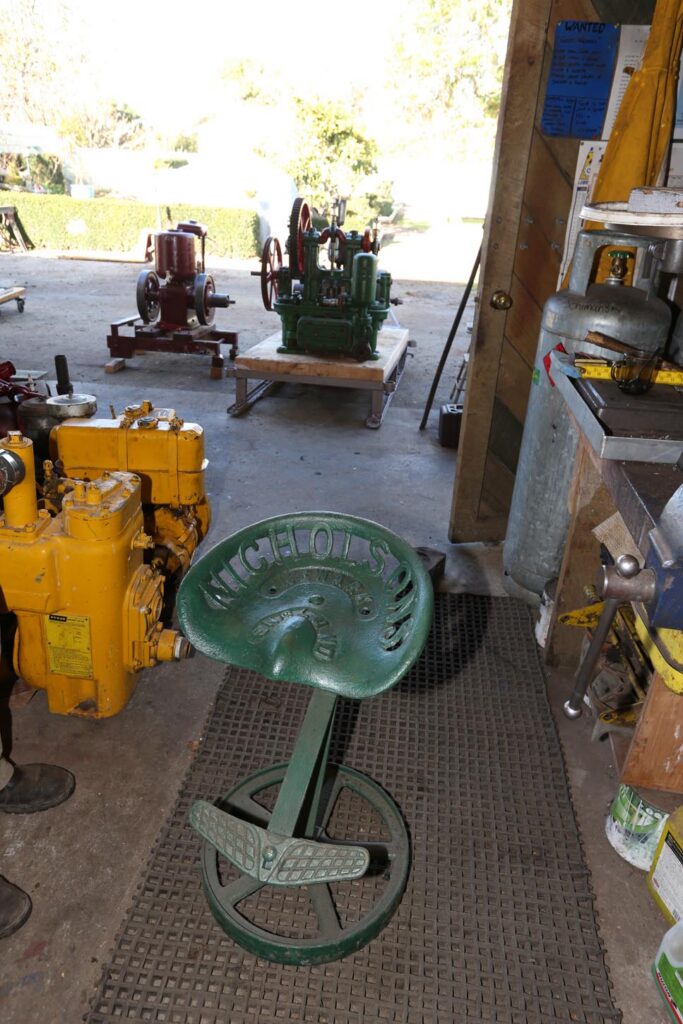
Kevin has a variety of engines. From single-cylinder to twin-cylinder and even a four-cylinder model. Included is a Wolseley sheep shearing plant.
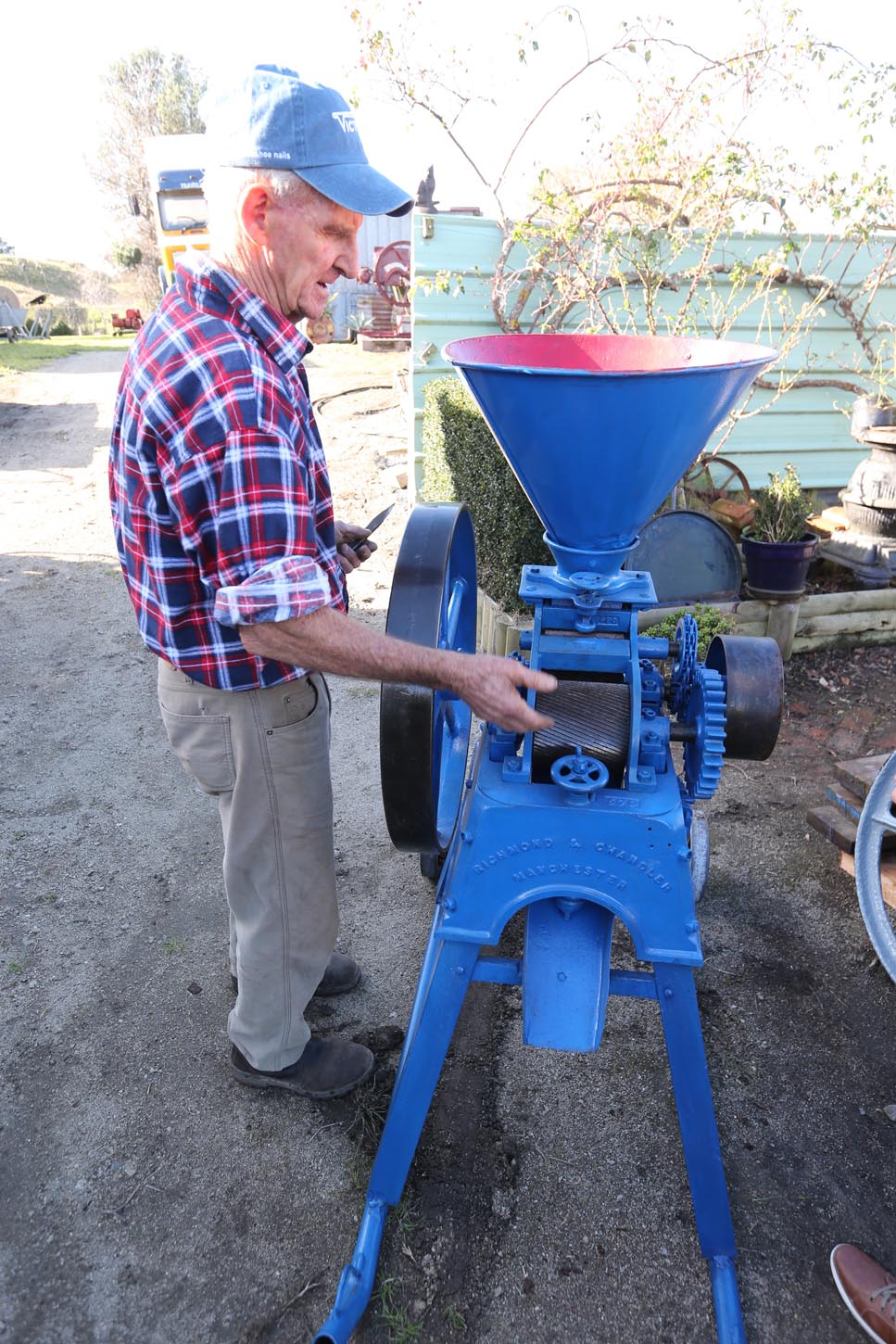
The machinery he attaches to the motors with long belts includes a Bentall grinding mill, used to crush or grind grain and a maize crusher.
Up the back of the section sits an old yellow 1940s Bristol bulldozer. “It’s really just something to play with. I had to get it,” he says.
While most guys in their late 70s take it pretty easy or head down to the bowling green, Kevin has more things going on than he can handle. Good on him.