You can have fun in the shed without becoming a noise nuisance to others
By Bob Hulme
Photographs: Jude Woodside and Bob Hulme
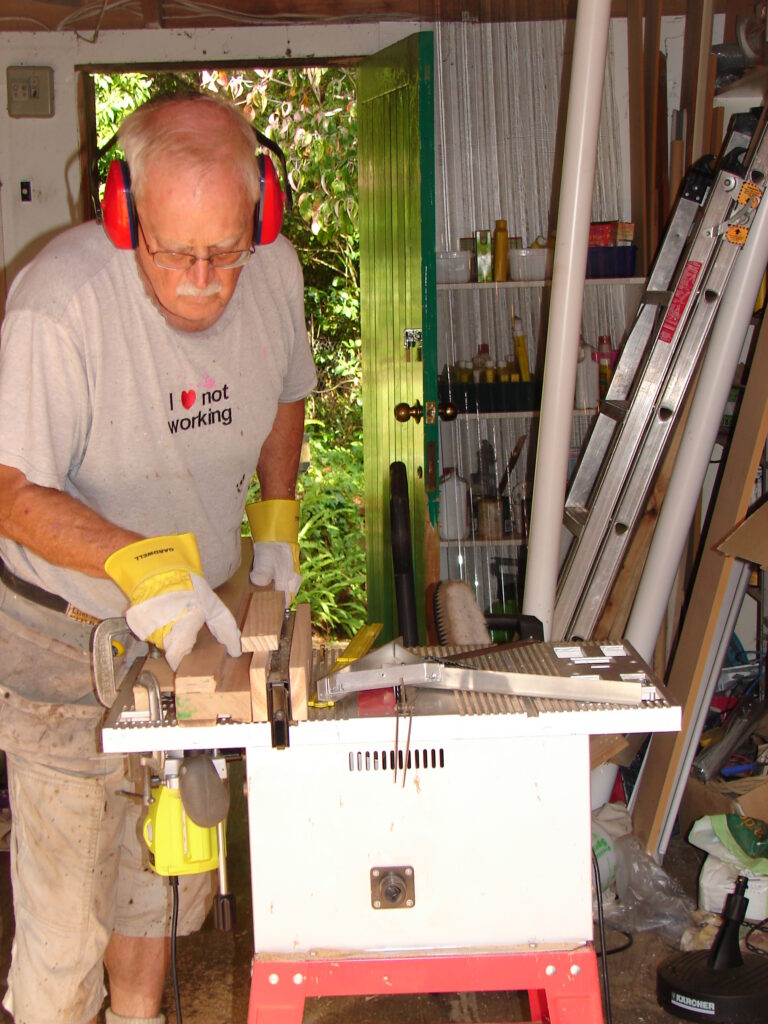
As power tools become more affordable, the average shed or home workshop is full of tools that do work that would take ages with hand tools. Unfortunately, they also produce plenty of noise. If you are the one having all the fun with these great tools, you are likely to be well kitted out with the appropriate ear muffs, etc. But what about your neighbours or anyone else in the vicinity? There are ways to reduce harm to other people’s hearing, as well as the nuisance factor. First, let’s understand what noise is.
Waves
Sound travels through the air as waves of varying pressure. Just touch a stereo speaker while it is working to feel its cone vibrating to understand what is going on. We think of sound travelling through air, but of course it can travel through any medium and not necessarily just fluids. Sound waves can move through solids such as timber and concrete, but less easily. Next time you are watching a sci-fi movie, think about the sound effects that are applied to the various spacecraft. The fact is, if you were in space, then you would not hear any sounds because there is no material to carry the sound waves.
Loudness
What is the difference between sound and noise? In the context of this article, we are considering the difference to be about how loud the sound is. I know, some loud noise can be a beautiful sound (like a V12 Ferrari on full song), while some sound (think of rap music) can be noise at any volume. Before we start getting into an argument that will have no clear winner because it is based on opinion anyway, let’s confine our discussion to loudness.
The universal measurement for sound is the decibel (dB). Zero dB is basically silence, and 140dB is really painful for our ears to listen to. The diagram (fig 1) shows various dB levels relating to everyday things we can all relate to. Anything of 50dB or more is classified as noise. You can imagine that there are plenty of times when you are working in the shed that the noise is louder than a vacuum cleaner.
More often than not, it is not the sound of the power tool itself that creates most of the noise, but the sound made by cutting the material you are working with. For example, an angle grinder on steel or a thicknesser on timber.
Sounds add to each other and increase the strength of the total sound produced. So when you are in the shed with the radio going and you are using the electric planer, the sound output is the sum of both sources of sound. If you are aware of this, it will be easier to minimise the nuisance noise produced. In other words, if you are going to be doing something noisy, remember to eliminate as many other noise sources as possible, such as the radio or compressor.
Answers
Sound waves lose intensity over distance or, more specifically, the energy is absorbed by the air as the sound waves travel through it. However, as air is not that dense, the sound can travel quite a distance before its waves are small enough to be inaudible. Sound can be absorbed to make it quieter (not so many decibels).
If we have a solid barrier such as a really thick wall, sound is much less on one side of the wall than on the other because it has difficulty penetrating the dense material. Instead, it bounces off. These are the two ways to deal with noise: it can be absorbed or reflected back.
Reflection
Reflecting sound is easy to do, but containing the sound completely is not. To use reflection, surround the source of the noise with hard surfaces. Make sure there are no openings or gaps for the noise to escape. If you have eaten in a restaurant with hard floors, ceilings and walls and very little in the way of soft furnishings, you will experience how sound reflects. It is almost impossible to hold a conversation in such a place.
Wall linings such as the sound-insulating versions of plasterboard are simply a denser version than normal in order to reflect the sound back to where it came from. This is usually effective when the room where the noise is coming from has plenty of soft furnishings to absorb the noise.
Absorption
Absorption is surely the best way to deal with noise because it stops it in its tracks and eliminates it. The trouble is, how do we keep our shed easy-to-clean yet have curtains on the windows and loops of woven material hanging from the ceiling, or even do this without creating a fire hazard?
Linings
The answer is to use industrial wall linings and some sheddie thinking. The folk at Potter Interior Systems (part of CSR Group) have been helpful in providing me with info on their range of linings that they supply for commercial buildings. I have singled out a couple of their products that I believe would work well in a shed.
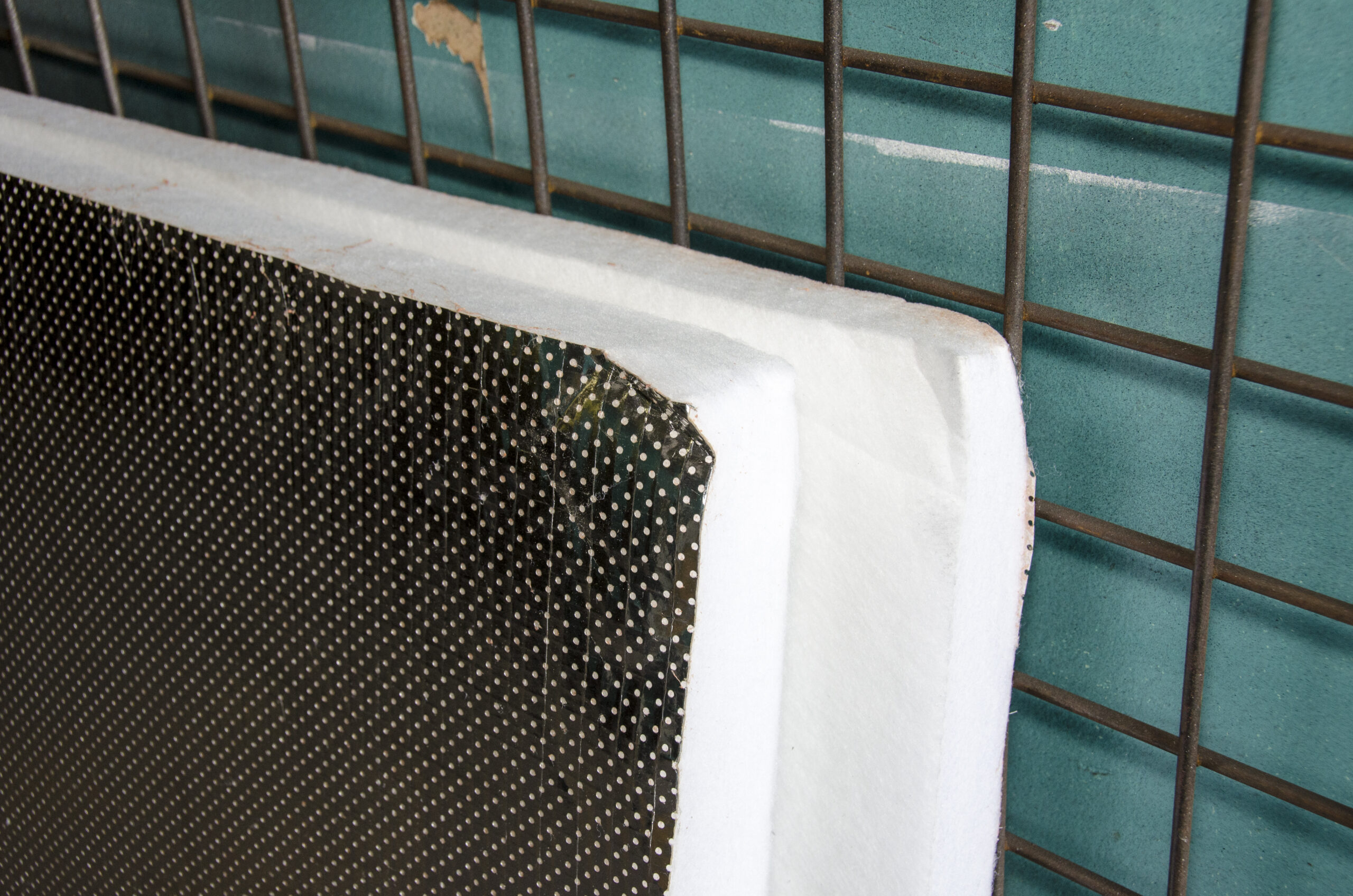
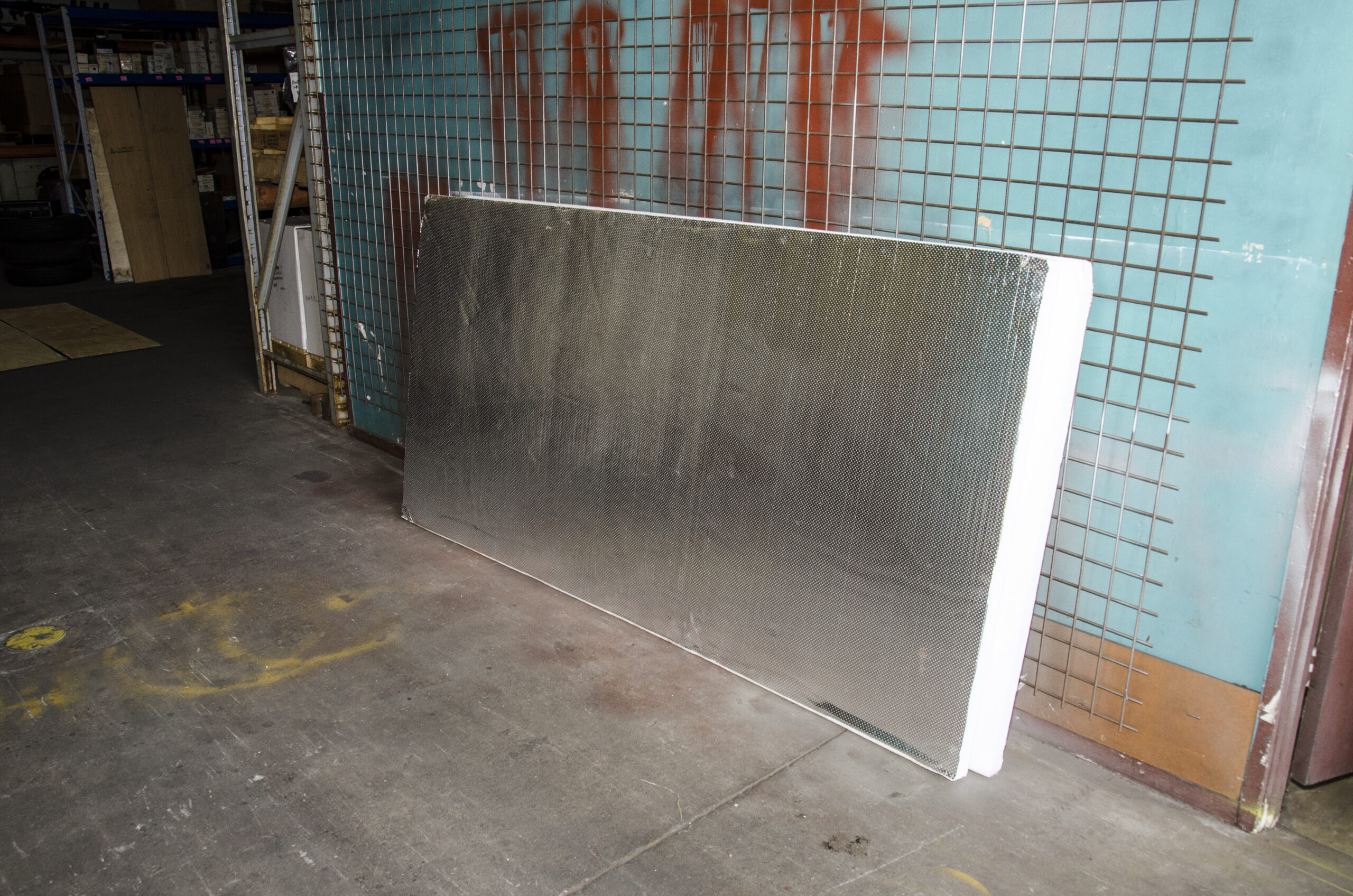
Pyrotek Sorberflex is a sandwich of sound-absorbing urethane foam with a reflective barrier in between. Sound which makes it through the absorbent foam is reflected back by the barrier so the foam gets to have another go at it.
If your walls are unlined, then perhaps it is time to consider lining them, even though you would lose those convenient shelves created by open access to the nogs. Lining with a heavier plasterboard than the basic type—with sound-absorbing insulating material within the wall—is probably the most practical solution for most sheds/garages. You will find that when you put up shelves to compensate for the nogs disappearing, you will most likely have more usable storage surface than you had before.
There are versions of fibreglass insulation that are good for sound as well as thermal insulation. Examples are Bradford Fibertex and Acousticlad. These are designed to provide both acoustic and thermal insulation.

Panels
Wall insulation panels are different from ceiling panels for two main reasons. Firstly, wall panels must be stiffer so that they can stand on end and not slump down. Ceiling panels need to be more flexible to lie over and around cables and pipes. Secondly, wall panels must be the right thickness to fit between the lining boards (stud-depth size), whereas ceiling panels usually have the freedom to be thicker. The moral of the story is, don’t use ceiling panels in walls and vice versa.
Other measures
We have looked at the main areas such as walls and ceilings, but so much sound can still run wild through windows and gaps around doors and pipework, etc. Heavy curtains on windows can be ideal for dealing with noise as long as they overlap the window frame by at least 100 mm (more is better), but do be mindful of fire hazard. Look at seals around doorways and gaps where pipes come through walls.
Machinery can impart vibrations into floors. If the machines are bolted down, maybe you need to look at anti-vibration mounts. There are a number of these on the market that can make using your larger power tools a lot more pleasant.
Doors
With a sectional-type garage door, it is usually possible to stick some sort of dampening panel product to the inside faces. This will greatly reduce the noise that finds its way outside and stop the reflected noise from being a nuisance inside the shed.
The previously mentioned Pyrotek Sorberflex panels would be good for this, as would those sound-deadening panels used on the floor of cars to counter the drumming effect and reduce road noise. However, the automotive panels could be quite an expensive alternative.
If there is a roller door or sectional door made from light-gauge steel, then there is another problem. The steel acts like the surface of a drum and has an amplifying effect.

PANEL 1
Decibels
Here are some of the common levels of sound registered by a decibel (dB) meter, as calculated by sources such as New Zealand’s Department of Labour and the American Speech-Language-Hearing Association. The effect of a noise depends on how close a hearer is and how long the noise is heard for.
15 dB: rustling leaves. average threshold of human hearing.
70 dB: noisy office or road traffic.
80-90 dB: food processor, vacuum cleaner.
90 dB: heavy truck, lawn mower (up to 107 only a metre away).
93 dB: welding.
100 dB: pneumatic drill, chainsaw (up to 117 dB) or diesel truck at nine metres.
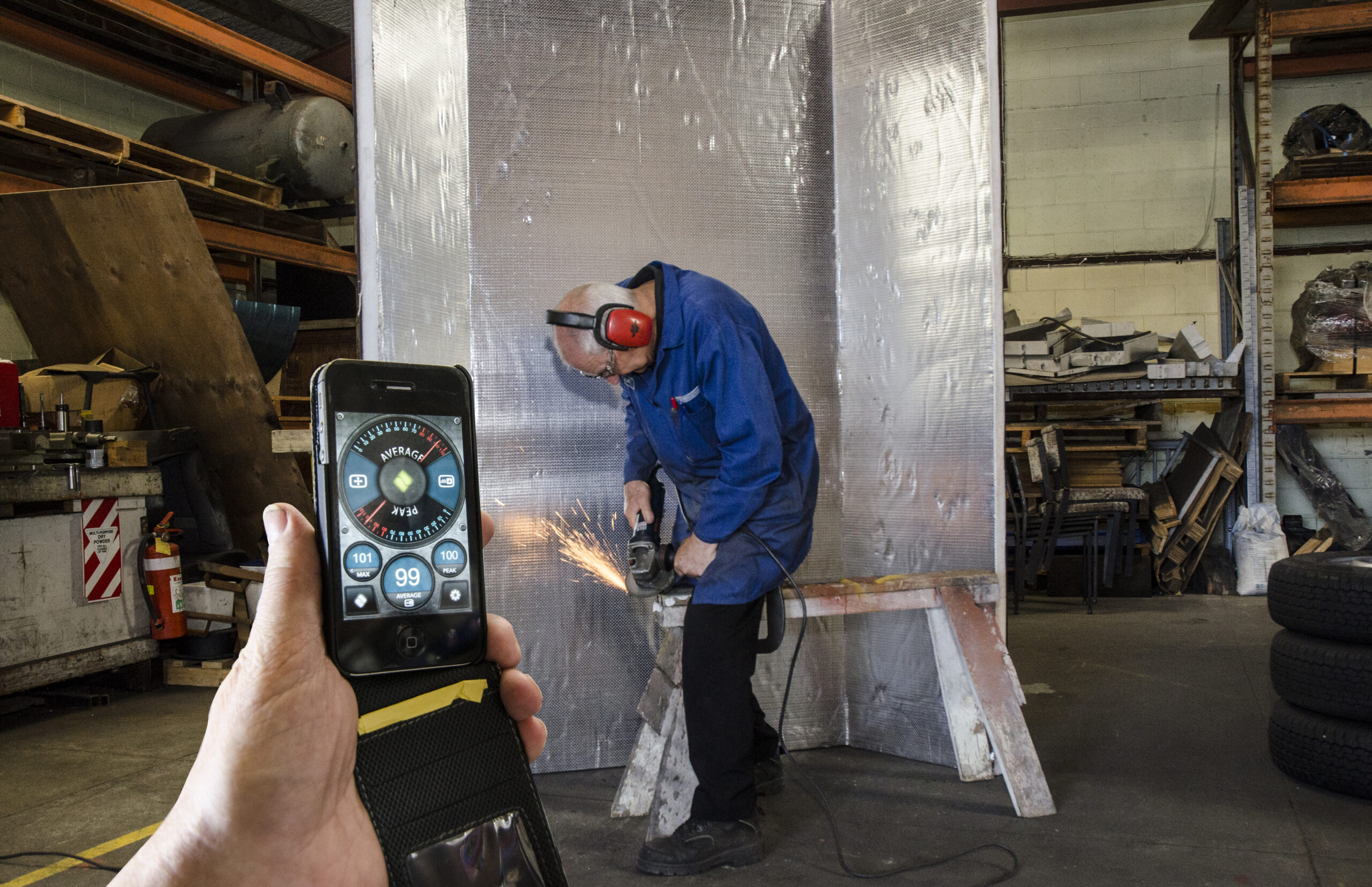
104 dB: angle grinder.
110 dB: maximum output of some MP3 players.
100 to 115 dB: circular saw.
130-140 dB: Jet aircraft taking off (America’s FAA has Effective Perceived Noise Level in Decibels (EPNdB) = 80 to 90 for most modern jets at take-off).
140 dB: Shotgun blast. (Even brief exposure causes pain and damage to ears.)
Samples of the maximum time unprotected ears should be legally exposed to various levels of sound in a noisy working environment, according to the Occupational Health and Safety (OSH) service, are:
Duration per day Sound Level dB(A)
8 hours 85 dB:
1 hour 94 dB:
8 min 103 dB:
1 min 112 dB:
30 seconds 115 dB:


Screen Project
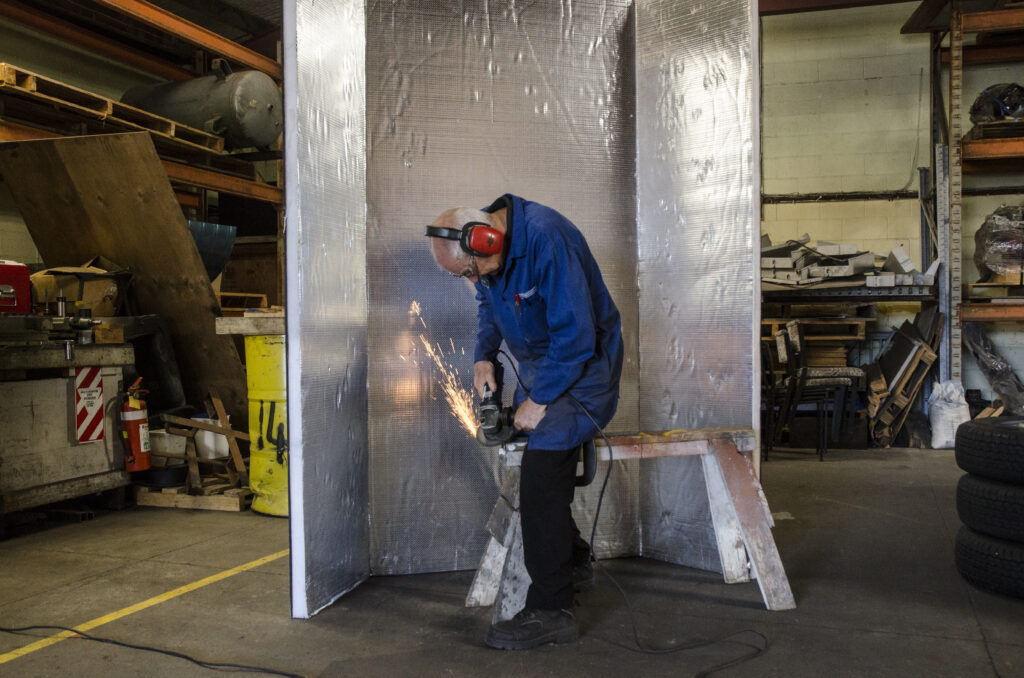
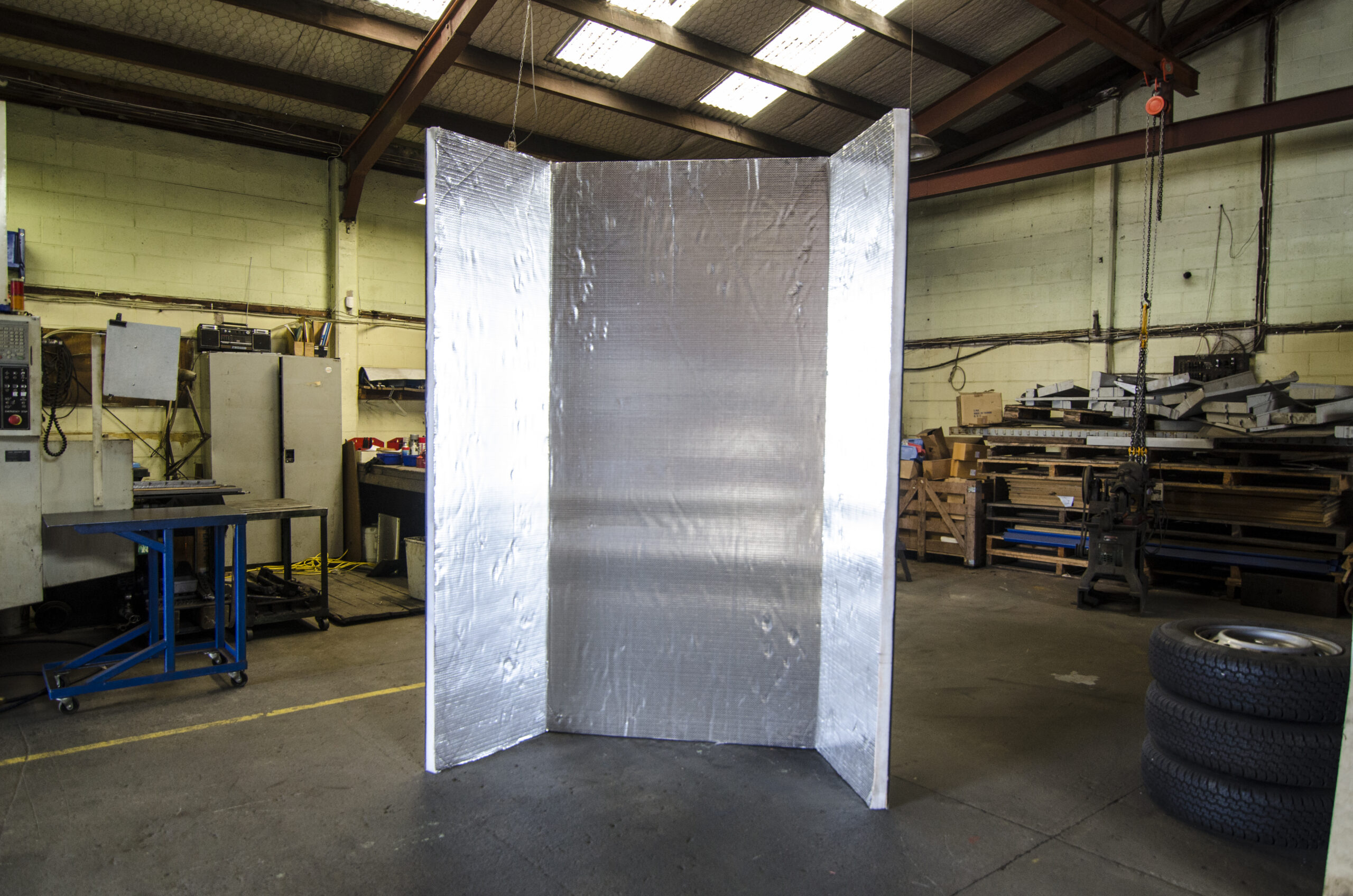
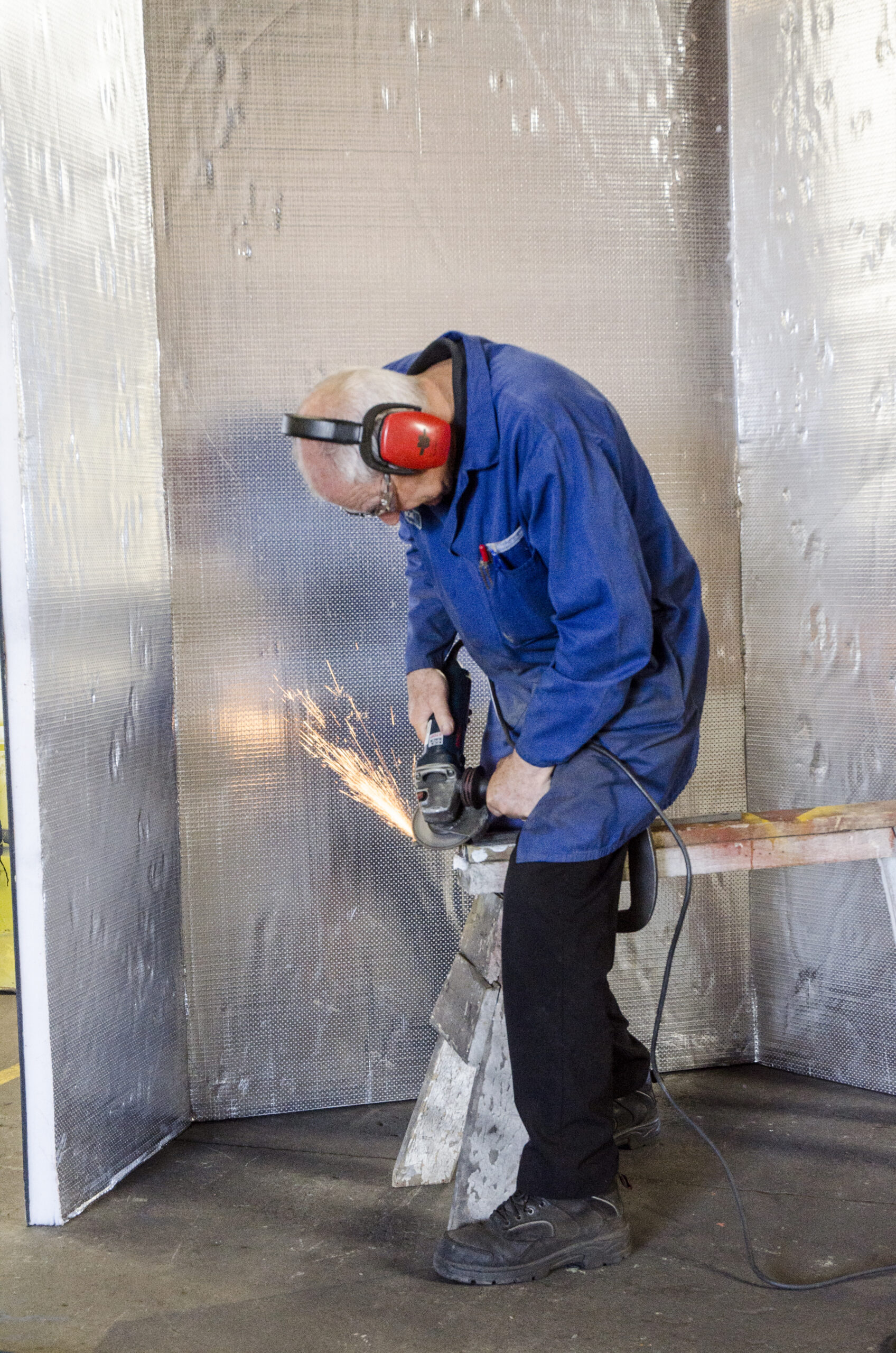
Roller doors are a bigger problem; you cannot stick any material onto them as they need to be able to roll up. In this instance, I would suggest using that famous sheddie thinking and come up with a portable screen that can be placed in front of the rolladoor to catch the sound first. This could be covered on one side with a sound-absorbing material and be painted matt black on the other—you would be able to use it as a welding screen, too. If it were hinged in the middle, it could be used to “wrap” around a noisy activity to better contain the noise.
After thinking about a portable “sound screen”, I came up with the notion of a screen that was hinged so that it could wrap around the noise source a bit. Then I thought that it could be more useful if it was double-sided, with one side having sound-absorbing panels and the other painted matt black. It can now be used as a welding screen too.
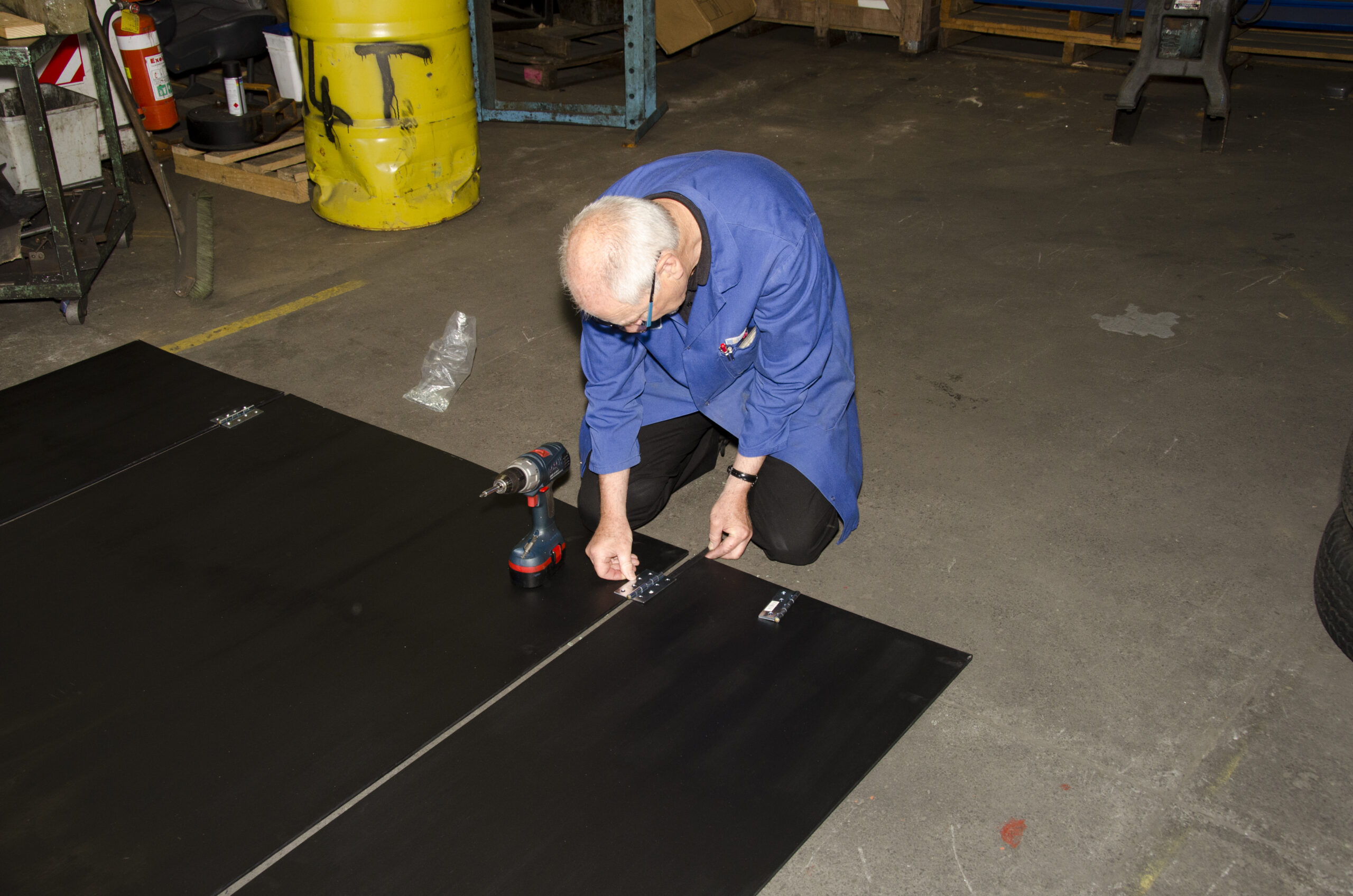
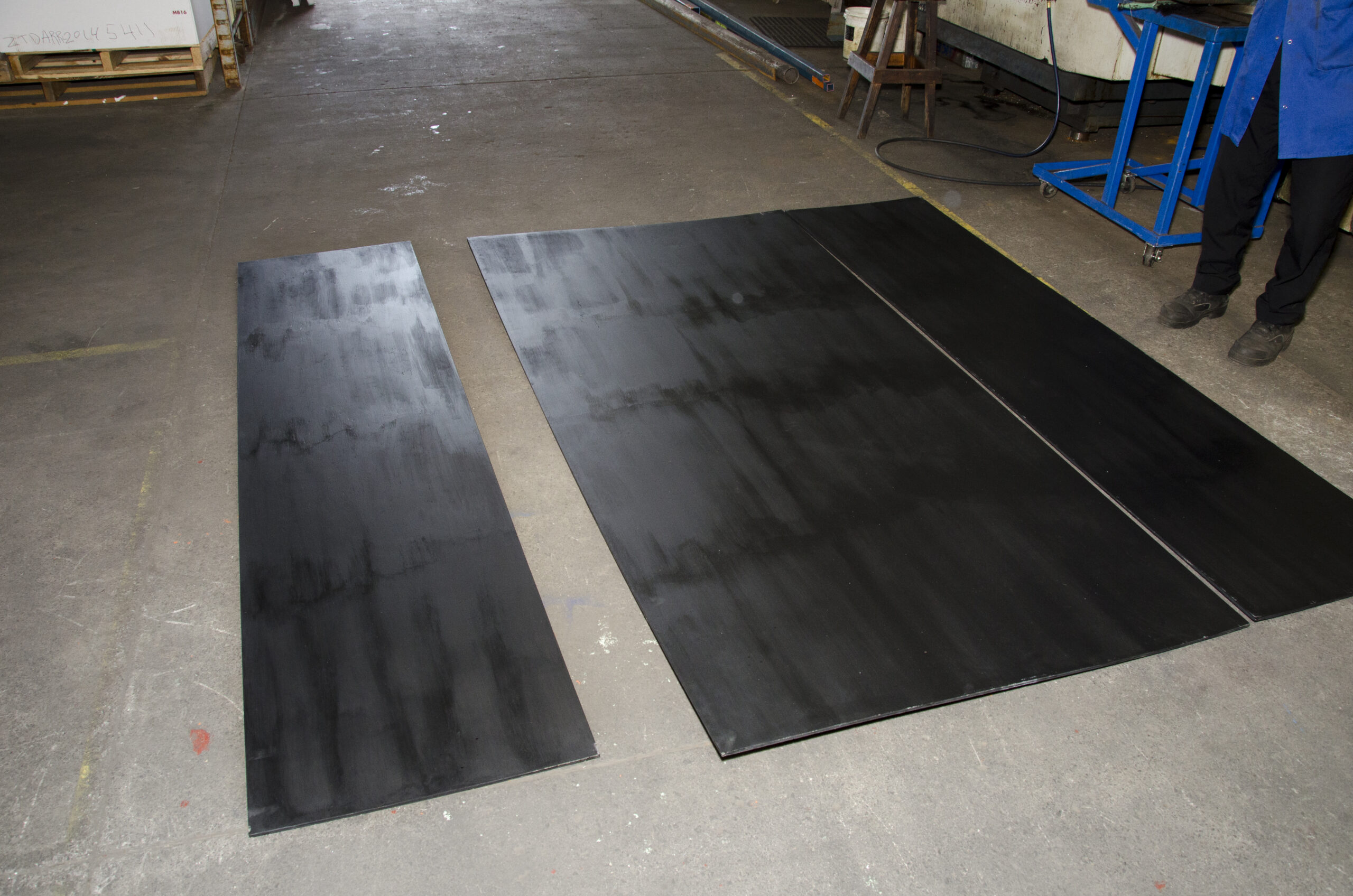
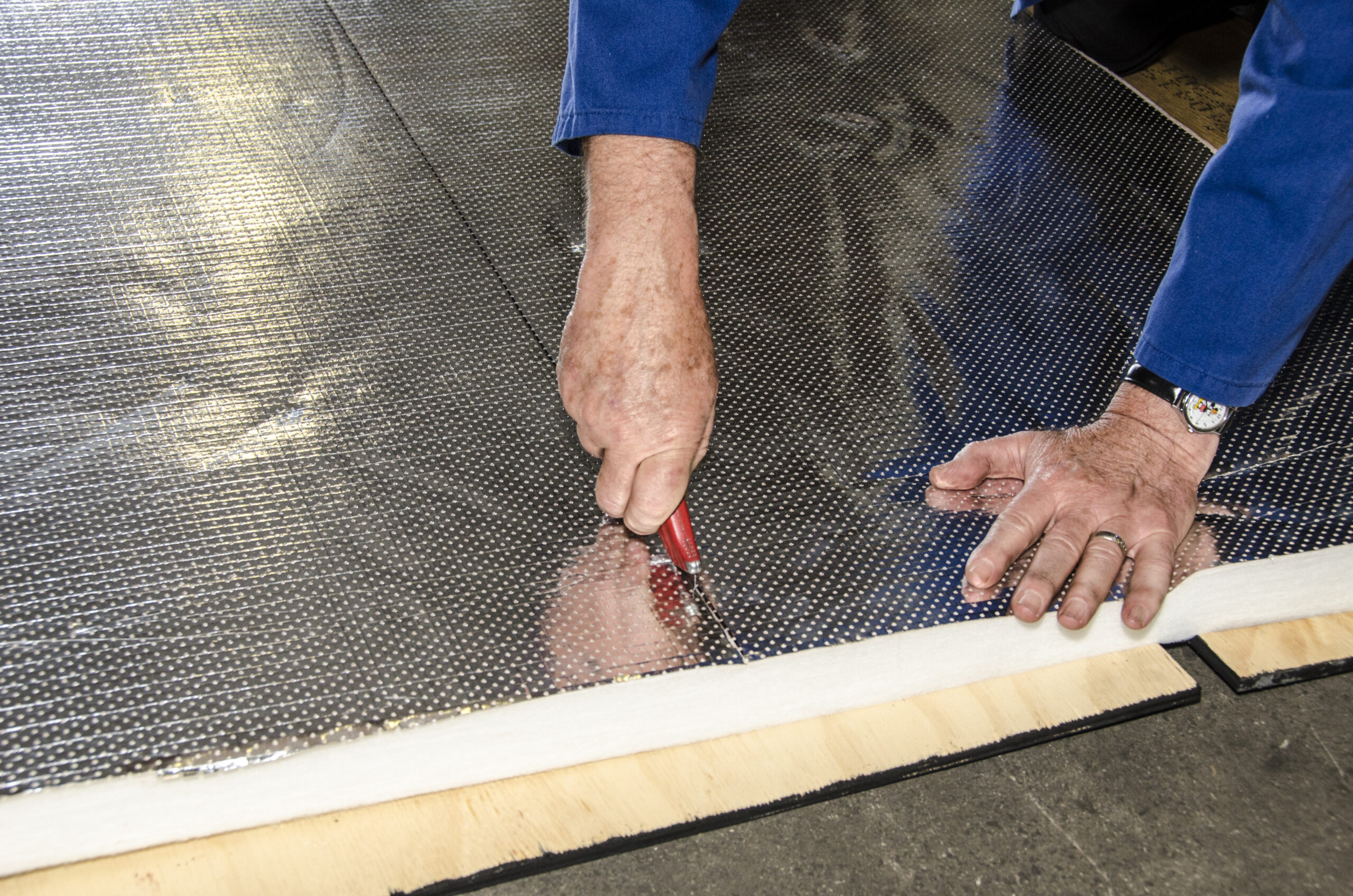
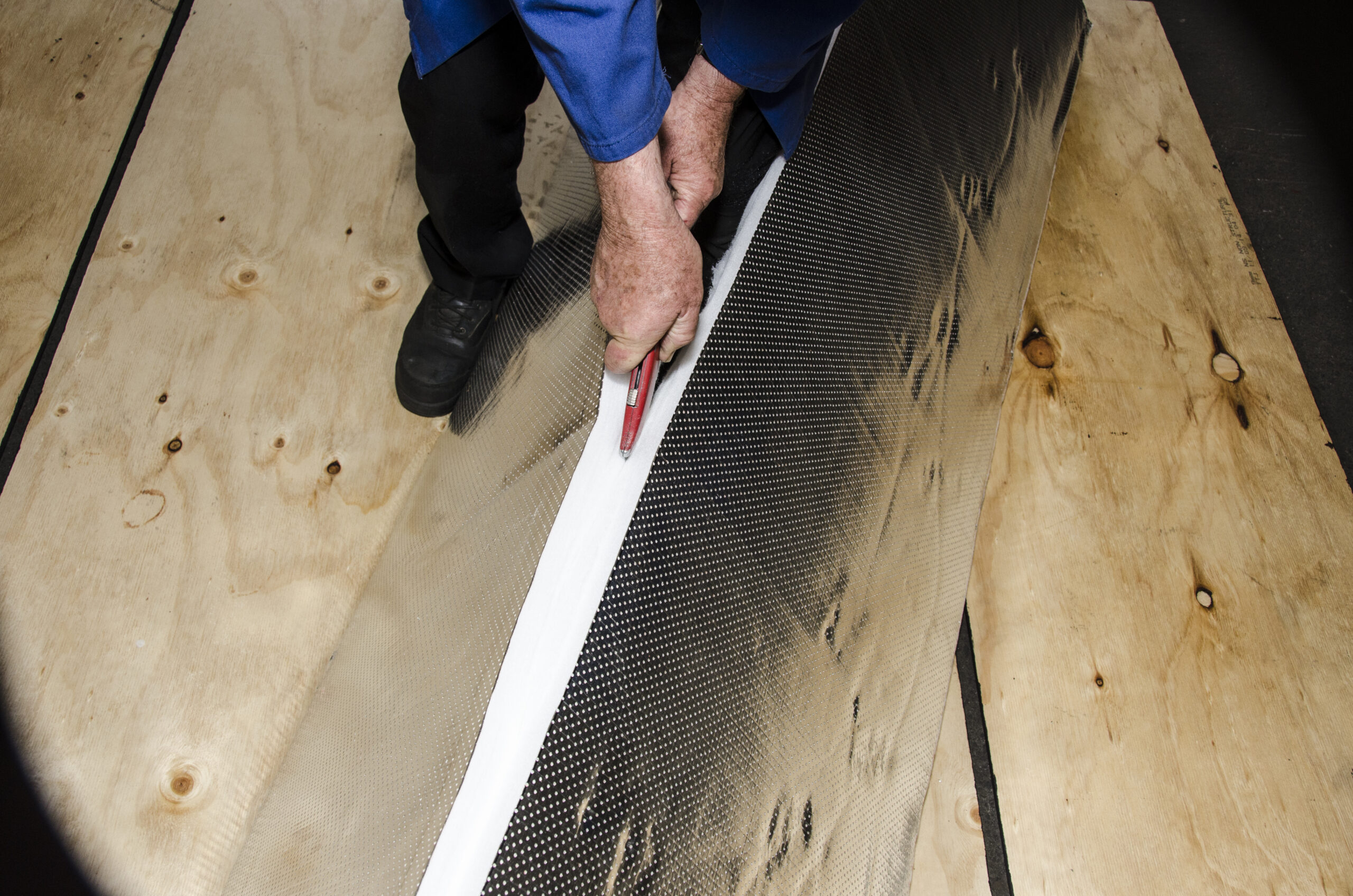
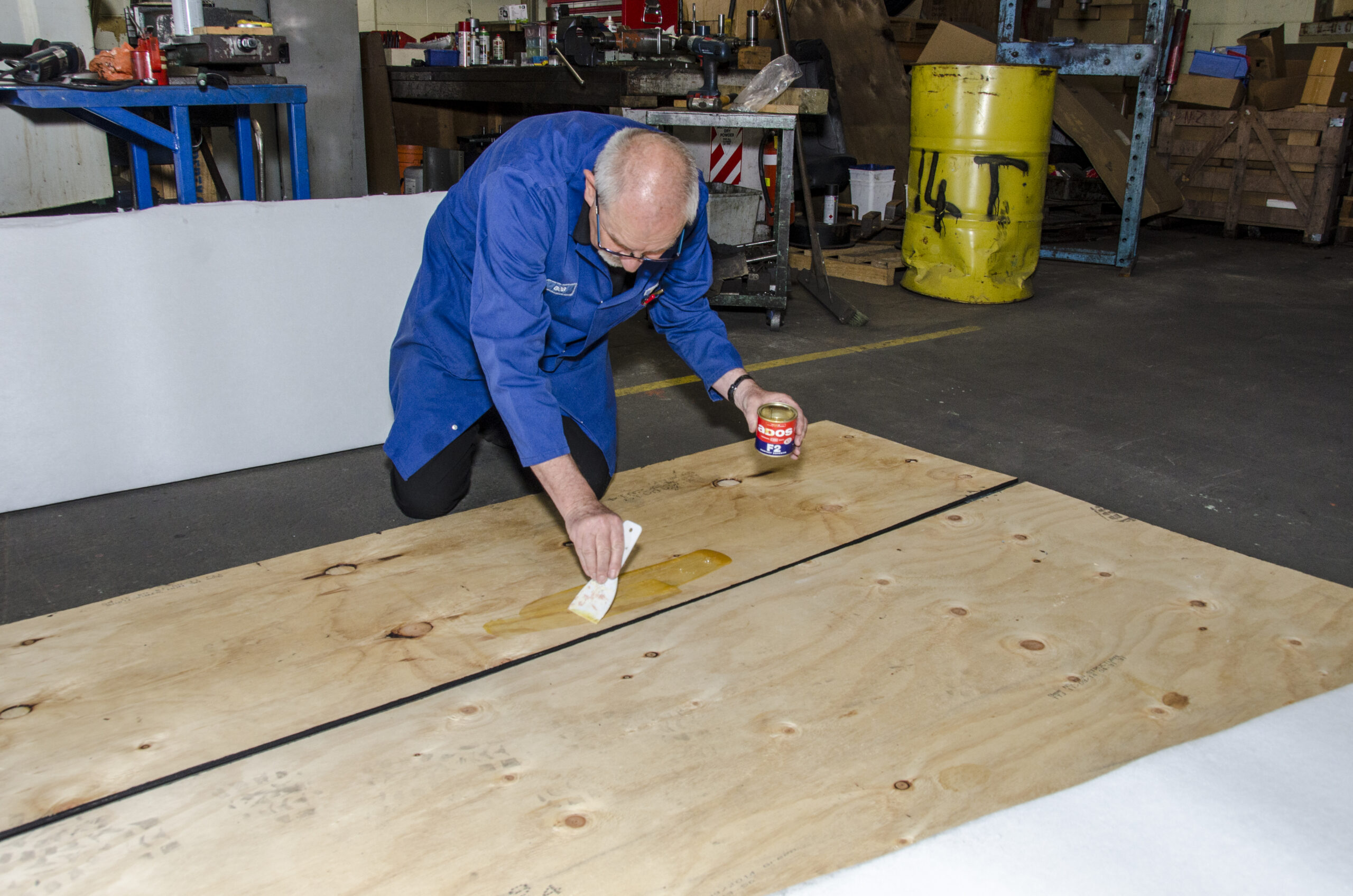
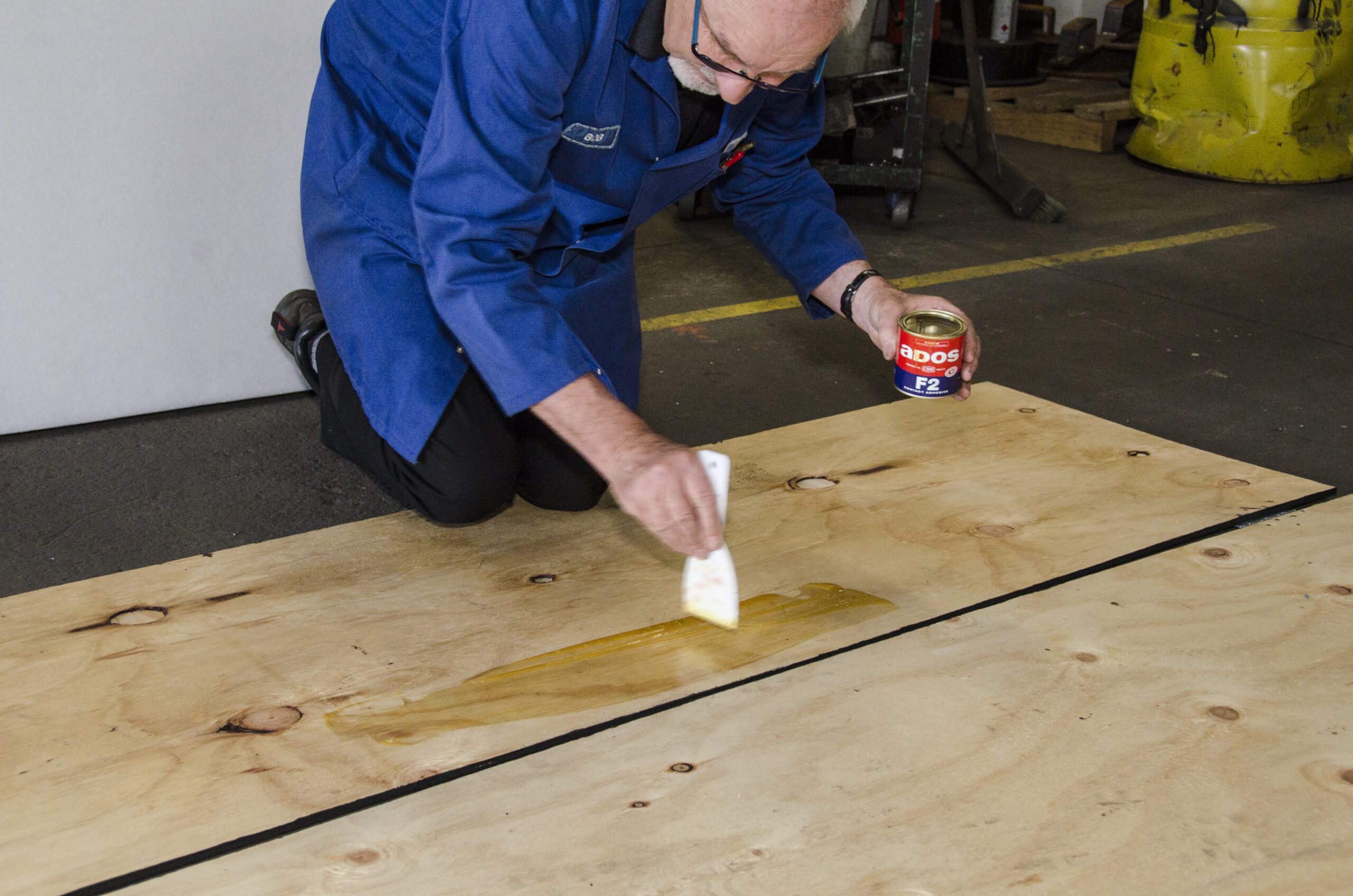
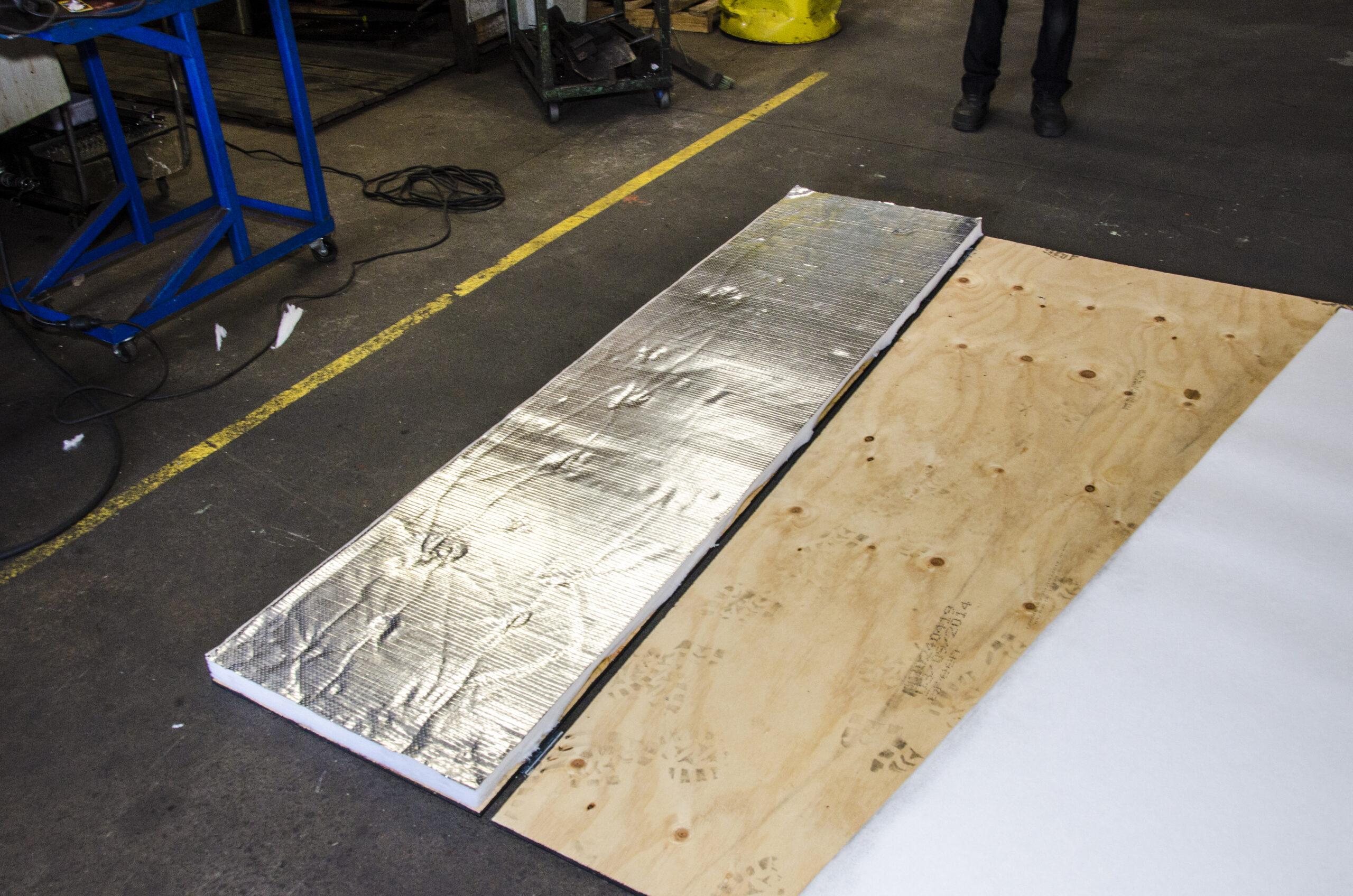
The photos show much of the way this was accomplished. The basis of the screen is 2 sheets of plywood. One is used whole and the other cut in half down its length. The hinges were fitted to the long sides so that the full sheet was in the middle, leaving a gap between sheets to enable the hinges to swing both ways (i.e. so that the screen is effectively “double jointed”)
Contact adhesive was used to mount the sound-absorbing panels to one side of the plywood, although Potter Interiors do also have a pin and clip fastening system. Two full sheets of the sound-absorbing material were used, cut with a disposable blade-type knife. I used Pyrotech Sorboflex material.
On the opposite side, I painted the plywood with blackboard paint to get a matte black finish. This will not reflect arc flashes from welding, as well as being a physical barrier. The beauty of using blackboard paint is that the screen is now a memo board too!
Now that the project is complete, there are a couple of improvements that are apparent. The first problem is that it is really too big to be easily handled by one person. If it were not so high, I think handling would be a lot easier – say 1800mm high. Secondly, the gaps between the sheets where they are hinged, while necessary to make folding both ways possible, would best be covered by a fabric to contain arc flashes and to reduce noise leakage.
In general, however, the portable screen has proved to be most helpful in keeping good relations with neighbours. Now, what we need to do is come up with an effective and low-priced lawn mower muffler! Any ideas?