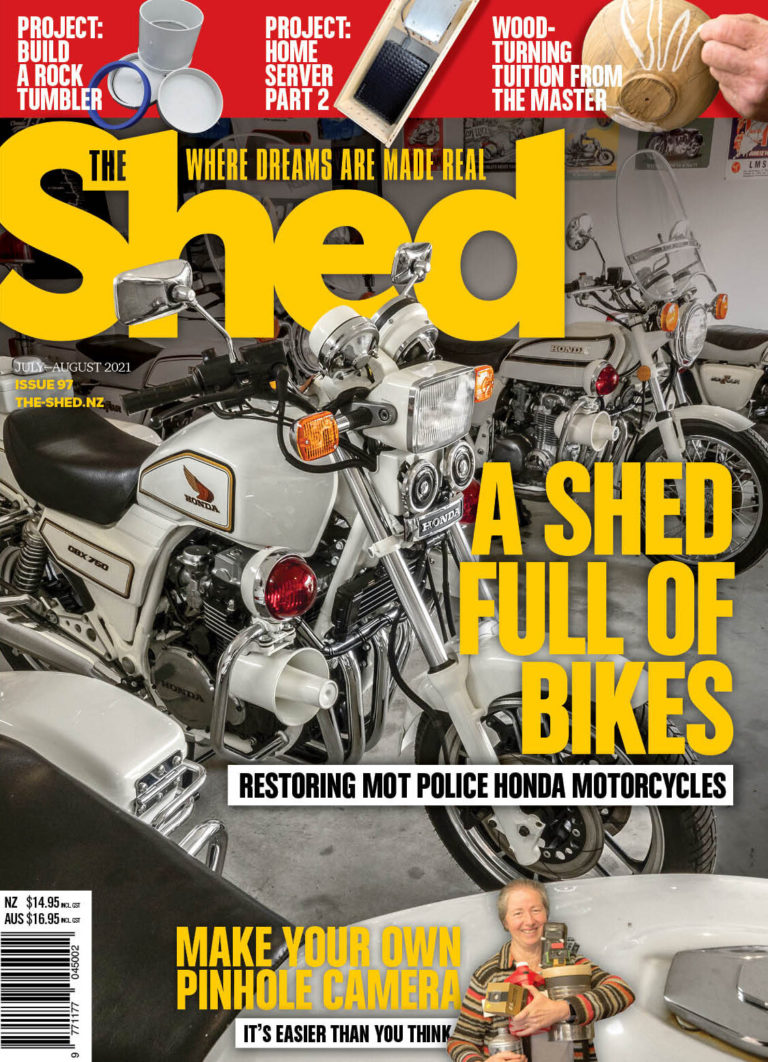
Murray Belfield is a phenomenon
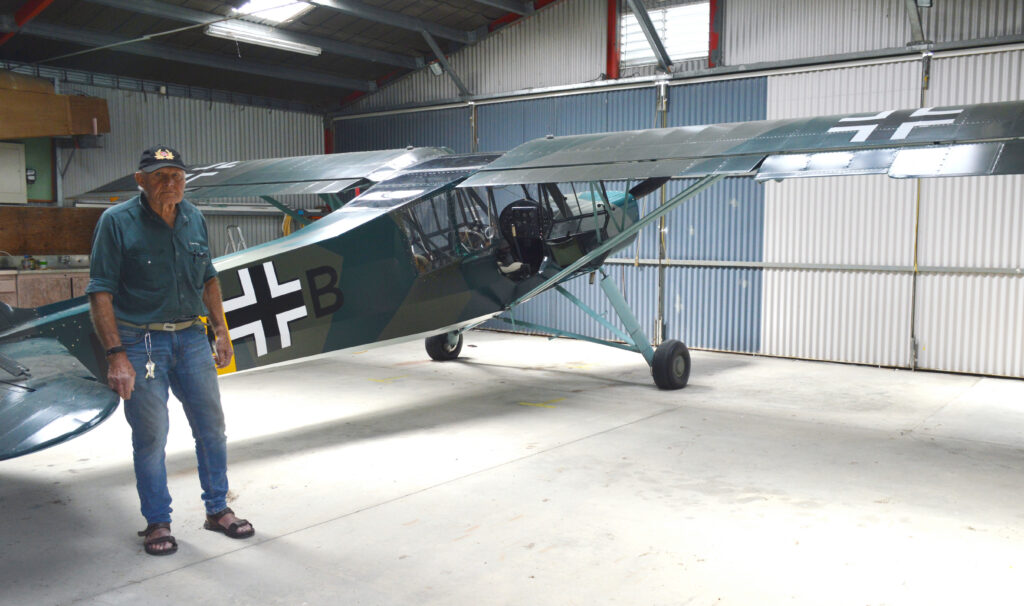
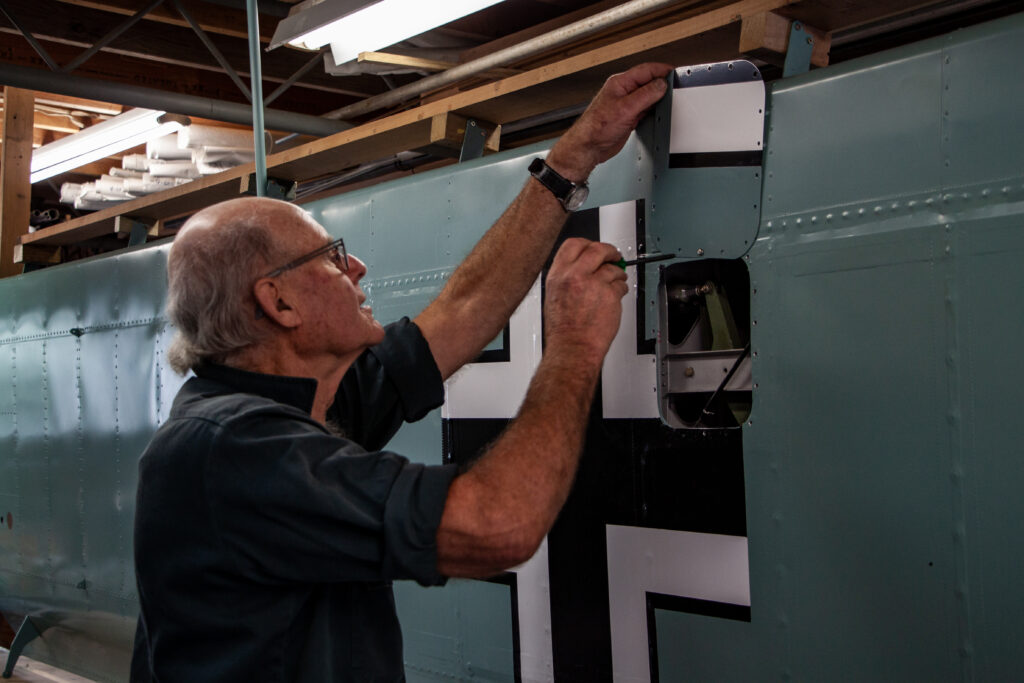
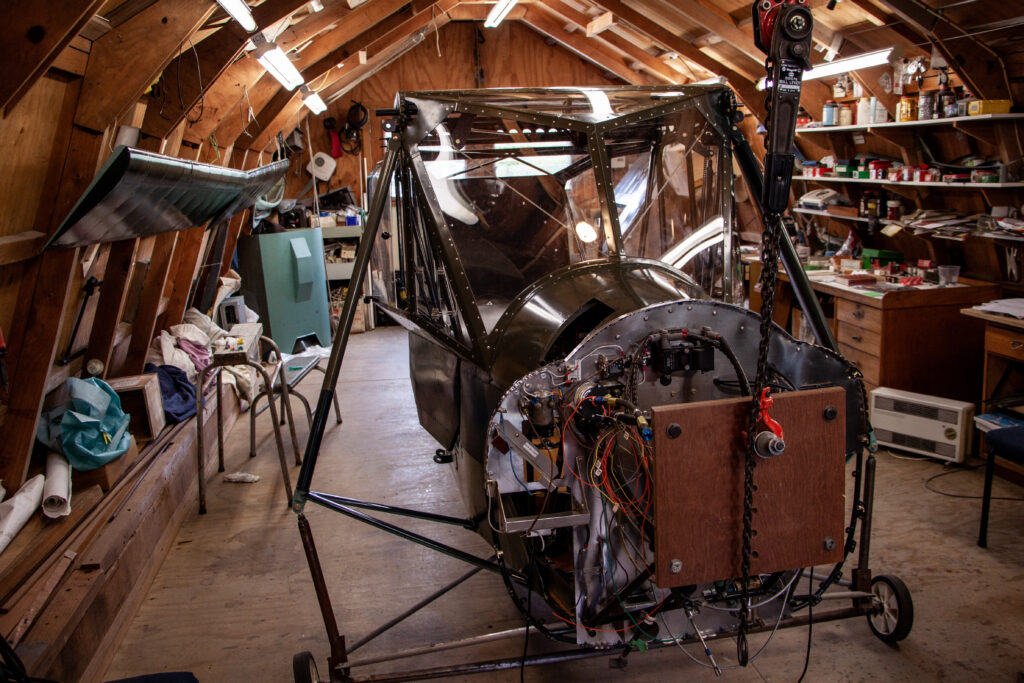
He has built a few planes over the years, but none gave Murray the performance and thrills he really wanted until he built his scaled-down German paratrooper’s plane, a Storch. Building this rarest of planes consumed nine years of this 86-year-old’s life. And the result? He couldn’t be happier.
For most of us, stalking a deer across the back country, shooting it cleanly and lugging it home to furnish the table would be accomplishment enough for any evening’s bragging rights.
But when that involves landing an aeroplane you built in your shed onto a handkerchief-sized patch of hilltop scrub, finding and shooting the quarry, manoeuvring the carcase into the spare seat and getting off the ground again, and doing all that at the age of 86, bragging just vanishes in the slipstream. Murray Belfield is, anyway, far too practical and busy a guy to waste his evenings boasting to his mates, but he is, nevertheless, a phenomenon. His plane, the second he has built by hand, is another. Highly specialised for short take-offs and landings (STOL), it is a three-quarters-scale replica of a WWII flying legend, the Fieseler Storch.
The replica, designed by famed aircraft engineer Ladislao Pazmany, is so challenging to build that, to Murray’s knowledge, only one other Pazmany model has been completed to the flying stage, by an enthusiast in Alaska. As if that wasn’t a hard enough ask, Murray has incorporated many improvements of his own based on his many years of bush flying experience (and his dislike of fibreglass).
To purchase a copy of this edition of the magazine, head here to The Shed’s own online store
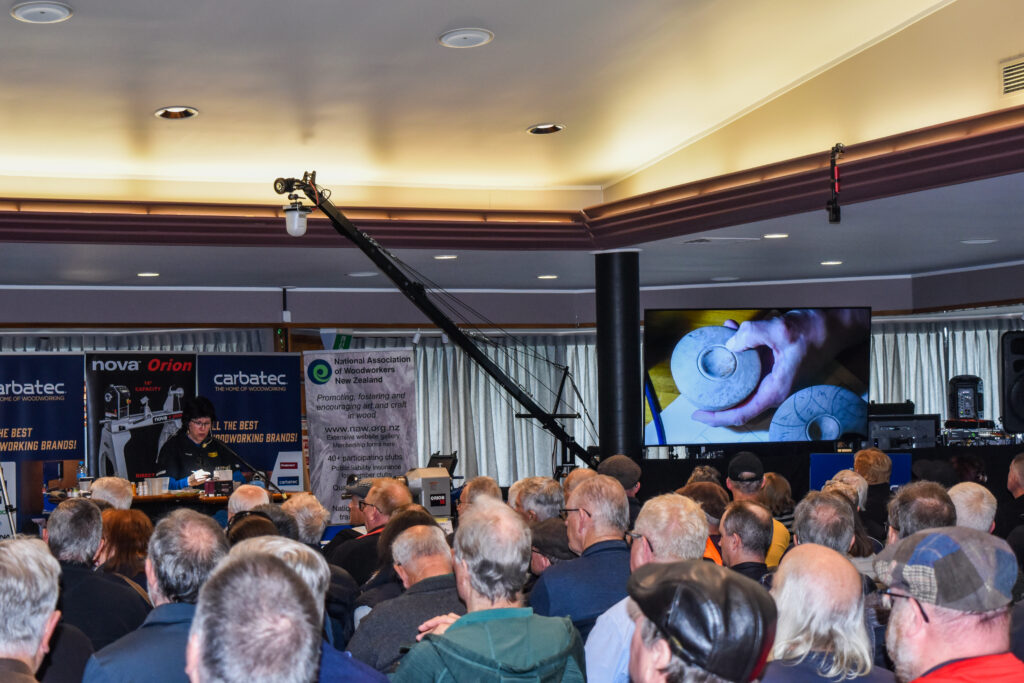
The annual Woodturners’ Expo is a winner
World-renowned woodturners demonstrating at this year’s event, plus a tool supermarket, and an outstanding multi-camera video set-up, make our correspondent’s day.
For hobbyists and semi-professional woodcrafters alike, the appeal of the Expo, run by the NZ National Association of Woodworkers (NAW) – and this year, held in the salubrious premises of the Papatoetoe Cossie club in South Auckland – is that it serves as a one-stop gallery and exhibition of top-class art pieces, a place to meet and greet the best 100-plus woodturners from around the country, a makeshift supermarket of equipment, tools and supplies from the leading merchants and retailers supplying our industry, and a place to discover and learn new techniques and practices from world-class demonstrators.
Another of the drawcard demonstrators at this year’s Expo was world-leading American female wood artist Andi Wolfe, a botanist with art pieces in Smithsonian museums and a teacher at numerous institutions around the globe.

From the archives: Casting aluminium wheels
With my background as a fitter and turner with the railways, it was natural that I would be interested in making small then large wooden locomotives as presents or to sell and then extend this to creating a steam tractor, the traditional traction engine.
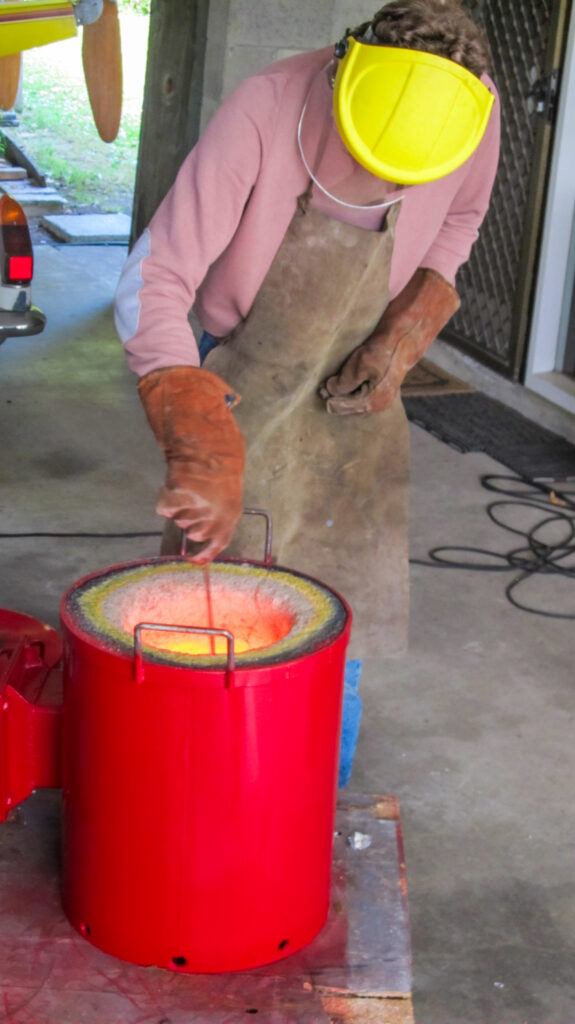
At one point, a friendly sheddie lent me his foundry equipment, an electric furnace, a crucible and tongs, etc., and I melted down old pistons to get a fine-grained cast.
Wheels are an important component to add character to a toy tractor, truck or locomotive. This raises the possibility of casting wheels in aluminium. Casting aluminium is not as complicated as it may seem; common sense is the main ingredient.
In the case of a tractor or traction engine with two small and two much larger wheels, the contrast in size is important. Also, the large wheels need to be wide but have thin tapered spokes.
This poses a problem: how to flow enough molten metal through the spokes to fill the rim? One way that may succeed is to extend the length of the sprue (entry port) to increase the weight of molten metal above the cavity. Another solution is to add a 5 mm backing on the pattern. Thus, the spokes will be formed, as well as this ‘extra cavity,’ and the rim will fill too.
Ham Radio, a 100-year-old Internet alternative?
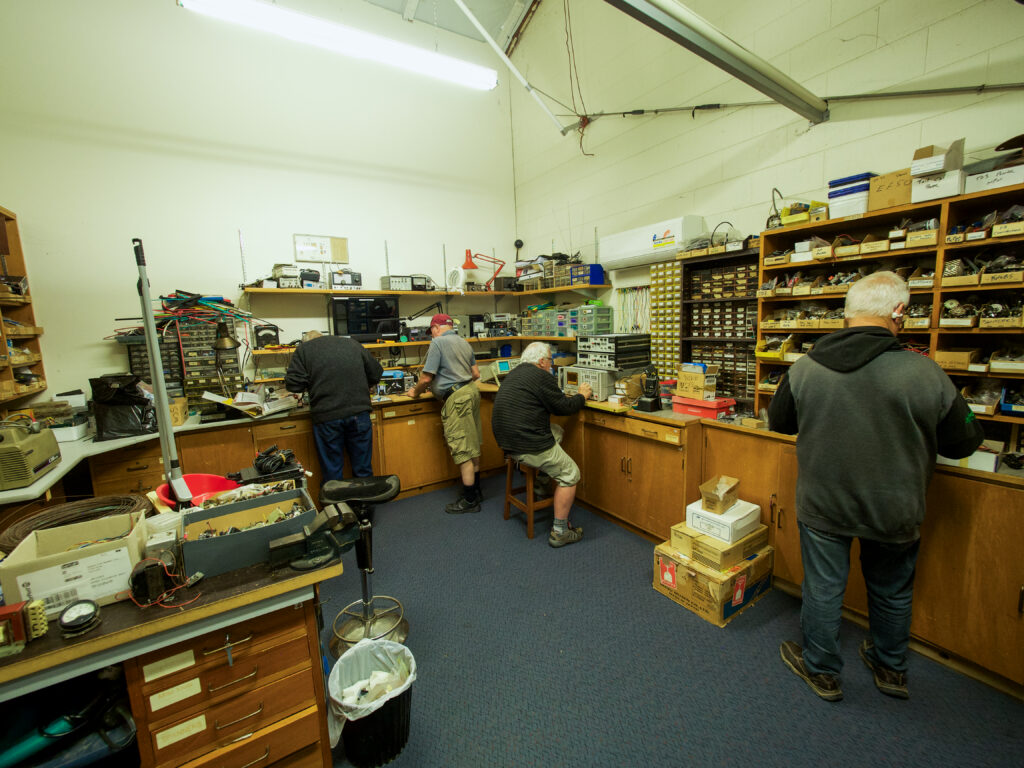
A glimpse of some tall aerials in the backyard of a neighbour’s house sent Nigel Young off on an adventure of discovery. He learns that amateur radio not only has a fascinating history but also offers many areas of both fun and responsibility that interest and inspire enthusiasts.
The research into this article also took a personal turn. I contacted Craig Crawford ZL3TLB, historian at NZART (New Zealand Association of Radio Transmitters Inc, see sidebar), and it turned out he had previously worked with my Dad – Eric Young – who had been the Christchurch District Radio Engineer in what was then known as the Post Office, in the early 1970s. Dad died in 1979.
Some years later, Mum married ham radio operator Martin Kimble ZL4GO and ZL2AY, who was also associated with PEACESAT. Martin’s involvement included writing articles for the NZART magazine Break-In in the 1930s and ’40s. Break-In was first published in 1928, and is still the official magazine of the NZART. Martin also wrote an entry entitled ‘Radio and Electronics’ in the 2nd Volume (p. 571) of the white three-volume series ‘The New Zealand Junior Encyclopaedia’, published back in 1960. Some of you may remember them on bookshelves when you were younger.
Those letters and numbers that begin with ZL and follow Craig’s and Martin’s names are known as call signs and were established in 1923, although initially without the Z or L prefix. The establishment of the IARU (International Amateur Radio Union) resulted in Z being allocated to Aotearoa New Zealand in 1925, OZ in 1927 and ZL in 1929.
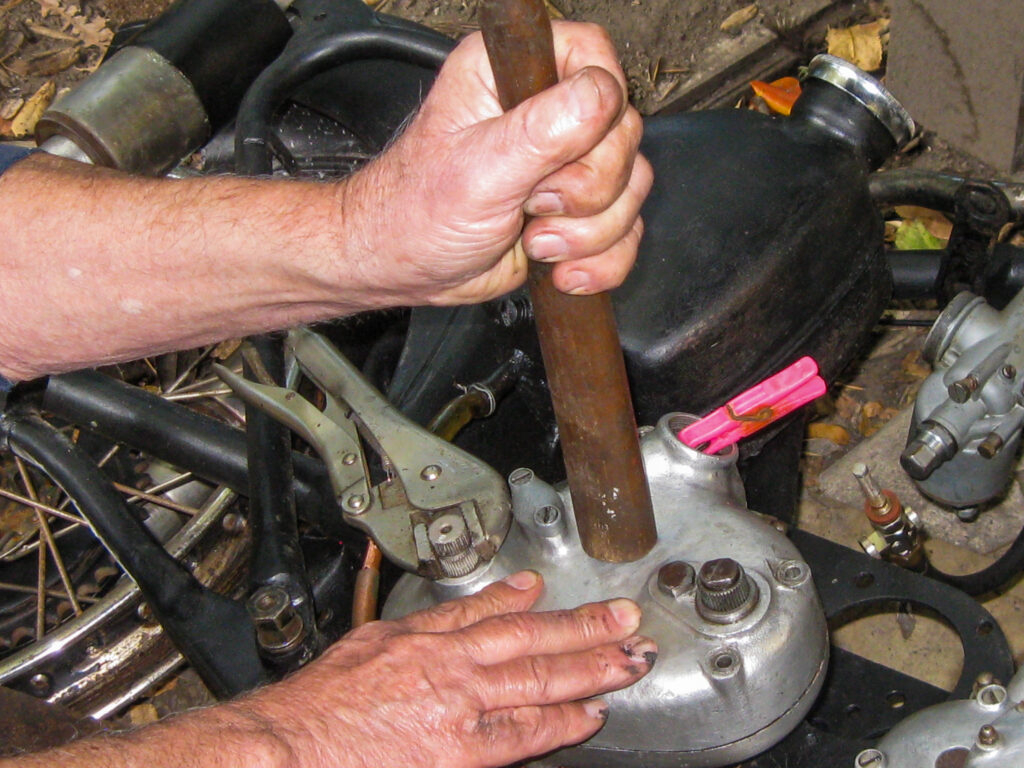
Restoring a 1952 AJS – Part 10
Peter’s unwavering commitment to this restoration is truly admirable. He has had to redo several tasks multiple times and has faced challenges with issues like plating, the kickstart spline, and getting the engine running. Despite encountering obstacles, he maintains a positive attitude and knows that the only way to complete this thorough rebuild from boxes of old parts is to keep pushing on.
I am continuing the rebuild of an old classic English motorcycle, which has been in parts and in storage for the past 50 years.
I call it a 1952 AJS 500 cc (model 18S), although many parts are from before or after 1952, and some are actually from a Matchless. I rode it briefly in the mid-70s, and it was apparent even then that some work needed to be done. The electrics (apart from the magneto ignition) had never worked for me; the alloy head needed heat treatment; the swing arm suspension had to be rebushed; and the steering had a bad judder at speed. Only the swing arm was fixed, but other repairs and reassembly never started until three or so years ago. It became a retirement project.
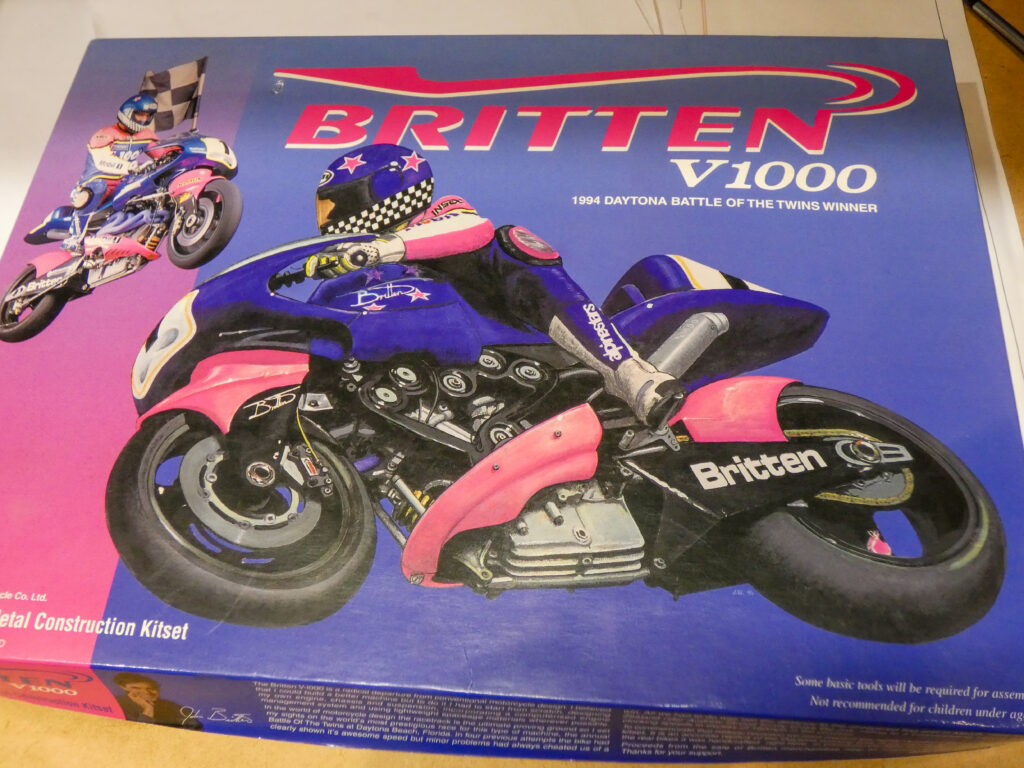
Model kits of the Britten V1000
Legendary motorcycle builder John Britten envisioned a Baby Britten model as a bike for fans who couldn’t afford a real racer, allowing them to own a piece of the legend. Now, a new and even more detailed model of the V1000 has become available, and it’s in very high demand.
For two years after he returned from a year in London and before he started living at the historic Mona Vale stables, highly esteemed New Zealand racing motorcycle designer John Britten shared a flat in Merivale with mechanic Allan Wylie.
They had become friends because they were both restoring Triumph Tiger 100 motorcycles and had decided to work together: John refurbishing the frames while Allan worked on the two motors. When they flatted together, John supported himself by making table lamps in his bedroom with cast-brass bases, chromed tube supports, and Tiffany-glass shades.
In subsequent years, John established the Britten Motorcycle Company (BMC) as a successful competitor in international motorcycle racing, with its innovative Britten V1000 racer. The BMC also produced a limited number of V1000s which were sold to customers around the world.
The two men remained friends for the remainder of John’s life. Allan drove John’s 1926 International camper van in his funeral procession (which brought central Christchurch to a standstill) after John died in 1995.
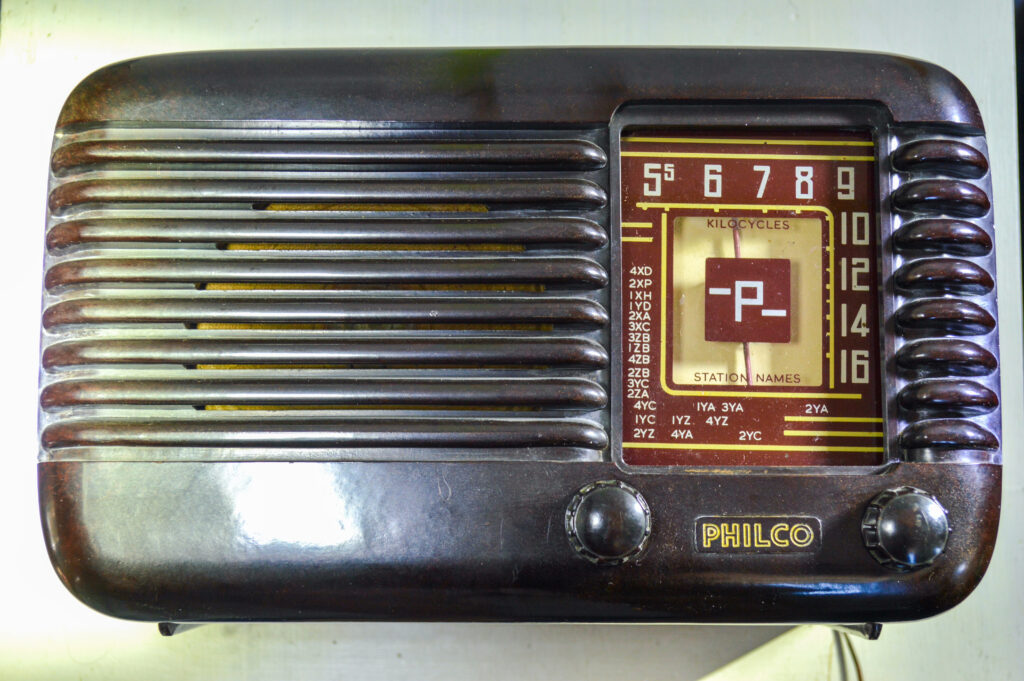
Restoring a vintage valve radio – part one
Chris has accepted the challenge to learn all he can about valve radios and has taken a crack at restoring a classic, dead Philco Nevada 401. How hard can it be?
I travelled to Pukekohe on a two-fold mission for The Shed – to meet radio restorer Peter Walsham (Issue 126) and write a story about restoring a vintage radio for readers who might want to give it a try.
I know absolutely nothing about how any sort of radio works, much less a valve radio, so I decided I was the perfect guinea pig to give it a go. I needed little encouragement, not only for the challenge but because the warm sound of a valve radio had been a big feature of my childhood in the 50s.
The insanely original The Goon Show was the highlight of the week at 8 pm every Sunday. The same day, at 6 am, we had risen early to listen to the 1ZB Children’s Show. My father had been a radio star in Christchurch before the war, and he still wrote and performed in some of those Sunday morning shows.
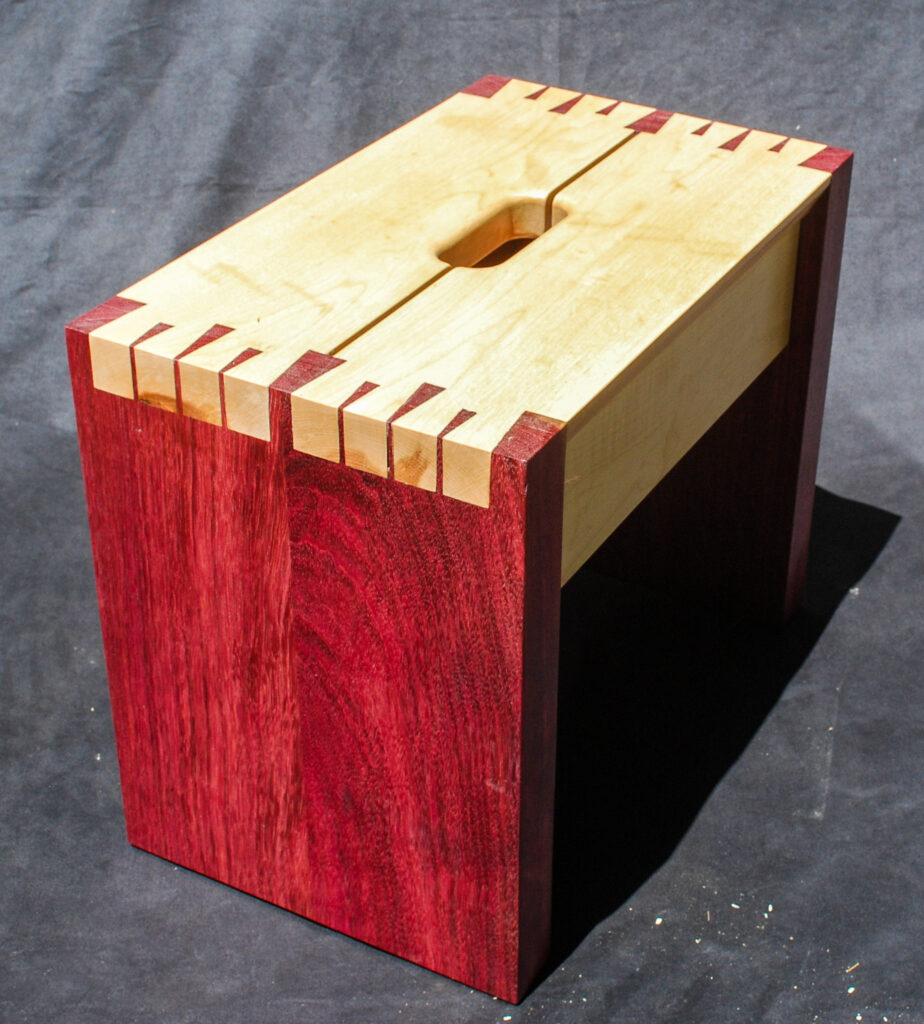
Learn how to make a dovetail joint
The dovetail joint is one of the oldest known woodworking techniques, dating back to before written history. It is named for its resemblance to a dove’s fanned tail. In this instalment of his woodworking tutorial series, Edward Prince explains how to master the various types of dovetail joints.
In the world of woodworking, few techniques are as iconic or revered as the dovetail joint.
You can buy clip together drawer boxes fitted with full extension soft closing runners, so what’s the point of learning how to hand cut dovetail joints in the centuries-old tradition of the fine craftsmen? Known for its strength, durability, and elegant simplicity, this interlocking method of joining two pieces of wood has long been considered the pinnacle of a cabinetmaker’s skill, a hallmark of fine craftsmanship.
The dovetail joint is one of the oldest known joinery techniques, predating written history. It gets its name from its resemblance to the fanned tail of a dove. Evidence of its use dates to ancient Egypt, in furniture entombed from the First Dynasty; the tombs of ancient Chinese emperors; and on stone pillars in India, indicating its widespread use across civilisations for thousands of years.
A Kiwi workshop icon with a story built on practicality
How a global maintenance brand found a natural home in thousands of New Zealand sheds, garages, boats, and backyards.
For generations, CRC has been more than just a product on a shelf; it has been a trusted problem solver in workshops. Whether it’s loosening a rusted bolt, silencing a squeaky hinge, protecting tools from corrosion, or restoring a weathered piece of machinery, CRC has become an essential part of Kiwi maintenance culture. In many households, the familiar red-and-white can is as common as a hammer, screwdriver, or the Buzzy Bee.
However, behind this everyday familiarity lies a story that spans over sixty years – one built on innovation, practical chemistry, and a strong connection to the way New Zealanders live and work.

Off the grid – Déjà vu all over again
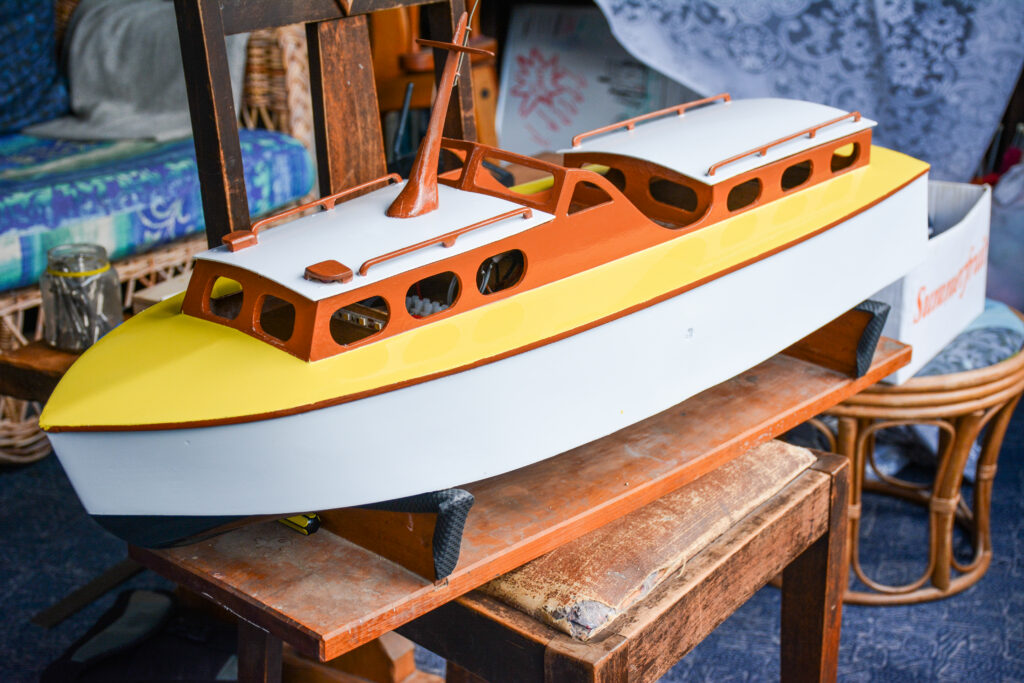
So many of our sheddie interests are started in our early years, and Murray is solid proof of that. Reading a book on sailing as a young ‘un led him to a life upon the waves, and has also drawn him back to a model boat he viewed 63 years ago, through a neighbour’s window.
It was an interesting year, 1953, worth remembering, given what is happening currently.
Elizabeth was crowned Queen of a dying Empire. Its spy agency, MI6, combined with its US counterpart, the CIA, to overthrow the government of Persia, now known as Iran, because they wanted to regain access to Iran’s oil. They incited riots in the streets prior to the attempted regime change. Now, why does that sound familiar?
Meanwhile, back in Lizzie’s decaying England, a talented model boat designer put pen to paper and came up with something reminiscent of the craft being hired on the Norfolk Broads.
Real-world Arduino
Our Arduino expert has been following an intriguing online project for the past 12 years, but he raises some valid points about certain approaches he disagrees with in this unique project.
In recent issues of The Shed, I’ve introduced readers to features of Arduino.
We’ve touched on past projects or articles, as well as talked about some current projects that utilise an Arduino.
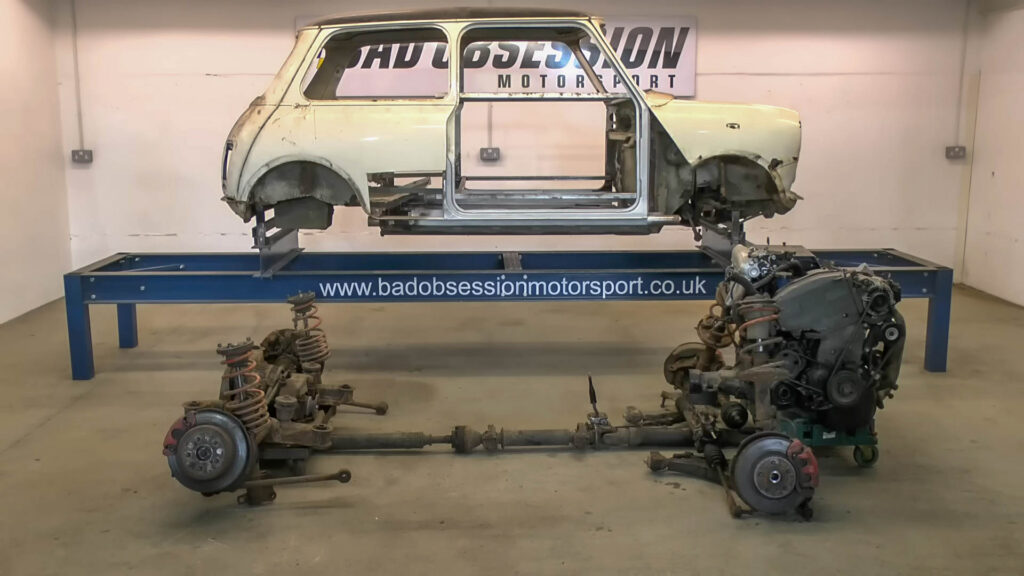
Over the last twelve years, I’ve been following a couple of clever and talented guys (Nik Blackhurst and Richard Brunning) in England. Their goal was to put all the running gear (including a turbocharged engine) from a Toyota Celica 4WD into a Mk1 Mini while keeping the overall dimensions and four seats.
Most of the work was done in a garage on weekends, using basic tools. This is not some bodge job but a properly engineered and executed project.
JimBots – a world of illusions
Seated at his workbench in a tiny shed in Paraparaumu Beach, Scotsman/Kiwi, Colonel Jim Dryburgh, looks a little like Gepetto, the storybook character who carved wooden puppets such as the famous Pinocchio. But instead of crafting puppets, Jim creates robots from scrap metal.
Originally from Argyll on the West Coast of Scotland, Jim Dryburgh grew up in the small seaside town of Dunoon, which is similar in size to where he now lives on the other side of the world, in Paraparaumu. A long military career brought him to NZ, and he has now spent some decades here. The robots he makes preserve vintage items in the process, sometimes memorable items.
“One of my favourite things is that people will come to me with a piece. They might have had a grandfather or a father who had a shed like this, and of course, when they pass on, as will happen when I do, the family will say, ‘bloody hell, what are we gonna do now? Because nobody wants this junk. And then they’ll have the job of clearing it, and quite often they’ll come to me with a piece and say, ‘Can you incorporate this into something whereby we can remember them?’’

Know your stuff – The Shed Quiz No. 8
You’ve got a shed, and you know how to use it – but do you really understand how everything works? Test your sheddie knowledge.
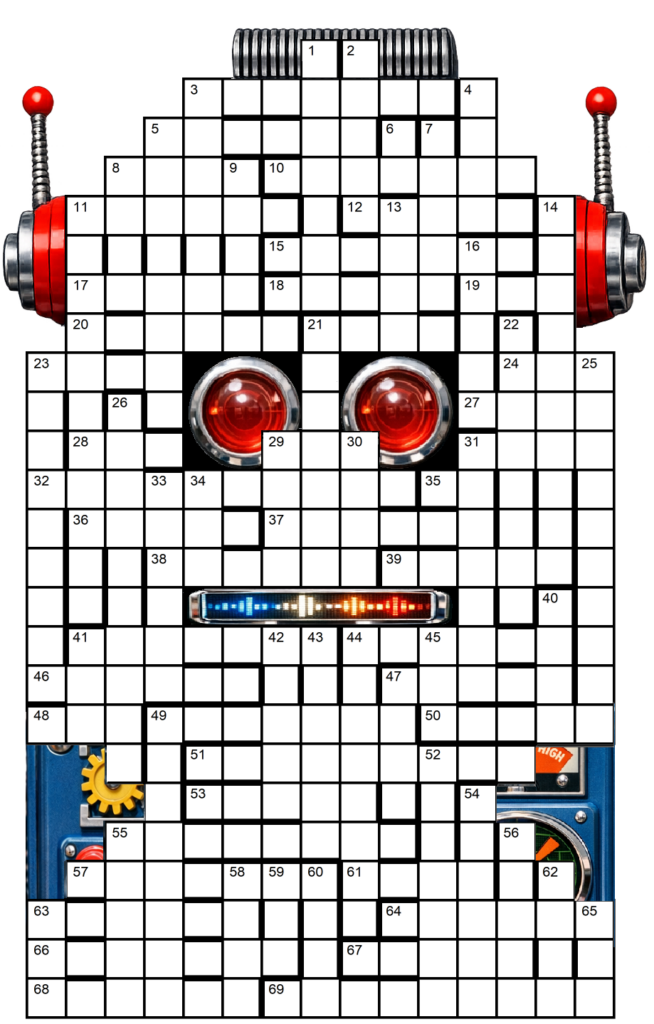
Plus: The Shed Cryptic Crossword No. 5 – by Maya

The Shed Shrink – one very cosmic dude
Music, art, and meeting people are what make Don Williams a very happy and contented fella. Our Shed Shrink spends some quality time with the guy who has been to more concerts than you have had hot dinners.
Rockets, space and alien UFO craft are hot topics right now, what with the launch of Artemis II, the first crewed flight to the moon since 1972.
NASA disclosed that it intends to create a moon base near the lunar south pole by 2030. Wow, it’s all happening in our lifetime, living on the moon could soon be a reality, stuff we could only read about in comics as boys in shorts. So not one to miss out on any of this space action, I decided to track down a chap, Don, aka ‘Cosmic Dude.’
I was told this guy had some interesting music to listen to, some cool old Harleys, and an impressive shed, so armed with this information, I jumped on my time machine (the old HD Softail) and teleported myself to another galaxy.

Back O The Shed – tightening my halo
Is it time for Jude to slow down a little? Well, now that he has purchased an electric “Nana car”, he doesn’t have much choice.
Back when the world was trying to give up smoking, there was a saying – “Kiss a non-smoker and taste the smugness”.
It’s been a bit like that recently as we try to wean ourselves off fossil fuels. All the electric vehicle drivers had a subtle sense of smugness. I used to think that if their halos were a bit tighter, they’d all get migraines.
To be fair, I think they are doing the right thing, but I just couldn’t afford it. I’m still not an EV convert, but I can now afford to be a little smug, too. I have just purchased a hybrid. It’s not anything flash – just the opposite, actually. After my last car died, I had been considering getting a hybrid, but the rocketing price of fuel was the final catalyst.