
Video of dolls house makers, Peter and Lynda Brocklehurst
In The Shed January/February Issue 94, we featured these amazing dolls house builders from Christchurch.

In The Shed January/February Issue 94, we featured these amazing dolls house builders from Christchurch.
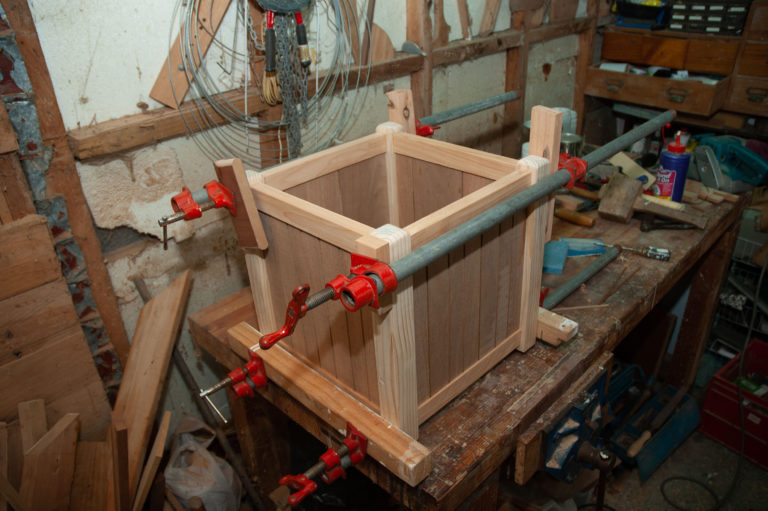
The “Leader of the Opposition” has pointed me to the great outdoors and is making noises about things to house the shrubbery that materialises from the garden centre every weekend
Glen Macmillan works between his two sheds creating sculptures from recycled waste. His junk of choice is gardening tools, landscaping equipment, and farming equipment — particularly the older kind of hand tools that were made to last and had a bit of styling.

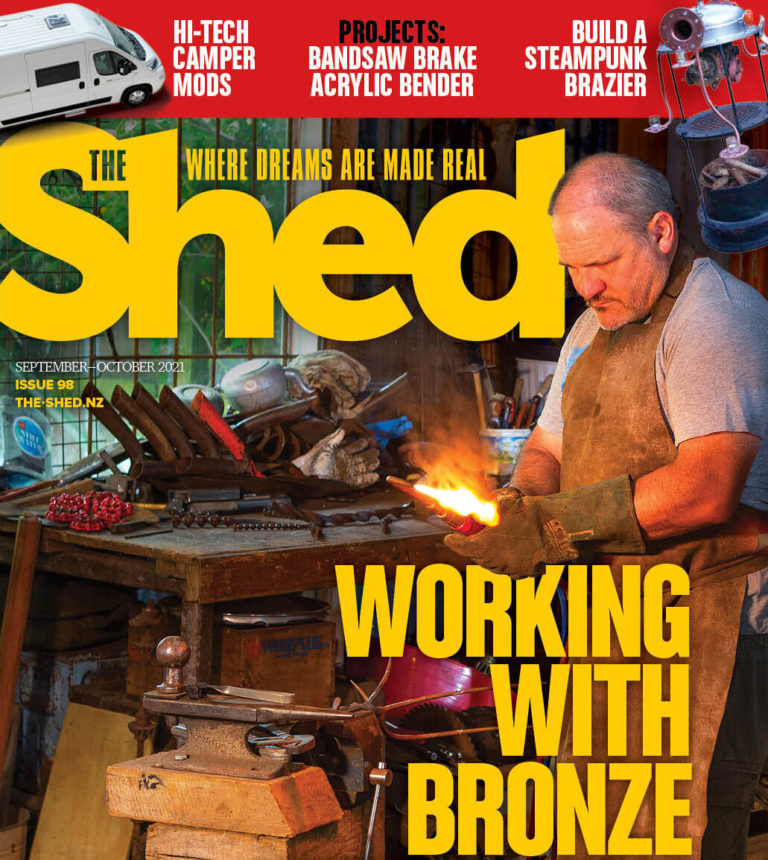
Brazing can be described as the joining of two or more pieces of base metals together using a copper or silver-based filler rod.
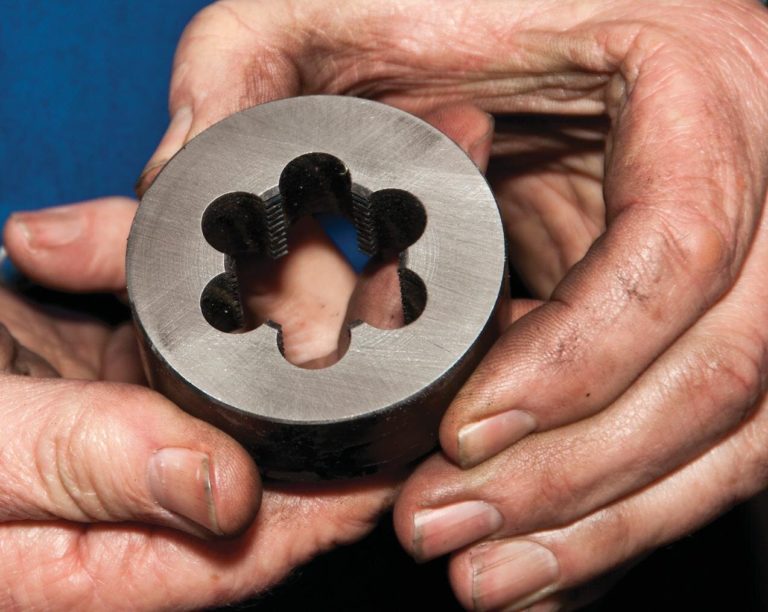
A die nut is created with interrupted sections of thread around its internal diameter. Die nuts are simply screwed onto the threaded part. As they are wound down, they cut away any of the screw thread that is bruised (bent over) or out of line. A die nut cuts irregularities and scrapes off the dirt from the thread it is being used on so needs cutting edges, which are formed by the cut-away places.

We are now calling for entries for your shed to be featured in our 2022 The Shed Calendar.

I have constructed this project to demonstrate the concept of modular design for a set of drawers.
A modular concept allows you to design drawer space to fit your needs. You can add on or change the layout to suit, or you could mix them with shelves to make up modules to fit an awkward space or just to express your creativity.

A replica steam engine that made its first appearance at the Glenbrook Vintage Railway near Auckland in 2013 was much more than just another piece of interesting machinery. Built to mark 300 years since what was believed to be Thomas Newcomen’s first engine, made in 1712, it celebrates an invention that contributed significantly to the industrial revolution.
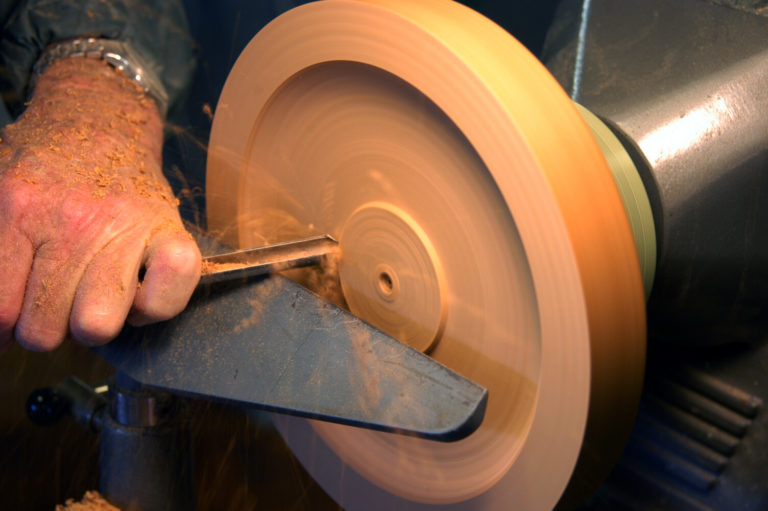
A crescent clock looks at its best if it is made from a stylish native timber.
For this project, I used a kauri block. When you come to select the wood which will be prominently on display in the living room or dining room, for preference choose a piece of timber that has a distinctive grain.
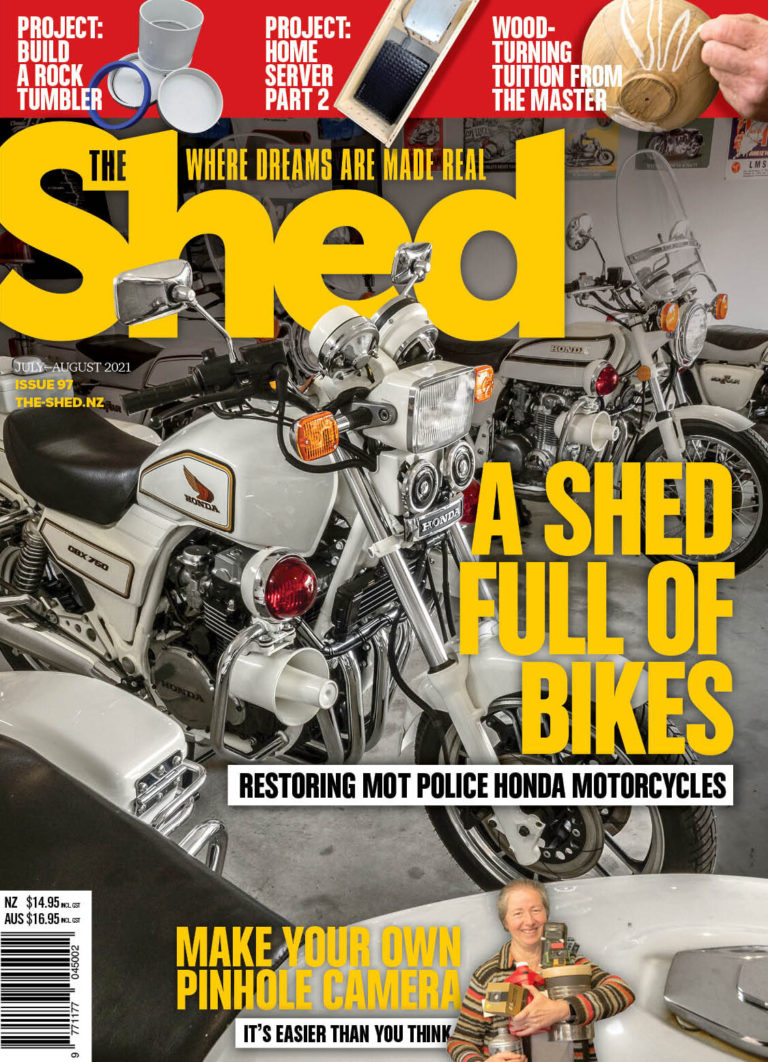
Restoring motorbikes is what South Island sheddie Hayden Tasker loves to do in his workshop, but not just any motorbike.
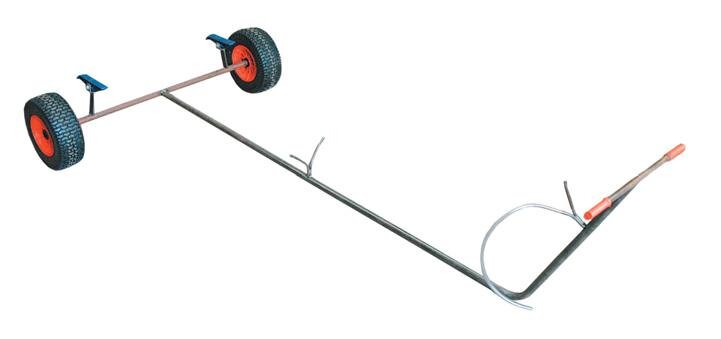
I used a pipe 3200mm long, but it depends on what you have. This is 2400mm along the flat and bent up at the front. The horizontal distance, from the flat to the tip lengthwise, is 340mm. I measured from a square on the pipe, and out 340mm for the bend. The axle is usually 1200mm. I turned a little insert stub axle for putting through the one-inch (25mm) bush in the centre of the wheel and into the axle. You could also turn down the axle to fit. It’s a straight bush because bearings and saltwater don’t mix.

Here we’re going to use 3D printing to do a modern twist on “lost wax” casting.
It’s a trick that’s more than 5000 years old: make something in wax, bury it in clay or plaster leaving a hole in the shell. Bake the heck out of it to remove the wax and then pour molten metal down the hole. If everything stays together, you get a metal replica of your wax object.

This a project to make a popular Newtonian-design reflector telescope with a Dobsonian mount. The principle of the telescope is to collect light and then magnify the image. The light from a distant object (a star or planet) is gathered by the mirror and brought to a focal point. The eyepiece is used to focus and enlarge the image. By changing the eyepiece, we can increase the magnification and the size of the image. The larger the objective or mirror the more light it can gather and therefore you can use a higher magnification eyepiece.

When the meat lovers among us think about carving up Daisy the cow, we’re picturing the Sunday roast but Lilach Paul sees bare white bones: blank canvases to be brought to their full potential beneath her Dremel drill.