Earl’s Wood Hardener penetrates into soft and rotted wood fibres, restoring them to near original strength. It makes repairs possible to even the most fragile wood, ready for full restoration. Forget digging out rot. Earl’s Wood Hardener will penetrate wood fibres, and once dry, you can patch and paint, if necessary. It’s suitable for both interior and exterior jobs and is ready to use straight from the tub or bottle. There’s no waste and no volatiles to avoid. Available in 250ml, 1L and 4L sizes from hardware and paint retailers nationwide. Visit hobeca.co.nz for more information.
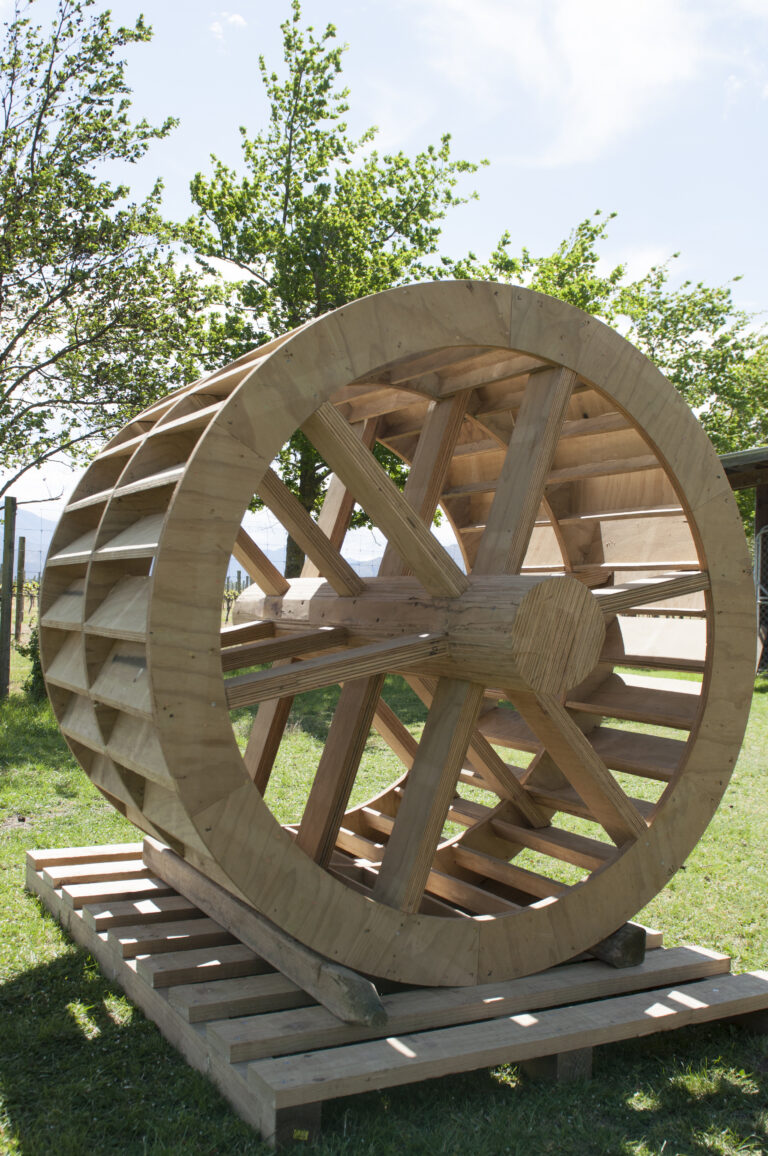
Turning back time – a waterwheel replica
When a Marlborough farmer with a passion for history took to his stream with a digger, he knew what he was looking for and came up trumps. John Walsh, of Woodbourne Farm, near Blenheim, was searching for remains of the waterwheel that powered the province’s first flour mill in the mid-1850s.
The concrete weir, although breached in a couple of places, was still standing on the Mill Stream, along with rusty debris from the metal operating system. The waterwheel itself had rotted away, save for two blades (or paddles) and a portion of the rim, but when John went digging below the weir, he unearthed the wheel’s wooden hub virtually intact.
“There was enough left to make a pattern from which to build a replica,” says John, who runs a private museum on the property, Woodbourne Homestead and Historic Farm, which is a NZ Heritage-registered site.
The waterwheel had been built for the original landowner, Henry Godfrey, by the Barton Brothers, who were early bridge builders in Marlborough. “These structures were built by the finest-quality tradesmen,” says John. But despite the workmanship, the water-powered mill operated for less than two decades, closing in 1873. Unlike the gentle streams of England, the meandering Marlborough creek could turn from a trickle to a torrent in a matter of hours. “It wasn’t a hugely successful site,” says John.