
New Zealand Railways celebrates 150 years

In 2013, Railways in New Zealand marked the anniversary in October this year of 150 years since the first broad-gauge public steam railway opened between Ferrymead and Christchurch City in 1863, a distance of seven kilometres. The original gauge was five feet three inches (1600 mm) wide, although the standard gauge for New Zealand railways was to become three feet six inches (1067 mm). As the Railways 150 Years Committee describes it, “People and goods were barged from the Port of Lyttelton to Ferrymead, then taken by rail to Christchurch. The Ferrymead Line operated for ten years from 1863 until 1873 when the 2.6-kilometre tunnel connecting Lyttelton and the Heathcote Valley was completed and commissioned.” The celebrations for the anniversary in 2013 are focused on operations and displays at the Ferrymead Heritage Park during Labour Weekend and include heritage steam trips with the restored locomotive Ja1240 from Christchurch to Arthur’s Pass, Timaru and Ashburton. The Railways 150 Committee includes representatives from rail organisations such as the Ferrymead Railway, the National Railway Museum of New Zealand, the Mainline Steam Heritage Trust, the Plains Railway, the Weka Pass Railway, the Steam Canterbury Preservation Society and others. Additional help and assistance is provided by KiwiRail.

A milestone in the history of NZ rail
By Terry Snow
Photographs: Darryl Houston, Michael Tolich, Geoff Osborne, Terry Snow

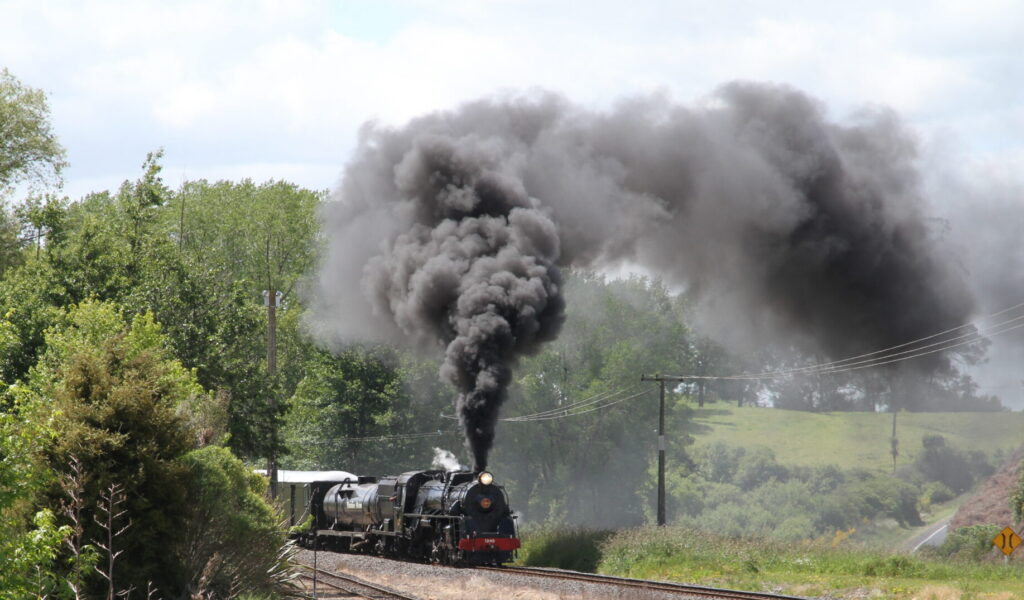
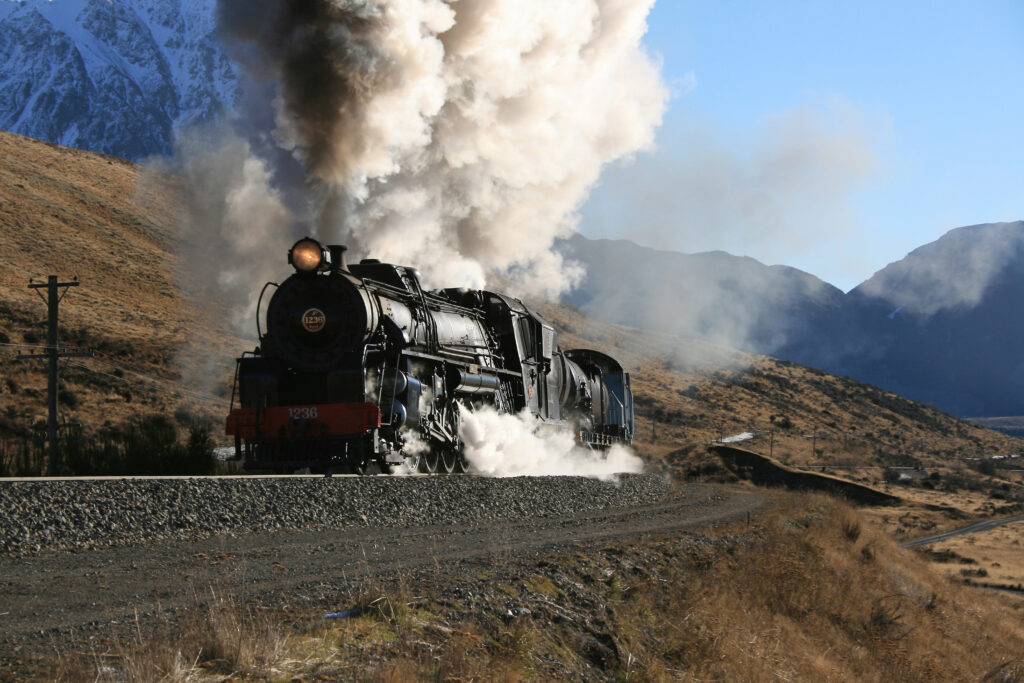
In the Waikato, Ja1240 under power

In 2013, Railways in New Zealand marked the anniversary in October this year of 150 years since the first broad-gauge public steam railway opened between Ferrymead and Christchurch City in 1863, a distance of seven kilometres. The original gauge was five feet three inches (1600 mm) wide, although the standard gauge for New Zealand railways was to become three feet six inches (1067 mm).
As the Railways 150 Years Committee describes it, “People and goods were barged from the Port of Lyttelton to Ferrymead, then taken by rail to Christchurch. The Ferrymead Line operated for ten years from 1863 until 1873 when the 2.6-kilometre tunnel connecting Lyttelton and the Heathcote Valley was completed and commissioned.”
The celebrations for the anniversary in 2013 are focused on operations and displays at the Ferrymead Heritage Park during Labour Weekend and include heritage steam trips with the restored locomotive Ja1240 from Christchurch to Arthur’s Pass, Timaru and Ashburton. The Railways 150 Committee includes representatives from rail organisations such as the Ferrymead Railway, the National Railway Museum of New Zealand, the Mainline Steam Heritage Trust, the Plains Railway, the Weka Pass Railway, the Steam Canterbury Preservation Society and others. Additional help and assistance is provided by KiwiRail.

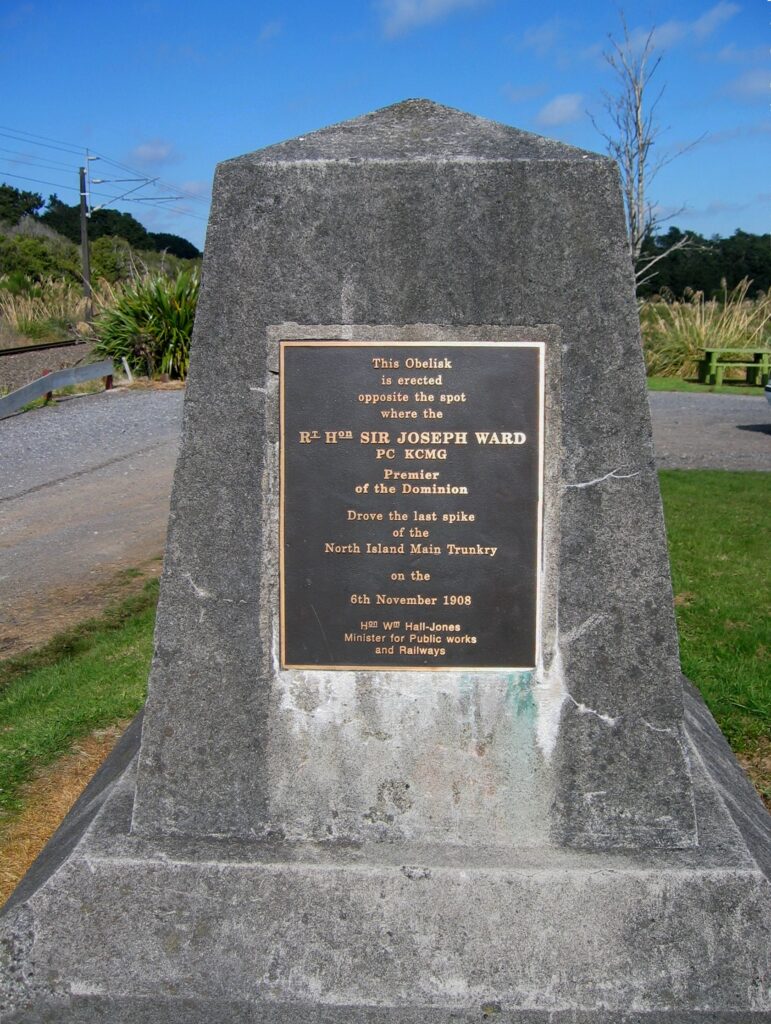
Manganuioteao, where the North Island Main Trunk line was finished
Made in New Zealand

Ja1240
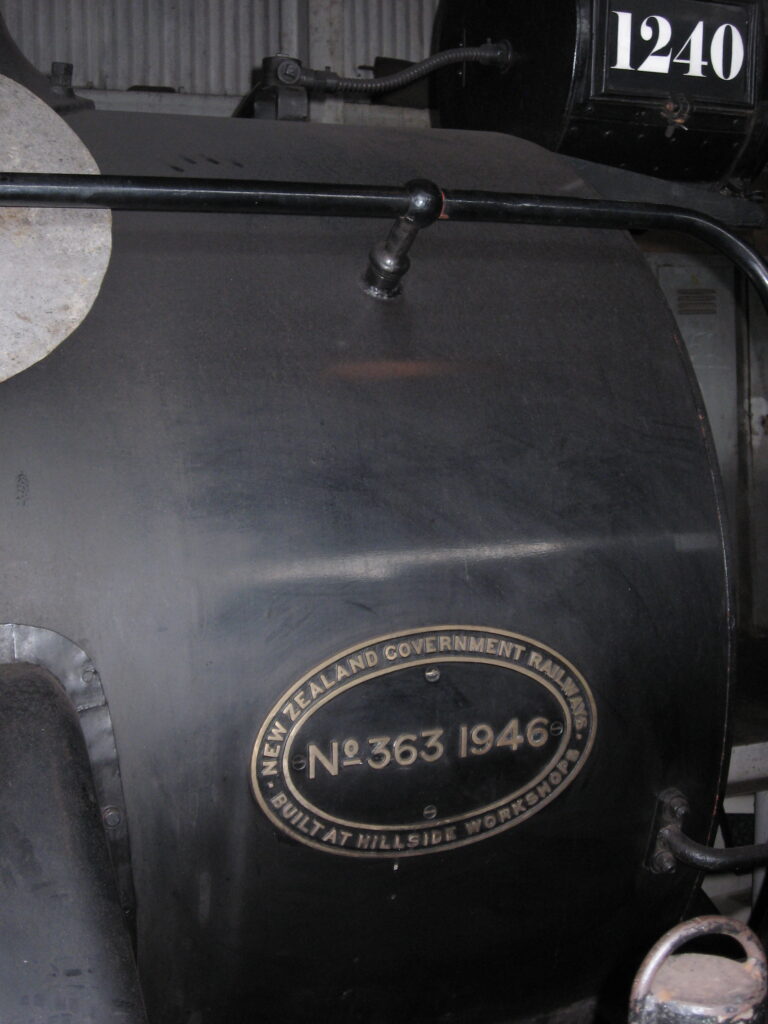
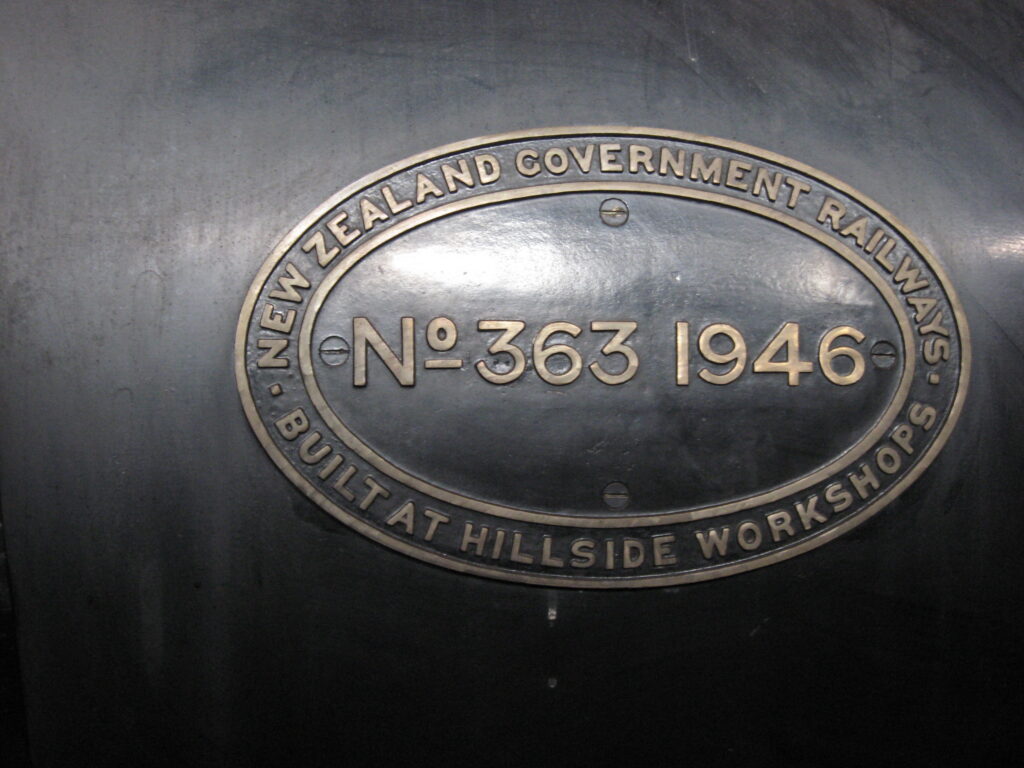
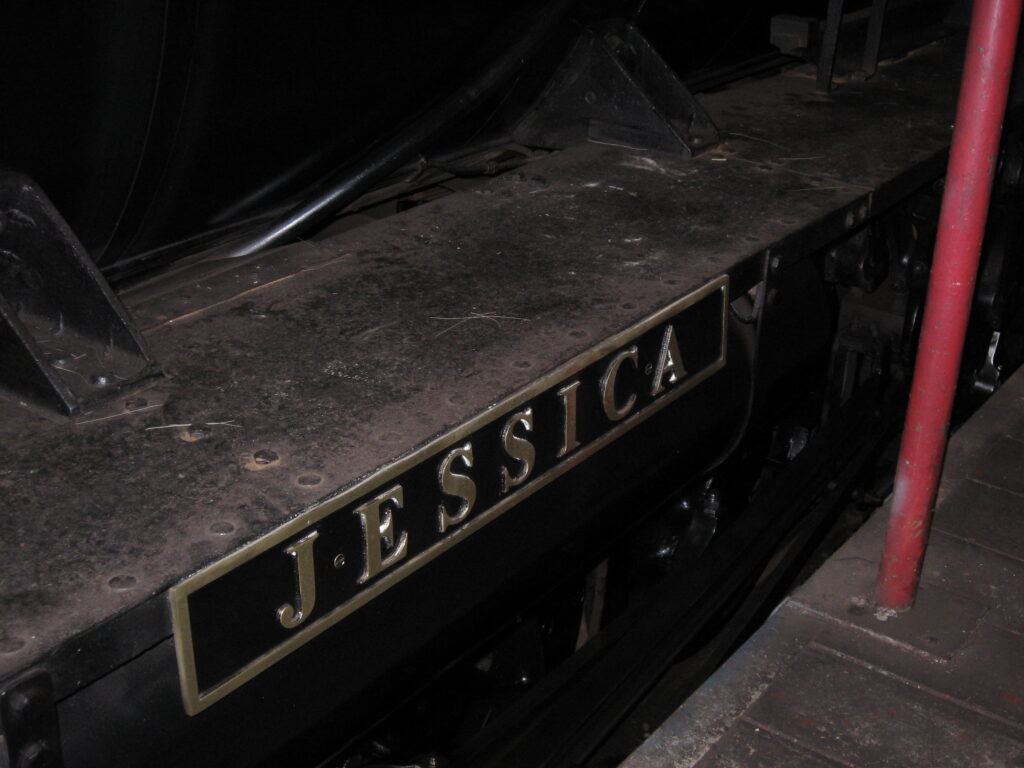
The restored Ja class locomotive central to the anniversary commemorations, Ja1240 was the first of 35 locomotives of the series starting in 1946 that were built at Hillside Railway Workshops in Dunedin. As The Shed magazine reported in a story on its restoration, this locomotive was in service with the New Zealand Railways (NZR) in the South Island until 1971 when it was sold to a private owner. But he was unable to realise his goal of restoring the 109-ton locomotive and in 1991 the locomotive was purchased by Ian Welch from the estate of Peter Coleman, who originally saved the locomotive from being scrapped. Mainline Steam took the locomotive back to the rail at Blenheim from Peter’s farm and had it towed north to Mainline Steam’s Parnell depot where it sat in the shed until work could be started in 2006. After several years of meticulous restoration Ja1240 is being returned to the South Island where it spent its working life with New Zealand Railways. Ja1240 is named “Jessica” after Ian Welch’s eldest granddaughter.
Gary Farquhar, a Mainline volunteer engineer, reported in The Shed magazine, “Ja 1240 was very untidy in appearance, but when volunteers stripped it down, they found there was not a major amount of work to do to get her back to life. They had to remove the boiler tubes and inspect and clean the barrel. Because a steam engine is a pressure vessel operating at 200 pounds per square inch (200 psi = 1379 kPa or 13.789 bar), they had to pay close attention to ensure the integrity of the boiler.
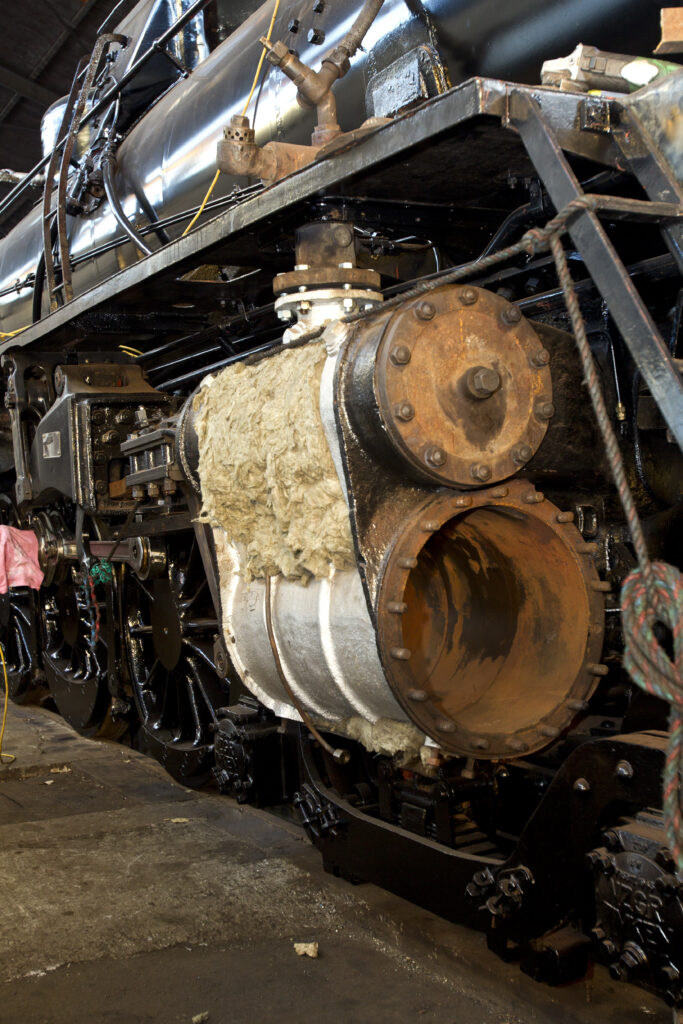
“Once they were satisfied, they put in new tubes and pressure-tested the boiler hydraulically to twice its working pressure as a safety requirement before lighting any fire inside. Apart from checking and replacing critical safety parts, the main problem they discovered was a crack in one of the cylinder liners. To fix it, they sourced a large piece of cast-iron tube and machined it down to allow a shrink-fit into the cylinders. The springs were re-tempered at Mainline Steam’s Christchurch depot where they had suitable-sized machinery.”
Ja 1240, to be based in Christchurch, was restored as a coal burner because there is a plentiful and handy supply of good West Coast firing coal available. Other formerly coal-fired locomotives based mainly in the North Island have been converted to burn oil because of the expense of getting West Coast firing coal to Auckland. (Huntly coal is too soft.)

Railways engineering achievements include the 162 metre-long Kopuawhara Viaduct

Money-saving
While the first public rail journey was made in Canterbury, the Southland provincial government was another early rail pioneer. KiwiRail notes in its history of New Zealand rail that Southland imported a locomotive from Australia in 1863 and by October 1864 had completed a 12 km railway between Invercargill and Makarewa.
“In an effort to save money, this line was laid using thick wooden rails. Unfortunately, these became slippery in wet weather and were crushed by the locomotives. In dry weather sparks set the tracks alight. A more successful iron-railed line to Bluff, built to the standard 1435 mm gauge, was completed in 1867, but the effort bankrupted Southland province. Eventually, to speed up construction and reduce costs, the government decided that all railways would be built to the narrow 1067 mm gauge. The broader Canterbury and Southland lines were converted later that decade. 
“Travelling on these early railways was an adventure. Journeys were slow and often uncomfortable. A journalist visiting Southland recalled an occasion when he and fellow passengers were ‘politely requested by the guard to leave the carriage and help to push the carriage and engine to the summit of the bank. This we did with colonial cheerfulness, and on returning to our seats the guard promptly collected 2s. 6d. apiece from us as our fares!’”
KiwiRail reports that in 1870 New Zealand had just 74 kilometres of railway, all of it on the eastern and southern plains of the South Island. By comparison, the United States had almost 50,000 km.

The cracked cylinder lining on Ja1240 was replaced
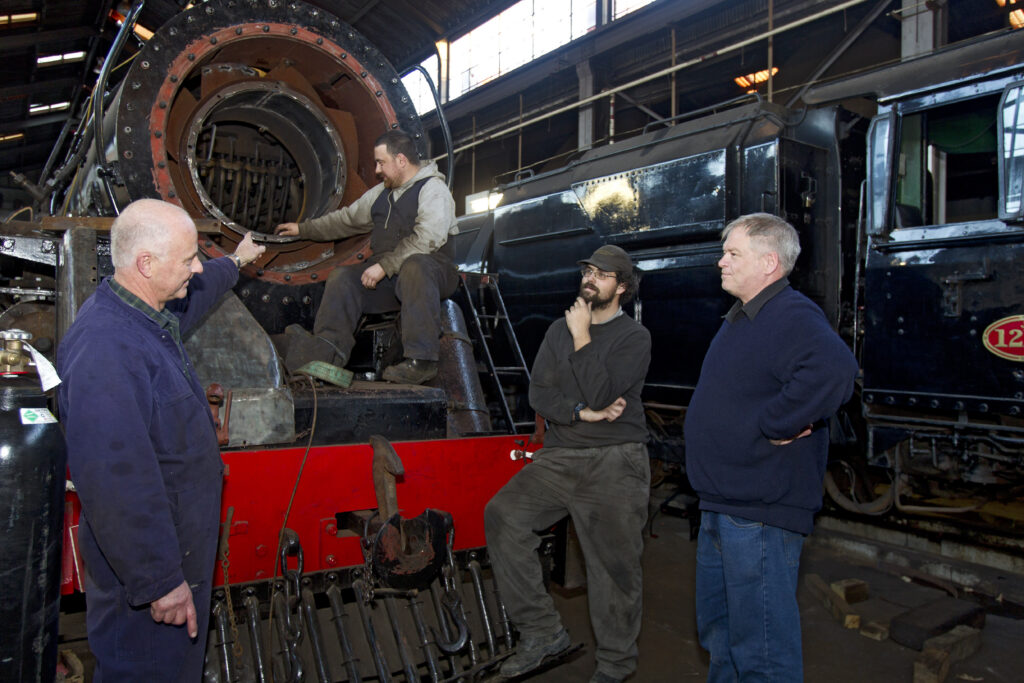
Mainline Steam volunteers (from left) Gary Farquhar, Lexi Browne, Ian Wiley and engineering manager Grant Hjorth, 22 years a volunteer, discuss a boiler problem

Main trunk
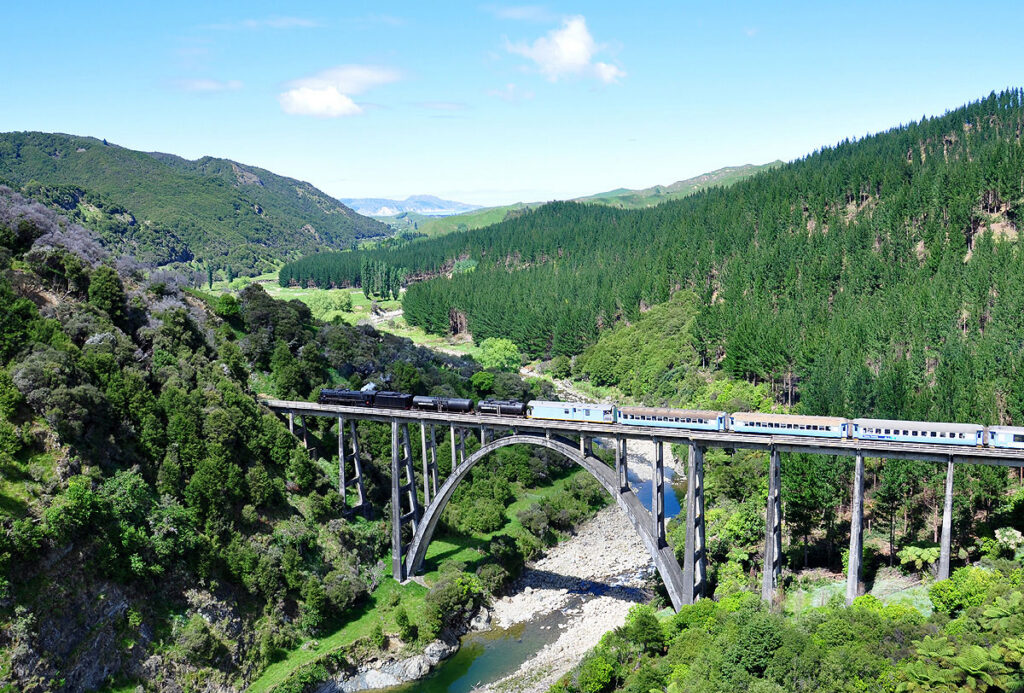
While the Christchurch-Dunedin line was completed in 1878, the building of the North Island main trunk line through rugged countryside was a more tortuous story. The Auckland-Te Awamutu link was in place by 1880 under Julius Vogel’s rail-building initiatives. But the opening up of the rugged central North Island took 23 years of wrangling and arduous labour from 1885 until 1908 when Prime Minister Sir Joseph Ward hammered in the final silver spike at Manganuioteao between Ohakune and National Park. The engineering achievements included the Raurimu spiral with its horseshoe curves and several massive steel viaducts.
There will be former passengers alive today who remember with nostalgia if not affection the refreshment stops and the scrum for tea and pies at Taumarunui tearooms in the middle of the night, the hissing breaks in the rattling rhythm of the travel when the locomotives paused to refill with water for the boilers and the smell of soot, the cinders and smoke that permeated the carriages clacking through the night on the seemingly endless 14-hour Limited Express journey between Auckland and Wellington.

Ja1240 named after owner Ian Welch’s eldest granddaughter
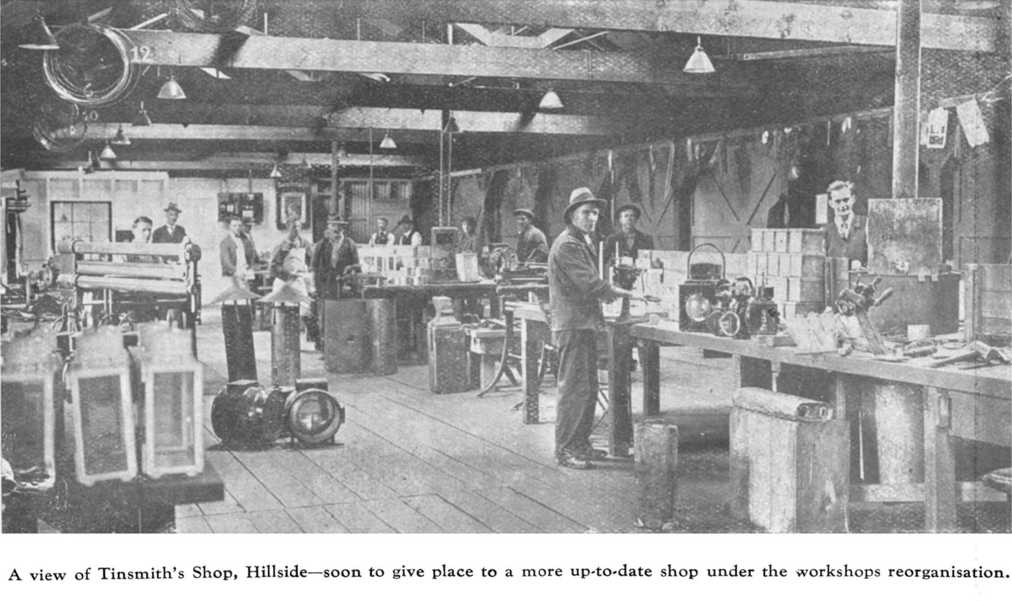
Hillside tinsmith’s shop prior to updating, seen in the 1927 New Zealand Railways magazine

Achievements
Other engineering achievements made through railways in New Zealand include the 162 metre-long Kopuawhara Viaduct, one of six major viaducts on the Napier-Gisborne Railway, which was completed in 1942. The design was carried out in the Public Works Department’s Head Office in Wellington under Charles William Oakey Turner, Chief Designing Engineer.
The Institute of Professional Engineers of New Zealand (IPENZ) says in its report on New Zealand’s engineering heritage that the Kopuawhara Viaduct differs from its counterparts as it was constructed in reinforced concrete rather than steel. A design in steel was also prepared, but one of the deciding factors in favour of a concrete bridge was the wartime shortage of structural steel. When completed in 1942 with an open spandrel parabolic arch of 54.9 metres and a height of 30.5 metres—after wartime delays of labour and materials—the Kopuawhara Viaduct was hailed as “a splendid design. The viaduct is a superb structure technologically, and a visual delight.”

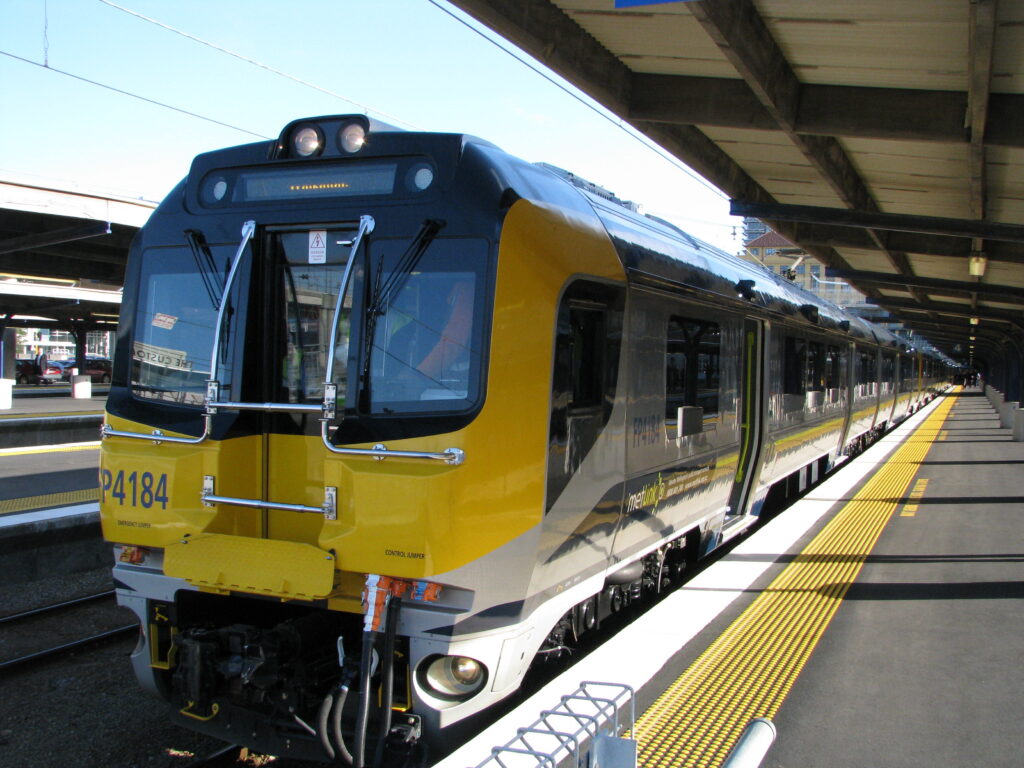
Latest electric units in Wellington, continue railway modernisation
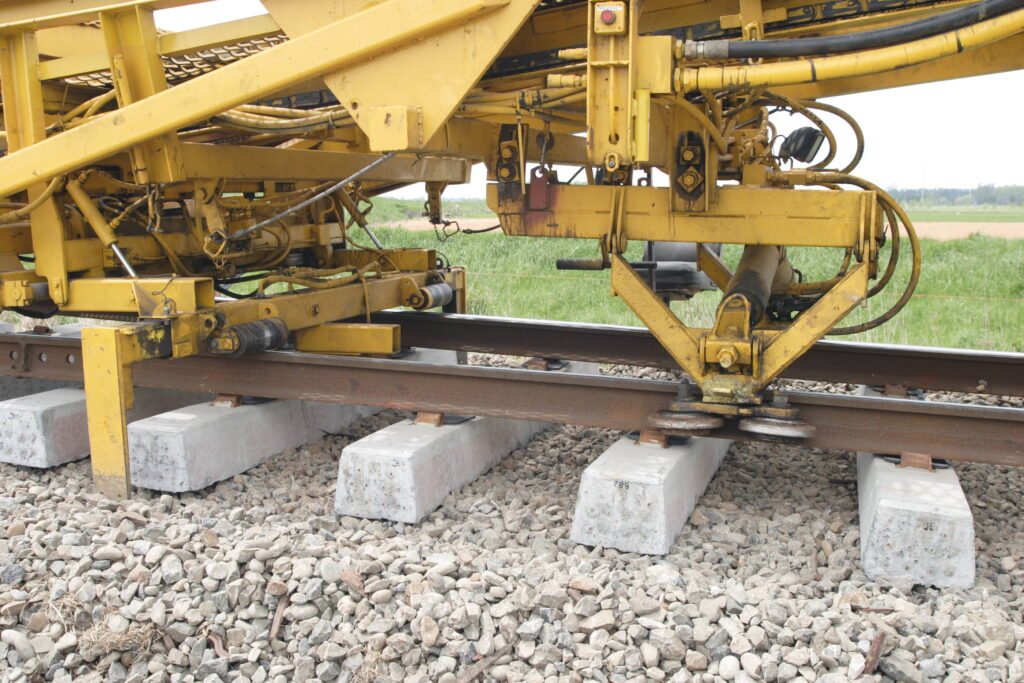
Concrete sleepers have replaced wooden versions

Hillside
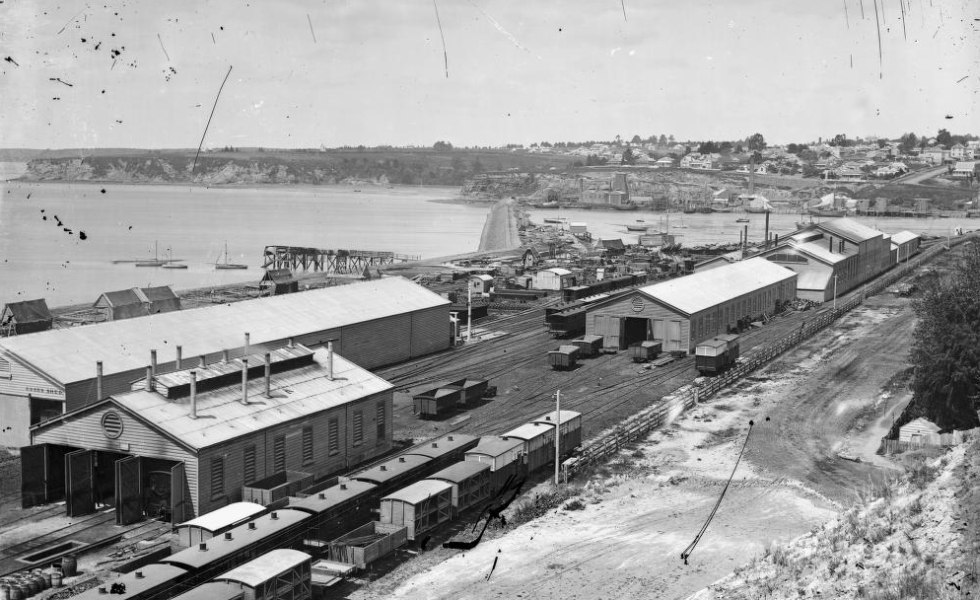
The railway system also created the rail engineering workshops and nurtured technical skills through these. The restored Ja1240 was built in 1946 at the Hillside Workshops. As IPENZ records in its work on New Zealand’s engineering heritage, “Dunedin’s Hillside Railway Workshops have played a major role in the construction of locomotives and freight wagons for New Zealand’s railway system.
“The five government workshops—Addington, Hillside, Otahuhu, Wanganui and Woburn – were early industrial complexes. Hillside initially opened in the mid-1870s as a relatively small repair workshop but soon was significantly expanded. Further major upgrading and expansion occurred during 1926-29.
“Between 1897 and 1967 Hillside manufactured a total of 190 locomotives, including 90 4-6-4 tank engines (Classes Wg, Ww and Wab) between 1910 and 1927, and 35 4-8-2 Ja express engines between 1946 and 1956. During World War Two Hillside manufactured 3-inch mortars, as well as machined components for other weapons systems.
“In 1946, the year that Ja1240 was built, Hillside was the largest industrial complex in the southern half of the South Island, employing a maximum of nearly 1200 people.
“Between 1966 and 1990 Hillside produced nearly 1600 wagons, including 1200 bogie container wagons between 1971 and 1988. Late 20th century contracts included large car carrier wagons and hopper wagons for fertiliser, using both steel and aluminium alloys.
“In 1989 the workshops were renamed Transtec Hillside Engineering, a division of Transport Engineering Equipment Liaison (TEEL) Business Group of the New Zealand Railways Corporation. At this time Hillside was the largest mechanical engineering enterprise in New Zealand, and incorporated the largest metal foundry. It concentrated on iron and steel castings, steel and aluminium machining and fabrication, wagon assembly, together with the physical testing of metals and castings.”
In 2012, KiwiRail sold the foundry section of Hillside Workshops but closed the rest of the manufacturing plant.

Electric
Electrification of New Zealand railways continues the modernisation of the network. Recent arrivals have been the “Matangi” class of electric multiple units, which are serving the Wellington suburban rail system and commuters. The units consist of an FP for a “power” car and an FT for a “trailer” car. The electrification of the Auckland suburban network is in train. Other differences from the early railway construction include the displacement of wooden sleepers with concrete sleepers and the mechanisation of the process of laying them down.

Heritage steam trips will be made through Arthur’s Pass

Share:

More Posts

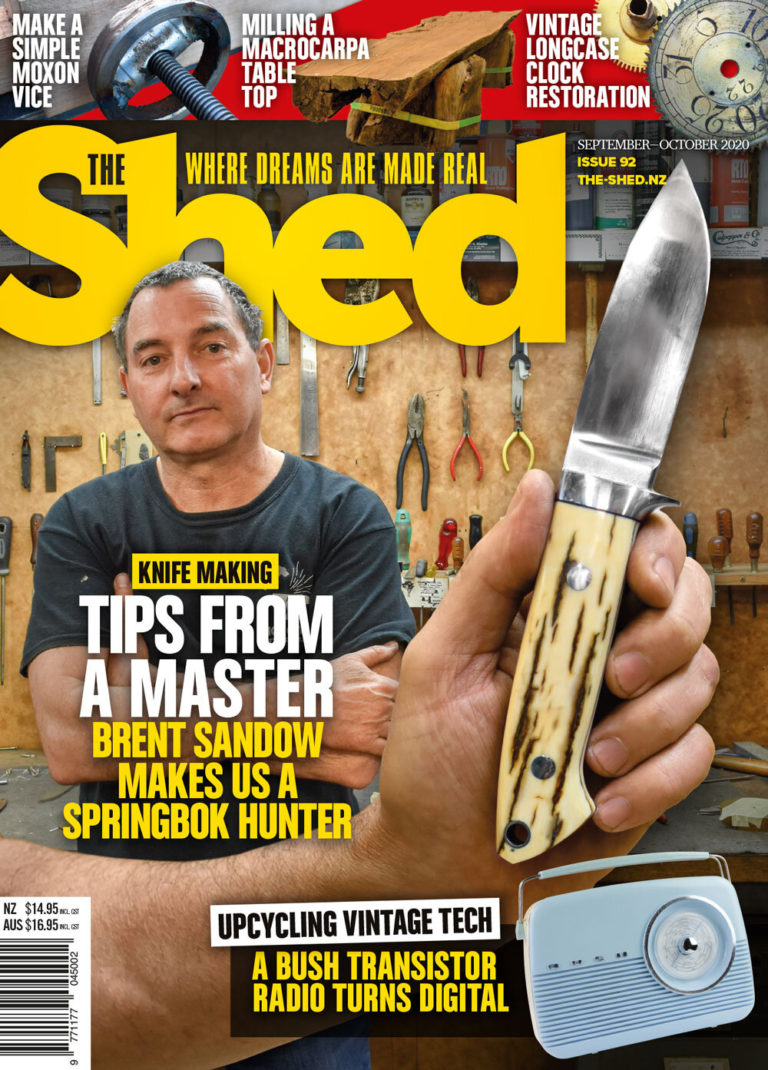
The Shed September/October Issue 92 is on sale now

There’s a real treat for knife makers in the September/October Issue No. 92 of The Shed.
We head to the Auckland workshop of master knifemaker Brent Sandow to get insights into what makes him such a well-regarded exponent of the art. We watch and learn as he goes through the steps on how he makes a Springbok Hunter knife.
Get ready, secrets are shared.
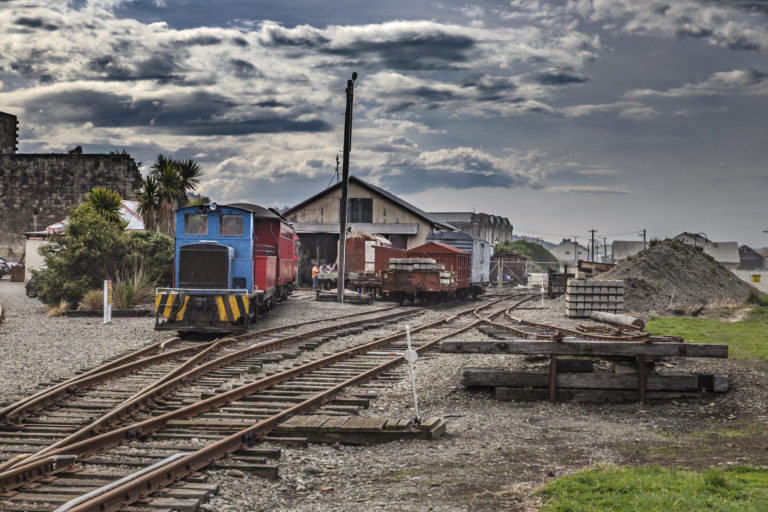
Pleasant Point Railway photo gallery

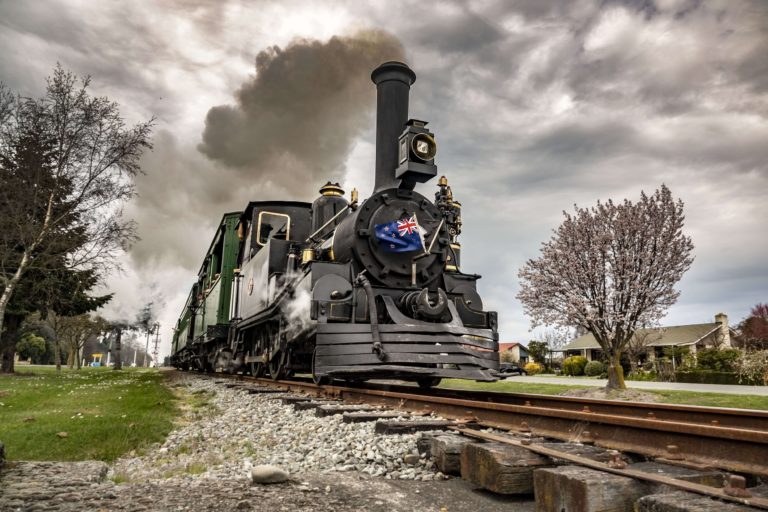
We visited and wrote about the impressive Pleasant Point Railway & Historical Society in South Canterbury, in The Shed September/October 2020 Issue 92.
Sadly, we just couldn’t squeeze in all the great photos we shot for the article into the magazine. As you will now see, these unpublished photographs are just too good to leave sitting on our hard drive so we felt we just had to share them with readers.
Enjoy.