A Legend Returns

A Legend Returns A Historic Ferrari Monza 750 Joins the 2026 Ayrburn Classic Line-Up – 20-22 February 2026 The Ayrburn Classic, one of the most anticipated motoring events on the New Zealand calendar, is set to take things up a gear in 2026 with a line-up that promises to captivate enthusiasts and the general public alike. Following the success of the inaugural event, the Ayrburn Classic returns with a recently confirmed feature that is nothing short of extraordinary: the historic Ferrari Monza 750 – a masterpiece of motorsport and one of the most significant vehicles to race on New Zealand soil. Legendary status This particular Ferrari Monza 750, which arrived in New Zealand in 1957 and has remained here ever since, holds a legendary status in motorsport history. It competed in the Mille Miglia, Le Mans, and the Targa Florio – the ‘Big Three' of European endurance racing during the golden era of the sport. Few cars can claim such provenance, and even fewer have such a deep and poignant connection to New Zealand's own racing legacy. Tragically, the Ferrari Monza 750 was involved in a fatal accident at Ardmore in 1957, marking the final moments of British driver Ken Wharton, whose last photograph was taken next to this very car. The vehicle has since been meticulously preserved, with images from the aftermath of the crash etched in motorsport history. Today, it stands as a symbol of both the bravery of that era and the enduring beauty of Italian automotive craftsmanship.

A Historic Ferrari Monza 750 Joins the 2026 Ayrburn Classic Line-Up – 20-22 February 2026
The Ayrburn Classic, one of the most anticipated motoring events on the New Zealand calendar, is set to take things up a gear in 2026 with a line-up that promises to captivate enthusiasts and the general public alike. Following the success of the inaugural event, the Ayrburn Classic returns with a recently confirmed feature that is nothing short of extraordinary: the historic Ferrari Monza 750 – a masterpiece of motorsport and one of the most significant vehicles to race on New Zealand soil.
Legendary status
This particular Ferrari Monza 750, which arrived in New Zealand in 1957 and has remained here ever since, holds a legendary status in motorsport history. It competed in the Mille Miglia, Le Mans, and the Targa Florio – the ‘Big Three’ of European endurance racing during the golden era of the sport. Few cars can claim such provenance, and even fewer have such a deep and poignant connection to New Zealand’s own racing legacy.
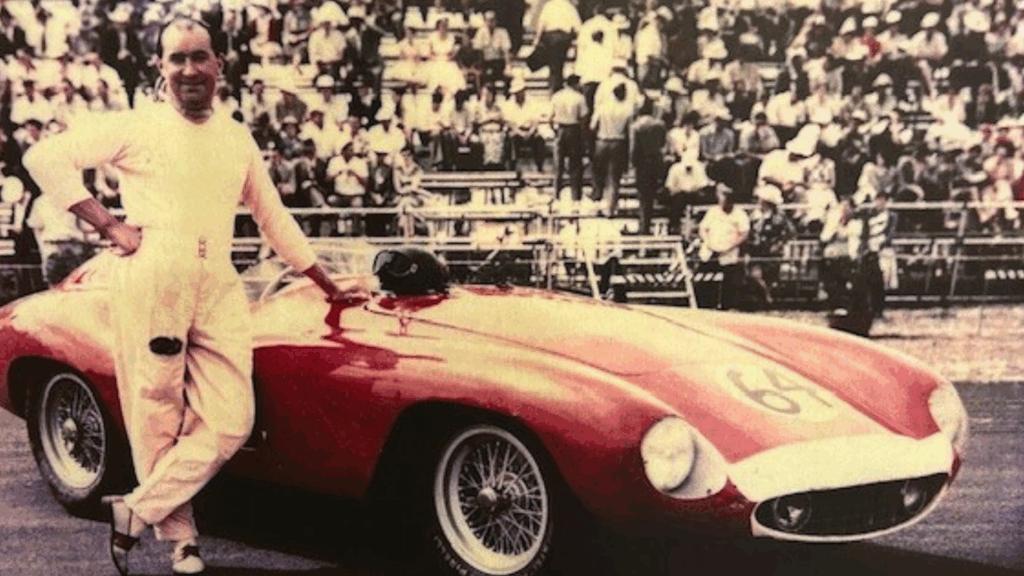
Tragically, the Ferrari Monza 750 was involved in a fatal accident at Ardmore in 1957, marking the final moments of British driver Ken Wharton, whose last photograph was taken next to this very car. The vehicle has since been meticulously preserved, with images from the aftermath of the crash etched in motorsport history. Today, it stands as a symbol of both the bravery of that era and the enduring beauty of Italian automotive craftsmanship.

Once-in-a-generation opportunity

Incredibly, the Ferrari Monza 750 has not been seen in the South Island since 1967 –  nearly 60 years ago – and has only been publicly displayed a handful of times, all in the North Island. Its appearance at the 2026 Ayrburn Classic is not just a homecoming; it’s a once-in-a-generation opportunity.
This extraordinary Ferrari will be presented within Maranello Magic, a newly introduced display class that will host the largest collection of Ferraris ever assembled in the South Island, created in partnership with the Ferrari Owners Club of New Zealand. For motoring fans, this promises to be a show-stopping centrepiece.

Much more than just a car show

Set against the extraordinary backdrop of the Ayrburn precinct – a reimagined 150-year-old farm estate where heritage meets indulgence – the Ayrburn Classic is more than just a car show. It’s a celebration of style, passion and craftsmanship. With sweeping lawns, historic architecture, world-class gardens, award-winning dining and vibrant bars, Ayrburn offers the perfect stage for a showcase of motoring excellence.

Enter a vehicle:

Car owners are invited to secure their place in the festival, alongside the legendary Ferrari Monza 750. With spaces limited, immediate entry is highly encouraged.
Purchase a ticket:
Tickets to the Ayrburn Classic 2026 are now available. Don’t miss your chance to witness history, revel in Ayrburn’s unmatched atmosphere, and see the Ferrari Monza 750 up close. With single-day, weekend, and family passes available, there’s a suitable option for all. Children under 12 years of age enter for free.

For further information, please contact:

Marketing Manager
Ella James
ella.james@ayrburn.com
Share:

More Posts

The Shed magazine August/September 2026 issue 128 on sale now

Sentimental Journey
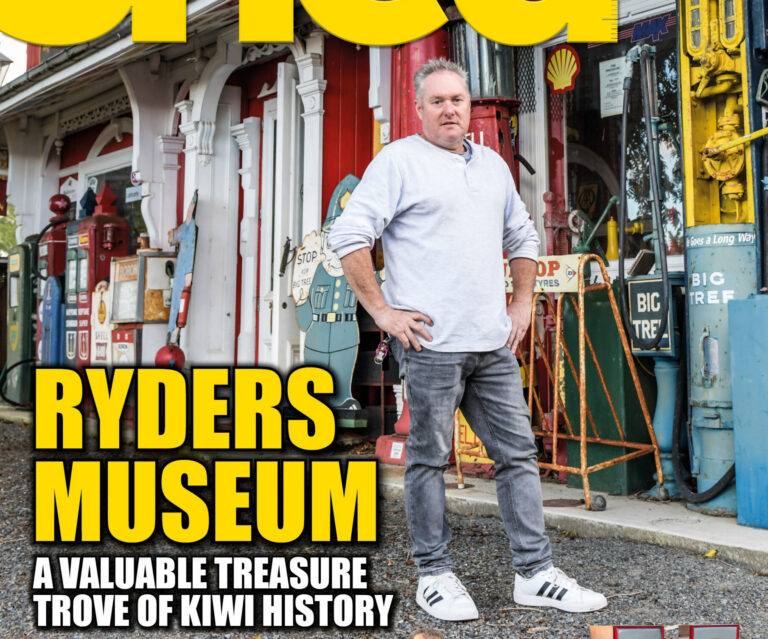
Jack Ryder had a unique ability to hypnotise sports stars, politicians, and celebrities into donating items for his museum and sports memorabilia collection. Now, his grandson Clint manages this West Auckland landmark, but the property development vultures are circling.
It is hard to imagine a less likely location for a living museum than the back blocks of suburban West Auckland in Avondale.
Yet here, towards the end of a lengthy no-through road, the Ryder family hold tight to a self-built vestige of Auckland’s yesteryear. While the surrounding streets are turned into homogeneous multi-unit town housing, the Ryders’ two-acre slice of Pavlova Paradise remains, less a multi-generational home ground and more a celebration of the character of the city’s past.
Slipping through the tall white gates past the twin concrete lion sentinels at the street end of Ryder’s long hedge-lined driveway, the modern world slips away. Ahead, in the shade of a 100-year-old Pecan tree, an enclave of antique edifices opens out along the back-fence line like a set from a period movie. This corner of vintage Kiwiana is the handiwork of the late and industrious Jack Ryder, a coach-builder and wharfie, who began constructing it from a group of sheds spread across the property.

New Zealand Railways celebrates 150 years

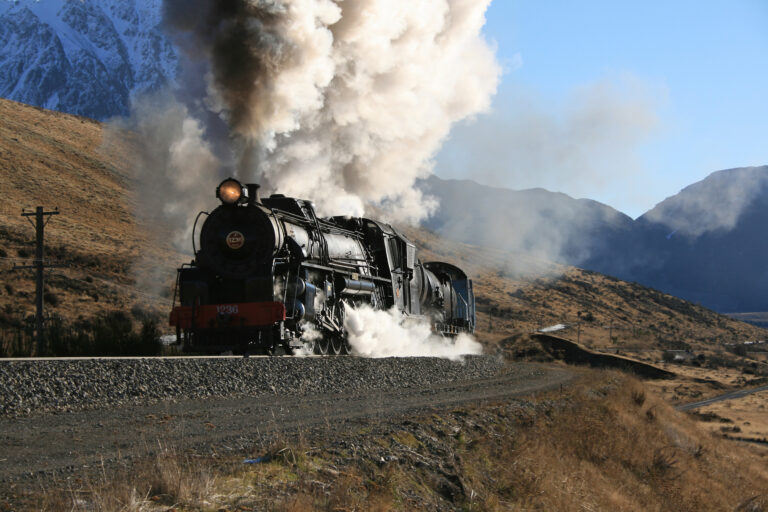
In 2013, Railways in New Zealand marked the anniversary in October this year of 150 years since the first broad-gauge public steam railway opened between Ferrymead and Christchurch City in 1863, a distance of seven kilometres. The original gauge was five feet three inches (1600 mm) wide, although the standard gauge for New Zealand railways was to become three feet six inches (1067 mm).
As the Railways 150 Years Committee describes it, “People and goods were barged from the Port of Lyttelton to Ferrymead, then taken by rail to Christchurch. The Ferrymead Line operated for ten years from 1863 until 1873 when the 2.6-kilometre tunnel connecting Lyttelton and the Heathcote Valley was completed and commissioned.”
The celebrations for the anniversary in 2013 are focused on operations and displays at the Ferrymead Heritage Park during Labour Weekend and include heritage steam trips with the restored locomotive Ja1240 from Christchurch to Arthur’s Pass, Timaru and Ashburton. The Railways 150 Committee includes representatives from rail organisations such as the Ferrymead Railway, the National Railway Museum of New Zealand, the Mainline Steam Heritage Trust, the Plains Railway, the Weka Pass Railway, the Steam Canterbury Preservation Society and others. Additional help and assistance is provided by KiwiRail.

How to pimp your shed

The urge to decorate is universal, whether it be tattoos, floral designs on early Stanley rebate planes, or flames on hot-rod hoods, and sheds are no exception.
Big or small, simple or ultra-flash, sheds have one consistent feature – they all have decorations. These can be nostalgic, humorous, or more or less misogynistic (and often all three).
The mamo-centric female portraits which, in the past, were so common in garages and workshops are now rarely seen, perhaps because businesses which used to distribute complimentary “girlie” calendars can’t now risk the potential bad publicity. Or shed owners are embarrassed at the thought of their wives, children, or grandchildren seeing them. Or perhaps we have all become a little more mature.
Feminist relatives tell me that the purpose of pin-ups wasn’t decorative, but to make women visitors so uncomfortable that they wouldn’t linger, creating a woman-free zone. Sort of like farmers draping the skins of killed predators on fences to discourage their kin.