A 107-year-old car restored to glory
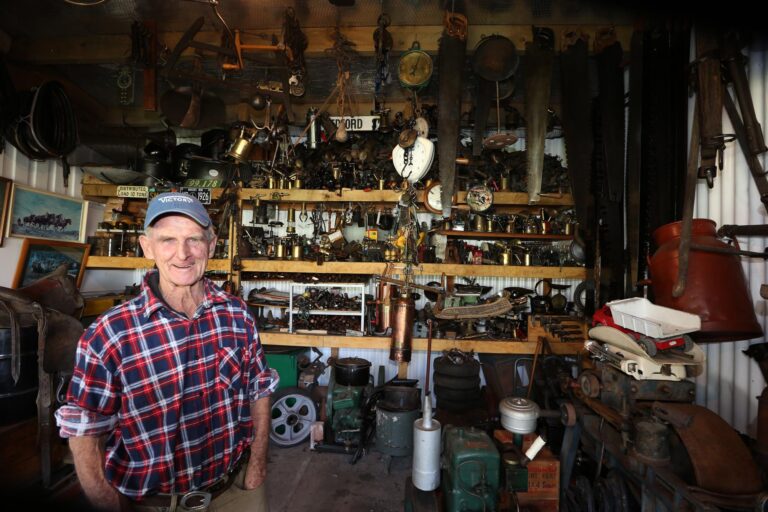
Many of the old crafts that had been around for centuries have been almost lost in our modern age. Among them are the crafts of those who used hand tools and tapped into centuries of passed-down knowledge, the blacksmith, the wheelwright and the coachbuilder. Coachbuilding with wood has been around for more than 500 years. The restoration of vintage cars is helping keep this craft alive in New Zealand—just— and there are only a few people here who still have these skills. One is Neil Carter of Normanby in South Taranaki. He specialises in restoring veteran cars (made before the end of 1918). These vehicles had wooden frames and bodies made by coachbuilders in the days when the horse and carriage ruled the highways. We caught up with Neil, his skills and his current project: the complete restoration of the body of a 1906 Arrol Johnston, a car made in Scotland and one of only two left in the world. William Arrol, a Scottish engineer, was famous for building the massive Forth Bridge near Edinburgh in Scotland and he made cars from the 1890s to the 1930s. The Scottish owner of the car which is currently in Taranaki is sparing no expense to restore the vehicle to its original condition. The other existing model of this car is in a museum in Scotland.


Challenge
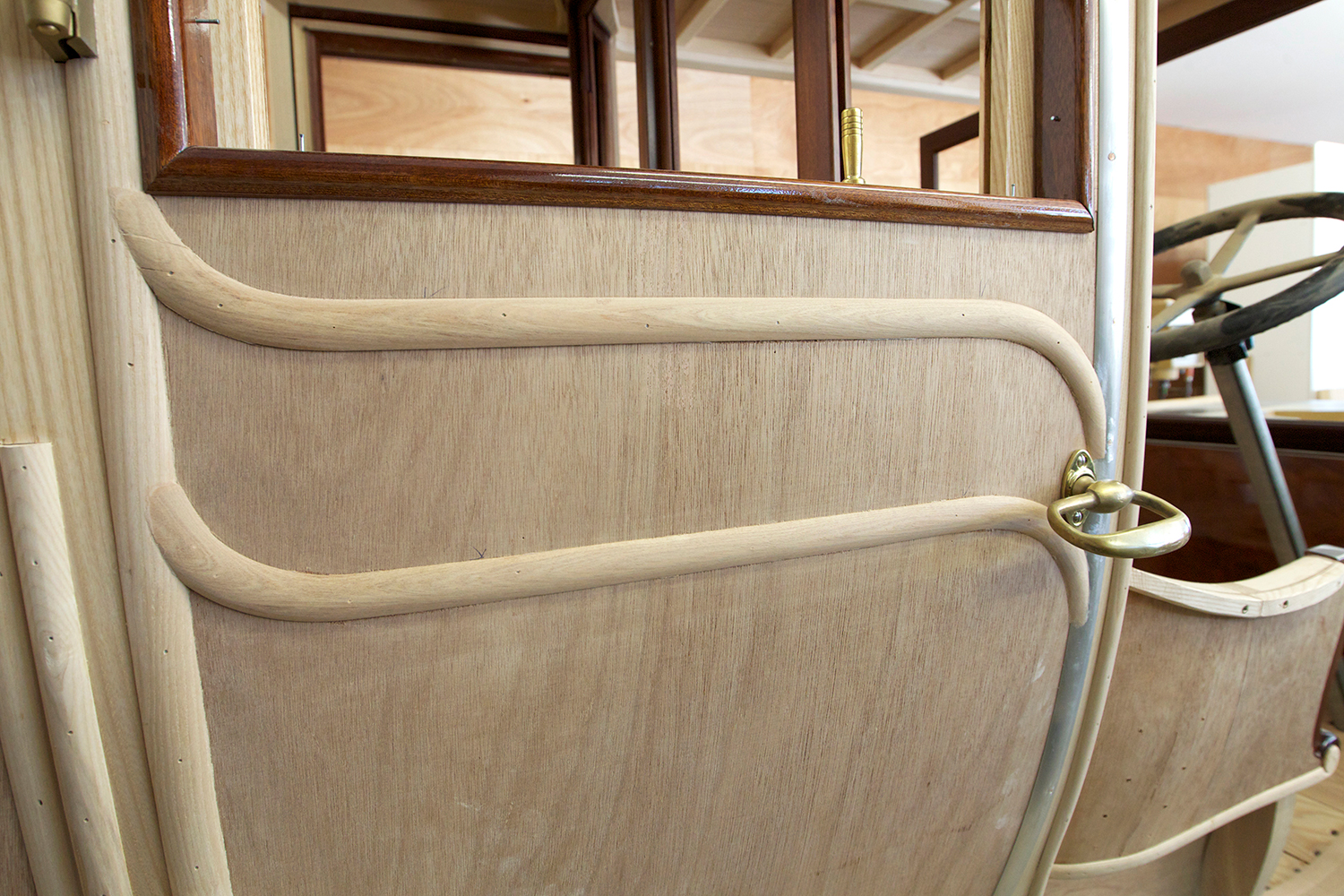
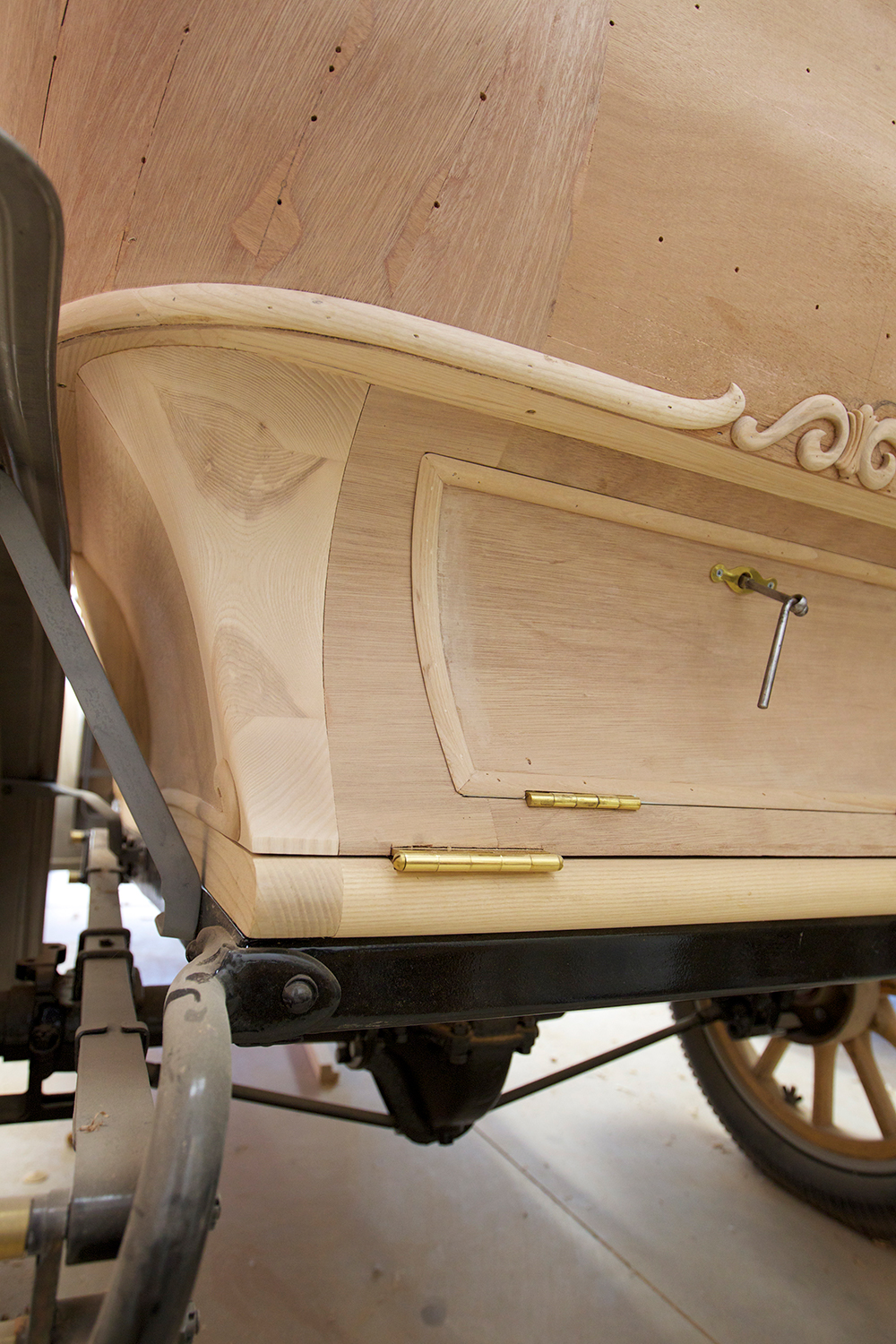
The challenge of this job has been to build the complete wooden body of a 107-year-old horseless carriage from scratch, using only a drawing as a guide. The project started with a bare chassis with a wheel in each corner and an old picture that Neil was given to work from. In the days before metal-bodied cars, the framing and skin of the car was all wood and Neil is building up the entire body. He believes the wooden body is the same weight as a metal body and says in the old days people often bought a car with a chassis and running gear and then took it to a coachbuilder to have a body made to order. “Each coachbuilder had their own style. Many car bodies were thus custom made.” The first step in restoring the Arrol Johnston was to make a small wooden mock-up of the body of the car using bits of wood and dowel. From this model, Neil mapped out the shape by attaching sheets of chipboard to the side of the vehicle and drawing up the life-size dimensions. “The only photo we were given was of a double landaulet Arrol Johnston. This one is a single landaulet, so we had to modify.” A landaulet is usually a car with a convertible roof for the passengers and a fixed roof for the driver. “The chassis has a shorter wheelbase than the car in the photo, which meant a few challenges,” Neil said. “As well as estimating the length and shape of the body, I had to extend the curved wall behind the driver to allow for more room. The chauffeur’s seating was very small and the new owner wants to drive it himself so I’ve had to enlarge that area. “This is really an Edwardian car. It has style and lines from the early 20th century and that makes restoration interesting.” He has designed Edwardian scrollwork and patterns to match that era. “Early coachbuilders were used to making fancy work on gigs and carriages and this carried on with motor vehicles,” said Neil.


Ash
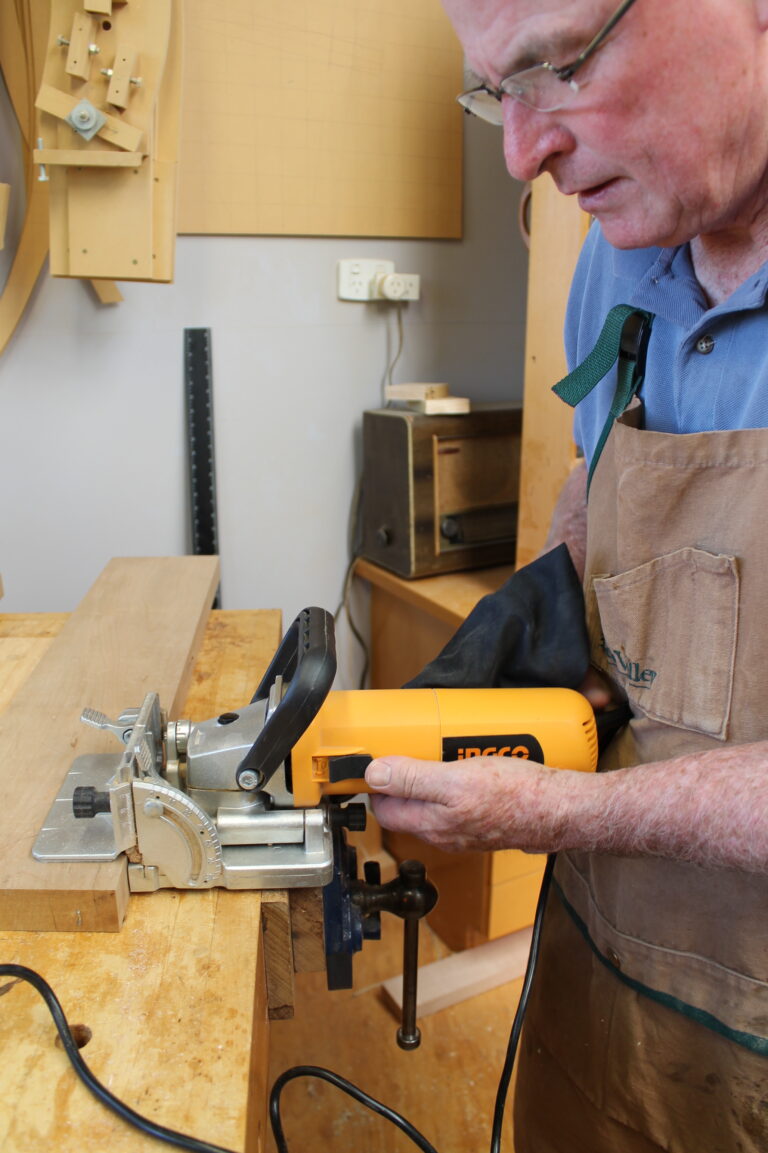
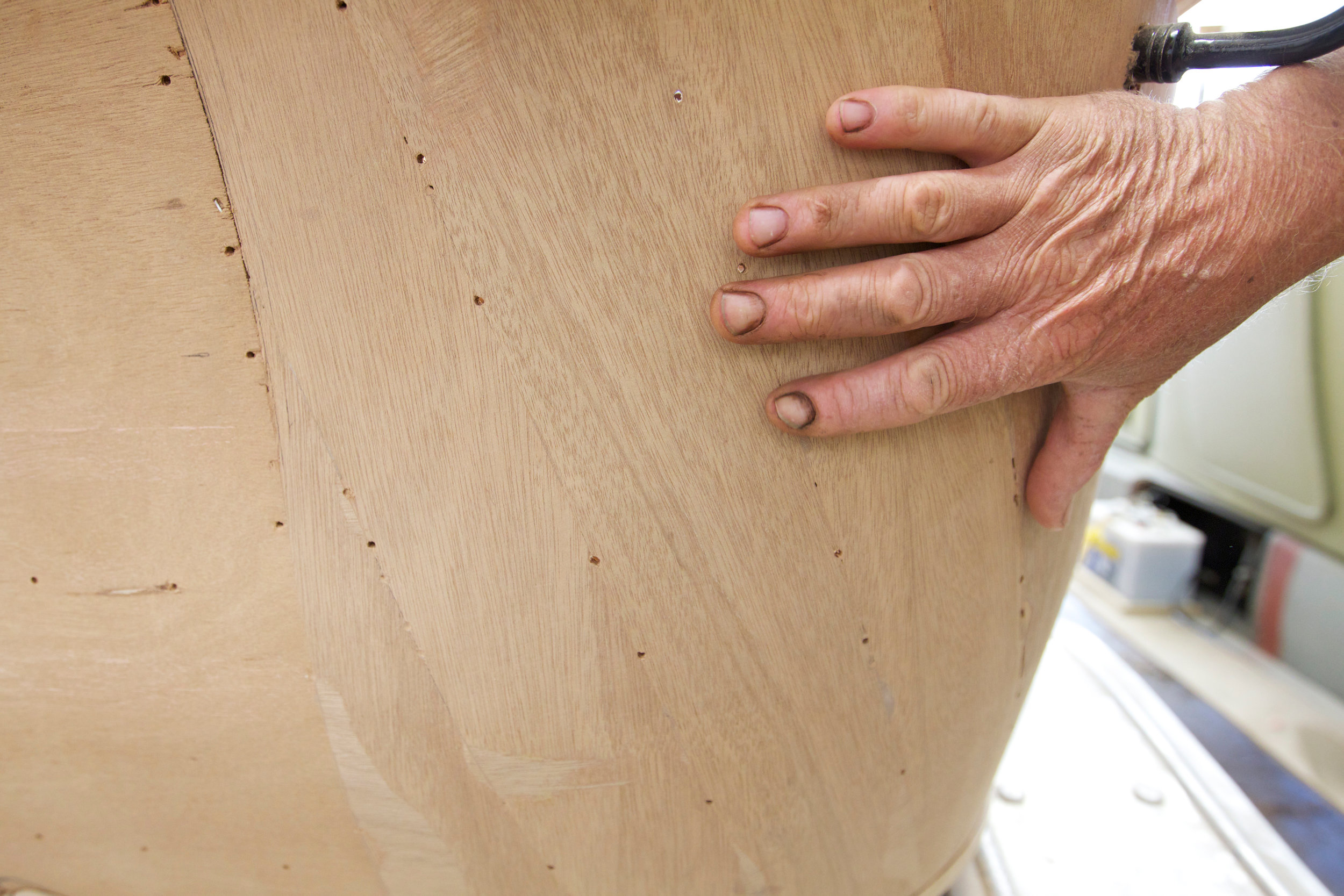
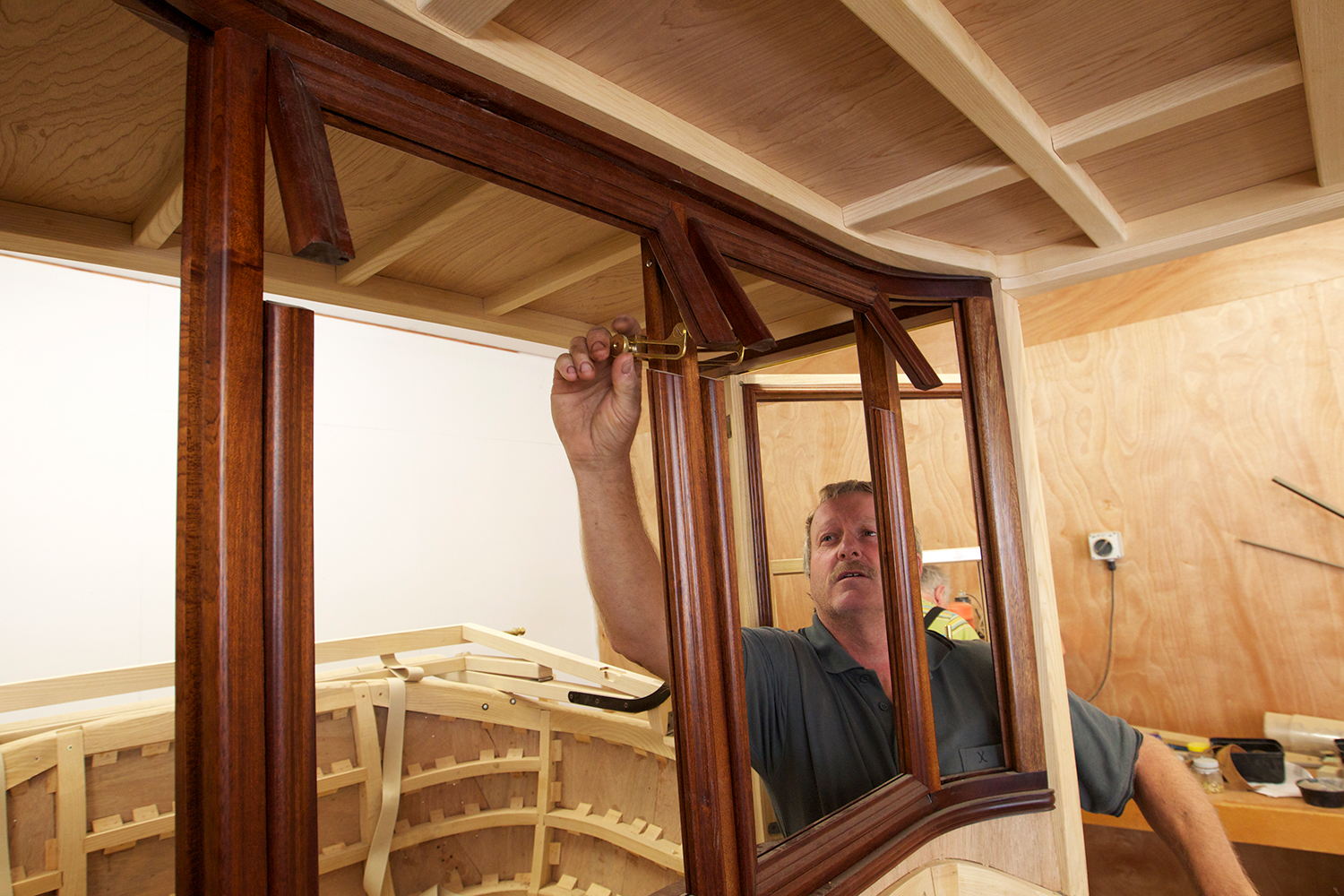
For the framing Neil uses American Ash, imported from the United States. “A lot of early cars and coaches were built with ash. It’s very strong and stable and doesn’t move in cold and hot weather. New Zealand native timbers move a lot but the ash is dependable and strong in every direction. I also have to be careful with humidity and the car had to be painted before winter.” Neil uses his bandsaw to cut the wood to size. Another handy tool is a spindle moulder, a large, bench-mounted inverted router that takes different blades to make the mouldings and do the finish work. He then gets into the hand work. Like the artisans of old he uses simple tools and experience. His most-used tools are an old spokeshave (hard to find these days) and a hand scraper. His scraper is a small piece of flat steel he uses for sanding. “It needs to be good steel. A piece of spring steel from an old saw blade is good.” Neil constantly keeps a burr on the edges of the scraper, using the side of an old chisel to rub along the edges. The burr edge shaves the wood neatly so there is no need for sandpaper. “High-tech tools don’t really fit in with this sort of work. Most joinery shops use modern gear but when you learn to use the spokeshave and scraper you don’t need a lot of electric or computerised tools—just a bit of old fashioned know-how.” Neil says that the framework must be perfect to take the plywood outer skin. The lines and joins have to be spot-on. Where the body curves, the ply has been fitted in strips that are twisted on an angle to stop the edges protruding. The 3-ply veneer Flexiply is glued as a double skin with resorcinol pheno formaldehyde resin glue. It must be mixed before use and comes as a liquid resin and powdered catalyst. Glue blocks have been put along all the joins for strength. “It’s a huge amount of work. It must be perfect,” said Neil. The body has to look right. I put a slight rake forward on the roof to get that right look.”The convertible back has foldable hood bows to carry the fabric roof. Neil has made these, as well as opening glass windows between the driver and passengers. The whole back of the body is hinged and tips backward, for what purpose Neil is unsure.


Engine
The car is powered by a four-litre, 18 brake horsepower engine, which is being restored by Roy King of Kaponga. Roy, who featured in an earlier edition of The Shed, is doing all the mechanical and brass work on the car. The engine is extraordinary. It’s a fourstroke, two-cylinder, four-piston engine with opposing pistons. The two pistons in each cylinder meet in the middle. It has a four-speed gearbox and can drive the car at a maximum speed of 45 miles an hour (72 km/hr). The Arrol Johnston model before this had the same engine but the wheels were equivalent to those of a horse cart. This was the first model to run on pneumatic tyres. There’s no accelerator foot pedal; a lever under the steering wheel adjusts the speed. There are three brakes, one on the prop shaft and two on the wheel hubs, all operated by a hand lever like the gigs of old. Sitting alongside the Arrol Johnston is another project, a 1918 Cadillac Landaulet. It has a steel body but the framing is wood and Neil is in his element. Neil’s business in Normanby is Furniture and Design, which he has been running since 1980. When he left high school in Hawera he was apprenticed to a furniture maker where he learned the trade. Coachbuilding is something he began 25 years ago, teaching himself the skills needed. He mainly makes furniture and kitchens but when an old car turns up, like the Arrol Johnston or the Cadillac, he looks forward to changing tools and rising to the challenge of rebuilding and restoring these vehicles with the arts of yesteryear.