In the January/February Issue 76 of The Shed, we decide the best way to enjoy summer is to create some outdoor fires that Sheddies can happily build themselves. Jude builds one for a measly $200 out of Corten steel and we follow the build of a block kitset fireplace that takes less than two days to set up. David Blackwell visits the Melbourne Working with wood show and we meet Des Thomson of Christchurch who endless skill-set sees him build a unique pod for his small campervan. His skills will astound you. Hugh McCarroll hears the call from his wife who needs a rolling stool made for her galley kitchen then we head to Oamaru to meet Alistair Allan who has old chicken sheds chock full of Kiwiana. Andrew Bellringer is an ex-diesel mechanic who now creates stunning art pieces out of steel junk and Coen Smit show us another way to use cast-off materials by using it to create interesting household lamps. Philip King is an Auckland antique furniture restorer and he shares some of his tricks of the trade with us and we visit the shed of Aucklander Simon Dew who restores BSA, Royal Enfield and Moto Guzzi motorbikes – to name but a few. We learn all about the Hallswell Menzshed in Christchurch before Enrico Migliano gives us more 3D printing tips and advice. Ritchie Wilson and Jude Woodside team up to explain all there is to know about universal sockets, sockets and spanner sizes through the ages before Bob Hulme gives us some choice tips on drills and drilling in our metalwork workshop. We close this Christmas and summer issue with Back ‘O’ the shed where Jim Hopkins is pleading with us to have a 2018 of living positively. Now The Shed is all for that!
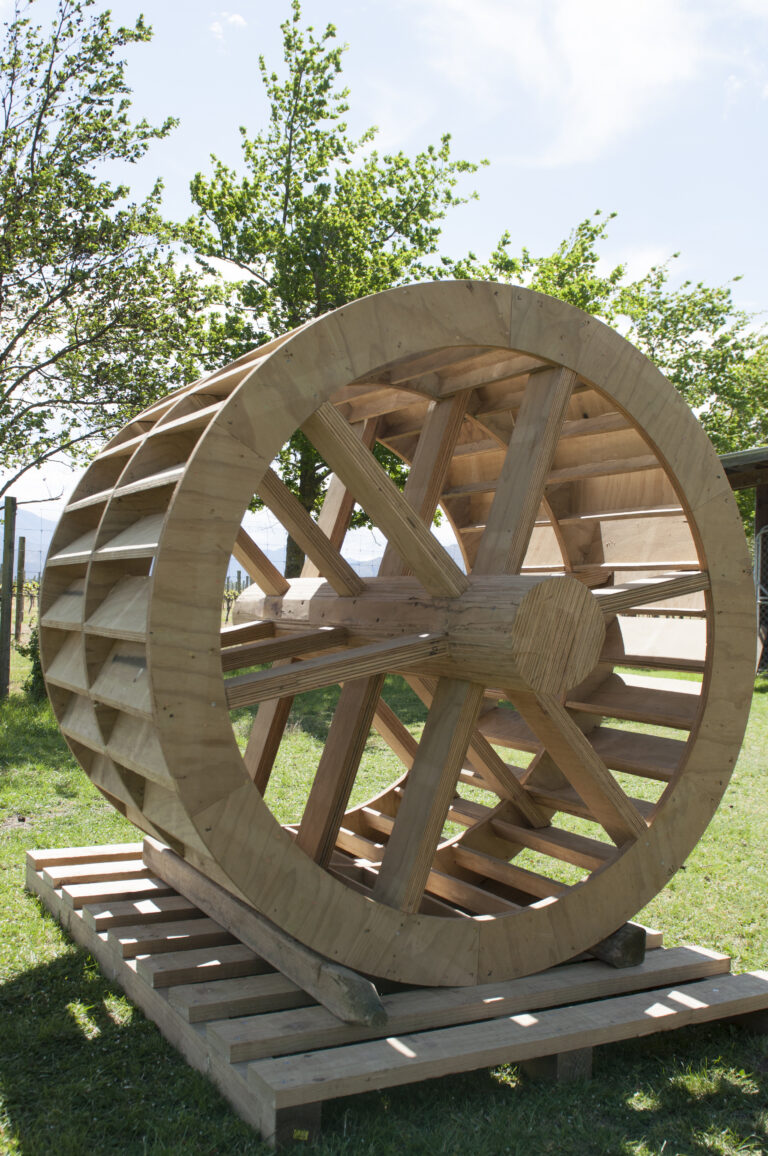
Turning back time – a waterwheel replica
When a Marlborough farmer with a passion for history took to his stream with a digger, he knew what he was looking for and came up trumps. John Walsh, of Woodbourne Farm, near Blenheim, was searching for remains of the waterwheel that powered the province’s first flour mill in the mid-1850s.
The concrete weir, although breached in a couple of places, was still standing on the Mill Stream, along with rusty debris from the metal operating system. The waterwheel itself had rotted away, save for two blades (or paddles) and a portion of the rim, but when John went digging below the weir, he unearthed the wheel’s wooden hub virtually intact.
“There was enough left to make a pattern from which to build a replica,” says John, who runs a private museum on the property, Woodbourne Homestead and Historic Farm, which is a NZ Heritage-registered site.
The waterwheel had been built for the original landowner, Henry Godfrey, by the Barton Brothers, who were early bridge builders in Marlborough. “These structures were built by the finest-quality tradesmen,” says John. But despite the workmanship, the water-powered mill operated for less than two decades, closing in 1873. Unlike the gentle streams of England, the meandering Marlborough creek could turn from a trickle to a torrent in a matter of hours. “It wasn’t a hugely successful site,” says John.