
A guide to those important first steps
By David Blackwell
PHOTOGRAPHS: HALEY NIELSEN, DAVID BLACKWELL
Not be too many weeks pass before someone asks me how to get started in woodworking as a hobby. I have had a life-long interest in making or building things but only in the last 20-plus years has my woodworking become dominant. Most people contemplating something in the woodworking area say they have had previous exposure to the craft, but often that was just a brief introduction during their school days.
Perhaps the biggest decision is first to determine that you want to start making something out of wood. Once underway, you will probably move in a particular direction that interests you.
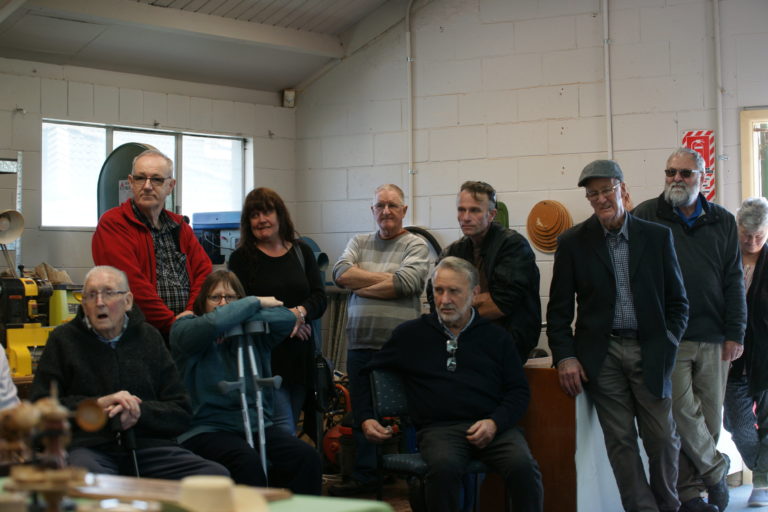
One of the best places to start is at a woodworking hobby class at a local school or polytechnic. Evening hobby classes have been hit hard in recent years due to the withdrawal of government subsidies but I still think they represent good value. These types of courses start you with one or two basic projects and let you learn to use machines safely so you can then decide to make whatever you want.
Ask around for something near where you live; ring secondary schools, polytechnics etc or search around on the website or in the local paper. From my experience, polytechnics have a more comprehensive range of machinery than secondary schools but there may not be a big choice in your area. Once you have attended a course for a reasonable length of time and gained the basic skills, you will find you can treat the venue as an extension of your workshop.
I attended a course at the Christchurch Polytechnic for more than ten years and kept that time on a Wednesday evening to use machines that I did not have at home. Other people there probably had no idea what I was doing each week because I took along only whatever parts I needed to work on that I could not do easily at home.
This might have included using the speed sander, re-machining large beams I had from a building deconstruction or cutting large sheets of MDF. The tutors were always available to talk through any issues I needed a second opinion on.
A dedicated woodworking school, the Centre for Fine Woodworking in Nelson, runs courses for all levels, including beginners, and I have heard many good reports on the school.
Woodturning
There are basically two general directions you can head with the hobby:
- wood turning; or
- general furniture/cabinet making.
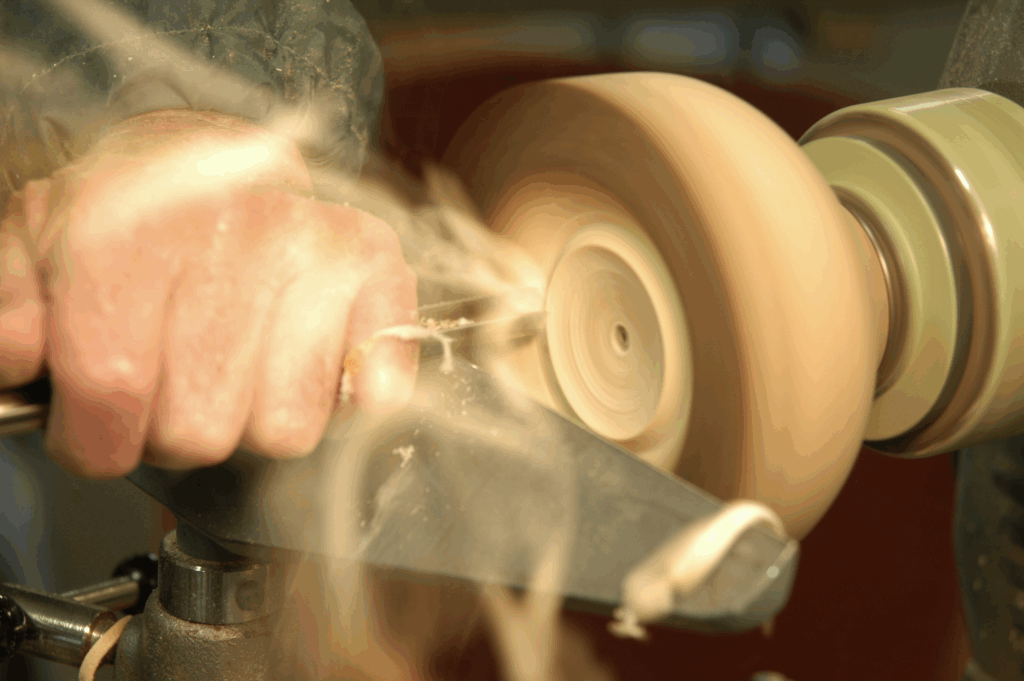
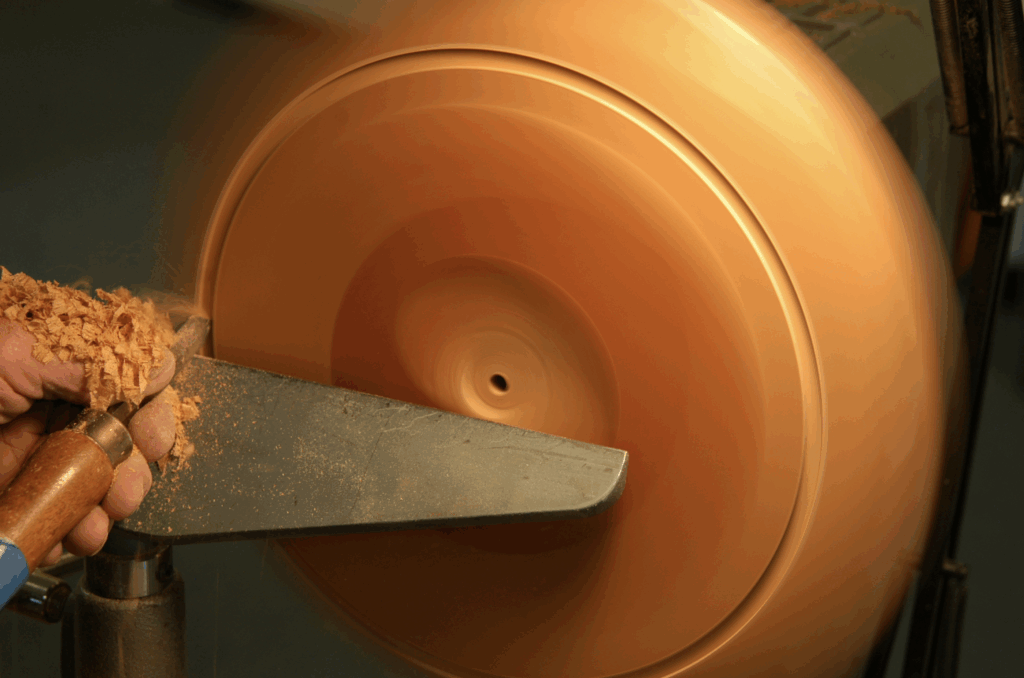
Woodturning seems to have a great following with many introductory courses available for prospective wood turners. For the beginner, it can produce finished products relatively quickly which I am sure spurs turners onto greater heights. A lathe can fit into the corner of a garage or even a larger garden shed and the initial setup cost can be low. A second-hand wood lathe can start at $100 -$200 and a new entry level one only a few hundred dollars more.
The National Association of Woodworkers website lists all 45 affiliated woodturning clubs across the country with contact details, times and locations of club nights/afternoons, etc. www.naw.org.nz. This will put you in contact with other woodturners who can give the best advice on equipment to buy and even the best courses for you. The club days may even be enough to get you under way.
Simple projects
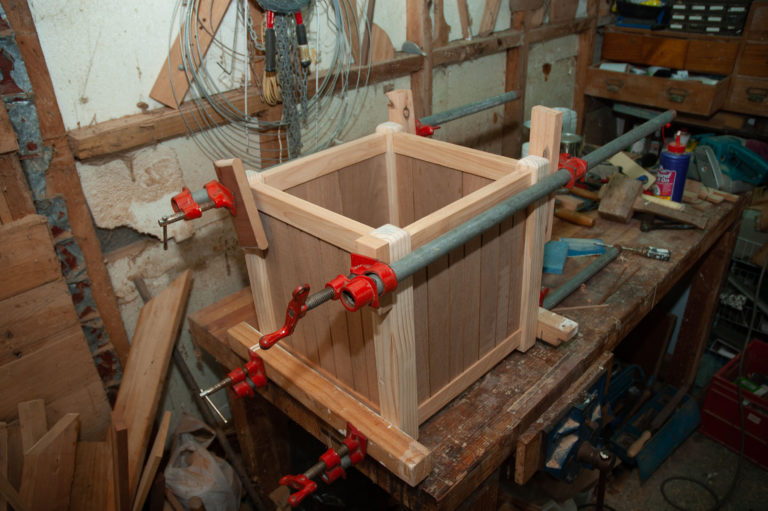
If you start your general woodworking hobby at home, then I suggest you begin by making two or three simple projects. This will get you to first base and let you and maybe other family members see that you can make interesting and useful things for the home. I believe you just need to get started—that is often the hardest part of the project or hobby.
Do not be too ambitious with your first projects, and make useful things. I have set out four simple items that are not too difficult but look good.
You can build these with very basic tools, but a sawbench, bandsaw, drill press and a cordless drill would speed up the process enormously. If you do not have the tools, try to borrow some for these first projects as you will gradually develop thoughts on the sort of good-quality tools you may wish to buy. If you intend to start a woodworking course, I suggest you do not buy any tools until you have started the course.
Cheese board
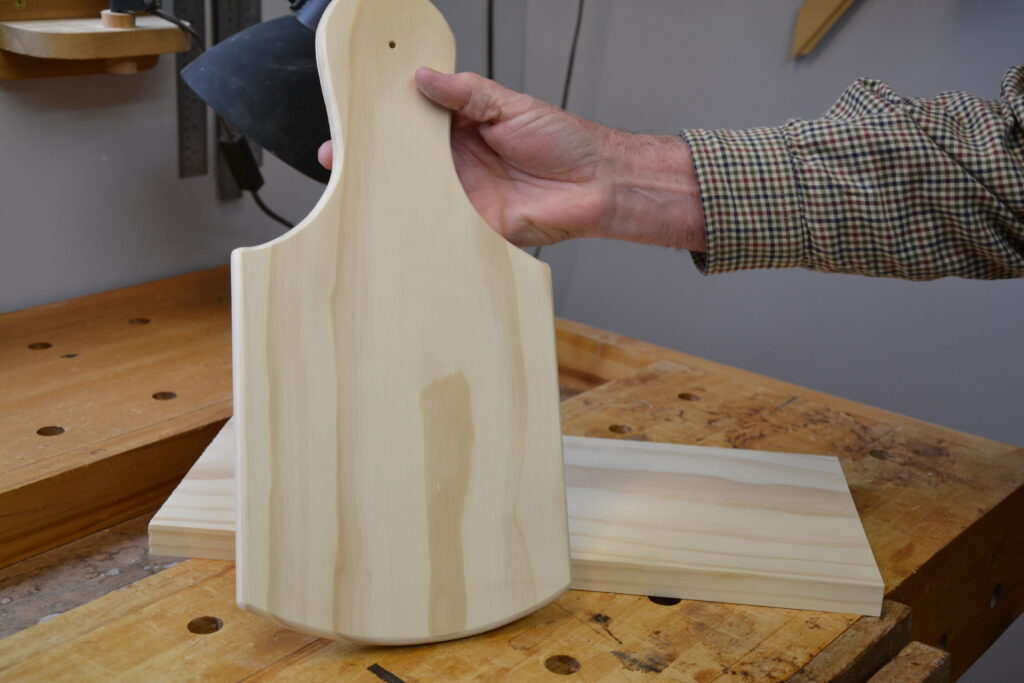
With the summer months now upon us cheese and crackers with a cup of coffee out on the deck is a great way to relax on Saturday or Sunday morning. This cheese board is simple to make and if you do not have any machinery to surface the timber you can buy dressed timber from your local timber yard or big barn store. The one in the photo is made from dressed 200 x 25 mm pine and it is 400 mm long. Change the shape to suit yourself and you may consider a circle end rather than oblong if you start with a wider piece of timber.
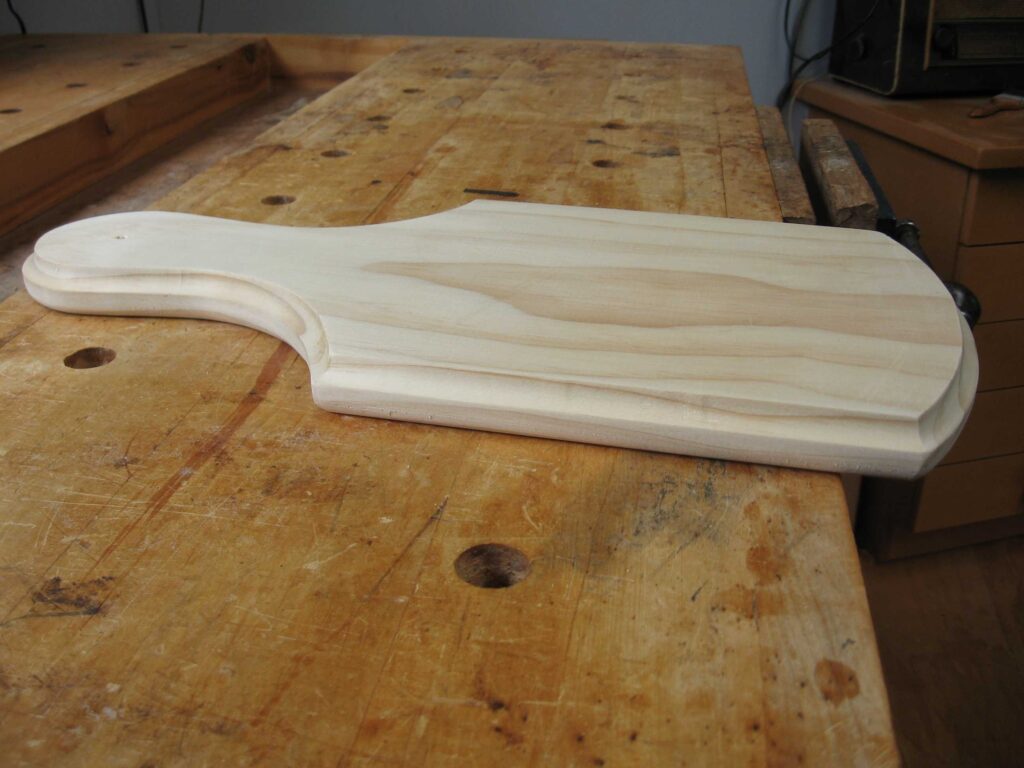
To finish the styling I have put a small radius of about 6 mm on the top and a reverse radius on the back to make it easier to pick up. A radius in woodworking is the rounded edge created on a piece of timber, having in profile the appearance of the circumference of a quarter circle. A reverse radius is where the curve on the edge is a hollow rather than a bulge.
A reverse radius is put in with a router using a bull-nosed cutter. If you do not have a router then a 6 mm radius top and bottom will still look good. Finish the cheeseboard with a couple of coats of cooking oil.
Tool caddy
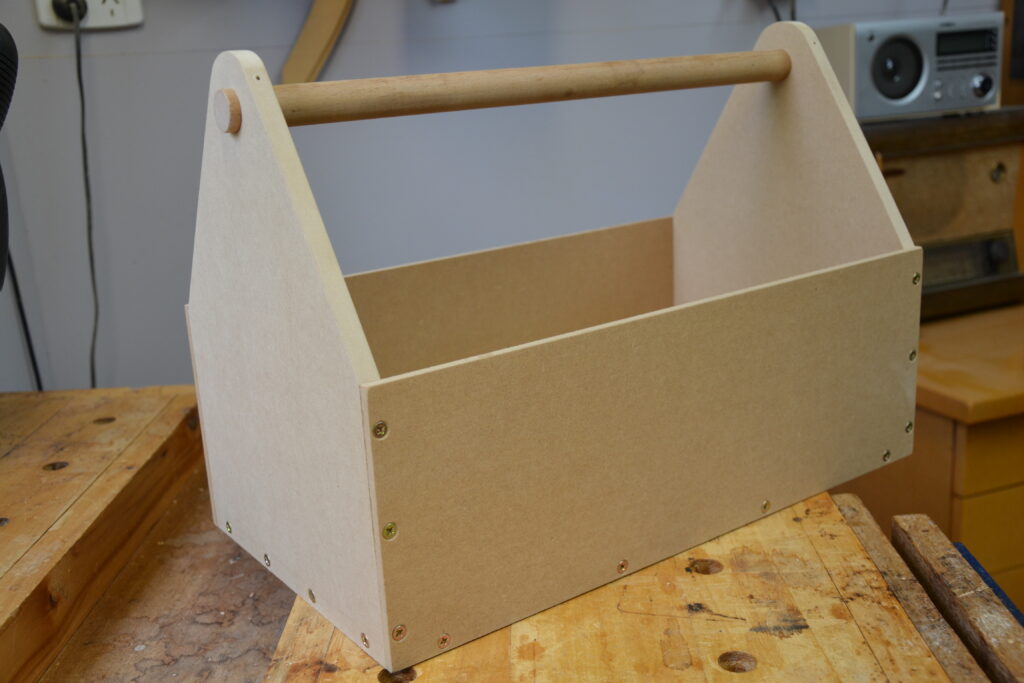
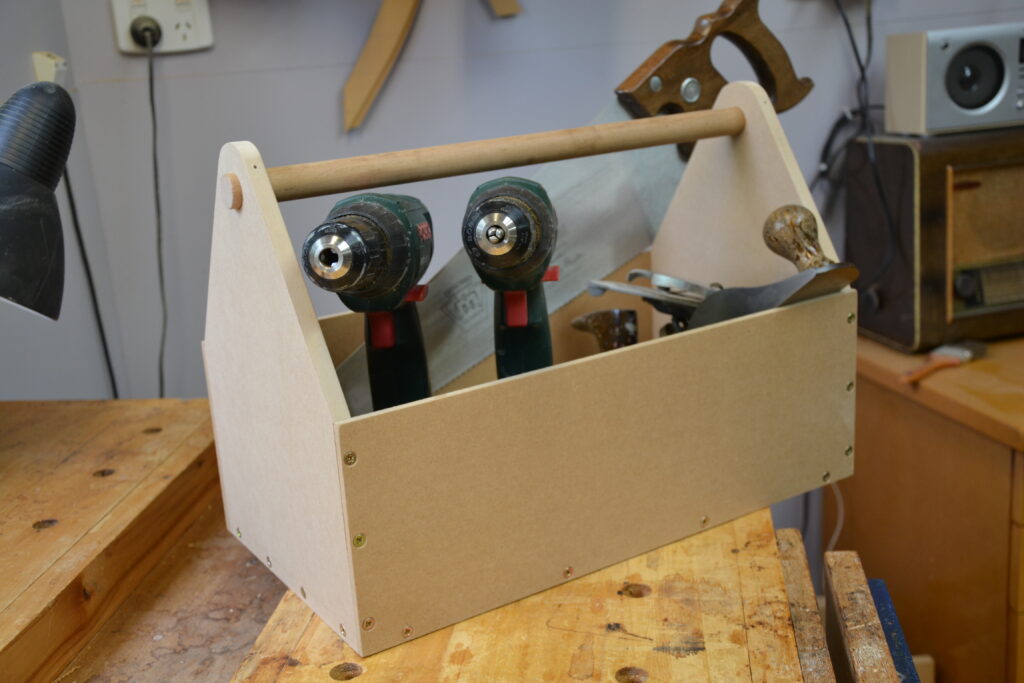
I find the tool caddy very useful for carrying tools around home where I might be doing maintenance or for taking tools to a friend’s or family member’s home to undertake some or other task. This one is 420 mm long and 230 mm wide. The ends and the base are from 12 mm MDF and the sides 5 mm MDF. The handle is from an old broomstick.
You could use plywood or even solid timber but make sure it is not too heavy. Thirty years ago I made one out some old 18 mm chipboard flooring but I soon abandoned it because of the weight.
Think about what tools you might need to carry to repair a gate, fence etc before determining what size you want to make it. If you have some experience you may even want to make it out of timber and hand-cut dovetails joints all around as a showpiece of your skills.
Printer stand
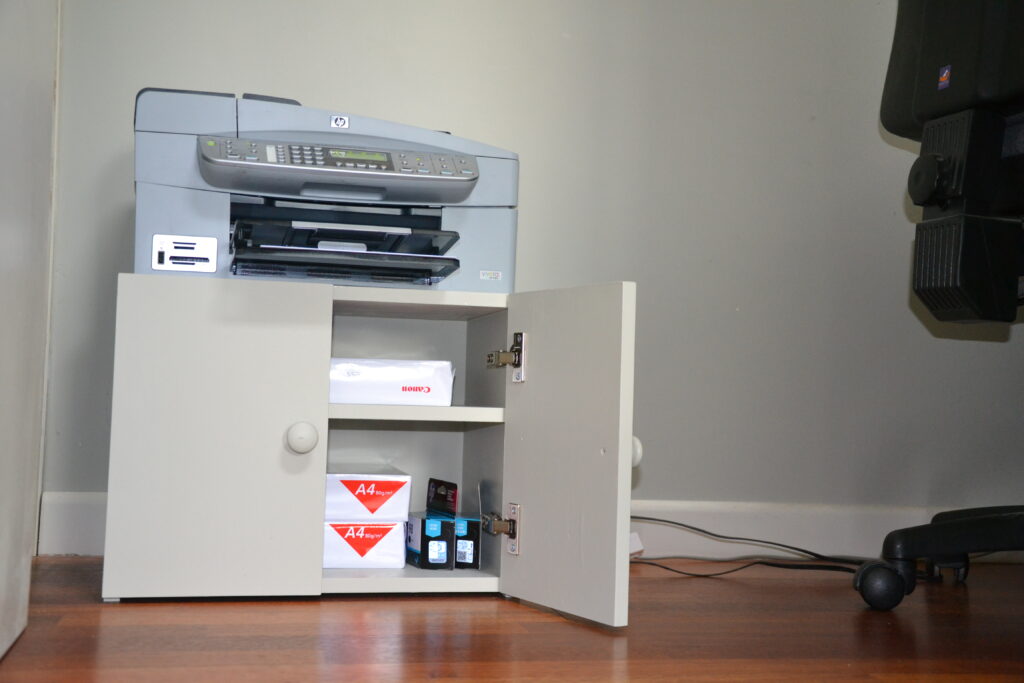
The third of my suggested “starter” projects is a small computer printer stand and cupboard similar to the one I made many years ago. As I probably spend more than 20 hours a week in my home-based office, I need to be organised and use the small space as efficiently as possible. This simple screwed-and-glued cabinet is just a guide. You could use the same construction method for bedside cabinets, book shelves or even, with a little experience, a whole new kitchen.
Once you know the size you require it needs careful marking-out to make sure every component is cut square. Screwing into MDF end grain can be a bit tricky and you need to drill a pilot hole for the screw to avoid the MDF splitting.
When you fit the hinges for the first time, do a test on two scrap pieces of MDF and read the instructions that come with the hinges. You will need a special Forstner type drill bit but they are inexpensive and last for years.
Child’s rocker
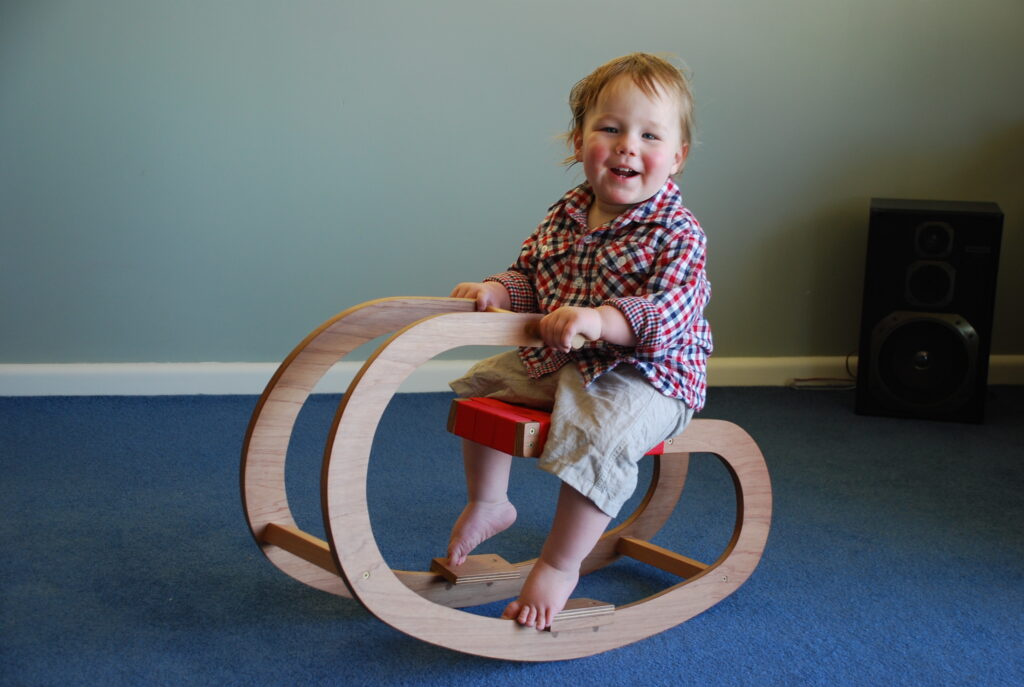
This project requires a slightly higher skill level however once you have made the other items you should be ready to undertake it. The full plans and instructions were set out in a previous issue of The Shed magazine (Rocking role—“make a simple rocker,” Dec 2010/Jan 2011). The publishers have the back issue available to purchase.
Get started
Taking the first step in anything is always the hardest part. Take the bull by the horns and start making something, and you will soon find all sorts of potential projects start coming into your mind. Books on things to make at all levels are easy to obtain in libraries, but caution. It is easy to read book after book without getting stuck in and start making something. Take that first step to a new hobby today.
MDF
MDF is an abbreviation you will see commonly in woodworking. It is short for Medium-Density Fibreboard, which is a product manufactured from wood fibres and combined with resins to form a flat panel or sheet. It comes in various thicknesses and is very simple to work with and marvellous for cabinets and the like. The dust from machining MDF is unpleasant and you should wear a mask if you are sanding it or doing any other machining that creates dust.