
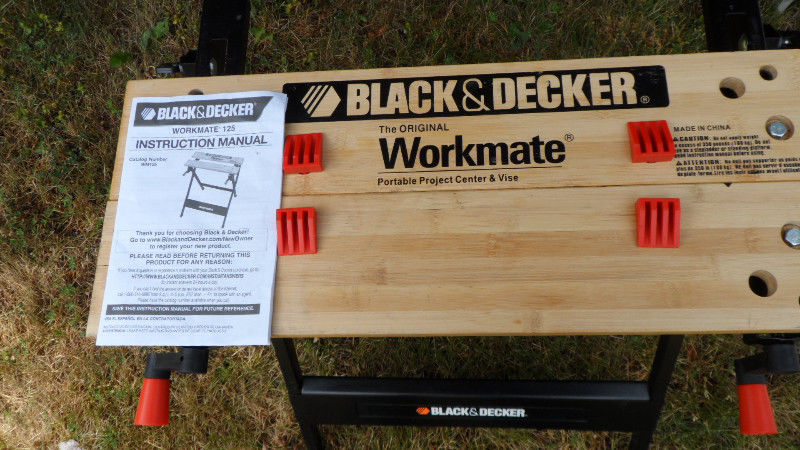


A eureka moment and tenacity led to the development of a staple piece of sheddie equipment
By Ritchie Wilson
Photographs: Ritchie Wilson
At the end of World War II, Britain – although victorious – was on her knees economically. Much of her merchant shipping fleet had been sunk by German U-boats, and her exports had fallen to a third of their pre-war level. All rationing finally finished in 1954, and living standards continued to improve, with very low unemployment and high levels of home ownership, until the economic troubles of the 1970s.
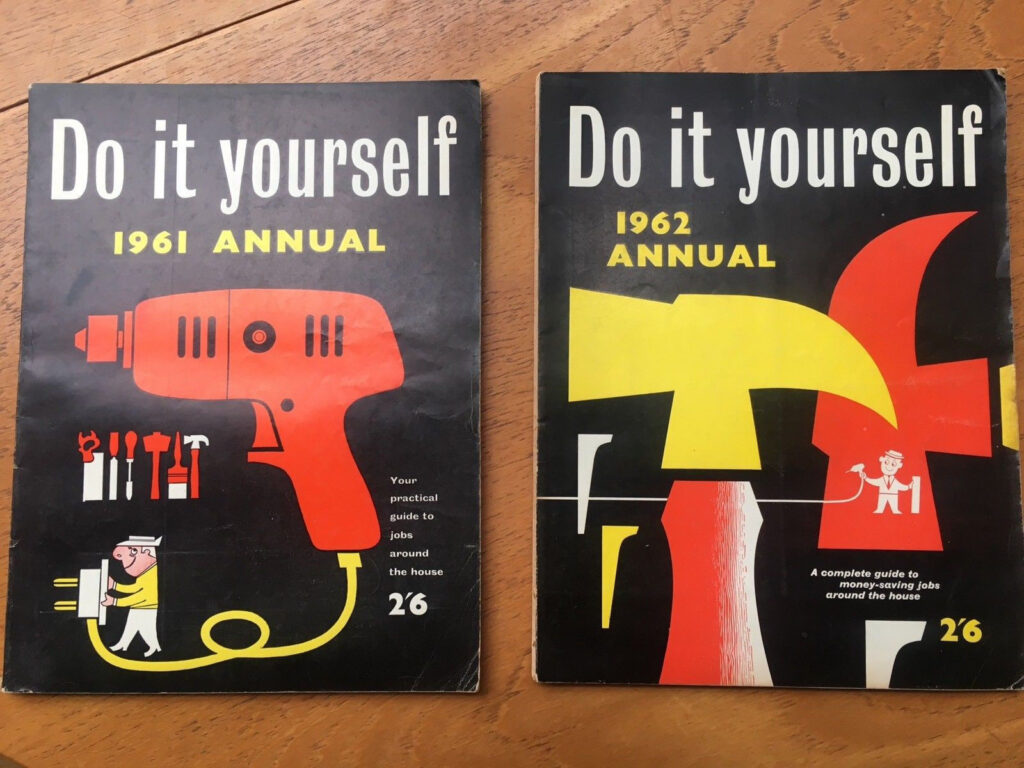
Because of this post-war prosperity, ordinary people had money to spend improving their accommodation. This led to a boom in DIY, with specialist magazines filled with advertisements for paint, hardboard, and electric drills. In the 1962 annual of the Do It Yourself magazine, there were numerous ads for four different brands of corded drills, with one featured prominently on the front cover.
Eureka moment
In 1961, Ron Hickman, a just-married South African immigrant to the UK, was making a wardrobe using expensive Scandinavian chairs as sawhorses (as you do) when he inadvertently cut one of the chairs as well as the plywood. This was his eureka moment. The need for a workbench which could be stored away in an apartment cupboard when not being used was obvious.
His prototype folding workbench had a classic cast-iron and steel Record brand wood vice attached to it.
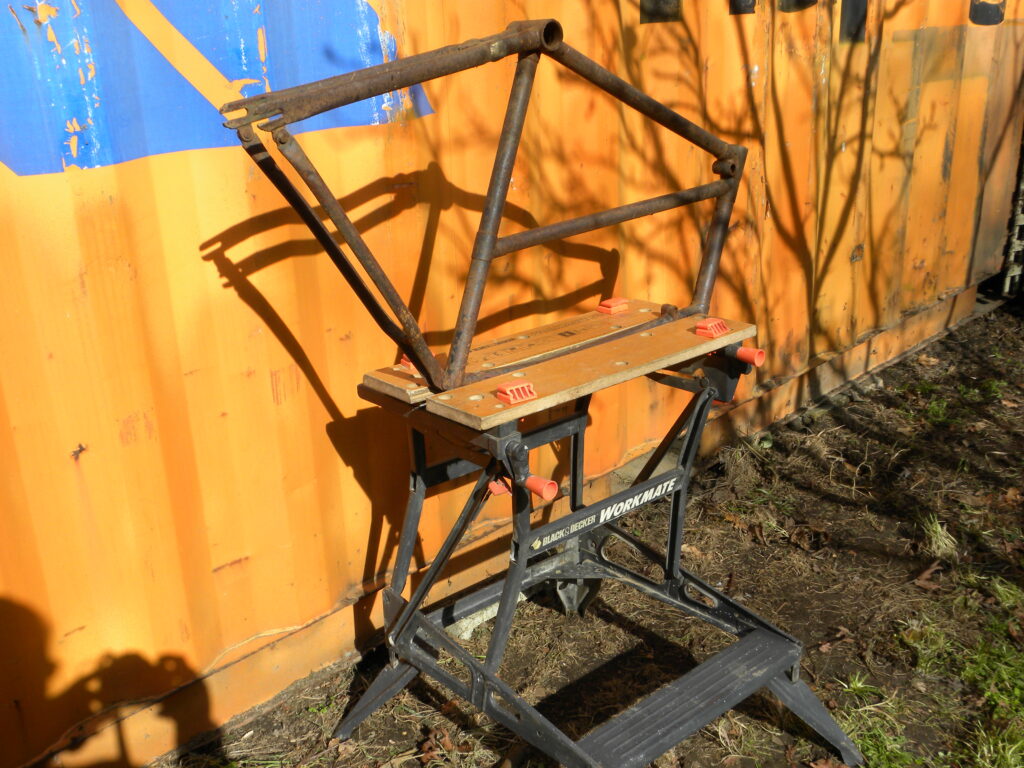
Ron was known in the Lotus Cars factory, where he was director of engineering, as someone who could always see an alternative approach to design problems, and so it was with his workbench. His final design used the top of the bench as a vise; one half of the top being fixed, the other being moved by two threaded rods to clamp the object being worked on, vaguely similar to a book-binder’s vise. His background in car manufacture led to him design the folding workbench with a metal frame. Because it was intended to be used for woodwork the top was wooden – solid wood in the original design.
Sales in the dozens
Very luckily, one of Ron’s neighbours in the village where he lived was a patent lawyer who assured Ron that his design was patentable, and so he left Lotus in 1967 to set up his own design studio.
He offered the workbench design to several large British tool companies after obtaining a number of patents for it in 1968. There was little interest. Stanley Tools sent him a letter saying that the anticipated sales in Europe were “in the dozens, rather than the hundreds”.
What to do? Ron rented a shed, had parts manufactured, and began to make the workbench, now called the Workmate, himself. He sold them by mail order and through trade fairs. Almost everyone who saw a Workmate was impressed and he sold thousands, mainly it seems, to builders.
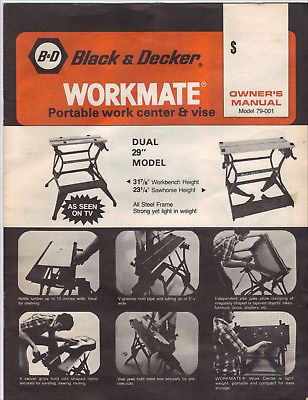
Not surprisingly, this caused a rethink at Black and Decker, and in 1972, they signed a royalty and copyright deal with Ron, giving him a reported 3 per cent royalty, which amounted to a minimum of 50 pence per Workmate. Black and Decker reworked the design and began selling the Workmate worldwide. And they sold millions. At least, it is variously reported, 30 to even maybe 70 million or more, and they are still selling today.
The reward is in the patent
Most people who come up with a marketable product miss out on the financial rewards because the process of obtaining a patent is so expensive, and even if the intellectual property is protected, they don’t receive a sufficiently high royalty from manufacturers to make much money.
As a designer and inventor in business, Ron had a different attitude. If his designs couldn’t be protected, then he was wasting his time, and if he wasn’t able to generate good money from licensing his ideas, then he would be better off remaining in the industry.
Ron managed the difficult double of patenting the Workmate and negotiating a satisfactory royalty for its manufacture. He became a wealthy man and moved his design studio to the tax haven of Jersey in the Channel Islands. There he bought a house with a view, pulled it down and replaced it with his own futuristic, gadget-laden version. He would open the house to raise money for local charities and was always keen to show visitors the infamous Stanley Tools letter.
Design career
The huge sales of the Workmate led to many imitators, some producing exact replicas. Ron’s patent protection (and by then a large income) allowed him to successfully sue many of the copyists, including the giant American mail-order firm Sears.
Before he became a full-time inventor, Ron had a career in car manufacturing. He came to Britain in 1954, after working in South Africa in the law, to try to get work in car design. He was eventually taken on by Ford at Dagenham as a clay modeller in the styling department, despite his complete lack of experience. He worked there for three years on cars such as the Ford Anglia 105E, and left after a chance meeting with Lotus owner Colin Chapman at a motor show.
Chapman was a leading designer of racing cars and was on the lookout for talented people to help him produce road cars. The idea was that the profits from the road cars would finance the racing cars, as was done at Ferrari. This was before television fees made F1 motor racing such an outstandingly profitable activity.
Ron quickly rose through the Lotus organisation, becoming a director and responsible for the design of cars such as the 1962 Lotus Elan, a highly successful Model. When Mazda bravely decided to produce a rag-top sports car in 1989 the Elan had an obvious influence and the resulting very pretty Mazda MX-5 has a similar appearance to the Elan.
But wait, there’s more
No one could say that Chapman was an easy person to work for, and by the late ’60s, Ron was looking for other opportunities. As well as working on the Workmate, he was moonlighting as a furniture designer before he left Lotus.
Ron developed many other products, but none of them has been as successful as the Workmate. One mentioned in the very many obituaries published when he died in 2011, five months after a bad fall, was the Child’s Toilet Pot, patented in 1970. This was a potty with an attached foot-piece. It solved the problem of the full potty sticking to toddlers’ bottoms when they stood up – and the consequent mess. Unfortunately potential buyers viewed it merely as an expensive potty. Friends of Ron were quoted in the obituaries as saying that they had never seen one of these potties in a shop.
Workmate accessories
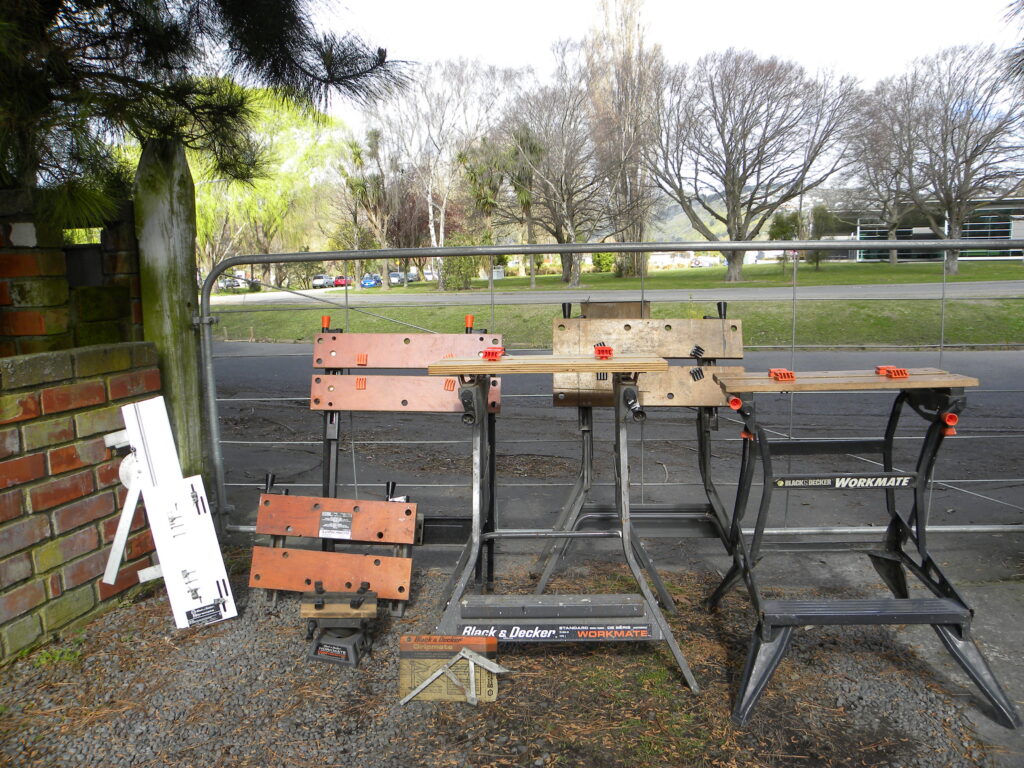
Black and Decker produced many accessories for, and variations of, the Workmate, which may have originated at Hickman Designs Limited.
Workmate Related Device | Product Number | Description |
Workmate | 79 – 001 etc | Portable workbench and vice |
Table Top Workmate or Jobber | 79 – 008 | Benchtop Workmate |
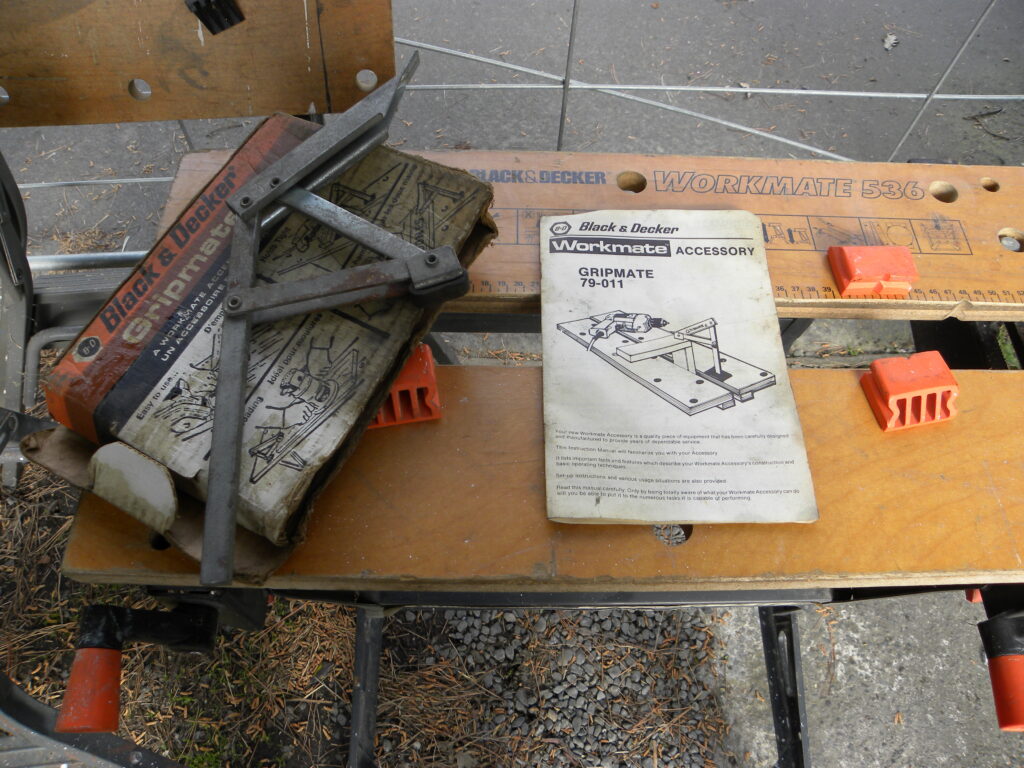
Gripmate | 79 – 011 | Vertical clamp similar to a bench hook |
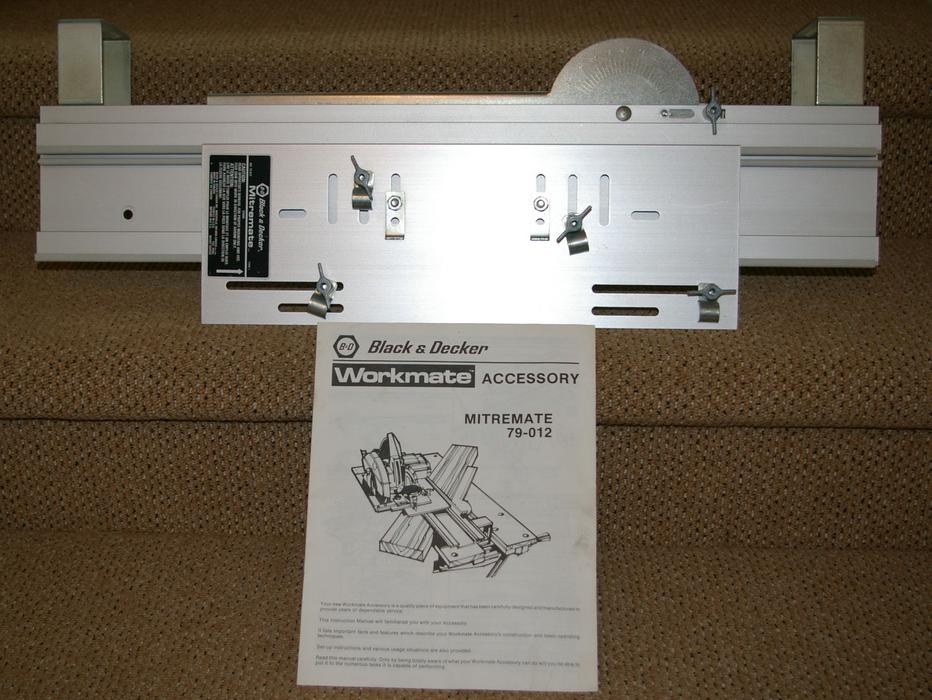
Mitremate | 79 – 012 | Adjustable fence for a portable saw |
Routermate | 79 – 013 | Guide for routing |
Guidemate | 79 – 015 | Vertical guide to convert a portable drill into a drill press |
Horizontal Clamp | 79 – 018 | Provides horizontal clamping for work on a Workmate |
Dropdown Work Centre | 79 – 021 | Wall-mounted Workmate with a plastic top |
Hobbycrafter | 79 – 025 | Benchtop work centre and vise |
7inch Quickvise | 79 – 081 | Small version of 79 – 008 |
Workbox | Plastic toolbox with Workmate mounted on the top |
Replacing a Workmate top
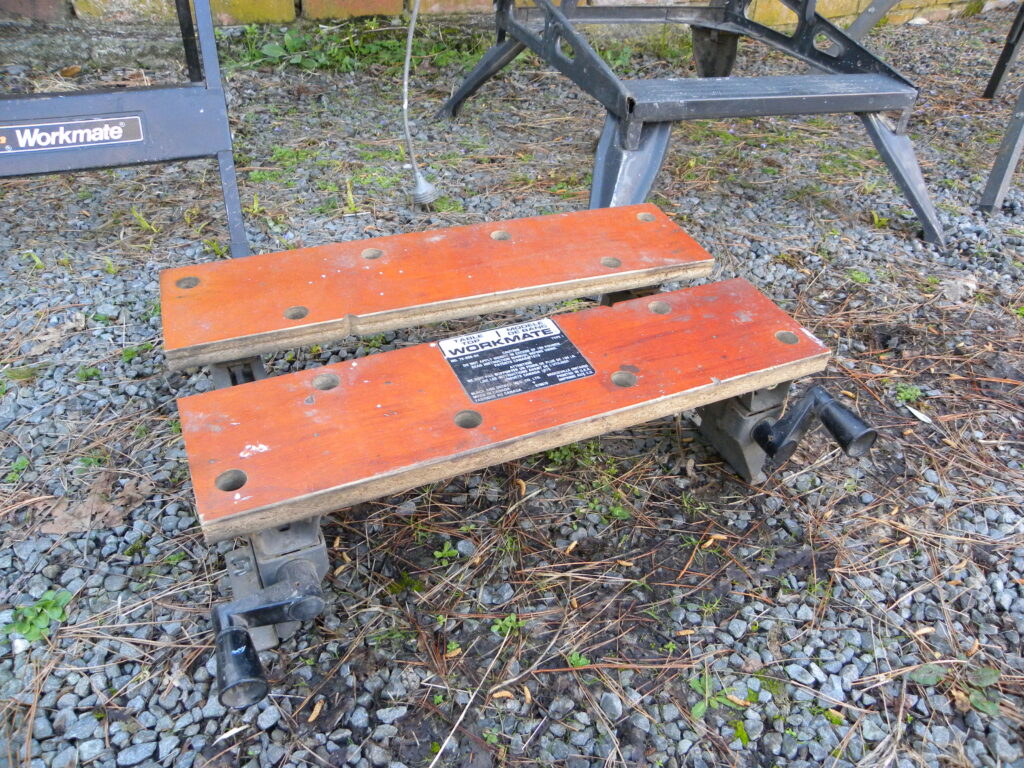
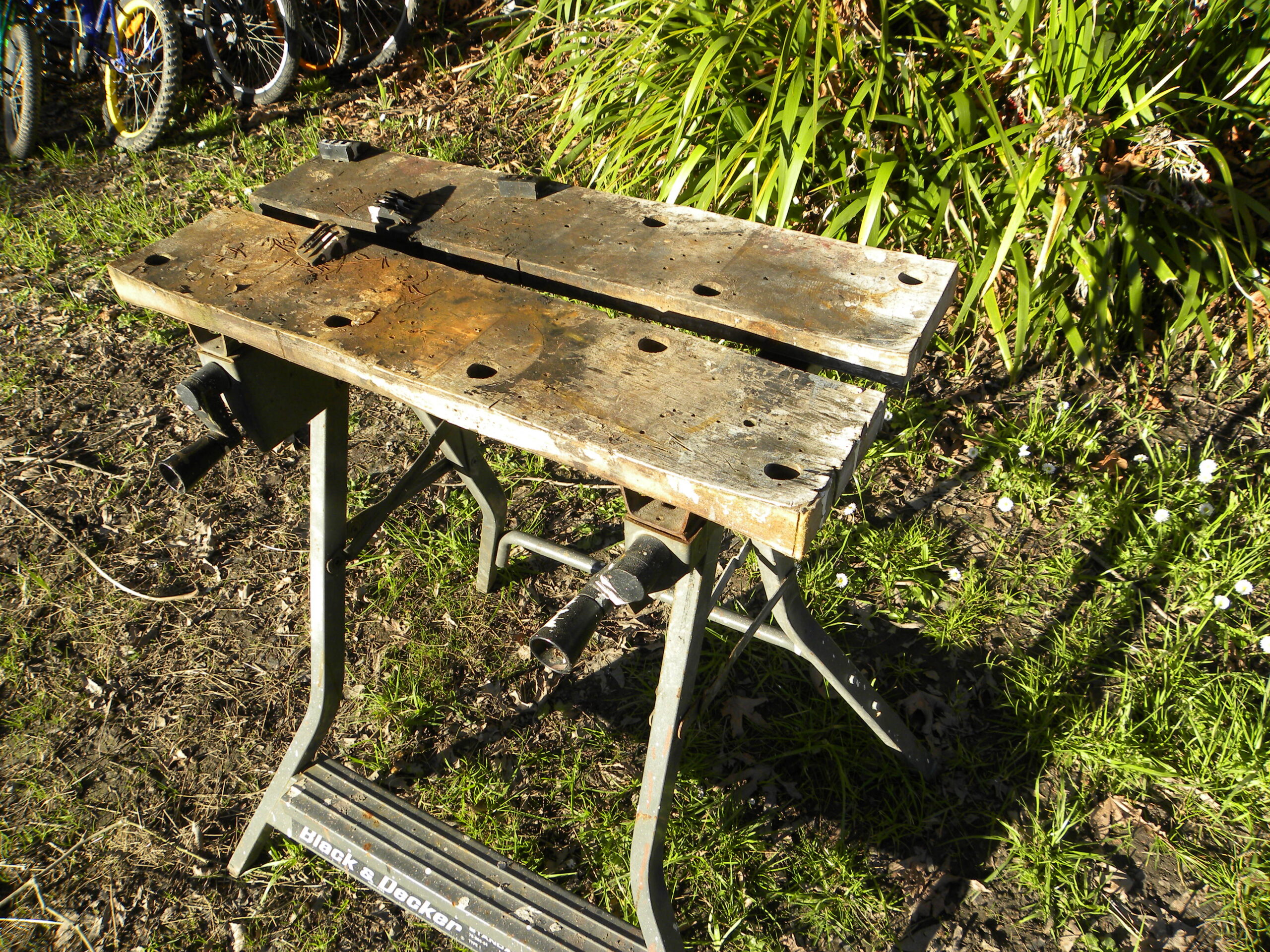
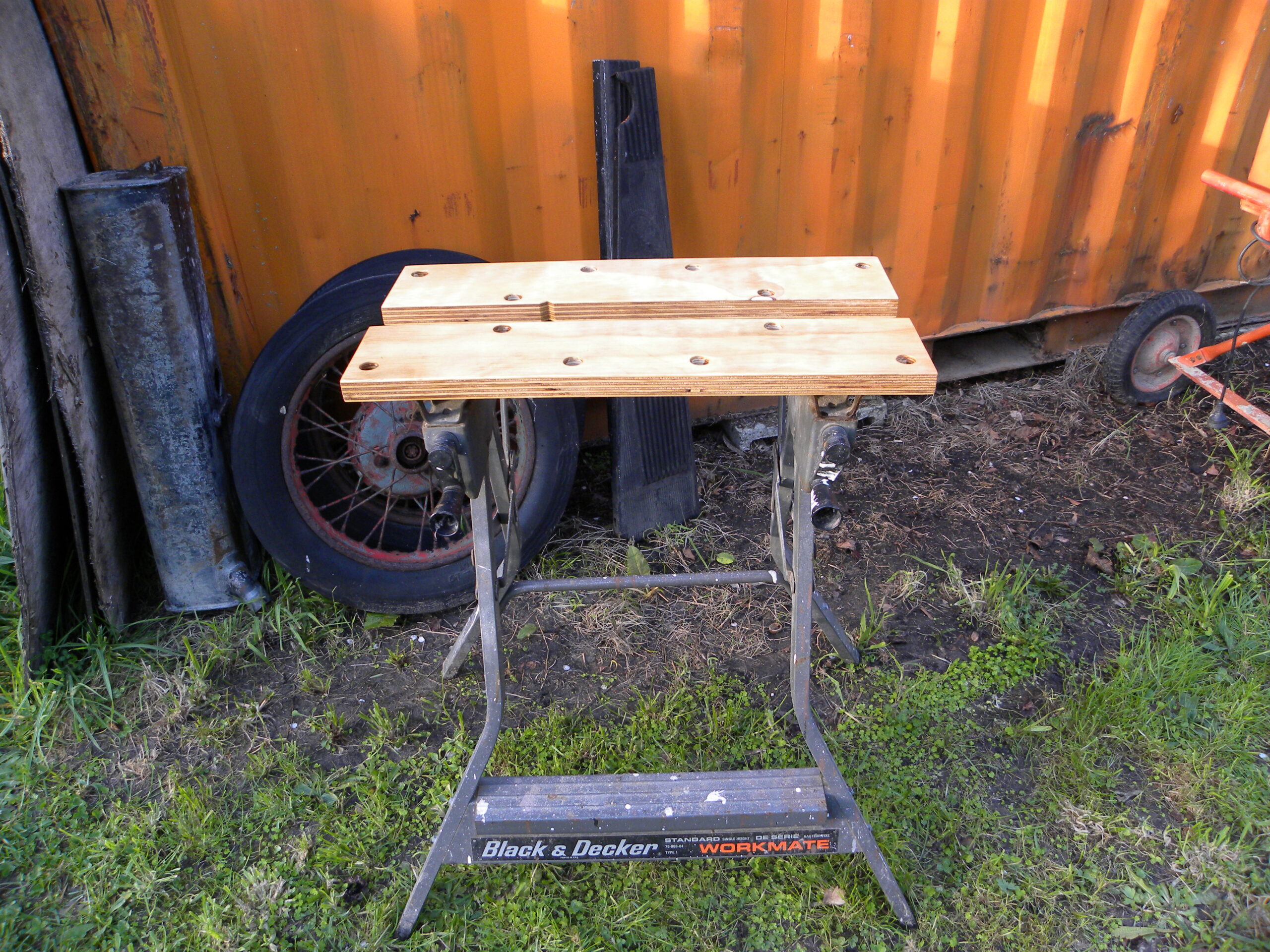
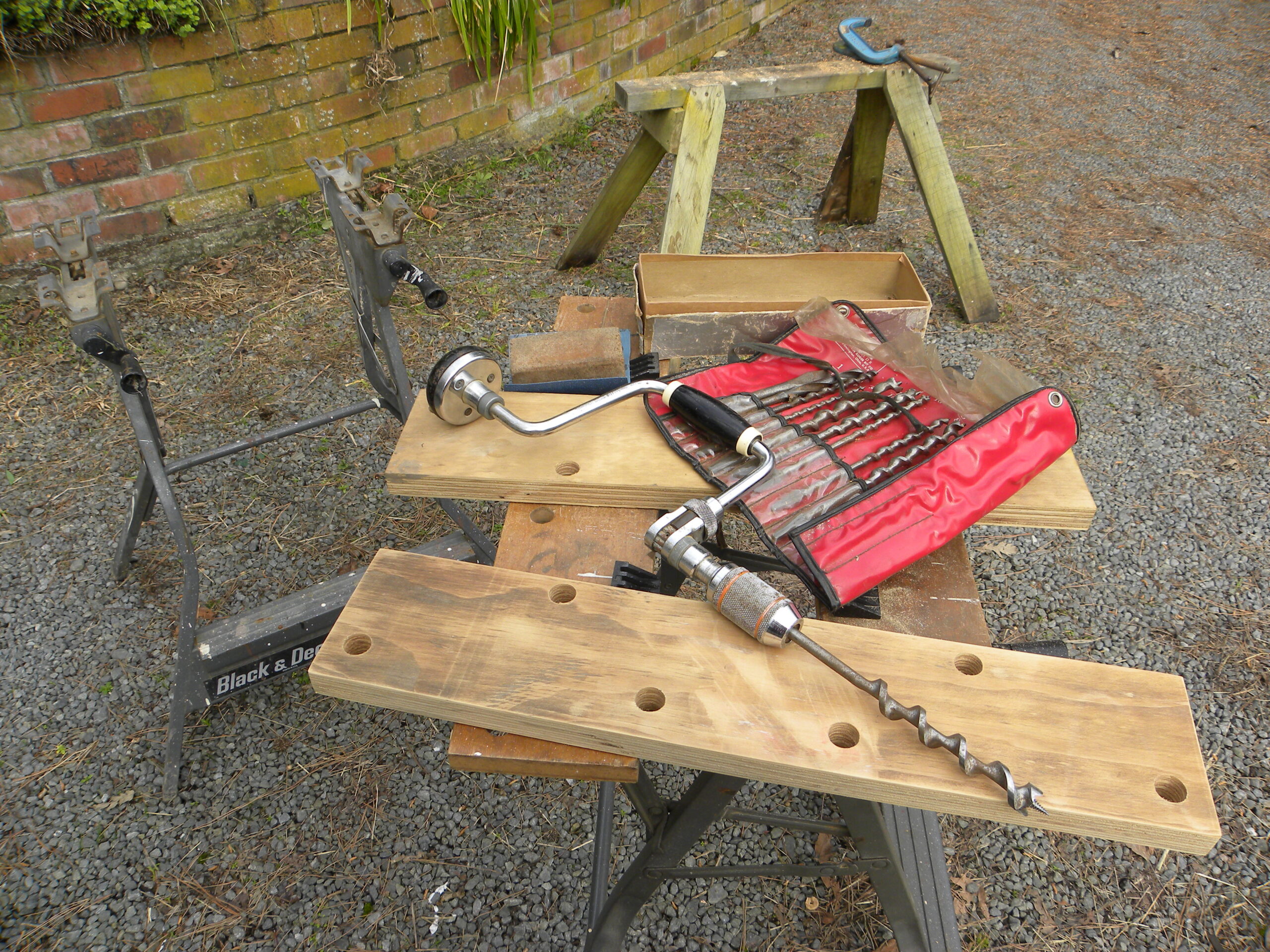
Kept indoors, the laminated wood tops of the workmate are very durable, but they don’t last long when exposed to the weather. The example pictured has warped and started to delaminate because of moisture.
A new top was made from 18mm construction ply using the old tops as patterns.
First the new tops were cut to the same dimensions as the old ones on the table saw and mitre saw.
The various holes were traced onto the new tops from the old.
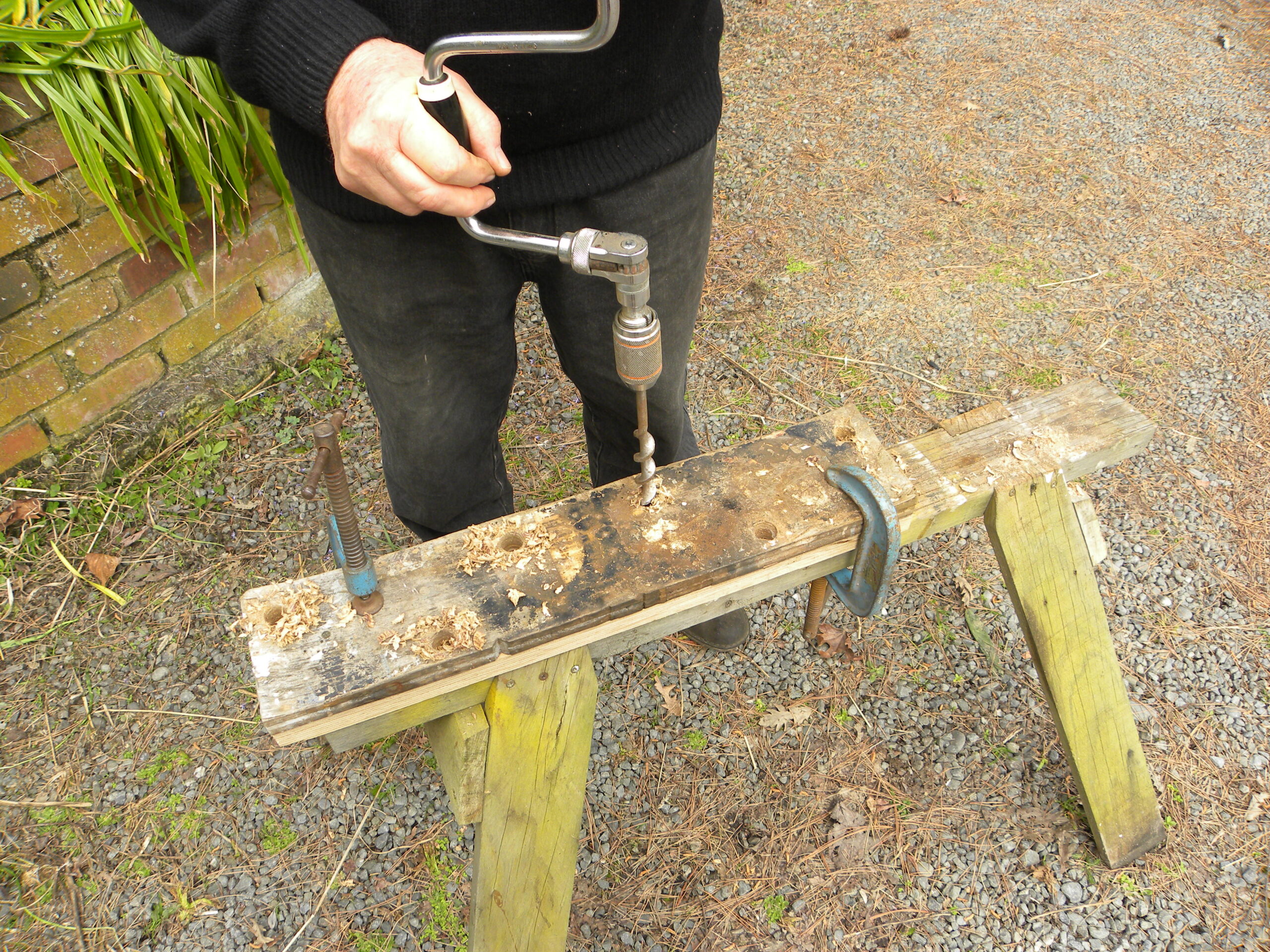
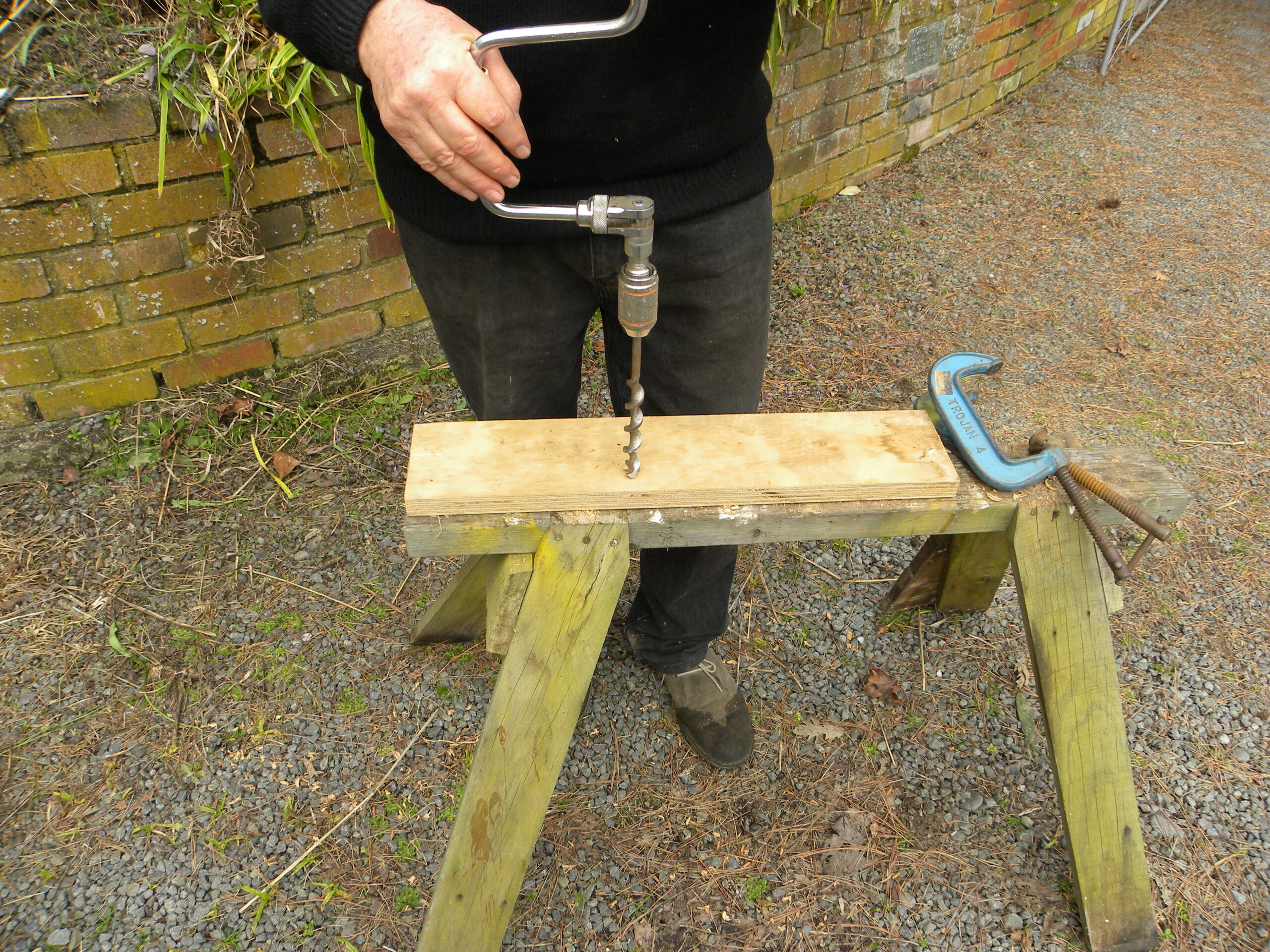
The holes for the plastic bench dogs were then drilled using a 19mm (¾ inch) Forstner bit in the drill press.
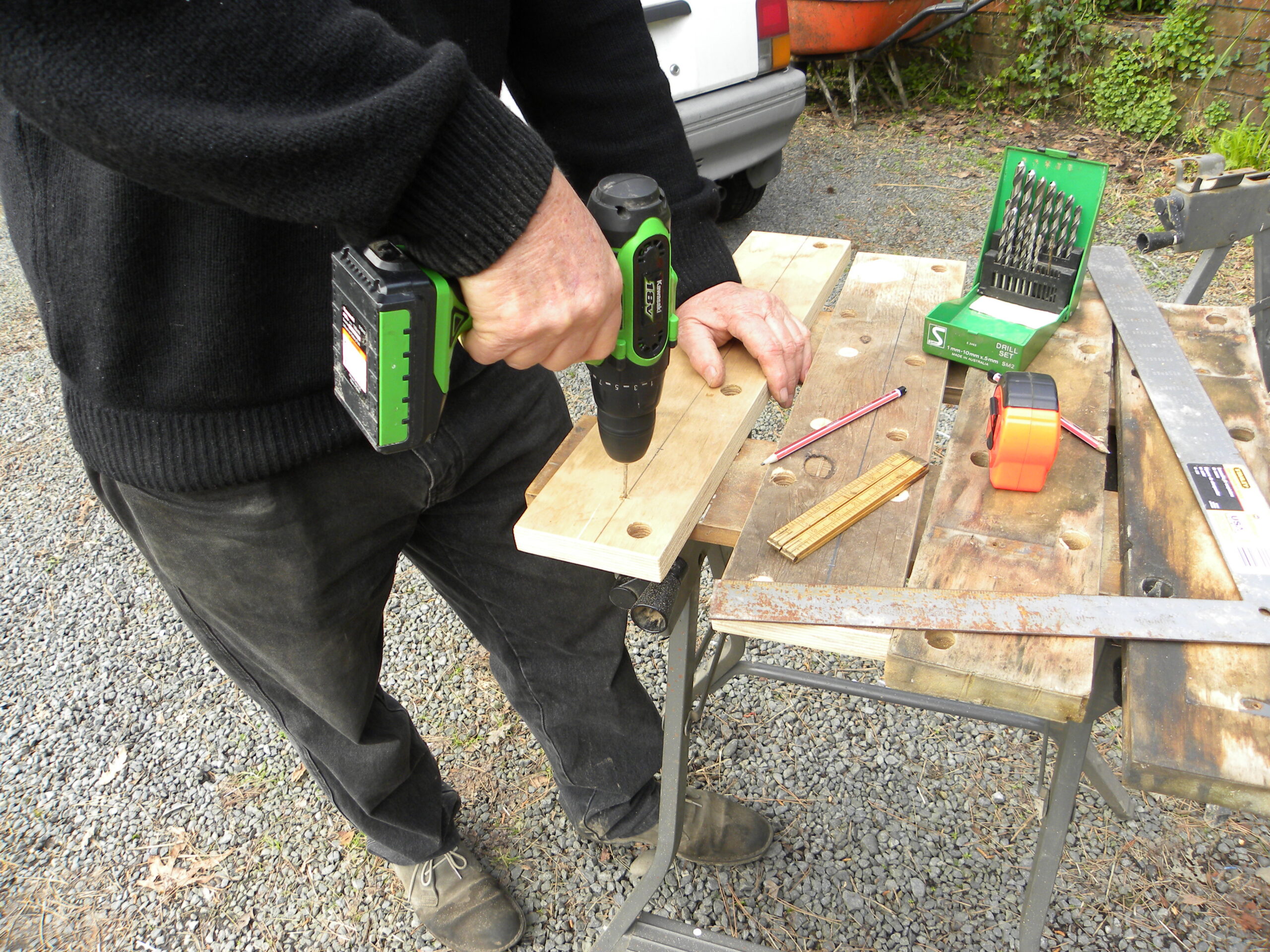
Next, the four fastening holes were drilled 10mm deep from the top surface, and the 8mm holes were drilled the rest of the way through.
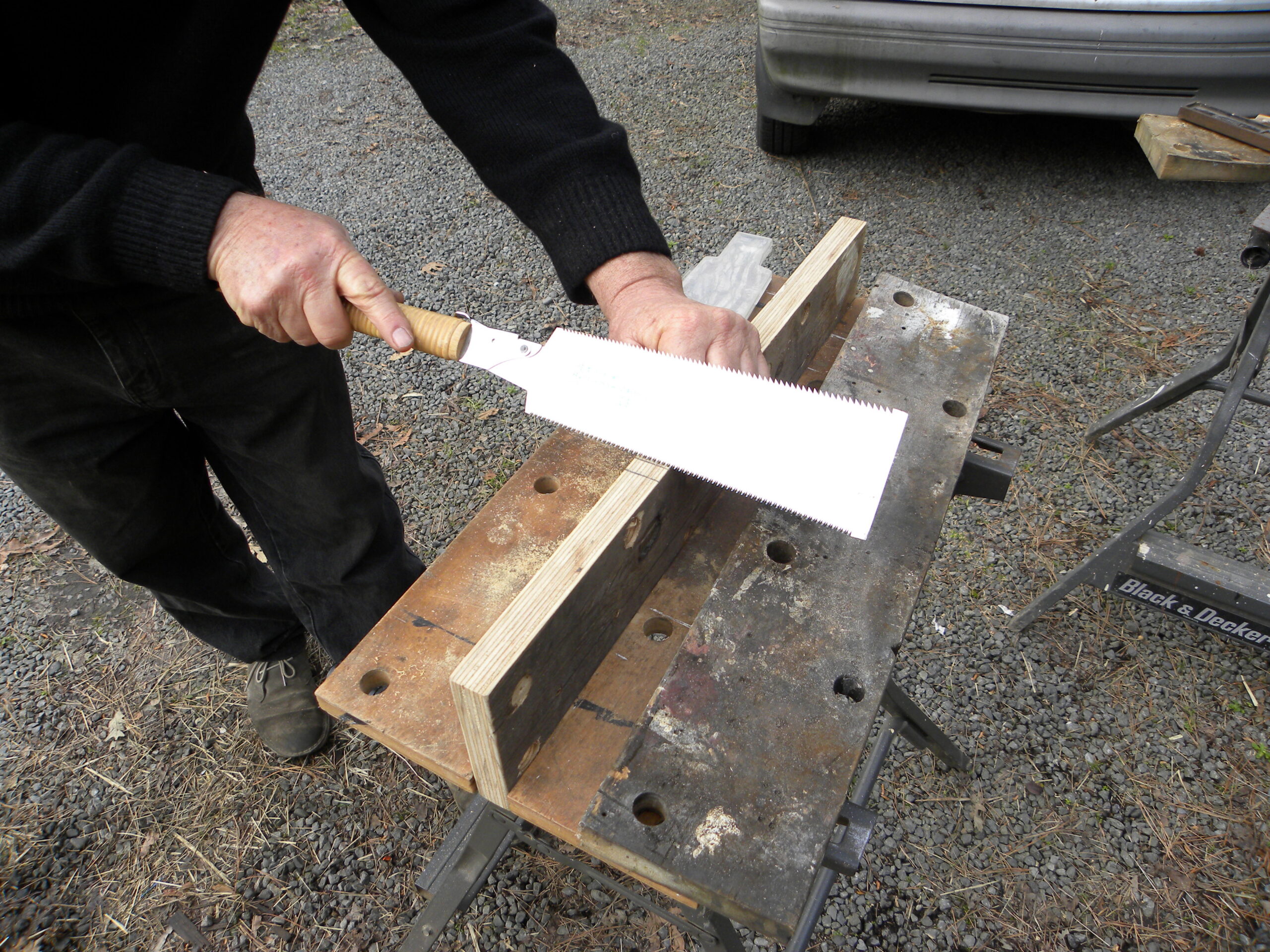
Two small Vs were cut into the clamping edges, and the edges were then planed.
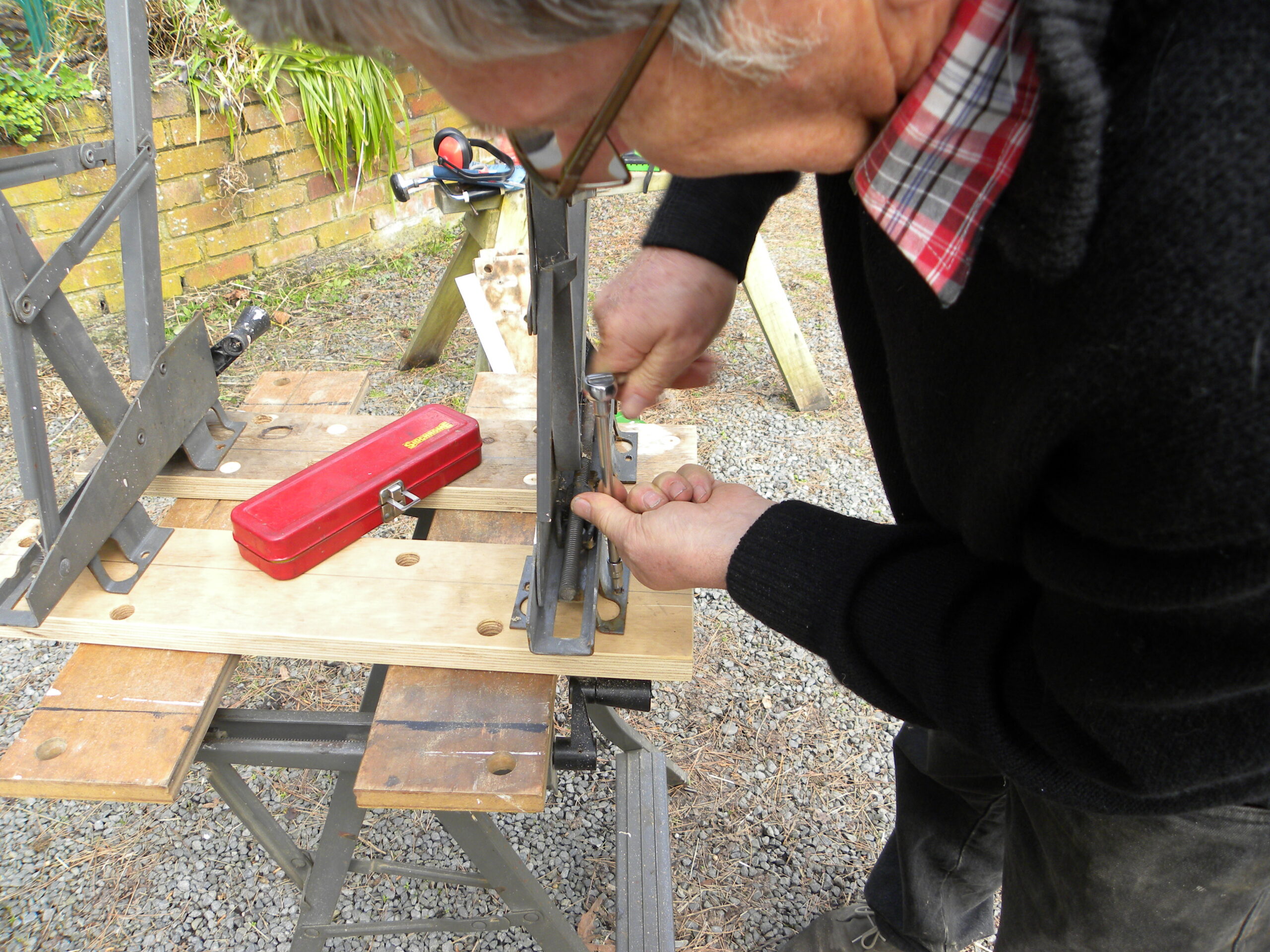
After a light all-over sand with 100-grit sandpaper, the tops were coated with a couple of coats of semigloss polyurethane, and the new tops were bolted onto the Workmate.
The portable workbench was now ready for another few decades of work.
The Workmate Hobbycrafter
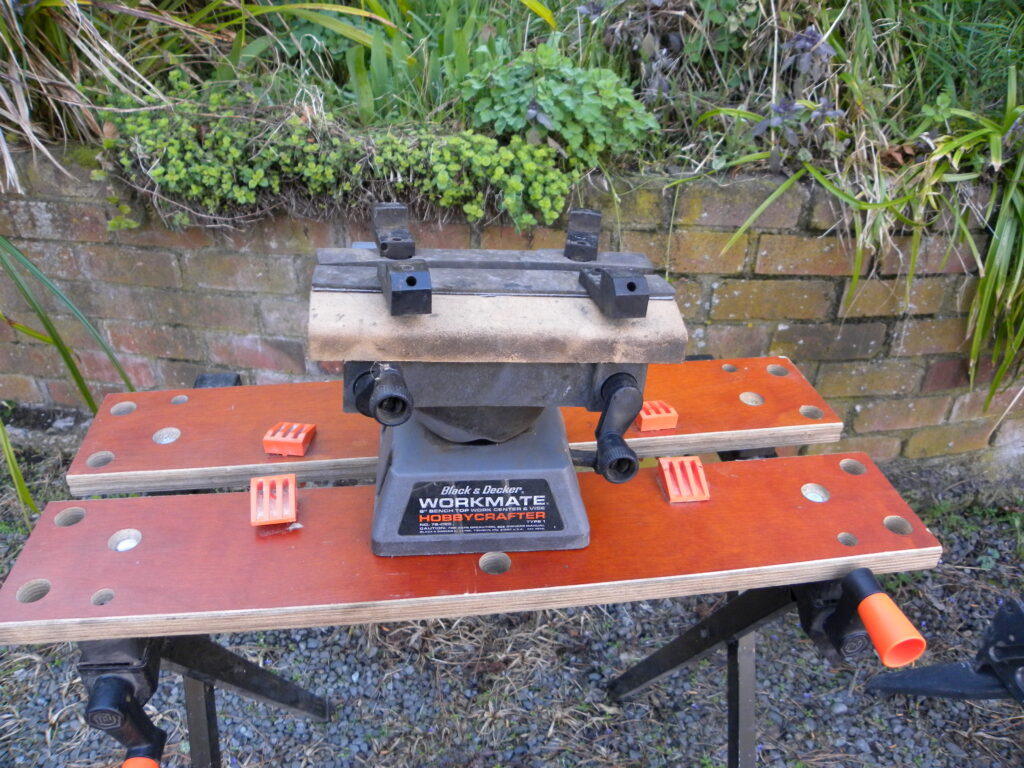
This is a plastic-topped miniature Workmate which can be clamped to a bench to act as a vice. It features small, offset versions of the original movable dogs to hold irregular-shaped objects. The defining movable top forms a vice. The jaw edges formed by the two halves of the top have removable rubber to allow them to safely grip easily damaged workpieces.
The vice has a universal mount, which means it can be set in an infinite range of orientations to aid fiddly work. The Hobbycrafter is useful for holding small objects being glued or soldered and, just like the original Workmate, it enables folks without a shed with a workbench and vise to do stuff themselves.
Using the Mitremate
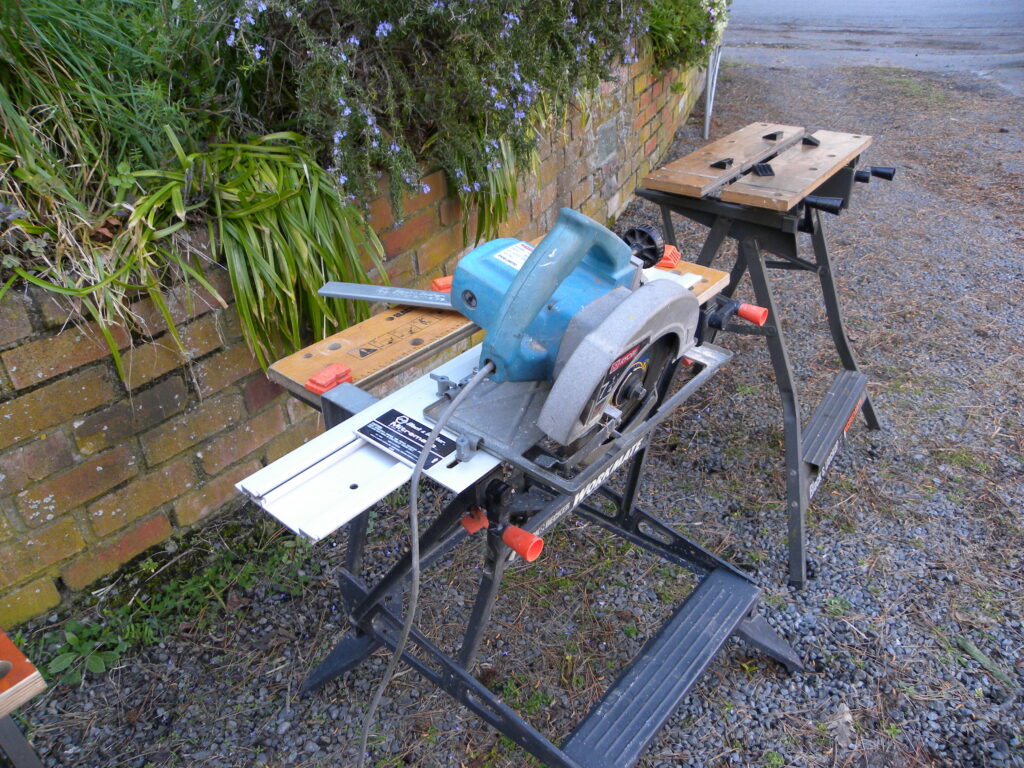
The Mitremate is a sliding mitre guide which allows the cutting of pretty accurate mitres using a portable 190mm circular saw. The saw is bolted to the sliding part of the device, and the fixed part is clamped between the Workmate’s jaws. The piece to be cut is held against the adjustable guide piece, and the saw is pushed forward to make the cut. The Mitremate was designed to do what the modern sliding mitre saw does, including compound mitres.
Carpenters used to cut angled joints by eye using a crosscut handsaw, but this required great skill born of long practice. Today, a chippy takes great pride in his mitre saw and stand, and most are devoted to a particular brand. The modern mitre saw is very quick and impressively accurate. With a stand which supports long stock it performs much better than the Mitremate, particularly on long boards, which is perhaps why the Mitremate is seldom seen today.