









Midgets to Sprints
In the shed with Sprint Car champs, Michael Pickens Racing
It is Thursday night, and I am deep in a gated no-man’s-land of West Auckland factories.
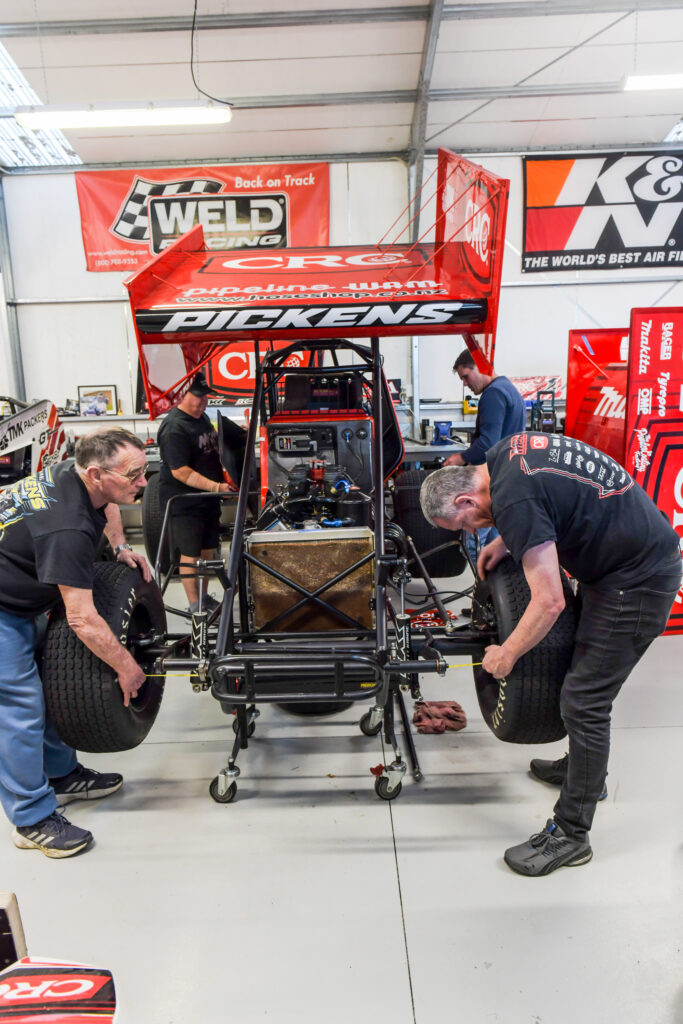
Manufacturing may have stopped for the day in the surrounding precinct, but in the workshop of New Zealand dirt-track superstar Michael Pickens, a four-man industry is in full effect. The mission here tonight is to clean, rebuild and ready Michael’s Sprint car not for racing but for display at the CRC Howick Village HOP. Tonight is a dress rehearsal for the season ahead; it is the first time that the crew will have the car back in one piece since racing finished at the end of May.
The Michael Pickens Racing (MPR) crew are: Crew Chief Steve Warrington, Tony Cullen, Mike Pipes and Michael himself. All are veteran motor heads who grew up watching Speedway at Western Springs. As with most Speedway teams in New Zealand, they are all volunteers and live for open-wheel race days. In the off-season, the team meets once a week at the workshop, twice or more during race season. Michael says, “Every week we are trying something new, and I’m thinking about what I can do better.”
It is one of the few times he refers to himself in the singular. When any one of the team speaks about a race, be it a win, a yellow light or even a crash, it is most always as the royal ‘We’.
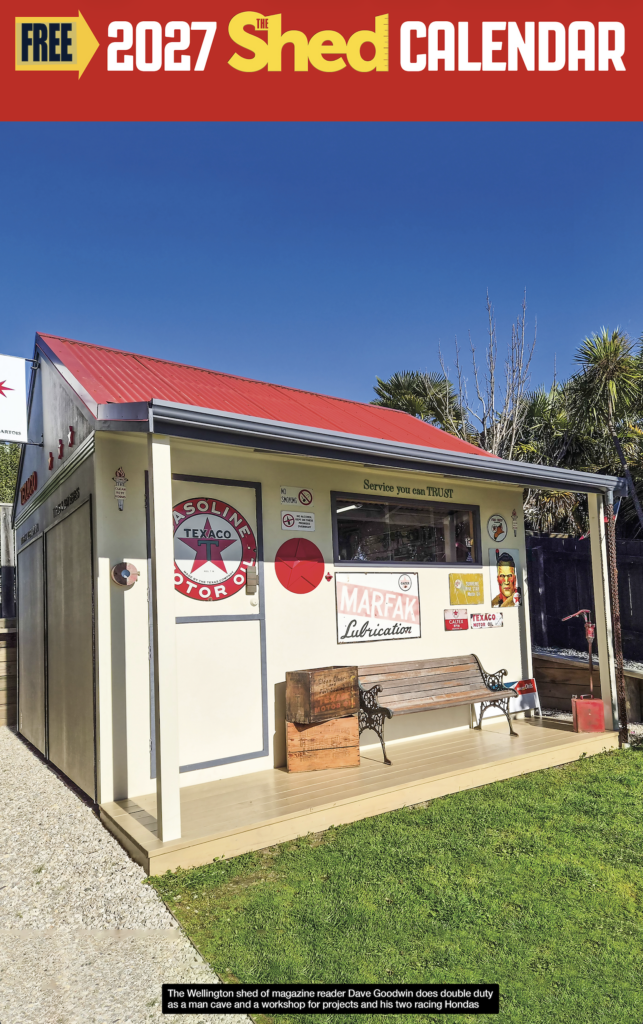
This Christmas issue also includes our FREE 2027 The Shed calendar – a must-have for every workshop wall
To purchase a copy of this edition, head here to our online store
The Art of Wood 2026
The winners from the online exhibition of New Zealand wood art.
When the National Association of Woodworkers (NAW) launched the Art of Wood competition in 2021, it created much more than another exhibition; it established a national showcase.
This exhibition lets New Zealand’s finest woodcraft inspire fellow makers while showing the public that woodworking is every bit as much an art form as painting and sculpture. After six years, the event has a strong following, with more than 550 entries submitted by woodcrafters throughout New Zealand, all vying for a piece of the $9500 prize pot.
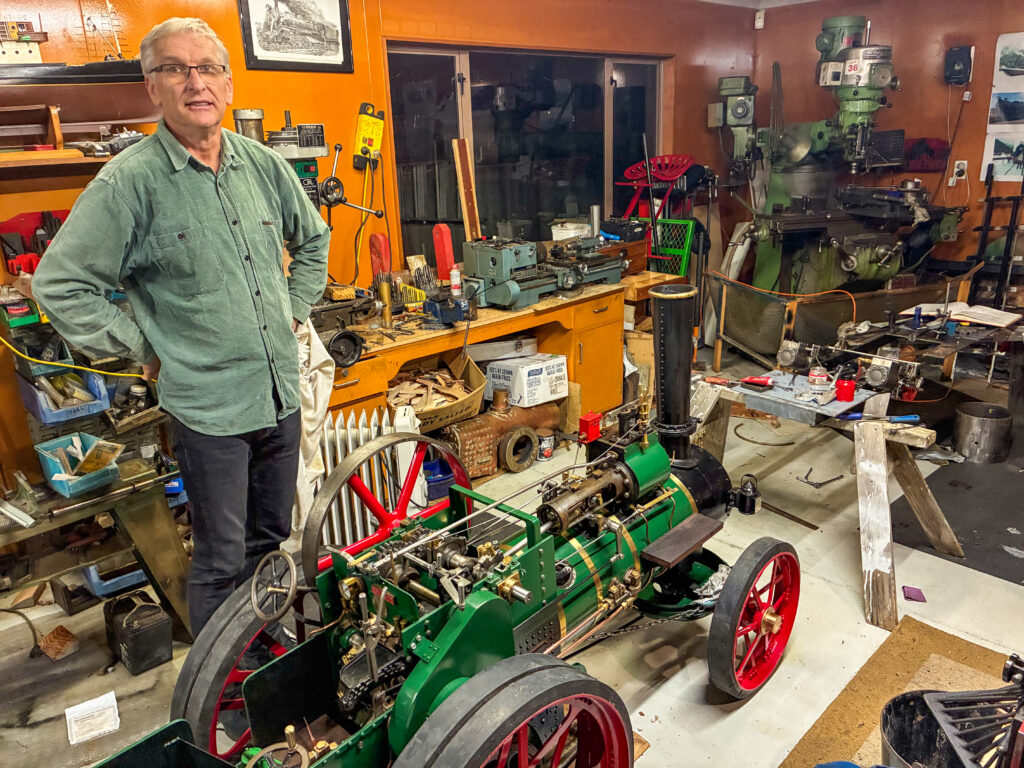
Palmerston North Model Engineering Club celebrates the big five-o
An opportunity to celebrate the highly skilled and dedicated craft of the senior members.
Fifty years ago, a shared passion for all things mechanical and miniature brought about the first meeting of the Palmerston North Model Engineering Club.
Eighteen founding members answered the call of a newspaper advertisement and met at the Palmerston North Hearing Association Rooms on Wednesday 23 February 1977.
The club has met monthly ever since. Members currently sit around 65 and range in age from 10 to 91. Backgrounds are varied and include tradespeople, professional engineers, doctors, machinists, fitters and turners, says Club President Jon Mason.
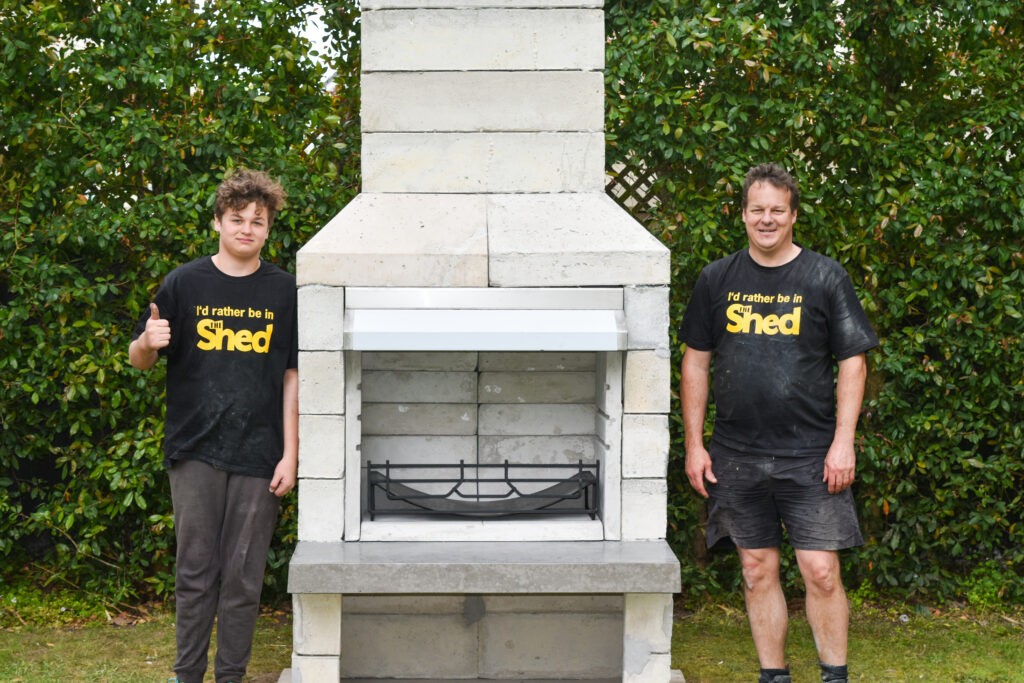
Constructing a kitset brick fire
This is one option to consider when choosing to build an outdoor fire this summer.
Around this time of year, you’ll be heading to see friends and family at their homes. While you’re catching up, it’s quite likely that a fireplace will become a focal point. Be it standing around a good old gas barbecue burning some sizzlers or warming yourself poolside with a magnificent all-in-one fire, grill, and pizza oven, there will be fire. Most sheddies will quite likely say to themselves, “I want to build one of these!”
Now there are options for that outdoor brick fire build. You could design one yourself from scratch and build a bespoke fire suited to your own wood-burning desires.
You could get a bloke in…hmm…that doesn’t sound right.
Or, what we reckon is the in-between third, not-a-bad option is to build one from a kitset. It will need a good skill level to complete, but all the hard design work and functionality have been taken care of with your choice of product, so you can rest easy on that count.
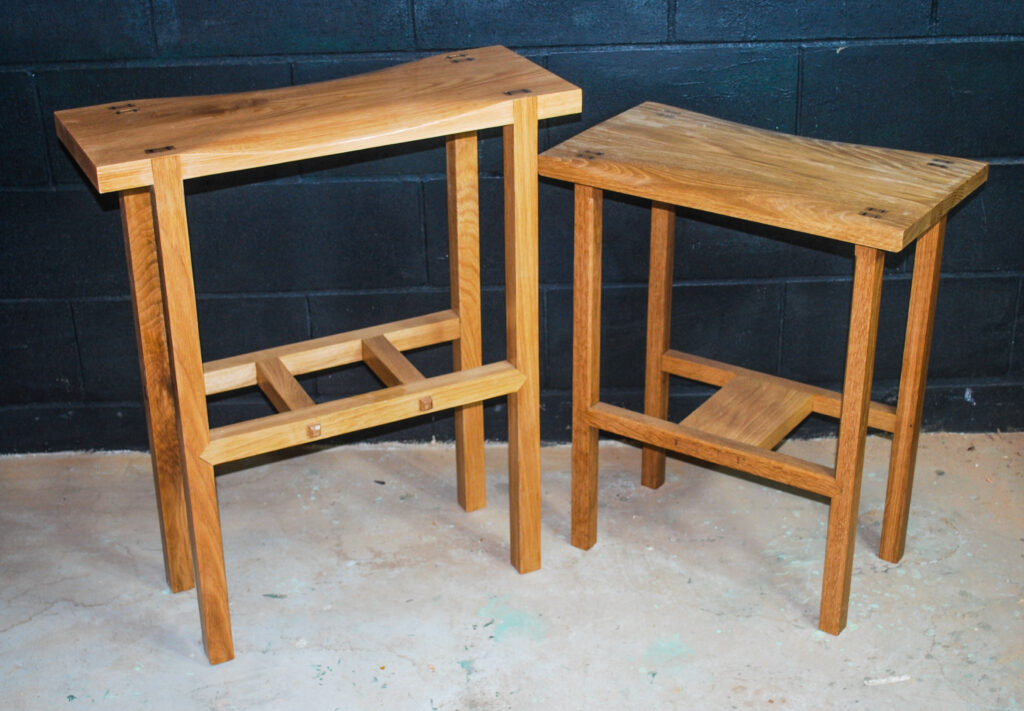
Basic woodworking: Designing and making the Rail Trail stool
Ed now figures it’s time you explored some ways you can adapt joinery skills with some image mining to make a project that really is uniquely yours.
My two previous articles in The Shed have explored different types of mortise and tenon joints and some uses for these joints to make frame-and-panel projects.
This article continues with the most common uses for the mortise and tenon joint in making seat/table-type frames. For this project, I have designed a simple and elegant barstool. This has explored some ways you can adapt joinery details to make a project that is uniquely yours and show off your skills.
Product profile: From decking offcut to Better Brackets
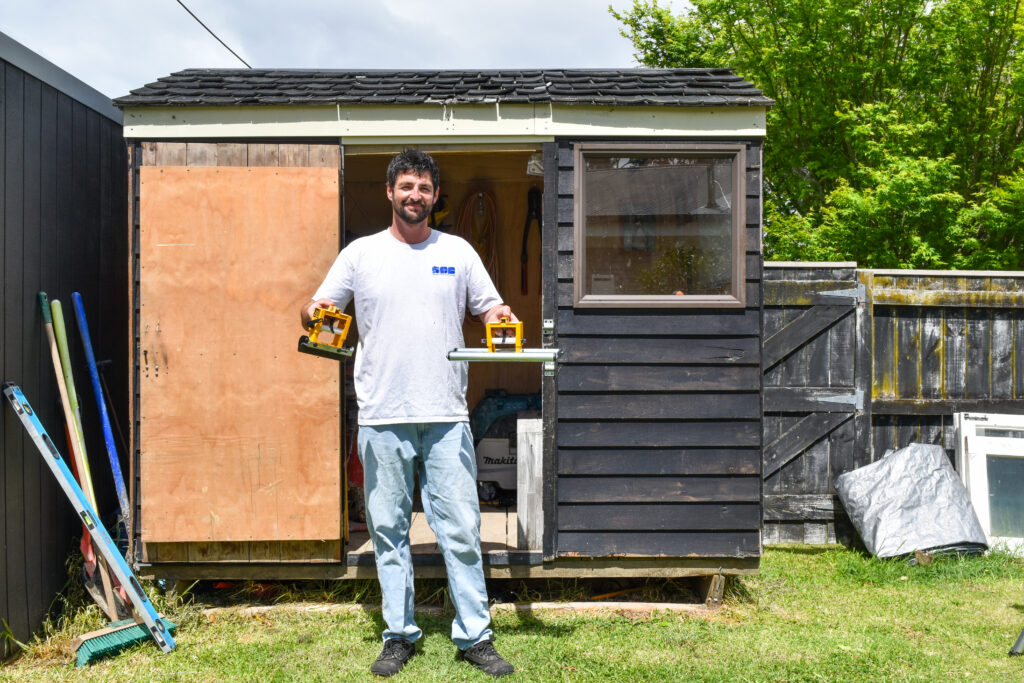
An awkward adjustment on a drop-saw stand led Auckland builder, David Court, to look for a better solution. Seven years later, a modification made with a scrap of decking has grown into a product other builders are buying.
There is something satisfying about improving a piece of equipment you use every day. Sometimes the problem is small enough to put up with for years, but irritating enough that you keep thinking there must be a better way.
For me, that problem was the riser adjustment on my DeWalt drop-saw stand.
I am an Auckland builder and run Super City Construction. I have always enjoyed making things and finding practical ways to improve equipment.
In 2019, my drop-saw stand’s riser adjustments had rusted and become difficult to use. Like plenty of builders, I had effectively given up on adjusting them and screwed them together at a fixed height.
That got me by, but it did not solve the underlying problem. Eventually, a bicycle-style quick release and an unlikely piece of decking timber provided the beginnings of an answer.
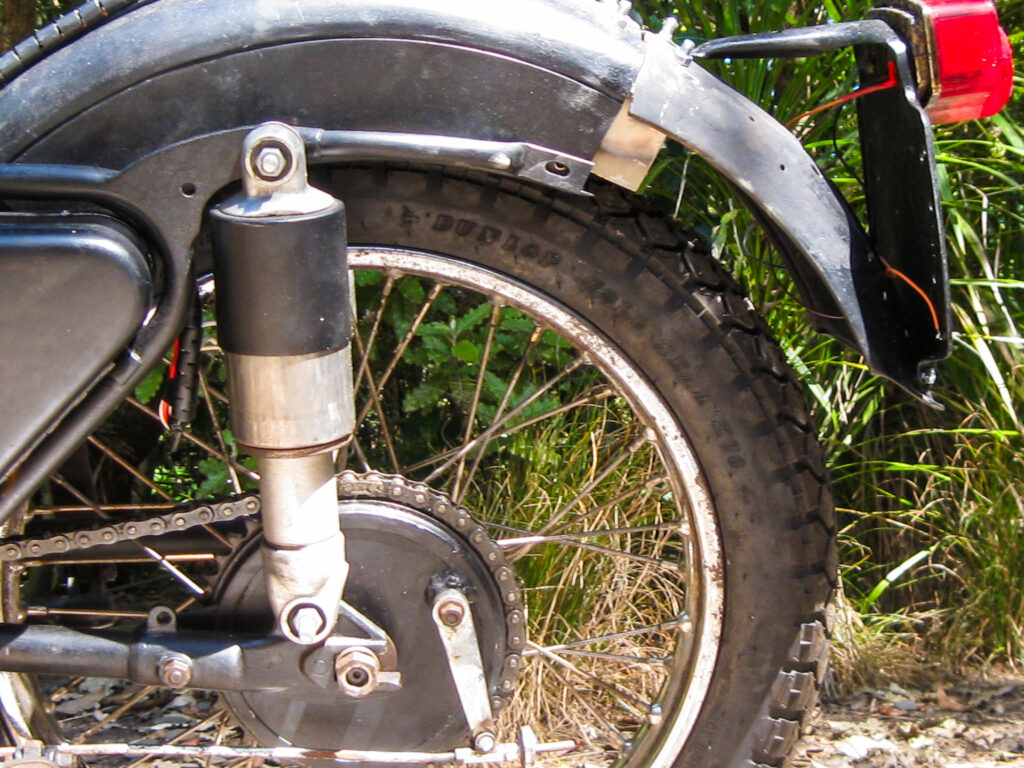
Motorbike restoration: Restoring a 1952 AJS – Part 13
Peter is determined to resolve a large range of issues in this instalment, and battery voltages and cables send him down a restoration rabbit hole of ohms and volts. Still, he ploughs on, determined and admirably resolves every tricky problem that confronts him.
I’m getting close, I think, to the end of my motorcycle rebuild, after its fifty years of storage and many, many months of reassembly.
The nominal “1952 AJS 500cc, model 18S” has been a source of frustration in that many parts are old and middle-aged and in poor condition, and through some ignorance I’ve generally created a two steps forward, one step backwards path, on top of a low budget. I’ve worked on old vehicles before, and every time I do, I relearn that I have to curb impatience and keep the goal in view, in the great game of snakes and ladders. Character testing and even maybe character building; sometimes I have a minor triumph.
At the end of my last article, I was partway through wiring, fitting a mudguard extension, and repairing a speedometer cable.
I deal with my Barton-frustration by spreading myself across several distinct tasks: if ‘A’ isn’t going well, walk away for a while; have a cup of tea and think; maybe try successfully doing ‘B’ before going back to ‘A’. More patient workers would stick to just the one task.
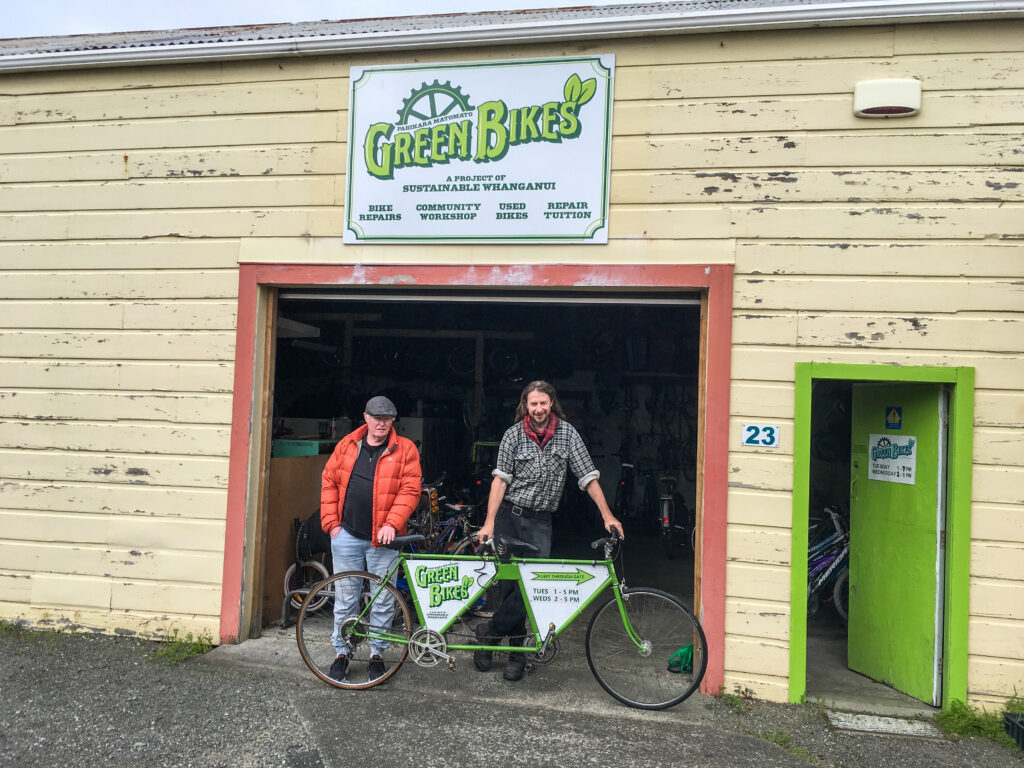
Green Bikes repair and share
This is not your average bike shop; it’s a not-for-profit organisation that offers the Whanganui community affordable repair services and free training in DIY bicycle repair and maintenance.
The Green Bikes workshop in Whanganui fills a sizable shed out back of its umbrella organisation, Sustainable Whanganui.
Located down an alley in the historic part of the city, the not-for-profit organisation offers the community an affordable repair service and free training in DIY bicycle repair and maintenance. They also sell second-hand bikes at very affordable prices.
Inside the workshop, bicycle wheels, hanging from a wooden frame, occupy around half of the air space, and then there are the workstations equipped with the specialist bike tools needed to take apart and reassemble the hundreds of bikes that come through the hands of Green Bike volunteers.
The Sensory Shed
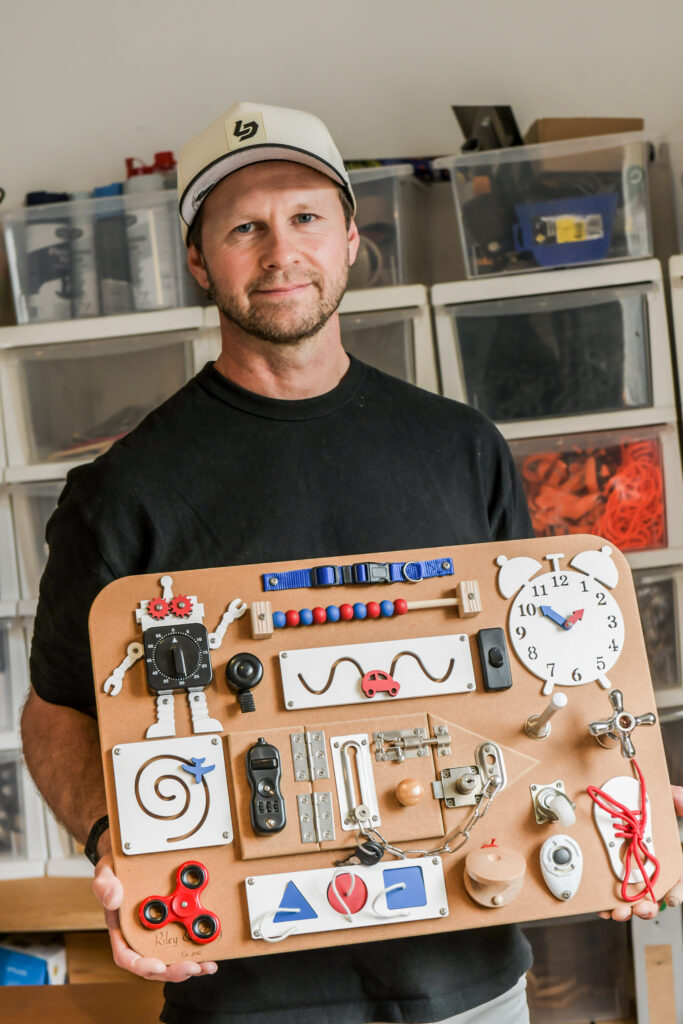
As with many a great business, it starts with a simple idea – in this case, an educational toy for the baby. Now, shed creation ‘Busy Boards’, with plenty of sales and Safety Standard approval, has the potential to operate for generations.
When Ben Weston’s wife Jamie asked him if he could make their son Grayson a first birthday gift, the couple had no idea that his handiwork would kick-start a bustling shed-based side-hustle.
Grayson is now five, and in the ensuing four years Ben has been cranking out ‘Busy Boards,’ in the hundreds, all in his spare time, while Jamie manages the marketing, mostly on social media where much of their business is generated from.
Most boards are sold locally, but to the couple’s astonishment, some have been ordered from overseas. Jamie says, “We had no idea that it was going to be so popular. We initially thought, oh, cool for little kids, but now we are making them for people with dementia and stroke survivors. We even made one for a client’s pet parrot!”
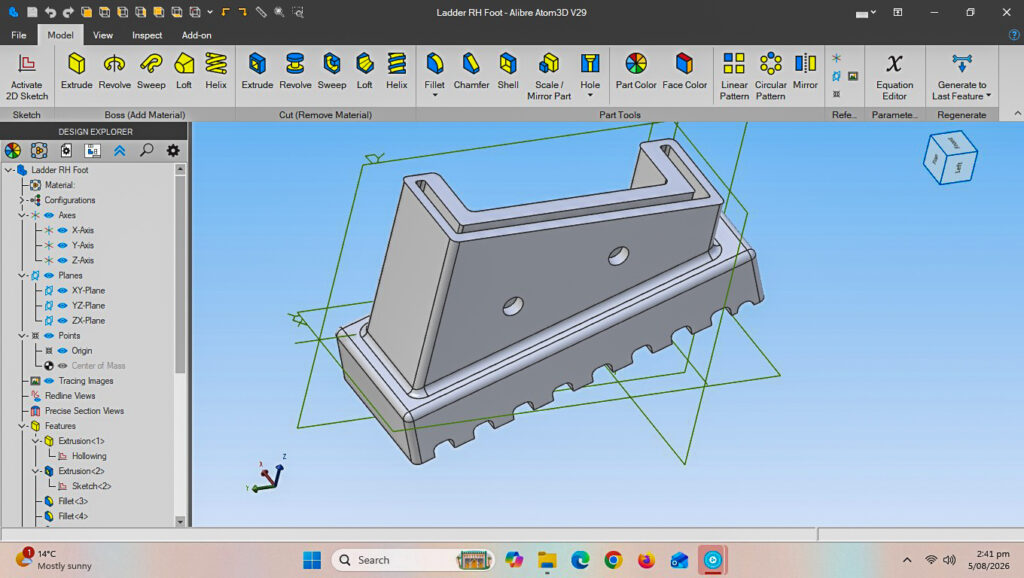
A practical guide to 3D printing: Part 1: printing with liquid resin
If you’re having difficulty locating parts that need repairs, consider making your own. Bob Hulme demonstrates that it’s not as difficult as it seems, guiding us through the basics of using a 3D printer, along with Alibre Atom 3D software.
There are two main types of 3D printers that suit the DIY market.
One type uses a plastic filament, much like fishing line, as its raw material, while the other type uses UV light-curing liquid resin. This article’s focus is the liquid resin processing method simply because that is the first 3D printer I bought. Resin and filament 3D printers work in quite different ways.
The Reservation: A life less ordinary
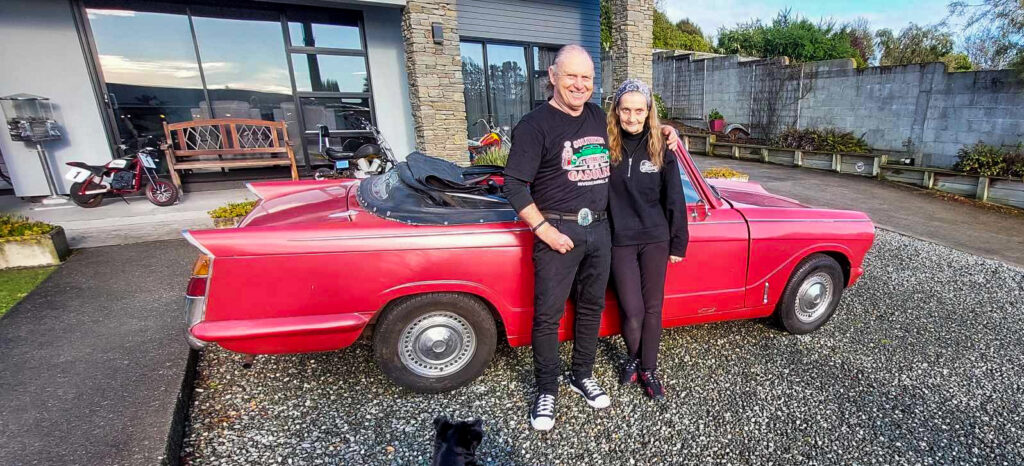
If you spend an afternoon with Bruce and Jayne Moffatt, you’ll quickly see that The Reservation is more than a place to stay. It’s a collection of a lifetime of stories, all gathered on a hillside in Southland.
Driving through the gates at The Reservation, you quickly realise this isn’t your average accommodation. There are rusty old vehicles tucked amongst the gardens, vintage motorcycles, limousines, rustic signs, unique buildings, and everywhere you look, there’s a piece that tells a story.
But the most interesting part isn’t what you can see; it’s how it all came to be.
Off the Grid: Never Break the Chain
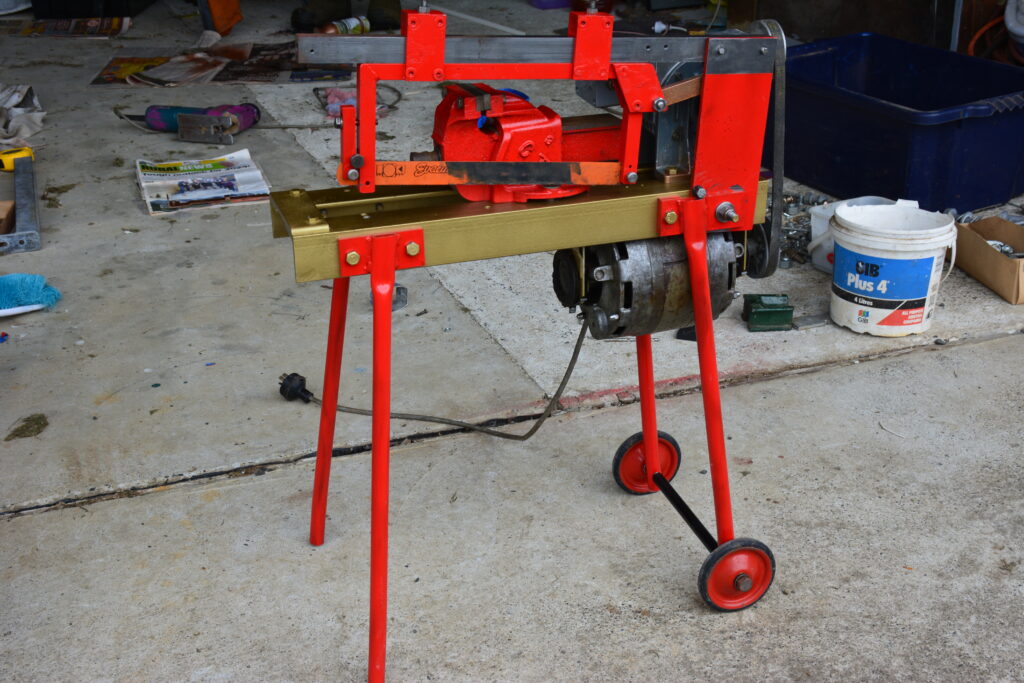
Murray gets tempted by a little homebuilt reciprocating hacksaw and realises there are jobs to do to get it operating safely. This, along with continued improvements to his favoured Amoukura ship model, makes him continually grateful to be doing the things he so enjoys.
I have favourite tools and, even at this later stage in life, still hanker for some not yet in the collection. Then there are the things that can be done with tools which are around, but could be better done if only I had…
We traverse the tool spectrum widely too, hereabouts; a recent auction saw me taking home a bundle of garden hoes, a fly-fisherman’s tying-stand and a chain-wrench. Good luck to the AI algorithm trying to profile that person! And, of course, the ‘maker’ urge is always the first card to be turned over when something is needed.
Know your stuff – The Shed Quiz No. 11
You’ve got a shed, and you know how to use it – but do you really understand how everything works? Test your sheddie knowledge.
Plus: The Shed Cryptic Crossword No. 8 – by Maya
Ham Radio Part Four: Extending the reach even further
Amateur radio, I am discovering, is anything but amateur, which is why this is part four of a three-part series – there is simply so much interesting stuff!
We have a tendency to see the amateur as one who dabbles, but that simply is not the case here. The level of intricacy and understanding – not to mention the jargon – defies that.
Call signs imply exams, and exams imply formal teaching. In the case of the Christchurch Amateur Radio Club, the HamCram – a weekend-long course to prepare for that test – is held once every two to three months and taught by a retired Post Office Technician.
There are generally around a dozen students per course, roughly sixty new ‘hams’ a year signing up for this fascinating world. And that’s only one club – there are fifty-nine throughout the country. Now, we can’t extrapolate from that, but we can see the interest is truly there.
The Shed Shrink
Ghost Cat and the city that remembered
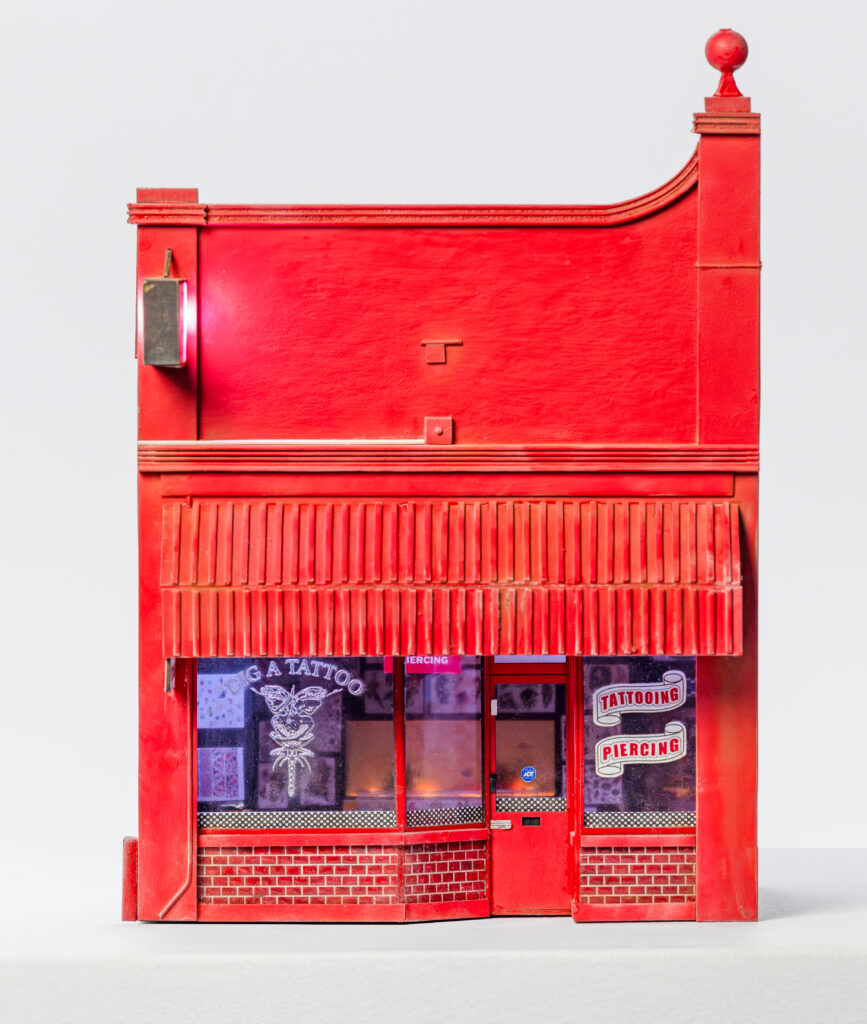
Through painstaking miniature replicas of lost Christchurch landmarks, ‘scratch-built’ artist Mike Beer – better known as Ghost Cat – has helped a city revisit its memories, its grief, and its sense of place.
I will do almost anything for a cup of PG Tips tea. Well, almost anything – some things are still off limits.
But the chance to sit down for a brew with Mike Beer, the artist many know as Ghost Cat, was one invitation I was never going to turn down.
Finding him had taken a little persistence. Ghost Cat is not exactly chasing the spotlight. When Mike finally reached out, he mentioned that he had switched off social media. At first, I was curious. Then he told me why, and it was hard not to understand.
Four years spent scratch-building miniature versions of Christchurch’s corner dairies, bookshops, the infamous Atami Bathhouse, and other much-loved, slightly edgy landmarks would be enough to exhaust anyone. Add to that the hundreds of earthquake memories shared by some of the 17,000 visitors who came to see his exhibition, and the launch of a book! A temporary ‘gone fishing’ sign seems not only reasonable, but necessary.
Back O The Shed
AI: your creepy new assistant
Jude feels that reading AI copy demeans and cheapens our reading experience; it offers nothing original, just a reworking of old material. He does, however, end 2026 on something of a cheerful note, while wondering whether AI will be the end of us all.
My generation has lived through more technical marvels than any other, I suspect.
Jet airliners, television, satellites, the moon landing, the fax machine, the dishwasher, microwaves, the internet, cassette tape, CDs, social media, streaming. We have seen some of them flare briefly and fade away. Where’s my fax machine? Now we are confronted with yet another “genre-changing” technology, AI.
AI as it is currently used is none too bright. It cannot determine what things are used for. It depends entirely on the directions it is given. Its results are no better than what it is asked to do. Sadly, it doesn’t write very well either.