Sentimental Journey
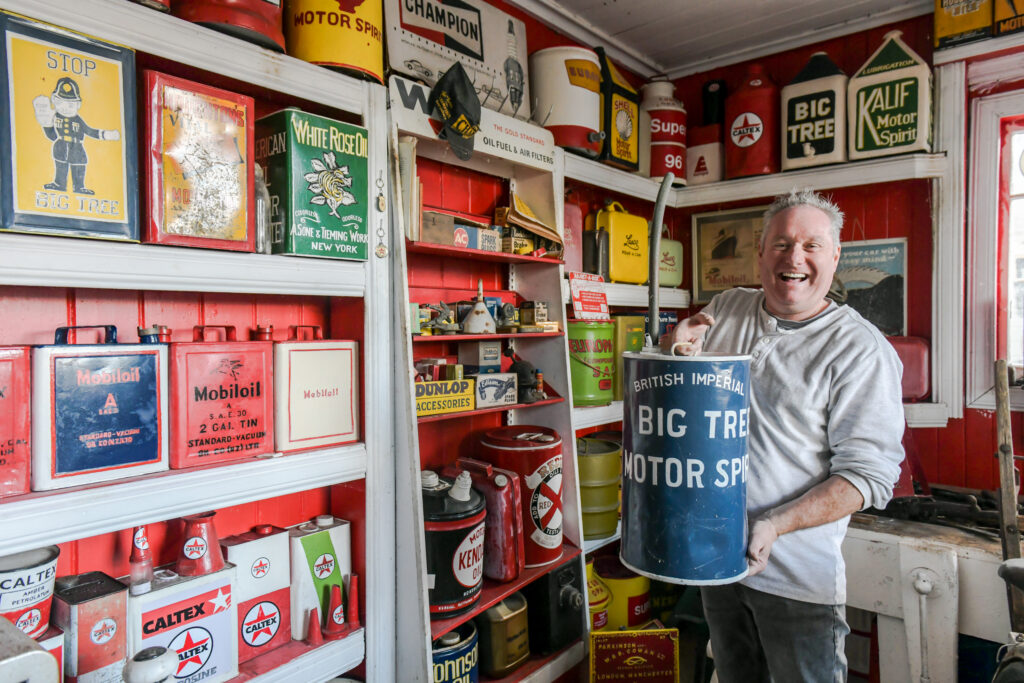
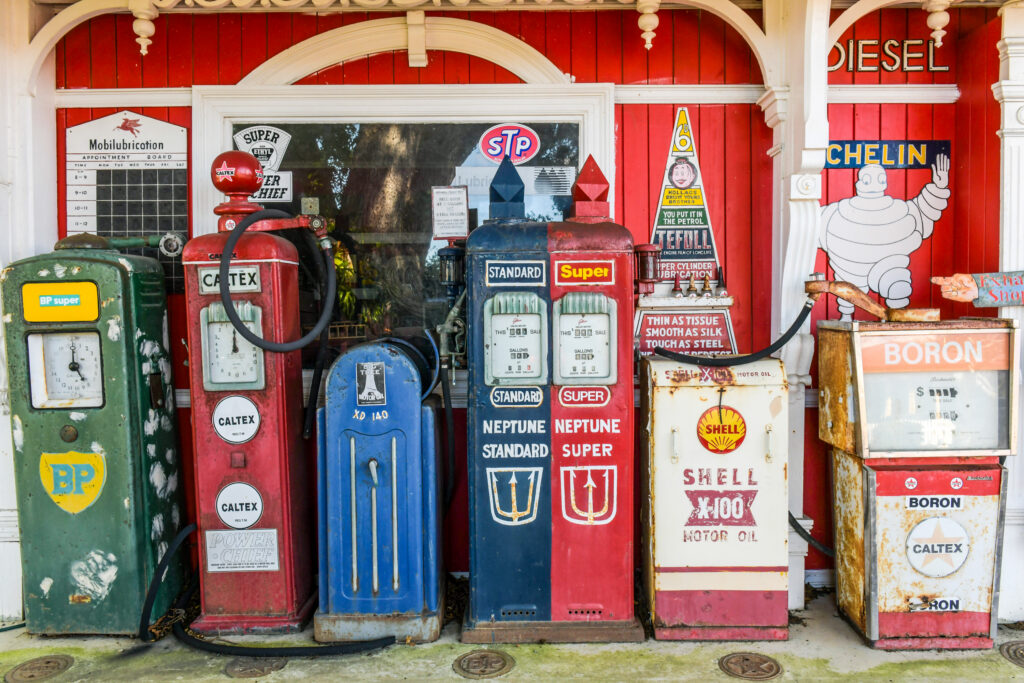
Jack Ryder had a unique ability to hypnotise sports stars, politicians, and celebrities into donating items for his museum and sports memorabilia collection. Now, his grandson Clint manages this West Auckland landmark, but the property development vultures are circling.
It is hard to imagine a less likely location for a living museum than the back blocks of suburban West Auckland in Avondale.
Yet here, towards the end of a lengthy no-through road, the Ryder family hold tight to a self-built vestige of Auckland’s yesteryear. While the surrounding streets are turned into homogeneous multi-unit town housing, the Ryders’ two-acre slice of Pavlova Paradise remains, less a multi-generational home ground and more a celebration of the character of the city’s past.
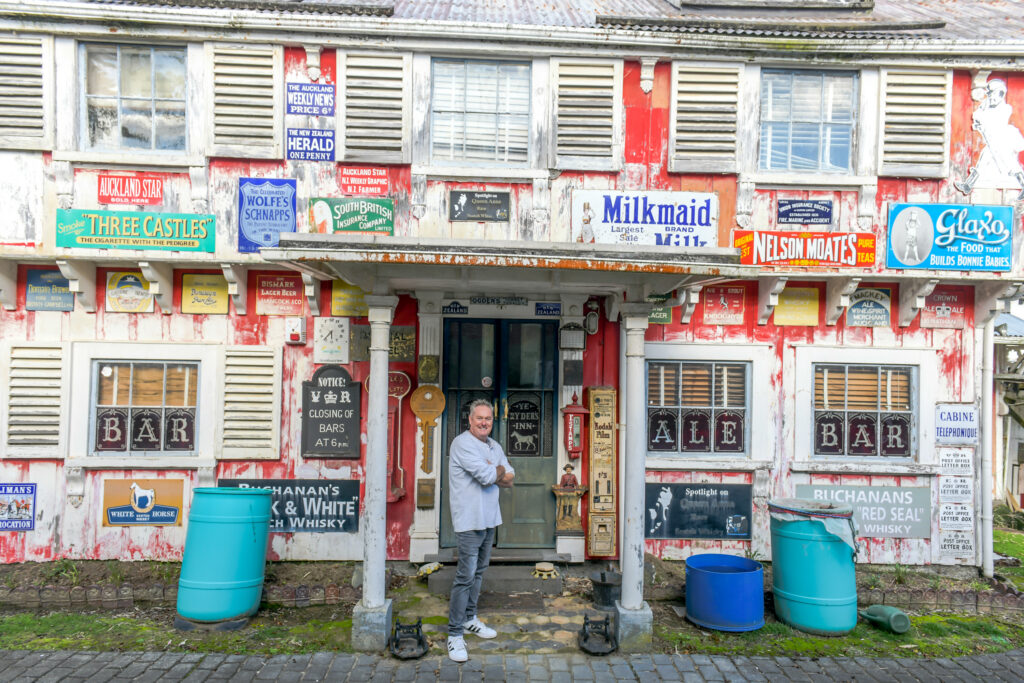
Slipping through the tall white gates past the twin concrete lion sentinels at the street end of Ryder’s long hedge-lined driveway, the modern world slips away. Ahead, in the shade of a 100-year-old Pecan tree, an enclave of antique edifices opens out along the back-fence line like a set from a period movie. This corner of vintage Kiwiana is the handiwork of the late and industrious Jack Ryder, a coach-builder and wharfie, who began constructing it from a group of sheds spread across the property.
Jack grew his “village” from the detritus of late-Victorian buildings that he procured from demolition sites in the late 1950s. His mission was to conjure something of the spirit of the old Auckland that he grew up in. Jack’s first project, though, was building the family home. He had to make good on a promise to his bride-to-be, Margaret, that she would have a house of her own before they tied the knot. That abode still stands across the rambling garden that Margaret would grow and tend throughout her life. Pathways framing garden beds lead to the weathered-looking, two-story country-style pub, which was Jack’s next project.
To purchase a copy of this edition of the magazine, head here to The Shed’s own online store

A new chapter for Nova lathes
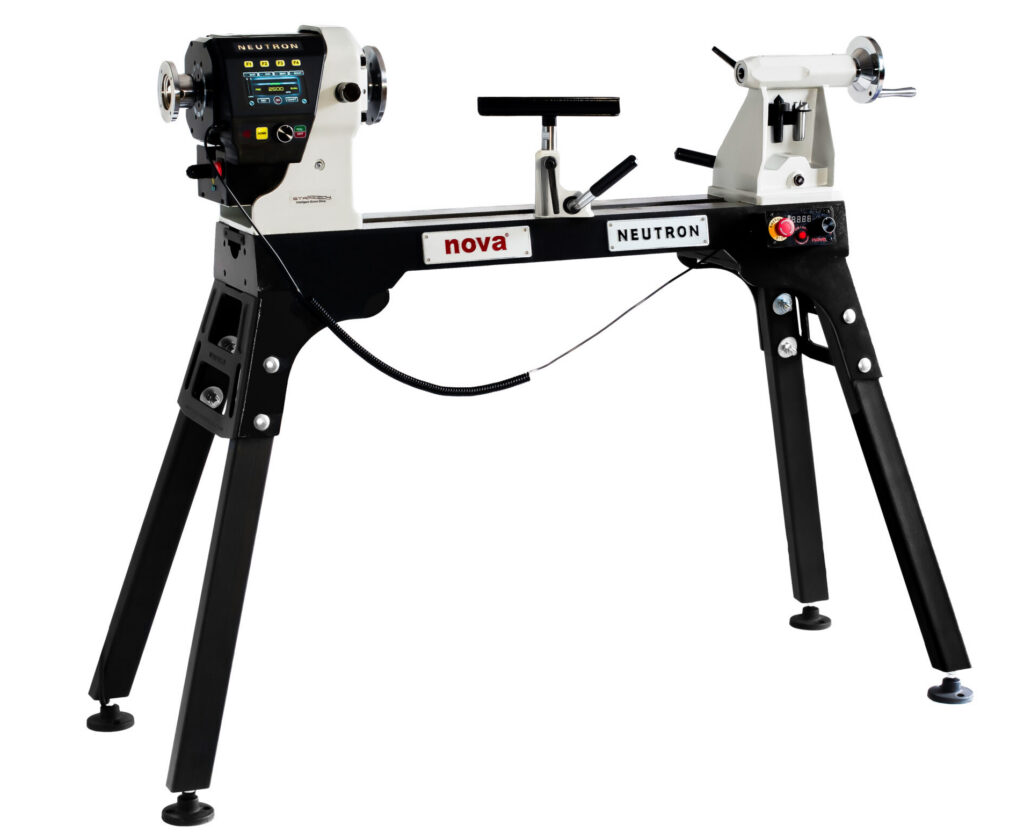
A new Kiwi-designed lathe has got this woodworker very excited. So excited, in fact, he has already ordered one for himself. This profile of the new Nova Neutron Lathe is by woodcrafter John Woods, NAW committee member.
The Nova Neutron – the latest mid-to-large swing lathe from Teknatool – is one of those. It’s the natural successor to the company’s well-regarded Saturn, and it lands in a part of the market that hasn’t had a genuinely new product in some time: the 17″ swing range, where enthusiast and professional buyers tend to overlap.
For The Shed readers, the headline is short. The Neutron is a beltless, direct-drive lathe with a 2 HP DVR motor, a 10.9cm colour touchscreen on the headstock, a 50–5,000 RPM range to handle the materials makers use, and a 10-year motor warranty. For proficient turners like myself using the 2004 variable-speed Nova DVR 3000, the gruntier Neutron is a logical next-step acquisition.
From the archives – The Sound of Music
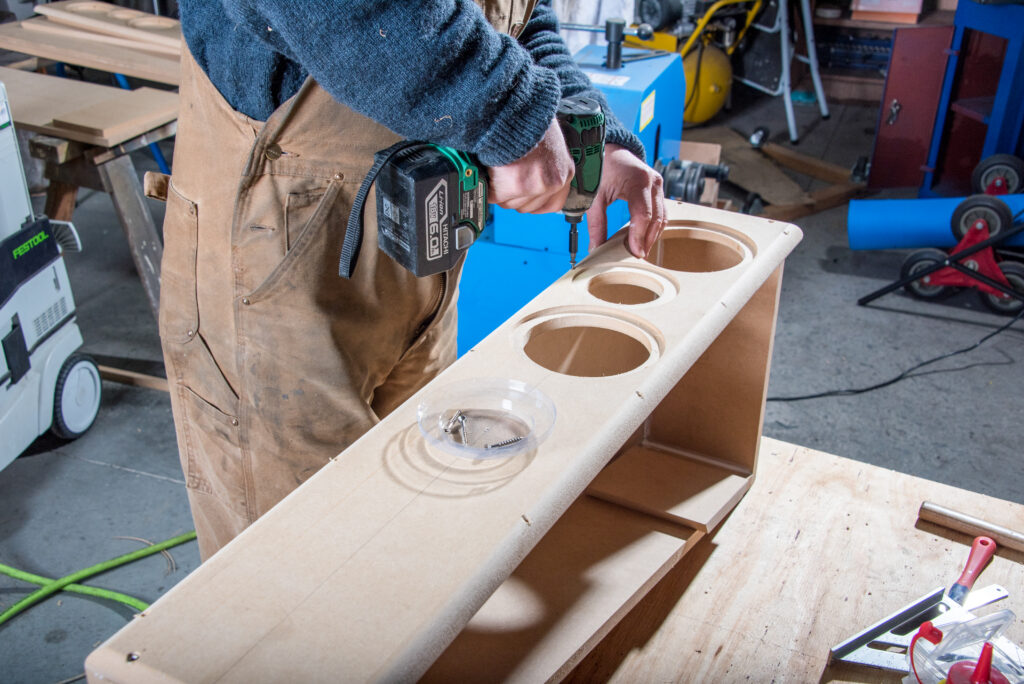
A quest for better-quality sound leads to a transmission-line speaker build.
I’m probably showing my age, but I still believe that much of what passes for audio hi-fi today is vastly inferior to some of that which went before.
I may be quite wrong, but I can remember a truly awesome sound that made you feel that the band was in the same room and the sound was coming from their own monitors. Sound with clarity and definition. While I appreciate that for enormous sums of money you can still get that quality, I still believe that it was more common in the ’70s from off-the-shelf equipment. To prove the point, I wanted to build a set of speakers in a style that was popular at the time. There are three basic kinds of speaker enclosures.
Sealed units, ported units – which have a port somewhere in the cabinet – and transmission line. TL speakers are similar to ported enclosures in some respects; they also have an opening into the cabinet. Reputedly, TL cabinets provide better bass replication across the range without over-emphasising any particular frequencies.
Ham Radio Part Two – just a backup?
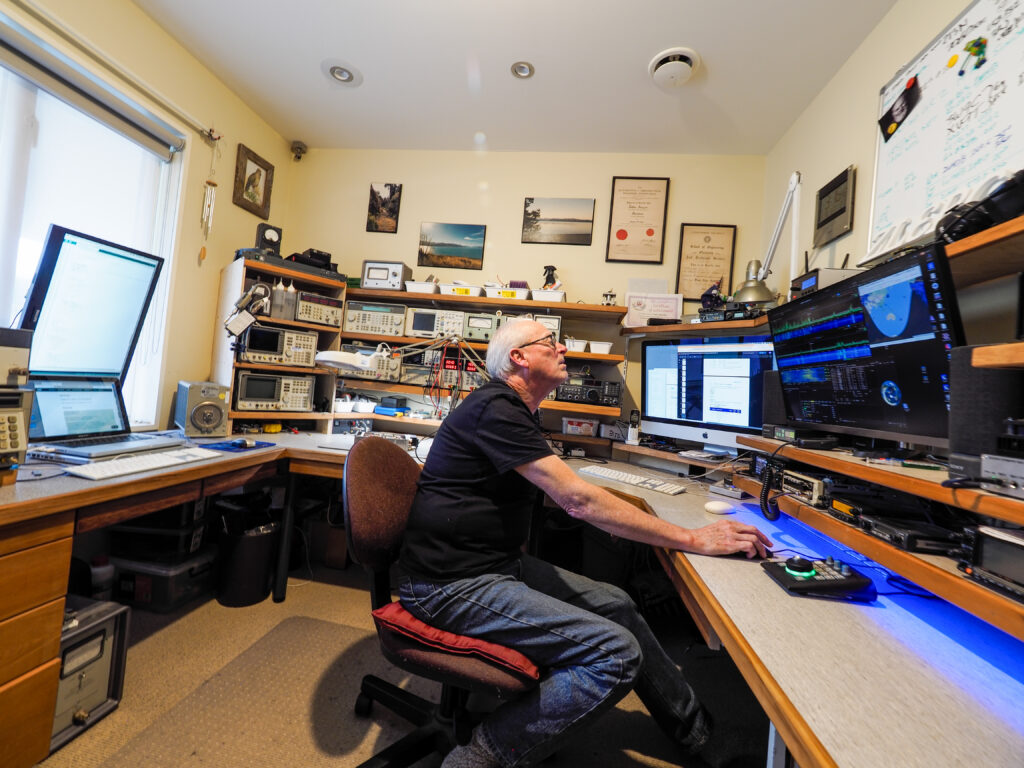
Nigel continues to explore the world of Ham Radio, constantly intrigued and surprised by his discoveries. The skills of these radio operators and innovators are diverse, even extending into space.
In my previous article, The Shed 127, we looked at the beginnings of ham radio, its history and development and to some degree the involvement of New Zealand pioneers such as George Kemp in Gisborne (1888) and Lord Rutherford at Canterbury College (1895).
We also asked the question, why? In these days of cell phones and the internet, surely amateur radio is an obsolete technology? The first answer to that in areas where there is no cell or internet coverage, amateur radio is the obvious choice.
But does that mean it’s a fallback position until cell and internet coverage is available? In many ways, the clue is in that statement: when cell coverage and internet availability fall over, as they have during significant events such as floods and earthquakes – and we’re very familiar with those now – then amateur radio comes to the fore. But that still frames it as some kind of backup role, and doing so misses the real point.
Motorbike restoration – Restoring a 1952 AJS, part 11
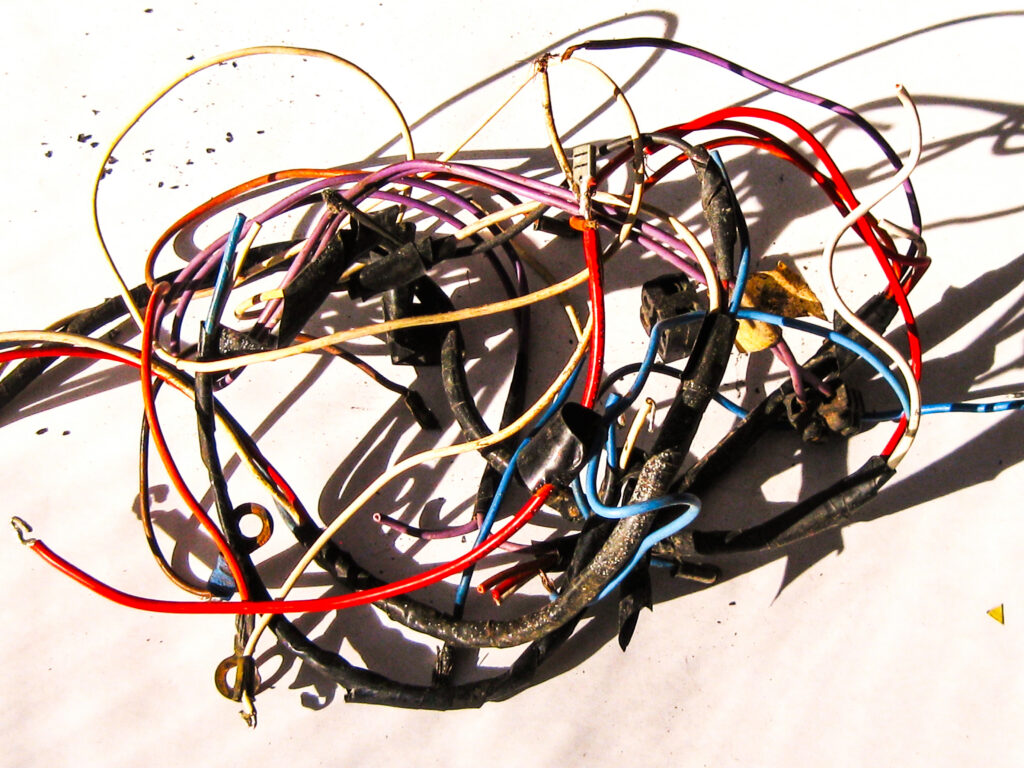
Peter is focusing on the electrical aspects in this instalment, making plenty of calls to determine the best approaches as funds and time permit. Having a ride down the driveway is now not far away.
I last rode “the Ay-Jay” in the mid 1970s; it had a sloppy swing arm suspension in the rear, with incorrect springs/shock absorbers (no original Jampot suspension), and the electrics, apart from the independent magneto ignition, didn’t work.
Hence, it had been taken off the road and readied, partly stripped, for a rebuild. At that time, I had the swing arm re-bushed, but no further reassembly ever took place. Little did I know that it would take 50 years, Rob Muldoon, Roger Douglas, family, and retirement before anything further occurred.
In the meantime, the web and social media arrived, and of course, good information and photographs of almost anything are now vastly easier to access. The downside to this is that I learned, and had to accept, that the bike is a real bitser, more than I first thought. The upside is that when I make some radical changes (to cope with the snakes in this game of snakes and ladders), I am not vandalising what could have been rebuilt as a valuable ‘Original’; hence I justify some of my activities, which I describe next.
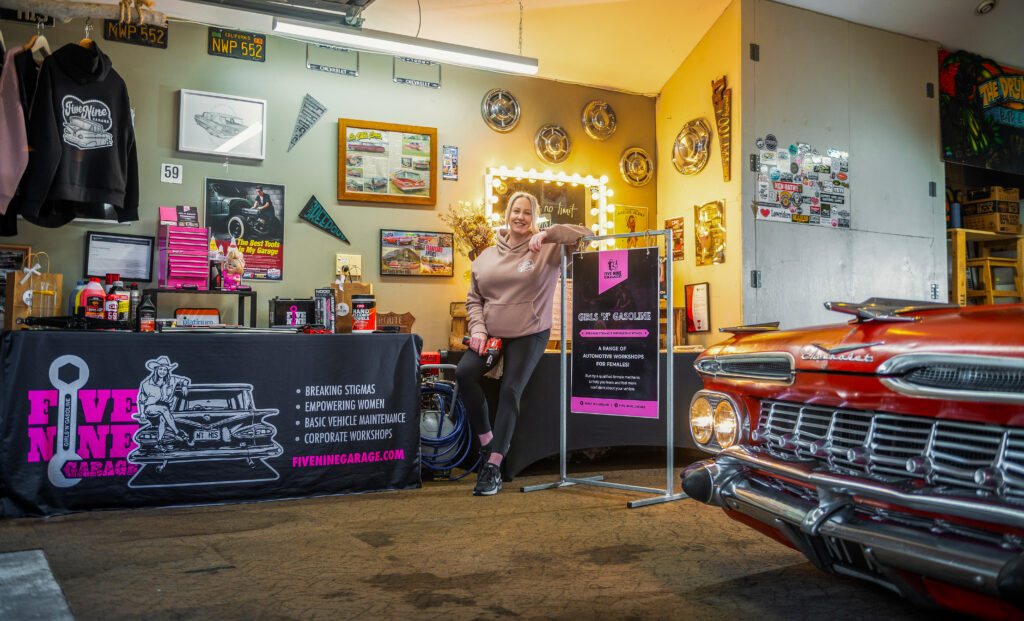
My Girls ’N’ Gasoline shed – If the Chev fits
Forget open-plan kitchens and fancy finishes – Melissa Hannan just needs her shed. That’s where the real living happens. It’s the heartbeat of her home, where projects take shape, mates gather around a stubborn job, and cars become part of her identity.
Too many houses these days are built without a proper shed.
In most new-builds, you’d be lucky to squeeze in a small Japanese vehicle, let alone a 5.5-metre Chev. But when I came across this place and saw it had three-car garaging, I knew straight away the Chev would fit. Even better, it gave me the extra room for tools, projects, and all the things that naturally come with a life spent in the shed.
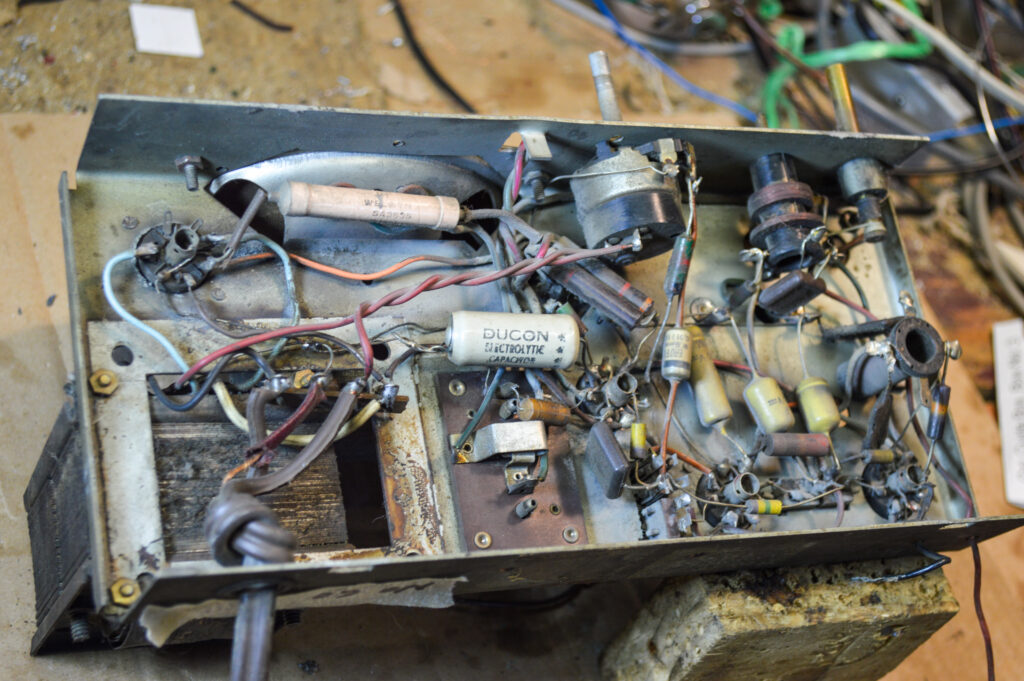
Valve radios – Going it alone
He has observed the master, had plenty of tuition, so the time has come for Chris to attempt to restore his Philco valve radio. There will be a few rookie mistakes for sure, but sometimes the best way to learn is on the job.
In The Shed Issue 127, I had acquired a small, dead Philco Nevada valve radio from the ‘50s with the intention of restoring it myself, and then immersed myself in the world of yesteryear’s radios.
With radio whiz Peter Walsham’s help, I now knew what was wrong with it and faced the task of bringing it back from the dusty grave where it had sat for who knows how long.
It was time to get soldering.
My initial experimentation had shown that the fine conical tip on my soldering iron was probably ideal for tiny connections on a printed circuit board, but useless for soldering wires and components onto terminals, because a larger surface area is needed.
Peter has an iron with a flat ovoid tip, but Jaycar did not stock a similar replacement tip. However, when I removed the tip from my iron, I discovered that it was a straight cylinder, pointed at one end and flat at the other. It was the work of only a few minutes to grind the blunt end to a nice copy of Peter’s working tip, which did everything asked of it. He uses an 80W temperature-controlled soldering station. My 40W stand-alone iron is just sufficient, but I often have to hold the tip in place for a minute or so to bring the work up to soldering heat. Still, it works.
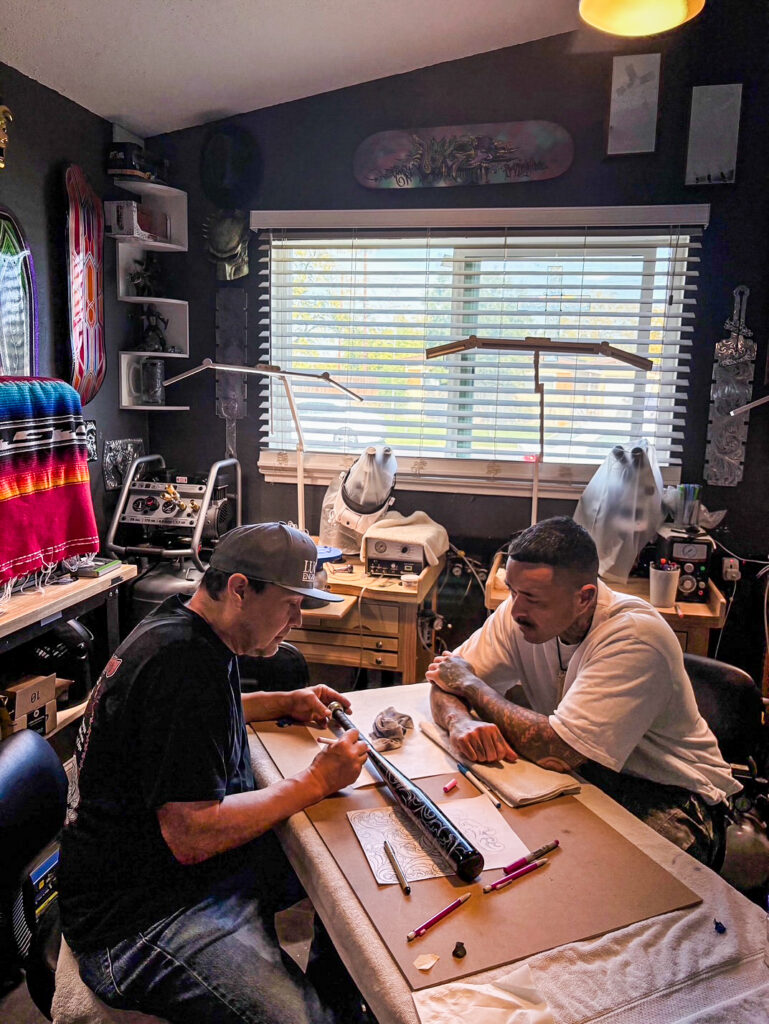
Metal engraving – Hand engraving artist
Blending culture, craftsmanship and creative edge, Reece Harlan is redefining freehand metal engraving. With a background as a welding engineer and early roots in graffiti and street art, he combines technical precision with raw artistic expression to create one-of-a-kind pieces.
Reece Harlan is a welder and engineer by trade and a devoted dad who, in the early days, was juggling full-time work, raising a family and teaching himself an entirely new craft in his spare time. Even as a kid, Reece was constantly drawing, doodling and immersed in graffiti art. Pursuing art in some form always made sense.
In 2017, everything shifted when he came across an engraved lowrider knock-off (spinners). Engraving itself wasn’t new, but that was the moment it truly caught his attention. He became consumed with questions – how do you do this? Where do you get the tools? How does it all work? Finding a mentor in New Zealand proved difficult, as the craft isn’t widely known here, so Reece turned to the internet and began researching on his own.
He invested thousands of dollars into equipment he hoped would get him started, opting for more affordable overseas gear as high-end American tools were out of reach. When it arrived, reality hit. With no guidance and no hands-on knowledge, nothing seemed to work – it wouldn’t cut, and frustration quickly set in. Demoralised and doubting himself, he nearly gave it all up. Instead, he quietly continued practising on scrap metal, slowly building his skills through trial and error and sheer determination.
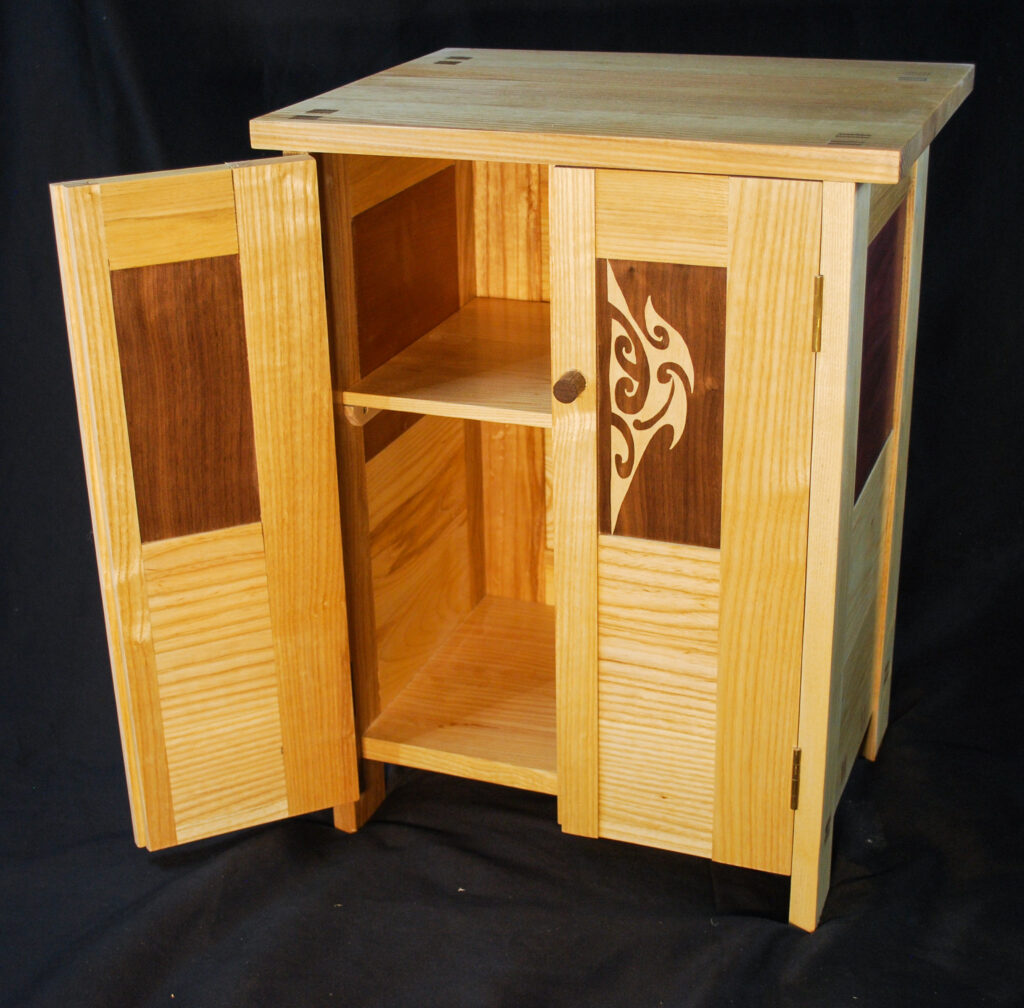
Woodworking basics – Mortise-and-tenon – Part One
We continue our series of tutorials on woodworking and cabinetmaking, and in this instalment, Edward Prince explains how to create the mortise-and-tenon joint. The oldest and strongest joint in woodworking
The mortise-and-tenon joint is the oldest and strongest joint in woodworking.
It is as simple as inserting one end of a piece of wood into a hole that has been carved into another piece of wood to join the two pieces together crosswise or at 90 degrees to build a wooden structure. Typically used to make frames, as in a door or between legs and rails as in a table. The strength can be improved by varying the glue, pins, and wedges.
The cavity is called the mortise. The word mortise is derived from the same Latin stem as mortem, mortify, etc., which in turn are suggestive of death. It is supposed that the shape of the mortise resembling the shape of the grave gave rise to the origin of the name. Thus, the mortise is the hole in one piece of wood into which the tenon fits.
The end with a protruding tongue is the tenon. The word tenon is derived from the Latin teno, to hold. From the same Latin stem words as tenacity, tentacle, etc. are derived. The tenon fits into the mortise. Old school cabinet makers referred to the tenon as a tenant, as it lived in the mortise.
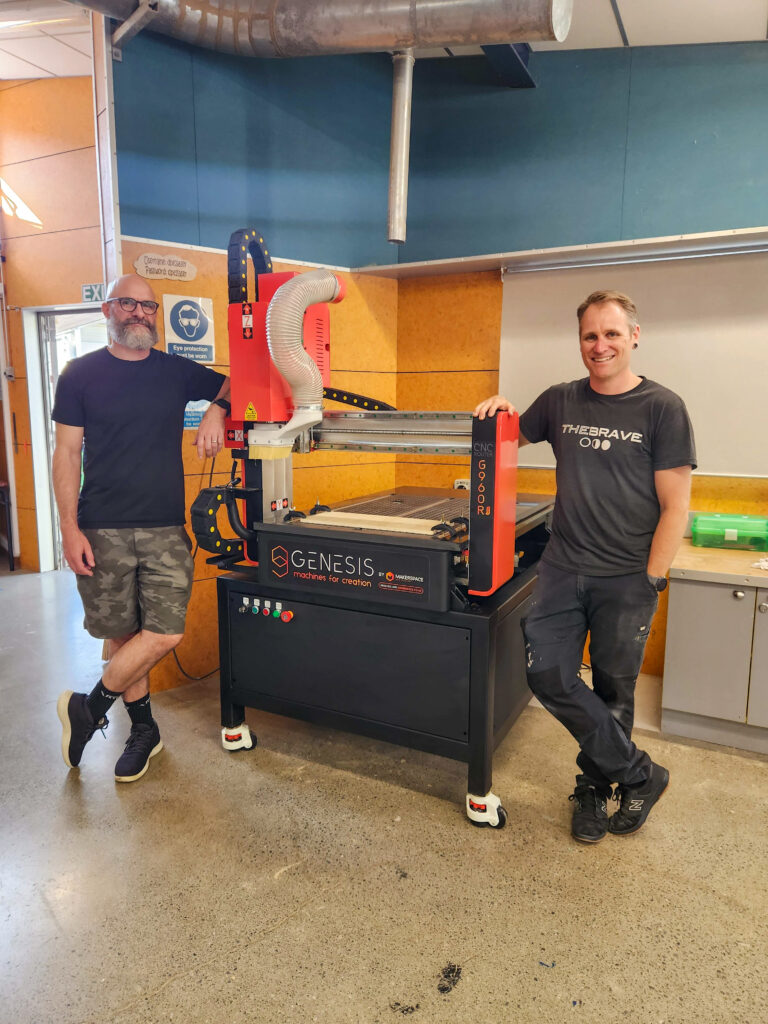
Workshops are changing – Makerspace NZ and the new wave of advanced makers.
Step into a Kiwi garage or workshop today, and you’ll notice something different.
The familiar sights are still there – hand tools hanging on the wall, stacks of timber, and half-finished weekend projects waiting for attention. But alongside them, you’ll increasingly find computer screens displaying CAD designs, laser cutters, CNC routers, and a growing range of digital fabrication equipment that was once found only in commercial factories.
The modern workshop has evolved. It’s no longer just a place to repair, restore or build by hand – it’s becoming a space where digital technology and traditional craftsmanship work together. Driving this change is a new generation of advanced makers. These are people who have moved beyond traditional DIY.
They’re designing components on a computer, cutting materials with laser precision, machining complex parts on CNC equipment and using a range of specialist fabrication tools to turn ideas into finished products.
Off the grid – Otago Model Engineering Society – 90 years old and counting…
Murray is in awe of the history of this club and the talented, dedicated modellers who have built this club up from absolutely nothing. But the sharing, appreciation, and joy of model-making are why this group still thrives today
According to the Evening Star (1st June, 1936), the first meeting of the Otago Model Engineering Society had been held in the YMCA the previous Saturday, with a “large attendance”.
Recently, it celebrated its 90th birthday, and it’s still going strong. In a city which encompassed the sprawling Hillside railway workshops, it is unsurprising that miniature steam figured prominently in the early days. Latterly, 3D printing sits alongside more traditional building methods, as members turn out everything from jet boats to hovercraft to submarines, showing them off on open days and at birthday hostings; the Society’s public interface.

Arduino – Coding and AI
Our Arduino expert is curious if AI can help check his written code. He decides to test Claude AI and even inquires how and why it performed its analyses. The outcome?
I decided to use Claude AI to review my Mt Lyford Trip Safety System software. This code is 1580 lines (1116 instructions, 254 blank and 210 comment lines… according to the AI) that compiles correctly and has been tested on the bench, so I knew it worked.
Claude AI offers multiple versions you can use.
Sonnet is free and also the highest-performing in the SWE-bench tests. (SWE-bench is an evaluation tool to check and rank LM’s Language Models using real-world software engineering tasks).
The initial interaction spotted a few runtime errors that could creep in, along with a couple of minor comments rather than actual items.

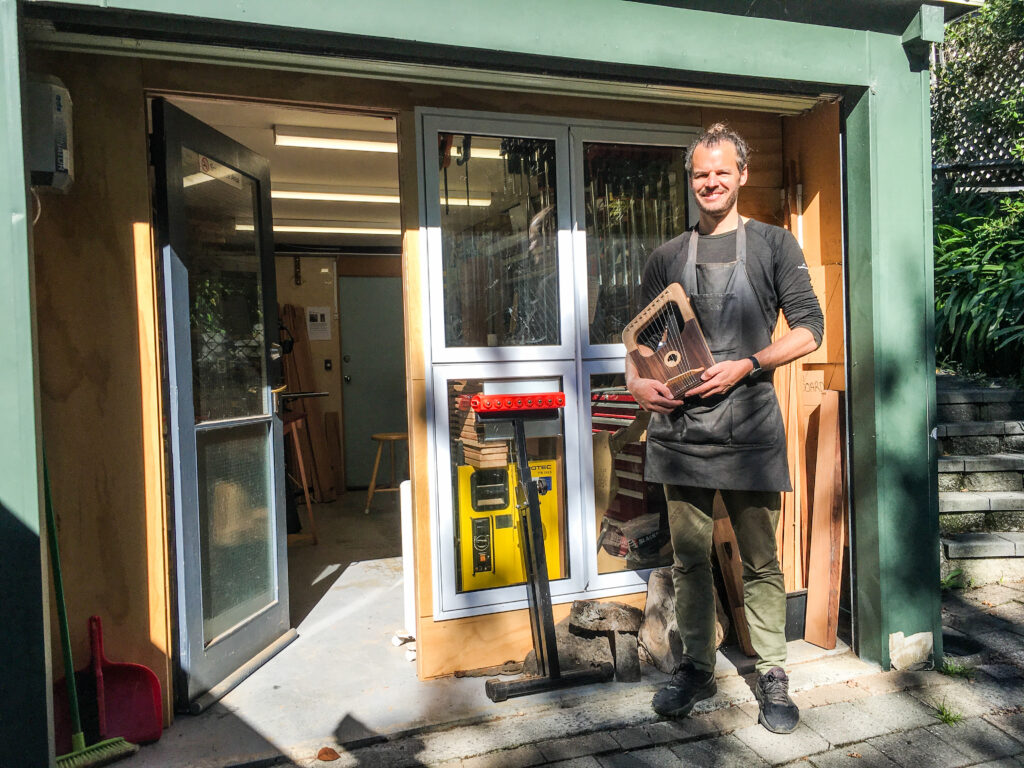
Instrument maker – The sounds of wood
Growing up on a farm, surrounded by tools and an inspirational grandfather, in a home filled with music, led to a life of playing and making a world of instruments. Meet Phill Jones, a self-taught bespoke instrument maker.
Whether he is sawing or hammering, strumming or plucking, the tones of the timbers and the variety of musical instruments he makes fill his working days.
The 42-year-old musician, instrument craftsman and luthier grew up in Havelock North and is now based in Whanganui. He works in the basement of a secluded house, up a steep driveway surrounded by trees. Inside, Phill’s workspace is a compact two-room arrangement where materials, tools and machinery are within easy reaching distance.
The rooms are light and airy and were easy to insulate. In addition, to maintain a clean, breathable and dry atmosphere (moisture affects both his health and the wood), Phill has installed Cyclone dust extraction units, air filtration systems, and a dehumidifier.
Phill’s phone is suspended on a movable arm above his workbench so he can listen to music or a podcast, talk or film what he is doing and share it online. The phone is wirelessly connected to his watch so he can manage calls, music and podcasts from his wrist.
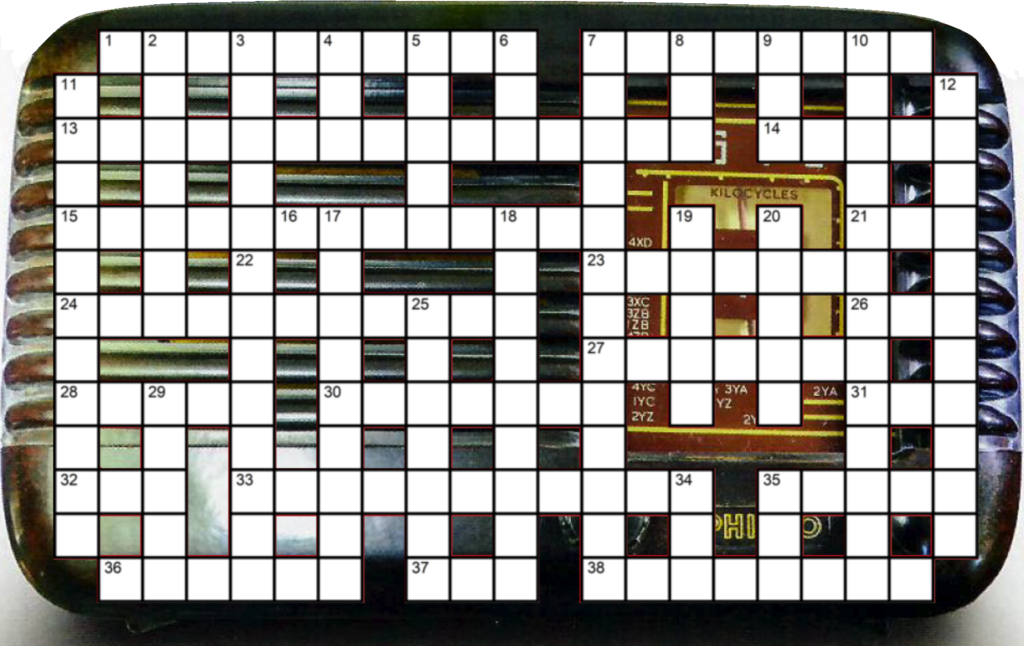
Know your stuff – The Shed Quiz No. 9
You’ve got a shed, and you know how to use it – but do you really understand how everything works? Test your sheddie knowledge.
Plus: The Shed Cryptic Crossword No. 6 – by Maya

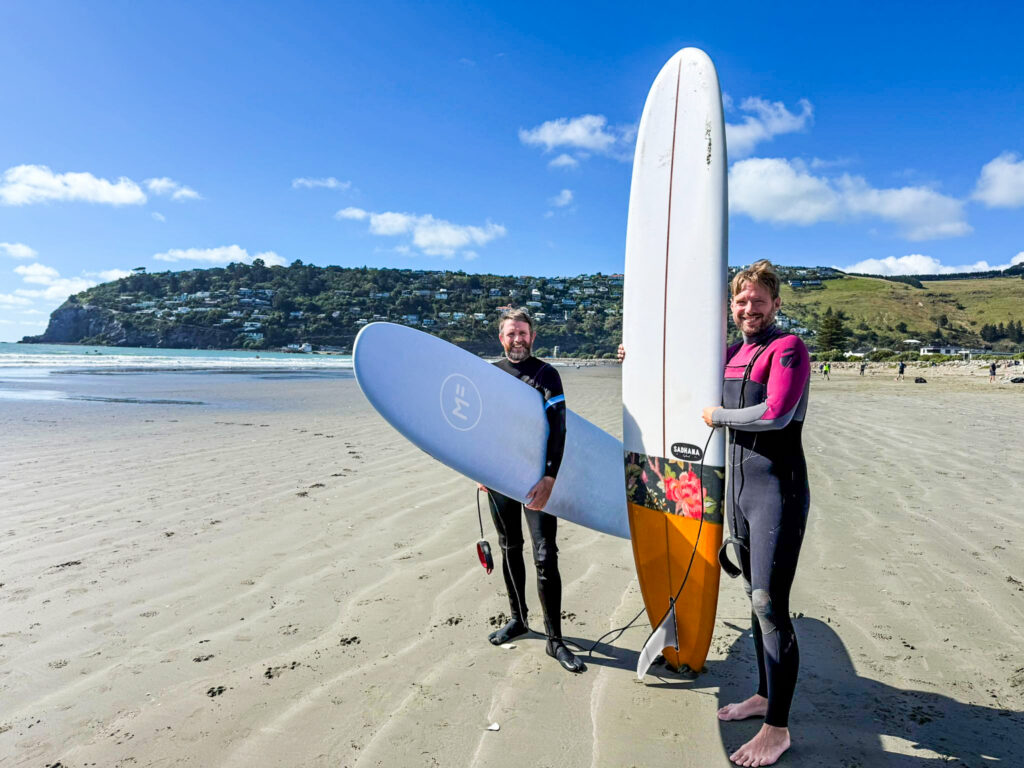
The Shed Shrink – Surfs up
Some near misses with large trucks when out road cycling sent this new Kiwi looking for some safer thrills. He discovered a new outdoor pastime that is also great for his mental well-being.
Five years ago, Stuart Foster swapped Lycra and two wheels for a rubber suit and a 10-foot foam surfboard, and he tells me over a coffee that he hasn’t looked back since.
Taking up any endurance sport like surfing at 40-something certainly impressed me. Stuart’s Instagram page @surfinmybones is quite open about the fact that age is no barrier. Stuart doesn’t come from a surfing family, but I’m sure he would say that finding the surfing family here in Christchurch is a long-term relationship.
Originally, Stuart and his wife were working and living in London, and life was pretty hectic. He describes that time as a very precious commodity, and when he found some spare time, his escape was out on his bicycle. He assured me that London has some fantastic, dedicated cycle-only pathways to escape the city and that it is easily accessible.
Back O The Shed – Booming on
An election is on the horizon, so Jude joins a political party to do his bit for democracy. However, he laments the lack of aspirations in our youth. Who will provide the unifying voice that can hold us together?
I foolishly imagined I had plenty of spare time, so I did something I had never done before: I joined a political party.
I signed up to help win an election, and I noticed something unsettling about my fellow volunteers. We are, for the most part, all of the same generation – a gathering of chromium blondes. No eager youth set on remaking the world, no weathered apparatchiks dulled by years of campaigning, just a company of near-geriatric volunteers. Boomers.