Honing an edge
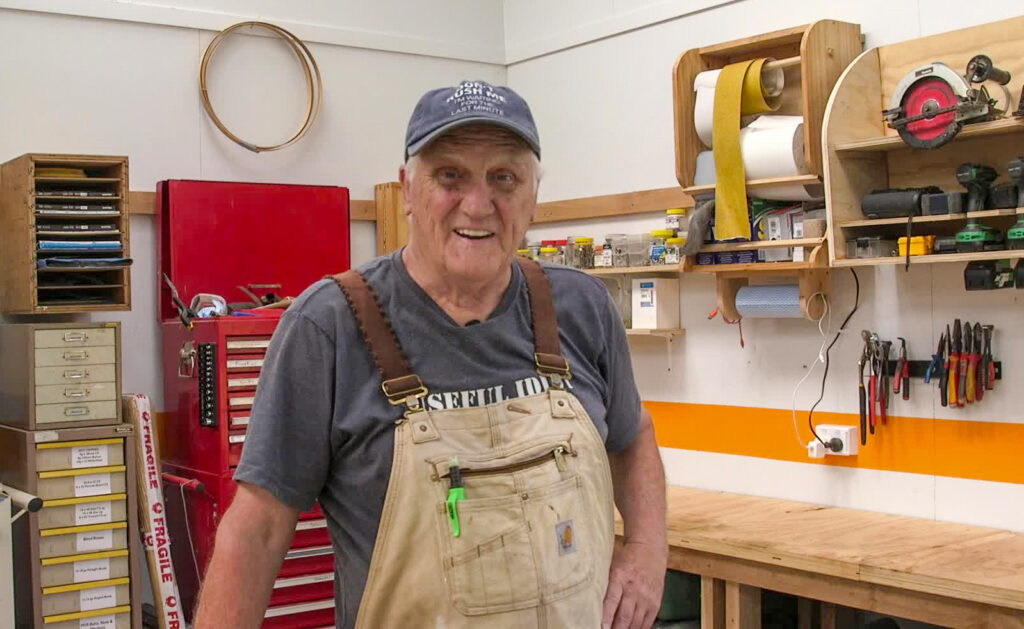
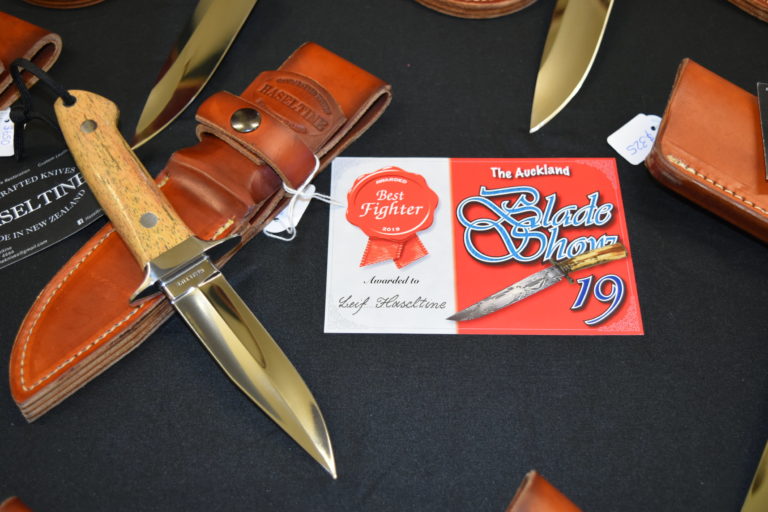
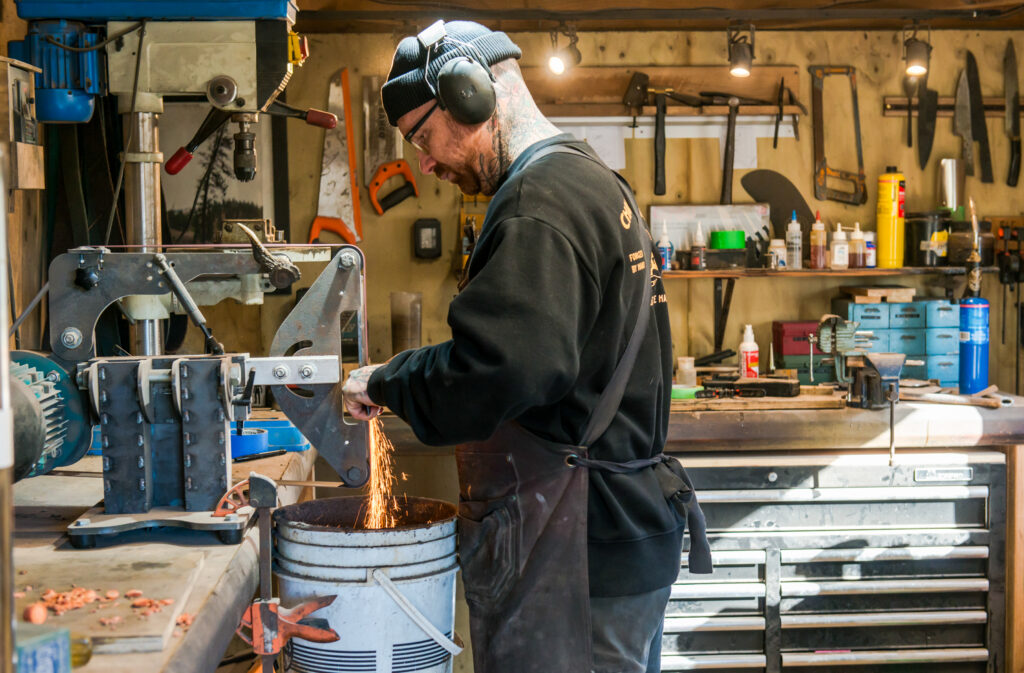
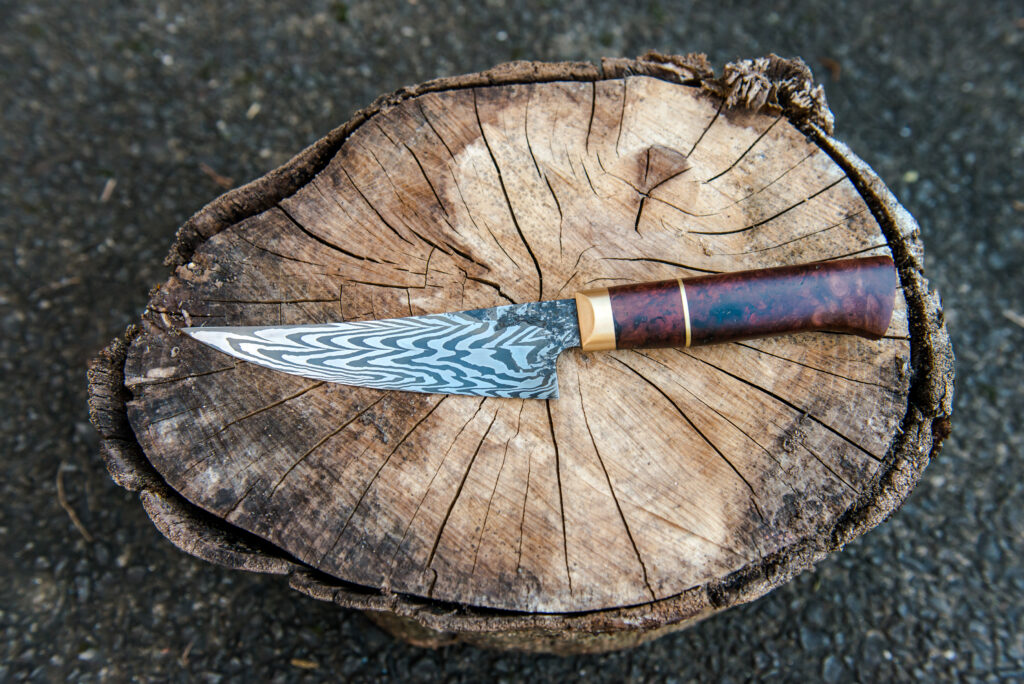
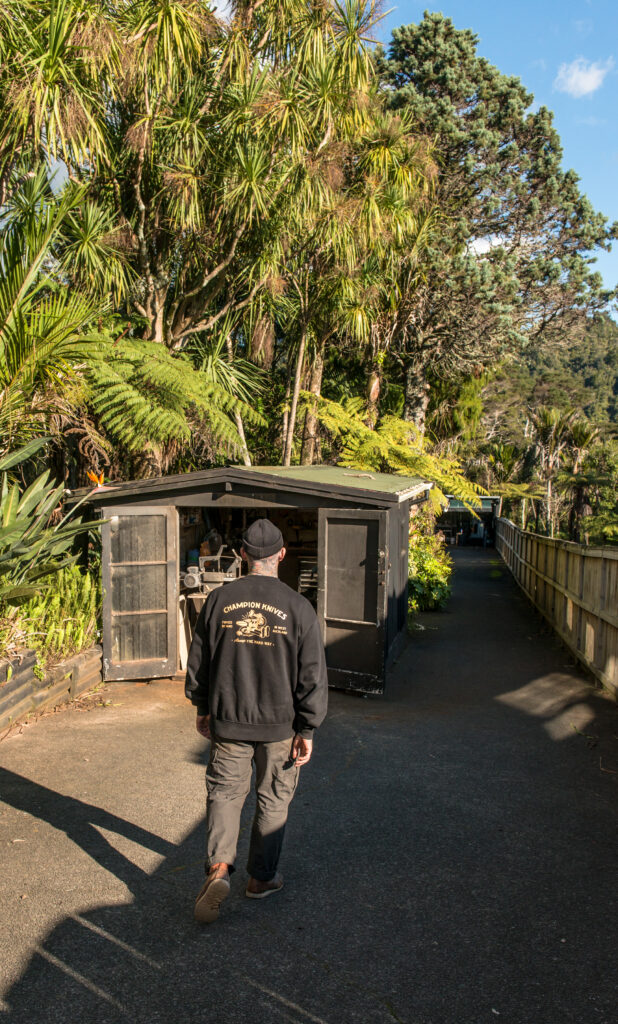
Hayden Scott’s road to crafting Damascus blades has been a journey of self-discovery, from an ambitious teen working the boning tables of the Balclutha freezing works to chef Al Brown’s right-hand man. Now, with over 25 years of experience using knives, he has found his calling: hand-forging the finest blades for cooks all over the world from his backyard sheds in the Waitākere Ranges.
“Hayden grew up in Balclutha surrounded by farmland and a practical family: his mum made the family’s clothes; dad was a chippie; an uncle built airplanes, and another uncle was a fitter and turner.
Hayden and his brother were often left to their own devices, usually with a pocket knife in hand. He remembers, “I always had a project on the go. What have we got here? What can I make from this?” Huts and bows and arrows lead to hovercrafts with electric motors, and later to bicycles, motorbikes, and furniture restorations.
His uncle Russell was a real inspiration, a builder who knocked together a Jodel airplane, which Hayden fondly remembers flying around Otago in. “I was in absolute awe that someone could build something like that, at home.” Another uncle, Allan, was a Fitter and Turner who rebuilt motorcycles. He had to dig out a cellar under his house to store his vast collection of vintage motorcycles. Hayden remembers, “He was always in there with his overalls on, working on them. Growing up around people like that was really motivating.”
To purchase a copy of this edition of the magazine, head here to The Shed’s own online store
Ayrburn Classic 2026 dazzles: A spectacular celebration of classic motoring
A dazzling display of more than 600 rare, classic exotica descended on the tranquil lakeside setting and terraces of the Ayrburn Precinct near Queenstown for the 2026 Ayrburn Classic, a celebration of motoring through the decades.
The event also celebrated 40 years of the Ferrari Owner Club in New Zealand with a stunning display of more than 60 examples from all decades of the marque.

Making a dust extractor
Mini cyclone and vacuum systems are a workshop essential that will help to keep the peace.
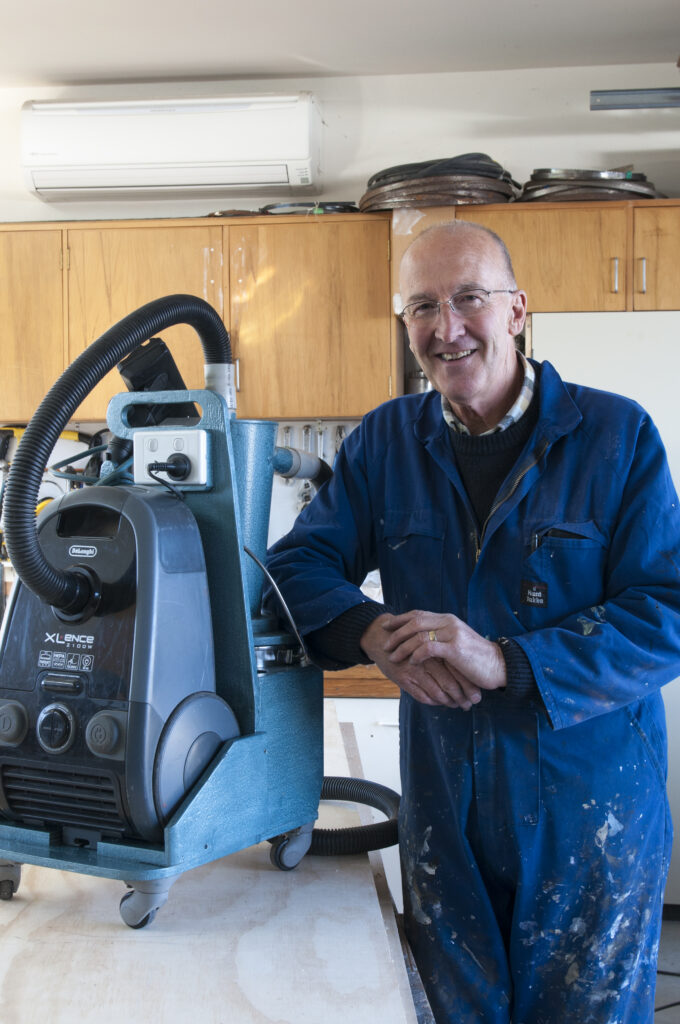
“In any workshop, dust is a health hazard and an annoyance, but when your workshop has direct access to the house, it also becomes a matrimonial issue. My workshop takes up two bays of a three-bay attached garage, so it is very important to keep everything clean so workshop debris does not end up being carried inside.
To keep dust under control, I have fitted each of my woodworking machines with its own mini cyclone and vacuum system. This means that when I need to move machines about to create a workspace, the dust collection continues to work.
Cyclones are very effective at removing both large and small dust particles. The cyclones that I have made easily collect sawdust from the saws, as well as fine dust from sanding or jib stopping. When attached to an ordinary domestic vacuum cleaner, the dust bag in the cleaner will last six months or more. In that time, I will have emptied the 10-litre dust collection pail many times.”
Build a workshop bench: New approach to utility benches
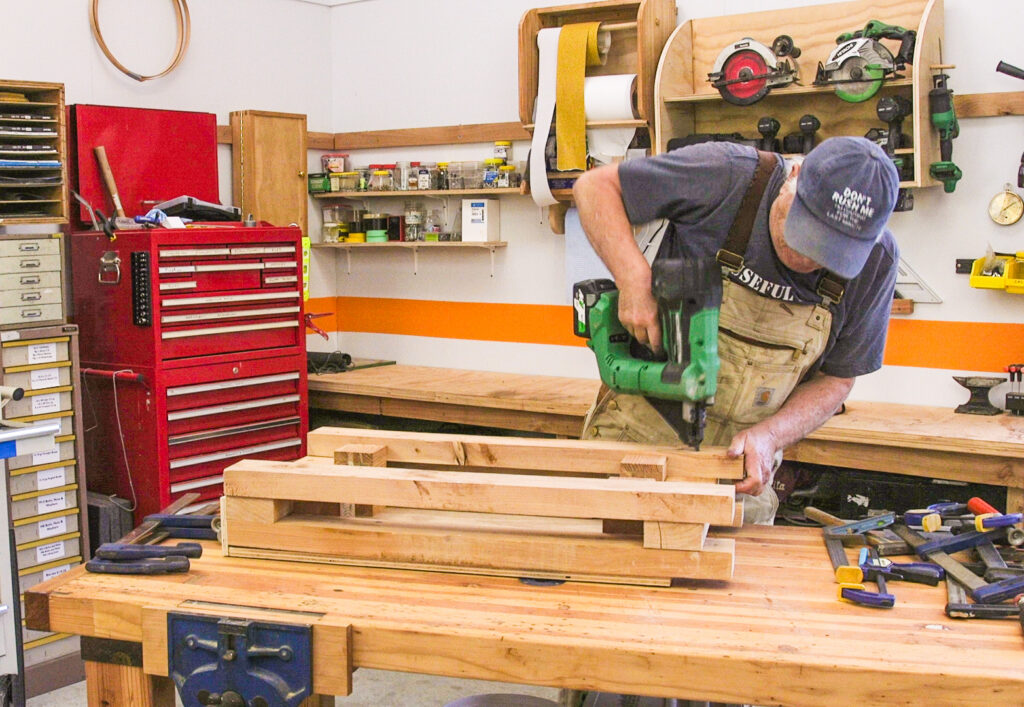
Now that Jude’s new shed is completed, it’s time to start on some projects. He begins by building simple and sturdy wooden benches using affordable lengths of Macracarpa.
“Every shed needs a utility bench, and most sheds usually have one or two.
It’s a place where things can be worked on or stored. I have built a few recently, and I have developed a simple process that makes the process quite easy and results in a sturdy workshop asset with space for storage.
The advantage of this design is that it doesn’t require good, straight timber. In fact, I often buy very cheap, knotty 2nd or third grade timber from my local sawmill, who specialise in Macrocarpa. I can get long lengths, but they are rarely straight or twist-free. Sometimes I can get relatively straight pieces, or I can find 3 metres or so in a 4-5m length. For the most part, you can usually find enough pieces of around a metre that are relatively straight.”
Motorbike restoration: Restoring a 1952 AJS – part nine
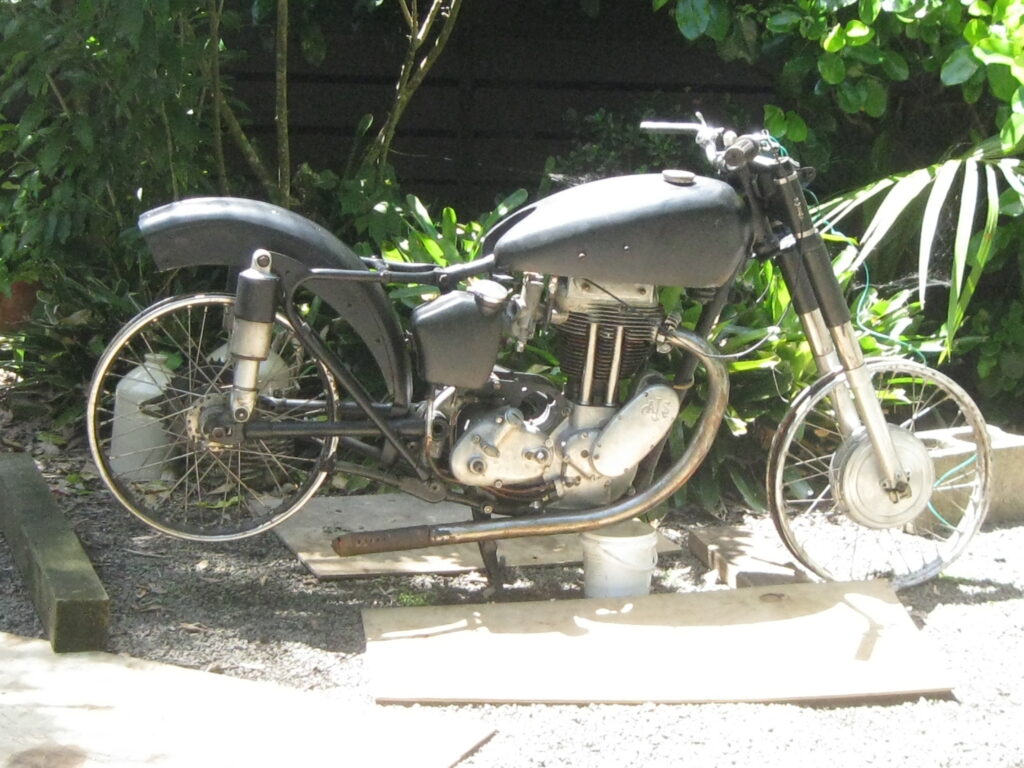
Problems aplenty for Peter again in this instalment, but he soldiers on regardless – if at first you don’t succeed… The kickstarter splines give him big issues, and there is the oil supply, the gearbox, and some tin panels to attend to. Now, did that engine start or not?
“My last article The Shed, issue 125) on the ongoing saga of the ‘1952’ AJS 500 rebuild ended at the point where I described jumping on the kickstart lever – no electric start, of course.
My start attempt was unsuccessful; the lever lost its grip on the kick start pinion and just spun around, and furthermore, the return spring had no tension to get the lever back into position. However, I’m heartened that the cylinder compression must be good; look on the bright side of life.
This article has a lot of descriptions about how I have tried many things but have not got very much further on the project. The story would be misleading if it seemed that things went well. I want to thank those who have contacted me through The Shed and given me great advice; it is heartening.”
Restoring vintage radios
Radios once connected us to the world, much like the internet does today. For children of that era, radios had a magical quality that captivated our imaginations for decades. We were enchanted by the sounds, mysteries, and beauty of valve radios. Meet Peter Walsham, a lifelong fan and dedicated saviour of these gems.
“The sound you hear on a valve radio is not decoded data. It is the sound itself, its waves reproduced as variations of the amplitude or frequency of the radio carrier wave. The valves introduce distortions which are mostly harmonics, audible and pleasing to the ears. It’s real, and we can hear that. Restoring a vintage radio brings all that back home.
With that in mind, I took a ride to Pukekohe, to the home and workshop of one of the country’s few full-time radio restorers, Peter Walsham.
I spent a fascinating day with Peter, a man with half a century of radio knowledge under his belt. His superb and ever-growing collection of vintage radios and many thousands of radio parts fills his house, where we passed an agreeable if challenging afternoon discussing the history of radio production and broadcasting in New Zealand, whilst looking into the workings of the radio he is currently working on for a client.”

The John Britten Museum: A fitting tribute
The John Britten story is now part of Kiwi folklore. A bloke in a shed with skills and passion who takes on the world and wins. Ritchie Wislon gives us insights into the man, what he created, and visits the new museum dedicated to this much-missed Kiwi legend.
“Almost exactly 30 years ago, celebrated racing-motorcycle designer John Britten died at only 45.
It was widely appreciated that New Zealand had lost a hugely significant figure. In his workshop, he and a handful of friends had built, virtually from scratch, a series of racing two-wheelers which had vanquished bikes built in the very well-funded racing departments of major motorcycle manufacturers. He had done what many a sheddie has dreamed of – surpassing professionals at their own game.
Had he lived, what might he have achieved? Could he have perhaps become the Enzo Ferrari of the motorcycle world?”

Off the grid: Downscaling – but not slowing down
‘…do not go gentle into that goodnight’ (Dylan Thomas). Murray decides it’s time to sell the family keeler, but not at all the time to back off on his projects and activities. Downsizing is not necessarily an ending, but new beginnings elsewhere.
“As I’ve aged, I’ve always clung to the belief that I’ll do this or that again, someday.
But selling our keeler recently – its replacement is a tiny trailer-yacht – made me face the fact that I may never sail into Moorea, or up to Hawaii or down to the Sub Antarctic Islands, again. That shift paralleled getting involved in the local Model Engineering group (more on that in a later article), so miniaturisation – of everything from possible voyage destinations to possible construction projects – has been the overriding feature of recent times. To quote Monty Python, it makes you think, doesn’t it?“

Woodworking: Learn the art of Marquetry
Centuries ago, trade guilds regulated the apprenticeship and training of skilled craftsmen. Once trained, these artisans travelled across various European countries to ply their trade. One such craft is marquetry, and Ed Prince demonstrates how to create your own pieces using this ancient and delicate woodworking technique. With simple tools, you can make some surprisingly easy and beautiful examples of marquetry
“For centuries, trade guilds associated with woodworking, carving, gilding, wheelwrighting, and coppersmithing controlled how skilled craftsmen were apprenticed and learned their craft.
The guild process enabled ideas and knowledge to be spread, innovations to take place, and new techniques and materials to be experimented with. When an apprentice graduated to become a journeyman, they travelled around European workshops, refining their specialist skills until they became time-served master craftsmen. Marquetarians are one such specialist trade. They cut veneers of wood, tortoiseshell, mother-of-pearl, brass, pewter, and enamel, transforming their colours and textures into patterns and images and applying them to furniture. In the process, producing some of the most incredible furniture and interiors for royalty, the church and wealthy merchants.”
The Shed Shrink: The thrill of the chase
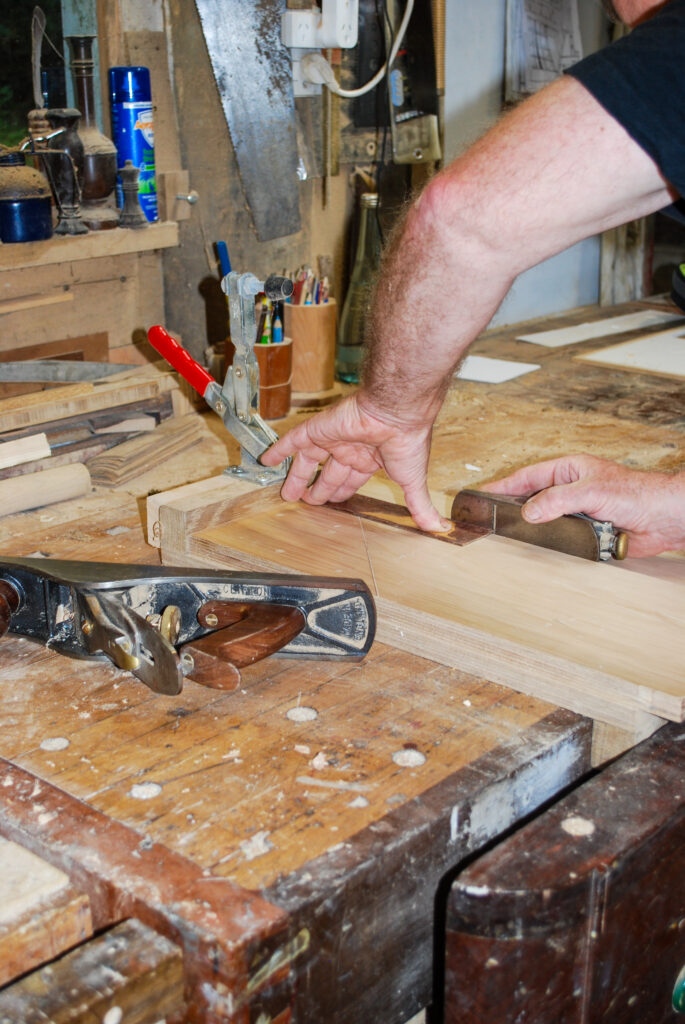
Our shrink tells us that working on projects and restoring old objects benefits us in many ways. It’s pretty amazing to find that dream barn find, and then have the opportunity to spend weeks, months, or even years enjoying your shed time, bringing it back to as new.
“In the wee hours of the morning on no particular day, and earlier than any self-respecting farting sparrow could be located, I find myself meandering down the gravel driveway to where supposedly there was a 1937 Chevrolet for sale.
It reminded me of other times when I sniffed out a barn-find, usable classic car or a motorcycle. The ‘thrill of the chase’ that few get to experience, and it goes something like this.”

Templates and Jigs: Applied workshop wisdom, designed to repeat
This is part two of a series on understanding and using templates and jigs in your workshop projects. You may also be very surprised to discover what constitutes a jig among your array of tools.
“In the previous issue of The Shed, #125, we looked at the work of mandolin maker Malcolm Locke and the use of templates and jigs in his work.
Next issue, we’re going to look at the construction of a 1800mm-long Model T Ford truck pedal car, currently being built at the New Brighton Menz Shed. This also involves the use of templates and jigs, which had to be made before the work on the car could even begin.
While both of these projects are very specific, don’t let that mislead you into thinking that templates and jigs are only of use in bespoke and high-end projects. Take your vice, for example – it is a jig designed to do one simple thing: hold something in place so you can work on it.
Now you can do other things with a vice, and there are, of course, many different types. But despite their differences, they come back to the same core principle – holding the item you’re working on still and steady, so that you can do whatever it is you want to achieve.”
Hear that whistle blowing
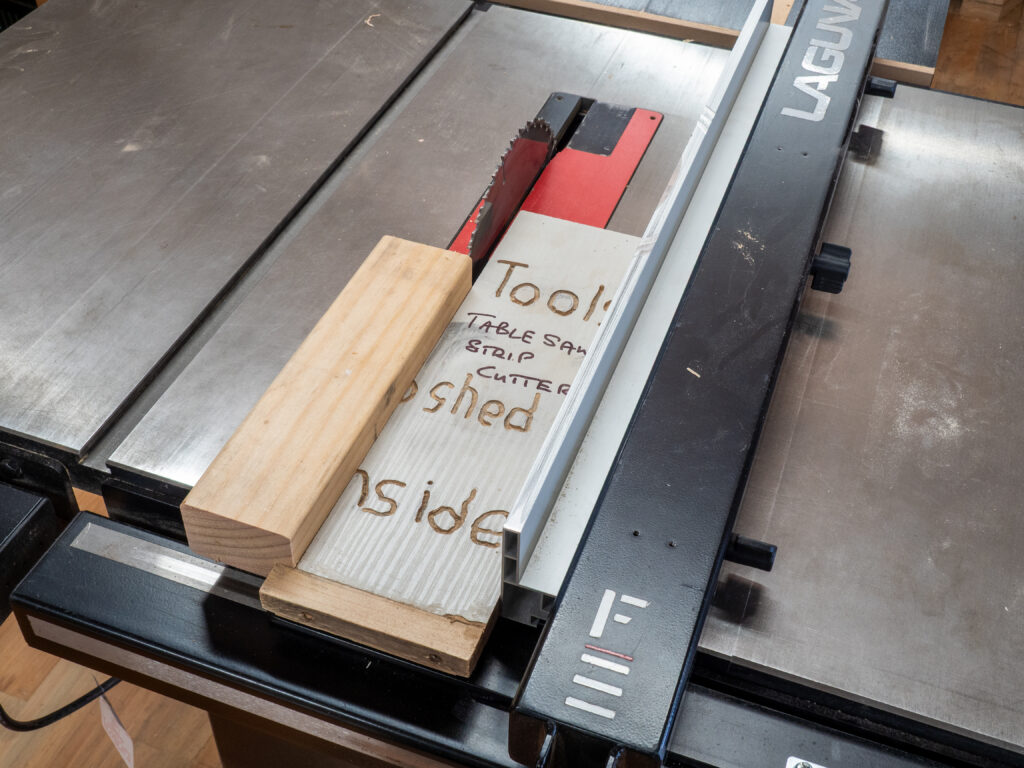
The Bay of Islands Vintage Railway in Kawakawa is a national treasure, operated by a handful of dedicated volunteers. Rare rolling stock is meticulously restored for current and future generations to enjoy, plus, there are some very exciting plans afoot for this railway’s future.
“When the whistle of a train blows in Kawakawa, the main street slows to a crawl. It has been that way for over a century.
This historic Northland town grew up alongside its railroad, and it remains unique in that both cars on State Highway 1 and Bay of Islands Vintage Railway (BOIVR) trains share the same thoroughfare through town. The sight of an old iron horse rumbling down the median is as captivating for bystanders as it is for the passengers on board. More than just a joy ride, the line is a reminder of pioneering tenacity and the pivotal role railways played in opening up the country’s backblocks.”
Know your stuff – The Shed Quiz No. 7
You’ve got a shed, and you know how to use it – but do you really understand how everything works? Test your sheddie knowledge.
Plus: The Shed Cryptic Crossword No. 4 – by Maya

Back O The Shed: The Useful Idiot
Our The Shed magazine founder is preparing to launch a YouTube channel featuring how-to videos to accompany his own shed project, but there are a few technical details to address first
“You may have seen my latest project piece in this issue of The Shed.
You may not know that it is accompanied by a video of the whole process that is available on The Shed website. This has been a test, a proof of concept for my new channel tentatively titled ‘The Useful Idiot’ on the basis that I am an idiot, but occasionally I can do useful things.
Although I did spend some time in my youth as a cameraman working in film and video for a well-known Australian broadcaster, it has been some time since I used a video camera in anger; it is even more out of my comfort zone for me to be in front of the camera.”