
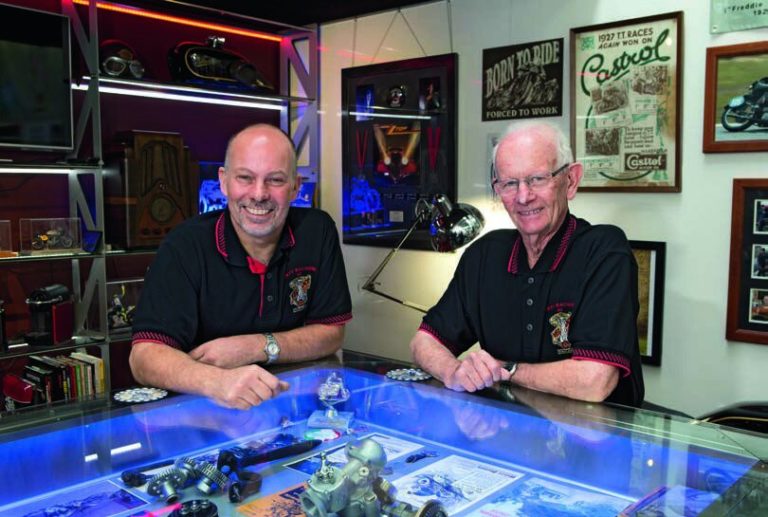
A Great Barrier Island sheddie doesn’t let isolation get in the way of restoring bikes to their original condition
By Bob Hulme
Photographs: Bob Hulme
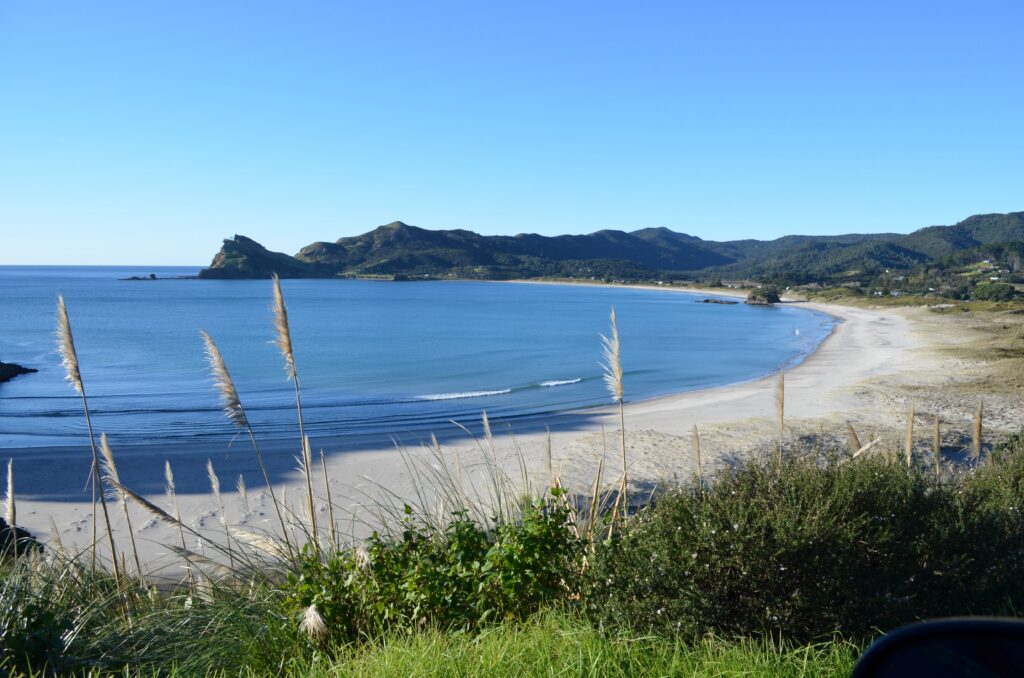
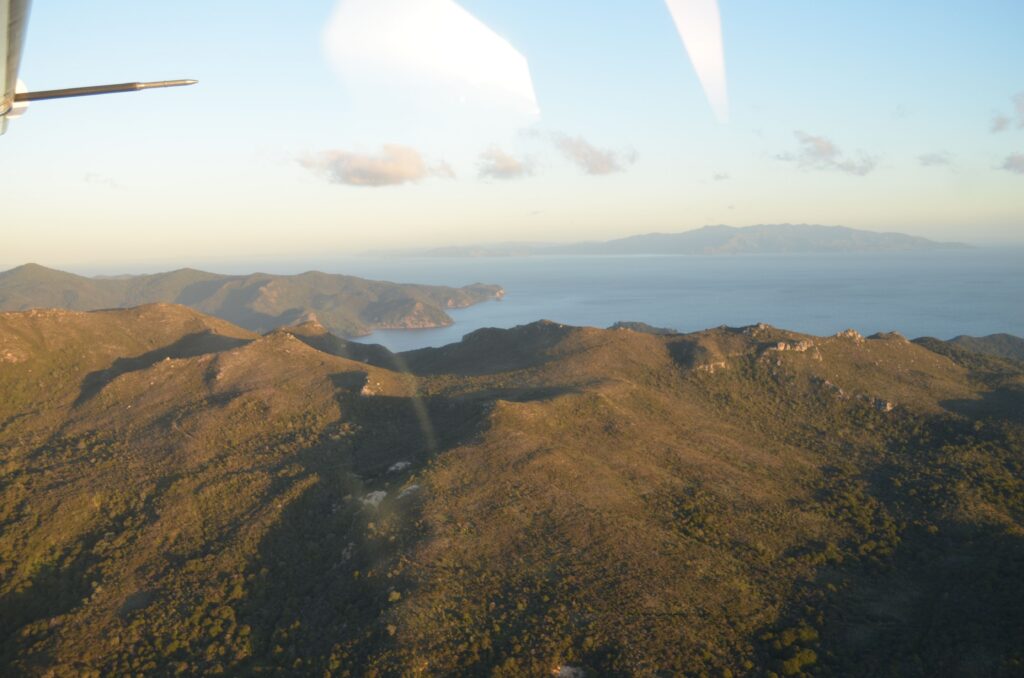
As you can imagine, on Great Barrier Island, the population is likely to have more than its share of characters, given the island’s remote location. Part of the charm is its lack of power supply and absence of a supermarket. If something breaks, there’s not likely to be a spare part sitting on a shelf anywhere on the Island, so if you don’t want to wait or to pay hefty freight charges on top of the cost of the part, you make one or use real no. 8 wire ingenuity. Even though it is New Zealand’s fourth largest island (after the North, South and Stewart Islands) and is only a half-hour flight from Auckland, it’s like a different world, and that’s why the locals love it.
Hippie to sheddie
One of the characters who gives the Barrier its flavour is Artie Laven. He’s a proper sheddie who moved here 47 years ago. He says he was a hippie when he arrived, so I guess it has been the island way of life and the need to fix things that has turned him into a sheddie. He built his own house back then and did part-time work in Auckland in the refrigeration industry to fund the build. Once the house was finished, he was able to set up his own business servicing fridges, mostly on board visiting yachts, as well as around the Barrier. Generator servicing became part of his speciality, too. When it became obvious that solar power systems were the future, he obtained an agency to sell and install them on the island.
The locals here each have their own skills, and survival on the Barrier is dependent on knowing who has the required skills and the right gear when something needs fixing or building.
Artie’s shed/s
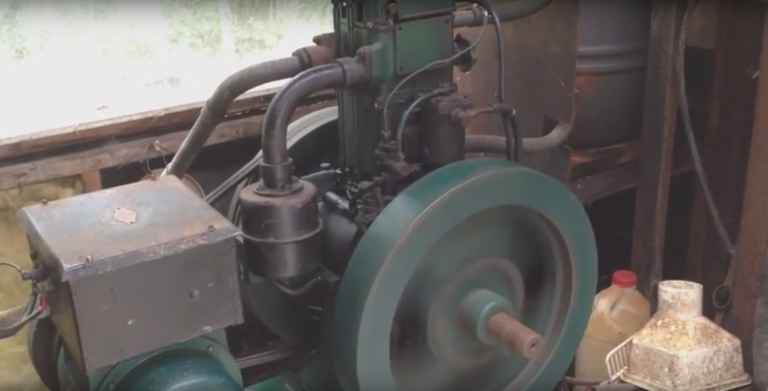
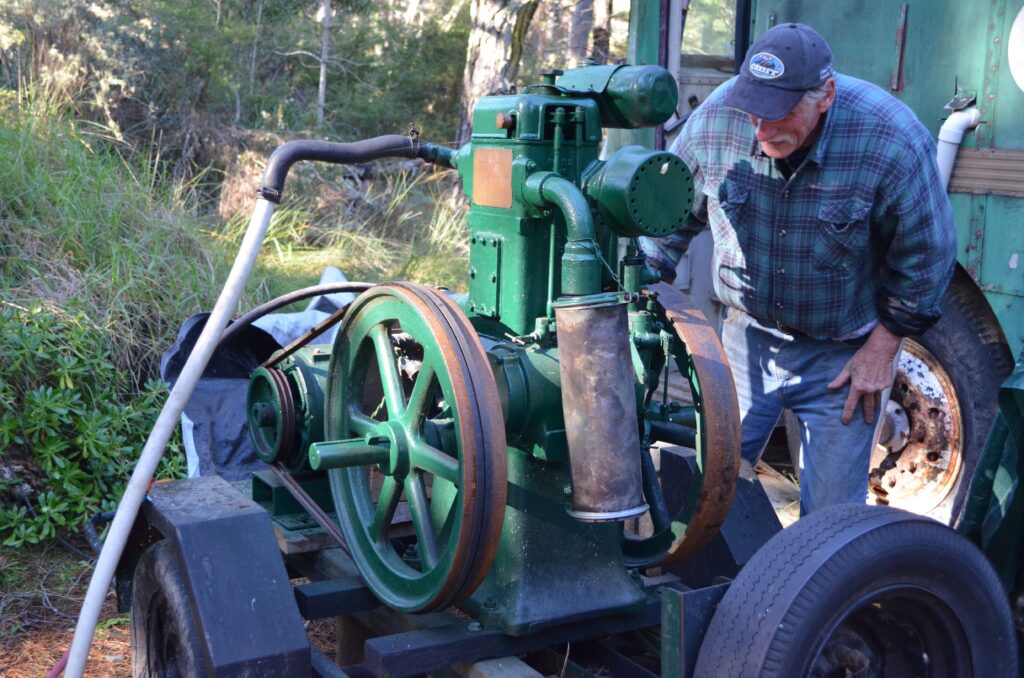
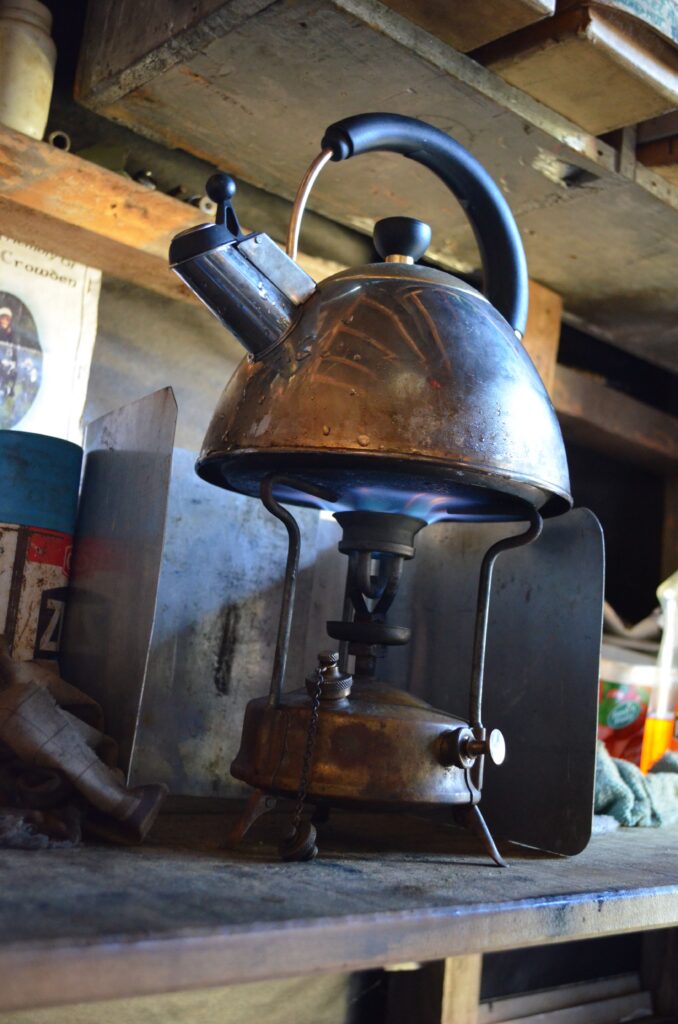
Nowadays, Artie says he is retired, but he still does pump and generator servicing for a few clients and friends. Artie’s shed is more of a collection of sheds in reality. The main workshop is housed in an old bus. With electricity not on tap, generation is a necessity, and he has a robust-looking Lister engine driving a generator. It was not in working order when first acquired, so Artie has spent many hours getting it in running order and has set it up so that it can run on a 70 per cent used vegetable oil mix. Fuel prices are much higher on the Barrier, which has been exacerbated by the Auckland Council tax, which the locals are fighting.
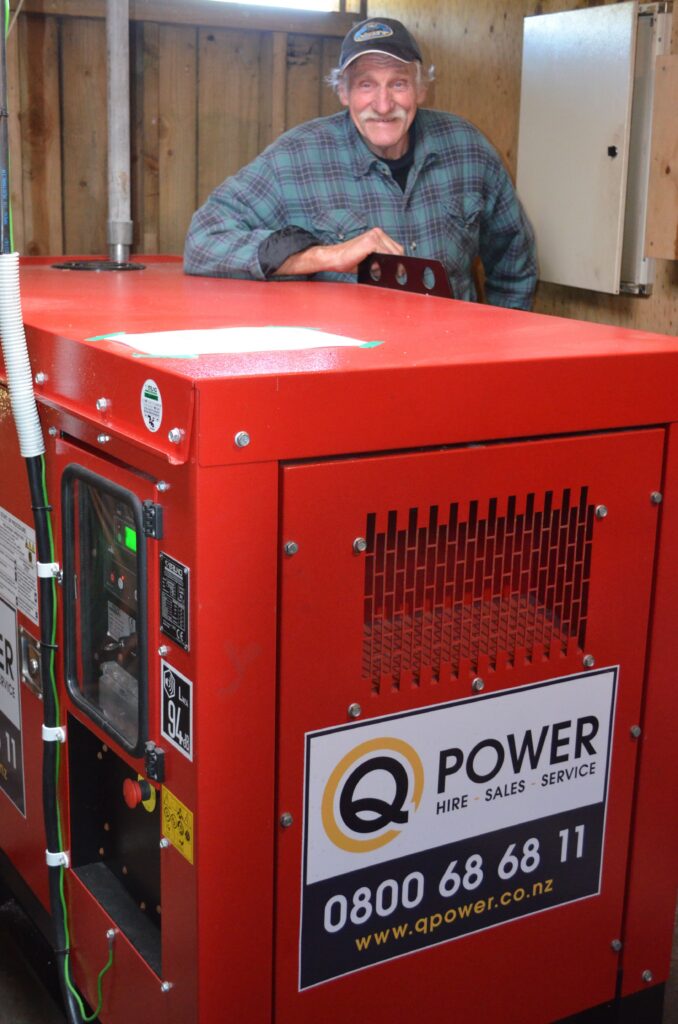
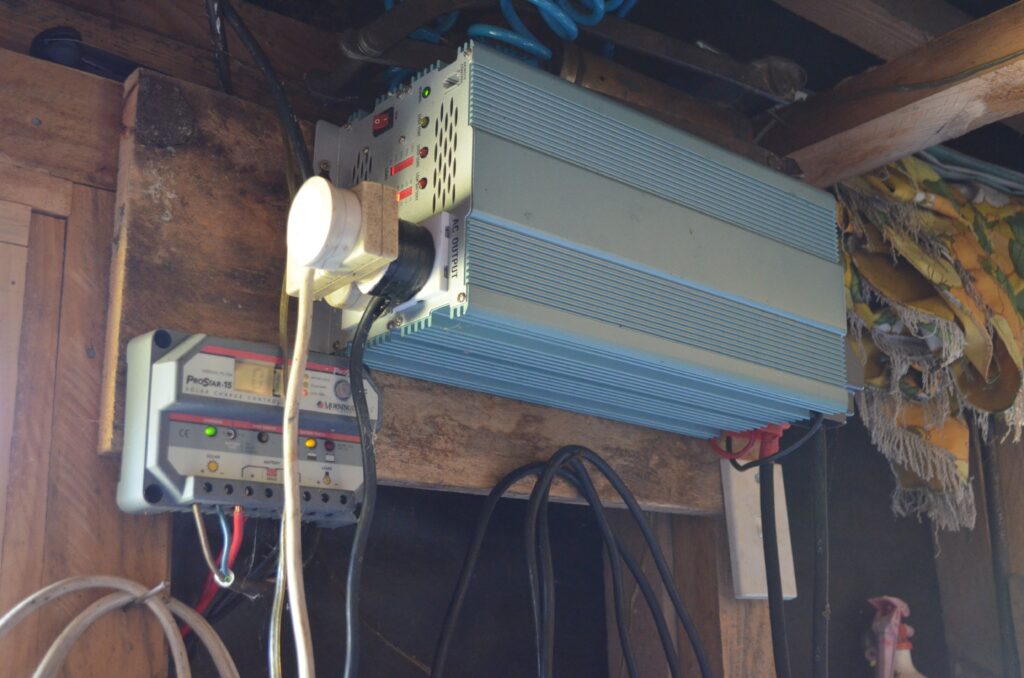
The Lister diesel drives a 1500-watt generator, which isn’t a lot of power from such a big unit, so Artie has another, more modern, smaller unit that has more grunt. The generator that the Lister powers is a motor/generator, meaning that it can be used as an electric motor to start the Lister diesel. On one of the sheds, he has only solar panels that top up a bank of batteries. These drive AC tools via an inverter.
Tools and interests
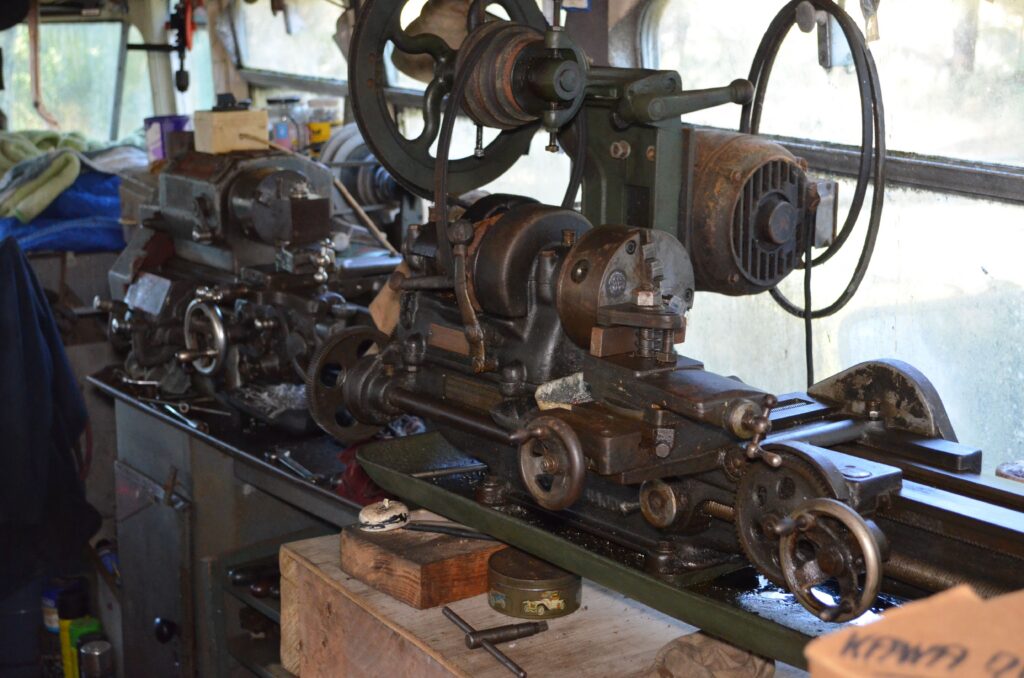
The bus is home to a couple of lathes as well as other tools essential for an island sheddie, such as welders, bench grinders, hand power tools, and of course, all manner of spanners, files, etc. One lathe is an old flat-bed Boxford. How many of those are there still in use around New Zealand? Probably loads! They seem to last forever. Various materials are kept on hand, and nothing is thrown away, as sourcing steel or other metals is not so convenient in this remote place.
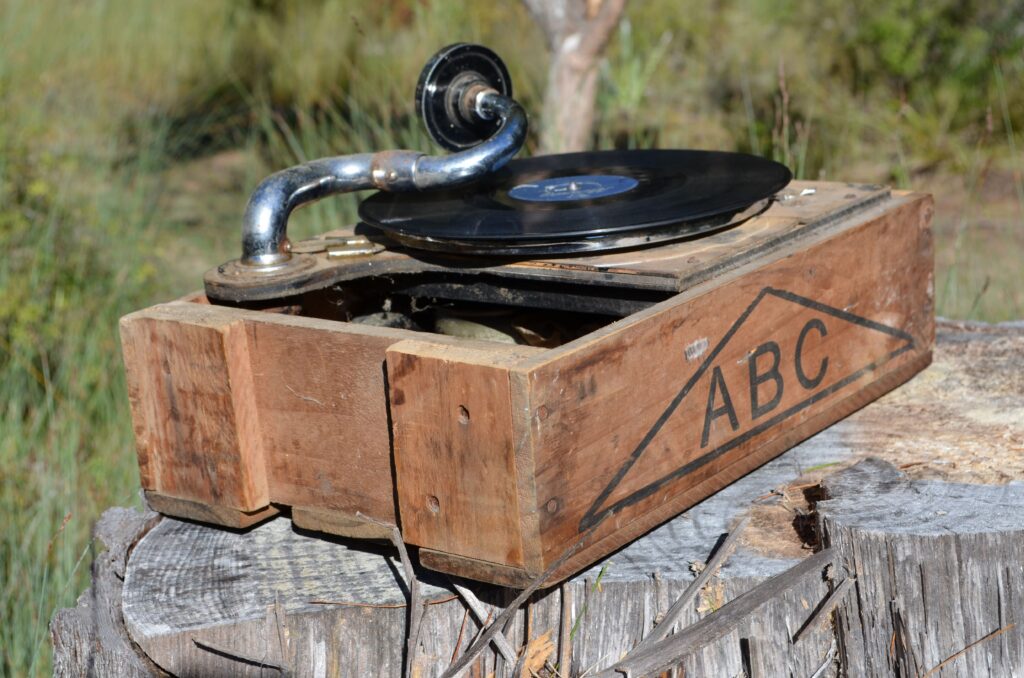
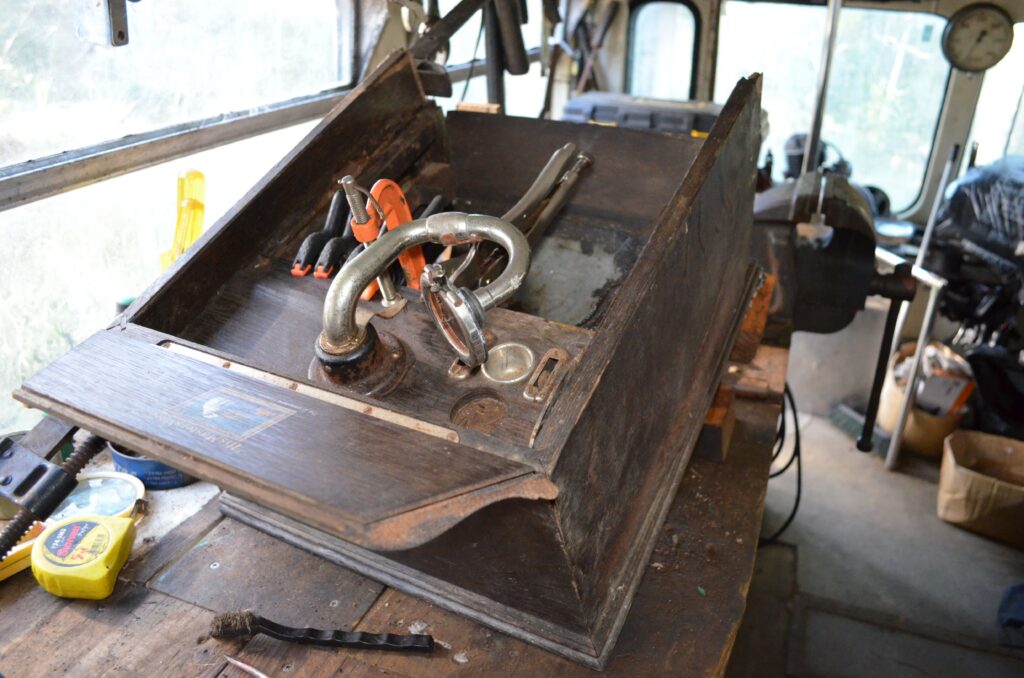
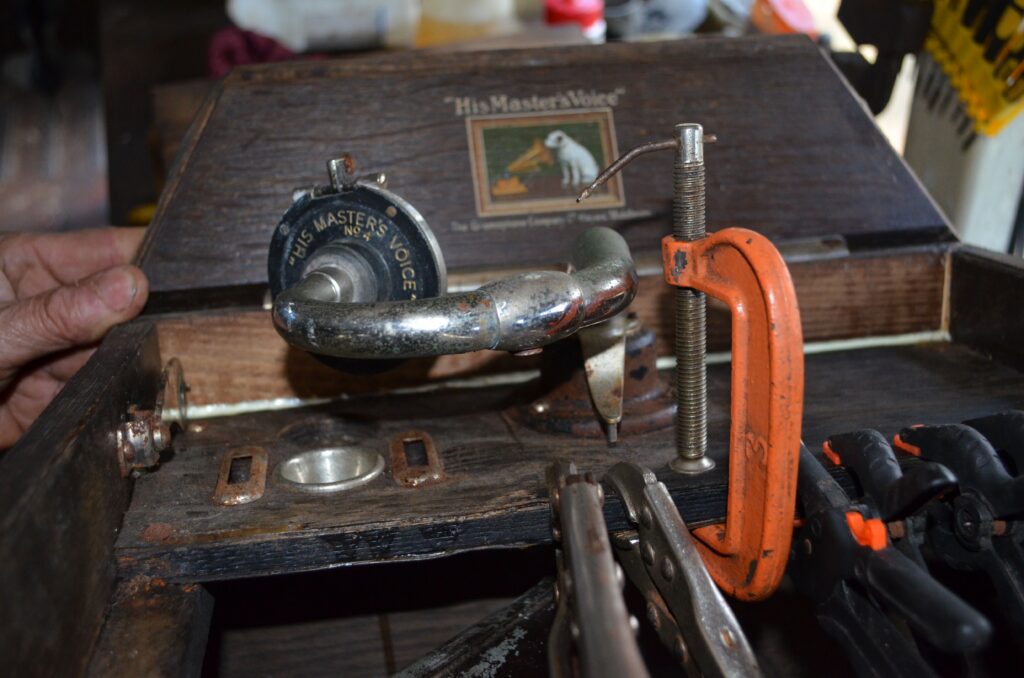
One of Artie’s interests is restoring antique 78rpm record players. These are the ones powered by a spring that needs to be wound up with a crank in the side. No electronic amplifier in these babies, just a sound-amplifying metal horn. The sound is pretty good, and Artie likes to play records from his collection. In fact, he has a bit of an ear for music and even has a show on the island radio station every Wednesday afternoon. It runs on three different frequencies around the Barrier — Aotea Radio broadcasts on 94.6 at Claris (where the airfield is), 104 at Fitzroy and 107 at Whangaparapara. Radio has a history here as Radio Hauraki started as a pirate station broadcasting from a boat in the waters off the Barrier.
Mad for motorbikes
While it was a love of sailing that influenced Artie’s move to the Barrier, he has never given up his enthusiasm for motorcycles, and in particular, the racing Nortons. Regular readers will remember him from our report on the annual classic motorcycle race festival at Pukekohe in The Shed issue no 78. He has only missed competing in one of those race meetings since it began 39 years ago due to illness.
The Barrier does seem to be a strange place to live if you are into fast bikes. The roads are mostly sealed now, but are narrow and windy, so not at all ideal for giving a bike its legs. There is probably no likelihood that the Barrier will become New Zealand’s Isle of Man any time soon. However, who knows? Waiheke Island was once quite primitive before it was transformed into the domain of glitzy vineyards and luxury retreats, and, believe it or not, back in the early 1900s, the NZTT motorcycle championship races were held on Waiheke.
Artie’s pride and joy
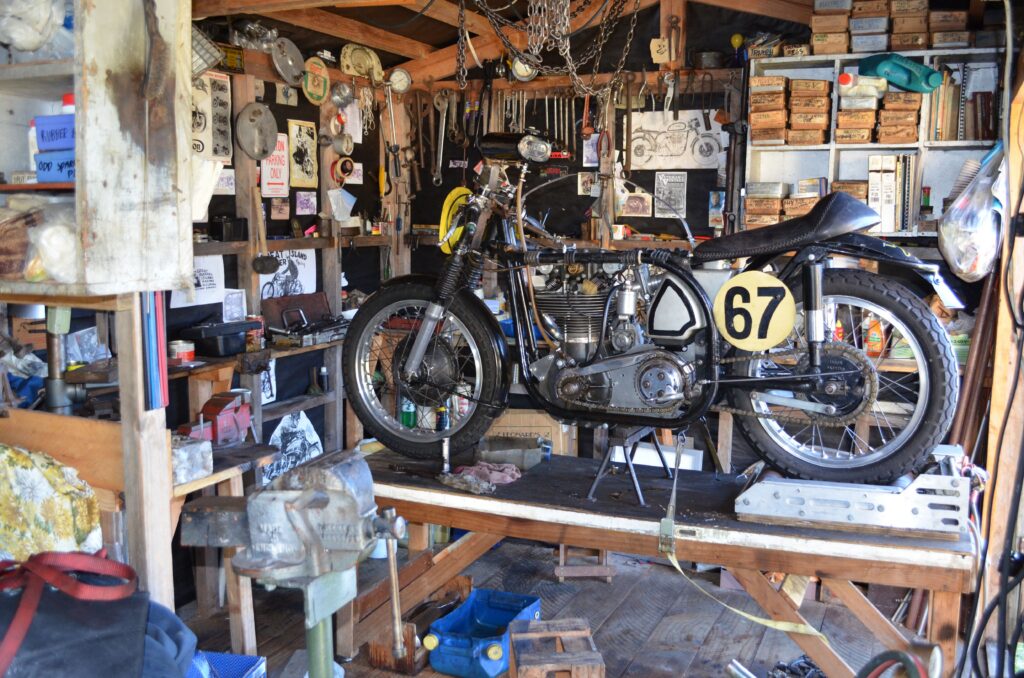
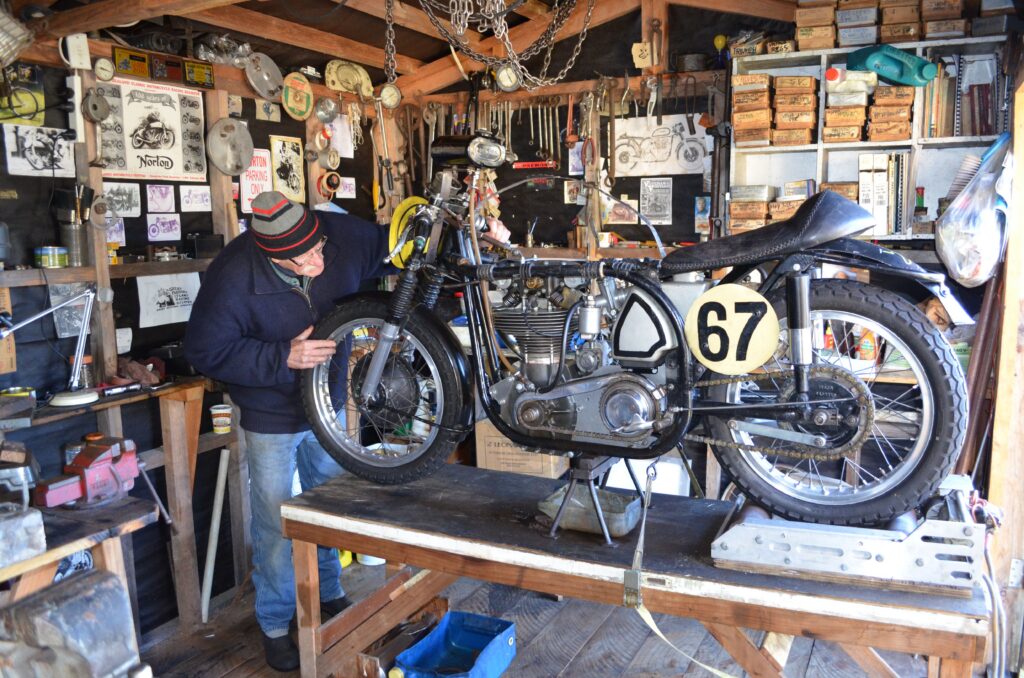
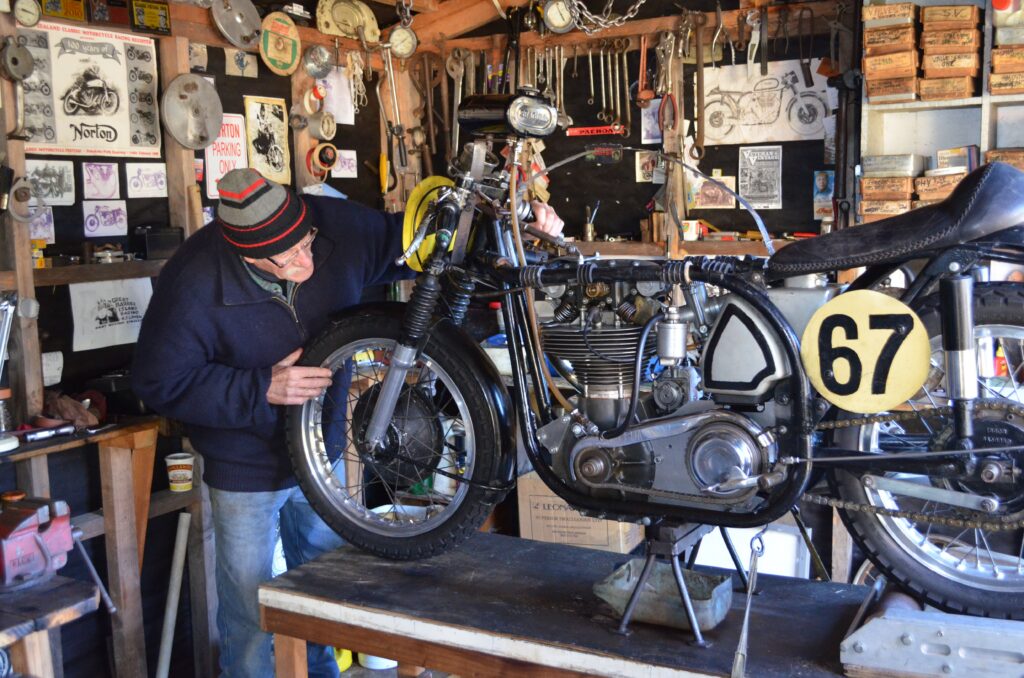
The bike that is Artie’s pride and joy is the Norton Manx that legendary Kiwi Len Perry rode in the Isle of Man TT back in 1951 to 9th place and the highest placed “colonial”. Artie bought the bare frame, front forks, front mudguard, rear suspension units, and swing arms in 1967. The original wheels were tracked down and bought shortly after. After fitting a Norton “International” motor, Artie got it into race trim. (He actually bought a complete bike so that he could get the International motor.)
It was not until this century that he located the original motor, but the owner didn’t want to sell. Instead, he wanted to buy Artie’s bike. So there was a stalemate for a while until it was resolved with what Artie said was a substantial payment to the engine’s owner. Now he has the complete bike in its historically original condition. The shed where this bike is kept has original posters and photos on the walls of Len Perry and the Isle of Man circuit. It’s a fine line between a shed and a shrine!
Keeping the bikes period correct
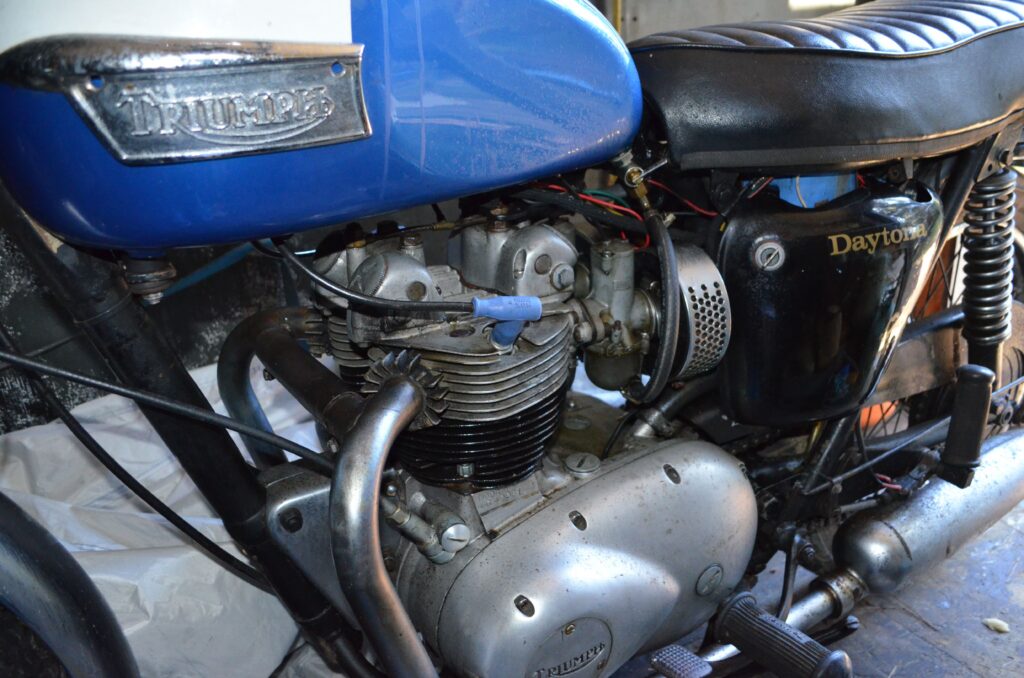
His efforts are not focused on just one bike or even on one make, although there is a definite bias towards Nortons. He always restores his bikes using (or creating) parts that are period correct. Sure, improvements could be made to bring a bike up to later specs and use changes that the manufacturer made to subsequent models, but that is not Artie’s way. He wants his bikes to be as close as possible to when they were first manufactured. The oldest complete original bike is a 1937 War Model 16H side valve Norton. An earlier 1931 Norton 22 motor sits in an ex Len Perry speedway sidecar outfit frame. The 22 motor is a 500cc OHV with twin exhausts — ahead of its time back then.
Even older is a Norton motor on its own — a 1930 DT model that is distinctive because of its through-bolting design. The cylinder head bolts go right down to the crankcase and hold the barrel in place as well as the head. It is reportedly one of only two that came to New Zealand.
More trips to Puke
The shed line-up includes an apparently out-of-place 1979 1000cc Moto Guzzi, LeMans frame, bike. It features innovations like a foot brake that works on both wheels, and the shaft drive makes it a very smooth tourer. Artie would not have looked for one of these, particularly and only ended up with this one as payment for restoration work done on a customer’s motorcycle. It’s possible this one could be sold to fund more trips to Pukekohe in the future, he says.
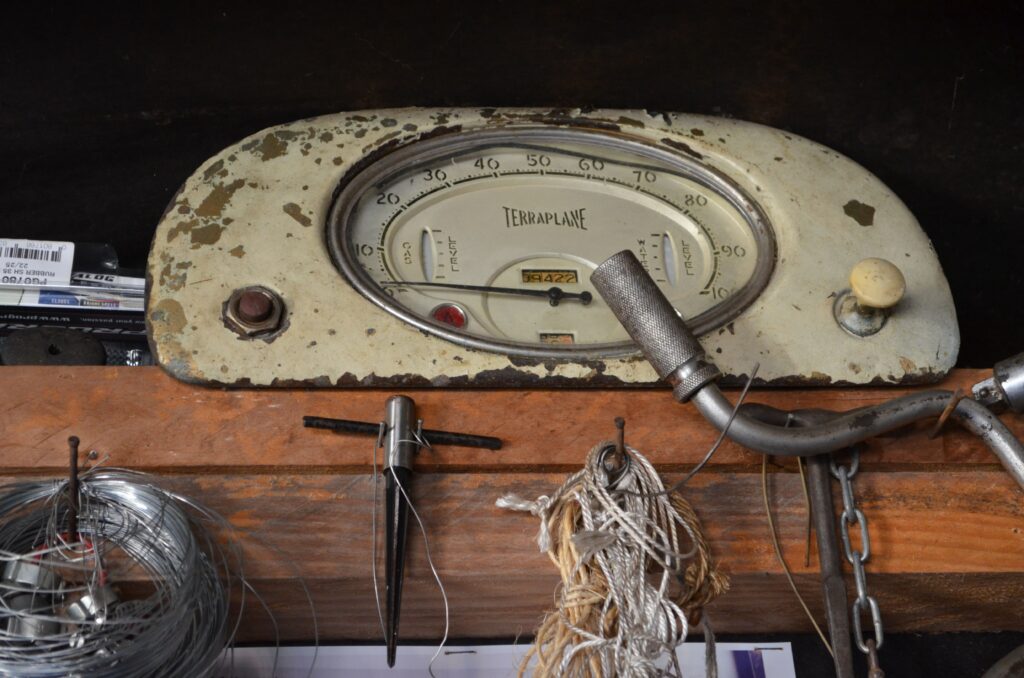
Four-wheeled vehicles have also featured in Artie’s past. He has the dashboard panel with the speedo off one of the two Hudson Terraplane cars he once owned. He absolutely loved them, and this momento helps to keep those memories fresh.
It will be useful one day
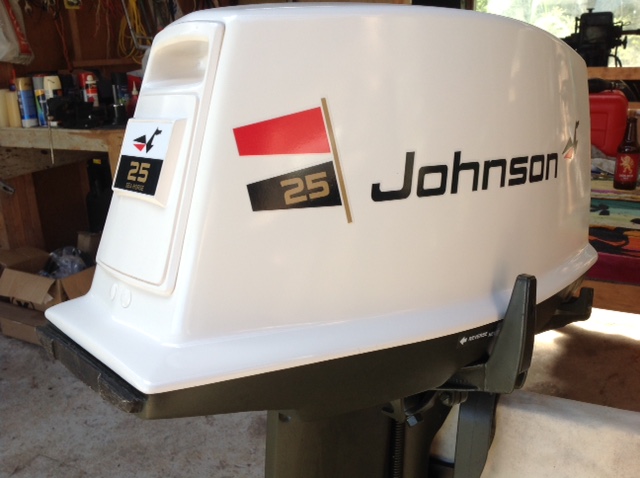
With so much water in every direction here, it is no surprise that boating is something nearly everyone is into, so it’s no surprise to see Artie’s row of outboard motors. He told me that only two are in working order, and the rest are kept for parts. People don’t like to throw things away over here.
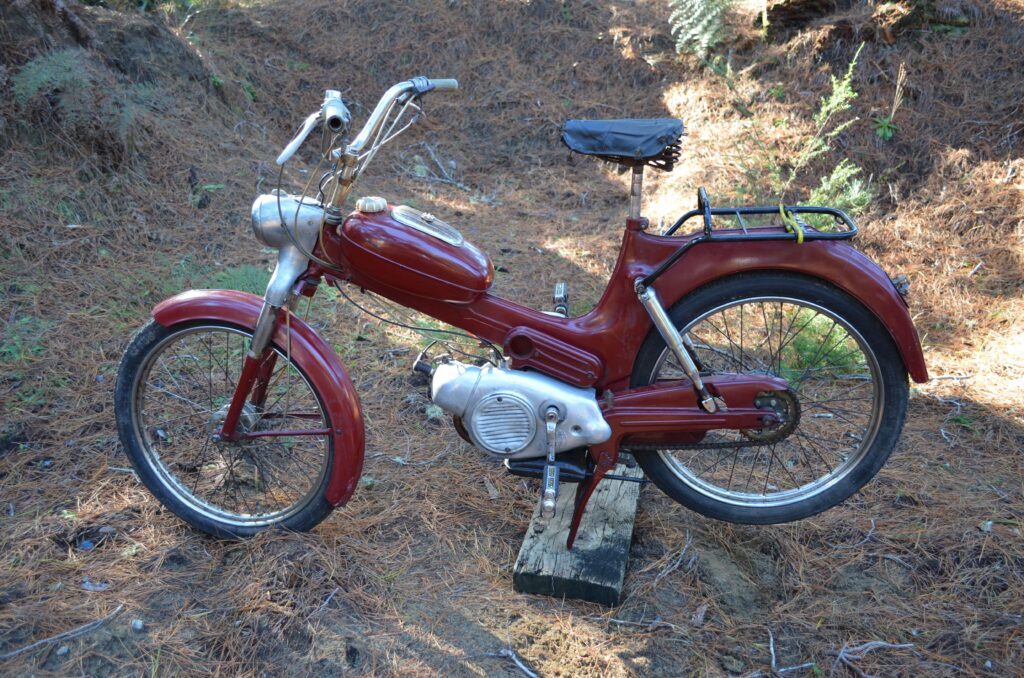
In another location are some items that carry on the two-wheeled theme. One of these is a Puch moped. These were very popular in New Zealand, and Artie has a story about this model. He came to New Zealand as a 14-year-old with his family from the Netherlands as government-assisted immigrants. Part of the deal was a restriction on how much cargo they could bring with them, and it was not easy to cut back on belongings to fit the maximum weight. However, Artie’s dad just loved his Puch moped and insisted that it came with the family. This one is not that actual one, but it is identical.
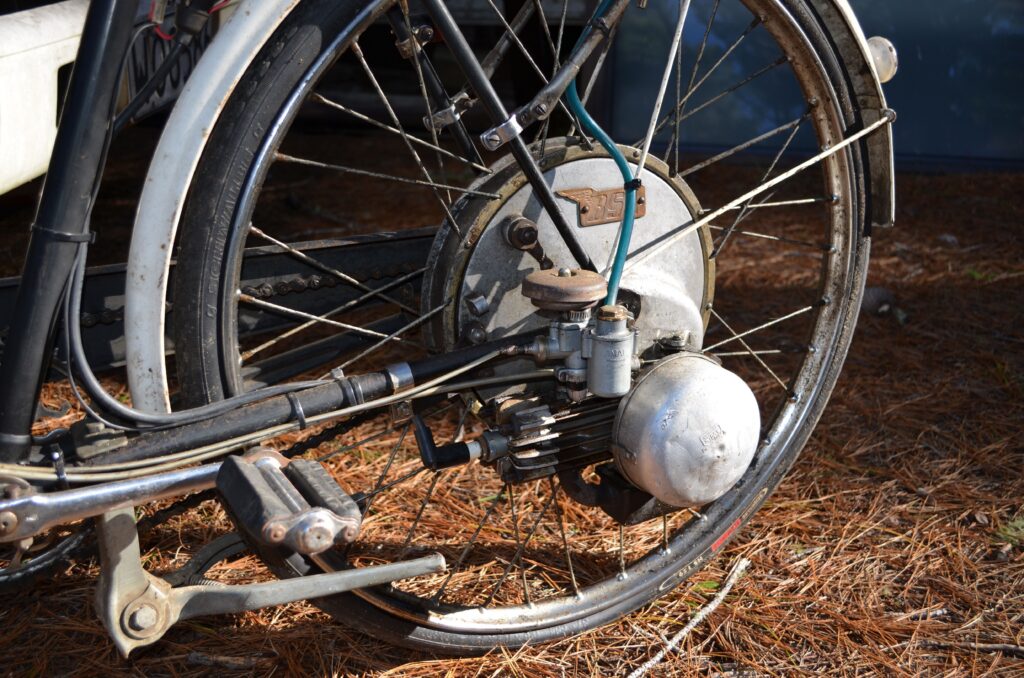
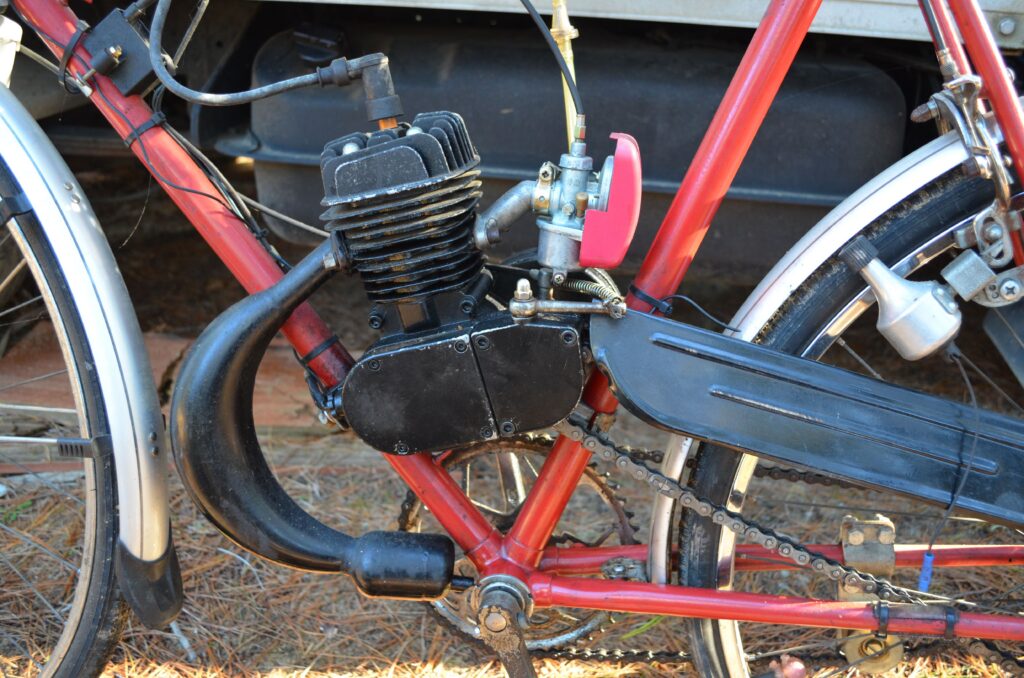
A couple of motorised bicycles here are fascinating — a BSA winged wheel bike, and what was a normal bicycle that has been fitted with a 50cc BSA motor. Absolute gems.
For more information on Great Barrier Island, go to aucklandcouncil.govt.nz, doc.govt.nz, and greatbarrier.co.nz.
Len Perry 1912 – 2002
Len started motorcycle racing at the age of 15 on a speedway bike at Henning’s Speedway, which was at Mangere. He won 42 national titles over the course of his career, including speedway, grass track, hill climbing and road racing. This included five senior NZTT titles and three Junior NZTT titles that were raced on Waiheke Island.
He was the Captain of the New Zealand team that went to the Isle of Man races in 1951. Other team members were Rod Coleman and Ken Mudford. Len finished in 9th place, and the team scored 2nd place. He raced two motorcycles supplied by the Norton factory — a 500cc Featherbed Norton Manx and a smaller-engined 350cc bike for races limited to the smaller capacity. He raced the bikes in Europe also that year and came 1st in the 350cc Belgium International De Mon and 2nd in the 500cc race at the same meeting. (First place went to fellow Kiwi Rod Coleman)
Business and family interests kept Len from serious competition from 1954 (which was the first of several times that he retired from racing), and yet he managed to win the New Zealand 250cc championship in 1959. He often turned up at classic race meetings and even rode at one such event in 1999. In 2001, he took part riding parade laps.
The 1951 Isle of Man wasn’t the first time he had gone over to race there. He tackled the torturous course in 1939, but after a crash in practice, which cost him his third finger, he was unable to take part in the race.
These days, we recognise names such as Graeme Crosby and Aaron Slight as Kiwi international racers, but Len was certainly one of the top New Zealand internationals in his day.