
A mounted stock crate is straightforward to make and surprisingly versatile
By Jude Woodside
Photographs: Jude Woodside
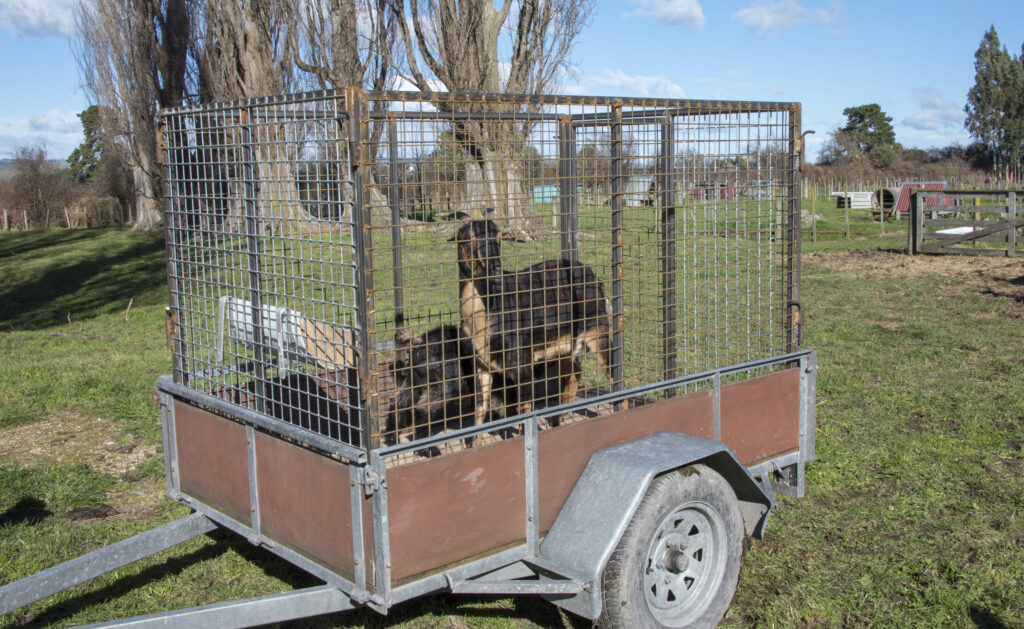
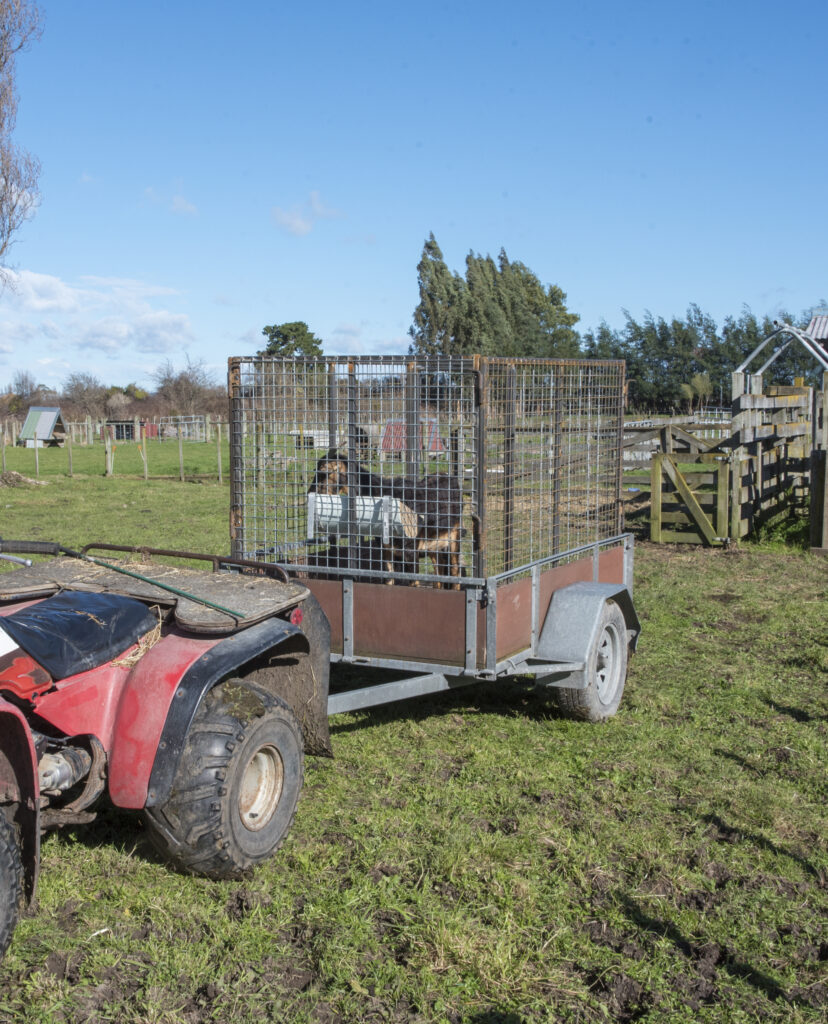
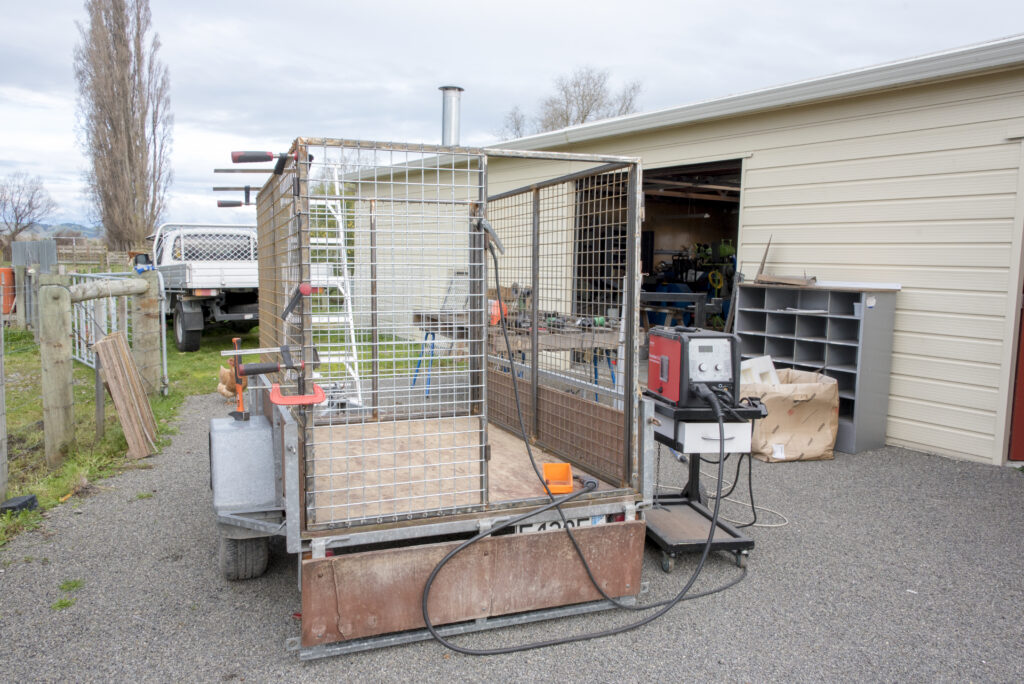
Farm life, even on a pocket-handkerchief farm like mine, means that you will need to move stock from time to time. I run a few cattle beasts and a few goats. I plan to get a few sheep soon, too. The issue with stock is moving them. Moving the cattle is a different story but for the smaller stock I could carry them either on the tray of my ute or my trailer if either had a stock cage.
I decided that building a cage could be an easily achievable project and so it has proved. It has value even if you don’t have stock – it certainly increases the options for your trailer. It is a lot easier to collect firewood with a cage, even transporting rubbish or green waste. In the case of the latter, you might want to make the end hinged rather than incorporate a gate to make it easier to unload the waste.
Having spent a few weeks checking out every stock crate that passed me – and living in a rural area that’s quite a few – I settled on a suitable design. At first, I thought I’d go with a design that featured a sliding door. They are quite popular, however, in the process I changed the design to a hinged door for reasons of space and for ease of construction. The sliding door takes up more room both for the door and the hardware, rails, etc., to make it work.
Fluxcore
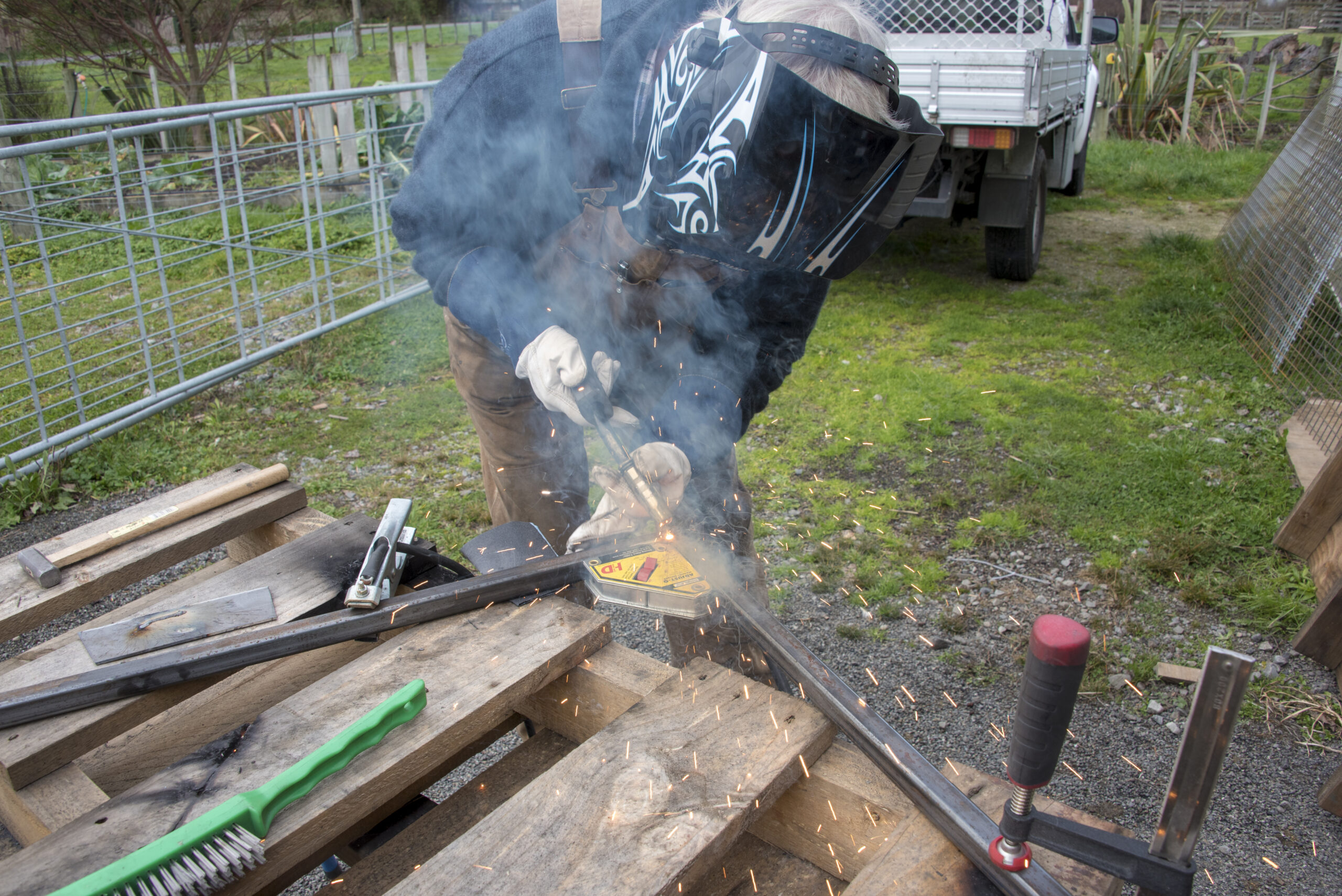
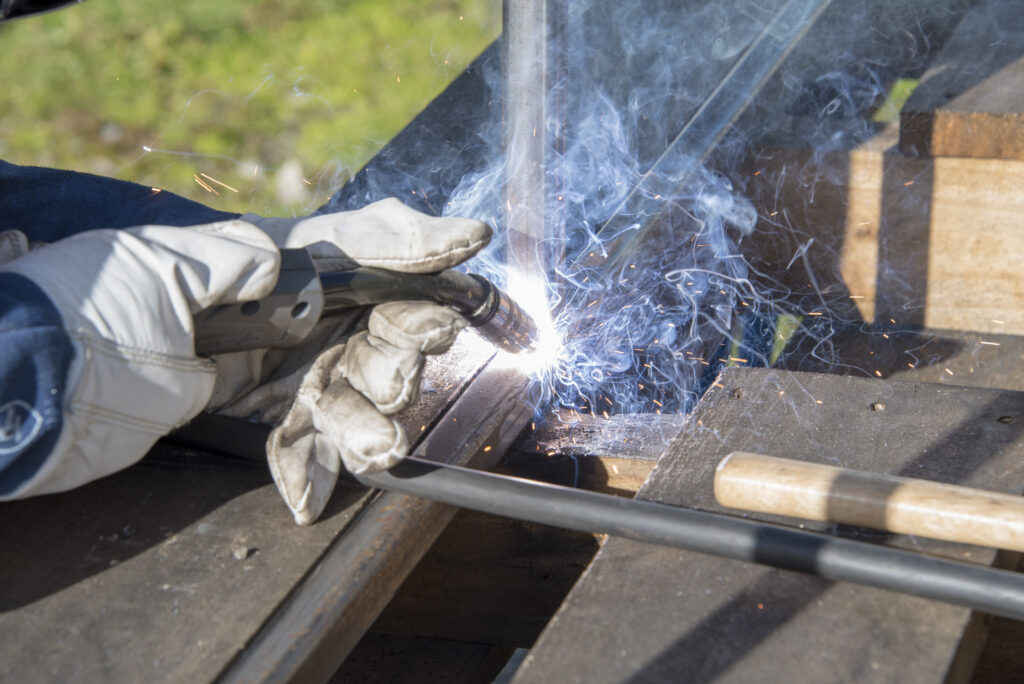
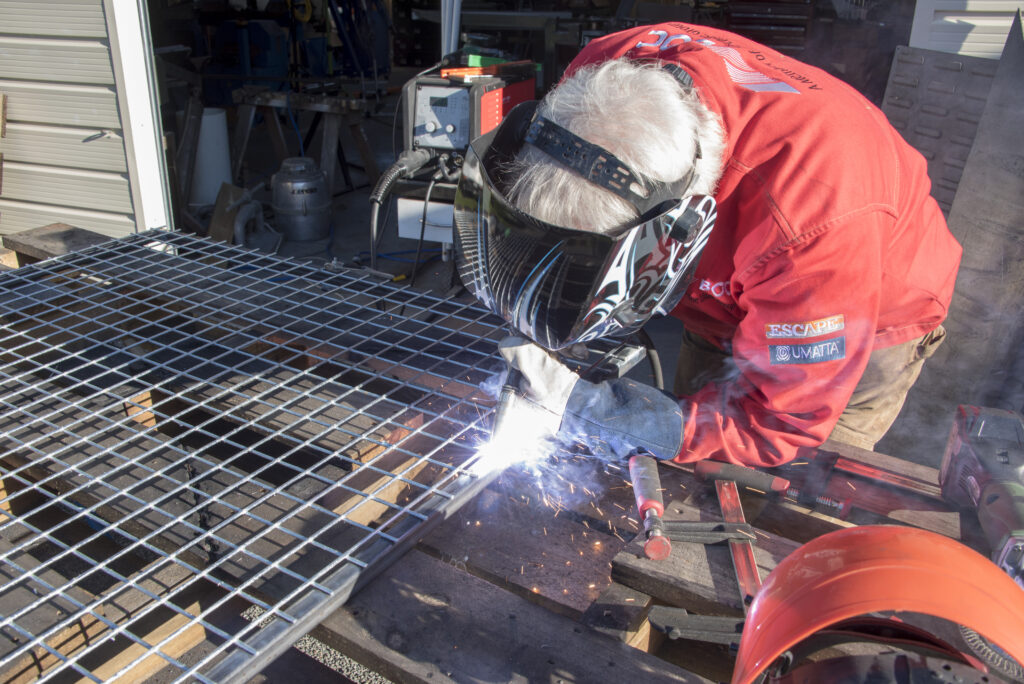
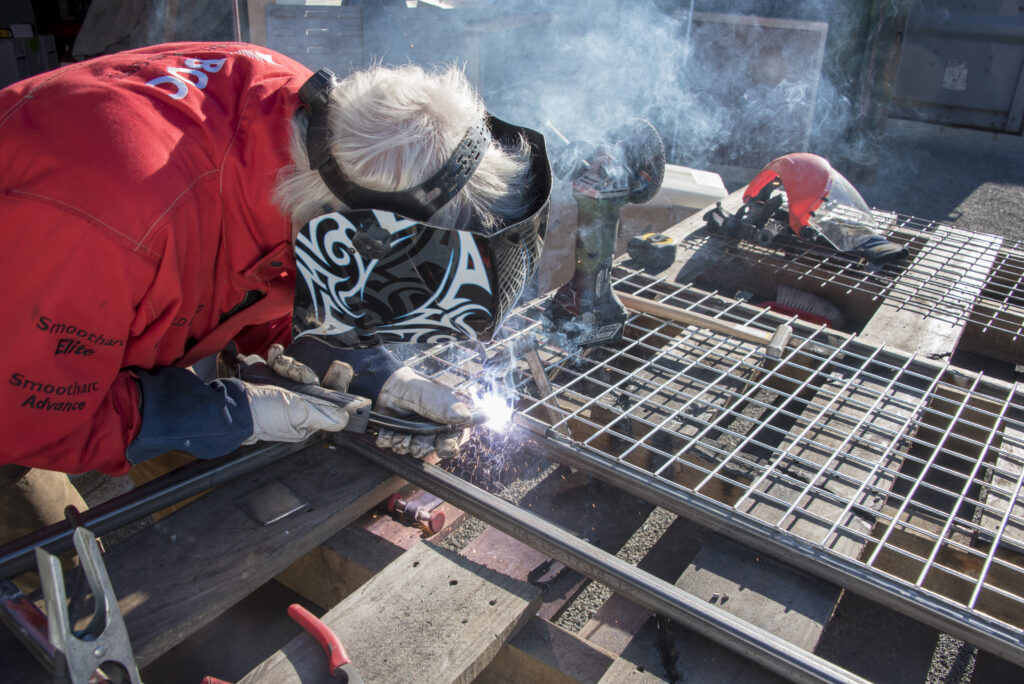
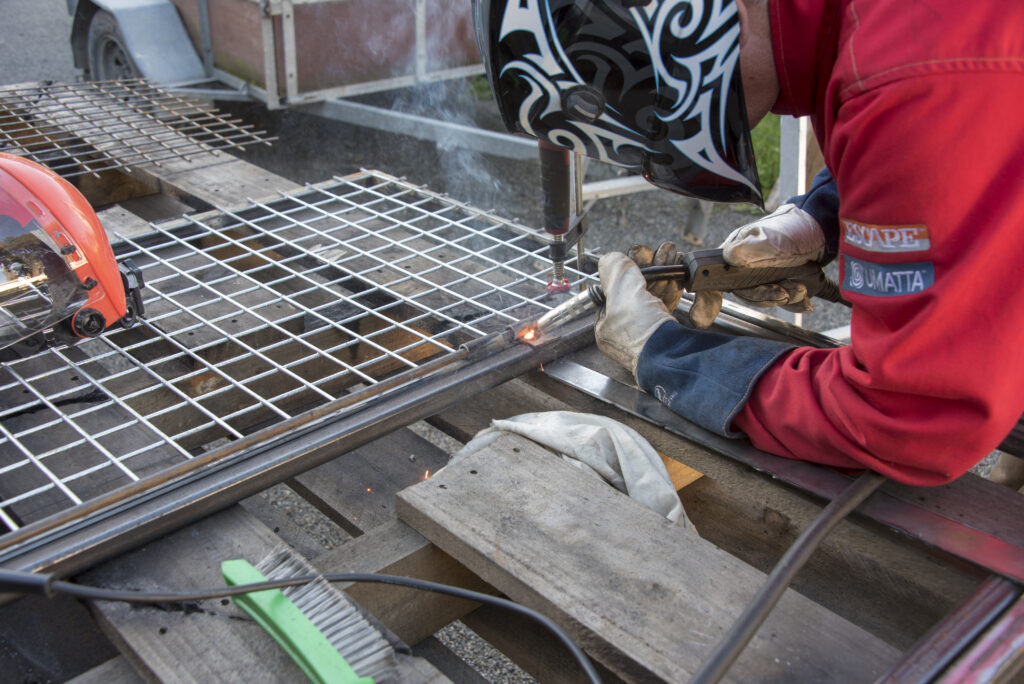
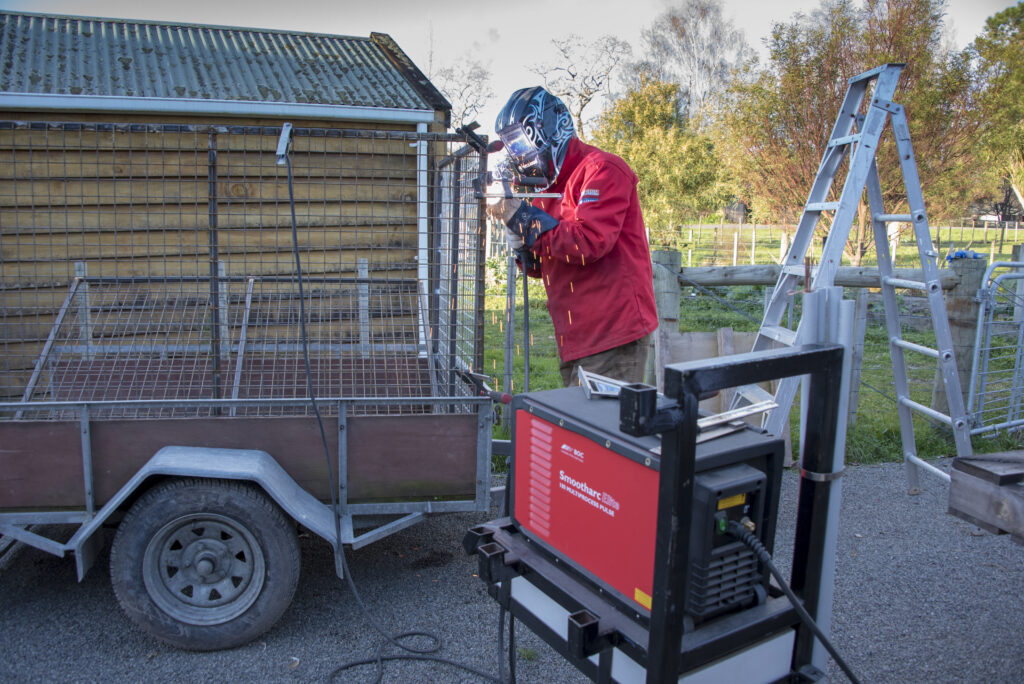
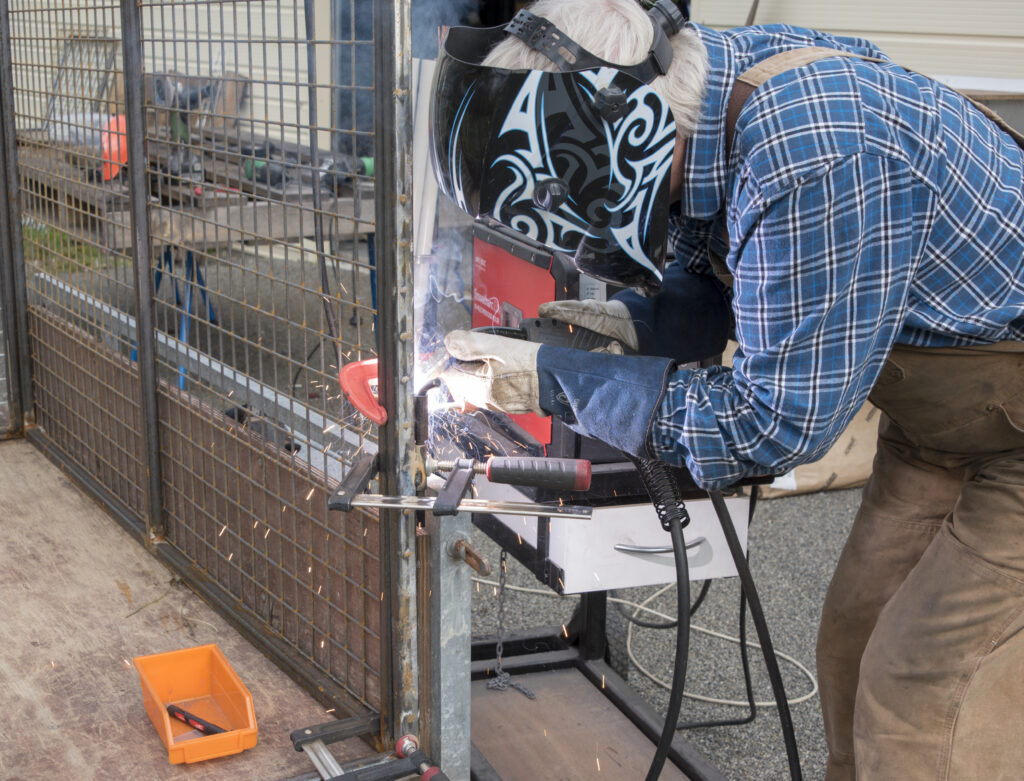
I elected to weld the parts together with gasless flux core wire, specifically BOC SmoothCor™ GS. I figured that the size of the crate would mean it was easier to work outside. Any kind of breeze can make gas-shielded welding ineffective especially outside so it was a no brainer really. Flux core is similar to stick welding where the stick carries a chemical that ignites from the arc and generates a gas that effectively shields the weld. In the case of flux core, the wire is hollow and contains the chemical that shields the weld like an arc rod turned inside out.
The flux contains deoxidisers that scavenge oxygen out of the weld to produce a clean, solid weld. Slag forms over the weld as it cools to protect it from the atmosphere. The flux also contains arc stabilizers to produce a smoother arc and less splatter and vapour-forming compounds, which provide the gaseous shield needed to protect against oxidization. The wire itself contains more alloys of carbon, manganese, and silicon than normal wires for stiffness and better weld-metal properties. The gasless, flux-cored process does not have as fast a deposition rate as hard wire or flux-cored wire using a shielding gas.
Gasless flux core does have a reputation for being able to weld over painted or rusty surfaces. It will handle galvanised surfaces, except for the heavy depositions that hot-dip galvanising leaves.
Polarity
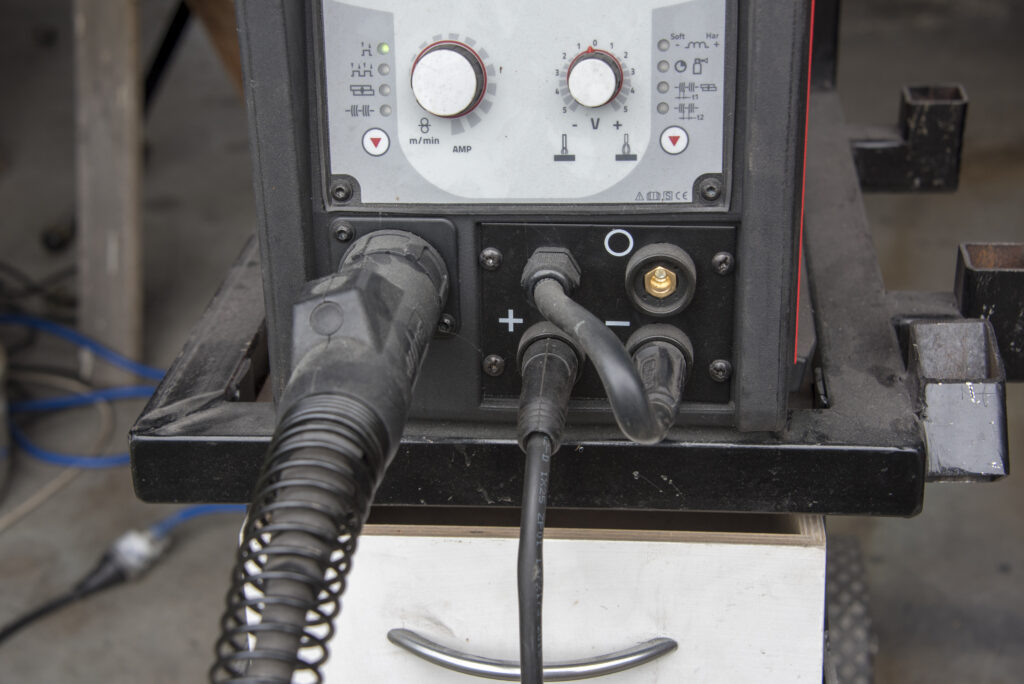
The first thing you need to do for gasless welding is to reverse the polarity. The earth is now positive, and the electrode is negative. On my machine there is a synergic setting for gasless wire but it is set up for 0.9mm wire and I’m only using 0.8 mm. I figured it would work anyway and it did. I found it better to tune the machine to weld for about 2.6mm instead of the usual 3mm. That tended to slow the deposition down enough so that I could work easier with it without burning through.
Be careful that you don’t crush the wire in the wire feeder. If you are changing from solid wire, back the tension a few turns or reset it so the tension is just enough to get the wire feeding, then add another quarter turn.
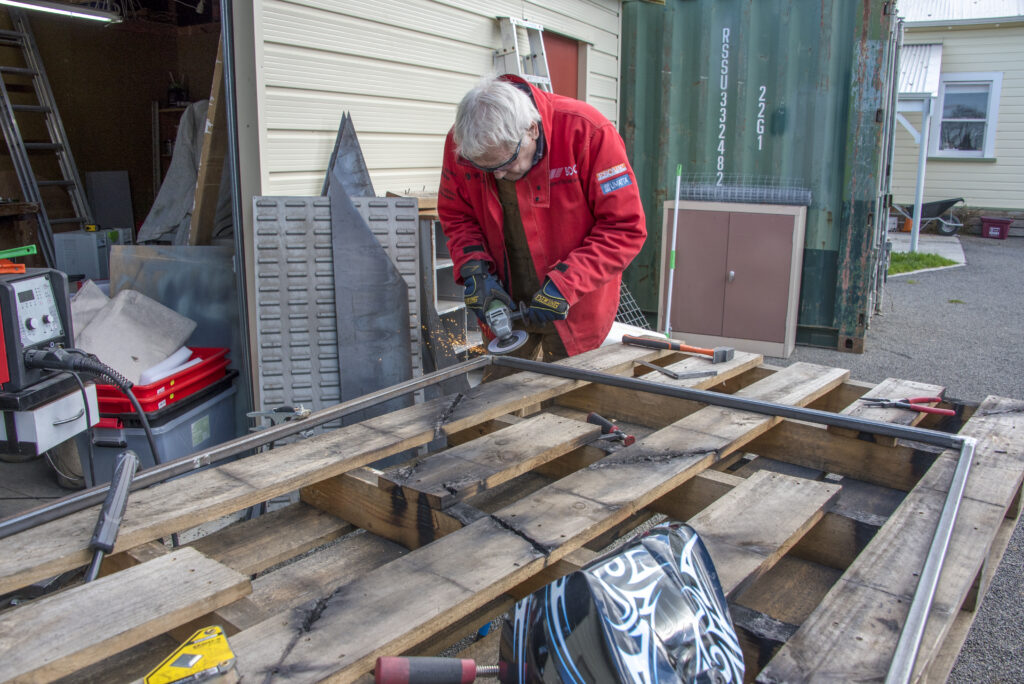
Gasless wire is exactly like arc welding in that the weld leaves slag that needs to be cleaned off. You can’t simply weld over a bad joint. It must be cleaned first, either with a slag hammer or a wire brush, although I found I didn’t have to use the hammer much. I tended to grind off the welds before welding over runs. Because it does leave a slag you must alter your technique to drag not push the weld puddle – if it’s slag you drag – as you would for arc welding.
Getting started
I ordered some 25mm square tube as I’m only dealing with fairly small livestock. I had initially also ordered galvanised steel mesh, not thinking what a pig it would be to weld, but more of that later. Fortunately, I only ordered two sheets of it and ordered black steel for the other two.
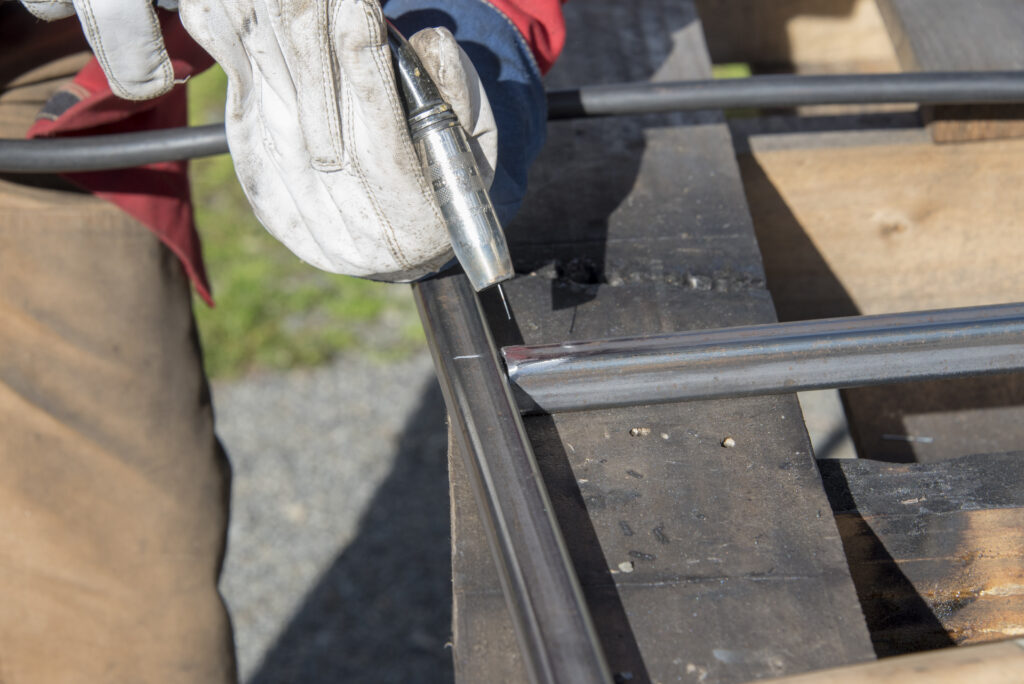
I started by cutting the steel for the two sides and one end. The internal sides of the trailer are 1800mm, so I made the sides of the crate 1750mm to allow for the depth of the ends. In the end, I made one end fit inside the sides to give me more room at the tailgate end.
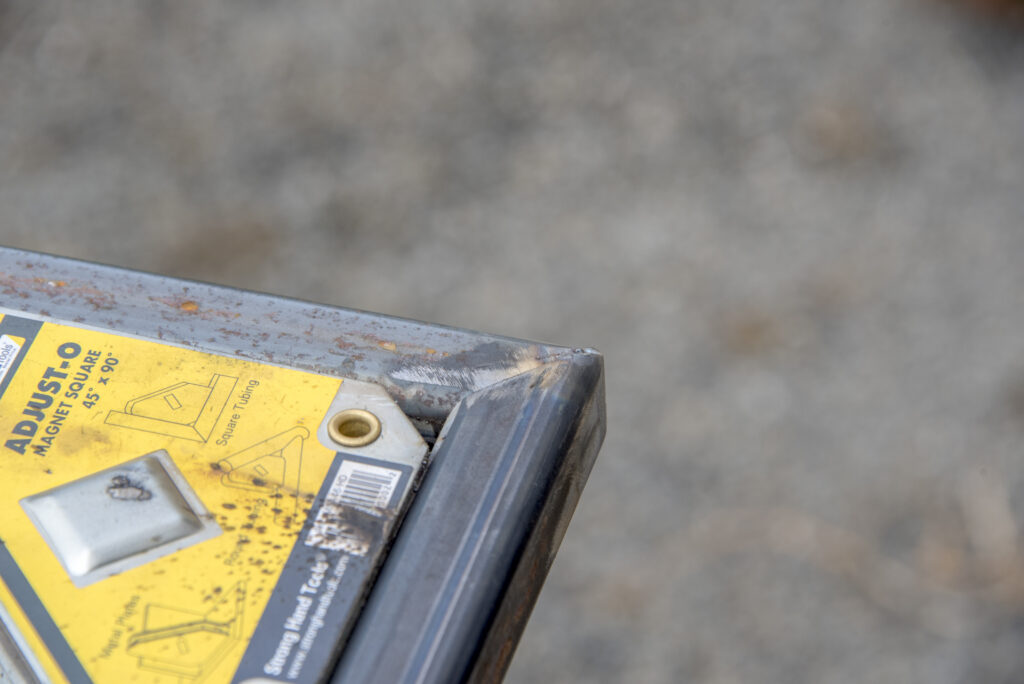
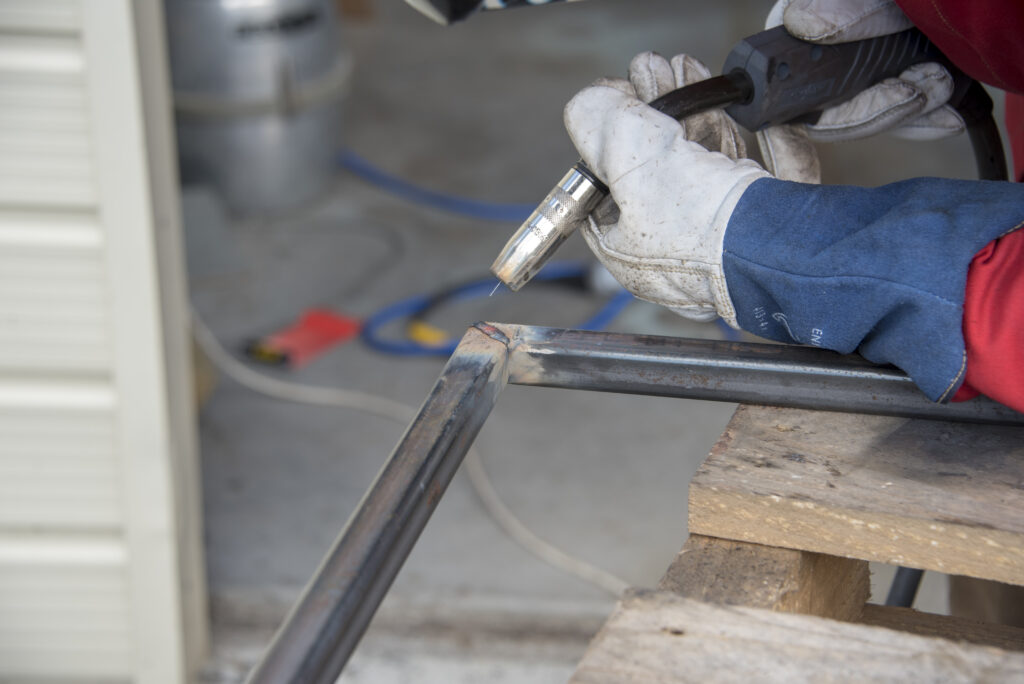
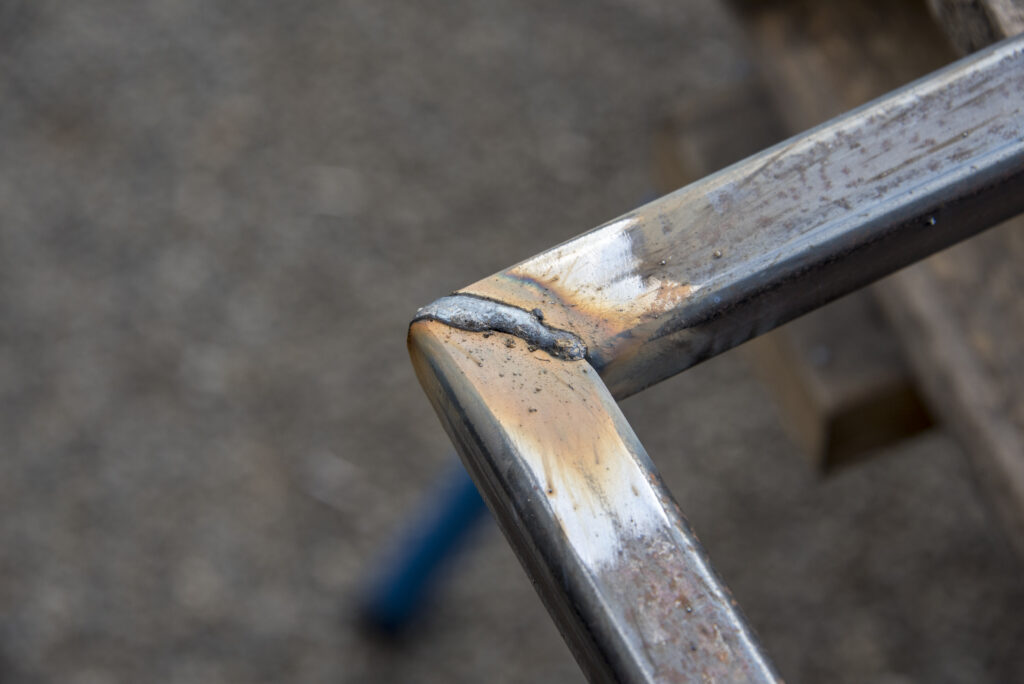
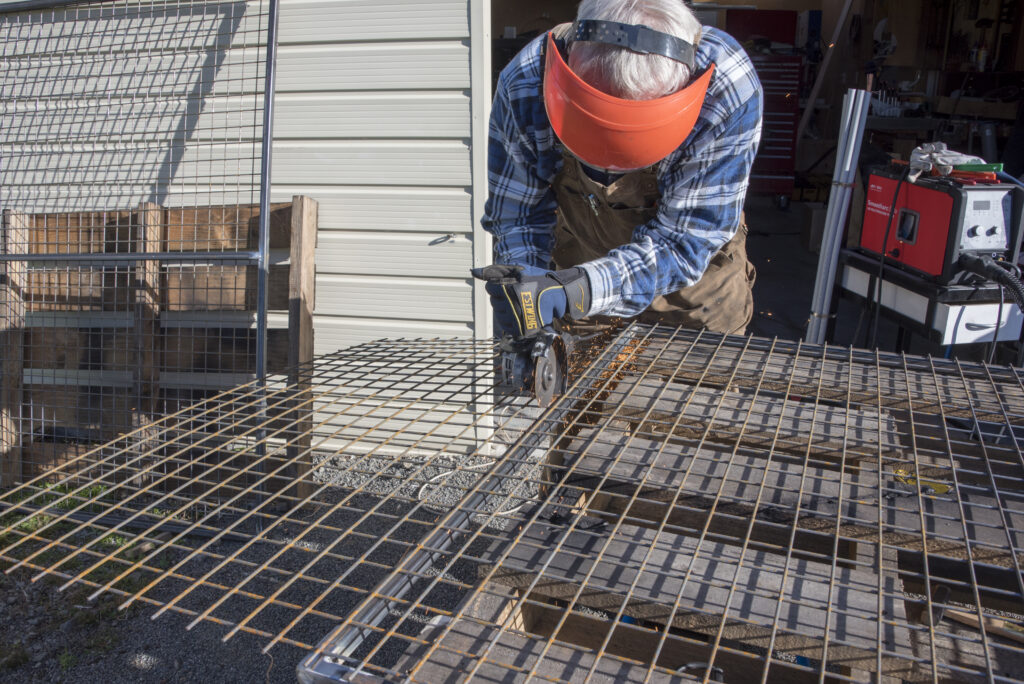
The sides were uneventful. I cut them to size, squared them up, stitched them together, and welded the ends. I have found that welding the outside edge of the mitre joint once you have the pieces tacked helps to prevent any distortion. The weld as it cools pulls the ends together but doesn’t tend to distort the joint.
I then turned the whole thing over and welded the seams on the other side. Then I turned it back to clean up the tacks and weld the seams again.
With the seams welded and cleaned up, I set the piece upright so I could weld the inside seams. Then it was simply a matter of placing the mesh, cutting it to size, and tacking the mesh to the frame. That took a bit of fiddling with the wire feed to get the right setting without burning through the 4mm wire of the mesh.
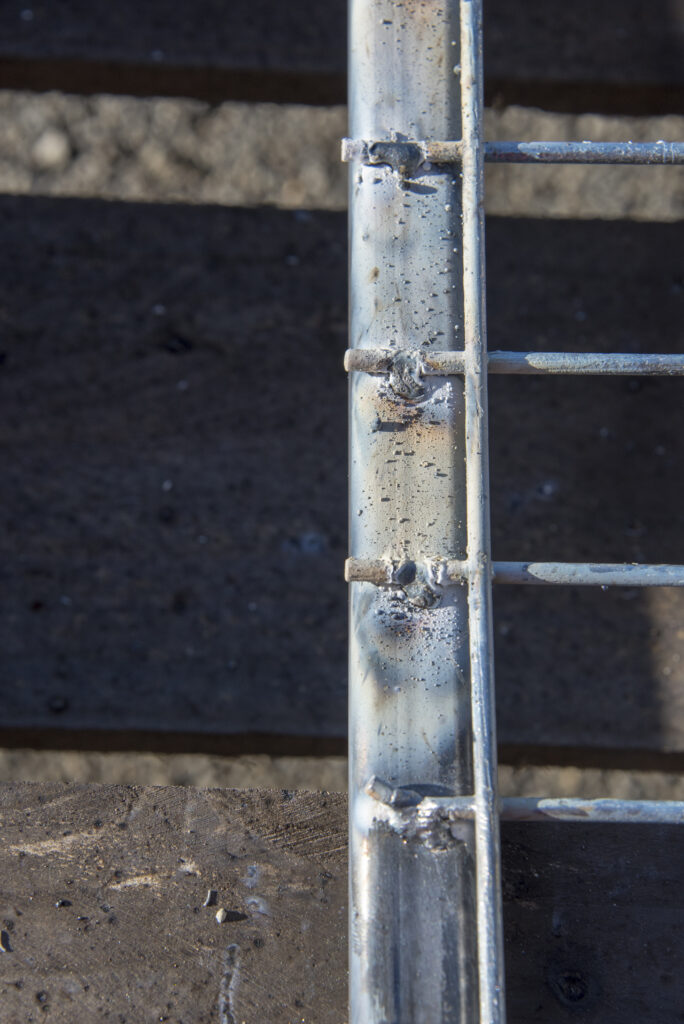
The end piece was similar, but this involved galvanised mesh. Worse, this was hot-dipped galvanised, so the zinc was quite thick and tended to bubble after the welding to create unsightly lumps, and bubble under the welds to make craters. I tried to remove as much of the zinc as possible with a wire brush mounted on my angle grinder, to little effect. It just tended to shine the zinc.
Hinges
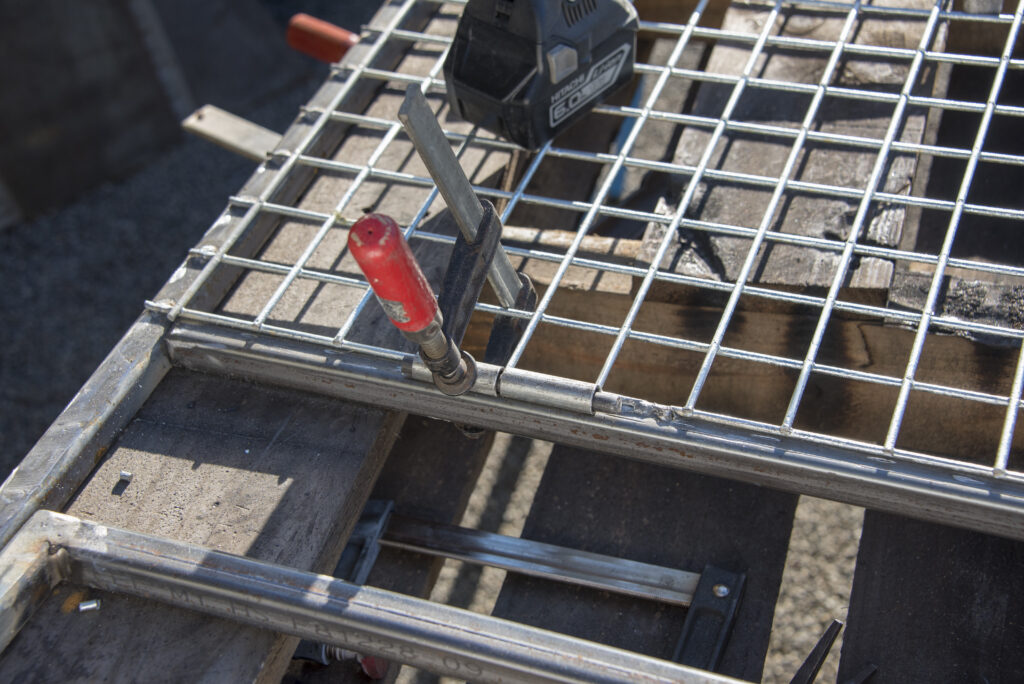
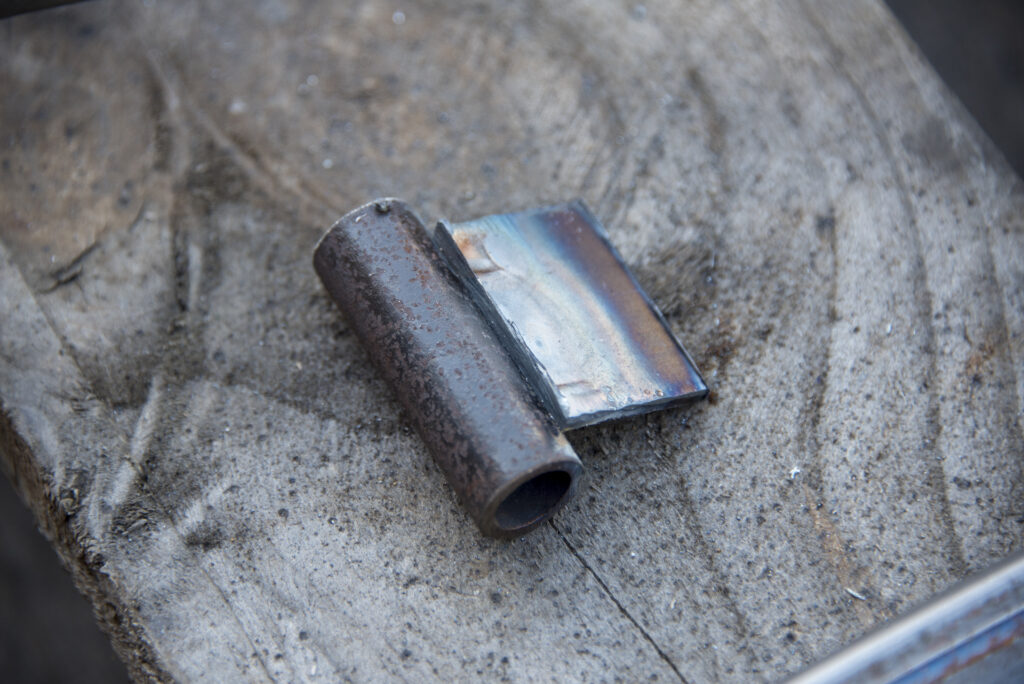
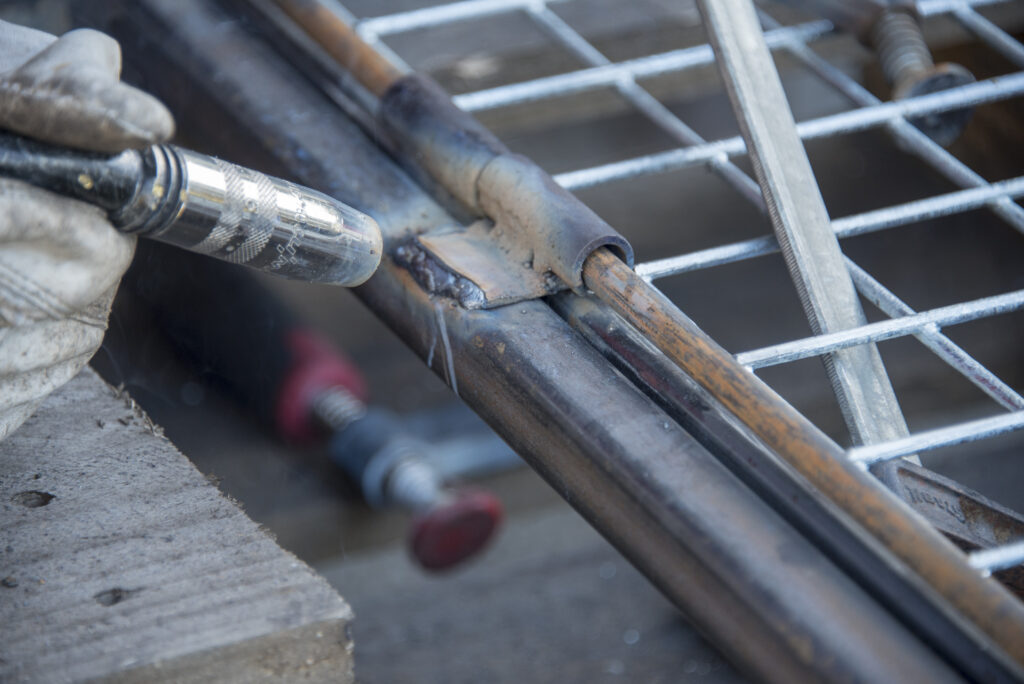
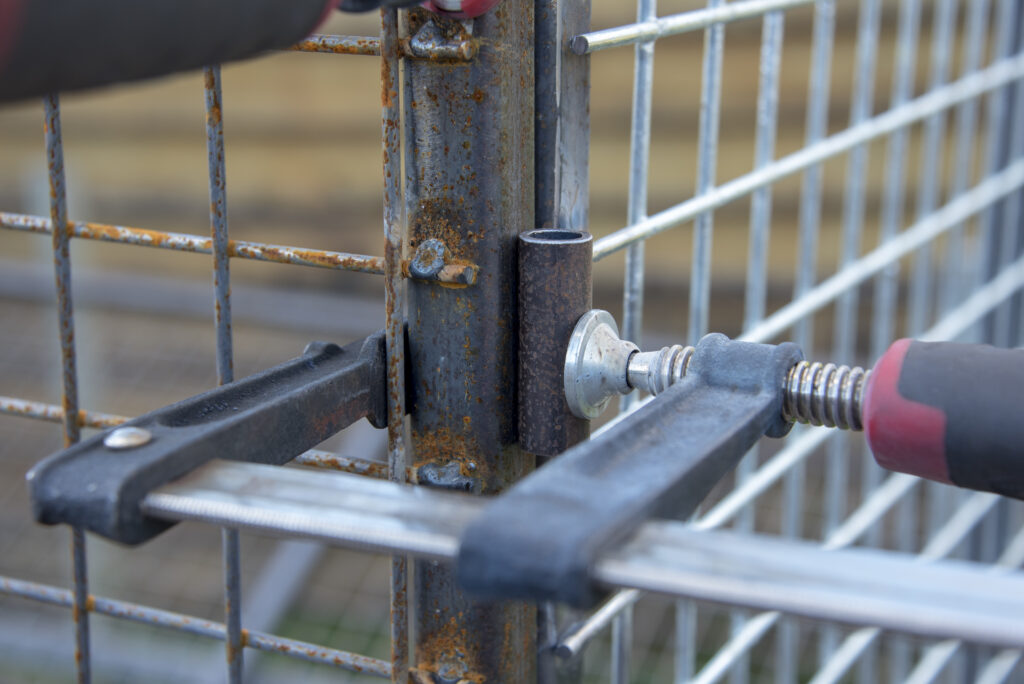
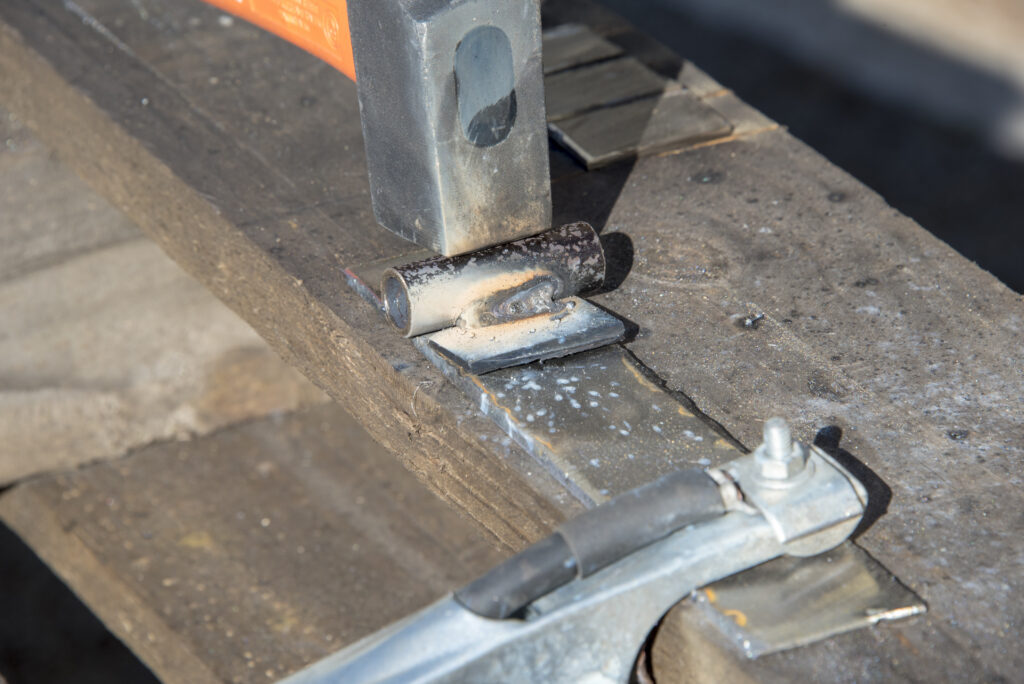
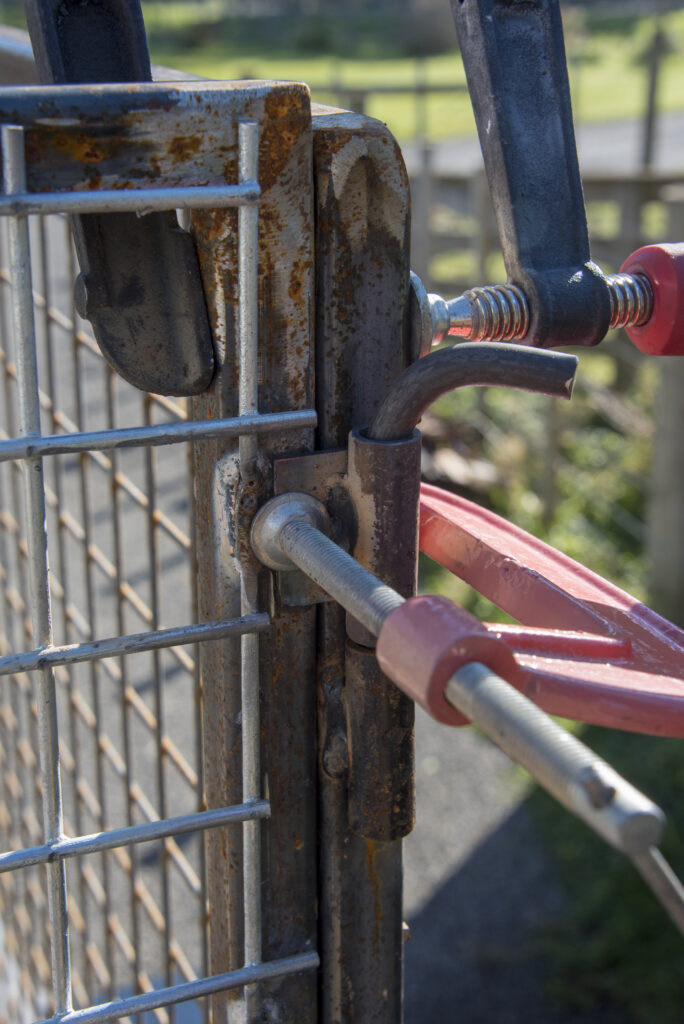
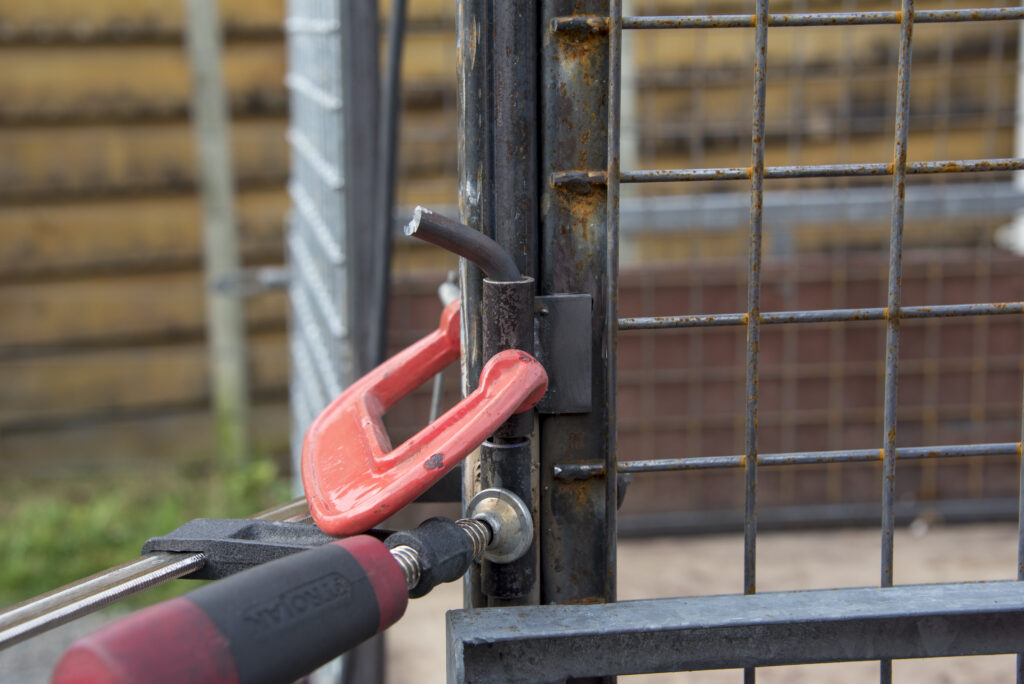
The front section contains a door that was intended at first to be a sliding door. I elected instead to change it to a hinged door that fitted inside one half of the frame. To do that, I welded two pieces of 3 mm-walled tube to the middle support using a piece of rod to keep them aligned. I then added the matching piece for the door that required a piece of 3mm flat steel to offset it slightly and allow me to weld that to the door. I used the piece of steel rod to keep the door hinges aligned with the hinges on the frame. I welded the steel hinge to the tube and then welded the back after I had removed it from the rod.
Once the hinges were in place, I welded the mesh to the door.
I then tackled the hinges to hold the various elements of the cage together. I want to be able to remove this cage and store it so I used the same sort of pipe hinge that I used on the door on the sides – one pipe attached to one of the frames, and the other attached to a short steel extension attached to the side or end.
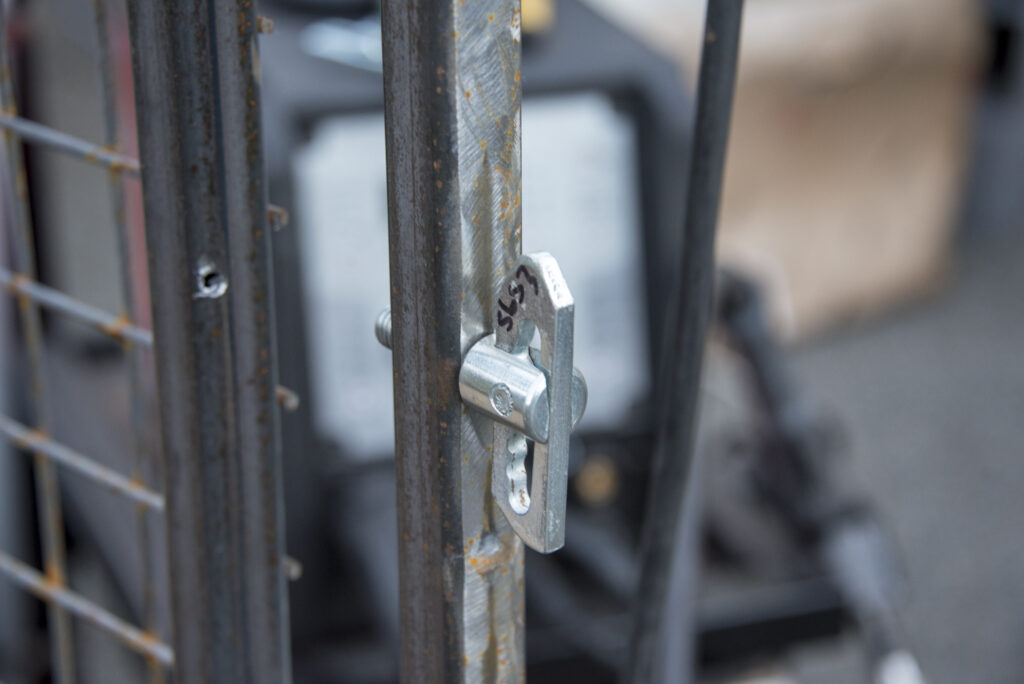
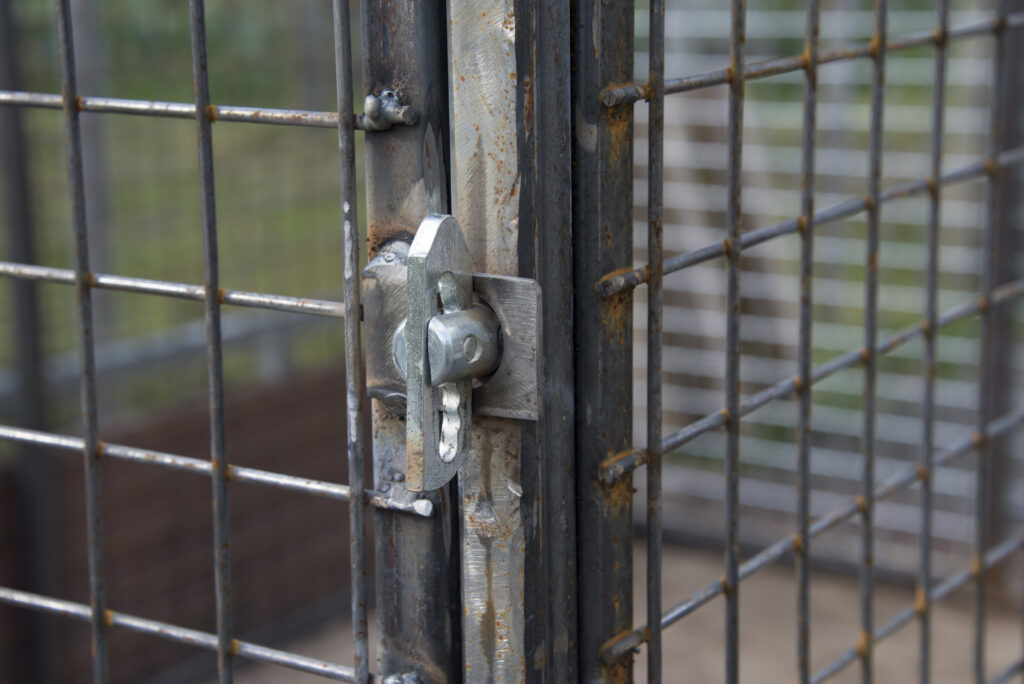
I intended to keep the door latched with a simple anti-latch drop lock as commonly found on trailers. The one I bought was meant to be screwed on, but that wasn’t going to be practical, so I drilled a hole large enough to accept it and tacked it in place while I cut the end flush with the cage end and welded it in place. You can in fact buy weldable locks but my supplier didn’t have any with a long enough tail. For the hasp, I cut a 20mm hole in a scrap piece of 3mm mild steel that I then welded to the door.
Holes
The last job was to disassemble the whole unit and drill 6mm holes at various places throughout the frame to allow air and steam to escape when it is hot dipped. Putting the holes on the bottom also ensures water can drain out later. Make sure there are no enclosed areas because the heat of the hot dip bath can cause the air to blow out explosively.
The final size of the cage means I have to remove the rear door of the trailer, but that is no real concern. I miscalculated the width of the end that fits between the sides because I forgot to account for the 4mm mesh added to each side. This meant I had to use a hammer to get it to fit. However, the upside is that it doesn’t really need much tethering to the trailer. Later, I will fit thinner sides to the trailer and alleviate the fit.
This is not the end of the process. The pieces will now have to be hot-dip galvanised, but the nearest hot dip is an hour and a half away with a two-week wait, so that is a job for another time.