
Racing motorcycles – the art of engineering

Chris Gordon has been devoted to the internal combustion engine since his earliest days, when his next-door neighbour was a motor mechanic. At 14, he was a crew member for Ron Collett, who successfully ran a Top Eliminator class dragster at strips throughout New Zealand. His Chris Gordon Racing Team won the 1998/99 125cc New Zealand Road Racing Championship, with well-known rider Dennis Charlett riding a Honda RS125 that Chris owned and prepared. Chris and his team ran the bike in the 125cc class at the Australian MotoGP at Phillip Island in 1999. Chris has also, from a very early age, made things: models, an electric bicycle, an electric go-kart; a fibre-glass, road-registered, scratch-built car; and a 500cc V8- powered grand prix racing bike. He has a minimalist approach to tools and equipment, but to make the racer’s V8 engine, he had to buy and master a small lathe and a serious, large and highly capable milling machine. The alternative would have been to get the machining and development done professionally. Chris calculates that this would have involved thousands of hours of very expensive machine time – say, 3000-plus hours at $100 per hour. That’s a lot of money.

Chris Gordon uses skill and artistry to make racing motorcycles in his shed. 
By Ritchie Wilson
Photographs: Ritchie Wilson

Chris Gordon has been devoted to the internal combustion engine since his earliest days, when his next-door neighbour was a motor mechanic. 
At 14, he was a crew member for Ron Collett, who successfully ran a Top Eliminator class dragster at strips throughout New Zealand. His Chris Gordon Racing Team won the 1998/99 125cc New Zealand Road Racing Championship, with well-known rider Dennis Charlett riding a Honda RS125 that Chris owned and prepared. Chris and his team ran the bike in the 125cc class at the Australian MotoGP at Phillip Island in 1999.
Chris has also, from a very early age, made things: models, an electric bicycle, an electric go-kart; a fibre-glass, road-registered, scratch-built car; and a 500cc V8- powered grand prix racing bike. He has a minimalist approach to tools and equipment, but to make the racer’s V8 engine, he had to buy and master a small lathe and a serious, large and highly capable milling machine. The alternative would have been to get the machining and development done professionally. Chris calculates that this would have involved thousands of hours of very expensive machine time – say, 3000-plus hours at $100 per hour. That’s a lot of money.
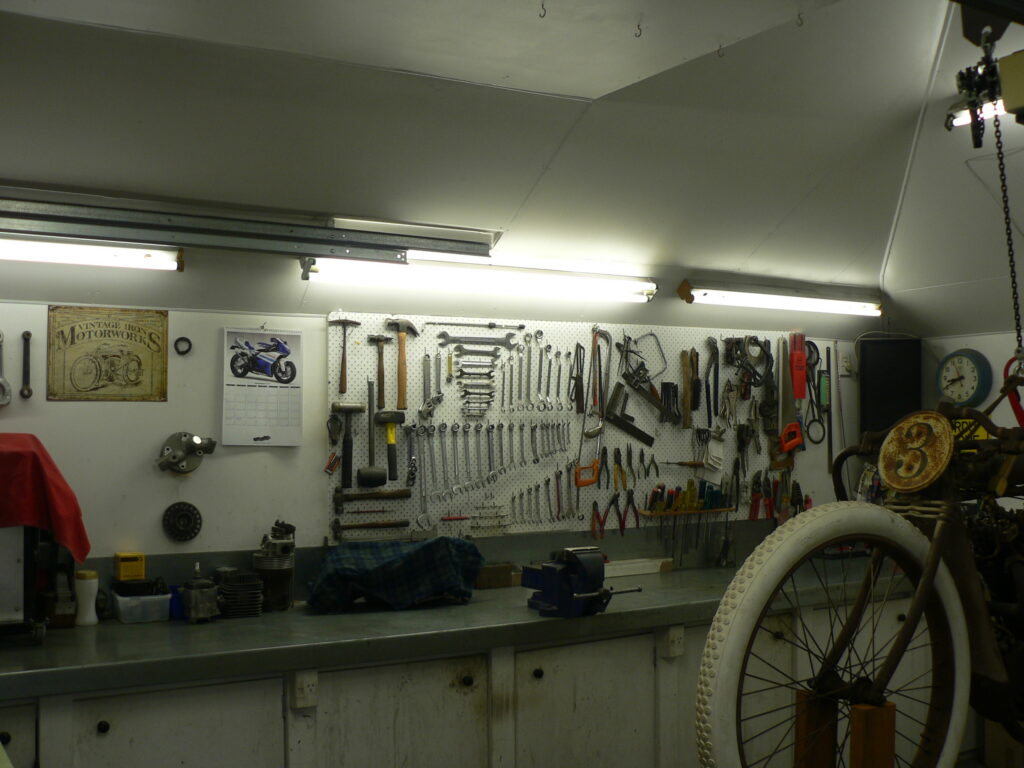
Chris is outstandingly well organised, and his workshop is a model of thoughtful planning. Partially, this is a result of his racing background – you need to be able to access the necessary gear immediately at the track, and there is no place for not-needed stuff. It is also a reflection of his practical approach: “I can make a mess, but I can’t work in a mess.” 

Chris doesn’t race bikes himself, he enjoys building them

Development of the V8 racer
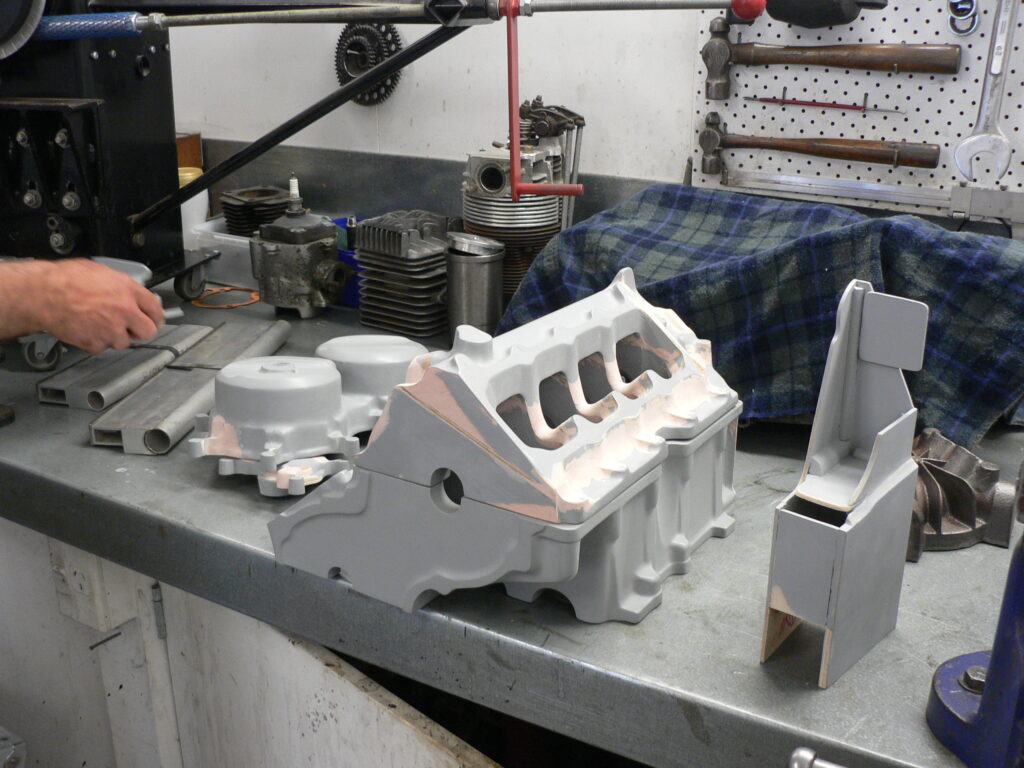
Chris has an ongoing interest in the use of multiple engines in a bike and came up with the idea of making a 500cc V8 engine by mating two 250cc four-cylinder engines. The donor inline-four motors chosen were Kawasaki ZXR250s, which can rev to 20,000 rpm, complete to their crankshafts. These were bolted to castings, which Chris made the moulds for, and machined. The original sump is retained at the bottom of the engine. Gears at the end of each crankshaft drive the common clutch. The meshing of these gears is arranged so that the combustion impulses don’t coincide, making the engine run smoother.
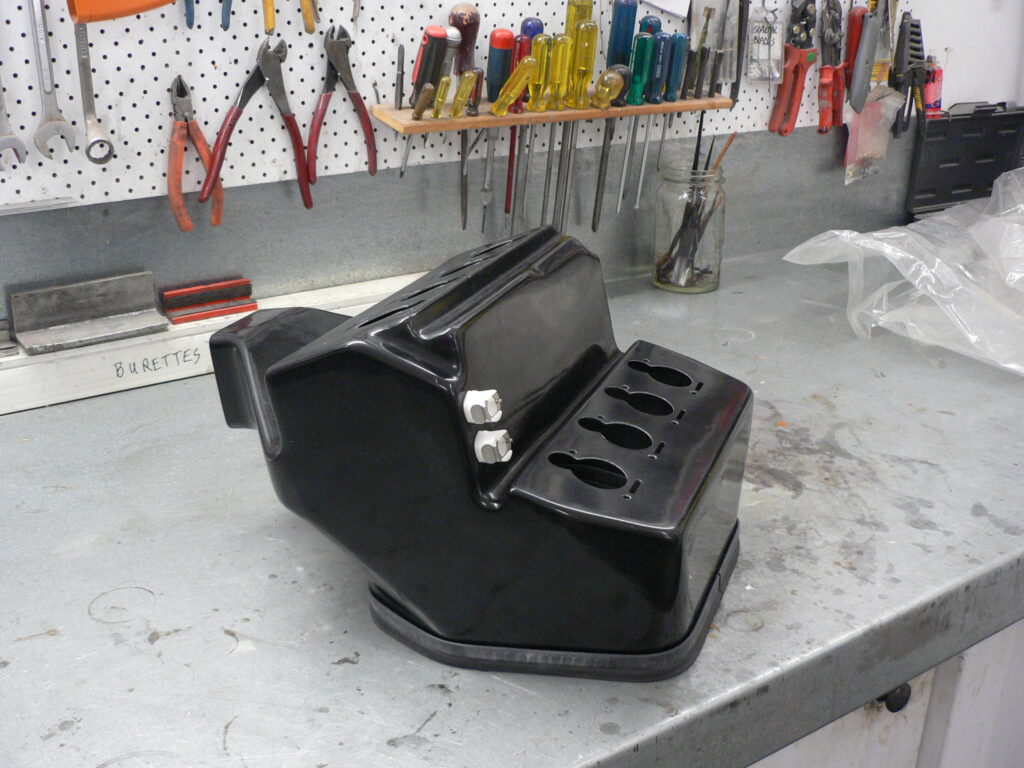
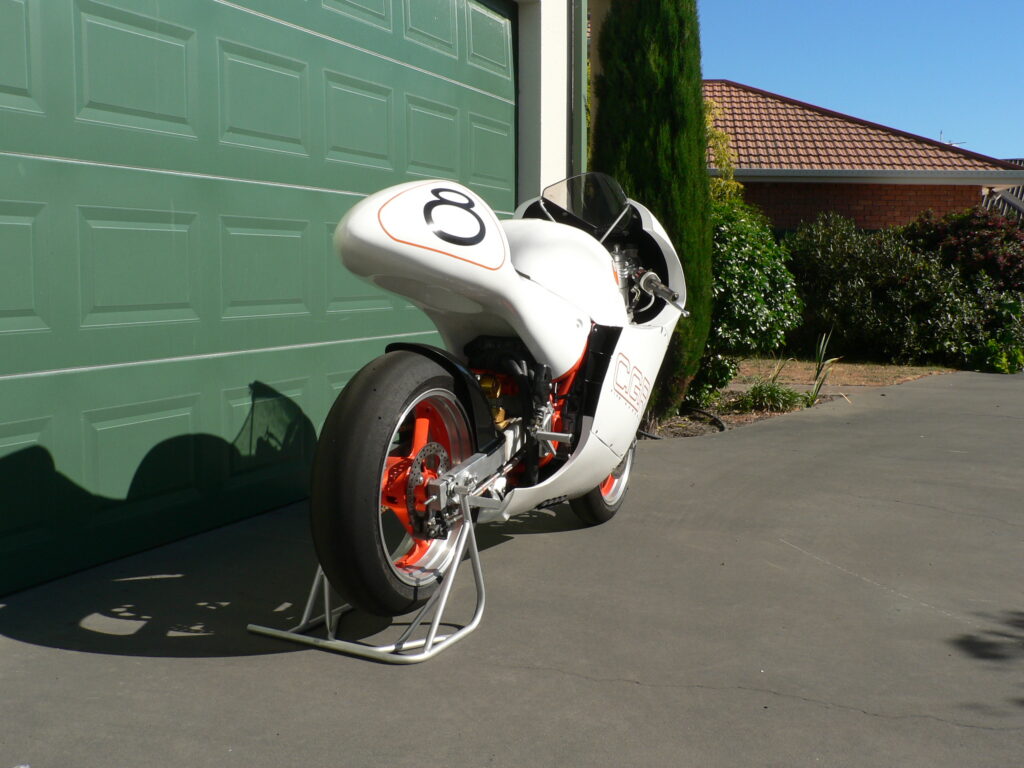
Having made an engine, the next step was to make a bike for it to power. This required more work than Chris is happy to recall, but the immaculate fibreglass petrol tank and fairings reflect his skill and painstaking approach.
Chris doesn’t race motorcycles himself and so would have had to let someone else compete on the bike. This brought the issue of his personal liability should an accident occur. The inevitable blowback from an accident involving a machine which he had made the vast majority of was not something he was prepared to contemplate. So the racer has never raced. 
For his next project, Chris decided that something much slower would have fewer legal risks. A friend was building a replica of a 1920s board-track racer, and this appealed as something which could be built from easily available materials, but would be a significant technical challenge. 
Chris would have liked to have been born in 1880 so that he would have been able to produce bikes at the dawn of motorcycle racing, before World War I, when the fastest form of racing was on the board-track racers that competed on banked, oval, wooden motordromes.

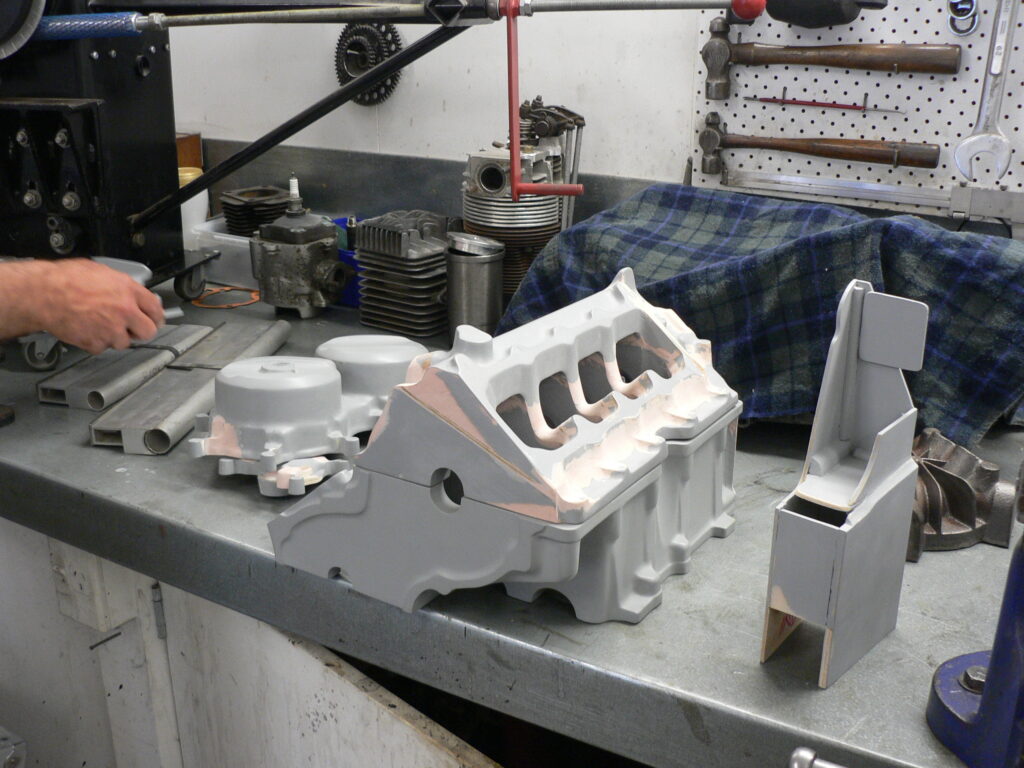
One of the many jigs Chris made. In this case, for the machining of the V8 racer’s crankcase
The crankcase patterns for the V8 engine

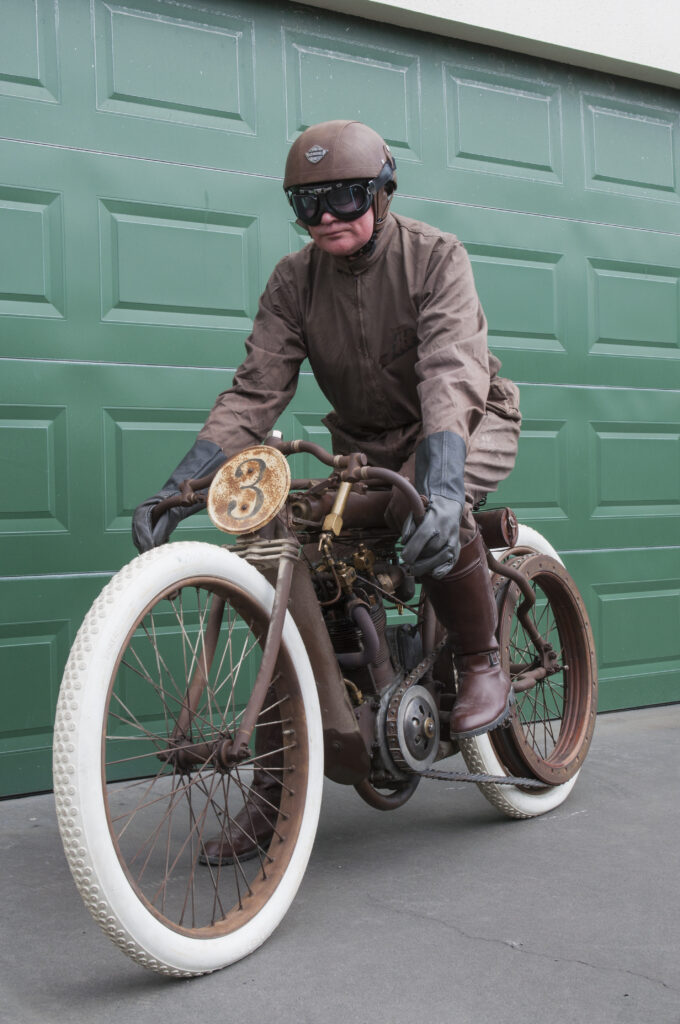
Board track racer 
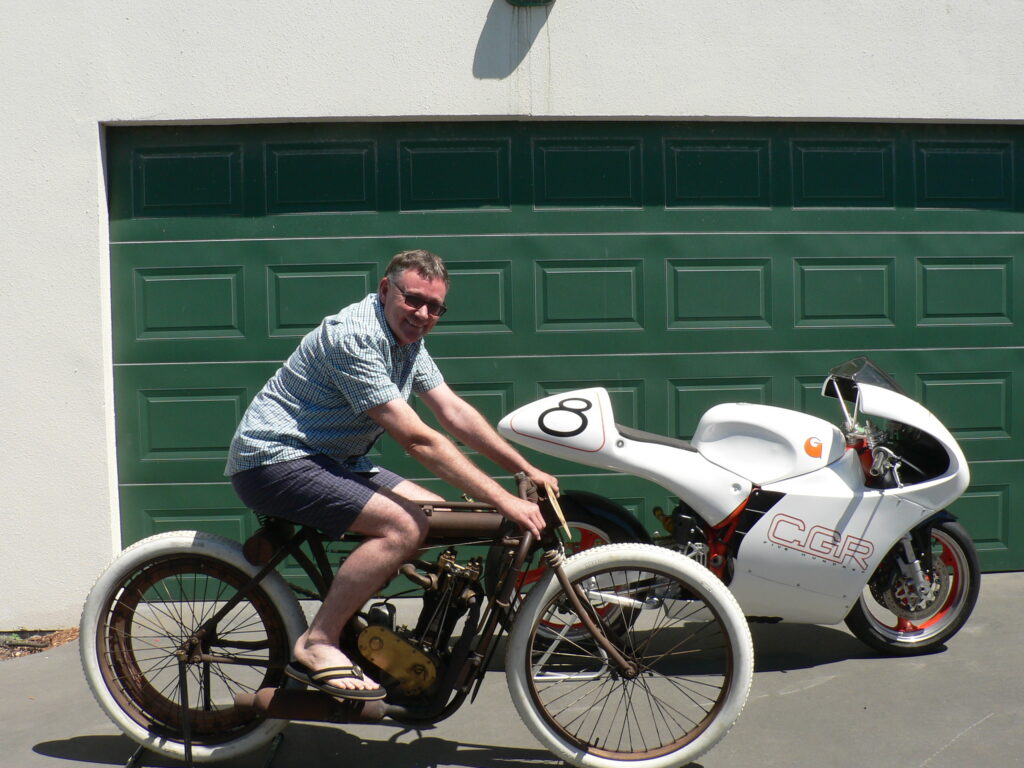
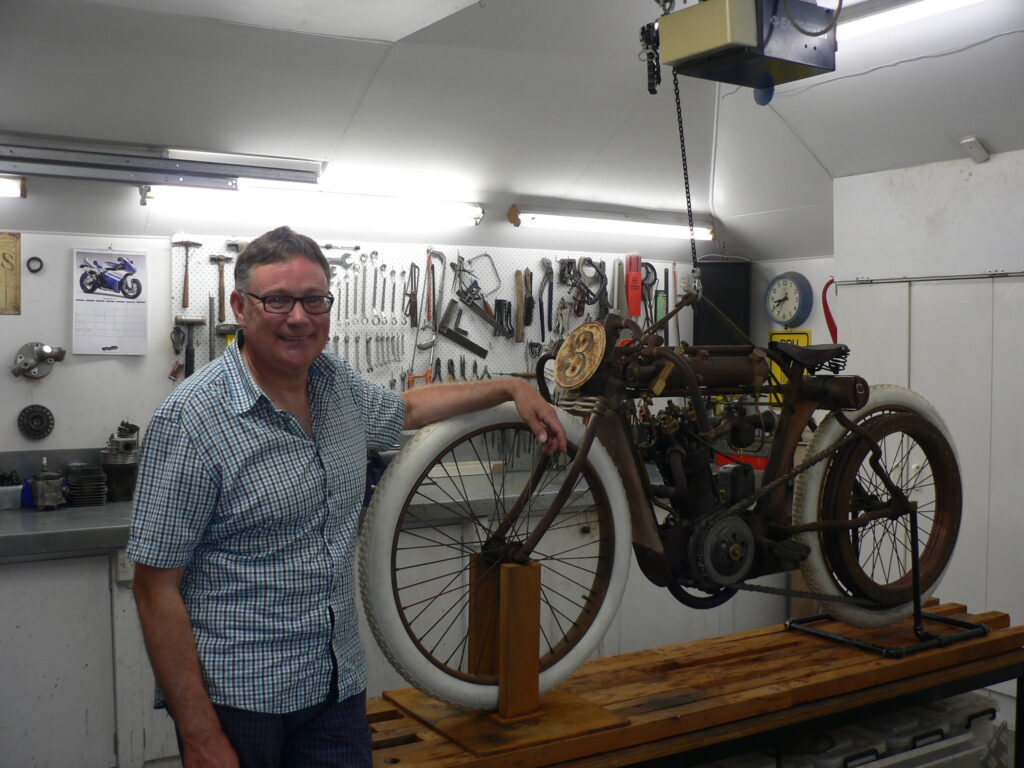
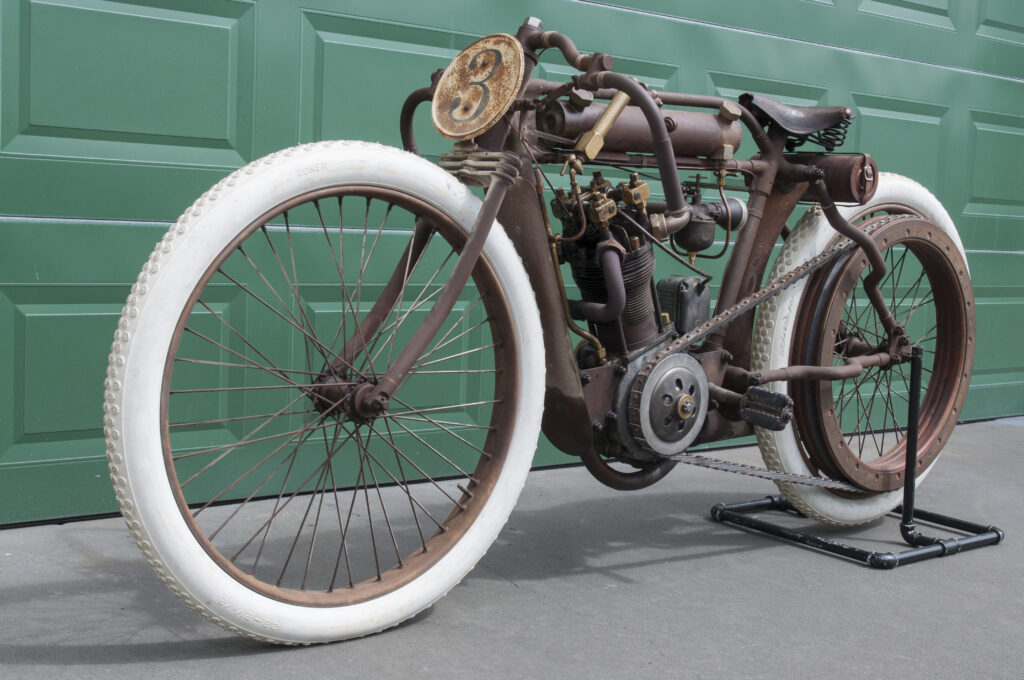
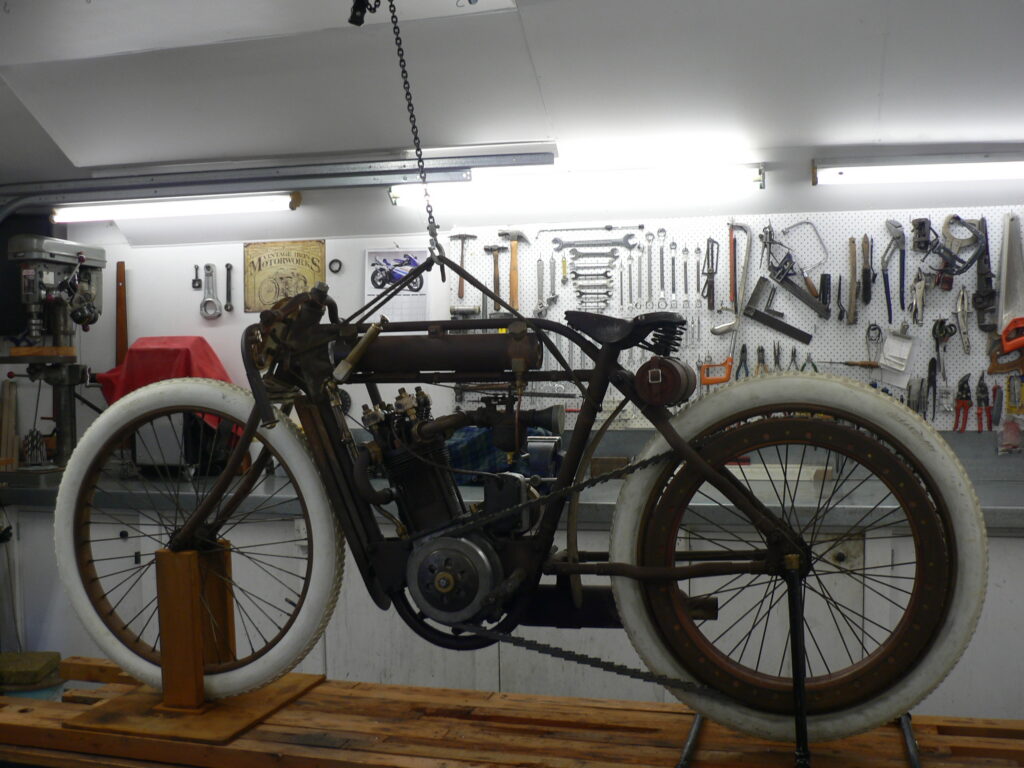
The only part of the board-track racer that Chris made, which dates from the early part of the last century, is the J.A.P. crankcase and crankshaft. J.A.P. engines were made by J. A. Prestwich Ltd in England from 1895 to 1963. The rest is new, purchased locally and online.
The wheels and tyres are new and are the most expensive parts of the racer. They were imported from America, where a genuine Board Track Harley-Davidson can fetch more than $200,000. Professionally made replicas are available in America from $27,000.
Chris started with old photographs of racers and, taking the wheels as a guide, scaled the images up to arrive at the dimensions of his machine.
The frame is constructed of seamless mild steel tubing brazed into bracketry made by Chris from solid steel. First, the pieces were turned to size on the lathe, then notched on the mill, then temporarily bolted together, and finally TIG-welded together.
The eye-catching handlebars were bent on the tube-bender Chris constructed when making the V8 bike, and incorporate an ingenious throttle mechanism using rods. As the handlebars are turned, a sliding section stops the throttle setting from changing.
The engine is based on a 1908 250cc J.A.P. crankcase and crankshaft, a VW Beetle cylinder and piston, and a Chinese-made connecting rod, which is a copy of a very early Harley-Davidson one. Chris designed the head with its exposed valve gear and four valves. It was cast by CanCast in Timaru and machined by Chris. The valves and springs are Honda copies, the rockers are modified Lifan, and the pushrods are fabricated from silver-steel shafting. He is at a loss to understand why the valve gear was exposed on the original racers, as the weight of an effective, oil-tight cover would be minimal. The dusty environment of the board-tracks would have promoted rapid wear. His best guess is that it was fashionable.

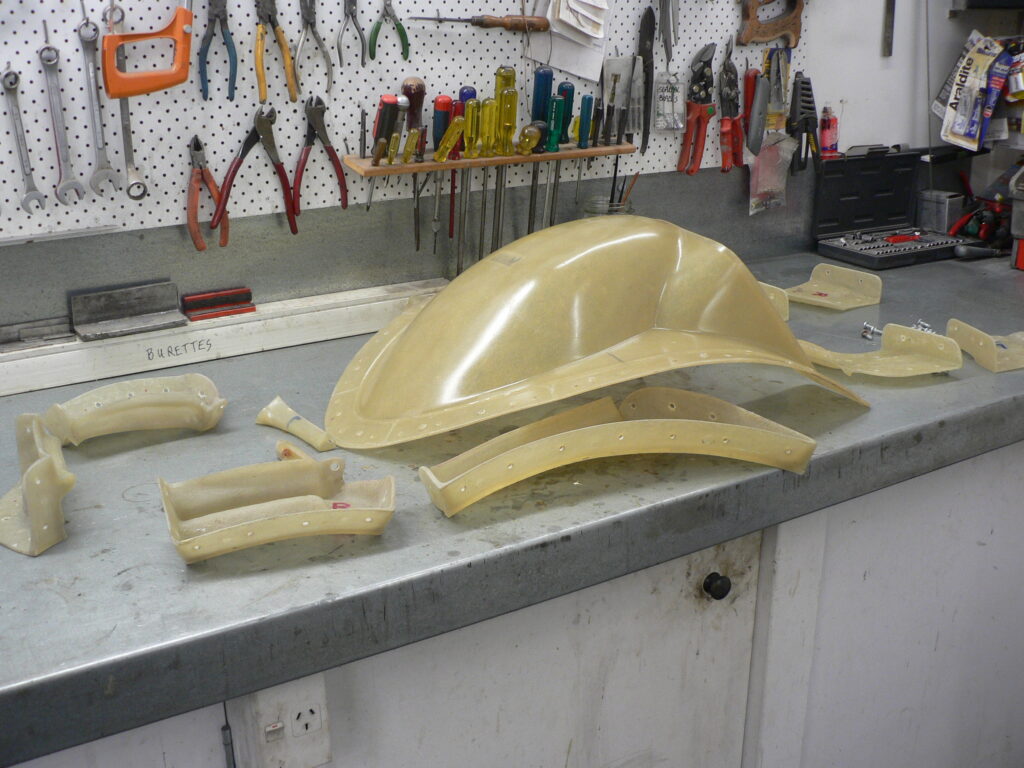
Chris assembling the mould for the V8 racer’s glass-reinforced-plastic (GRP) (fibreglass) petrol tank
The 11 component pieces of the petrol tank mould
The V8 racer’s fabricated GRP airbox

Is it real or is it a copy?
I first saw Chris’s replica board-track racer at this year’s New Brighton beach race, where it was surrounded by an admiring crowd, despite the presence of literally hundreds of fascinating two-wheelers, and a smattering of very desirable four- wheeled devices.
Even very knowledgeable observers were unsure if the bike was the real thing or a copy. The most discussed aspect of the replica was the flawlessly aged patina of the steel frame, which was gratifying to Chris because he had gone to extraordinary lengths to achieve the correct look to the bike’s finish.
The frame tubes were sanded, painted, assembled, the visible paint sanded off, a chlorine solution lightly sprayed on, left to oxidise the surface of the steel, and, when dry, wiped with an oil-soaked rag. The resulting finish is exactly what you would expect to see on a hard-used racing machine after more than a century had passed. Anyone working on it would see the original paint finish when the frame was disassembled. 
The mock tool roll attached to the vintage leather saddle is turned from wood recycled from a hardwood pallet. It contains the battery and the electronics of the ignition system, which were purchased online.
The drive from the engine to the rear wheel is by belt. The belt, manufactured for the emergency repair of industrial drive belts, is made from rectangles of polyurethane riveted together, originally bright orange in colour. It drives a period-correct large pulley, also made from recycled pallet wood, which is attached to the rear wheel by brass plates. The large diameter of the driven pulley gives a high gearing, which means the slow-revving engines of the 1910s could power the racers around the banked wooden tracks at lethal speeds.
The bike has no brakes, only one gear, but, unlike an original example, it does have a clutch. This is a copy of the clutch from the celebrated Honda GY6 scooter, which is now produced in China in vast numbers, so parts are remarkably cheap.

The GRP body of the V8 racer

Motordromes
The dangers of racing these machines at the motordromes were numerous. The speeds were high (well over 100mph), tyres were outstandingly unreliable, safety equipment consisted of goggles and a thick jumper, brakes were non-existent, the surface could be slippery with oil from the total-loss oiling systems, or break up into holes and nightmarish splinters. If you went too fast, you could slide off the upper edge of the banking to your doom – hence the expression ‘over the top’. There was probably also an expression for being impaled by long splinters of wood from the track, but it hasn’t survived.
Some motordromes used 100x50mm boards on the edge, and others were 300x25mm. The amount of banking on the turns varied from 30° to more than 60°. The spectators sat at the top of the track, looking down on the racing, and were in great danger – competitors losing control and sliding over the top would land in the crowd. Deaths were a regular occurrence. At one race, four young boys were killed when a riderless bike struck their heads as they leaned out over the edge of the track. 
The popular name for the tracks was ‘murder-dromes’. In America, from the end of the 1920s, motorcycle racing increasingly took place on dirt tracks, which were not only safer but didn’t need to be extensively rebuilt every few years. The Indianapolis banked oval, dating from 1909, has survived because it was made of brick. Brooklands in England, opening in 1907, was concrete, and it only closed when World War II broke out in 1939.

The artist and his work
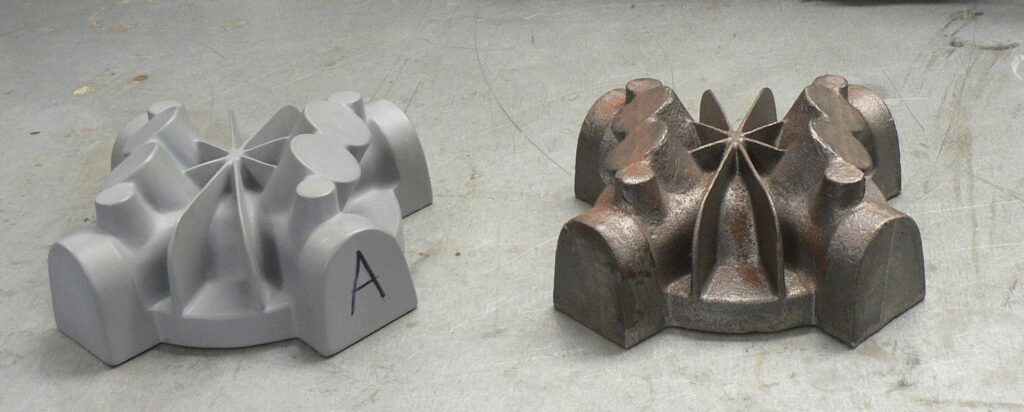
The wooden pattern for the head of the board-track racer’s engine (left) and an unfinished cast iron head (right)

Motordromes

Year opened

Speedway

Length

Racing Surface

1907

Brooklands, England

4.4km

Concrete

1909

Indianapolis, America 

4km

Bricks

1910

Los Angeles, America

1.6km

Wood

1929

Western Springs, Auckland

0.4km

Mildly banked clay

1949

Aranui, Christchurch

0.4km

Gas-works cinders

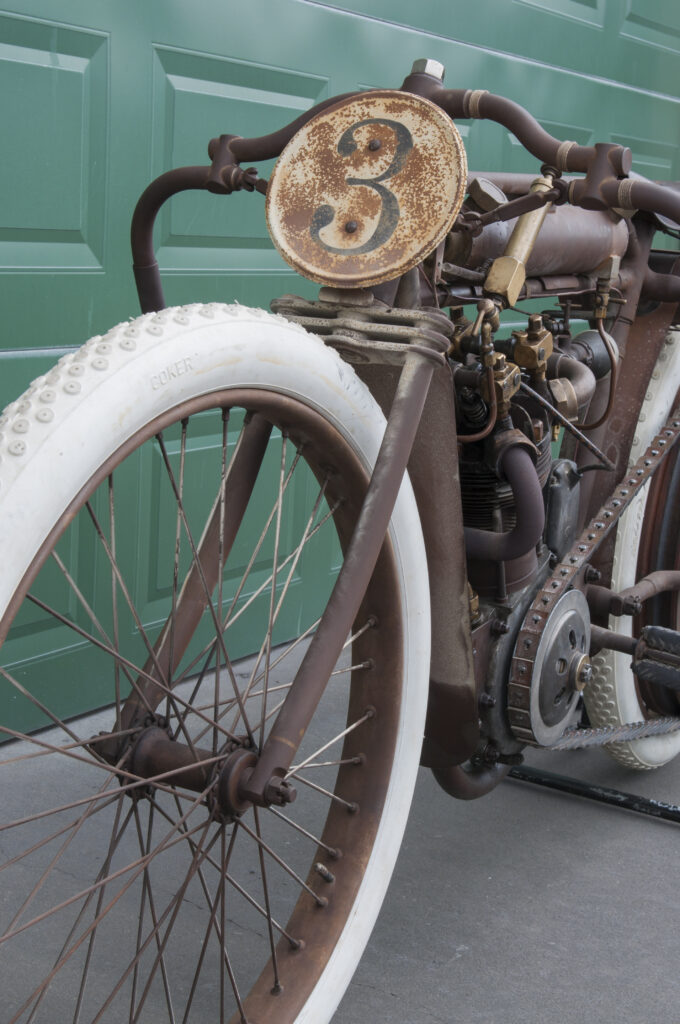
The reproduction racing number was made from an old biscuit tin. The rods controlling the throttle can also be seen

The workshop
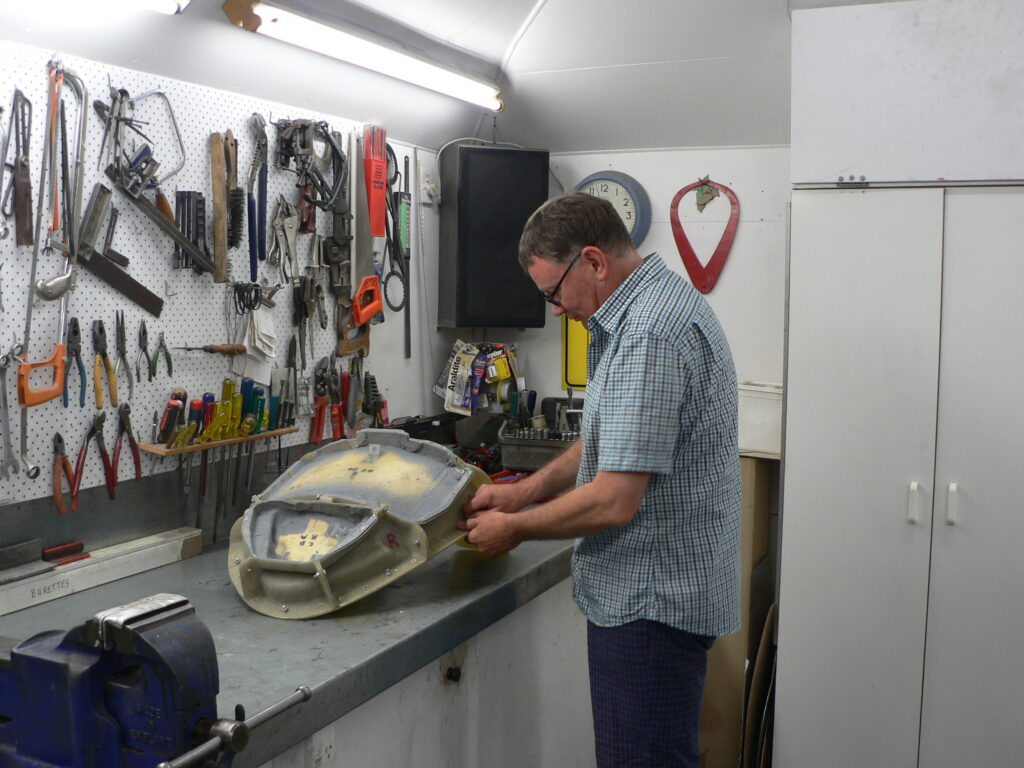
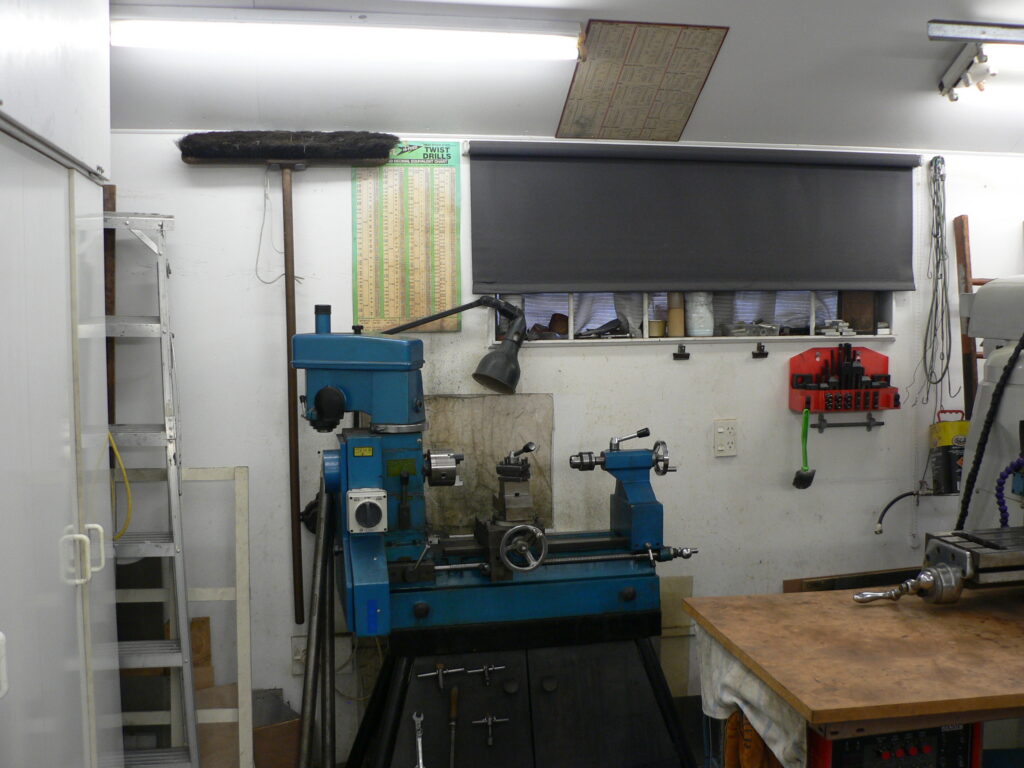
The neatness and organisation of Chris’s workshop reflect his no-nonsense approach to things mechanical. He has also extensively worked in fibreglass, which is unrivalled in messiness. As a result, his machine tools are carefully shrouded in cloth covers, and most of his gear is safely stored in cupboards. Surfaces are regularly cleaned. The only cleaner workshop I have seen is the Vespa repair depot in Hanoi, Vietnam, which could have served as a hospital operating theatre.
He has a metal-covered bench running the length of the south side of his workshop. Floor-to-ceiling cupboards are on the west side; his lathe, milling machine, grinder, door, fire extinguisher, and phone are on the north side. The east side has his drawing table with the double door behind it. 
His quick-release vice – a boon when working alone – tube-bender, and racing tool-box are on the bench; with a tool board above. A Rolls-Royce Merlin engine part is, perhaps, a clue to Chris’s next project. 
Chris would like to thank the New Zealand Electricity Department and its world-class tutors for giving him a comprehensive technical education while paying him. He was taught skills and, even more importantly, attitudes which have allowed him not only to earn a good living and compete at the highest level in motorcycle racing, but also to complete projects which are equal parts engineering and art.

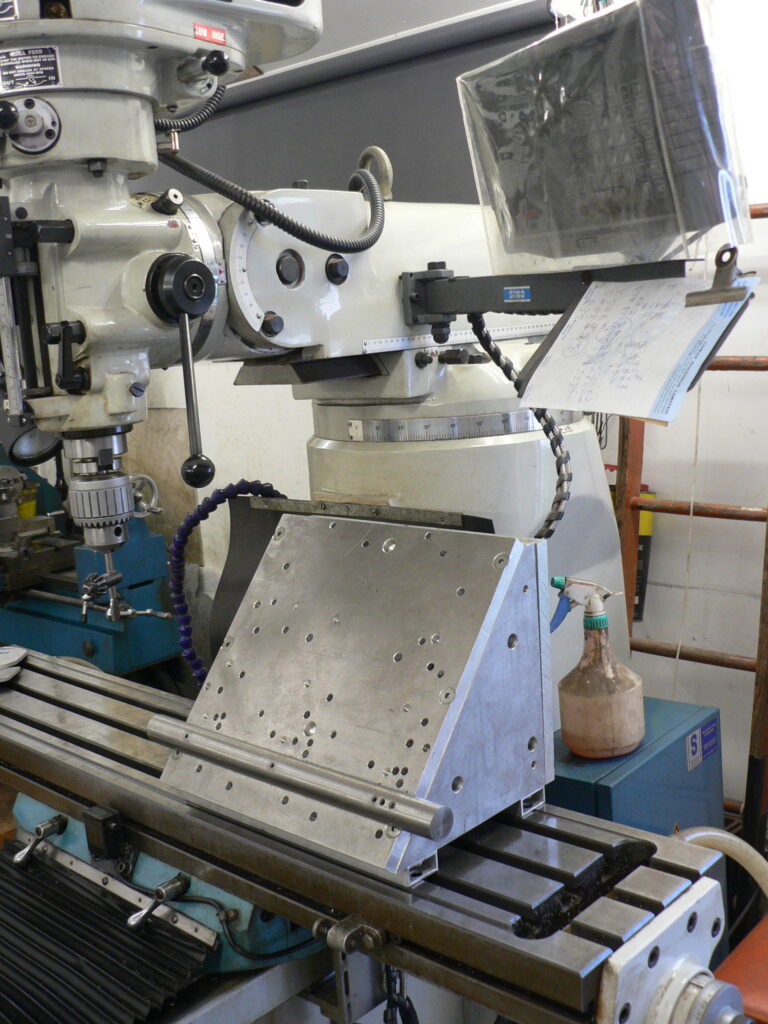
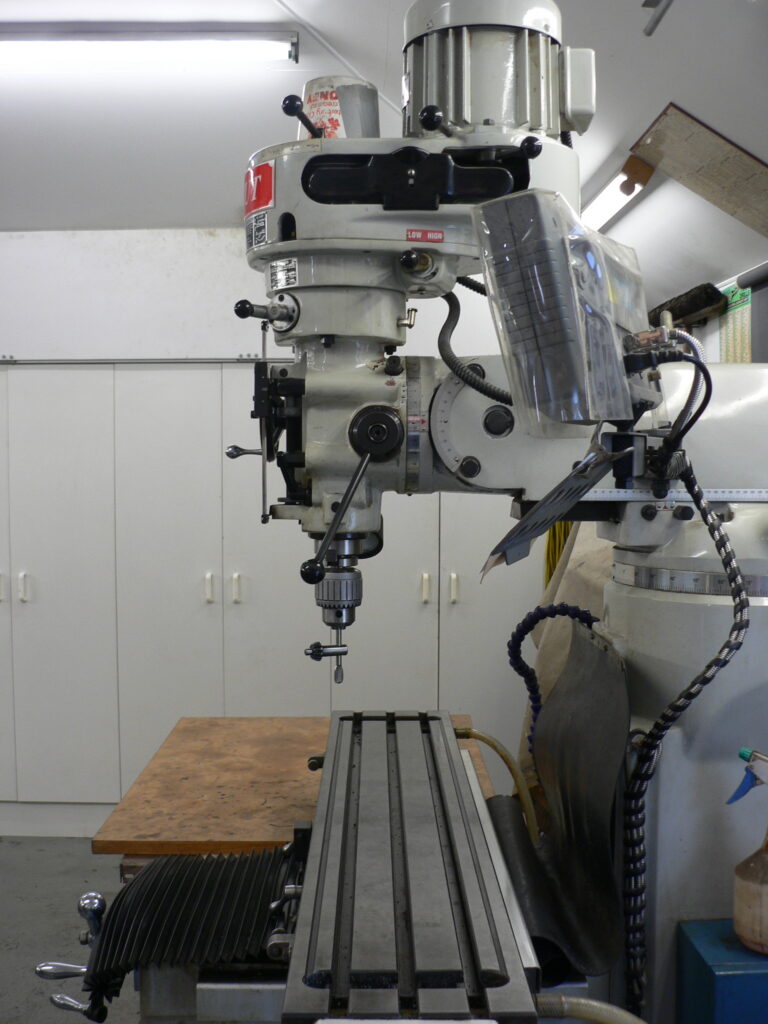
Milling machine 
This is a Bridgeport, made by Luxcut, and it has a very useful digital readout which allows much improved resolution and hence more dependable operation. Chris has used the machine to produce parts for his bikes and the very many gigs and mounts needed when undertaking precision machining.

Tube bender 
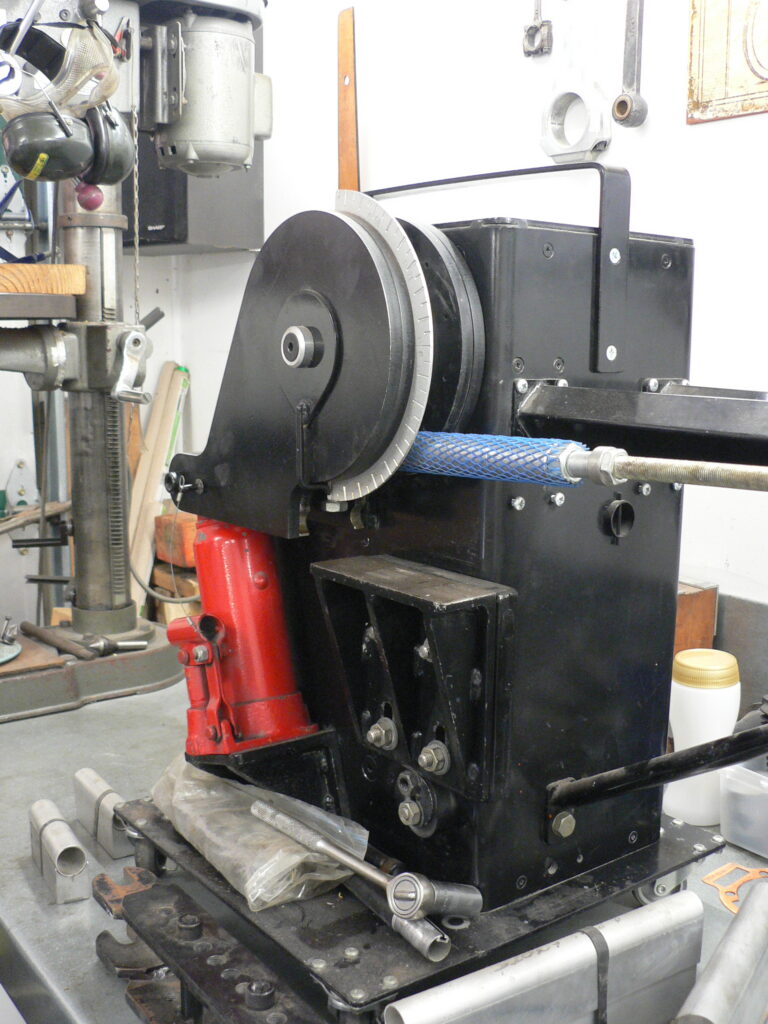
The 28mm diameter chrome moly tubing used in Chris’s V8 bike wasn’t able to be bent commercially in New Zealand, so he had to build his own bender. The mandrels, which sit inside the tube as it is bent, stopping it from collapsing, were purchased from America. Chris turned the formers, which the tube is rolled around, from aluminium plate. The holders for the formers were very nicely laser-cut from steel plate by a local Pegasus Bay firm, and the holes for attaching bolts machined on the Luxcut mill. 
A bender requires more than formers and mandrels, though. It needs grunt. The first version was horizontal and electric-powered. It could not bend the tube at all. Several more versions were constructed – all proved inadequate. It wasn’t until Chris saw a photograph of a large tube bender in a racing motorcycle-building manual that he fully appreciated the amount of force needed.
The fourth version has a large hydraulic jack pushing on long and strong levers to provide a more than adequate bending force. The jack operates best when upright, so the bending is in the vertical plane.

The Gordon GRP
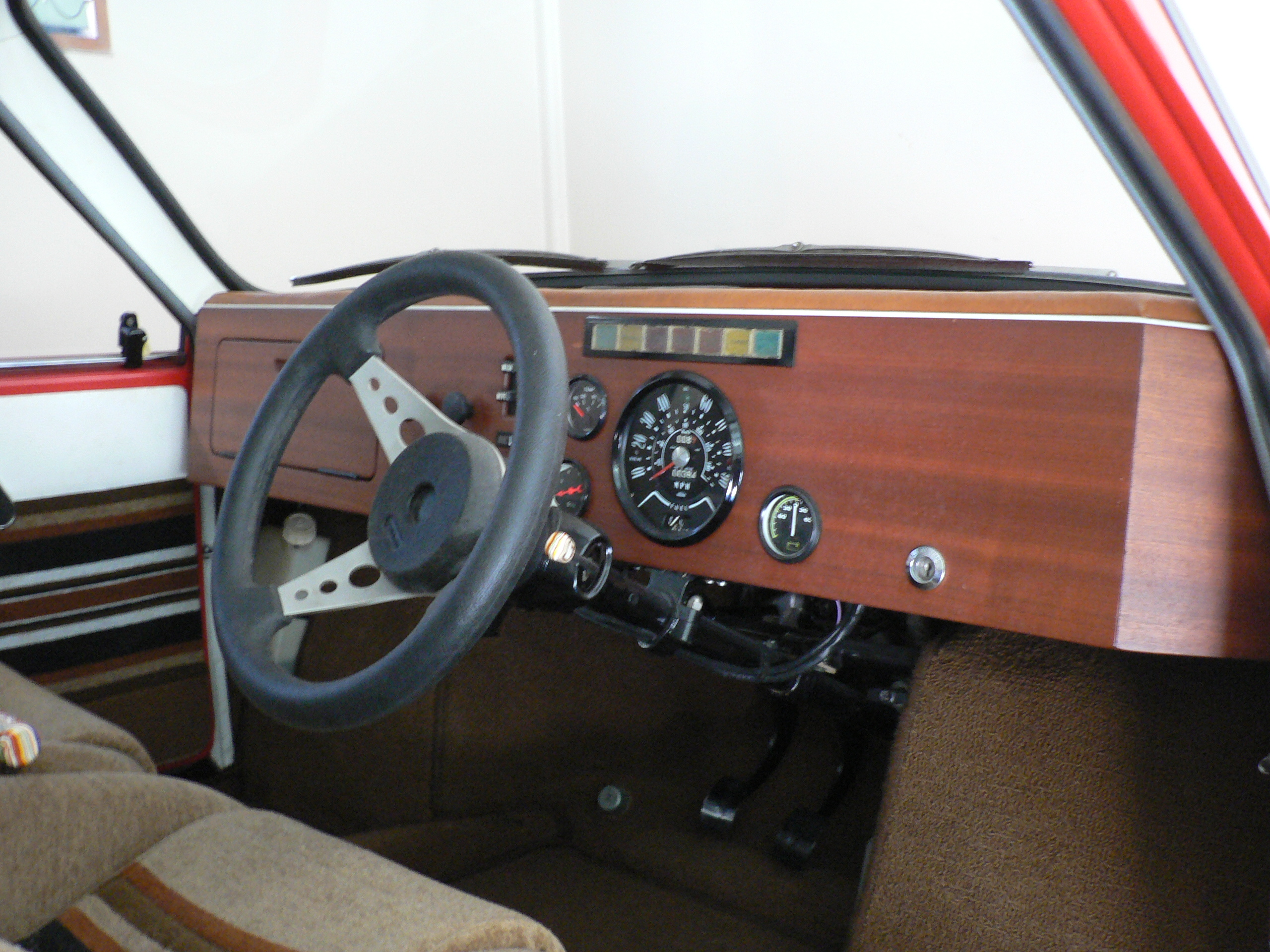
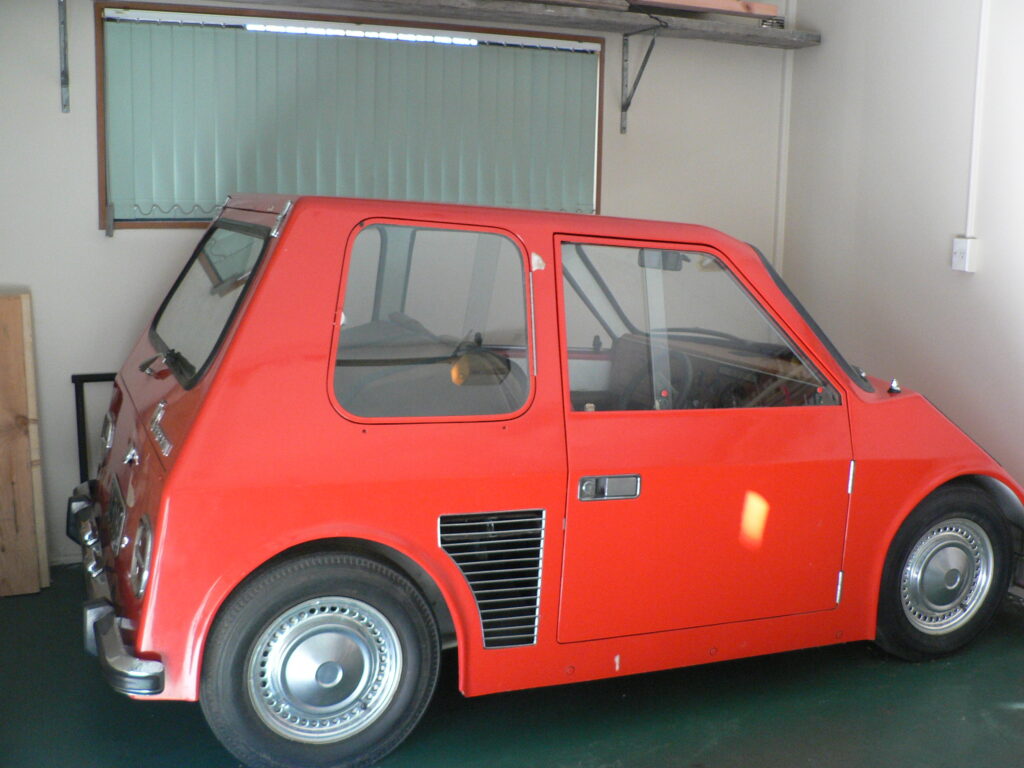
After converting a motorcycle to run on electricity so he could get around the huge thermal power station he worked at, a very young Chris Gordon decided to make an electric car. Like most makers of one-off cars, he made the body out of fibreglass and used the running gear from a donor car – in this case, a Triumph Herald. 
The GRP is up to 5mm thick with a central layer of core-mat and includes the metal front window surround from a Hino Contessa. The windscreen is (of course) from the same car. The other windows are made from specially-made Pilkington toughened glass. The car was designed from first principles, and its shape reflects not only the trends of the late ’70s (think Austin Princess), but also the futuristic designs of other electric vehicles of the time. The interior finish is of a similar standard to a production vehicle of the time.
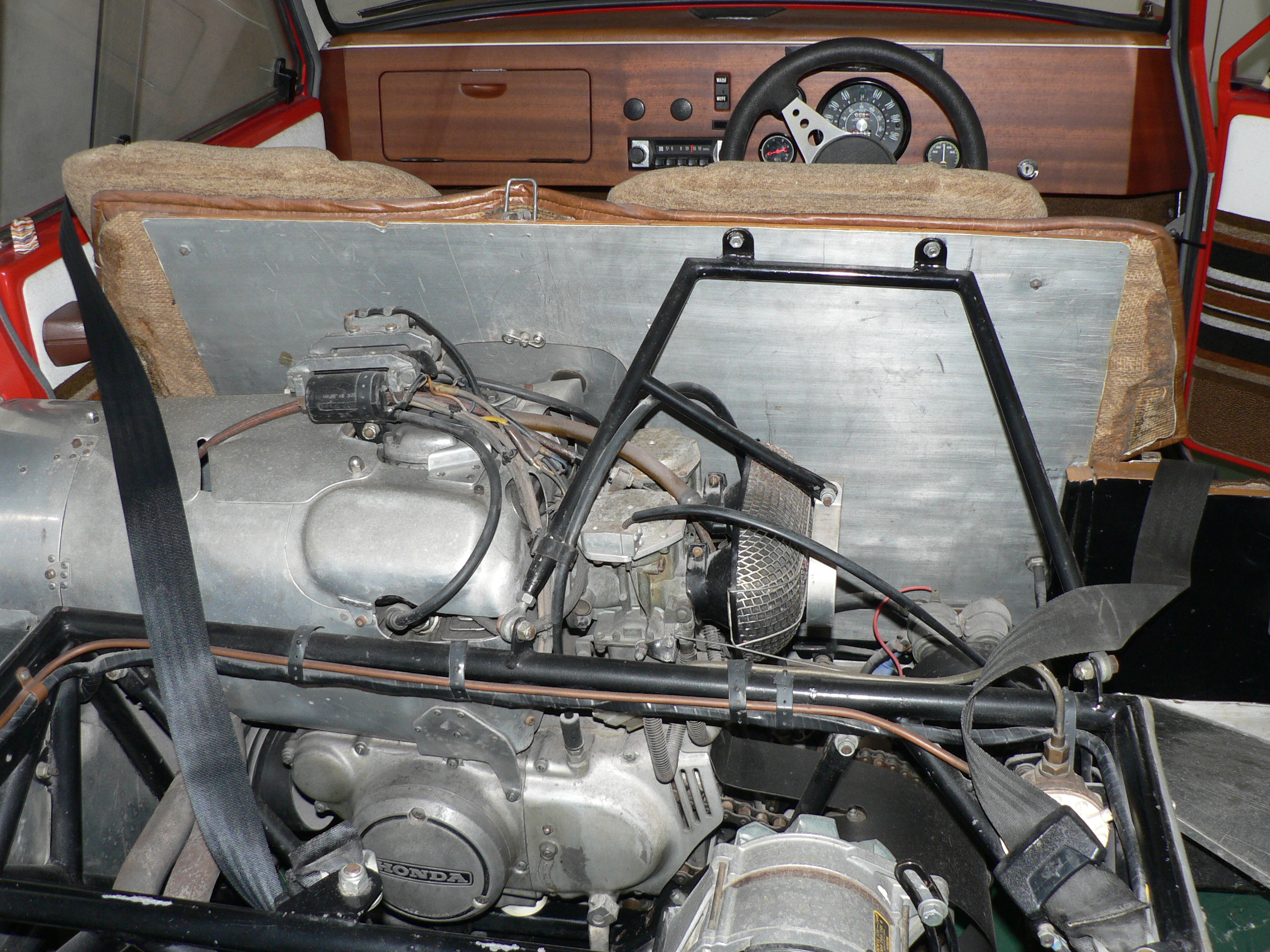
The chassis is made from steel tube brazed together, and the wheels, hubs, brakes, steering, and differential are all from the small Triumph.
The electric power option was killed off by the weight of the lead-acid batteries needed, so a motorcycle engine and gearbox were used instead. The unit chosen was a Honda CB360 – a 356cc two-valve SOHC twin which could provide enough power to attain a top speed of over 50kph. The drive from the engine to the short drive shaft is by chain.
When the car was completed, all Chris had to do to make it road-legal was to take it along to the MOT testing station and obtain a warrant of fitness, which it still proudly wears.
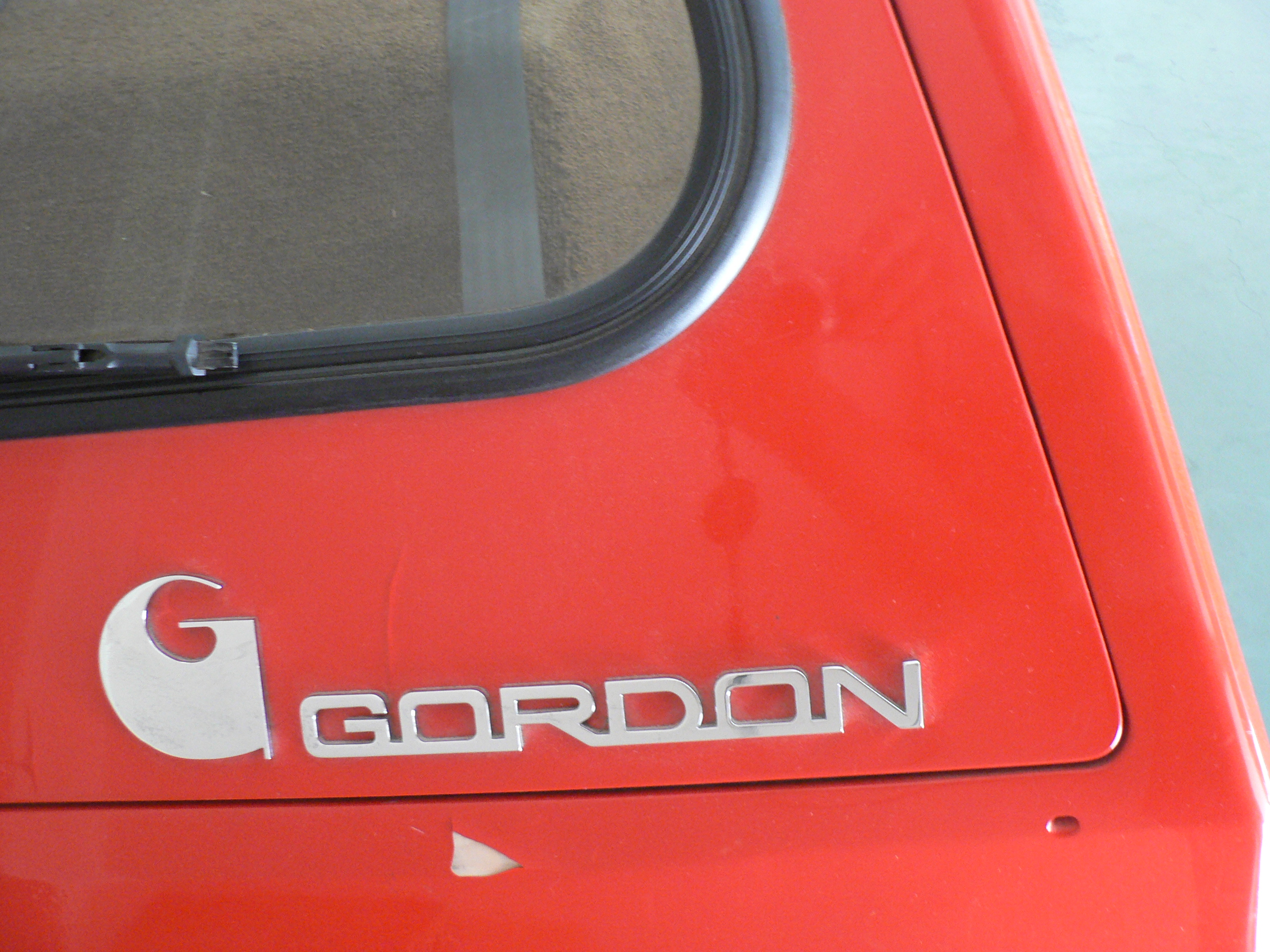
The maker’s name at the rear was made from brass strip. The letters were shaped using a hacksaw and files. The logo combines C and G with an arrow and was designed by Chris Gordon when he was at school.

Share:

More Posts

Building a 50cc mini-kart

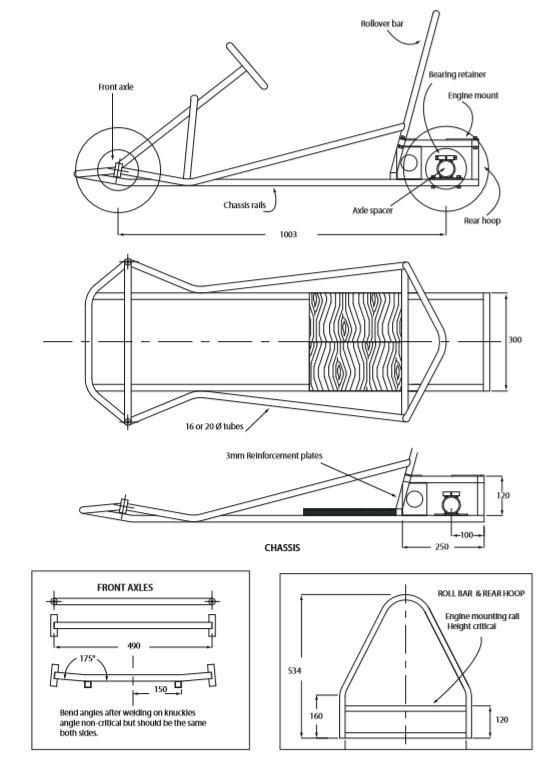
The design is not intended to be a high-performance, go-anywhere vehicle. It is a school project and therefore there are a few compromises in the design. It is economical to construct, achievable and straightforward for average Year 12 students. I might add, with some guidance.
It is also intended that most, if not all, of the Tools4work Level 2 mechanical engineering standards can be assessed against this project. Some of the techniques described may seem unnecessary, such as using a surface plate and scribing block for marking out, the design of the bearing retainers, or the generous use of a Bramley tube bender.
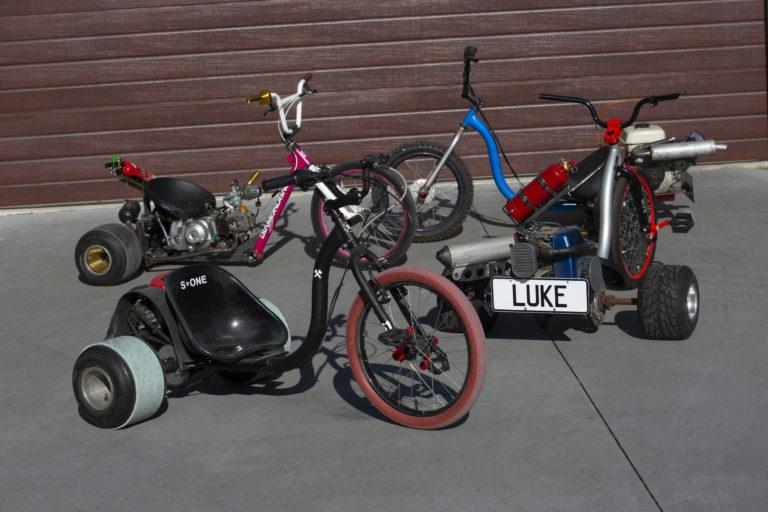
The most fun you can have on three wheels!

Cambridge sheddie Kim Dawick decided to build a drift trike for a mate’s birthday. It was relatively simple and so much fun to ride he decided to build eight more to bring the old gang from school back together. Click through to see the Kim take Mike’s trike for a spin, and another one, and another one….