
Woodwork: getting started (2)

A home workshop is a special place and will function much better if you are able to plan how it is set out. My first workshop was in a single garage which was also the home of a very old Austin 7. As I bought machines, things became a little tricky. It was not that motivating on a winter’s evening, knowing I had to shift the Austin and re-arrange the workshop before I started. Our architect’s major renovation to our home included the redevelopment of my workshop area and from a single garage to a 9 m x 6 m workshop was a massive leap forward, even if it is shared with an MG.

The machines you need for your workshop
By David Blackwell
PHOTOGRAPHS: HALEY NIELSEN, DAVID BLACKWELL

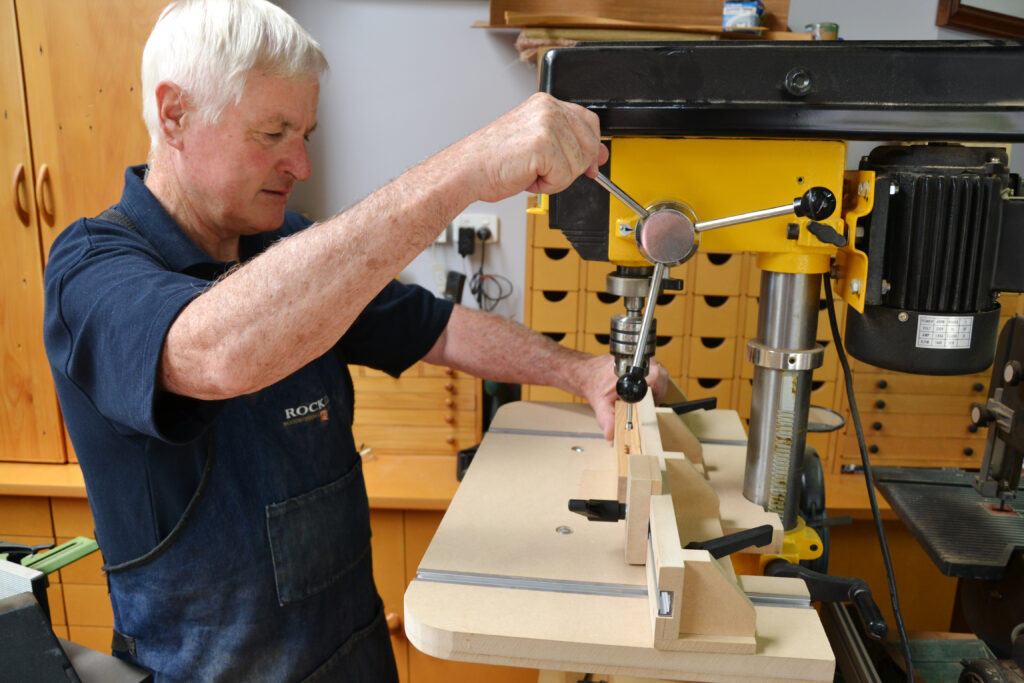
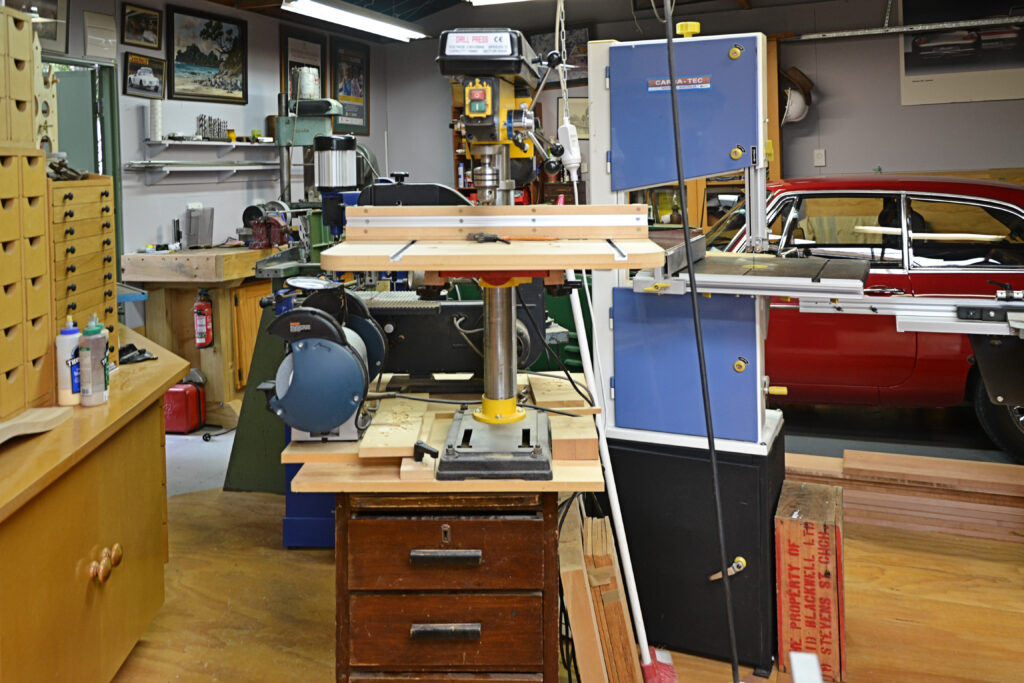
The author uses his basic drill press. Note the custom-made extension table

A home workshop is a special place and will function much better if you are able to plan how it is set out.
My first workshop was in a single garage, which was also the home of a very old Austin 7. As I bought machines, things became a little tricky. It was not that motivating on a winter’s evening, knowing I had to shift the Austin and re-arrange the workshop before I started. Our architect’s major renovation to our home included the redevelopment of my workshop area and from a single garage to a 9 m x 6 m workshop was a massive leap forward, even if it is shared with an MG.
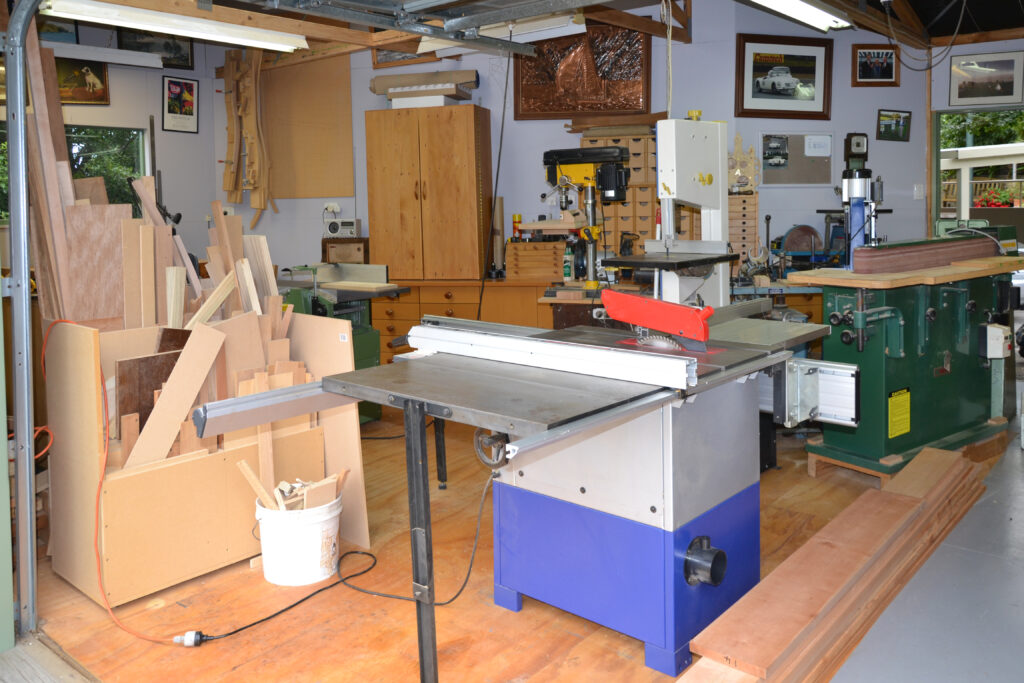
Think through the layout of your new workshop by drawing the floor area to scale on paper and moving around paper cut-outs of the machines and benches you would to see where they fit. You also need to think of workflow – where you bring in the raw timber to taking out the finished product. When building a workshop from scratch, ensure there are adequate doors to take things in and out. Remember Henry Ford needed to deconstruct a wall of his workshop to get his first car out. 
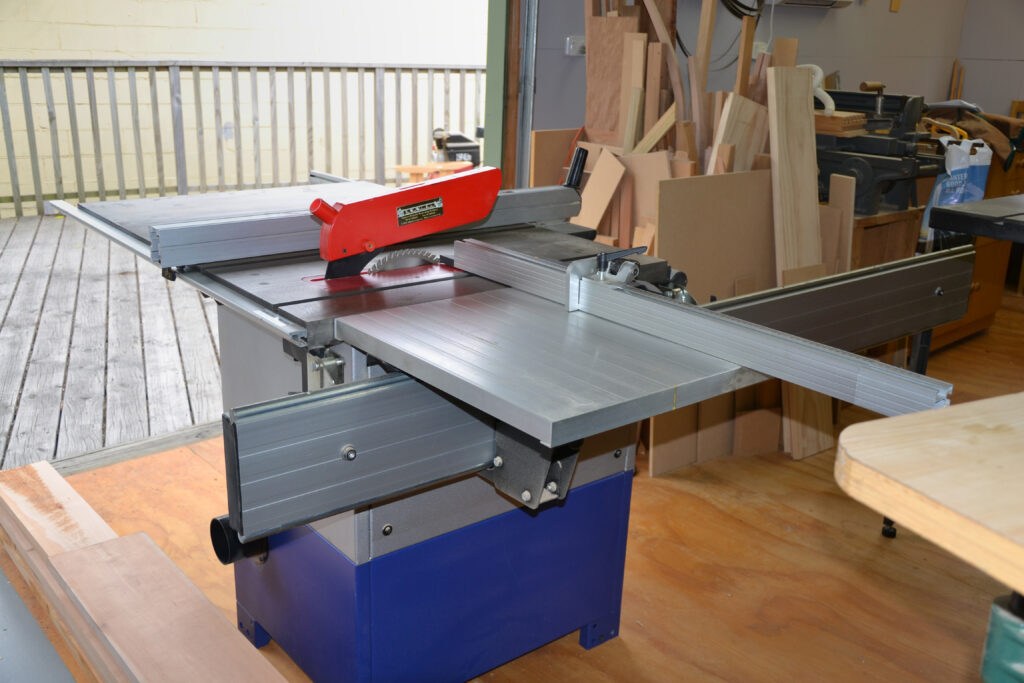
A saw bench is generally the focus of most workshops and should probably be your first purchase. A saw bench cuts square or whatever angle you set, leaves a good finish and can cut multiple pieces the same size quickly and efficiently. The brand and price range should also be the best you can afford; consider the availability of parts and after-sales service.
I started out with a saw bench with a basic 8-inch (200 mm) diameter blade but soon progressed to a 10 inch (250 mm) model with a sliding table and tilting arbor. Now I would never purchase a machine without a sliding table as I use it all the time to cut multiple pieces the same size by using the simply adjusted stops.  If you put three-phase power into your workshop, your options increase with heavy, older machines available  but they would probably need refurbishing. When considering the size and positioning of your proposed saw bench, think how you would handle a full sheet of MDF or plywood.

Think of workflow for your workshop layout
A saw bench is generally the focus of most workshops

Planer/thicknesser
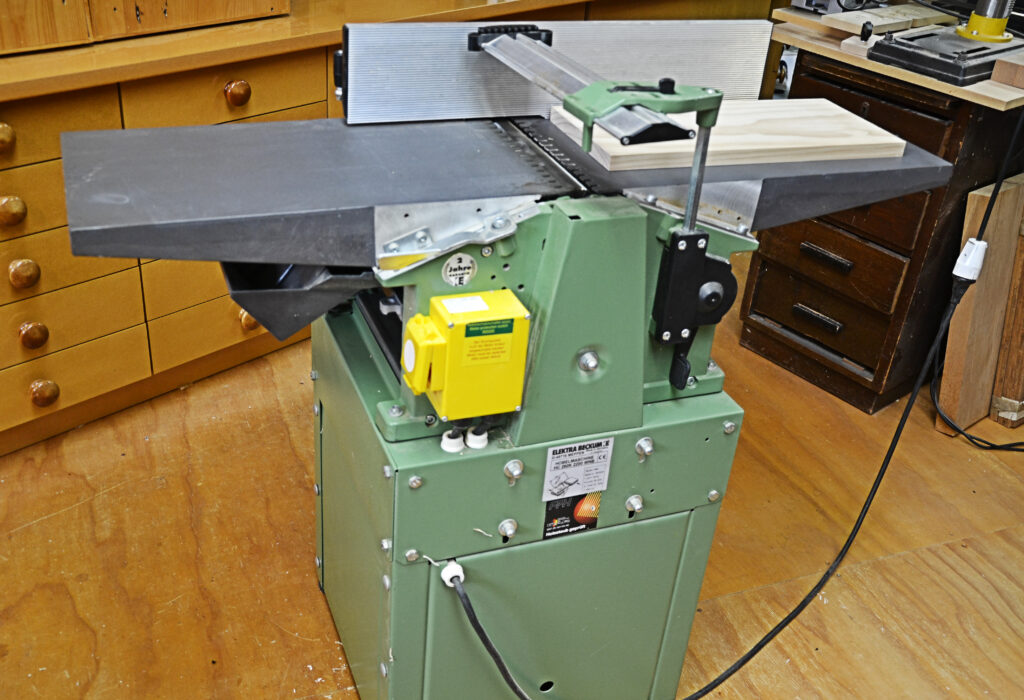
Probably the next most-used machine in my workshop is the planer/thicknesser. A planer flattens a piece of wood leaving a good finish while the thicknesser leaves the workpiece machined parallel to the thickness required, while also leaving a good finish.
You will need to decide if you have the room for two separate machines or to go with a combination machine. I have a combination machine but would almost certainly go with two machines if I had more room, mainly because of the ability to quickly move from one to the other.  Consider second-hand machines; at joinery shop or similar liquidation auctions you could pick up a bargain.  
You will almost certainly want to add next a bandsaw, a drill press and a bench grinder in order to make a very nice basic workshop. A bandsaw is handy for cutting angles or curves, trimming tenons and is quick and easy to use. A bandsaw with a 14-inch (350 mm) blade is a good, general-purpose one.
A drill press with a half-inch (12.7 mm) drill or chuck capacity can be relatively inexpensive and will be all you need for almost all woodwork tasks. My lightweight Chinese machine is so quick and easy to adjust, is ideal for woodwork and you can easily make a extension table for it (“Making a bigger drill press table”, The Shed, Feb/Mar 2012). I more or less use my heavy-duty Tanner drill press only for drilling steel.
I think a bench grinder is a necessity to allow you to sharpen a drill or grind a chisel but you will need to change at least one of the original grinding wheels to a softer wheel more suitable for sharpening precision tools.
You should be able to buy all of the above basic machinery new for a general woodworking workshop for under or around $6000, or less at clearance auctions or on Trade Me. Discuss what you are considering with a reputable retailer and you may be surprised by the package they can offer.

Planer/thicknesser. The next most-used machine
You can never have enough storage

Other
Space in your workshop may be an issue before you add extra equipment when you can afford it. I have gradually added as “nice to have” a belt sander, a triple head doweller, a mortising machine, a disc sander, a spindle sander, a router cabinet, a small compressor and a dovetailing machine. The dovetailer is a bit of a luxury but I could not resist putting my hand up at an auction.
The glaring omission in my workshop is an extraction system and while it is still only on my radar I have a shop vac that hooks up to most of my machines.
To the vital work bench – you can have a very simple MDF frame model or something more elaborate – I added a lower-level bench as a special area for work on my old vehicles, to avoid oil and grease getting near my woodworking.

Cluster of bench grinder, drill press and bandsaw (right). The car work area has its own workbench to keep oil and grease away from the woodwork

Storage
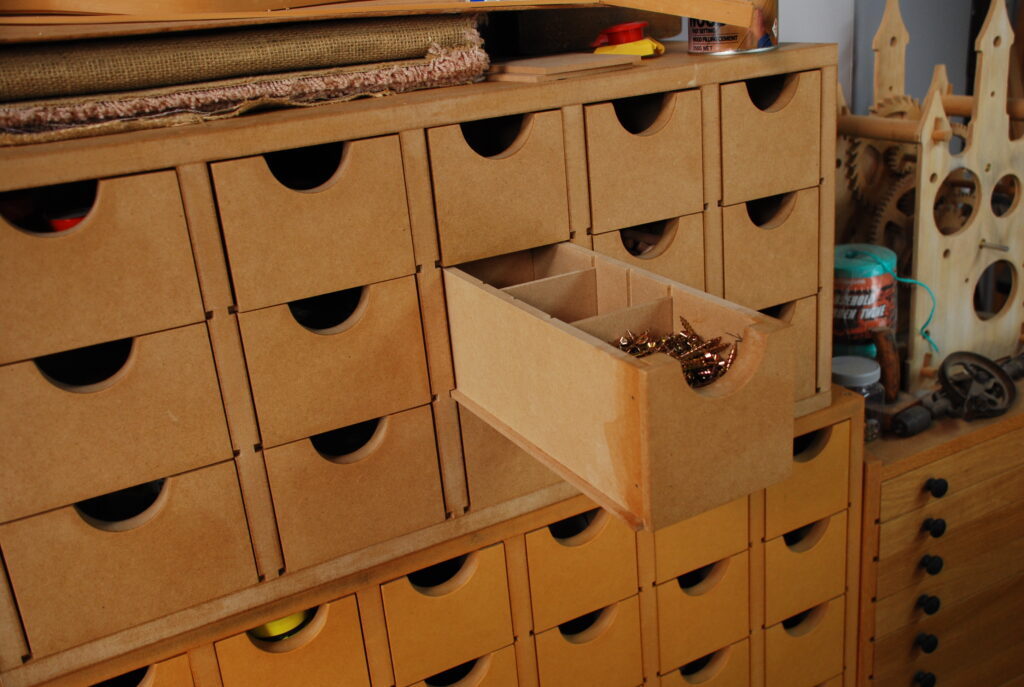
You never have enough storage. Think about building in drawers and cupboards in the workshop or even creating space in the ceiling. The experience and skills gained in making these drawers and cupboards could be most valuable should you wish to tackle a new kitchen. For many years my wife complained that the cupboards and drawers in my workshop were far superior to what she had in the kitchen, but this has now been rectified.
It is also often cheaper to do those important electrical, insulation and plumbing components in your workshop all at once. I have a combination of electrical wall sockets and plugs hanging from the ceiling. I think I have 27 power points and I use them all.
Insulation is worth it, not just to keep the warmth in but the heat out during the summer. I insulated the workshop walls, did the pre-wiring and then lined them with 5 mm MDF. I will get around to the ceiling in the next twelve months or so.
It is also worth considering having a sink with running water to enable you to wash up before heading back into the house. My brother-in-law installed a washing tub outside at the end of his house which enabled him to easily connect hot water as well.

Share:

More Posts

Elegant planter box on a tablesaw

The “Leader of the Opposition” has pointed me to the great outdoors and is making noises about things to house the shrubbery that materialises from the garden centre every weekend

The Good Wood: Macrocarpa

Macrocarpa (Cupressus macrocarpa or Monterey cypress) is a native of Southern California that like another Californian species from the same Monterey area (Pinus radiata) found New Zealand to be a more comfortable environment and thrived here. It grows faster and larger here than in its native environment, possibly due to the lack of pathogens that beset it in its home environment.