Video of Austins Foundry’s final pour

This is video of a family firm that has provided a good living for at least two generations, building up an impressive skills base while manufacturing essential farm machinery for more than 90 years. The Austin family has run a foundry in Timaru for 93 years. Ken Austin, grandson of the founder, says the business has faced increasing headwinds since the Covid-19 pandemic, so he has tested the winds of change and decided to close down. The Shed visits to celebrate their technical foundry skills, the likes of which we may never see again in New Zealand.

This is video of a family firm that has provided a good living for at least two generations, building up an impressive skills base while manufacturing essential farm machinery for more than 90 years. The Austin family has run a foundry in Timaru for 93 years. Ken Austin, grandson of the founder, says the business has faced increasing headwinds since the Covid-19 pandemic, so he has tested the winds of change and decided to close down. The Shed visits to celebrate their technical foundry skills, the likes of which we may never see again in New Zealand.
As featured in The Shed, magazine October/November 2023, issue 111 
Photography by Brian High

Share:

More Posts

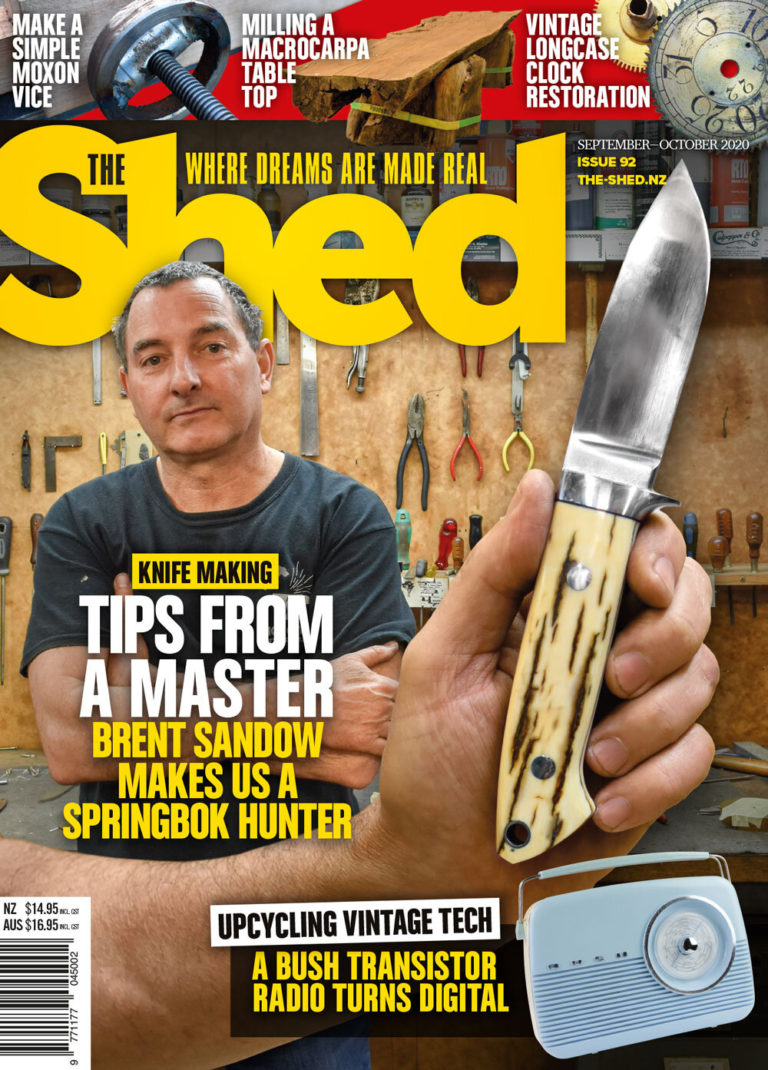
The Shed September/October Issue 92 is on sale now

There’s a real treat for knife makers in the September/October Issue No. 92 of The Shed.
We head to the Auckland workshop of master knifemaker Brent Sandow to get insights into what makes him such a well-regarded exponent of the art. We watch and learn as he goes through the steps on how he makes a Springbok Hunter knife.
Get ready, secrets are shared.

Video of McLean weaving of Oamaru

In The Shed Issue 90 we featured this small family business working from a shed in their back garden.
Using a 100-year-old Hattersley Domestic Weaving System, the McLean’s make stunning fabrics using traditional techniques and thread.
Incidentally, this Hattersley loom became popular after WWI when they were embraced by returning soldiers who preferred to work from home rather than a crowded and often fraught mill environment.