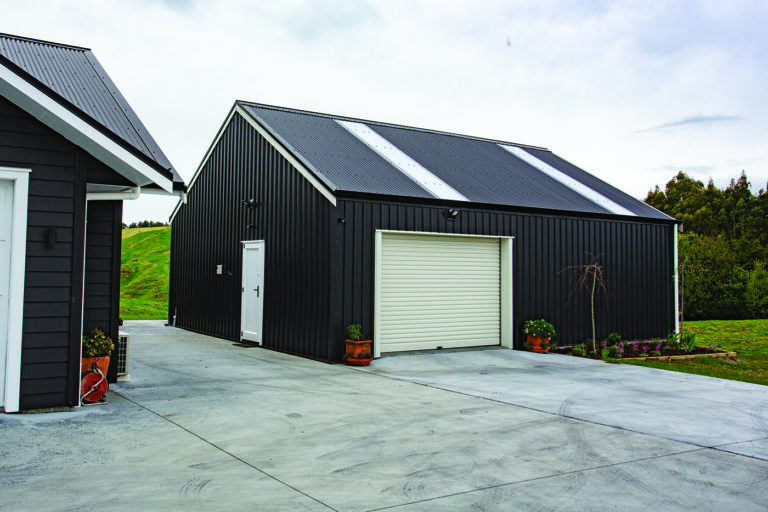
When everything goes right
David Thompson is a builder. When he wanted a new shed big enough to fit a car hoist you’d imagine that he would knock one up himself. Not so.

David Thompson is a builder. When he wanted a new shed big enough to fit a car hoist you’d imagine that he would knock one up himself. Not so.
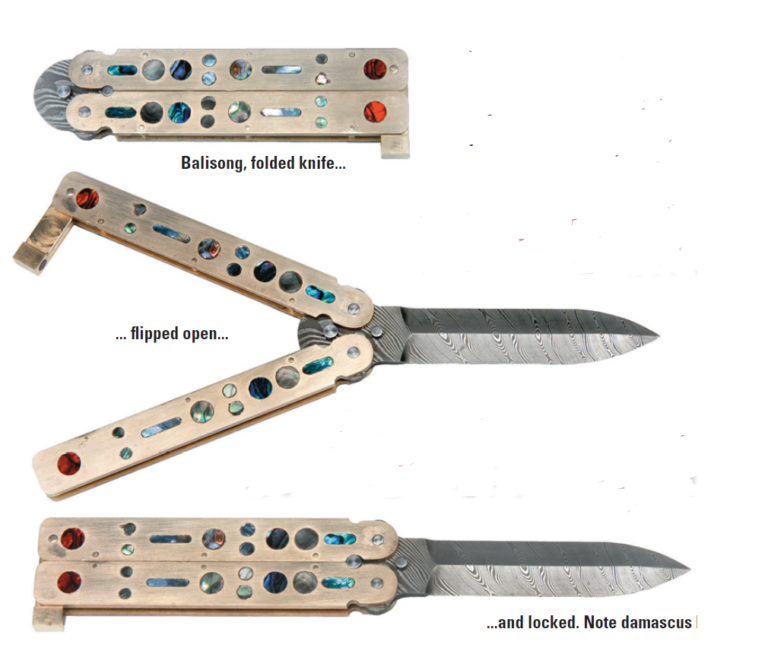
The balisong, also erroneously called the butterfly knife, has been around since approximately 1200 BC where it played a part in the Filipino martial art form, Escrima.
Although some commercially available ones have been around for many years, they never really caught on until the 1970s.
I know one knife-maker in NZ who makes balisongs exclusively. The reason for the balisong’s popularity: four pins, two handles, one blade. No springs, screws, rivets.
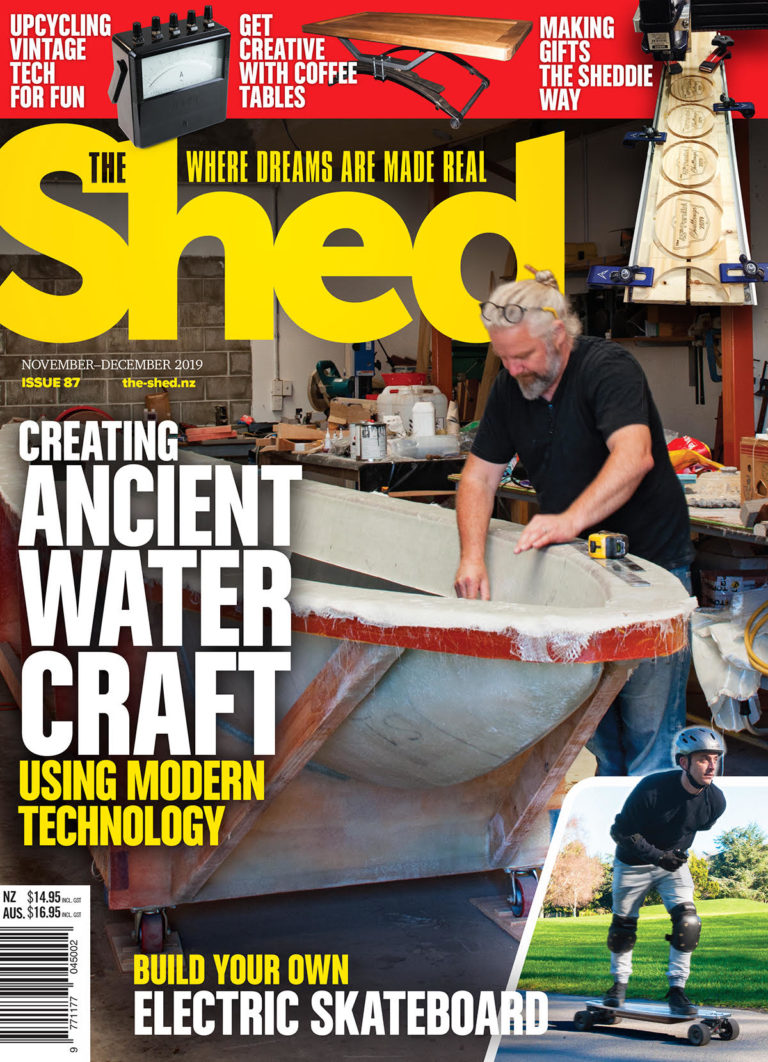
The November/December 2019 Issue 87 of The Shed, has a real electronics feel about it but there is also a lot here to keep all sheddies informed, entertained and well-skilled up.
Our cover story is about the goal of a Christchurch boat builder, architect, designer, sailor, Quentin Roake, to find a way to build waka in large numbers. He wants to recreate the appearance and characteristics of traditional craft in a modern version that is portable, durable, and economical to manufacture. Quentin has made it his mission to put Maori waka back on the water by marrying traditional knowledge with today’s technology
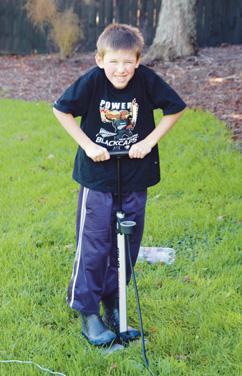
A pretty simple water rocket launcher using a few high-pressure PVC plumbing pipes, air and a soft-drink bottle with water in it will provide plenty of DIY fun and show some basic physics.
I built one for my eight-year-old’s Cub Scout group and have had lots of requests from fathers asking how to make one.
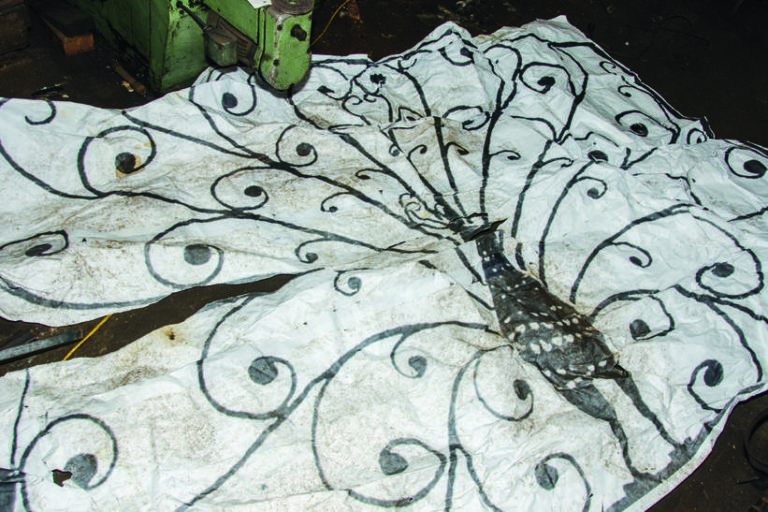
Once, while browsing through an old wrought-iron design catalogue, Kim (the son of blacksmiths Ian Nielsen & Son) came across a peacock design and decided it would make a great after-hours project. It turned into a much bigger job than he anticipated with the finished 3 metre by 2 metre gate taking around a ton of steel and about three months to make.

We thought you would find this video interesting to watch. It shows the impressive strength of Instant Hold Liquid Nails from Selleys – it’s a pretty quick fix.
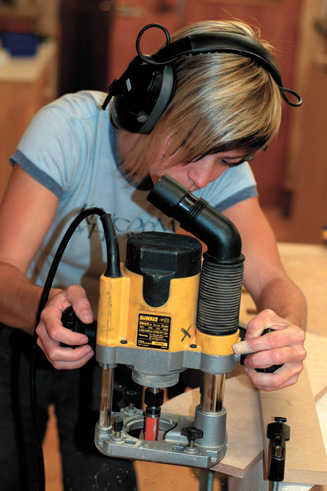
This piece was originally designed as a bit of fun: a simple carcase construction with a handle detail that would provide me with a challenge while satisfying my passion for curvy, organic forms. I made the original version in maple with a bloodwood veneer. The contrast in timber and the handle detail made for a striking piece and I was commissioned to make another in cherry with birdseye maple veneer.
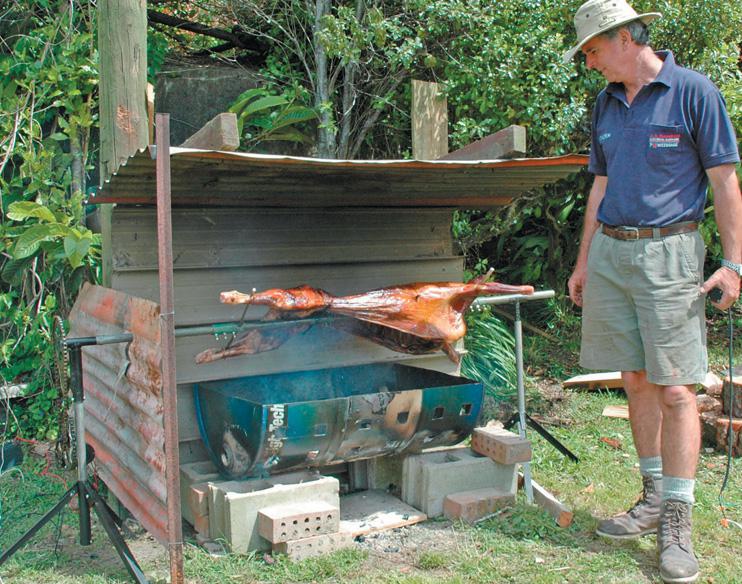
It’s not my original idea. I used to live in Tutukaka and we’d go on 4WD rallies and claybird shoots in the backblocks where there was no power. It was a lot of fun. One time a guy turned up with a battery-driven spit and the idea stayed in my mind. You could take it where there was no power – I always said I would design something one day that worked with no power.
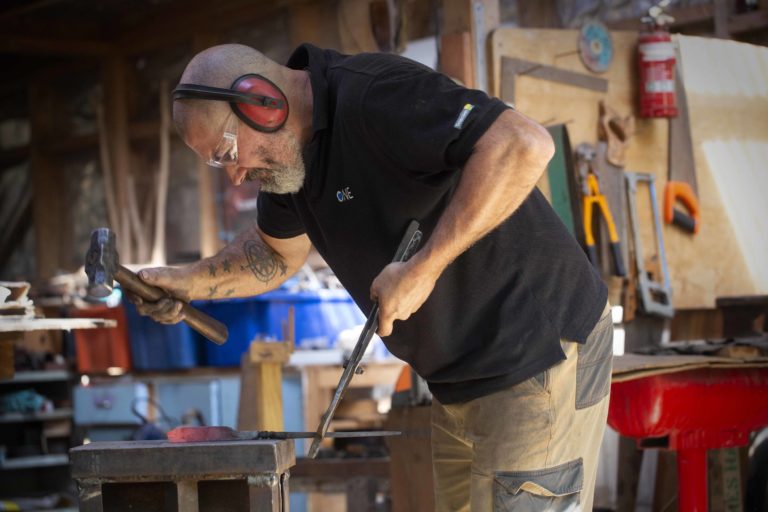
Meet the knifemaker from The Shed Issue 86 and watch how he makes a fully forged knife in his Whanganui shed
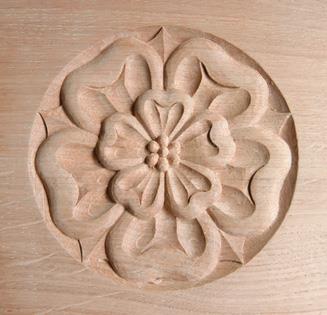
An aspiring woodcarver who builds on a solid foundation of knowledge and technique will soon be creating impressive carvings. To demonstrate basic knowledge and techniques, we are going to follow the carving of a Tudor rose.

Aluminium alloys have one critical failing, for all their good qualities of lightness, conductivity and strength. They corrode. One way to guard against corrosion is to create a hard oxide film on an aluminium alloy by anodising

Shannon Jordan and Louise Simmons sold up in suburbia and bought a block of land in Ruakaka, Northland, three years ago. They planned to live in a caravan while planning and saving for their house. From this magazine’s point of view, they had their priorities right and decided to build a shed first.

I think most turners get frustrated with constantly having to stop the lathe and measure and re-measure the length along the bed as the work gets reduced.
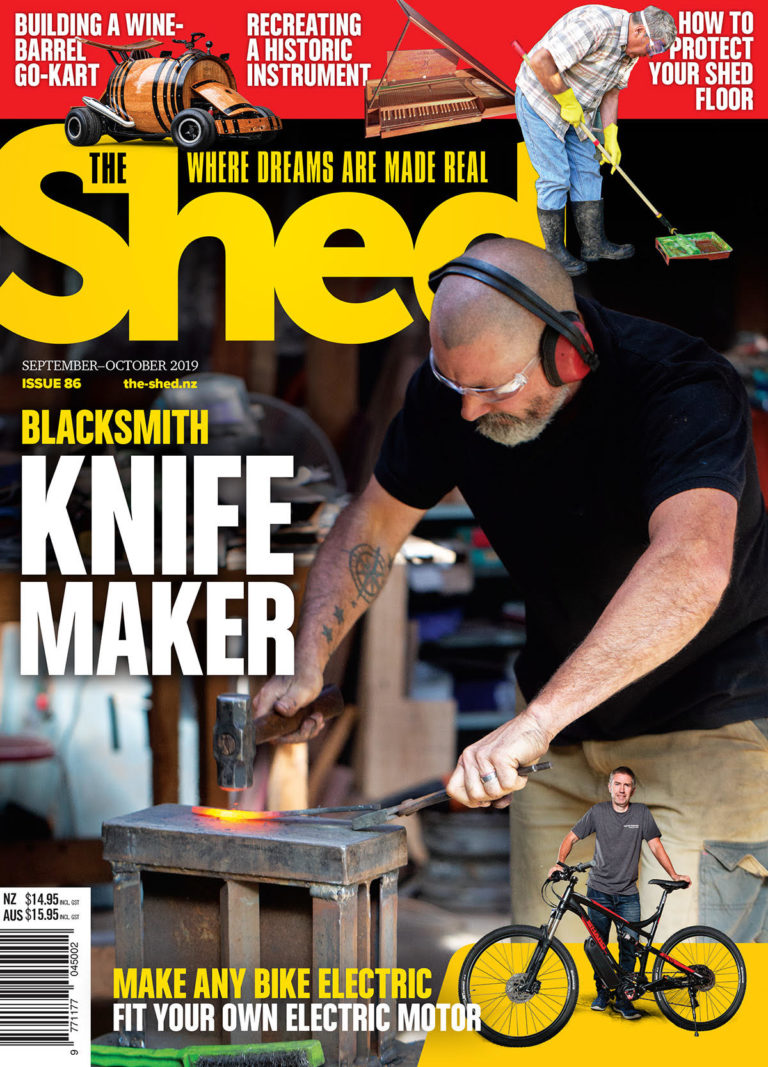
In the October/ November Issue 86 of The Shed, we first head to Whanganui to meet blacksmith Josh Timmins.
Josh has his own way of making knives and axes and shows us how to make a Viking Knife starting with a piece of new steel right through to the finished product.
Then we head to…
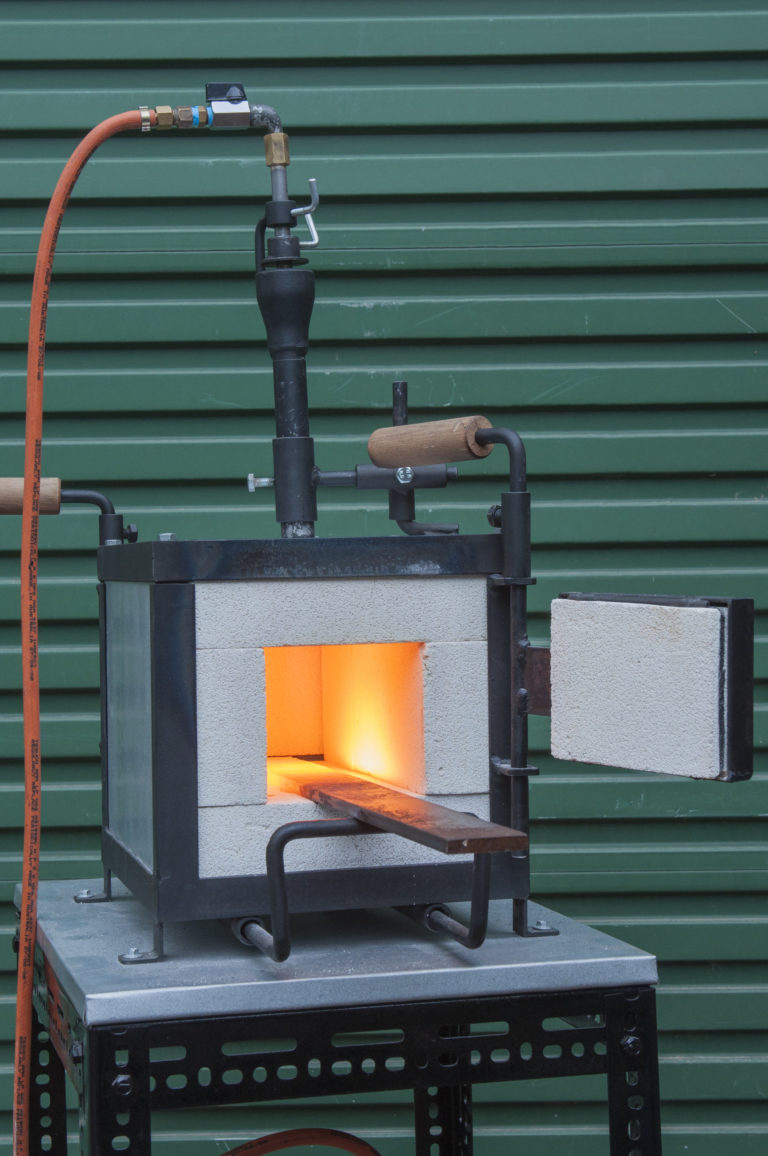
This brick forge is constructed from lightweight insulating firebrick. Known as a K26 brick it is available from Certec in Auckland.
These insulating fire bricks are rated to 1426°C and measure 230x115x75mm. They are commonly used to line foundry furnaces, forges, and kilns. These soft bricks can easily be cut to size with an ordinary wood saw, drilled to create burner openings, or routed to create channels.
Watch this video to see how we built this gas forge and an oil-powered version as well.
As featured in The Shed Issue 85