A new global distribution agreement between element14 and Analog Devices

A new global distribution agreement with Analog Devices, an international leader in the semiconductor market, has given element14 the ability to offer its customers an increased range of high-quality products for mixed signal and power management. The new partnership with element14 will offer fast delivery of the Analog Devices range, including the latest innovative products. The broad portfolio of high-performance analogue, mixed-signal, and digital signal processing integrated circuits is suitable for many types of electronic equipment, helping design engineers to create new solutions for a variety of industries, including automotive, communications, consumer, data centres, and industrial automation.

element14/Analog

A new global distribution agreement with Analog Devices, an international leader in the semiconductor market, has given  element14 the ability to offer its customers an increased range of high-quality products for mixed signal and power management.
“We are committed to strengthening our global product portfolio, and Analog Devices is uniquely positioned to drive innovation across our key markets with high-quality, integrated solutions,” says Simon Meadmore, vice-president of product and supplier management at element14.
The new partnership with element14 will offer fast delivery of the Analog Devices range, including the latest innovative products. The broad portfolio of high-performance analogue, mixed-signal, and digital signal processing integrated circuits is suitable for many types of electronic equipment, helping design engineers to create new solutions for a variety of industries, including automotive, communications, consumer, data centres, and industrial automation.

New products from Analog Devices now stocked by element 14 include: 

  • Mixed signal: Amplifiers, ADC and DAC converters, analogue switches, comparators, and analogue functions
  • Power management: Battery management, DC/DC converters, voltage regulators, LDO, LED drivers, controllers, and power management integrated circuits (PMICs)
  • Interface: Transceivers, receivers, interface, drivers, and special function products 
  • Radio frequency (RF): RF amplifiers and modules
  • Sensors: Temperature and optical sensors
  • Embedded: Microcontrollers and digital signal processors 

“In addition to this, the inclusion of legacy products from Maxim Integrated and Trinamic will assist design engineers in extending the life expectancy of existing products, helping to reduce the risk of early obsolescence,” says Simon Meadmore. “Together, Analog Devices and element14 can offer customers the capability and integrated services to help drive success across a wide range of technologies, projects, and applications.”
Analog Devices combines analogue, digital, and software technologies in a broad portfolio of high-performance analogue, mixed-signal, and digital signal processing integrated circuits designed for many types of electronic equipment, including 5G, Internet of Things (IoT), cyber security, radar systems, and RF solutions.
Bryan Tallman of Analog Devices says the new distribution agreement with element14 will increase the availability of its products for existing customers and also make them more accessible to engineers around the world.
“The power of element14’s element14 Community, regional, technical, and customer support services, [and] robust distribution network were key drivers in establishing this new global partnership,” he said.
element14 offers an extensive range of products in its comprehensive semiconductor portfolio to support design engineers. Customers also have free access to online resources, datasheets, application notes, videos, webinars, 24/5 technical support, and accurate traceability.
Analog Devices’ selected range of market-leading products is now available for fast delivery from element14 in APAC.

Share:

More Posts

On the move

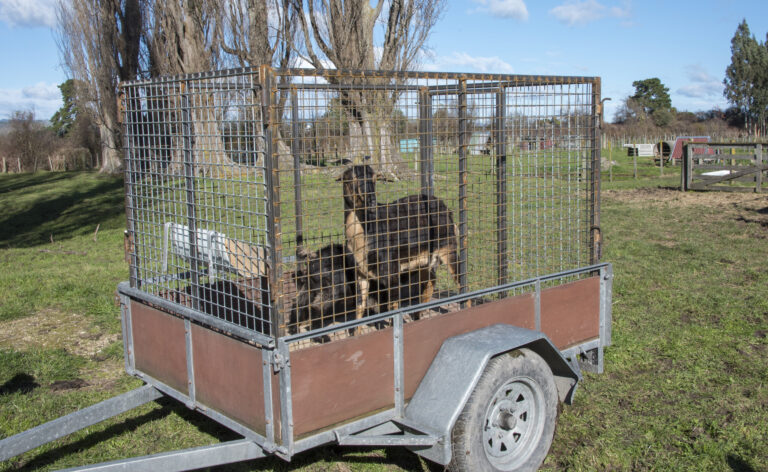
Farm life, even on a pocket-handkerchief farm like mine, means that you will need to move stock from time to time. I run a few cattle beasts and a few goats. I plan to get a few sheep soon, too. The issue with stock is moving them. Moving the cattle is a different story but for the smaller stock I could carry them either on the tray of my ute or my trailer if either had a stock cage.
I decided that building a cage could be an easily achievable project and so it has proved. It has value even if you don’t have stock – it certainly increases the options for your trailer. It is a lot easier collecting firewood with a cage, even transporting rubbish, or green waste. In the case of the latter you might want to make the end hinged rather than incorporate a gate to make it easier to unload the waste.

My shed the barn

Capacity is always the issue. My two sheds at home were each at their limit. I had woodwork in one and a one-off car suffering fabrication right on top of it in another.
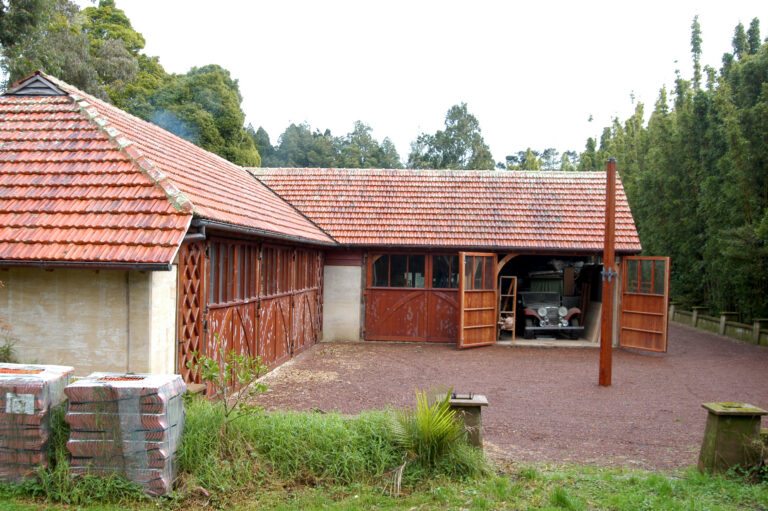
When it came time to plan a new house on the new section, I thought of a barn-sized shed. In this barn, I would build all the joinery for the house. But first I had to build the barn.
I had a design that had been kicked around for ages and required a giant leap forward in capacity. This barn as my workshop would have good height, tall openings, a range of areas for different tasks and that all-important swing room around the main machine, a multi-function dimension saw.
Like other glimpses I enjoy of by-gone eras, I have always loved those English “oak barns” typically housing Aston Martins in magazines portraying classic cars. The vision I had for my barn was of posts and beams and the roof crouching over long flanks, suggesting back rooms filled with the rare and the useful.

A life in harmony

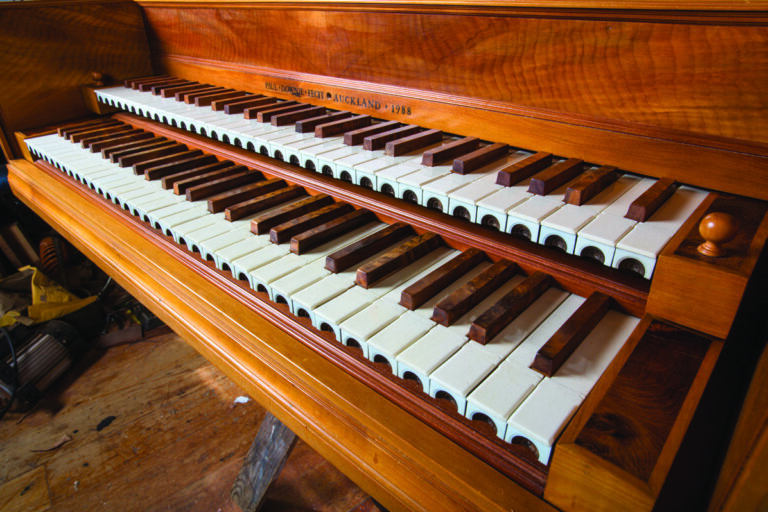
There is such a thing as serendipity. When Paul Downie was 11 years old a chance meeting at his grandmother’s house was to eventually set him on a course that would define his career.
“I was learning the piano at the time and her friend had a harpsichord that he invited me over to see. I thought it was marvellous,” he recalls. “He told me I should build one and although it sounded like a ridiculous idea, it never went away.”
When he was 22, Paul embarked on the project, researching how to build a harpsichord, scouring junk shops for old tools, sawing bits of wood, and gluing them up until he had constructed the instrument.
“I enjoyed the whole process so much that when I was 23 I decided to build another one. I discovered that overseas museums had very detailed technical drawings of old instruments which you could buy – when they are restored everything about the instrument and the mechanisms are recorded.
“I went on to build two more harpsichords. The first one did work but it wasn’t up to the same standard so I ended up pulling it apart and my sister burnt it as fire wood,” he says laughing. “The others have survived and are owned by very good musicians.”